
This North Carolina Native Grows From Winter Prunings So Easily You’ll Line Your Whole Fence For Free
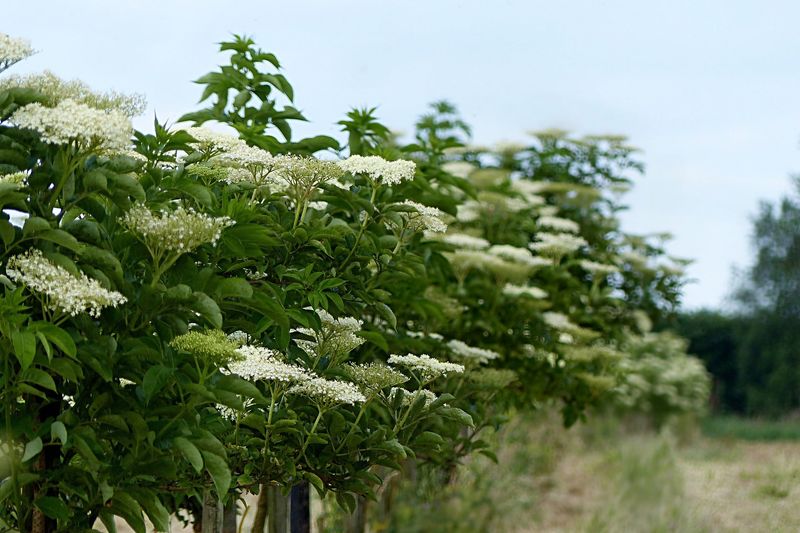
A bare winter fence line can feel like a blank page for a wildlife-friendly yard. American elderberry, a shrub native to North Carolina, can be started from dormant cuttings at little cost.
The catch is that cuttings are only the first step, and a loose, leafy boundary takes years to fill in. Here is how to start, what to expect, and how to make room for the birds and bees that will show up.
A native elderberry can make an informal boundary
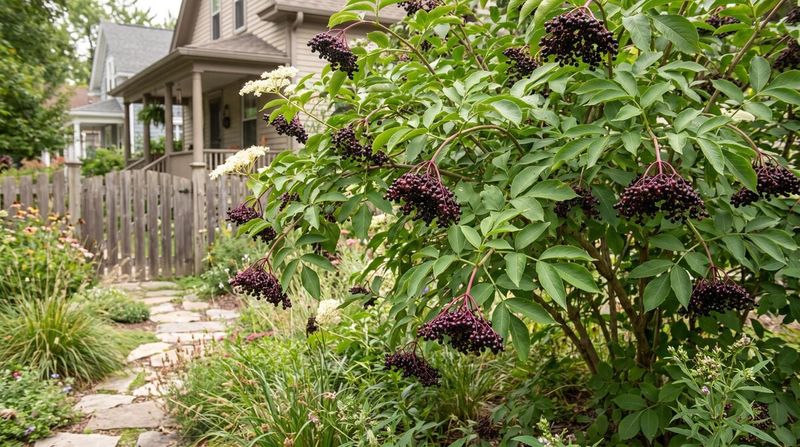
If you want a living boundary that works for wildlife, American elderberry (Sambucus canadensis) deserves a look. NC State Extension lists it as native throughout North Carolina and says it can be used as a hedge.
That makes it a better choice for local birds and insects than many imported shrubs sold for the same job.
Before you picture a tidy green wall, adjust the mental image. Elderberry is broad, arching, and a little rambling.
It can look loose or even unkempt, and NC State notes it is not well suited to formal garden settings. A clipped, boxy hedge is not what you will get.
It is also deciduous. The leaves drop in fall, so the shrub will not screen your yard from the neighbors in winter.
Think of it as a seasonal, naturalized border that is full and lush in summer and open in the cold months.
Size matters too. NC State gives a mature size of about 5 to 12 feet tall and 6 to 12 feet wide.
That is a lot of shrub for a narrow strip beside a fence. Walk your boundary and ask whether there is room for it to spread, and whether you are comfortable with a relaxed look.
Elderberry is a good match for a backyard steward who values function over polish. If that sounds like you, the next step is learning what winter cuttings can actually do.
What winter cuttings can—and cannot—do by spring
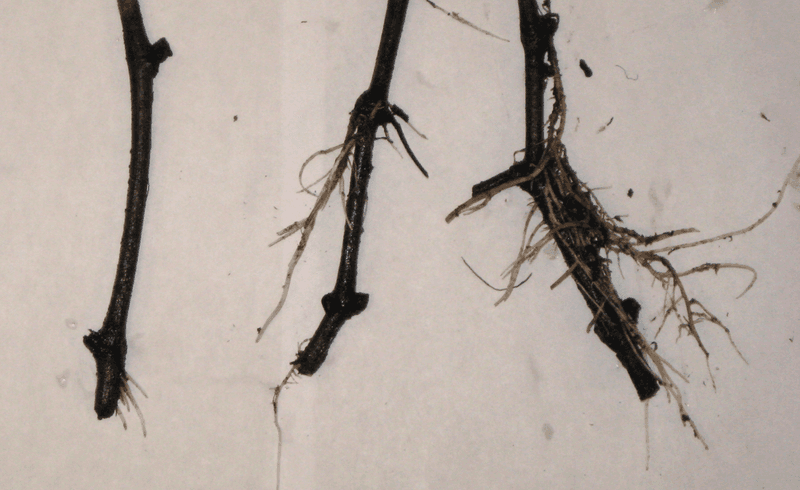
The headline promise is tempting, so here is the honest version. UF/IFAS Extension calls dormant hardwood cuttings a relatively easy, low-cost way to propagate American elderberry.
Roots may form in about 4 to 6 weeks under suitable conditions.
That is encouraging, but it is not a guarantee. Some cuttings will root and some will not.
Success depends on the species, the quality of the wood, and how you care for it, as Iowa State Extension points out about hardwood cuttings in general.
Low-cost is also not the same as free. You may need pots, a rooting medium, and perhaps rooting hormone.
You may also spend money replacing cuttings that fail.
The biggest gap is between rooted and established. A cutting that sprouts roots by spring is a tiny start, not a screen.
Iowa State cautions that a rooted cutting takes years to become a nice-sized plant.
So the sources support a modest claim: with luck, some winter cuttings may be rooted by spring. They do not support a full fence line, zero cost, or mature screening in one season.
Plan for a gradual build and you will be pleased rather than disappointed.
Choose healthy growth while the shrub is dormant
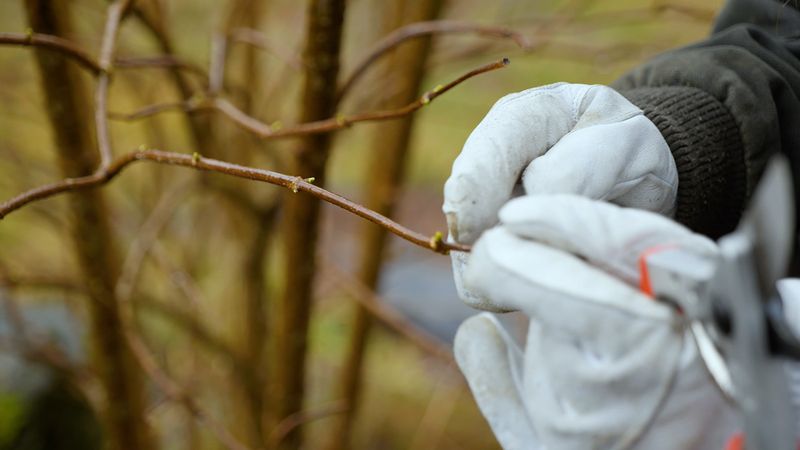
Start with the plant itself. Look for healthy, vigorous stems that grew during the previous season.
Skip anything that looks dried out, damaged, or weak, because not every pruning makes a good cutting.
Timing matters as much as selection. Take cuttings while the shrub is dormant and before the buds break.
UF/IFAS suggests January through March, but that schedule comes from a Florida guide. It is a reference point, not a North Carolina calendar rule.
In the mountains, the Piedmont, and the Coastal Plain, buds swell at different times. Watch your own shrub.
If the buds are plump and starting to open, you have waited too long. A warm spell in late winter can move things along faster than you expect.
Before you cut anything, confirm the plant is Sambucus canadensis. NC State Extension lists Sambucus nigra separately among plants also called elderberry, so a shrub labeled only elderberry may not be the local native.
Check a nursery tag or ask a knowledgeable grower.
The same care applies if you share cuttings with a neighbor. Passing along a mislabeled plant defeats the purpose of choosing a native.
When in doubt about identity, wait and verify.
Set each cutting up for rooting
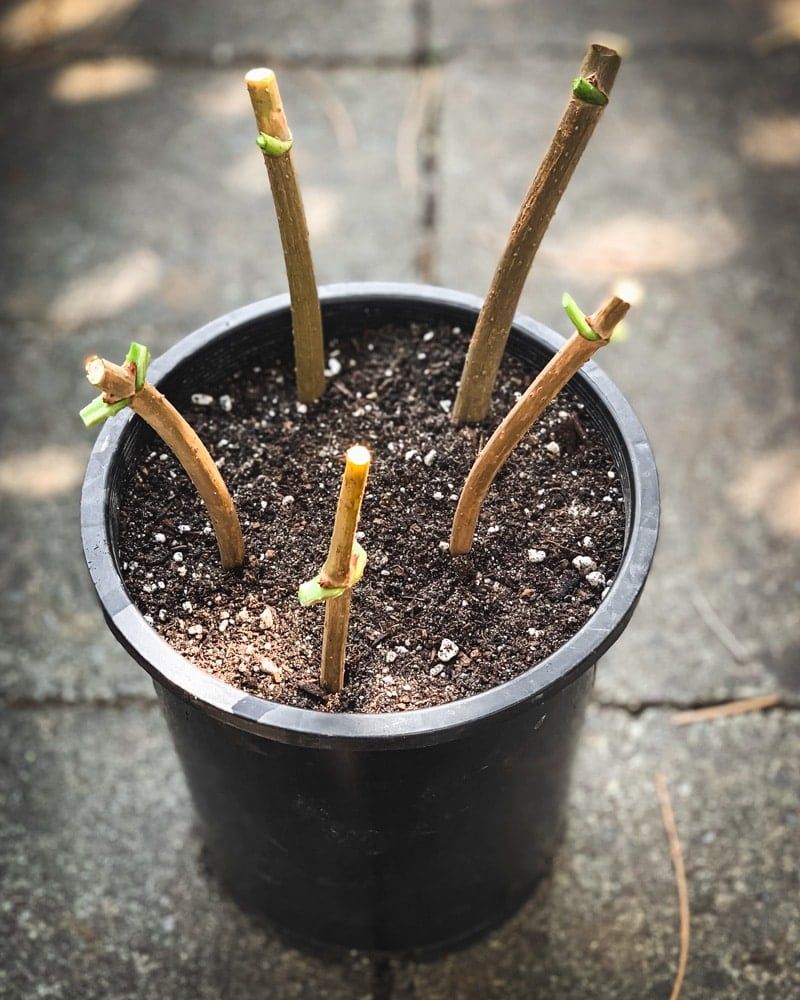
A simple setup goes a long way. Make each cutting with two nodes, the bumps where buds and leaves emerge.
UF/IFAS describes two-node cuttings for elderberry.
Fill a pot or tray with a well-draining medium. Iowa State Extension advises placing at least one node below the surface and one above it.
Keep track of which end is up, since a cutting set upside down will not grow properly.
Moisture is the balancing act. UF/IFAS recommends keeping cuttings moist but not waterlogged.
A soggy medium can rot the wood, while a dry one stalls rooting. Check the pot often and water lightly when the top starts to dry.
Rooting hormone may help, but it is not essential. If you use some, follow the product label.
Resist the urge to tug a cutting to see whether roots have formed. That can snap fragile new roots.
Instead, watch for new growth as a clue that something is happening below the surface. A few cuttings may fail even with good care, so make extras if you have plenty of healthy stems available.
Treat rooting as the first step, not the finish
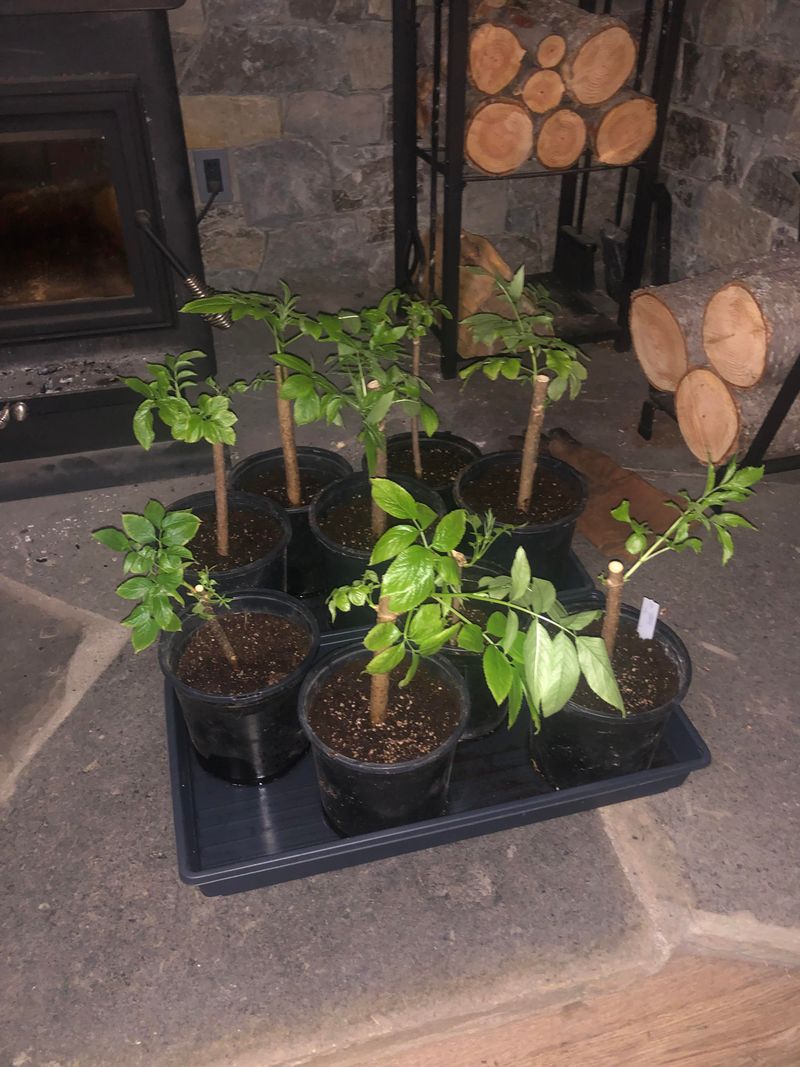
Roots are a milestone, and a happy one, but they are not the finish line. Under suitable conditions, UF/IFAS gives about 4 to 6 weeks for roots to develop, depending on temperature and moisture.
Treat that as a possible window, not a deadline.
Hardwood cuttings can take longer, and Iowa State Extension notes that rooted cuttings may need further growing-on before they go into their permanent spot. A cutting that has leafed out in a pot may still be too small to face weeds, mowers, and dry spells.
A practical approach is to keep young plants in pots or a protected nursery bed for a while. Water them during dry weather and watch for new growth.
Some will thrive, some will lag, and a few will give up.
When a plant looks sturdy, with healthy leaves and a root system that fills its container, it is ready to move. Even then, expect it to spend years growing into a shrub with real presence.
Patience is the real cost of a living boundary, and it pays off slowly.
Choose a site with room and moisture
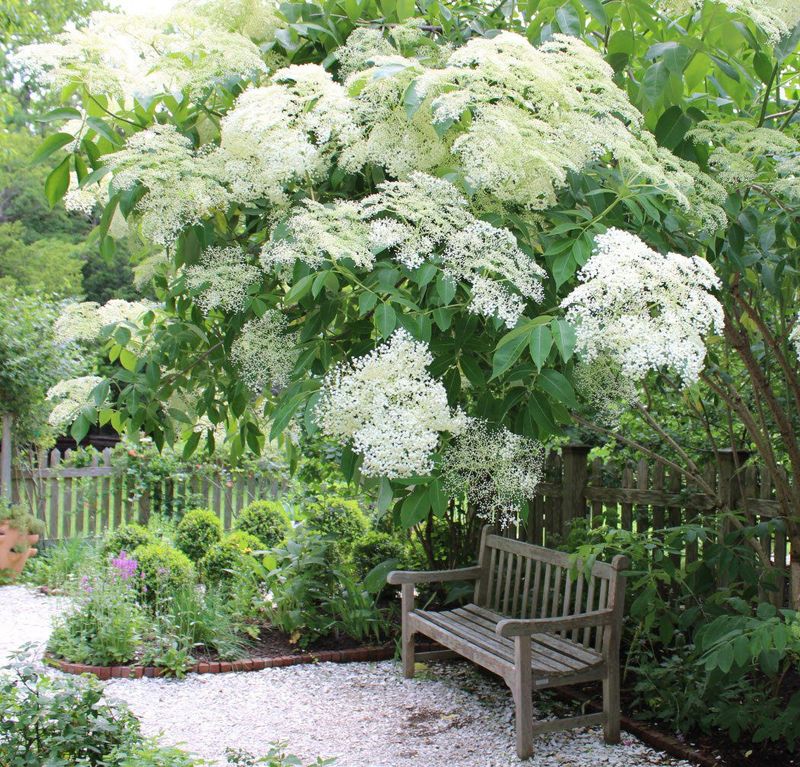
Where you plant matters more than how many cuttings you start. NC State Extension says elderberry tolerates a range of soils but prefers rich, moist soil in sun to partial shade.
A dry, compacted, or deeply shaded fence line may not suit it well.
Consider a low spot where water lingers a bit, or a stretch that gets decent sun. If your boundary is a sunbaked strip of poor soil, think hard before committing a row of plants to it.
Elderberry also spreads by root suckers and can form thickets. New shoots may pop up away from the parent plant, so the border will widen over time.
That is a plus if you want a naturalized screen, and a headache if you want crisp edges beside a lawn or a neighbor’s garden.
With a mature spread of 6 to 12 feet, it needs elbow room. Picture the shrub at full size, then ask whether it fits your property line, power lines, and walkways.
If the answer is no, you have other choices. Buttonbush is another native with wildlife value, but it needs consistently moist to wet soil, so it suits rain gardens and pond edges better than a typical fence.
Support wildlife and preserve nesting stems
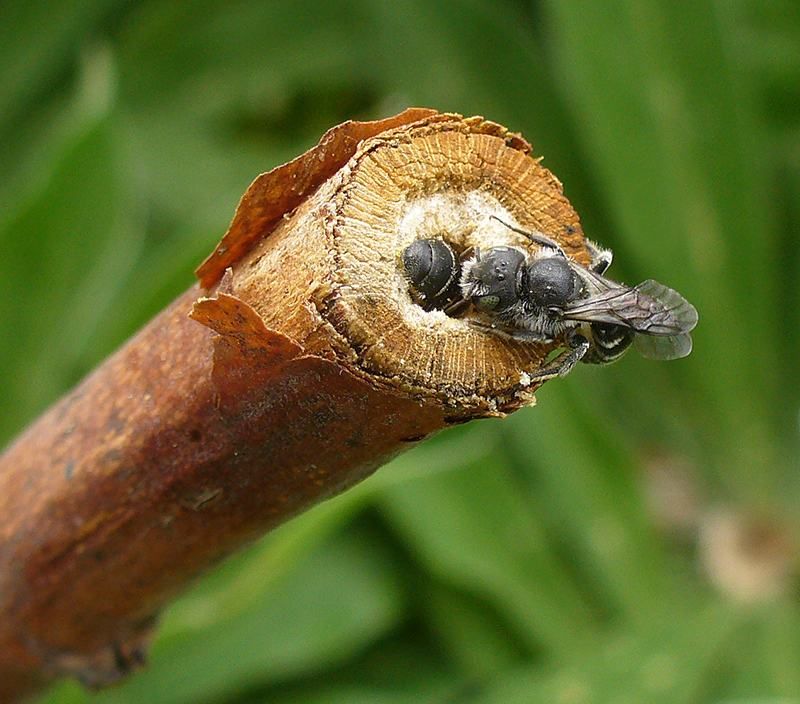
Elderberry earns its space with wildlife value. According to NC State Extension, the flowers attract butterflies and other insects, the fruit feeds songbirds and mammals, and the branches give birds nesting cover.
That makes a mature elderberry border a small habitat strip. Flowers bring pollinators in summer, berries feed birds later in the season, and dense branches offer shelter.
It takes years to reach that level, but every year adds more.
Pruning is where stewardship shows. NC State recommends leaving cut dead stems 12 to 24 inches tall until they disintegrate, because native bees use hollow stems for nesting.
Instead of cutting everything to the ground, leave those short stubs standing.
It is a small change that helps native bees nest in your yard. You can still remove dead wood that crosses a path or blocks a gate, but leave stems at that height wherever they are out of the way.
Keep in mind that parts of this plant are poisonous to people. NC State lists leaves, roots, stems, and fruits, and warns that unripe fruit is more toxic.
This article is about wildlife and propagation, so treat any food use as a separate topic that requires correct identification and proper preparation.
Build a living boundary gradually
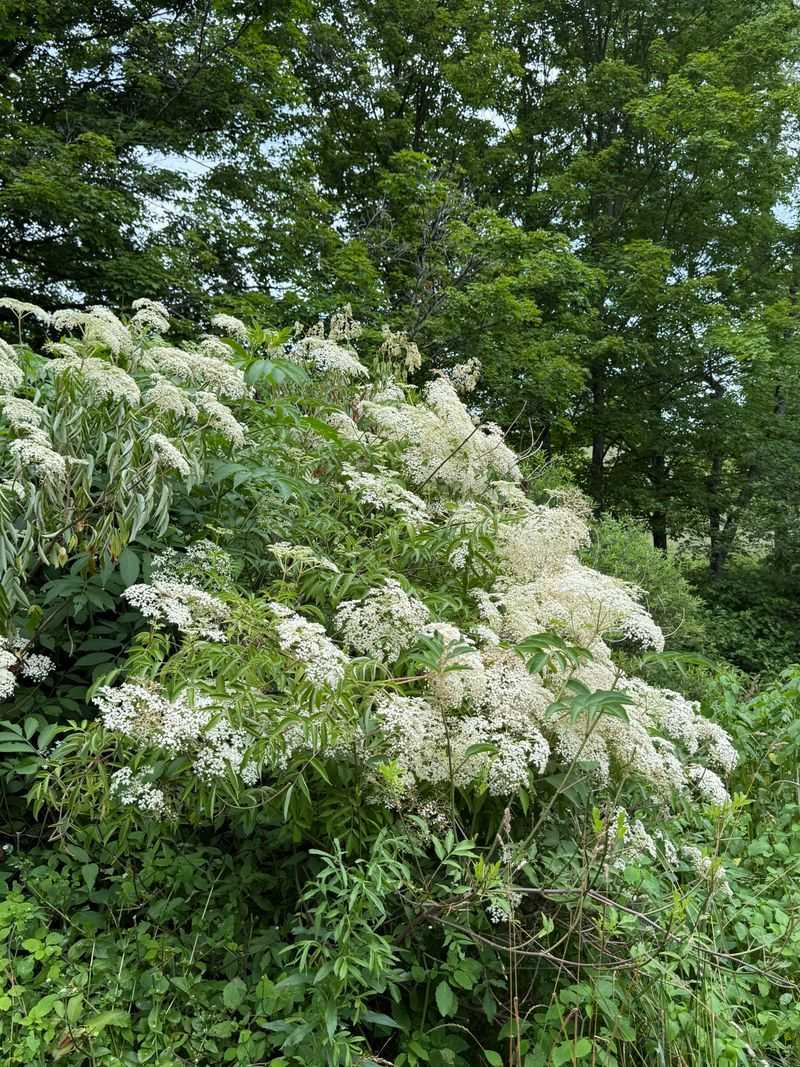
Start with correctly identified dormant cuttings, expect some to fail, and see each rooted plant as the beginning of a boundary rather than an instant fence. UF/IFAS and Iowa State both describe a patient process.
Elderberry suits a loose, wildlife-friendly hedge where the yard offers moisture, sun, and space.
A fence line like this is built in seasons, and the birds will notice before you do.