
Brown, Crispy Hydrangea Leaves in November: Why the Stems Matter More Than the Leaves
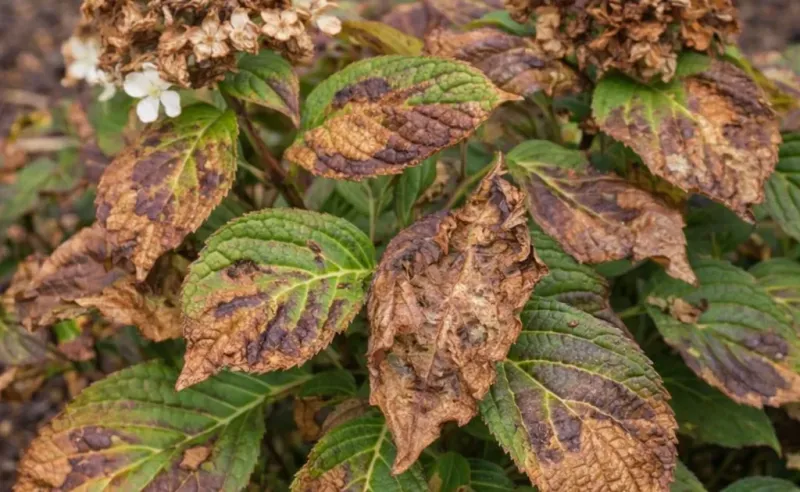
Walk out to your backyard in November and your hydrangea may look scorched, with leaves gone brown and crunchy. It is easy to panic and wonder if you did something wrong.
Often the shrub is simply winding down for winter, but sometimes the leaves are telling you something else. Here is how to tell the difference and which stems to leave alone so next summer’s flowers have a chance.
November does not mean the same thing for every hydrangea
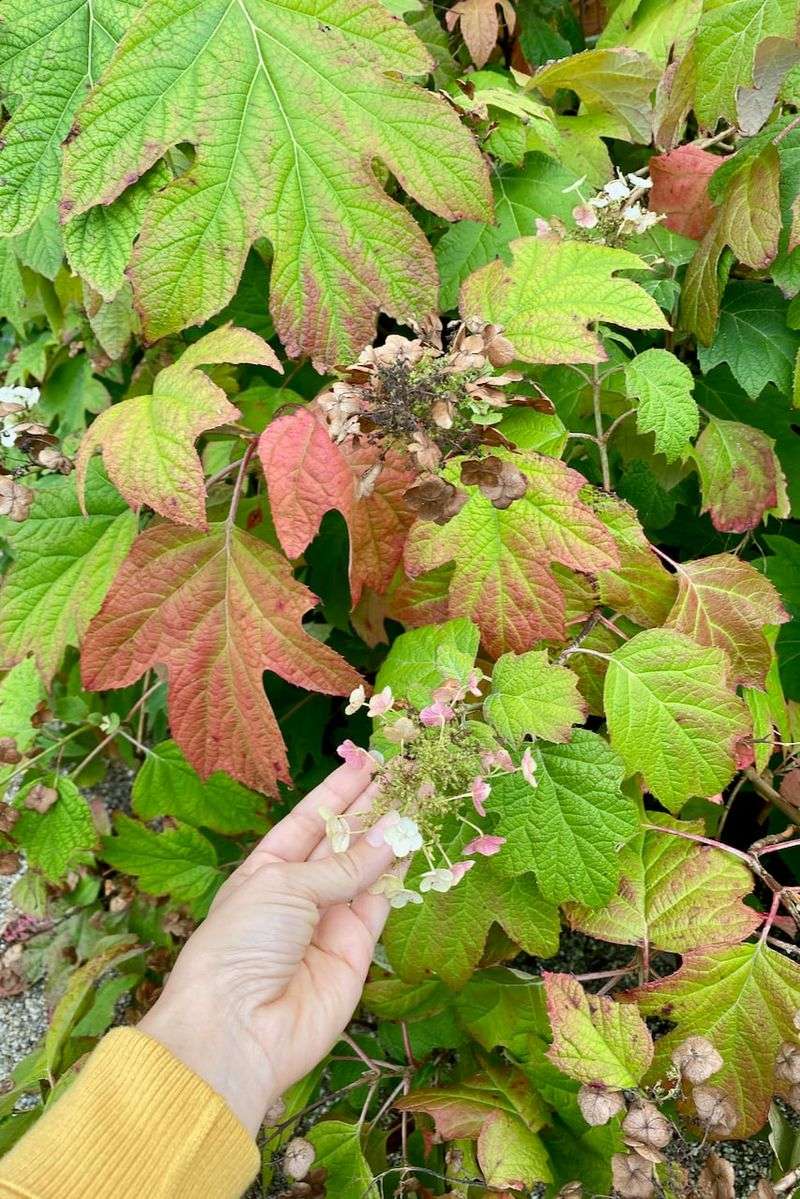
Hydrangeas are deciduous shrubs, which means they are built to drop their leaves at the end of the growing season. As nights cool, some varieties shift to shades of burgundy, bronze, or tan before the leaves fall.
According to University of Vermont Extension, that seasonal color change is a normal part of how these plants grow.
So if your shrub is looking tired as the year winds down, take a breath. Late-season browning and leaf drop can be a sign that the plant is heading into dormancy, which is its winter rest.
The calendar, though, is a poor judge. A gardener in Minnesota and a gardener in Georgia will see very different leaves on the same day in November.
Local weather, an early frost, a warm autumn, and the type of hydrangea you grow all shift the timing. A shrub that is bare in early November in one yard may still be green in another, and both can be perfectly healthy.
That also means a brown, crispy leaf does not automatically tell you the cause. Browning can come from the natural end of the season, but University of Maryland Extension notes that brown leaf edges can also come from scorch or watering problems.
Think of normal fall change as the most likely story when it happens gradually, across the whole plant, at a time when nearby deciduous shrubs and trees are doing the same thing. Browning that shows up early, in patches, or alongside other symptoms deserves a closer look, which we will cover below.
The buds are on the stems, not in the leaves
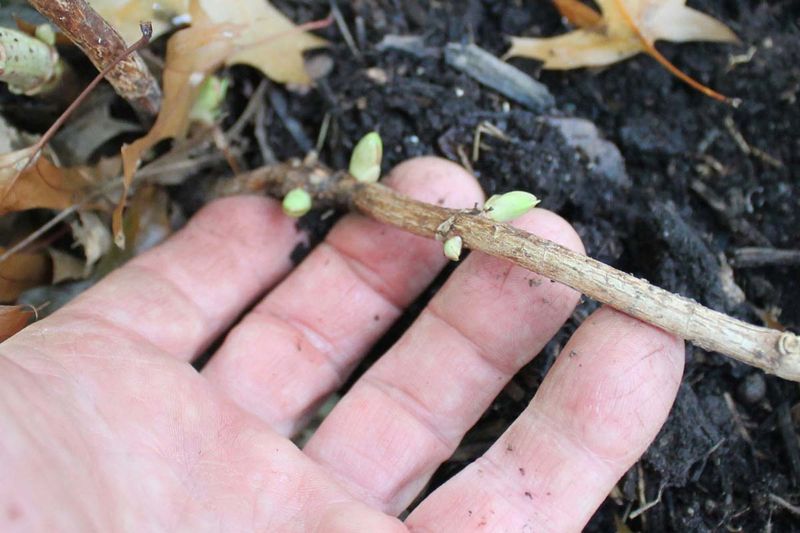
Here is the part the popular advice gets wrong. The leaves are not hiding next year’s flower buds.
On hydrangeas that bloom on old wood, the buds form on the stems and ride out the winter there, whether or not a single leaf is still hanging on.
That matters because the real risk in fall is the pruning shears. If you cut back stems on an old-wood bloomer, you can cut off the buds that would have opened next summer.
According to University of Maryland Extension pruning guidance, those flower buds develop on last year’s growth, which is why timing and stem choice matter so much.
Notice what this does not say. Brown leaves clinging to the plant are not acting as a blanket for the buds, and you do not need to keep them attached.
If they fall off on their own, that is fine. If you rake some up from the ground, that is fine too.
What you want to protect is the wood. Hold off on cutting stems when you are not sure what you have, and let the plant sit quietly through winter.
One honest caution: leaving stems alone does not guarantee flowers. Hard cold snaps, drying winter wind, and a late spring frost can still damage buds even on a plant that was never touched.
Skipping fall cuts simply avoids adding a human-made loss to the weather-made ones.
Which hydrangeas carry next summer’s flowers on old wood?
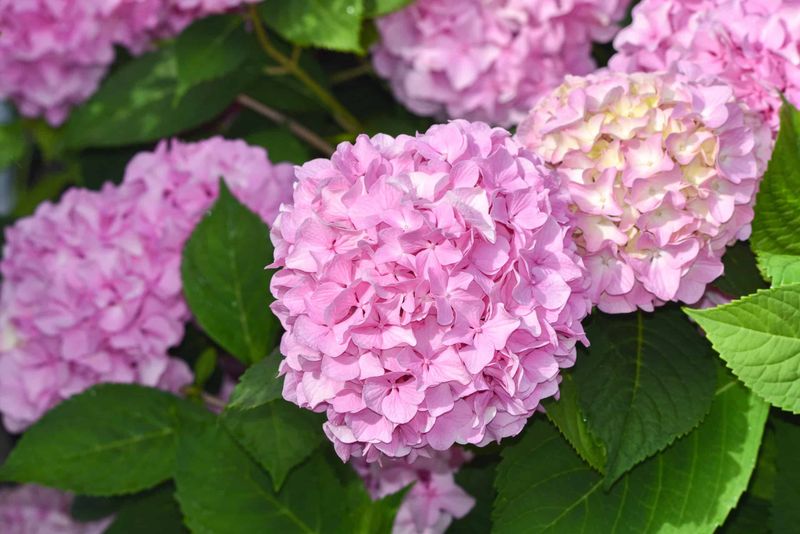
Not every hydrangea works the same way, so a quick sorting helps. Bigleaf (the classic mophead and lacecap types), mountain, and oakleaf hydrangeas generally set their flower buds on last year’s stems.
Those are the ones where a fall haircut can wipe out next summer’s show.
Smooth hydrangeas, such as the white ‘Annabelle’ types, and panicle hydrangeas, with their cone-shaped blooms, are different. They form flower buds on the current season’s growth, so they are more forgiving.
University of Maryland Extension lays out this old-wood and new-wood split and ties pruning timing to it.
Then there are the reblooming cultivars. Some bigleaf and mountain hydrangeas can flower on both old and new wood.
It is tempting to think you can prune those freely, but cutting them back can still remove the earlier flush of blooms that comes from old wood, even if the plant flowers again later on new growth.
You do not need to become a plant detective to use this. If you remember the plant tag, a photo of last summer’s blooms, or the shape of the flower head, you may already know the group.
If you have no idea, that is where the next section comes in, because there is an easy, low-risk move for mystery shrubs.
If you are unsure, skip fall shaping
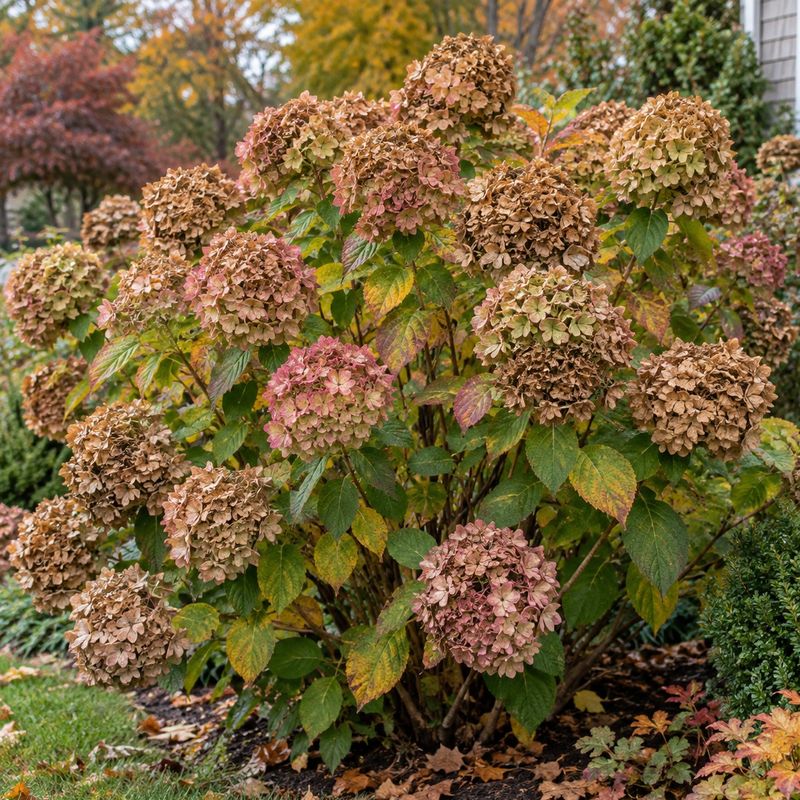
When you cannot say for sure which hydrangea you have, the safest plan is to put the pruners away in fall. Waiting costs you nothing, while a wrong cut on an old-wood bloomer can cost you a season of flowers.
Come spring, the shrub will show you what it needs. Once growth begins, you can tell live stems, which leaf out, from dead ones, which stay bare and brittle.
Bigleaf and mountain types in particular are best assessed after buds start to swell, since winter damage often does not show until then.
Timing for real pruning depends on the type. University of Maryland Extension recommends pruning old-wood hydrangeas just after they finish flowering, and for new-wood types it recommends pruning in late winter.
So pruning is not forbidden, it just has a best window for each group.
What about the faded flower heads? Removing just a spent bloom is optional and is not needed for the plant’s health.
Many gardeners leave them for winter looks. If you do snip, take only the flower head and stop there, because cutting farther down the stem can take off old-wood buds.
A simple routine works well: take a photo of the plant now, note the spot in your garden journal, and plan to identify it when it blooms next summer. That way, next fall you will know exactly what to do.
When crispy leaves deserve a closer look
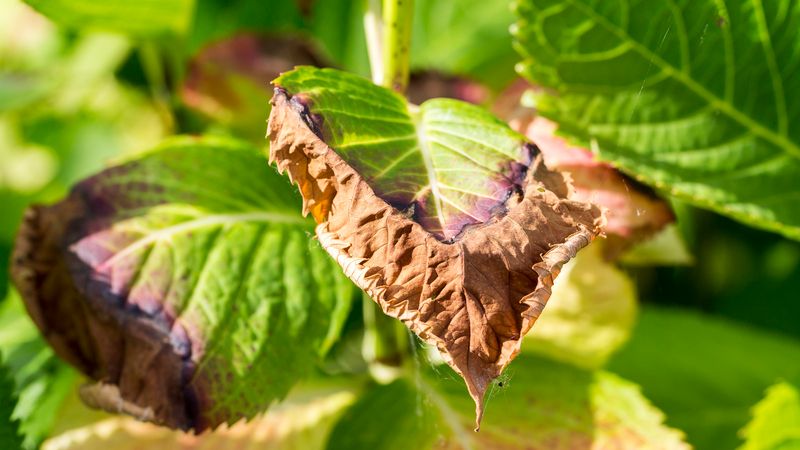
A crunchy leaf by itself cannot tell you what happened. A few clues can help you decide whether the plant is just finishing its year or asking for attention.
Brown, dry leaf margins can point to sun or frost injury, and hydrangeas may also wilt in dry, hot conditions. University of Maryland Extension describes these patterns.
Browning that hit after a cold night, or on the side facing hot afternoon sun, fits that picture.
Water can cause trouble in the opposite direction too. Oregon State University Extension notes that brown edges and leaf drop can accompany overwatering in poorly drained soil.
Poke a finger into the soil near the roots. If it is soggy days after rain, drainage may be part of the story.
Look for these red flags: browning that started well before fall, only one section of the plant affected, leaves that wilt while the soil stays wet, or spots on the leaves.
Spots deserve a specific mention. Late-season fungal leaf spot can show up as tan-to-gray lesions with dark-purple halos.
The good news is that this damage is usually cosmetic and rarely needs treatment. Spotted leaves can be removed, and infected lower leaves can be picked off when symptoms first appear.
None of these clues is a certain diagnosis. They simply help you decide whether to relax or to adjust watering, sun exposure, or drainage next season.
Preserve uncertain stems and check again in spring
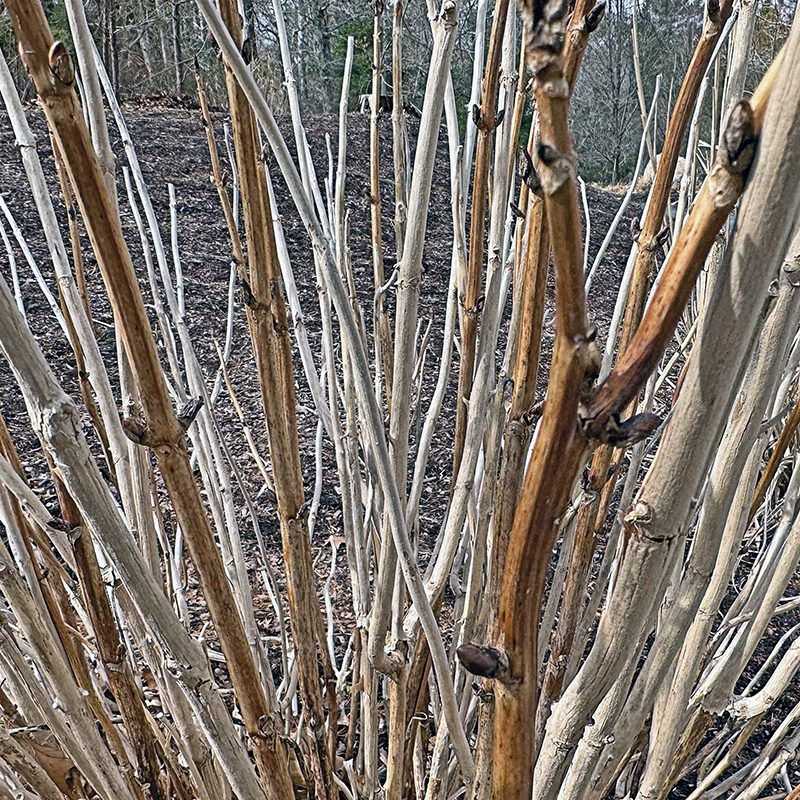
Your plan is simple: let normal leaves fall, skip fall cuts on stems you cannot identify, and judge the plant again in spring instead of pruning because of brown foliage.
Keep two leaf stories separate. Brown leaves still attached to the shrub are not protecting buds.
Fallen leaves packed inside a wire or mesh enclosure around a bigleaf hydrangea are a different winter-protection method, and UNH Extension says they may insulate buds in that setup.
Even then, winter can still win a round. Cold, wind, and late frost can injure buds, so treat flowers as a hope, not a promise.
For pruning timing by type, Maryland Extension’s pruning guide is a handy reference.
A hydrangea that looks wrecked in November often has its best plans tucked into the bare wood.