
Brown Patches Showing Up In Your Lawn After The Leaves Drop? 13 Causes To Rule Out Before Spring
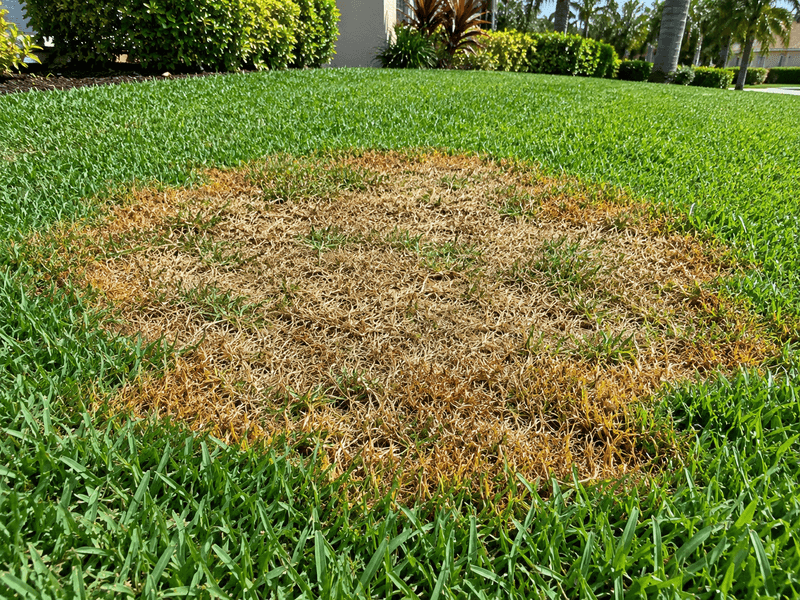
You finally rake up the last of the leaves, and there it is: ugly brown spots scattered across the grass you worked so hard on all year. It is easy to panic and assume the whole lawn is dying.
The good news is that most of these patches have a clear cause, and many are simple to fix once you know what you are looking at. Figuring it out now means your yard can bounce back green and thick when spring arrives.
1. Snow Mold
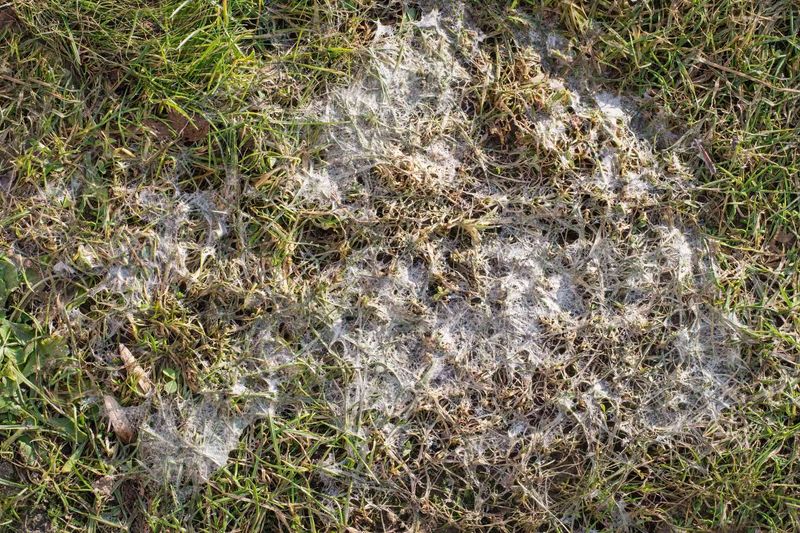
Picture the snow finally melting in March, and underneath you find circles of grass that look like someone laid a gray, cobwebby blanket over them. That crusty, matted look is the classic sign of snow mold, a fungus that loves cold, wet grass hidden under a long snow cover.
Gray snow mold can leave patches up to 3 feet wide, sometimes dotted with tiny tan or brown specks on the blades. Pink snow mold makes smaller white or tan circles, often with a salmon-pink ring at the edges while it is active.
Fescues, bluegrass, and ryegrass are its favorite targets.
Once things dry out, gently rake the matted spots to fluff the grass and let air reach the crowns. Most lawns recover on their own as the weather warms.
Next fall, keep leaves cleared and avoid heavy late fertilizing to help reduce the chances of a repeat.
2. Winter Dormancy
Sometimes the scariest-looking lawn is just taking a nap. Cool-season grasses like Kentucky bluegrass and tall fescue often turn brown once soil temperatures drop below about 45 degrees, and that is completely normal.
Dormancy is a survival trick. The grass pulls energy down into its crown and roots to wait out the cold, so the blades go tan while the plant stays alive below.
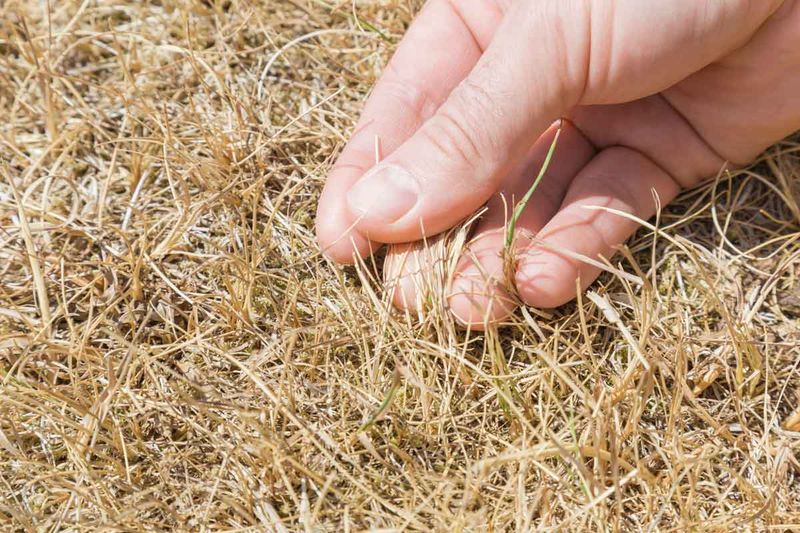
Not sure which you have? Try the tug test.
Grab a handful and pull gently. Dormant grass hangs on tight, while dead grass slides right out with almost no fight.
If yours holds firm, relax and let spring rain and warmth wake it up.
3. Brown Patch Disease
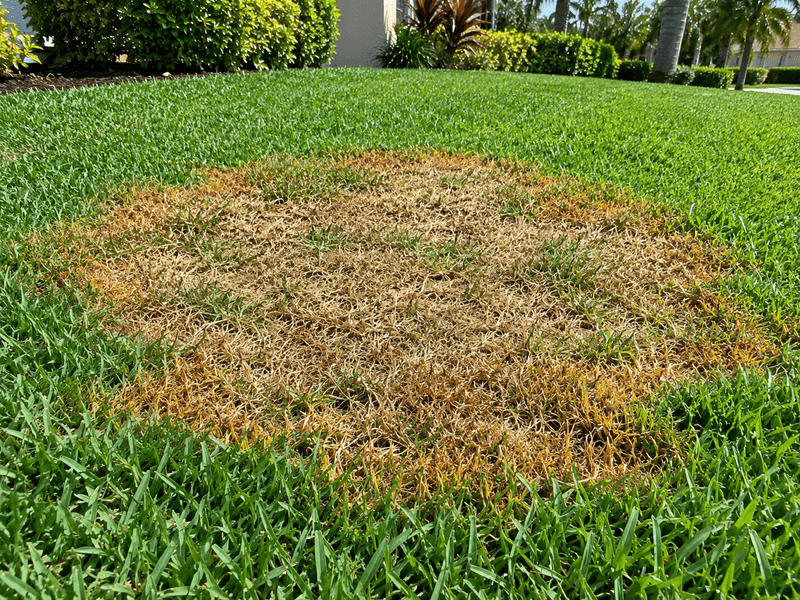
Here is one that catches warm-climate homeowners off guard. Brown patch, also called large patch on warm-season grass, can flare up during mild, humid stretches in fall and even winter.
Look for thinned, light brown circles that range from a few inches to several feet across. St. Augustine, Bermuda, and Zoysia are common victims, and the rings often spread fastest after rainy weeks or evening watering.
Water only in the early morning so the grass dries during the day, and go easy on nitrogen in the cooler months. Improving airflow and drainage can reduce the spread.
For stubborn cases, a lawn fungicide labeled for large patch may help, but cultural fixes come first.
4. Late-Season Drought Stress
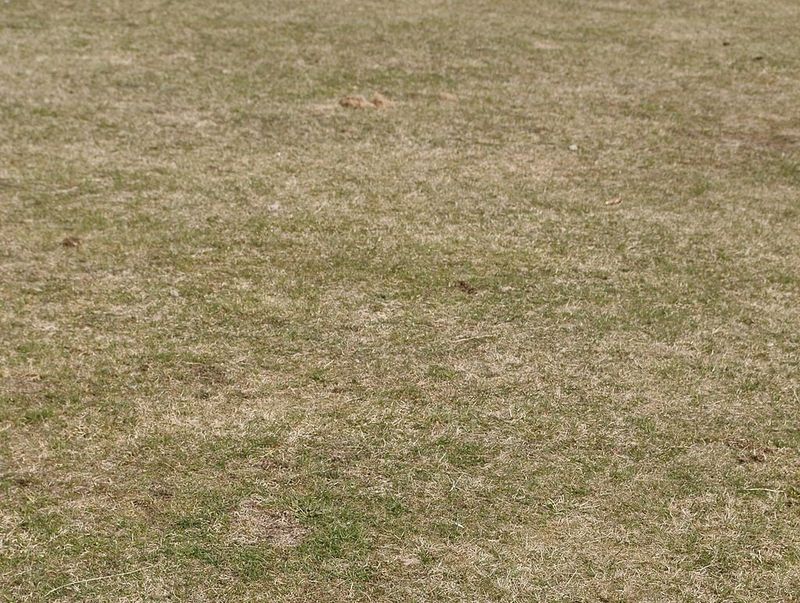
Walk across your yard and look back. If your footprints are still sitting there a few minutes later, the grass is thirsty.
Many people stop watering the moment summer ends, but a dry fall can leave lawns parched heading into winter. Drought stress usually shows up as wide, even areas of browning rather than neat circles.
Give the lawn a deep drink about once a week during dry, unfrozen spells until the ground freezes. Roots that go into winter well-hydrated tend to green up faster and stronger in spring.
5. Compacted Soil
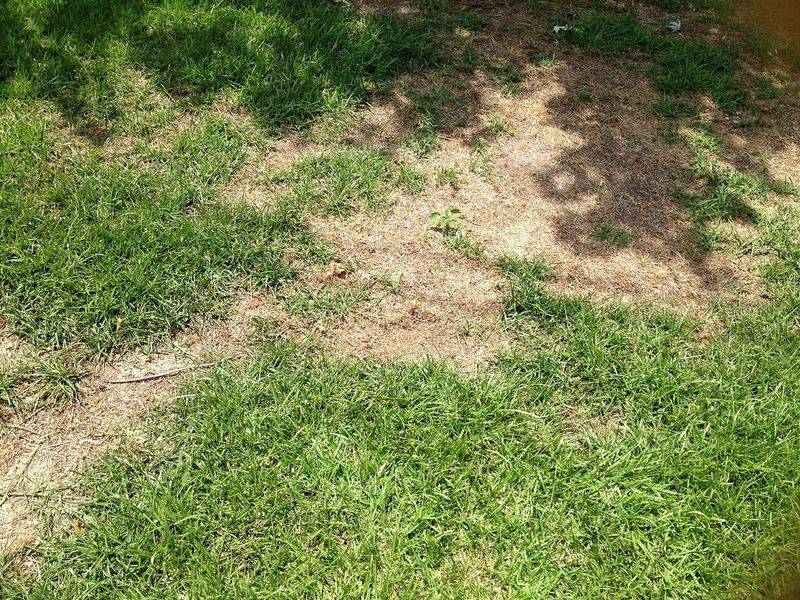
Kids racing to the swing set, the dog patrolling the fence, the shortcut everyone takes to the garage. All that traffic squeezes soil tighter than a packed suitcase.
When soil gets compacted, roots cannot reach air, water, or nutrients, so the grass above turns weak and patchy. Dense clay makes the problem worse, and winter freeze-thaw cycles can tighten things up even more.
Try pushing a screwdriver into the ground. If it fights you in one spot and slides easily in another, you have found the culprit.
Core aerating in fall or early spring loosens things up, and a stepping-stone path can protect your busiest routes.
6. Excess Thatch Buildup
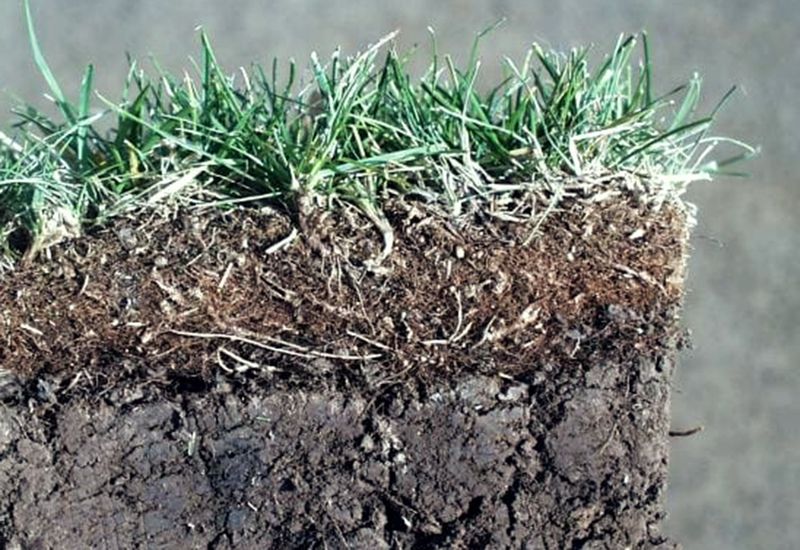
Thatch is a bit like the lint trap in your dryer. A thin layer is fine, but let it pile up and things stop working.
That spongy mat of dead stems and roots sits between the grass and the soil. Once it gets thicker than about half an inch, it blocks water and nutrients and gives fungi like snow mold a cozy place to hide over winter.
Cut out a small wedge of turf to measure it. If it is thick, dethatch with a rake or machine when the grass is actively growing, then overseed thin spots.
7. Grub Damage
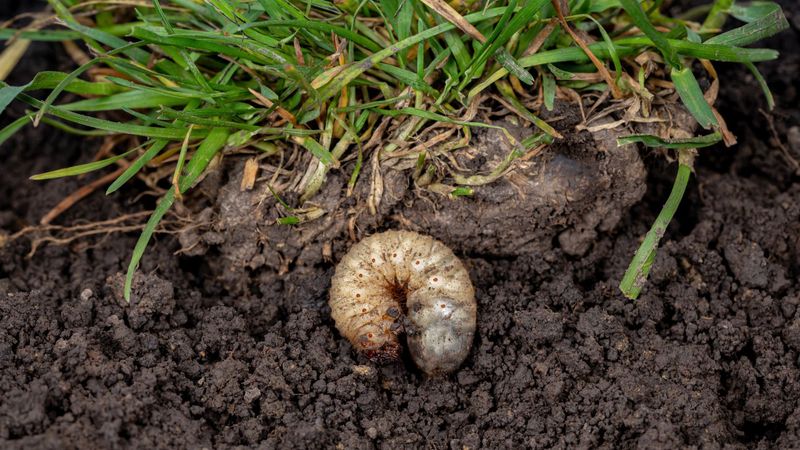
Grab a brown patch and pull. If it rolls back like an old rug, you probably have grubs.
These C-shaped white larvae of beetles chew grass roots just below the surface, usually from late summer into November. The damage often stays hidden until fall or even after winter, when the dead turf finally gives itself away.
Skunks, raccoons, and birds digging up your yard are another clue.
Count the grubs in a square foot of soil. More than five to ten usually means action is needed.
Treatments work best in late summer when grubs are young, so mark your calendar now.
8. Salt and Ice Melt Burn
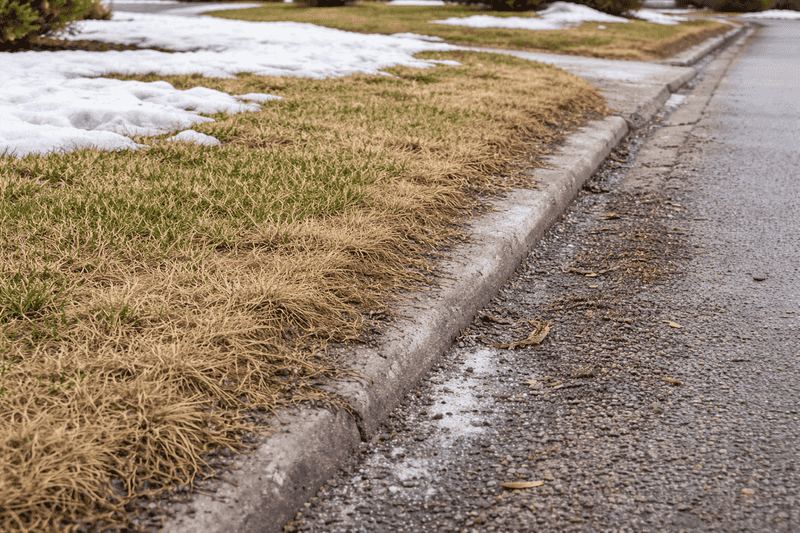
Notice a brown strip running right along your driveway or sidewalk? Winter salt is a likely suspect.
Ice melt and road salt pull moisture away from grass roots and can burn the edges of your lawn. Shoveling salty snow onto the grass makes it even worse.
Switch to a pet-safe, lawn-friendly ice melt and toss snow somewhere other than the turf when you can. In spring, flush the damaged strips with plenty of water to rinse salt deeper, then reseed.
Adding gypsum may help some soils recover.
9. Fall Mowing Mistakes
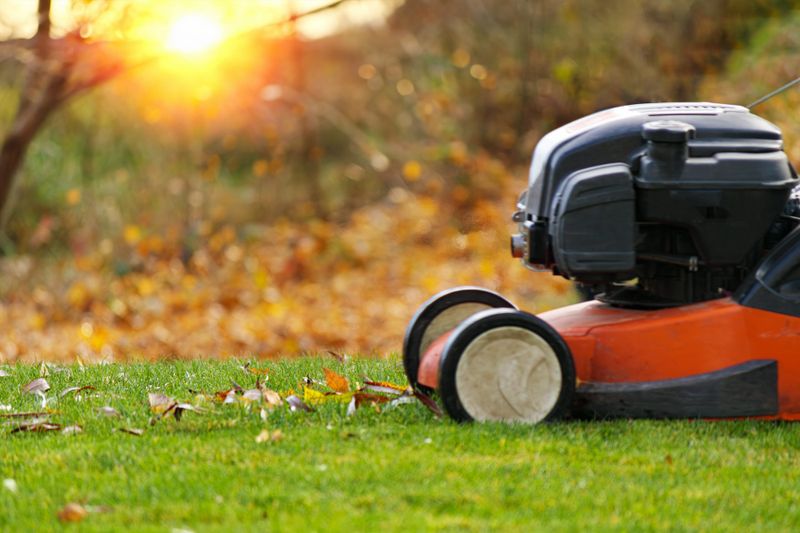
That last mow of the year matters more than most people think. Scalping the grass too short leaves it stressed and open to winter damage.
On the flip side, leaving it shaggy can trap moisture under snow and invite mold. For most cool-season lawns, a final height around 2.5 to 3 inches strikes a nice balance.
Look closely at the blade tips too. Ragged, whitish ends mean a dull mower blade tore the grass instead of slicing it.
Sharpen it before your first spring mow.
10. Poor Drainage and Soggy Spots
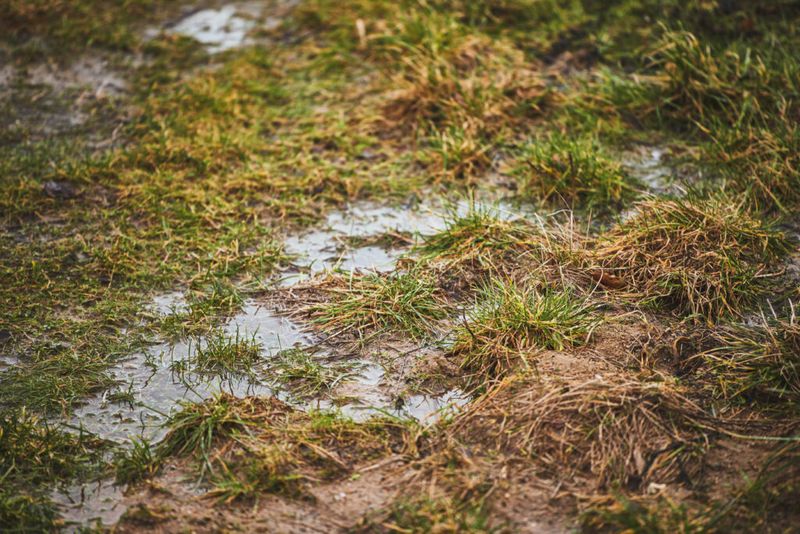
Every yard seems to have that one low spot where puddles linger long after the rain stops. Grass sitting in soggy soil basically drowns.
Waterlogged roots cannot breathe, and the constant dampness feeds fungal problems. In fall and winter, slow evaporation makes these areas stay wet even longer.
Aerating helps water soak in, and filling low spots with a topsoil and compost mix can level things out. For serious pooling, redirecting downspouts or adding a simple French drain may be the real fix.
11. Leaves and Debris Left Behind
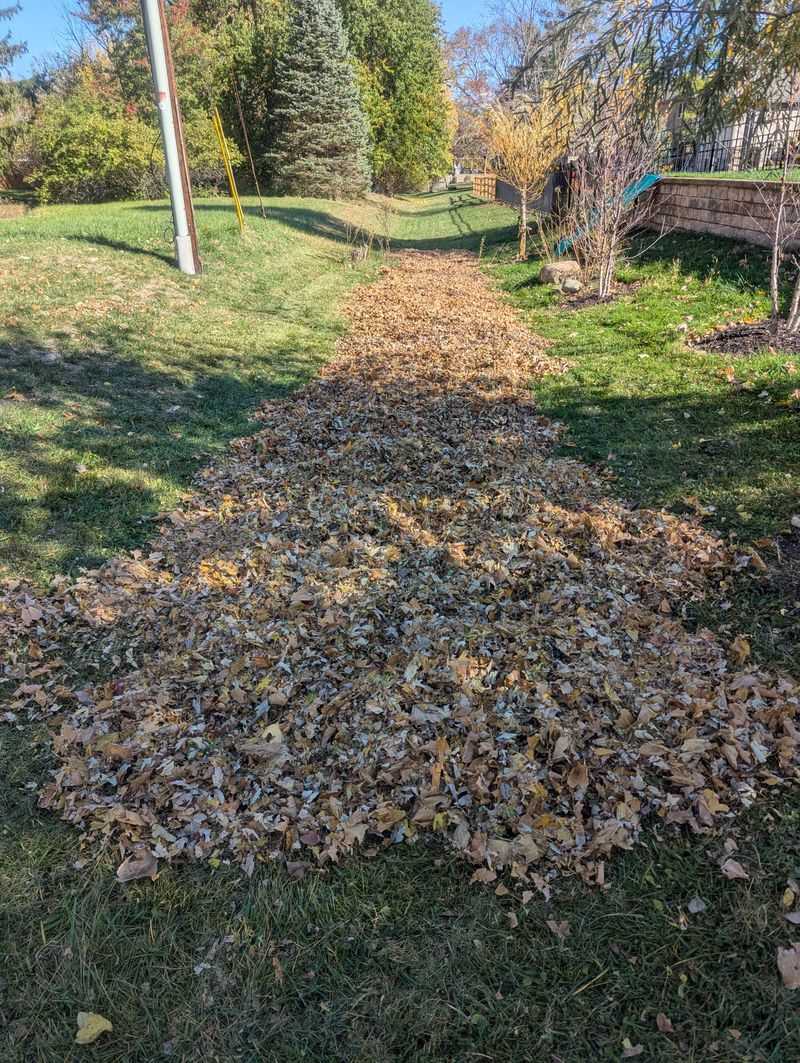
Remember that pile of leaves you meant to get to in November? Lift it up in spring and you may find a pale, sickly square of grass underneath.
Wet leaves, sticks, and stray toys block sunlight and hold moisture against the grass. That is the perfect setup for snow mold and slow spring green-up.
Rake or mulch-mow leaves regularly through fall rather than all at once. Chopped leaves in a thin layer can actually feed the soil, but a thick mat smothers it.
12. Fertilizer or Chemical Spills
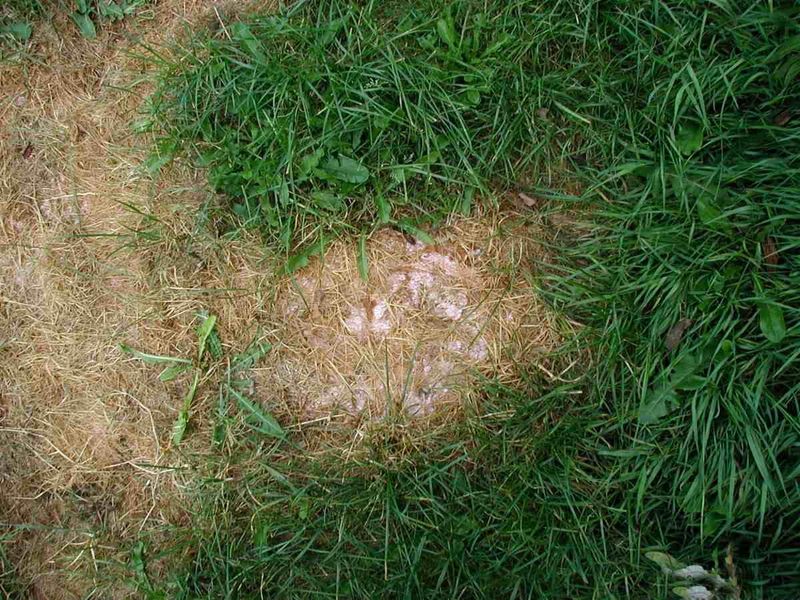
Straight lines rarely happen in nature. If you see brown stripes or a perfectly shaped dead spot, think back to your last fertilizer run.
Spills from a spreader, overlapping passes, or a leaking gas can can scorch grass fast. Late fall feedings are common, so these marks often show up right as leaves drop.
Scoop up any visible granules and soak the area deeply to dilute what remains. Reseed once the soil recovers, and fill spreaders on a driveway next time.
13. Pet Urine Spots
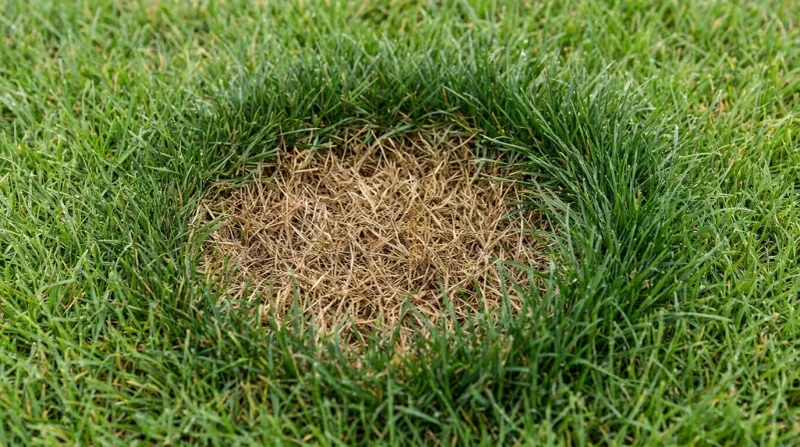
Your dog loves the lawn, maybe a little too much. Small round brown spots ringed with extra-green grass are a telltale sign of urine damage.
The high nitrogen in dog urine burns the center while the edges get a fertilizer boost. Because it happens year-round, it is easy to confuse with winter diseases.
Watering the spot right after your pup goes helps dilute it. Training your dog to use one mulched corner can also save the rest of the yard.
Reseed damaged spots in spring.