
Why a Cardinal Keeps Attacking Your North Carolina Window in Winter
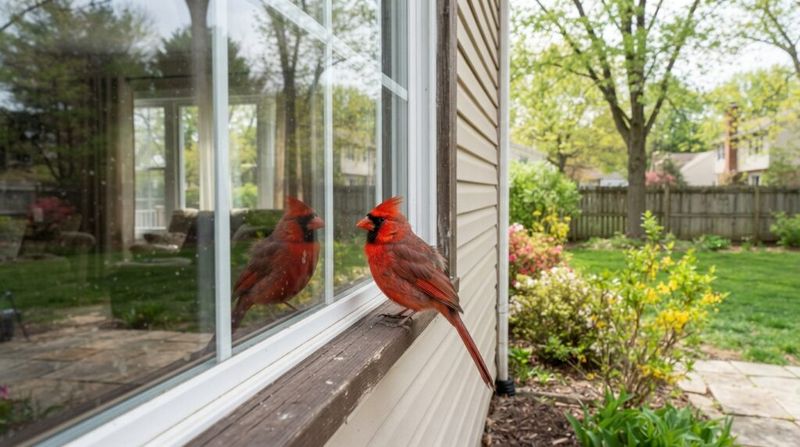
A flash of red keeps slamming into your kitchen window, and the bird just will not quit. Many North Carolina homeowners see this in winter and wonder what is going on.
The answer is more down to earth than you might expect, and it comes with simple steps that protect the bird. Here is what the behavior may mean, what it cannot tell you, and how to keep your yard safe for cardinals.
A cardinal at a North Carolina home in winter is not a nesting forecast
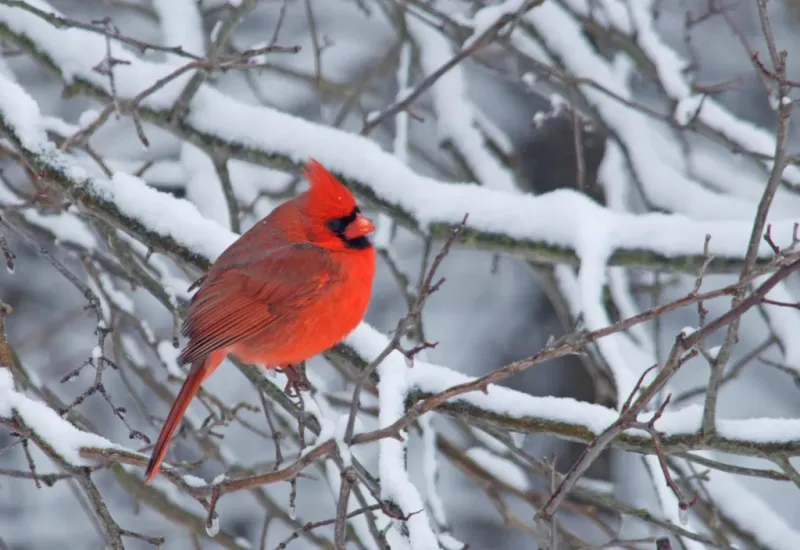
Seeing a cardinal in January feels like a gift, but it is also completely ordinary. According to the North Carolina bird records, Northern Cardinals live in the state in every season.
Whether you are in the Piedmont, the Coastal Plain, or the mountain foothills, these birds do not pack up and leave when the weather turns cold.
What does change is how they group up. As Cornell Lab describes in its Northern Cardinal life history, cardinals often form flocks in fall and winter, while pairs are more typical during the breeding season.
So the group of red and brown birds crowding under your feeder in February is just what winter usually looks like for this species.
That is why a winter cardinal at your house, even one that keeps returning to the same window, is not a forecast for spring. A bird that visits your yard often may nest nearby, or it may nest several streets away.
Nothing about a winter sighting points to a specific shrub, tree, or porch corner.
Keep that in mind as you read on. The bird at your window deserves attention and a practical response, but it does not come with a nesting prediction attached.
Think of it as a regular neighbor doing something puzzling, and the rest of this article helps you figure out what that puzzling thing is and how to handle it.
A window attack and a collision are different behaviors
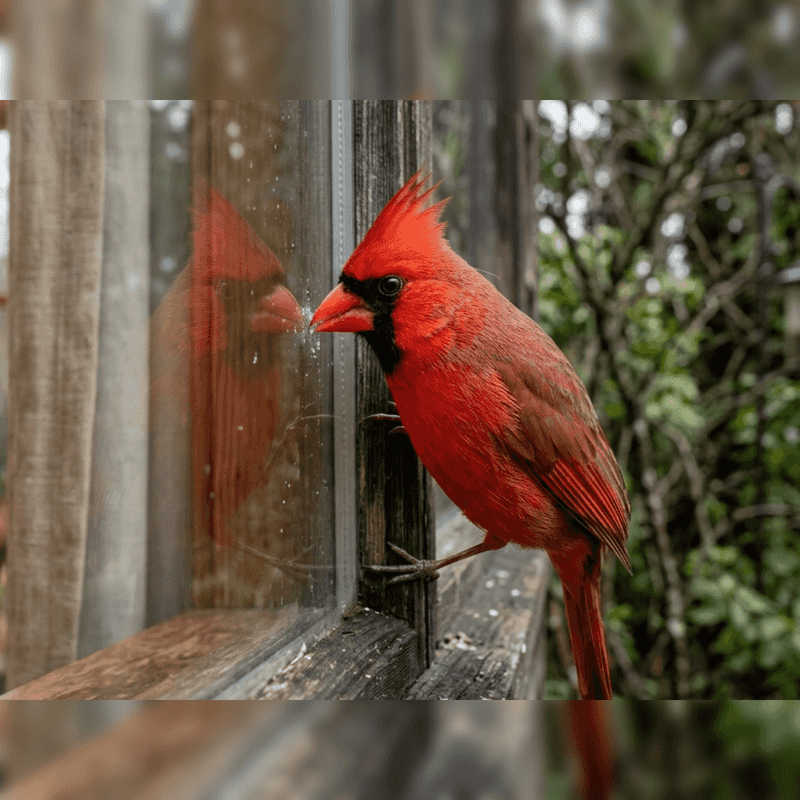
Picture a cardinal hovering at the glass, flapping and pecking again and again. That is a reflection attack.
The bird may mistake its reflection for a rival and try to chase it off, which is a far cry from a bird that simply did not see the glass.
A collision is a different event. It happens when a bird flies into glass it mistakes for open sky or habitat, like a reflected tree line or a view straight through a room.
As the Cornell Lab explains in its guide to why birds hit windows, reflection aggression is seldom a survival threat, while real collisions can cause serious or fatal injuries.
Notice that we say the bird may mistake its reflection for a rival. We cannot know what it understands, and Environment and Climate Change Canada does not claim the bird is thinking anything in particular.
It is a grounded way to describe what we see, nothing more.
Here is a quick clue for telling them apart. If the bird returns again and again to the same pane and stays there fighting, think reflection attack.
If you hear a single thud and find a stunned bird, think collision. The fixes are not the same, so one treatment will not necessarily solve both problems.
The next sections take them one at a time.
Year-round territorial defense does not prove a spring nesting claim
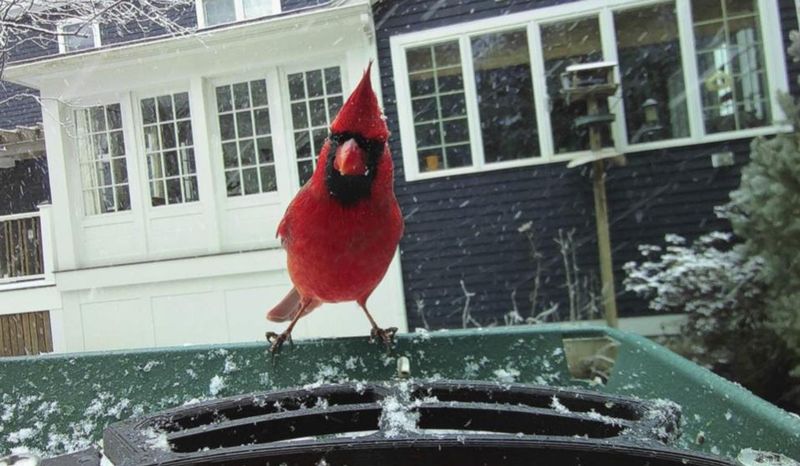
Here is where the story gets tricky. Cardinals in the southeastern United States can defend territories all year.
A master’s study from Southern Mississippi, Territorial Defense Strategies in the Northern Cardinal, found year-round territory occupancy and defense.
That sounds like it settles the question, but it does not. The study measured how birds responded to recorded songs.
It did not look at window attacks, and it did not follow birds to see where they nested later.
Timing matters too. Cornell Lab notes that reflection attacks are most frequent in spring, when territorial behavior runs high.
A winter attack can still happen, but it is not the typical season for it.
Then there is the flocking side of winter. As the Cornell life history page reports, many cardinals gather in groups in the cold months.
So not every winter cardinal is guarding a breeding territory.
Put it together and you get an honest answer. Territorial defense is real and can continue through winter.
But a single bird fighting your window tells you nothing certain about its motive that day, and nothing about where it will nest. Treat it as a behavior to manage, not a message to decode.
Block the reflection on the outside of the problem window
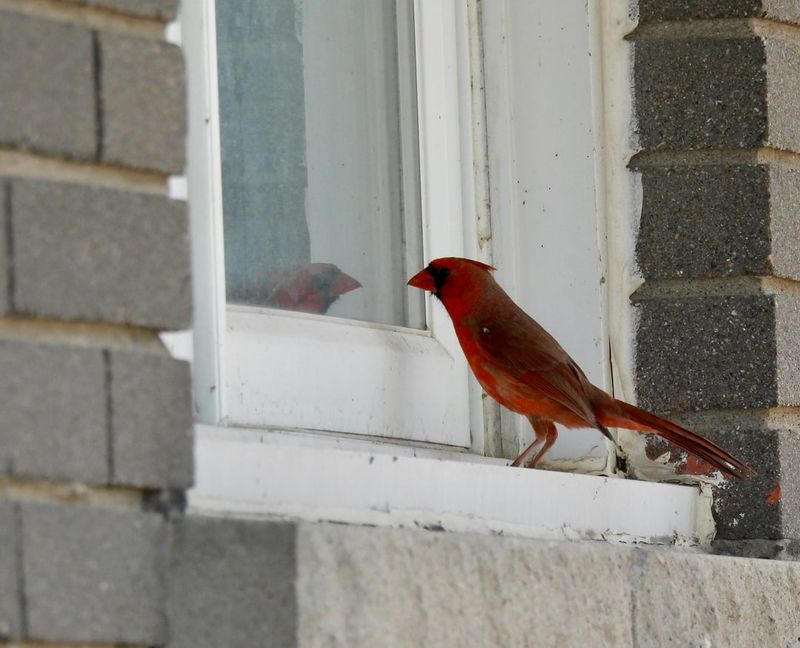
If your cardinal keeps fighting one particular pane, the goal is simple: take away the reflection. The Indiana Department of Natural Resources advises placing the treatment on the outside, between the bird and the glass.
Covering the inside does little, because the glass still mirrors the yard.
You can do this this weekend with things you likely own. Tape sheets of paper, cardboard, or cloth over the outside of the affected pane.
An outdoor covering such as a light screen or a hung sheet also works, as long as it breaks up the mirror effect.
Keep it temporary. Leave the cover up for several days, then peek to see whether the bird has moved on.
If it returns when you remove the cover, put it back for a while longer.
Stick to the one window the bird is using. Cardinals sometimes switch to a nearby pane, so check your car mirrors and side windows too.
One caution: this fix targets the apparent rivalry only. It is not a full collision plan for the rest of your house.
Opaque paper stops the fight at one pane, but other large windows may still pose a hazard, which is the topic of the next section.
Make collision-prone glass visible across the hazardous pane
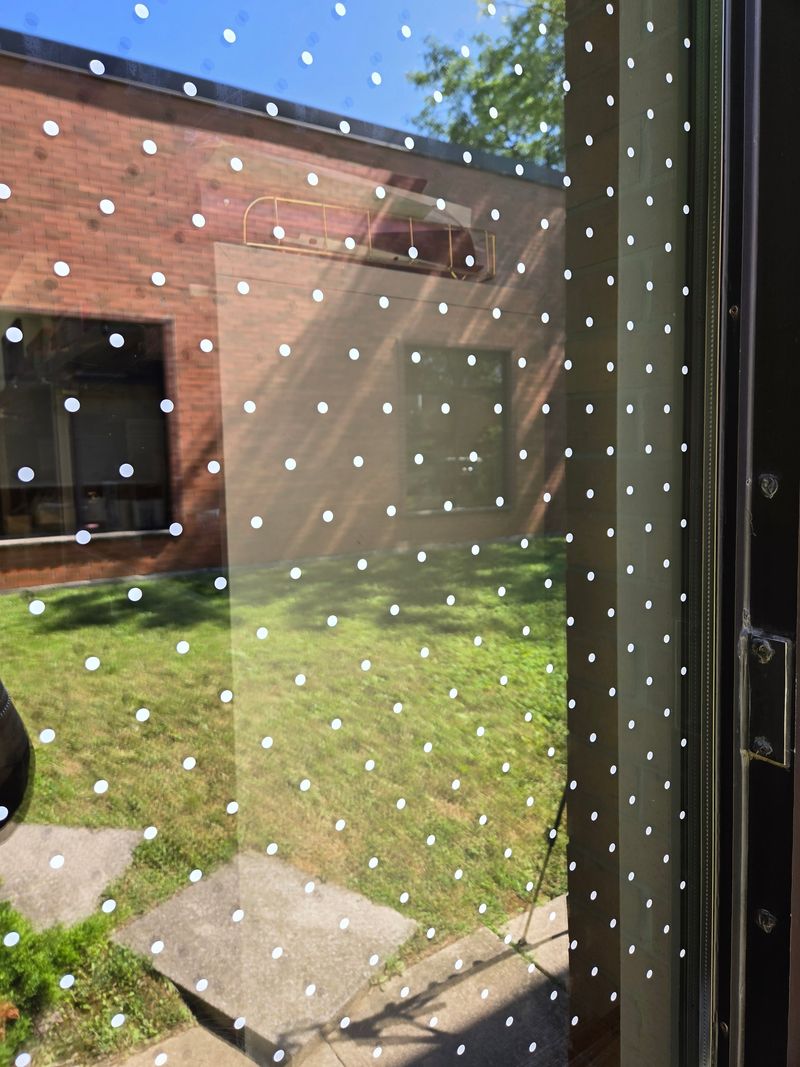
Collision prevention is its own job. One strong option is an exterior insect screen, which reduces reflections and cushions a bird if it does hit.
Many homeowners already have screens or can add them to the worst panes.
If you prefer tape, decals, or paint, the details matter. The American Bird Conservancy advises covering the hazardous pane with a visible pattern and leaving gaps no wider than 2 inches.
That is about the width of two fingers.
Choose the panes that worry you most. Large windows that reflect trees or sky, glass that lines up with another window so you can see through the house, and panes near shrubs and feeders are good places to start.
Put the pattern on the outside surface so it sits where the reflection forms.
Skip the shortcuts. A few scattered decals or one hawk silhouette leaves wide open gaps, and birds can still fly toward them.
It is the spacing across the whole pane that matters, not the shape of the sticker.
A treatment that looks busy to you may still leave room for a bird to aim at. Measure a few gaps before you call the job done.
Treat feeder placement as collision guidance, not a fix for reflection attacks
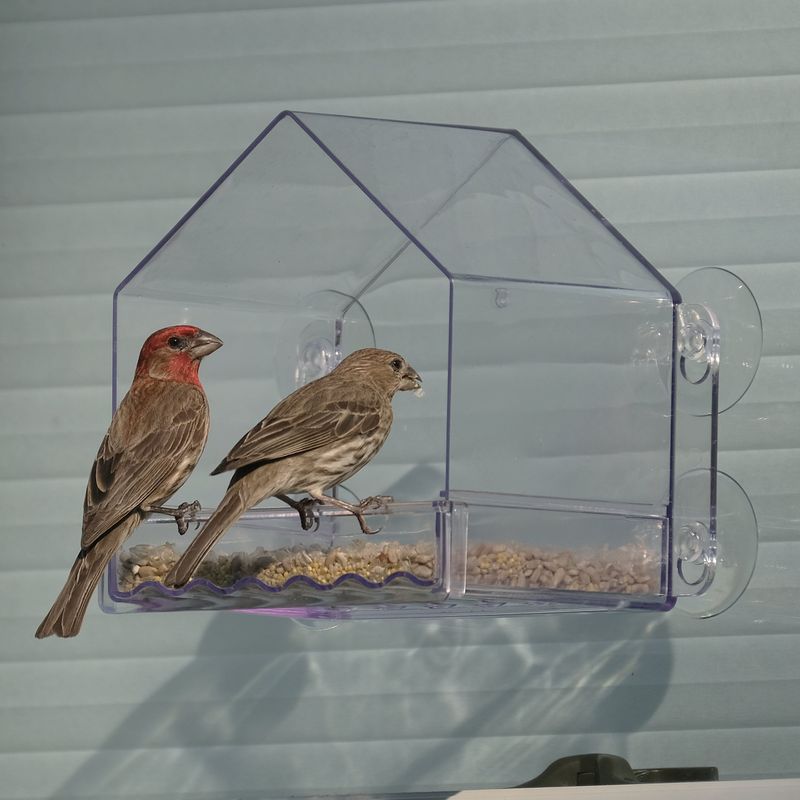
Feeders often sit right where our windows are, so placement deserves a look. Clemson Extension recommends putting feeders either within 3 feet of a window or more than 30 feet away, in its factsheet Reducing Bird Strikes at Your Home.
This advice is about collisions, not reflection fights.
The close option works by limiting speed. A bird taking off from a feeder 3 feet from the glass cannot build up much momentum, so an impact is less likely to cause harm.
It does not prevent every collision, and birds can still strike the glass.
The far option needs a caveat. The Canadian evidence reviewed, discussed by Environment and Climate Change Canada, tested distances only up to 10 meters, about 33 feet.
It did not establish that greater distances are safe, so treat 30 feet as guidance rather than a guarantee.
Do not expect moving a feeder to calm a cardinal that is attacking its reflection. That bird is reacting to the glass, so the exterior cover from earlier is the tool for that problem.
Use feeder placement as one layer of collision care, and pair it with visible patterns on the panes nearby.
Contact a rehabilitator if a collision leaves a bird injured
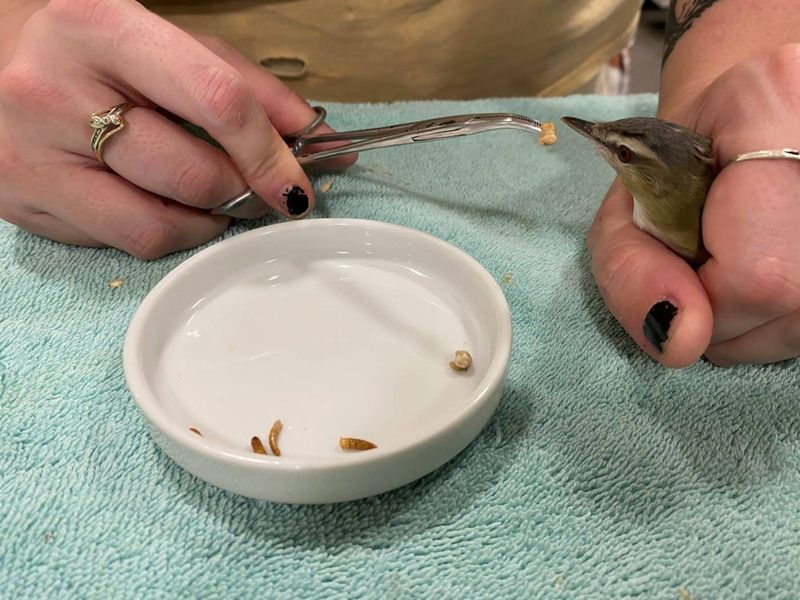
Sometimes a thud is followed by a bird on the ground. If it shows visible injury or cannot fly, call a licensed wildlife rehabilitator.
North Carolina has many, and your local wildlife agency can point you to one.
While you arrange help, you can contain the bird briefly. Audubon suggests a ventilated box kept in a quiet place.
Do not offer food or water, and do not keep the bird as a pet.
Resist the urge to relax just because a dazed bird flies off later. Cornell Lab’s window collision guidance cautions that a bird that looks recovered may still be hurt.
If it showed signs of injury or ongoing impairment, a rehabilitator is the right call.
Remember the two-track plan. Covering the outside of one pane stops a reflection fight, while screens or dense patterns tackle collision hazards across your home.
Your winter cardinal may be a mystery, but your yard can be a safer place for every bird that visits.