
Clover Popping Up In Your Lawn May Feed Your Grass Over Time, So Think Before You Pull It
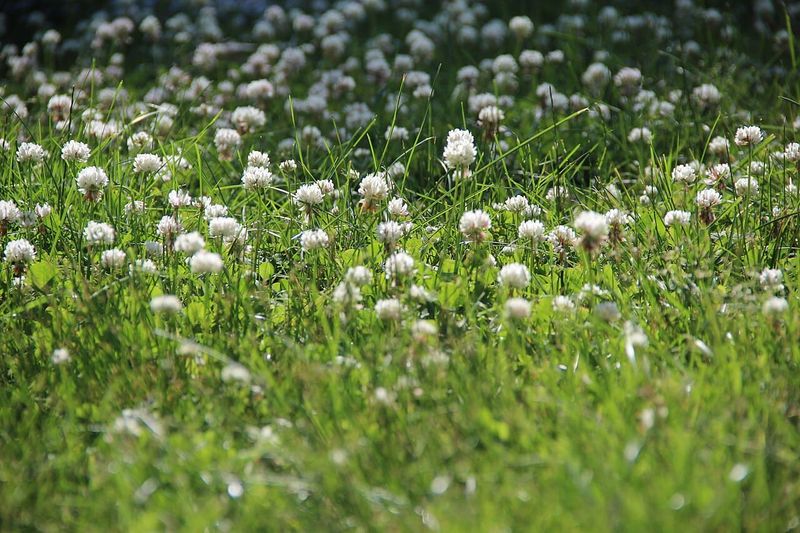
That little patch of three-leaf clover in your lawn is doing something most weeds cannot. With help from soil bacteria, it pulls nitrogen out of the air, and some of that nitrogen can end up helping nearby grass.
The benefit is slow and varies a lot from lawn to lawn, so clover is not a magic fertilizer bag. Here is what is known, so you can decide whether to keep it or pull it.
Clover fixes nitrogen with help from bacteria
Walk across a lawn on a summer morning and you will probably spot white clover, with its rounded leaves and puffy white blooms. Hidden underground, it runs a partnership most lawn plants cannot match.
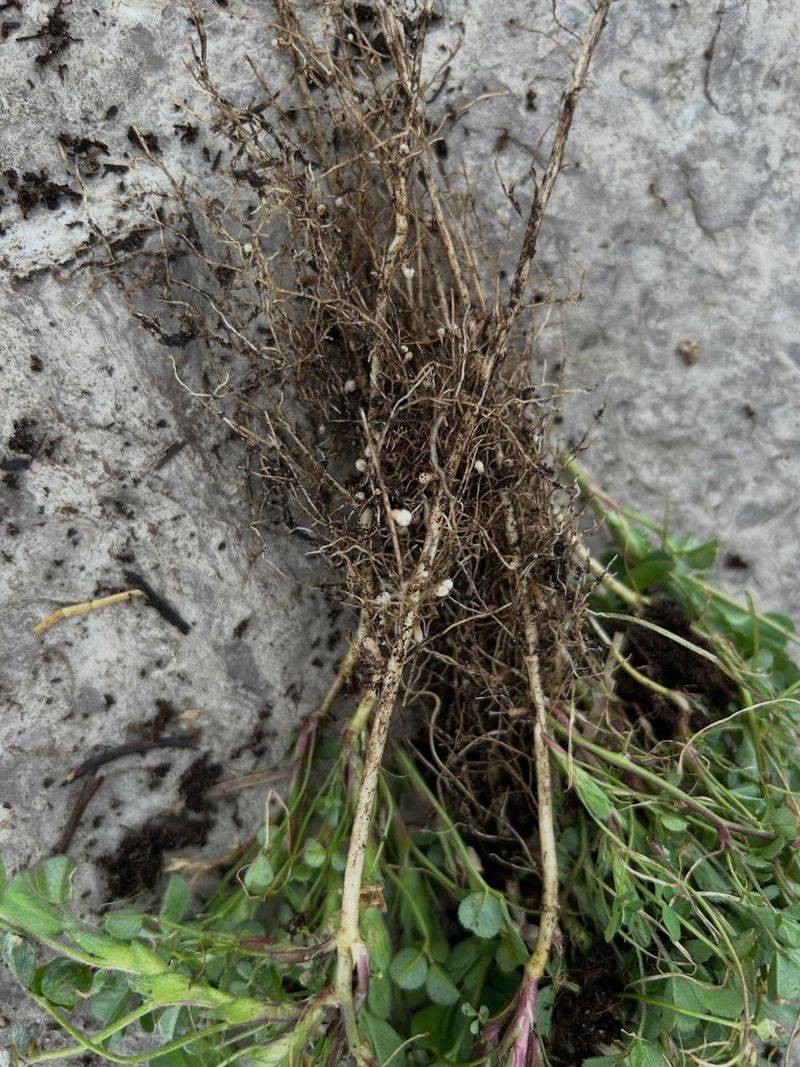
Clover roots host Rhizobium bacteria, and together they turn nitrogen gas from the air into a form the plant can use.
Air is about 78 percent nitrogen, but grass cannot use it in that form. The USDA NRCS white clover plant guide describes this relationship, in which the bacteria live in small nodules on the roots.
The clover gives the bacteria sugars, and the bacteria give the clover usable nitrogen.
That process is the reason clover can sometimes help a lawn. But fixing nitrogen is not the same as handing it to your grass.
The nitrogen first goes into the clover’s own leaves, stems, and roots, and only some of it becomes available to neighbors later.
Deliberately seeded microclover mixes are the lawn setup researchers have looked at most closely. University of Maryland Extension describes microclover as a possible organic nitrogen source for turf.
Think of it as a slow, partial contribution that depends on your lawn, not a switch that turns on free feeding.
How does that nitrogen reach the grass?
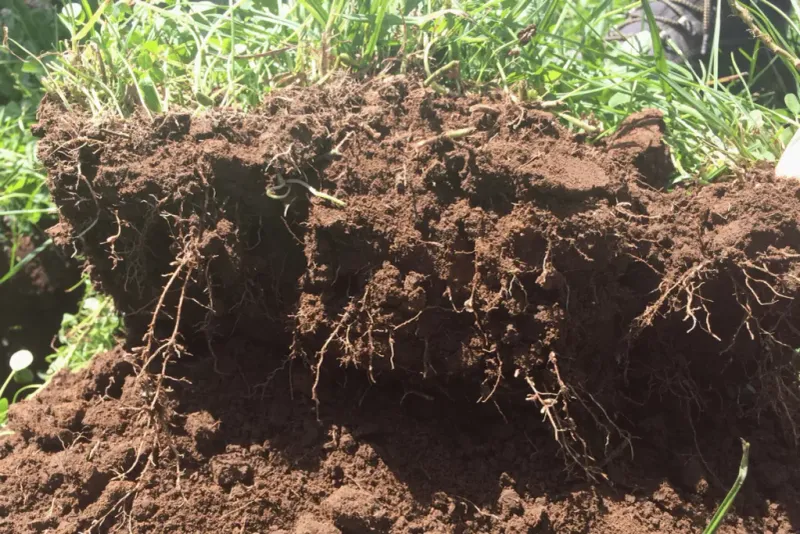
Nitrogen can move from clover to grass in a few ways. Clover roots release some nitrogen compounds into the soil, and grass roots growing nearby can take them up.
Old clover leaves, stems, and roots also break down over time, and as they decompose they release nitrogen back into the soil.
Researchers have measured this movement. A peer-reviewed study at three Northern European field sites tracked nitrogen transfer in grass and white clover mixtures and found it varied by place and by season.
The amount shifted with the site and with how the plots were managed.
Those fields were grass and clover grown for forage, not typical American backyards. So the study shows that transfer is real, but it cannot tell you how much nitrogen your own lawn will get.
Your soil, climate, mowing habits, and grass type all change the picture.
The USDA guide also notes that grass and legume mixes behave differently from either plant alone. A practical way to think about it: if your lawn has a healthy mix of grass and clover, some nitrogen is probably moving around over time.
How green your grass gets from it is something you can only judge by watching your own turf across seasons.
A clover patch does not guarantee a fertilizer-free lawn
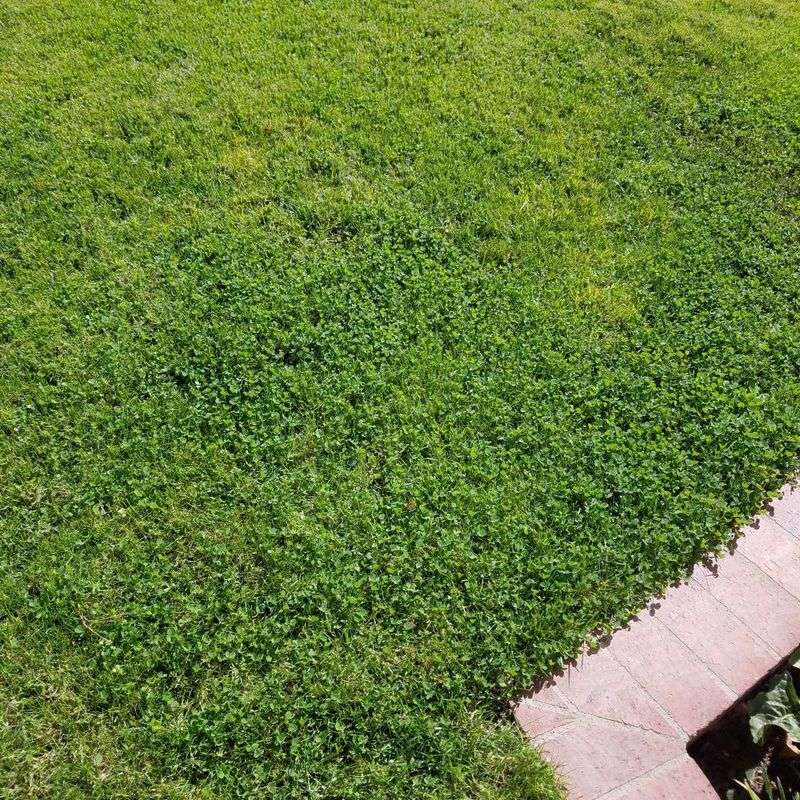
Here is the claim with the best lawn-specific backing. University of Maryland Extension reports that a microclover and tall fescue mix may reduce the need for one nitrogen application per year.
Note the wording: may reduce, and only one application.
That finding comes from a deliberately managed lawn. The microclover was seeded on purpose, mixed with tall fescue, and cared for as a combined stand.
A scattered patch of ordinary white clover that wandered in by itself is a different situation.
Incidental patches can be thin, uneven, or crowded out by taller grass. They may contribute some nitrogen, but nobody can promise how much or how soon.
If your grass looks pale and hungry, a few clover plants are unlikely to fix that alone.
So a sensible approach is to treat clover as a possible helper, not a replacement for your regular plan. If you want to experiment, keep a note of how your lawn looks over a full season.
If you are thinking of cutting back fertilizer, do it gradually and watch the turf rather than assuming the clover has it covered.
Clover is not a complete lawn-care diagnosis
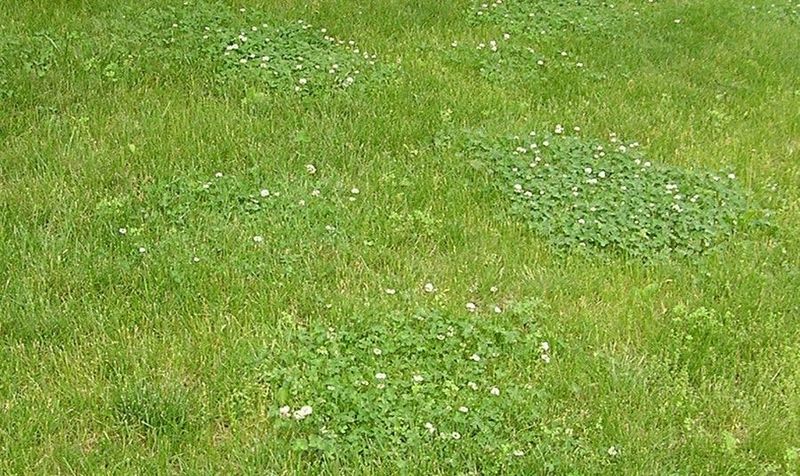
Seeing clover often gets people thinking their lawn is starving. There is some truth there.
University of Minnesota Extension notes that white clover may point to low nitrogen, and that dense, healthy turf helps hold clover back.
But a clover patch is only a clue. It cannot tell you how much your lawn needs, or which nutrients are short.
Compacted soil, thin turf, or mowing too low can all let clover move in.
The best next step is a soil test. Your local extension office can explain how to collect a sample and how to read the results.
Grass type matters too, since cool-season and warm-season lawns have different needs, and local recommendations beat any one-size-fits-all number.
Nitrogen is also only part of the story. The USDA guide points out that white clover itself needs phosphorus, potassium, and sulfur.
Fixing nitrogen does not cover those, so a lawn low in them can struggle no matter how much clover it has.
If you see clover plus yellowing or thin grass, test the soil before you reach for a bag or decide to leave things alone.
Returning clippings helps keep nutrients cycling
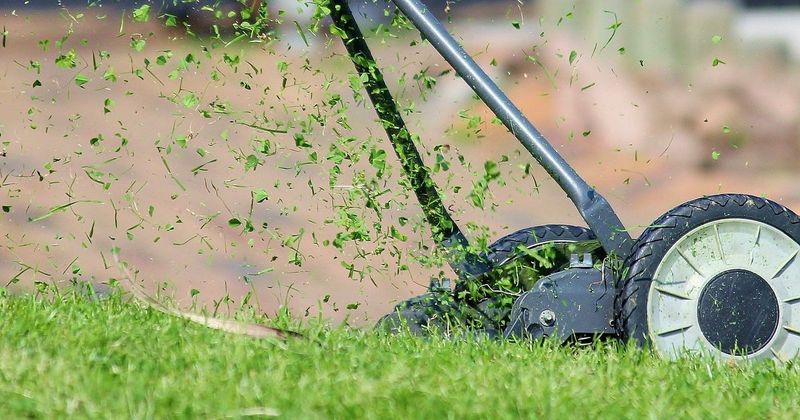
Mowing offers a simple way to recycle nutrients: leave the clippings where they fall. As grass and clover blades break down, they return some of what they took up to the soil.
Nobody can put an exact number on it, so treat it as steady recycling rather than a fertilizer substitute.
University of Maryland Extension describes clippings and decaying microclover as an organic nitrogen source for turf. That fits the idea that clover helps over time through its plant material.
The trick is to avoid smothering the grass. University of Minnesota Extension advises composting clippings or spreading them back over the lawn.
Thick clumps that sit in piles can block light and trap moisture, so rake or mow again to scatter them.
A few habits make this easier. Mow often enough that you remove only a small part of the blade at a time.
Keep the mower blade sharp so clippings are short and drop down into the turf. If a heavy batch builds up after a wet week, add it to a compost bin instead.
Flowering clover brings a pollinator tradeoff
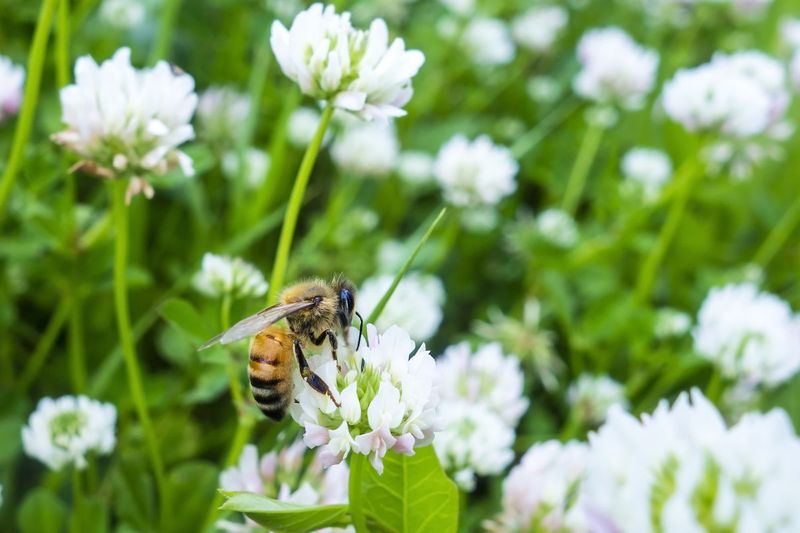
Bees love clover blooms. If you leave the flowers, your lawn becomes a small snack bar for pollinators, and University of Vermont Extension highlights lawns as a way to support bees.
That is a real plus for many gardeners.
It is also a real downside for some households. University of Maryland Extension points out that flowers draw bees, which matters if someone in your family has a bee sting allergy or the kids play barefoot on the lawn.
You can adjust the tradeoff with the mower. Mowing flowering patches cuts down the blooms, while skipping a section lets them stay for pollinators.
Some gardeners mow most of the yard and leave a clover-rich corner.
Be careful with herbicides. Many broadleaf weed killers also injure or kill clover, so spraying for dandelions can wipe out your clover too.
Follow the product label, and avoid spraying flowering clover when pollinators are active. University of Minnesota Extension offers more on managing a lawn with bees in mind.
Decide whether clover fits your lawn
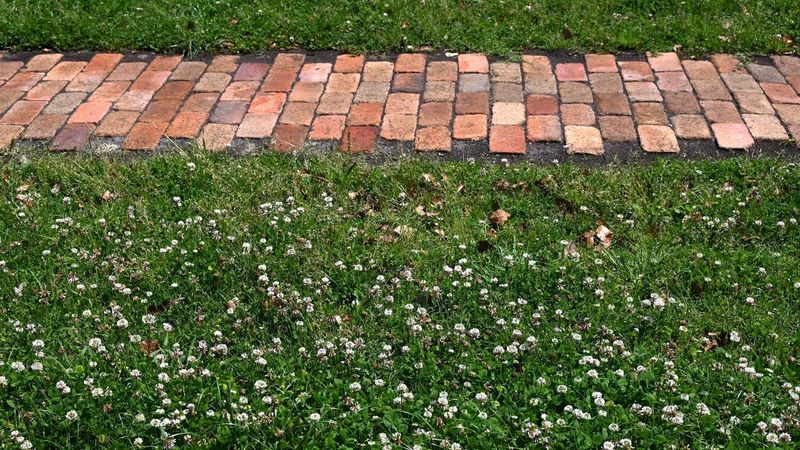
Keep clover if you can live with its habits: it spreads by creeping stems and seed, and it flowers. Pull or manage it if you want a uniform, bloom-free lawn.
Either choice is fine, but do not count on clover to replace all your fertilizer.
Site matters too. University of Maryland Extension says microclover can decline in high heat and drought and may need reseeding.
Minnesota Extension notes white clover handles shade and heavy foot traffic poorly.
A lawn is a lot like a garden bed: it rewards the gardener who watches it. Let your own turf tell you whether clover earns its spot.