
Cracked Tomato on the Counter? A Quick Screen for Warning Signs Before You Bite
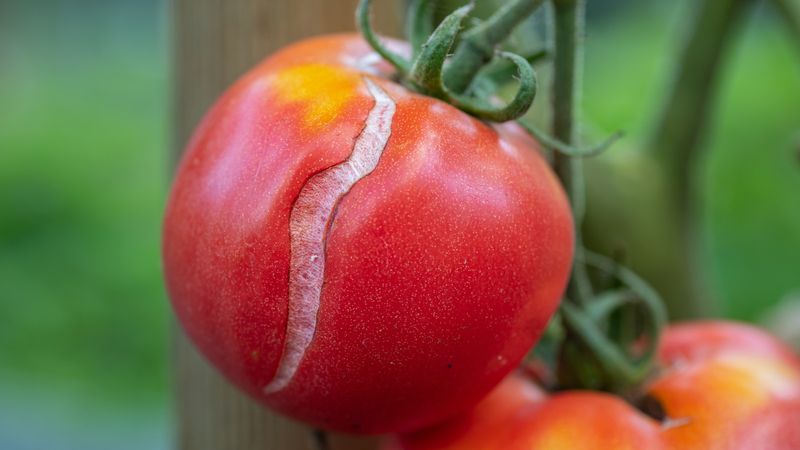
You reach for a tomato from the vine or the counter and spot a split in the skin. Now you have to decide: keep it or toss it?
A crack alone does not always mean a tomato has gone bad, but advice from experts is not the same everywhere. Here is a calm way to look for warning signs and handle the fruit wisely.
Start with the warning signs
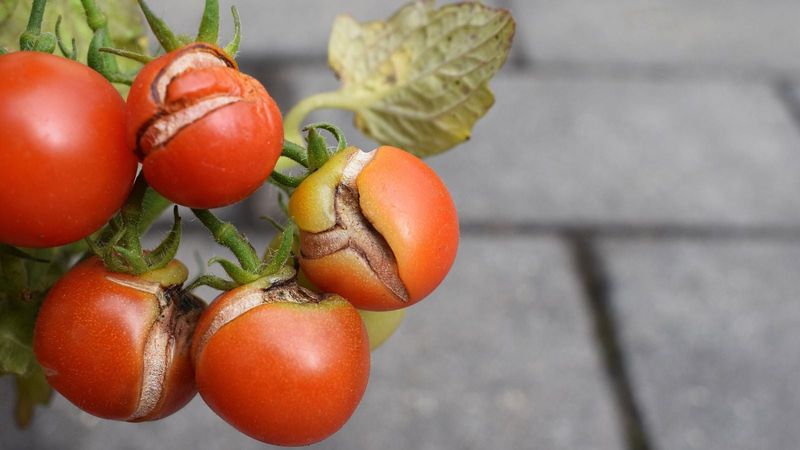
Before anything else, give the tomato a slow look and a sniff. Toss it if it looks rotten, leaks liquid, or smells sour.
Those are clear signs that the fruit has started to break down. NC State Extension guidance says cracked tomatoes are edible before they begin to rot, but fruit that develops a sour smell or starts oozing should go in the trash.
Look closely at the split and the skin around it. Is the area wet, slimy, sunken, or mushy?
Does the flesh look dark and collapsing? Any of those details is a reason to say no. Fuzzy growth is its own category, and the next section covers what to do about mold.
Here is the honest limit of this quick screen. A tomato can look fine and smell fine and still carry germs you cannot see or smell.
So the check is meant to flag reasons not to eat a tomato. It cannot certify that one is safe.
General produce advice from the FDA also says to throw away produce that looks rotten. If you are unsure, that same caution is a fair guide.
A lost tomato costs little compared with a stomach illness.
A split often reflects how the tomato grew
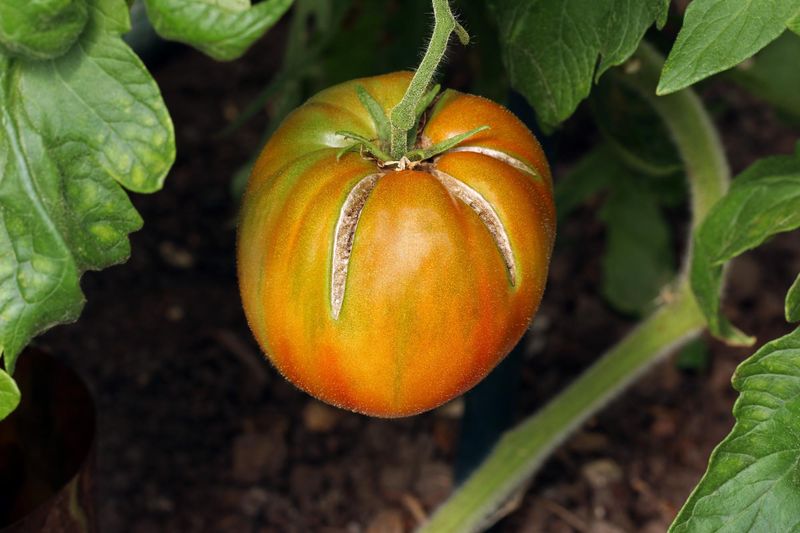
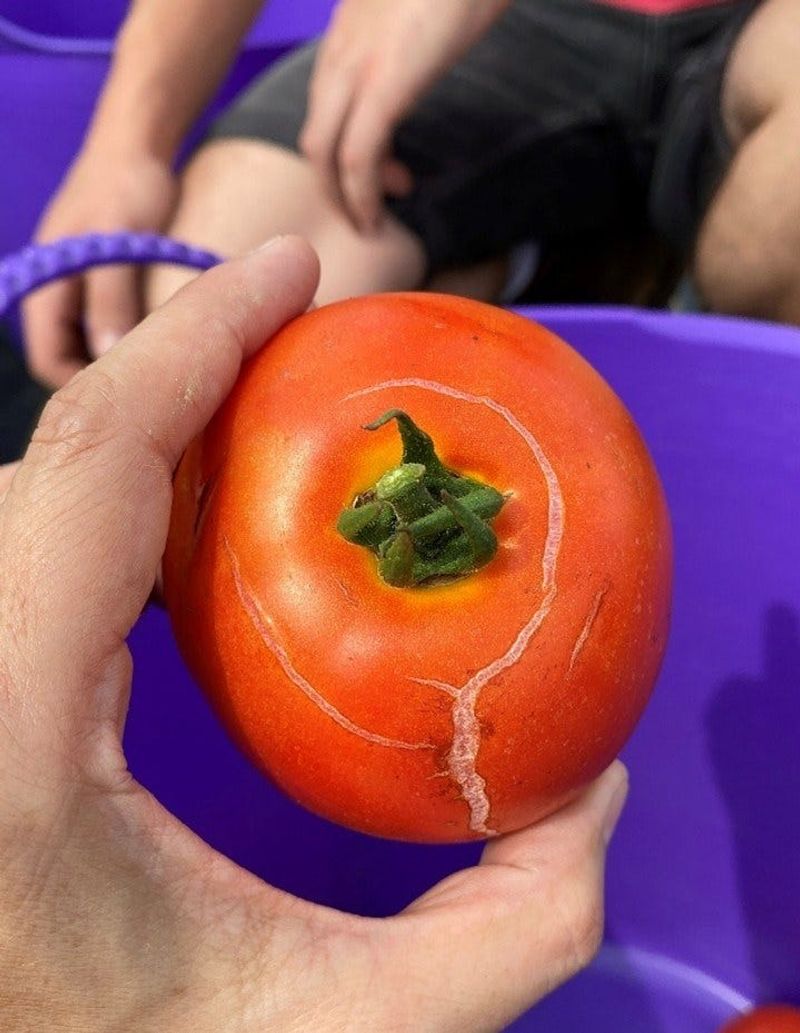
Gardeners often notice cracks in two patterns. Radial cracks run down from the stem like spokes.
Concentric cracks form rings around the shoulder of the fruit. Both can show up on the same tomato, so seeing one does not rule out the other.
The usual story is simple. Inside, the fruit swells faster than its skin can stretch, and the skin splits.
According to University of Delaware Cooperative Extension, this happens when growth outpaces the skin. It often follows heavy rain or a swing from dry soil to wet soil, when the plant sends a rush of water into the fruit.
Watering habits are only part of the picture. Some varieties crack more easily than others, and weather swings, including changes in temperature and humidity, add to the risk.
A tomato on your plant may split even if you water carefully. UF/IFAS Extension also describes cracking around the top as a common growing problem.
One more point matters when you are worried about your plants. A crack by itself does not prove disease, and it does not prove the tomato has spoiled.
It tells you the fruit grew in a way that stressed its skin. What happens afterward, such as rot or mold moving in, is a separate question.
Guidance differs on keeping a cracked tomato
If you hoped for one clear rule, the published advice does not offer it. Some sources lean toward keeping a cracked tomato if it is in good shape.
Others lean toward throwing it out. Both views come from reputable university and government sources.
On the more relaxed side, NC State Extension says cracked tomatoes are edible before they begin to rot. UF/IFAS likewise says a cracked tomato can still be safe to eat.
On the cautious side, USDA and UF-IFAS consumer guidance recommends discarding damaged tomatoes. Texas A&M AgriLife advises avoiding cracked tomatoes when you pick them out at the store.
So what should you do on your own counter? Condition matters.
A fresh, clean split with no soft spots is a different situation from a split that is leaking or smells off. No source gives a crack size or shape that marks a safe cutoff, so do not trust anyone who claims one.
Also remember that a tidy-looking tomato is not proof of safety. If you are cooking for young children, older adults, or anyone with a weak immune system, choosing the cautious approach is perfectly reasonable.
Tossing a tomato you feel unsure about is never a mistake.
Discard a moldy tomato
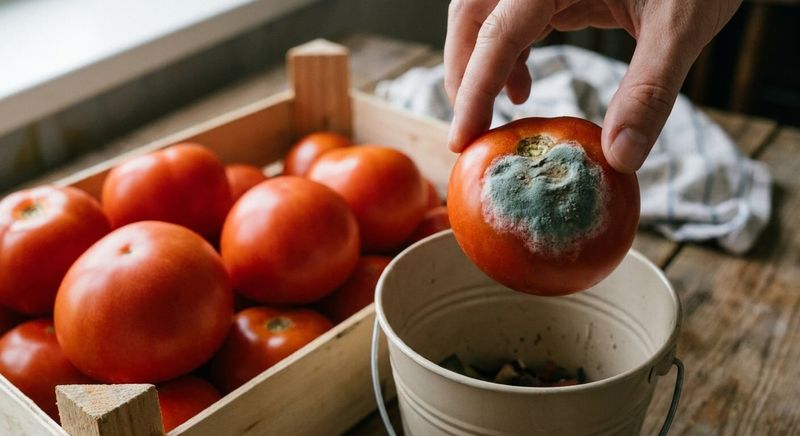
Mold changes the whole conversation. A clean split and a dry, healed scar are growth marks.
Fuzzy patches, whether white, gray, green, or black, are a different problem, and the tomato should go in the trash.
Tomatoes are soft, high-moisture produce. The USDA Food Safety and Inspection Service advises discarding foods like this when they are moldy.
The reason is that contamination can reach below the visible surface, so what you see on top may be only part of what is there.
That is why cutting around the fuzzy spot is not a safe rescue. Neither is rinsing the spot off, cooking the tomato into sauce, or hiding it in a soup.
None of those steps makes a moldy tomato safe.
Bag the tomato before you throw it out so spores do not drift around the kitchen. Then check nearby produce that was touching it, since mold can spread to neighbors.
Give the counter or bowl a good cleaning too.
Wash the tomato and handle cut pieces promptly
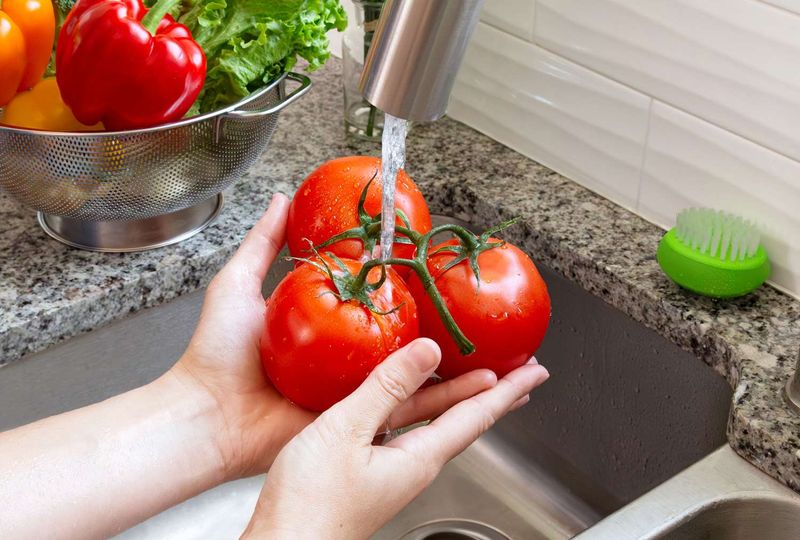
If the tomato passes your first look, wash it right before you cut or eat it. Hold it under plain running water and rub the surface with your hands.
Skip soap, detergent, bleach, and commercial produce wash. The FDA gives this advice for produce in general.
Washing helps, but it has limits. Running water can reduce bacteria on the skin, yet it does not eliminate them.
That is one more reason a rinse cannot turn a questionable tomato into a safe one.
The FDA also says to cut away damaged or bruised areas of produce. Treat that as general produce advice rather than a rule written for cracked tomatoes, and not as a guarantee that the rest is safe.
It also does not apply to moldy fruit, which should be discarded whole.
Once a tomato is cut, the clock starts. Put cut pieces in the refrigerator within two hours, and keep the fridge at 40°F or below.
Texas A&M AgriLife gives the same timing for cut tomatoes. A cheap fridge thermometer takes the guesswork out of that temperature.
Pick cracked fruit promptly and reduce future cracking
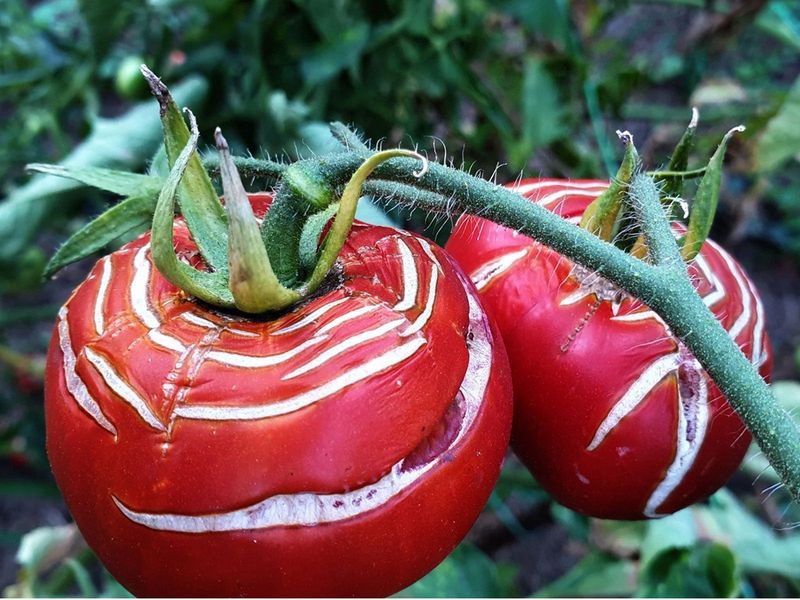
When you spot a split tomato on your plant, pick it soon. Fruit left hanging in the rain and heat has more time to attract rot and pests through that open skin.
NC State Extension suggests harvesting cracked fruit promptly and using it before it begins to rot.
To lower the odds of future splits, aim for more even soil moisture. Water deeply and on a steady schedule instead of letting beds dry out and then flooding them.
A layer of mulch around the plants slows evaporation and helps keep moisture from swinging up and down.
These steps can reduce cracking, but they will not stop every split. Heavy storms, hot spells, and the variety you planted all play a part.
If a downpour is coming, picking ripening fruit a bit early is another option.
Washing and cutting rules from the FDA still apply to garden tomatoes, so rinse before you slice.
A split is a growth mark, not a verdict. Obvious decay is the real signal to let go.