
Does Walking Barefoot On Your Lawn For 30 Minutes Do Anything Special To Your Body?
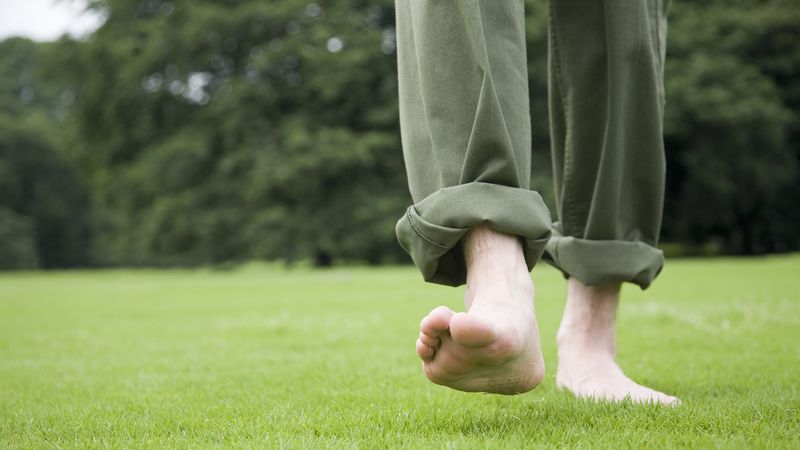
Kicking off your shoes and stepping onto cool grass feels good, and some people say it does much more than that. Online claims about “grounding” promise big changes from simple skin contact with the earth.
Before you plan a half-hour barefoot stroll through your backyard, it helps to know what research actually shows. The answer is more interesting, and a bit more modest, than the buzz.
A 30-minute lawn walk has no proven bodily payoff
Here is the straight answer: no study has shown that exactly 30 minutes of barefoot walking on a lawn causes a specific change in your body. That includes your hydrangea-tending, tomato-staking self.
The idea sounds neat, but the proof is not there.
Grounding, sometimes called earthing, is the idea that bare skin touching the ground affects your health. A 2023 integrative review describes the results as preliminary and notes there is little detailed research on direct grounding during outdoor exercise.
Early reports are interesting, but they are not settled science.
That does not mean the experience cannot feel good. Walking outside, breathing fresh air, and getting a break from screens can lift your mood.
In one small randomized crossover study, 30-minute walks were linked with better mood and lower cortisol in both urban and natural settings.
The catch is that those walkers were not barefoot, and they were not on a backyard lawn. So the pleasant feeling you get may come from the walk, the fresh air, and the pause itself, not from bare skin touching grass.
Enjoy it, but do not count on a hidden payoff.
What does “grounding” actually mean?
Grounding, also called earthing, simply means direct skin contact with the ground. Think bare feet on grass, sand, or soil.
Fans of the idea suggest that this contact may affect the body in helpful ways.
The proposed explanation is that the earth transfers electrons to your body. That is an idea, not a proven mechanism or treatment.
Nobody has established that this happens during a casual walk, or that it produces healing effects.
Here is another wrinkle. As the integrative review describes, many grounding studies used conductive mats, patches, or other indoor setups.
Those are quite different from a person strolling across a yard in summer.
Why does that matter? A mat on a desk and a lawn under your feet differ in moisture, soil, footwear history, activity level, and more.
Results from one setup cannot tell you what happens in the other.
Many studies are also small, and a positive report does not show that barefoot contact itself caused the change. So when you see a bold claim about earthing, treat it as a question worth asking, not an answer.
Your lawn is a lovely place to stand, but science has not shown it works like a therapy.
A walk in nature may feel restorative for other reasons

Researchers have looked at what outdoor walking does for mood and stress. In a 2016 small randomized crossover study, people took 30-minute walks in both urban and natural settings.
Their mood improved and cortisol, a stress hormone, went down in both places.
Natural settings did score higher for restoration and some cognitive benefits. That fits what many gardeners already feel after time among their plants.
A green space seems to give the mind a bit more room to reset.
Now the important limit. That study did not test barefoot walking, and it did not test a backyard lawn.
Participants did not compare bare feet with shoes, so the results cannot show that grounding caused any of the changes.
Think of it as context for taking an outdoor break, not proof of an earthing effect. If a half-hour stroll through the yard leaves you calmer, the walking, the scenery, and the time away from your phone are all fair suspects.
Bare skin on grass is just one more detail nobody has pinned down.
Also, the 30 minutes in that study was simply the length of the walk. It is not a magic threshold for anything.
The barefoot study tested a different routine
A 2024 study often comes up in barefoot walking talk. It compared 31 barefoot walkers with 31 sneaker-wearing walkers on an urban forest trail.
You can read about it in the published report on CRP, IFN-gamma, and serotonin levels.
Look closely at the routine. Each session lasted 90 minutes, and people walked four times a week for five weeks.
That is a lot more than one 30-minute stroll on your back lawn.
The setting differed too. It was a forest trail in a city, not a mowed yard with a garden hose coiled nearby.
The walkers followed a structured program, which is not how most of us step outside for a quick barefoot moment.
The authors also pointed out limits. The sample was small and local, and they said more research is needed.
Those cautions mean the findings should not be stretched to everyone, everywhere.
So this study cannot tell you what a single lawn walk does. It is a piece of early research on a very particular routine.
If you want to try barefoot time, do it because you enjoy it, not because a study promised a result.
Check the lawn before taking off your shoes

If you decide to go barefoot, pick a familiar, clear patch of grass. Walk it with your eyes first.
Look for sticks, thorns, broken glass, bee-covered clover, and anything a mower may have kicked up.
Next, think about what you have put on the lawn. If you used a pesticide product, follow the label.
EPA advice is to keep people and pets off until the product has dried or for the time the label specifies.
Ticks are another reason to look before you linger. They can turn up in yards, especially near grassy, brushy, or wooded edges.
Not every lawn carries the same risk, but CDC guidance says to check your body after time outdoors. It also notes that mowing and clearing leaf litter and tall brush can reduce tick habitat.
A quick check of your legs, ankles, and behind the knees after you come in takes a minute. Do it the same way you would after pulling weeds by the fence.
What about hookworm? It is not a reason to avoid every U.S. lawn.
CDC describes the risk as walking barefoot in places where hookworm is common and soil may be contaminated with human feces. For most backyard gardeners, the everyday hazards are sharp objects and treated grass.
Some gardeners should keep their shoes on

Curiosity about grounding is fine, but foot safety comes first. CDC says people with diabetes should not go barefoot.
You can read the details in CDC guidance on diabetes and your feet.
The reason is simple. Nerve damage or poor blood flow can make foot injuries harder to notice and slower to heal.
A small cut from a twig or a splinter in the grass could go unnoticed and turn into a bigger problem.
If that describes you, a pair of shoes or garden clogs is the safer choice, even for a quick trip to check the tomatoes. No unproven claim about earthing is worth risking a foot injury.
If you are not sure how this applies to you, ask your health care provider. They know your situation far better than a gardening article can.
For everyone else, this is not a reason to fear the lawn. It is a reminder that a pleasant idea does not outrank a clear safety rule.
Enjoy the pause without expecting a treatment
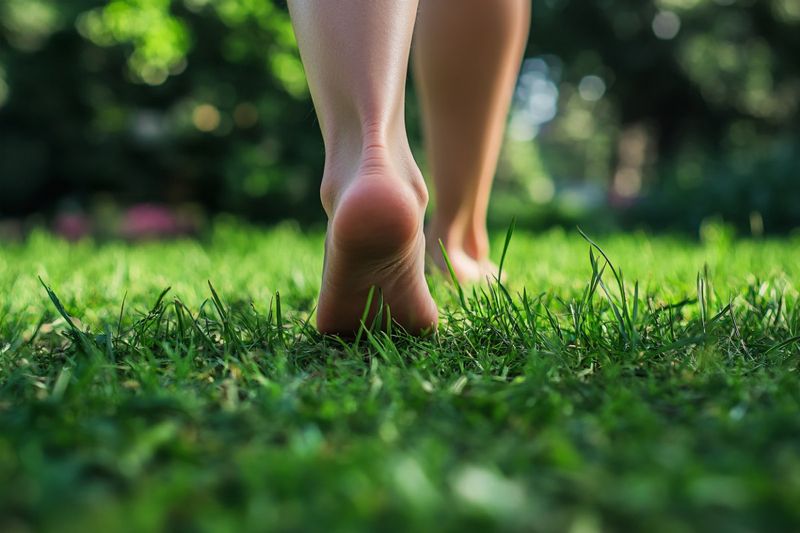
If a barefoot moment on the grass makes you smile, go for it, as long as the yard is safe and your feet are healthy. Just do not expect a set change in your body after 30 minutes.
The research on grounding is still early, so it is not a therapy.
The appeal of being outside is real, even if direct ground contact has no proven effect. Put your shoes back on whenever safety calls for it.
Sometimes the best thing a lawn offers is a reason to stop and look around.