
Don’t Toss Your Leggy Petunias Yet – 5 Pinching Tricks That Bring Back Fuller Plants And Bigger Blooms
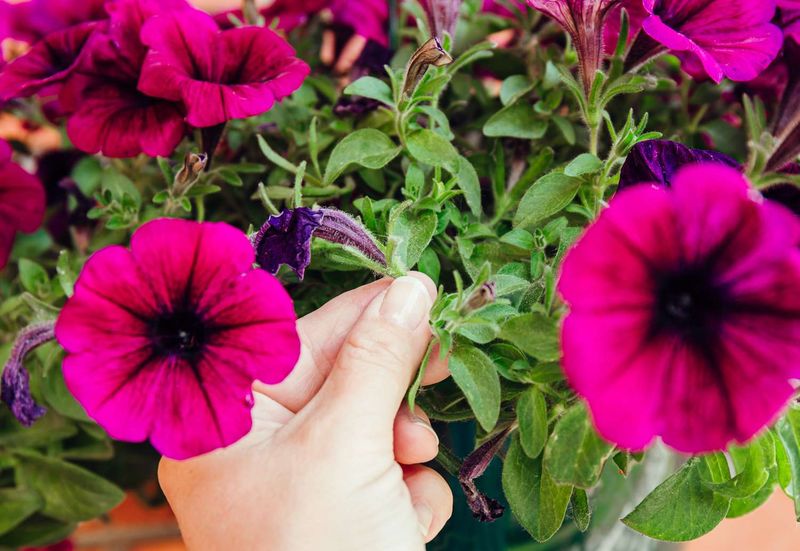
By midsummer, a lot of petunias start to look tired, with long bare stems and only a few flowers hanging off the ends. It is easy to think the plant is dying and pull it out, but leggy petunias are usually just asking for a trim.
A few well-timed pinches can push your plant to grow new branches and fill up with fresh color again. Here are five simple tricks you can try today with nothing more than your fingers or a small pair of snips.
1. The Early Bird Pinch for Young Plants
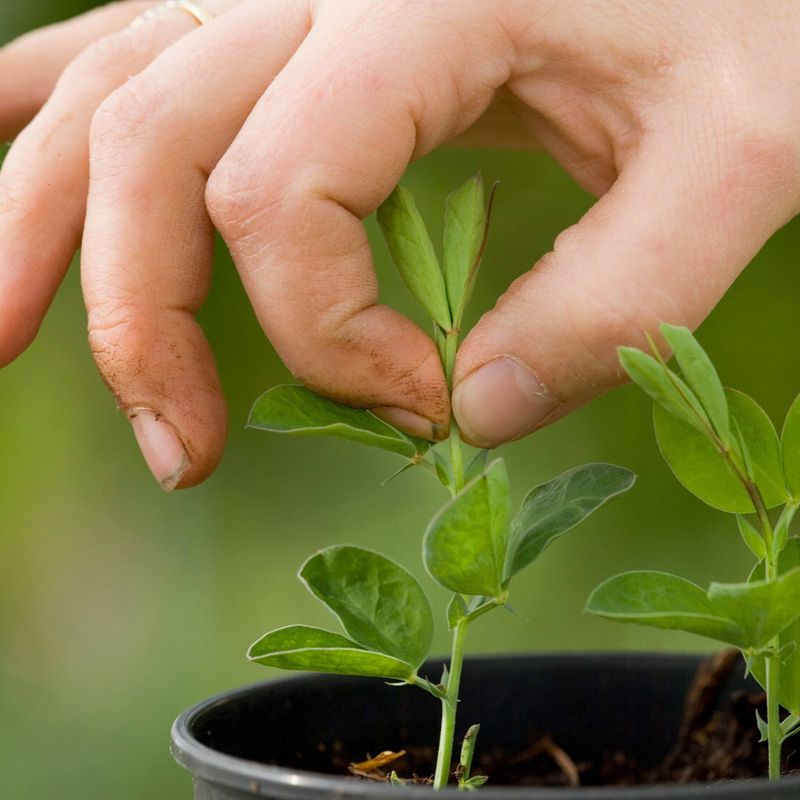
Think of a young petunia like a kid deciding which way to grow. Left alone, it often shoots one main stem straight up and out, and that single stem is where legginess begins.
A quick pinch early on changes the whole plan.
Soon after planting, or once seedlings have about three or four sets of true leaves, nip off the very top of each stem. Use your thumb and finger to remove the soft tip along with the top pair of leaves.
The plant responds by waking up buds lower down, sending out side shoots instead of one tall spike.
Yes, you may lose a flower bud or two in the process. That small sacrifice pays you back within a couple of weeks with a bushier plant that carries far more blooms.
If you bought petunias already flowering in a six-pack, you can still do it right after transplanting.
2. Consistent Deadheading for Continuous Blooms
Here is a little secret about petunias: they are not trying to look pretty for you. Every flower is the plant’s way of making seeds, and once seeds start forming, the plant figures its job is done and slows down.
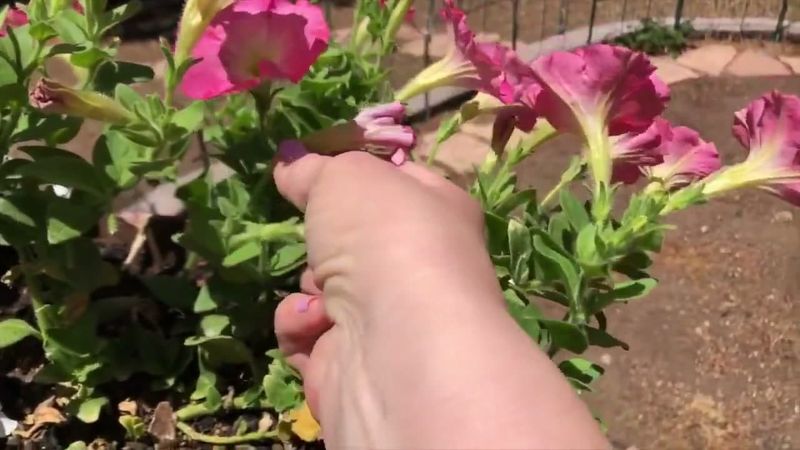
Deadheading tricks it into trying again. When a bloom wilts, follow the stem down past the faded petals and find the small green swelling at the base.
That swelling is the seed pod, and it needs to go too, so pinch below it rather than just pulling off the papery petals.
Make it a habit once or twice a week, maybe while your morning coffee cools. Many newer wave-type and calibrachoa-style petunias are sold as self-cleaning, though even those can look fresher with a light tidy-up.
Your fingers might get a bit sticky from the fuzzy stems, which is perfectly normal and washes right off.
3. The Leggy Stem Snip for Mid-Season Revitalization
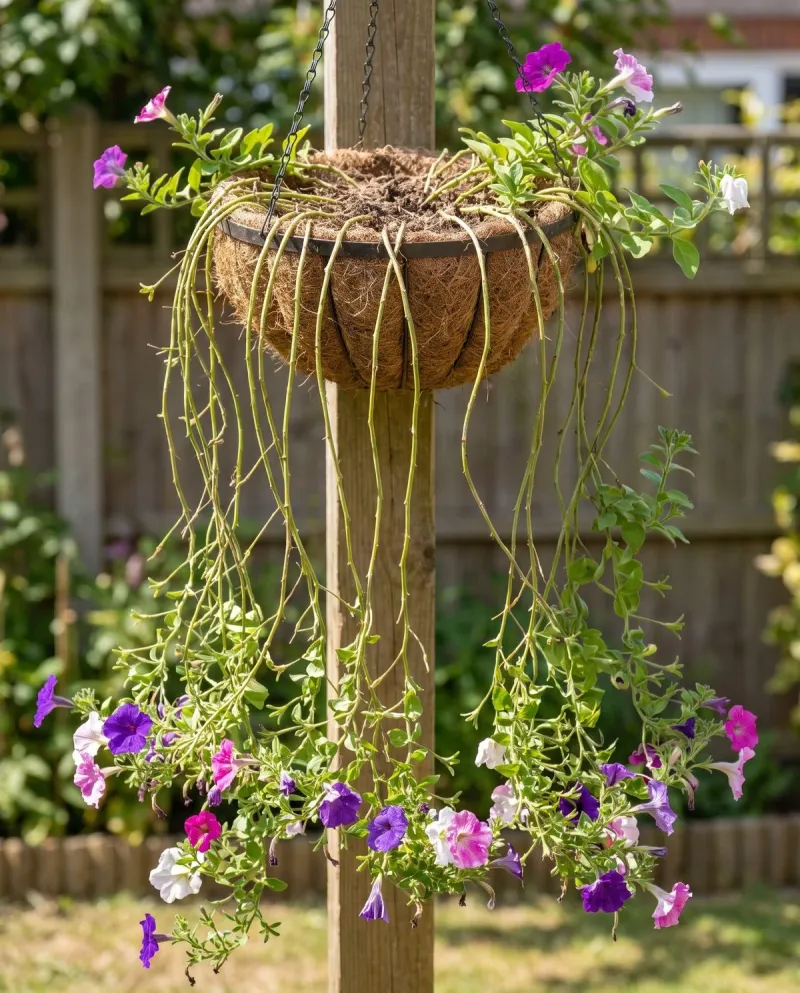
Picture a hanging basket in late July with long, stringy stems dangling down and a tiny cluster of flowers only at the tips. Lots of gardeners see that and assume the plant is finished.
It almost certainly is not.
Grab clean scissors or snips and look for the longest, barest stems. Cut each one back by roughly one-fourth to one-half of its length.
Shorter cuts suit stems that still have some leaves along them, while stems that are bare for most of their length can go back closer to half.
After the trim, give the plant a good drink and a dose of balanced liquid fertilizer, since petunias are hungry feeders. New shoots should appear along the shortened stems within a week or two.
Your basket may look plain for a short stretch, but it can come back thicker and stronger than before.
4. The One-Third Rule Rejuvenation Prune
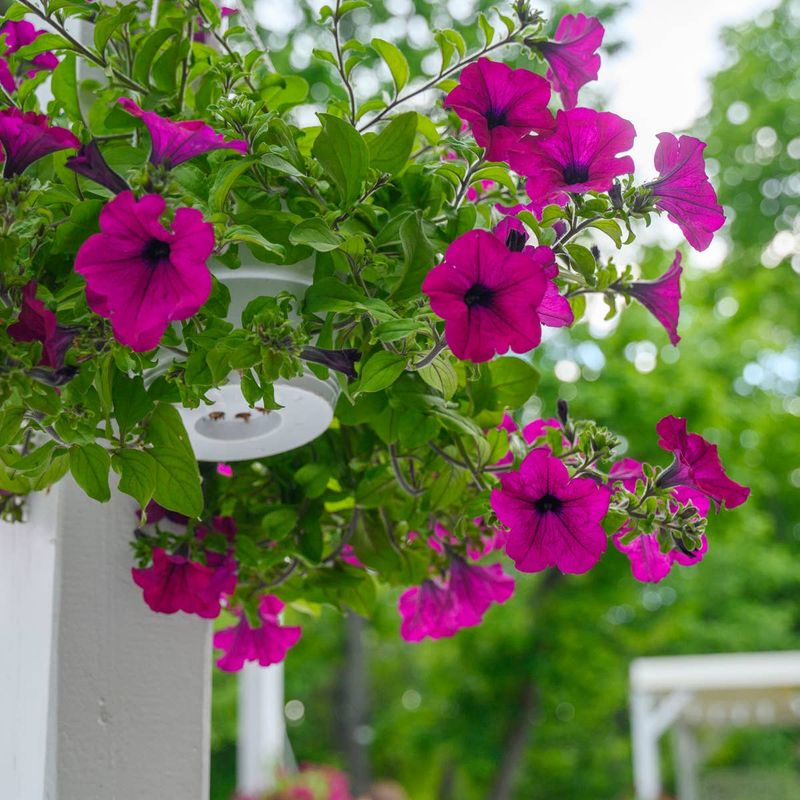
Cutting a whole petunia down at once feels bold, and honestly it can backfire. A gentler, staggered approach keeps color in your planter the entire time.
Choose about one-third of the stems, focusing on the longest and scraggliest, and cut them back hard, leaving a few inches. Leave the other two-thirds alone so the plant still has leaves to feed itself and flowers to show off.
Going past one-third at once can shock the plant and stall it for weeks.
Many gardeners follow a simple rhythm for spring-planted petunias: one round in early July, another in mid-August, and a last one around mid-September. By the time you trim the second group, the first group is already reblooming.
It is a rolling refresh that keeps the display going through fall.
5. Pinching Precisely Above a Leaf Node
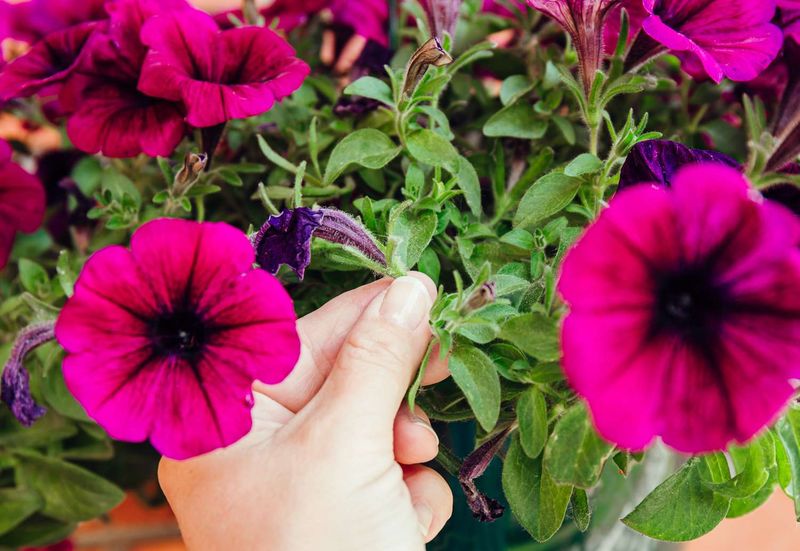
Where you cut matters just as much as when. Petunia stems have small joints where leaves attach, called leaf nodes, and tucked inside each one are sleeping buds waiting for a signal.
Make every pinch or snip just above a healthy pair of leaves, about a quarter inch above the node. Removing the stem tip there tells those hidden buds to wake up, and you will often see two new shoots grow where one used to be.
Twice the stems means twice the spots for flowers.
Cutting in the middle of a bare stem, far from a node, tends to leave a dead stub that simply browns and withers. So slow down and look before you snip.
Once your eyes learn to spot nodes, every one of the other four tricks works better, which is why this little habit may be the most useful of them all.
Fun fact: petunias belong to the same plant family as tomatoes and peppers, which explains why they can share some of the same pests and that slightly sticky feel.