
Don’t Wait Until Spring – 7 Amaryllis Steps To Start Now So It Blooms Again By Christmas
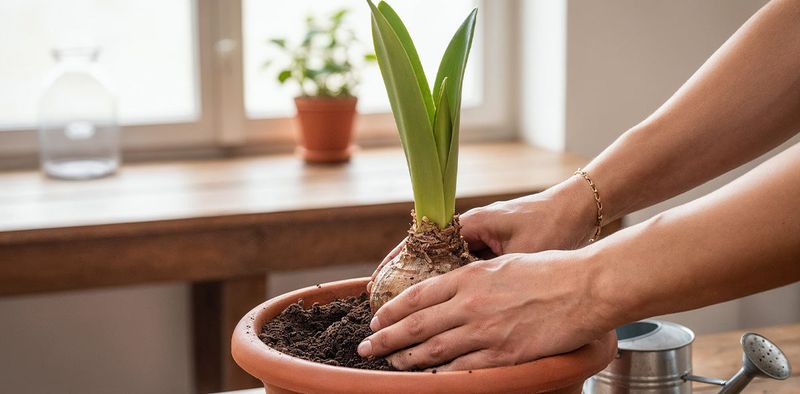
That amaryllis that dazzled you last December is probably sitting on a windowsill right now, all leaves and no flowers. Most people toss it or wait until spring to think about it, and that is exactly why it never blooms again on time.
The secret is that your bulb needs a planned rest, and the clock for a Christmas bloom starts ticking in late summer. Follow these seven simple steps, and your amaryllis can put on a holiday show all over again.
1. Stop Watering and Feeding in Late Summer
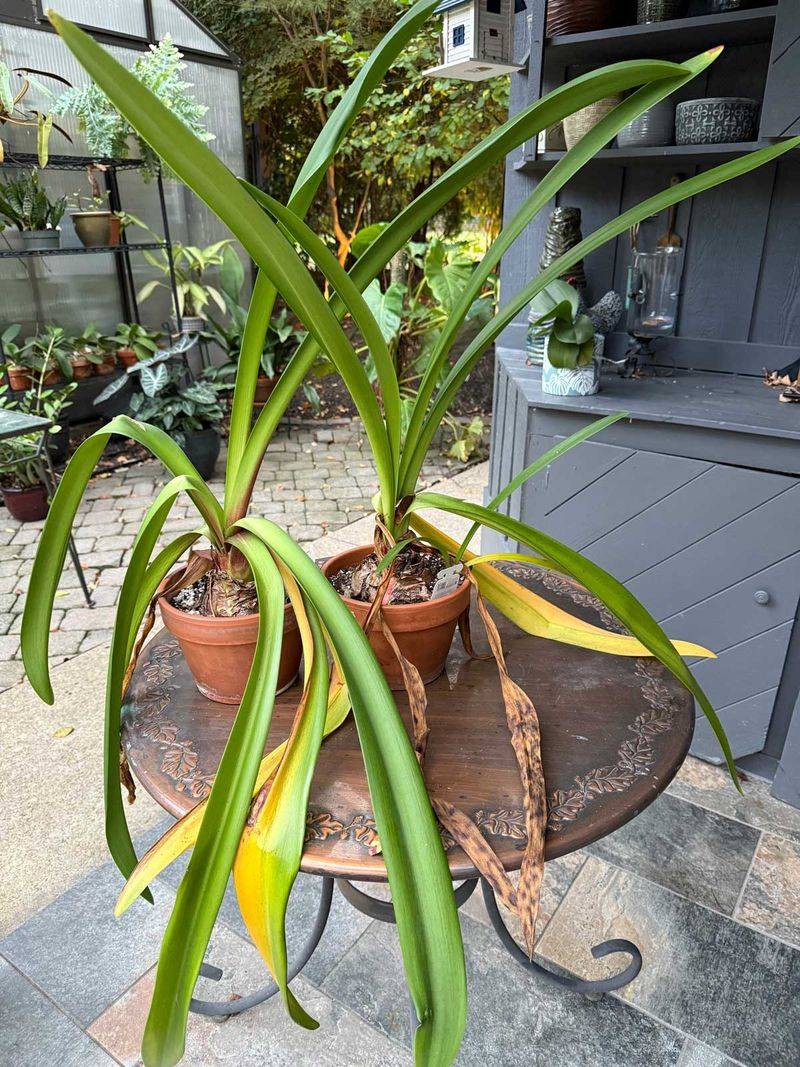
Here is the step that feels wrong but works: put the watering can down. Around late August or early September, your amaryllis needs a clear signal that growing season is over.
Cut back slowly over two or three weeks. Water a little less each time, then stop completely, and skip the fertilizer too.
Why so gradual? A sudden stop can stress the bulb, while a slow taper lets it pull energy down from the leaves.
Think of it as tucking the plant in rather than flipping off the lights.
2. Let the Leaves Yellow on Their Own
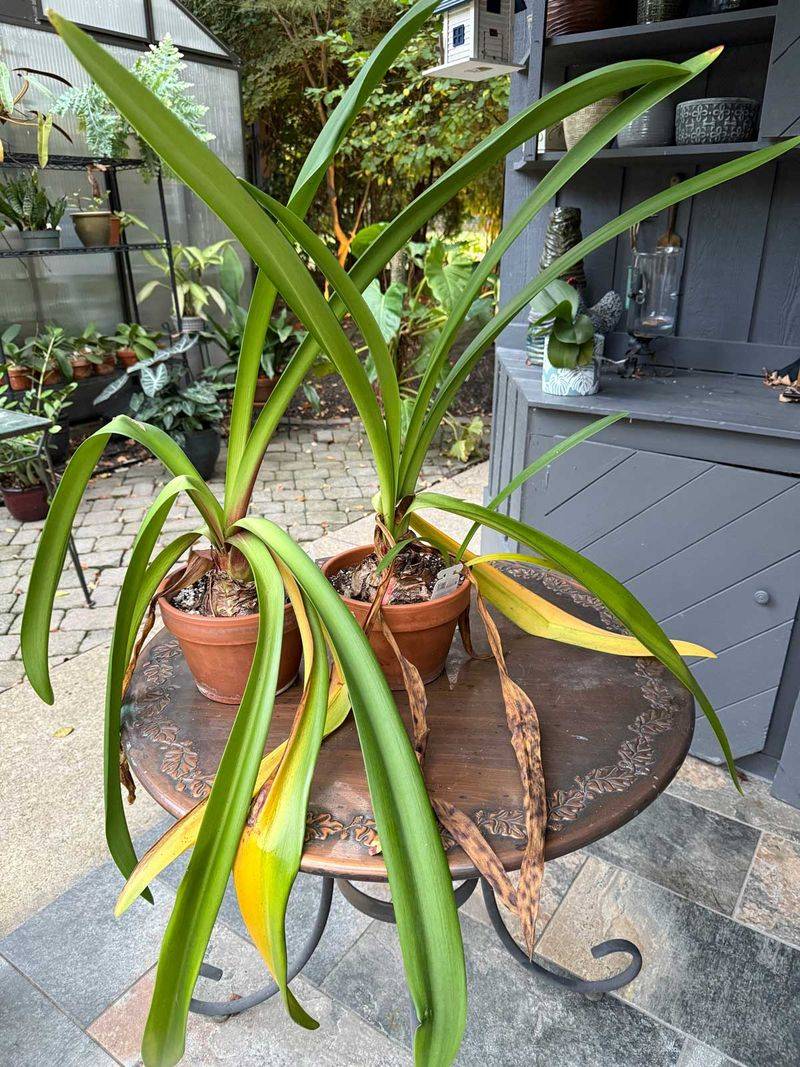
Grab the scissors too early and you could rob next year’s flowers. Those green leaves are tiny solar panels, and every day they stay green they pack more fuel into the bulb.
Once watering stops, the foliage will droop, yellow, and finally turn crispy brown. It looks messy for a few weeks, and that is perfectly fine.
When the leaves are fully brown and dry, trim them off about an inch or two above the bulb. A clean cut now keeps the bulb tidy for its long nap.
3. Give the Bulb a Cool, Dark Rest
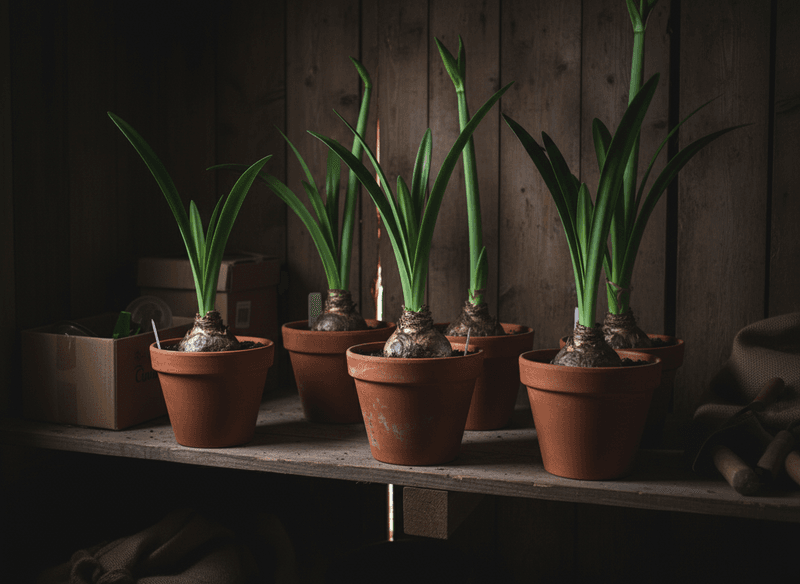
A basement shelf, an unheated closet, or a corner of the garage can become the most important spot in your whole plant routine. Amaryllis bulbs reset their flowering cycle while resting somewhere cool, dark, and dry.
Aim for temperatures between 45 and 55 degrees Fahrenheit. Just make sure the spot never freezes, since frost can ruin the bulb.
Leave it alone for 8 to 12 weeks with no water at all. Wet soil in the dark is an open invitation to rot, and a mushy bulb is almost impossible to save.
Fun fact: most amaryllis sold in the US are actually Hippeastrum, native to South America, where dry seasons naturally trigger this same rest.
4. Circle Your Wake-Up Date
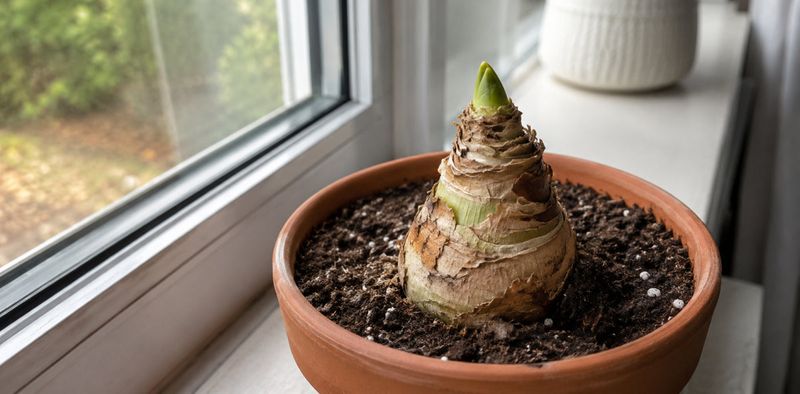
Timing is everything with a holiday bloom. Count backward from Christmas and you will land right around late October or early November.
Amaryllis usually takes 6 to 8 weeks to flower after it wakes up. Some varieties are quicker and others drag their feet, so early November is cutting it close.
Write the date on your calendar or set a phone reminder the day the bulb goes into storage. It is easy to forget a pot in the basement, and a missed date means Valentine’s flowers instead.
5. Repot Into a Snug Container
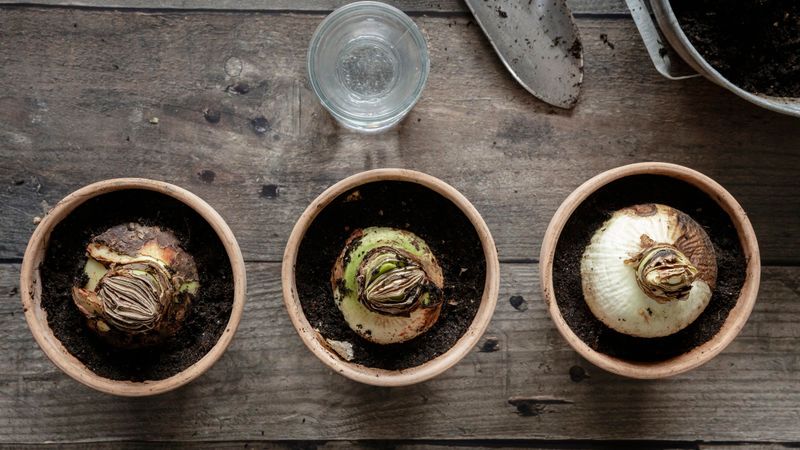
Amaryllis likes tight shoes. A pot only 1 to 2 inches wider than the bulb keeps it happy and focused on flowers instead of roots.
If it has been two or three years since the last repotting, now is the moment. Use fresh, well-draining potting mix and a pot with drainage holes.
Set the bulb so its top third sits above the soil line. Burying it too deep is a common mistake that can lead to rot, so leave those shoulders showing.
6. Wake It Up With Warmth and One Good Drink
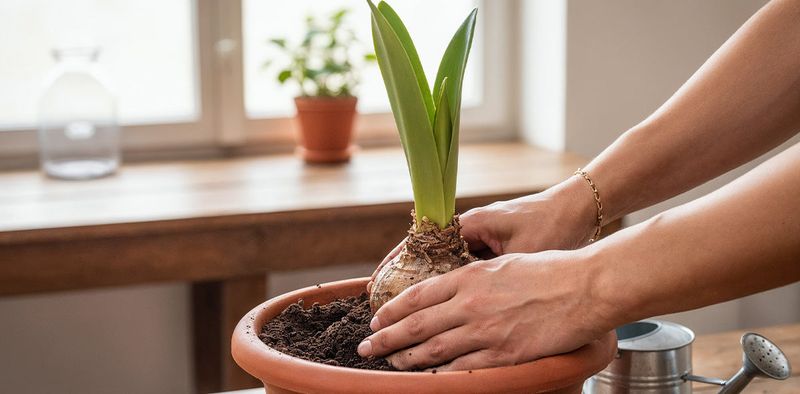
Moving day from the dark basement to a warm, bright room is when the magic starts. Find a spot around 70 to 75 degrees with bright, indirect light.
Water thoroughly once and let the extra drain away. After that, hold back and water only lightly until you see green poking out of the bulb.
Patience pays here, because roots have to wake up before they can drink much. Too much water now is the fastest way to lose a bulb you worked all fall to protect.
7. Guide the Stalk to Full Bloom
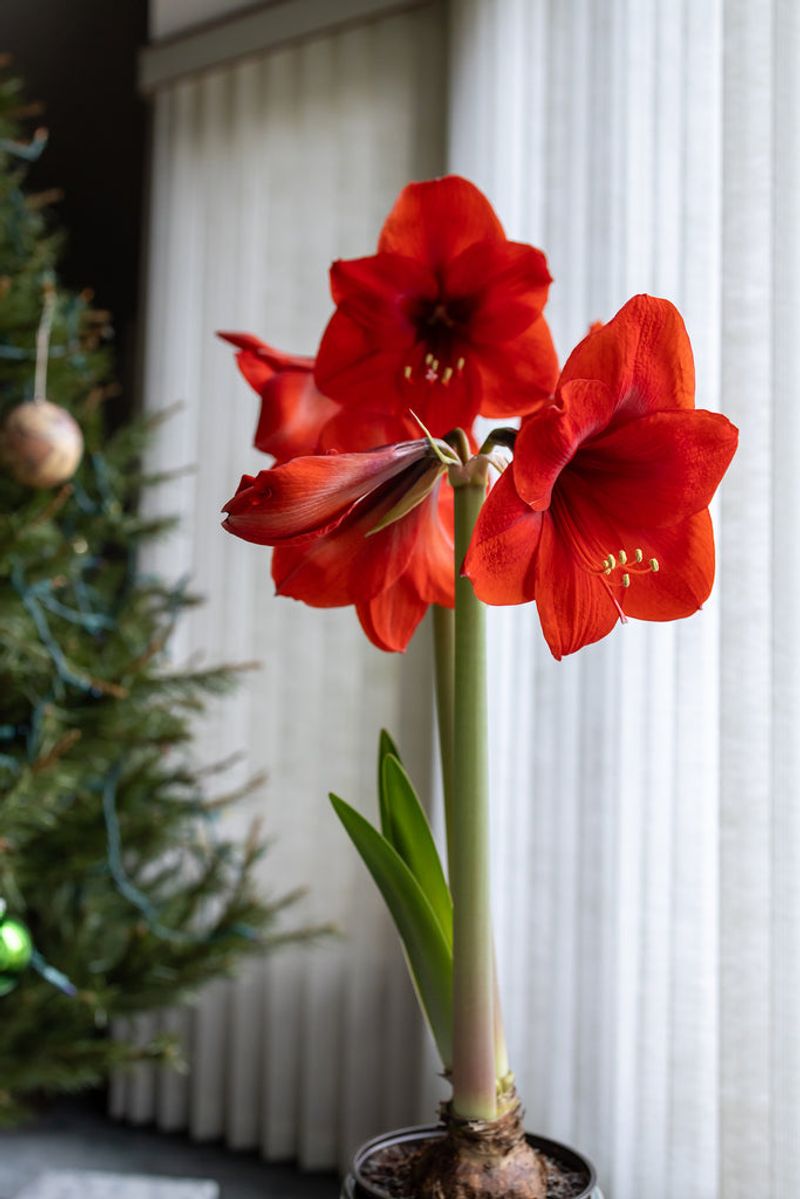
Nothing beats spotting that first fat flower bud in early December. Once shoots appear, water more often so the soil stays evenly moist but never soggy.
Turn the pot every few days. Amaryllis stalks lean hard toward light, and rotating keeps them standing straight.
Tall, heavy stalks may need a slim stake to keep from tipping. When blooms fade, snip them off to stop seed pods, but leave the stalk until it yellows so energy flows back into the bulb for next year.
Do all that, and you will have a repeat holiday show plus a head start on next Christmas.