
What a Large Dark Snake Near Your North Carolina Chicken Coop or Shed Could Mean
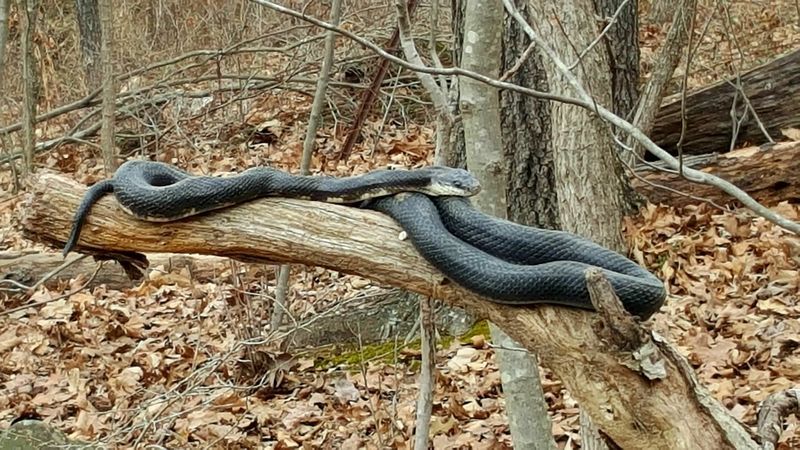
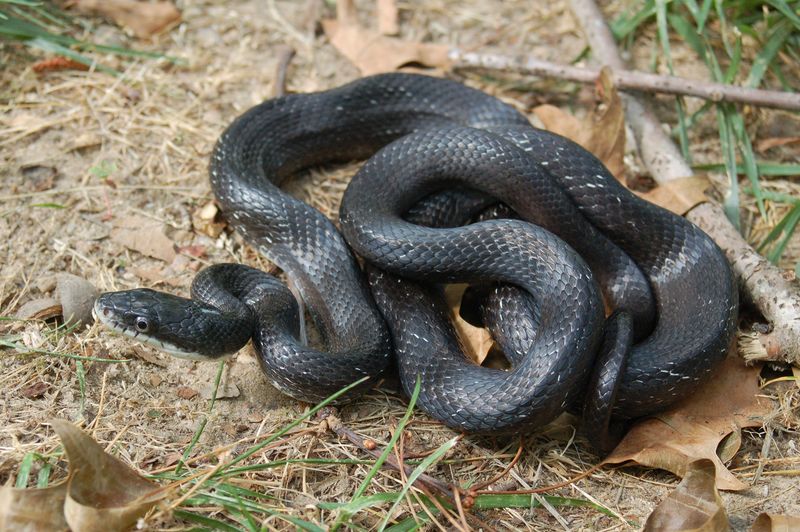
A big dark snake stretched along the wall of your coop or shed can make your heart jump. In North Carolina, it might be a rat snake, but color and location alone cannot tell you for sure.
What the snake is doing there can say something about food and shelter on your property. Knowing what to look for, and what to leave alone, helps you protect your family, your hens, and the wildlife in your yard.
A dark snake is not an identification
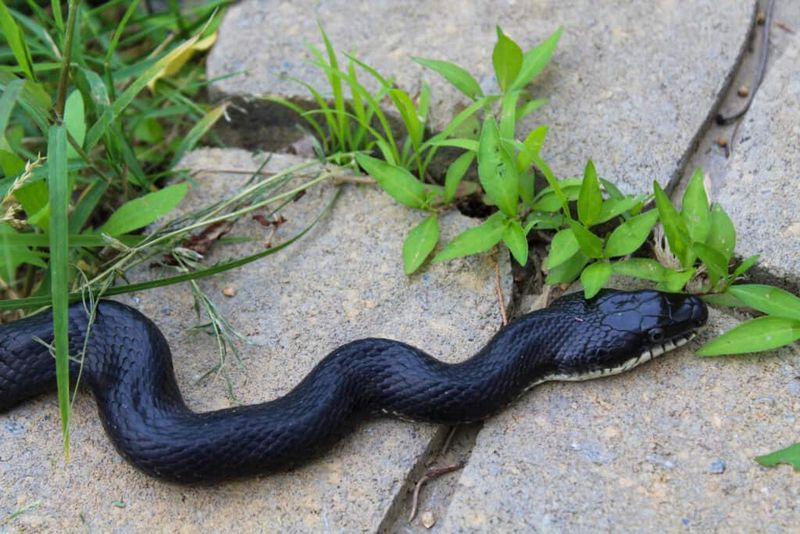
Seeing a big dark snake near a shed or coop feels like a neon sign that says rat snake. It could be one, but a sighting by itself does not settle the question.
The snake might be something else entirely, and guessing wrong can lead to bad choices.
The North Carolina Wildlife Resources Commission calls the species the rat snake, while NC State Extension uses the name eastern rat snake. Its looks change across the state.
Adults in the Piedmont and mountains are often black, while some Coastal Plain rat snakes are greenish or striped. Young ones look different again, so a baby rat snake may not resemble the adult you picture in your head.
Lookalikes add another wrinkle. NC State Extension’s snake profiles note that black racers can be mistaken for adult rat snakes.
The familiar label black rat snake is handy, but it is not a dependable ID from color alone.
So keep your observations simple and from far away. Notice the snake’s rough length, color, any pattern, and how it moves, and snap a photo with a zoom lens if you can.
Do not step closer to study its head, eyes, or scales. Head shape can also mislead, which is one reason NC State’s general snake guidance cautions against relying on it.
A clear photo taken from a distance is the best tool you have. It lets you ask for identification help later without putting anyone at risk.
What might have brought it to the coop?
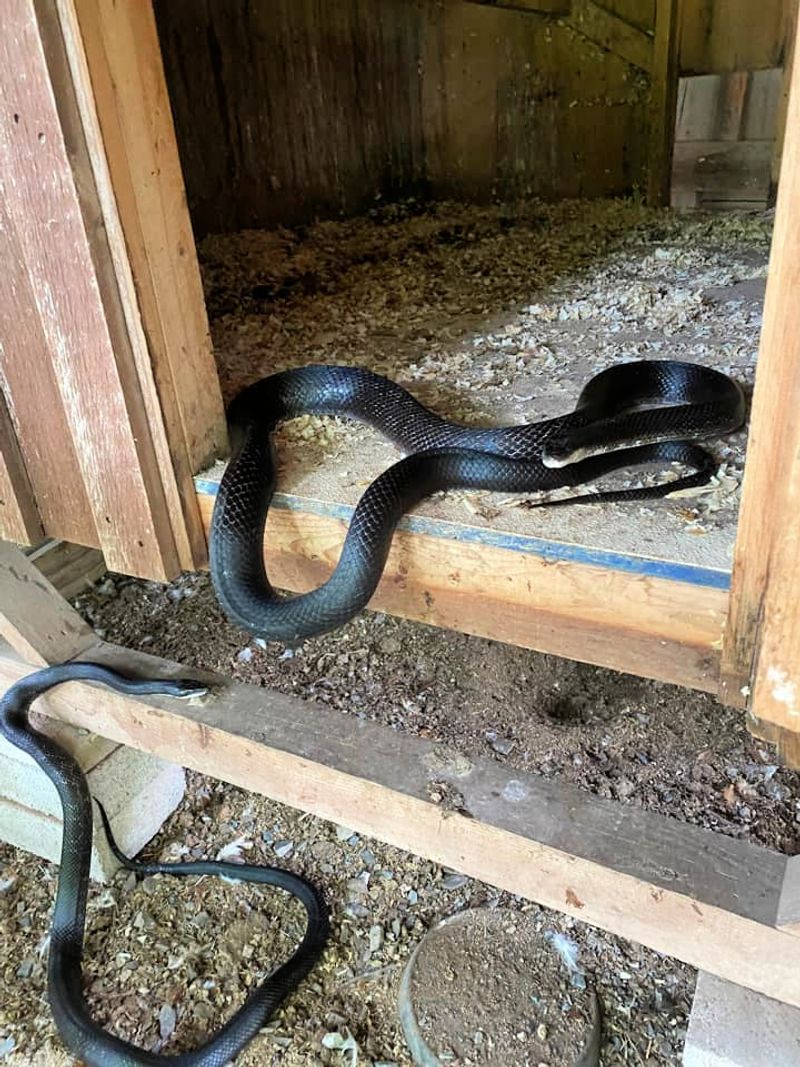
A coop is a busy place. There is food, shade, cover, and sometimes eggs, so a snake passing through may have several reasons to linger.
Rodents are one possibility, but they are not the only one.
Chicken feed is a classic draw for mice and rats. NC State’s guidance on keeping chickens points to feed handling as part of keeping rats out, and NC State’s wildlife chapter notes that easy food and shelter attract unwanted rodents.
Rodents in turn may attract predators like snakes. That is one pathway.
A second pathway has nothing to do with mice. Rat snakes also eat birds and eggs, and they climb well, so nest boxes may be the draw.
The shed or coop might also simply be good cover, a warm, hidden spot to rest. And sometimes a snake is just crossing your yard on its way somewhere else.
Because so many explanations fit, the snake itself cannot diagnose a rodent problem. NC State Extension describes rodents as an important part of many snakes’ diets, which makes the sighting a fair reason to look around, not proof of anything.
Take a walk around the coop and shed once the snake has moved on. Look for spilled feed, droppings, gnaw marks on wood or feeders, and tunnels along the foundation.
If you find several of those signs, rodents are likely using the space. If you find none, the snake may simply have been passing by.
A useful predator can still threaten eggs
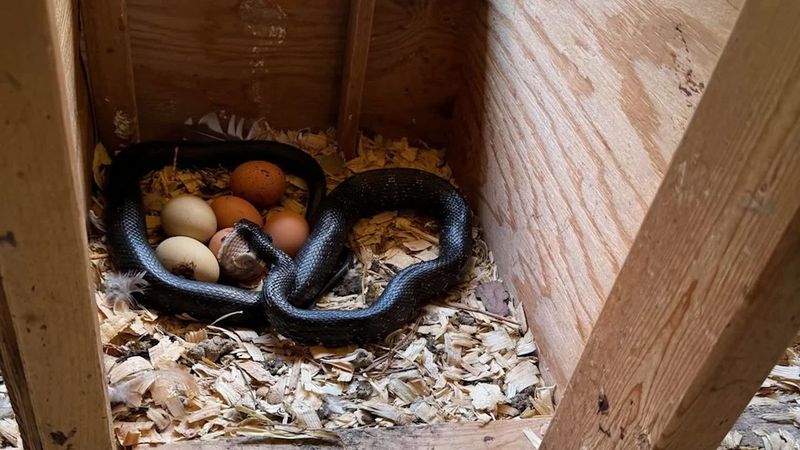
Here is the trade-off. Rat snakes are nonvenomous and do eat rodents, which is why many gardeners speak fondly of them.
Yet the same appetite can cause trouble in a henhouse.
The NC Wildlife Resources Commission lists birds and eggs among the foods of rat snakes and specifically notes they may take chicken eggs and young domestic fowl. So a snake that helps with mice one week might empty a nest box the next.
That means a rat snake is not a dependable, targeted, or risk-free form of rodent control. It eats what it finds, and it does not choose to patrol only for rats.
It also should not be treated as a guard for your flock against other predators, since nothing in North Carolina’s guidance shows that.
For a backyard steward, this is where calm thinking pays off. You can protect eggs and chicks with sturdy construction and tidy habits without harming a snake that may be doing some good elsewhere in the yard.
Since you may not even know the species for certain, harming it is a poor bet.
Gather eggs daily, keep young birds in secure housing, and close gaps that let a climbing animal slip inside. Those steps aim at the actual problem, which is access to the coop, not the existence of the snake.
Coexisting is not about love for snakes. It is about choosing the response that protects your flock and leaves wildlife unharmed.
Give the snake—and your household—space
Start with the simplest rule: leave the snake alone. Do not handle it, corner it, try to catch it, or kill it.
A frightened snake is more likely to defend itself, and unnecessary harm helps no one.
Nonvenomous does not mean unable to bite. The state wildlife agency says rat snakes may bite if handled roughly or restrained.
Distance is the safest choice, and watching without touching is enough.
For kids, keep the message short: look, don’t touch. Let them watch from a few big steps back, then head inside.
For pets, calmly lead dogs or cats away, leash or carry them if needed, and keep them elsewhere until the snake is gone. CDC guidance on wildlife also supports keeping pets away from wild animals.
If a pet is bitten, contact a veterinarian. If a person is bitten, NC Poison Control advises calling 1-800-222-1222.
An outdoor snake that is simply passing through usually moves on by itself. A snake inside a building is a different situation, and so is any snake you cannot identify.
In both cases, do not try to catch or kill it. NC Wildlife’s conflict guidance recommends seeking identification help, and for removal from inside a home, contacting a certified Wildlife Damage Control Agent.
Since even experts note lookalikes such as black racers, sending a distant photo for help is wiser than guessing.
Reduce feed access and close entry points
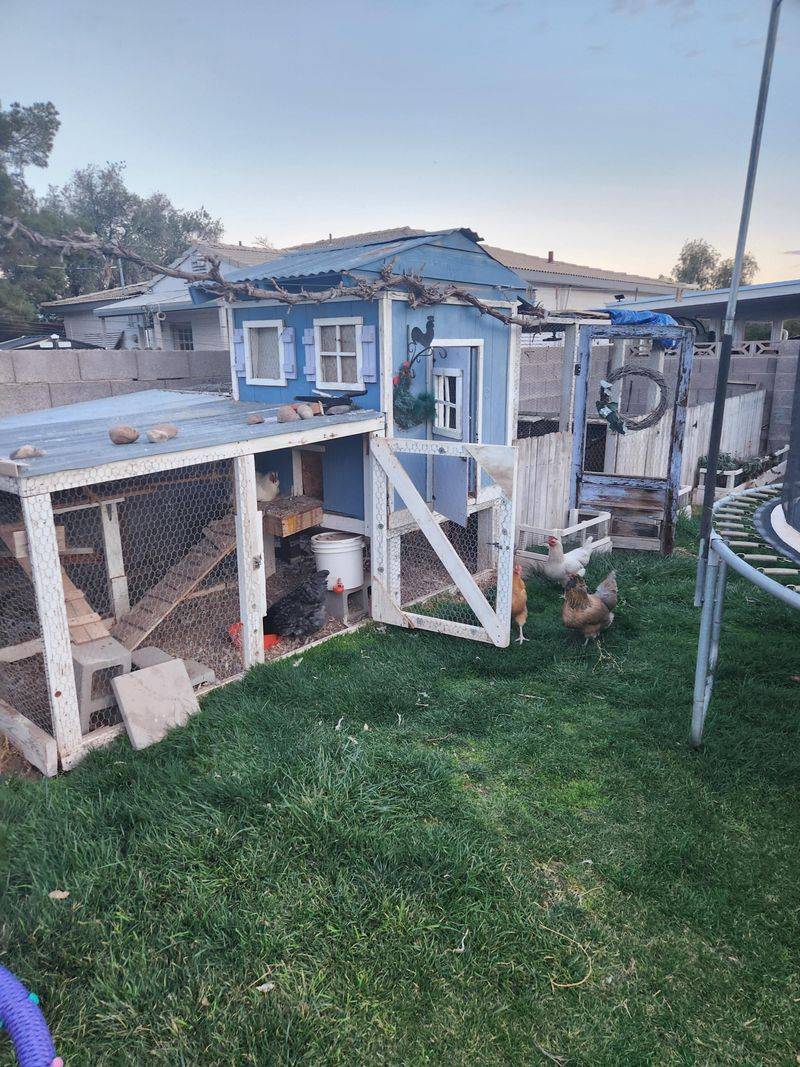
Once the snake has moved on, turn your attention to what made your coop inviting. Feed is the easiest thing to fix, and a weekend is enough to make real progress.
Store feed in metal containers with tight lids. NC State’s poultry guidance recommends metal feed storage and shields around poultry houses to help keep rats out.
Sweep up spilled grain, and avoid leaving feeders full overnight if rodents are a problem.
Next, look at the structure. NC State’s wildlife guidance recommends sealing gaps in buildings.
Walk the coop and shed, checking corners, vents, door bottoms, and places where wood meets the ground. Close openings with appropriately small, sturdy mesh or another durable material, because thin or flimsy screening can be chewed or pushed aside.
Tidy interiors matter too. Stacked bags, loose boards, and cluttered corners give rodents places to nest, so a clean shed gives them less to work with.
Keep the area around the coop free of food scraps and feed debris.
Think of these steps as reducing attractants and limiting access. They can make your coop less appealing to rodents and harder for animals to enter, but they cannot promise that a snake will never pass by.
NC Wildlife’s guidance on preventing snake conflicts frames prevention the same way, as lowering the chances of problems.
Re-check your repairs every season, especially after storms, when boards shift and gaps can open.
Clear nearby cover, but skip snake remedies
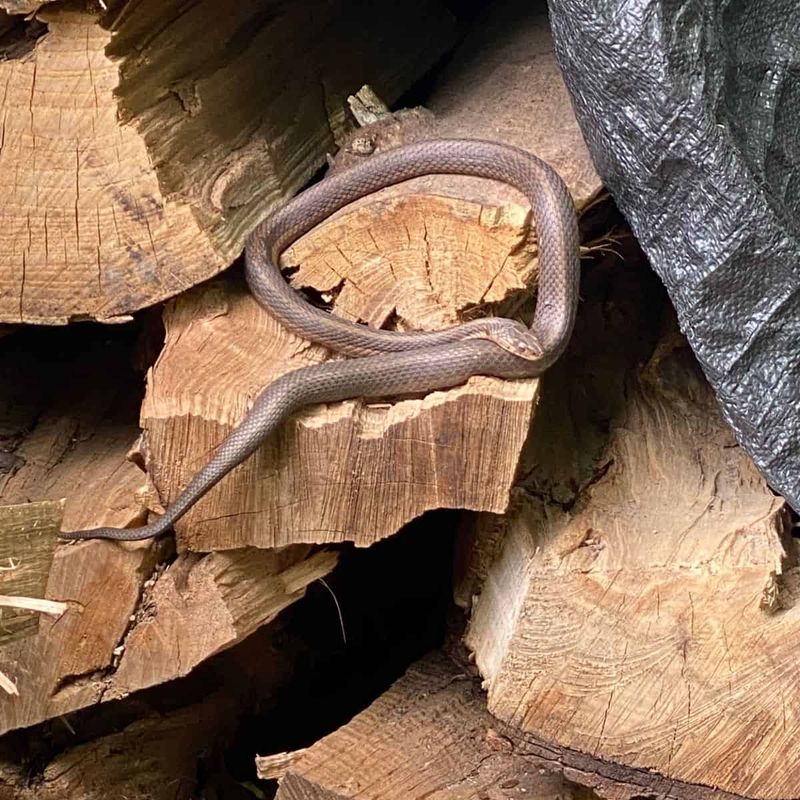
Hiding places near buildings make a yard comfortable for small animals, and the animals that hunt them. Clearing debris and trimming vegetation close to the coop and shed, where it makes sense, can make the immediate area less attractive.
NC Wildlife’s snake conflict guidance includes reducing cover near structures.
Start with the easy wins. Move wood piles, old boards, and spare materials away from walls.
Rake up heavy leaf litter and cut back dense growth that touches the building. You do not need to strip the whole yard, and leaving native plantings farther out keeps habitat for the wildlife you value.
Cleanup cannot guarantee a snake-free yard, but it does reduce nearby shelter.
Skip the quick fixes that sound tempting. Mothballs and commercial snake repellents are not reliable answers.
UGA Cooperative Extension says repellents have not been shown to work consistently, and outdoor mothball use is unsafe and not an approved way to control snakes. Mothballs can put children, pets, and wildlife at risk, so scent remedies of any kind are best left on the shelf.
Practical habitat and access management works differently. It removes what draws animals and closes what lets them in, instead of relying on a smell to do the job.
When you inspect the coop, keep people and pets back from any snake you see, and do not assume what it is or that rodents are present. Check for facts instead.
A snake is a reason to look around, and sometimes it is only a visitor.