
Growing A Lemon Tree In A Pot Is More Forgiving Than You Think, Even When It Spends Winter Indoors
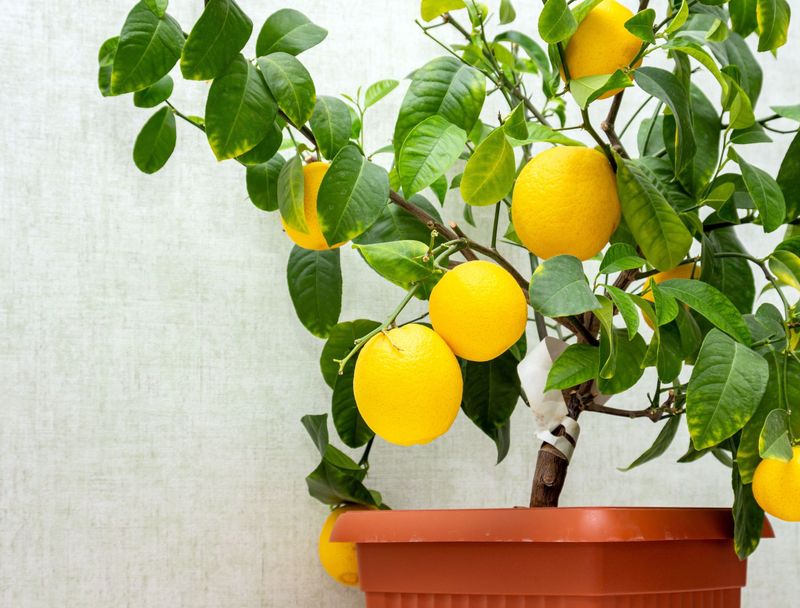
Your potted lemon tree has had a great summer on the patio, and now the nights are getting chilly. Many gardeners worry that moving it inside will doom it.
The good news is that most trees handle the change better than you might expect. A few simple basics will help yours get through to spring.
Bring the Tree In Before Frost Arrives
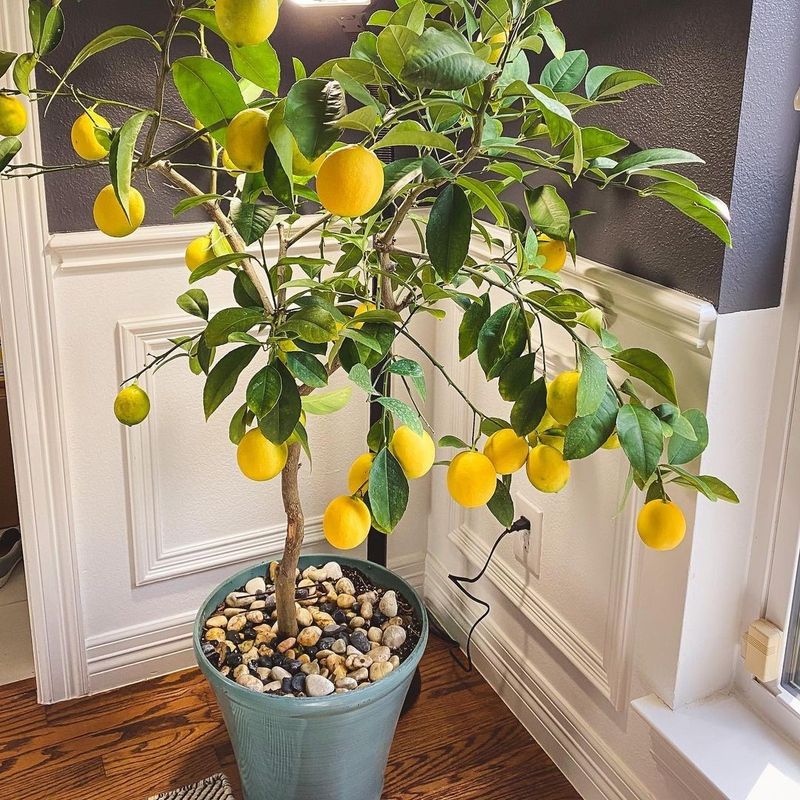
Lemon trees come from warm climates, and freezing air can injure leaves, twigs, and fruit. That is why the move indoors should happen before a frost, not after one surprises you on a clear November night.
Waiting for the first freeze warning is cutting it too close.
Advice on timing differs by region, and that is fine. Iowa State guidance says to move citrus indoors when nighttime temperatures fall below 50°F.
Wisconsin’s extension advice is to bring trees in before nights drop into the 40s. Those are regional recommendations, not one national cutoff.
So how do you pick your own date? Look at your local forecast and watch the overnight lows, not the daytime highs.
If your area has sudden cold snaps, lean toward moving the tree a little early. If your nights stay mild well into fall, you may have extra time to enjoy it outside.
The real goal is simple: keep the tree away from freezing temperatures. A few cool nights in the 40s or 50s are a signal to start getting ready, not a reason to panic.
Pick a calm weekend, clear a spot, and make the move on your schedule instead of the weather’s.
Give the Tree the Brightest Spot You Have
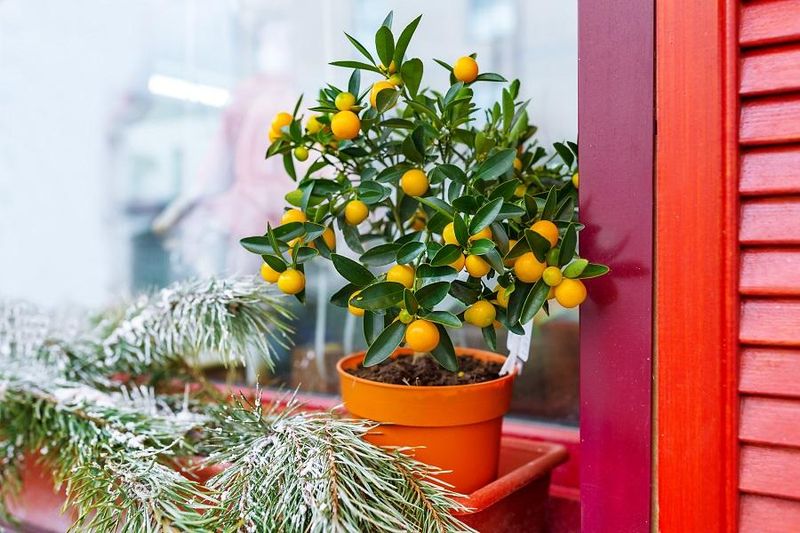
Light is the biggest challenge for a lemon tree indoors. Winter days are short and the sun sits low, so your tree gets far less than it did on the patio.
Give it the brightest place in the house.
A south- or southwest-facing window is usually the best bet. Extension sources commonly suggest about 6 to 8 hours of direct light when possible, as described in Iowa State’s citrus guide.
Not every home can offer that, and that is okay. Do the best you can with what you have.
Try moving the pot close to the glass, but check that leaves are not pressed against a cold window pane on frosty nights. Turn the pot a quarter turn every week or so to keep growth even.
If natural light falls short, a grow light may help. Oregon State Extension notes that supplemental lighting can be useful when natural light is not enough, especially if fruit is the goal.
A grow light can improve your odds, but it does not guarantee lemons. For plain survival, a bright window is often enough to keep the tree going until spring.
Start With a Well-Drained Pot and Mix
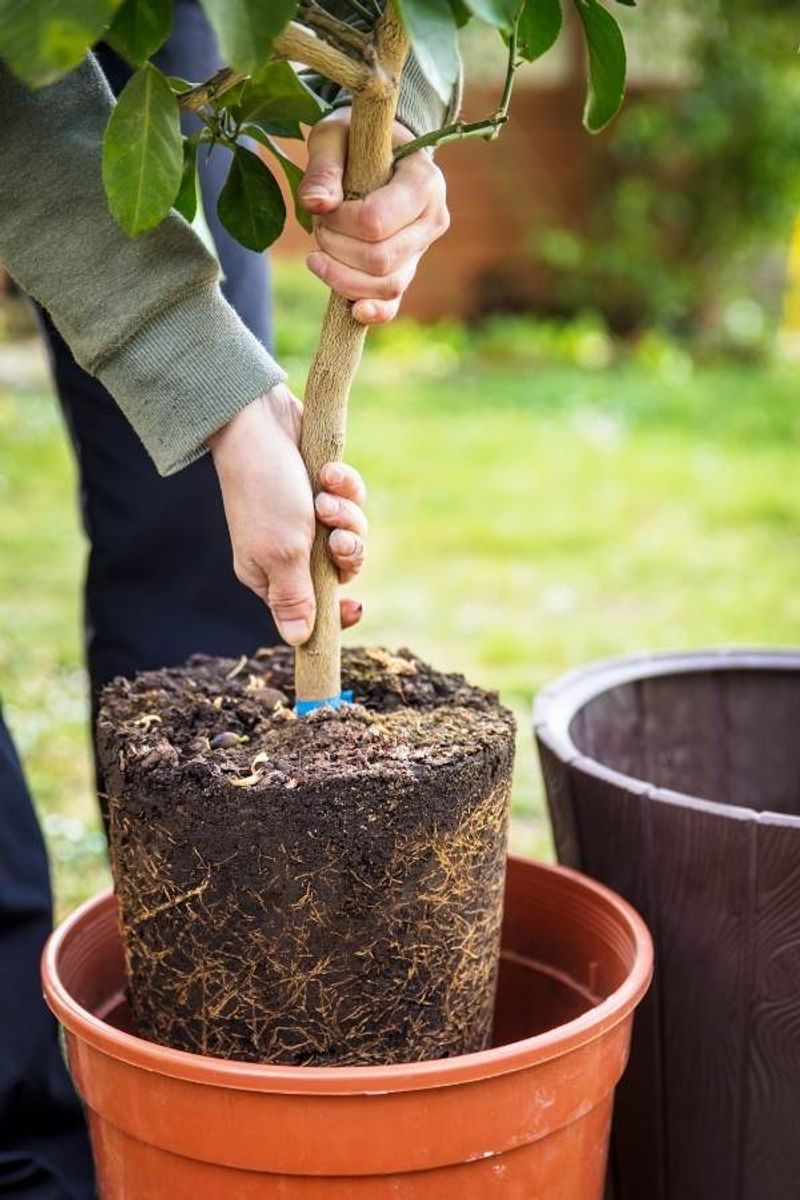
Soggy roots cause more trouble for potted citrus than almost anything else. Setting up good drainage now makes every later decision easier.
It also gives you more room for error when winter watering gets tricky.
Start with the pot. It needs drainage holes, and a pot with no holes is a bad choice for a lemon tree.
Water has to be able to escape, or the mix stays wet and the roots suffer. Mississippi State Extension warns against poor drainage in citrus containers.
Next, choose a quality container potting mix that drains well. Ordinary garden soil packs down in a pot and holds too much water, so leave it in the yard.
Texas A&M’s citrus fact sheet also points to the importance of drainage for container citrus.
Finally, think about pot size. A pot only a little bigger than the root ball is a better fit than a huge one.
Extra mix around a small root system can stay wet for a long time, which raises the risk of root problems. If the tree truly needs a bigger home, step up modestly, and consider doing it in spring rather than right before the move indoors.
Water by the Mix, Not by the Calendar
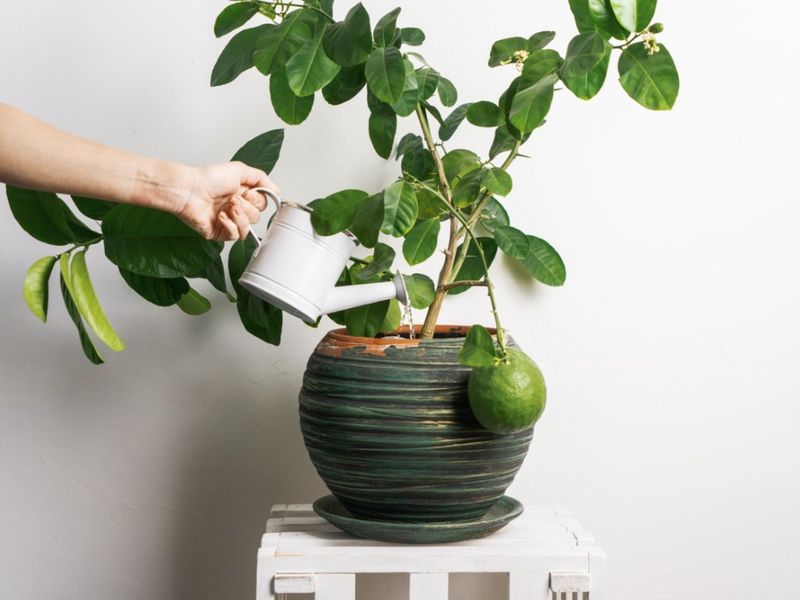
If you have ever heard “water once a week,” forget it. No single interval fits every tree.
Your lemon tree tells you what it needs through the mix in its pot.
Push a finger a couple of inches into the mix. Extension guidance, including University of Minnesota Extension, describes the goal as mix that is moist but not soggy, with slight drying between waterings.
When it feels barely damp or dry at that depth, it is time to water. When it still feels wet, wait.
Several things change how fast the mix dries. Pot size, the type of mix, room temperature, humidity, and the size of the tree all play a part.
A big tree in a small pot in a warm, sunny spot will dry out faster than a small tree in a cool room.
Winter adds another twist. As growth slows, the tree uses less water, so the mix may stay damp longer than it did in summer.
Wisconsin Extension also advises watering less often when growth slows.
When you do water, do it thoroughly and let the excess run out. Then empty the saucer so the pot is not sitting in water.
That one habit protects the roots more than almost anything else.
Slow Down Fertilizing When Growth Slows
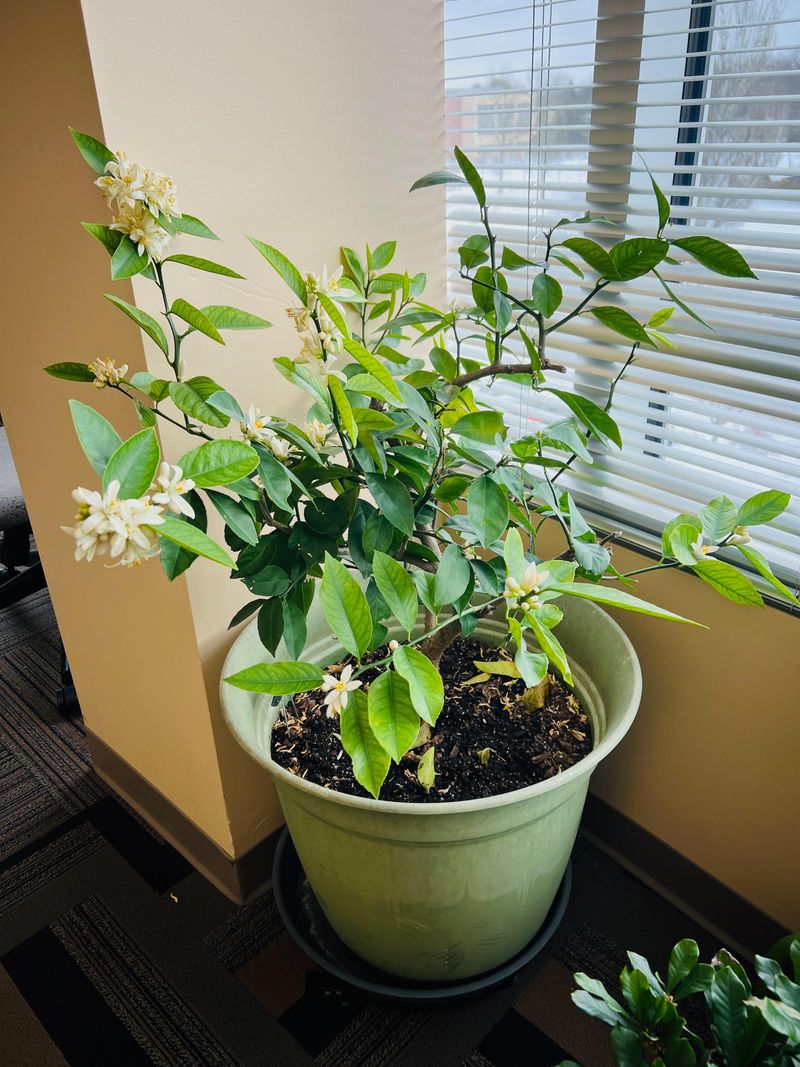
Fertilizer is food for growth, so it only helps when the tree is actually growing. In many homes, winter slows lemon trees down.
That means feeding them on autumn’s schedule can be wasted effort.
The safer approach is to follow the tree. University of Minnesota Extension notes that feeding should be reduced when growth slows.
If you see no new shoots and the tree is just sitting tight, cut back or pause. When fresh growth returns, go back to feeding according to the directions on your product label.
Sources differ on exact feeding calendars, so do not treat any one schedule as universal. Cornell Cooperative Extension offers its own guidance for dwarf citrus, and the label on your fertilizer is the best guide to strength and frequency.
One more warning: do not reach for fertilizer the moment you see a yellow leaf. Yellowing can come from watering problems, poor drainage, low light, temperature shifts, or pests.
Adding fertilizer in winter may not fix any of those and could just add stress. Check the basics first.
Make Seasonal Moves Gradually
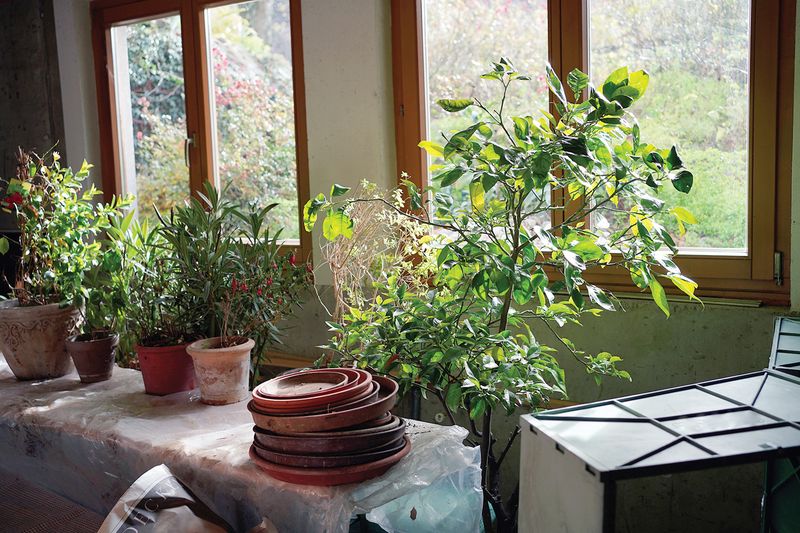
Plants notice sudden changes. Going from bright outdoor sun and fresh air to a dim, warm living room is a big shock for a lemon tree.
A tree may respond by dropping leaves, flowers, or young fruit.
Easing the move can help. In fall, try a few days in a sheltered spot, like a porch or a bright shady corner, before the tree goes fully indoors.
Then place it in its winter window. Oregon State’s Meyer lemon guide explains that sudden changes in conditions can contribute to drop.
Spring needs the same patience in reverse. Once nights are reliably warm, start with a few hours outdoors in shade, then lengthen the time and slowly add more sun over a week or two.
Wisconsin Extension recommends gradual adjustment when moving citrus outdoors, since leaves grown indoors can scorch in strong sun.
Be realistic, though. A gradual move can reduce stress, but it will not stop every dropped leaf.
Some leaf loss after the move is common, and a tree that shows a few bare spots is not necessarily in trouble. Keep up steady care and give it time to settle in.
Check for Pests, and Treat Leaf Drop as a Clue
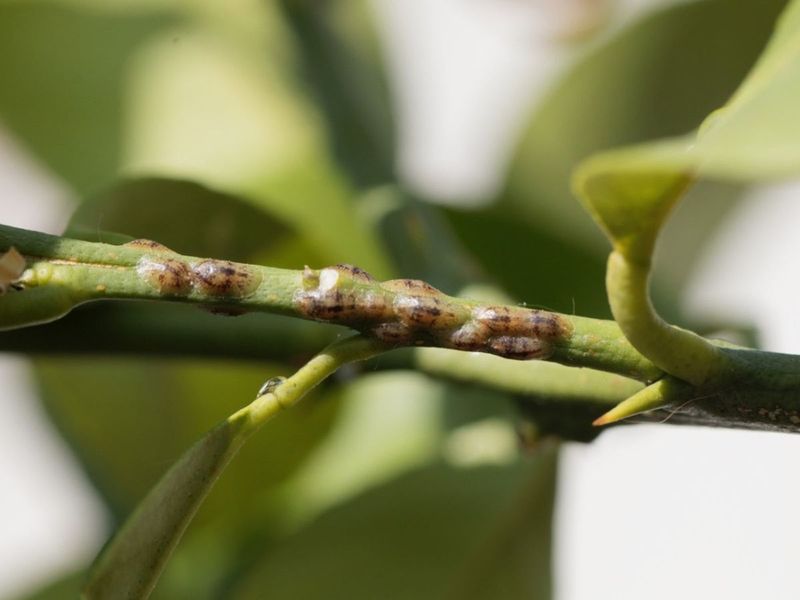
Hitchhikers love to ride indoors with a plant. Before the move, look over the tree carefully, including under the leaves and along the stems.
Wash the foliage to knock off pests and dust. Oregon State’s Meyer lemon guidance suggests inspecting and cleaning plants before bringing them inside.
Keep checking through winter. Scale, spider mites, and aphids are common on indoor citrus, and North Carolina State Extension lists them among Meyer lemon pests.
Look for sticky leaves, tiny webbing, small brown bumps on stems, or clusters of soft insects on new growth.
Now for the leaves. Yellowing or dropping leaves do not point to just one cause.
University of California Agriculture and Natural Resources describes winter yellowing and leaf drop in citrus as a common problem with several possible causes.
Treat it like a checklist. Is the tree getting enough light?
Is the mix too wet or too dry? Does the pot drain well?
Did the temperature or location change recently, or is a heater or drafty door nearby? Are there pests?
Wisconsin Extension also covers leaf drop in indoor citrus. Work through those clues before you reach for fertilizer.
Indoor Fruit Is Possible, but Not Guaranteed
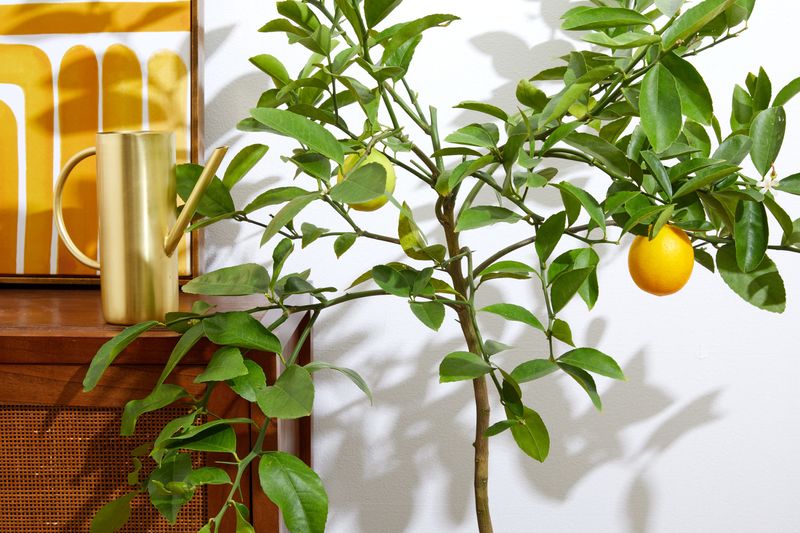
Here is the honest truth: keeping a lemon tree alive indoors is much easier than getting lemons from it. Many trees settle in as healthy houseplants without ever flowering.
That still counts as a win.
Light is the main hurdle. Iowa State Extension notes that citrus can adapt to lower indoor light well enough to stay alive, but fruiting needs more.
Wisconsin Extension likewise says strong light is key if you hope for flowers and fruit.
If blossoms do appear, pollination may need your help. Even a tree labeled self-fertile still needs pollen moved around, and indoors there are no bees or breezes.
Cornell Cooperative Extension describes hand-pollinating indoor citrus flowers, and Oregon State Extension does too. A small soft brush works well for dabbing pollen from flower to flower.
It may help, though it is no guarantee.
Do not be alarmed if some tiny fruit fall off. Some fruit drop can be normal, and sudden changes or watering swings can add to it.
If your tree stays green and healthy until spring, you did the job right. A lemon tree that simply lives is already a quiet success, and lemons are a bonus.