
If Pillbugs Roll Up Under Your Flower Pots, Here’s The Toxic Metal Cleanup Crew Working Your Soil For Free
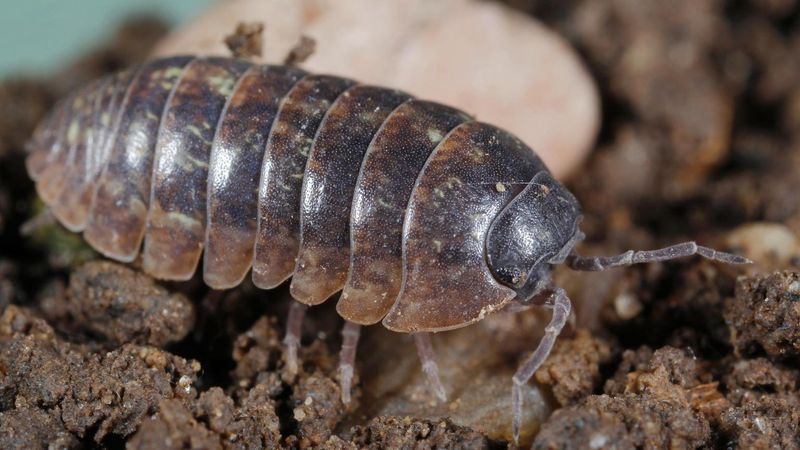
Flip over a flower pot and you’ll almost always find a few roly-polies curled up underneath, which makes a lot of gardeners wonder what those little critters are actually doing down there. Some headlines claim pillbugs act as a free cleanup crew, pulling toxic metals right out of contaminated soil, but that’s not quite the whole story.
Understanding what these small terrestrial crustaceans really do, and what science actually says about metals in their bodies, can help you make smarter decisions about your garden’s health.
Pillbugs Under a Pot Usually Point to Shelter, Not Poison
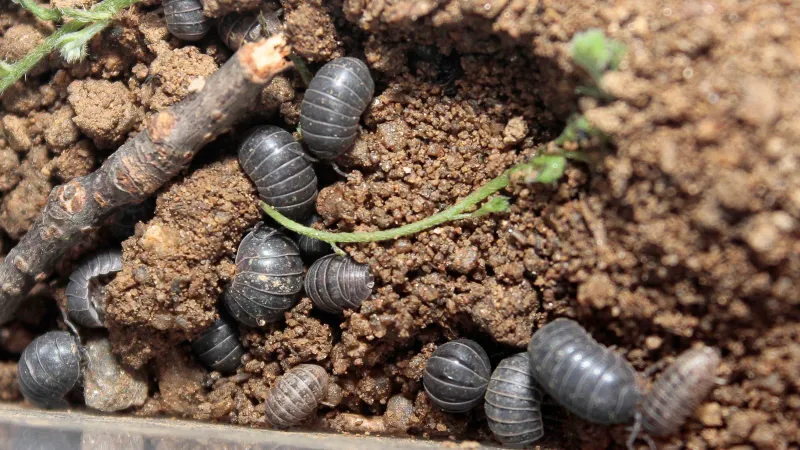
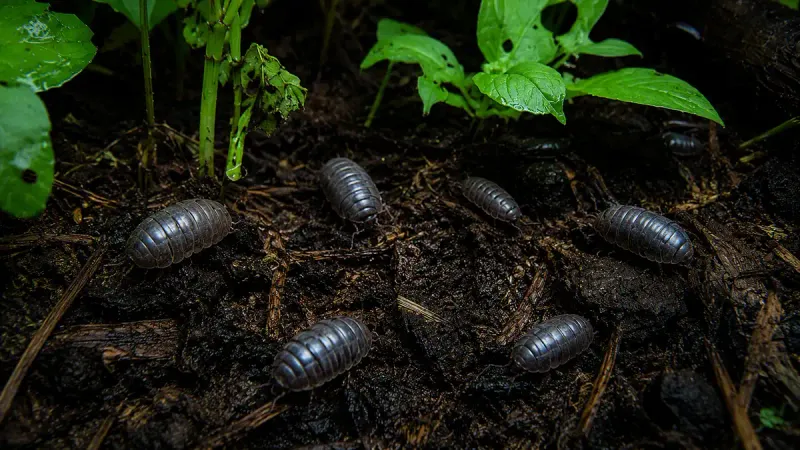
Lift a flower pot that has been sitting in a shady corner for a few weeks and the scene is almost predictable: a cluster of small, gray, armored creatures scatter or curl into tight spheres. Those are pillbugs, sometimes called roly-polies, and they belong to a group of terrestrial crustaceans called isopods, making them closer relatives of crabs and shrimp than of any beetle or caterpillar.
What draws them there has nothing to do with the chemical makeup of your soil. Extension guidance on roly-polies in compost explains that pillbugs seek out places that are cool, damp, and stocked with organic debris, exactly the conditions a flower pot sitting on bare soil tends to create.
Shade keeps moisture from evaporating, the pot’s rim traps humidity, and any decaying leaves or root fragments underneath offer a reliable food source.
The rolling behavior that earns them the roly-poly nickname is a defense response. When a pillbug tucks into a sphere, it protects its softer underside and gills, which must stay moist for the animal to breathe.
Some species roll up completely; others, called sowbugs, are flatter and cannot.
University of Minnesota Extension’s species profile notes that terrestrial isopods are commonly found beneath stones, logs, mulch, and leaf litter for exactly these reasons. Their preferred microhabitat is defined by moisture and shelter, not by any particular soil chemistry.
Seeing a dozen pillbugs under a pot tells you that spot is damp and shaded, with something organic nearby to eat. It does not tell you anything about lead levels, cadmium, or any other contaminant in your garden bed.
That distinction matters, and the rest of this article will explain why.
Their Everyday Role Is Breaking Down Dead Plant Matter
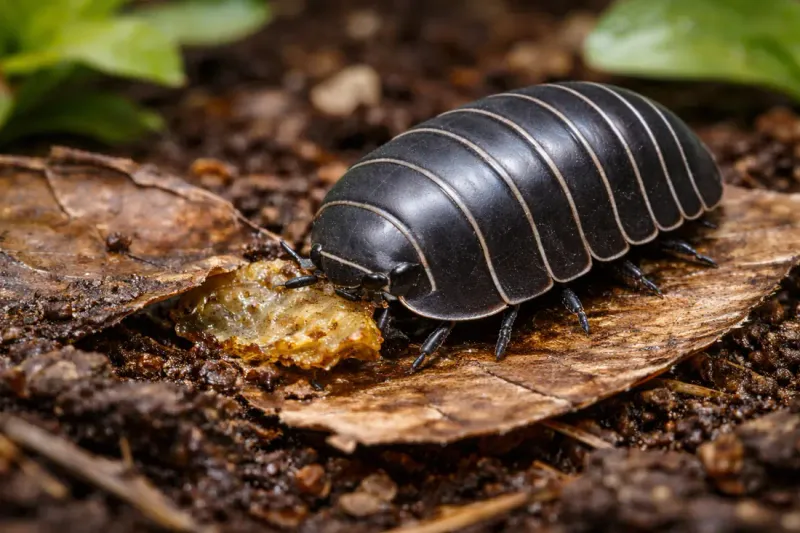
Before getting into what researchers have found about metals in isopod tissues, it helps to understand what pillbugs spend most of their lives actually doing: eating dead stuff. Fallen leaves, rotting stems, decaying root fragments, and other plant litter make up the bulk of their diet, and that habit quietly benefits the soil beneath your flower pots and garden beds.
A review of terrestrial isopods as model organisms in soil ecotoxicology describes how isopods fragment organic material into smaller pieces, which exposes far more surface area to bacteria and fungi. Those microorganisms then complete the breakdown process, cycling nutrients back into the soil where plant roots can reach them.
Pillbugs, in other words, are working the first shift of a relay race that ends with nutrients becoming available to your garden plants.
Their contribution is real but proportionate. A few dozen pillbugs under a pot are not composting your entire yard or fertilizing your flowers on their own.
They are one small part of a much larger soil food web that includes earthworms, beetles, mites, nematodes, and billions of microbes. Removing pillbugs from a healthy garden would not collapse that system, but their presence does add a useful link.
What they eat also shapes where they live. Pillbugs track down moist organic matter, which is why gardens heavy with mulch, leaf piles kept right against plant stems, or compost spread directly on the soil surface tend to support larger populations.
The food and the habitat overlap almost completely.
Knowing their ecological function as decomposers is the foundation for understanding every other claim about pillbugs, including the more complicated story about metals that follows. They are not soil cleaners, pest controllers, or fertilizer factories.
They are fragment-and-feed specialists, and they do that job steadily and without any help from gardeners.
Some Studied Isopods Accumulate Metals in Their Tissues
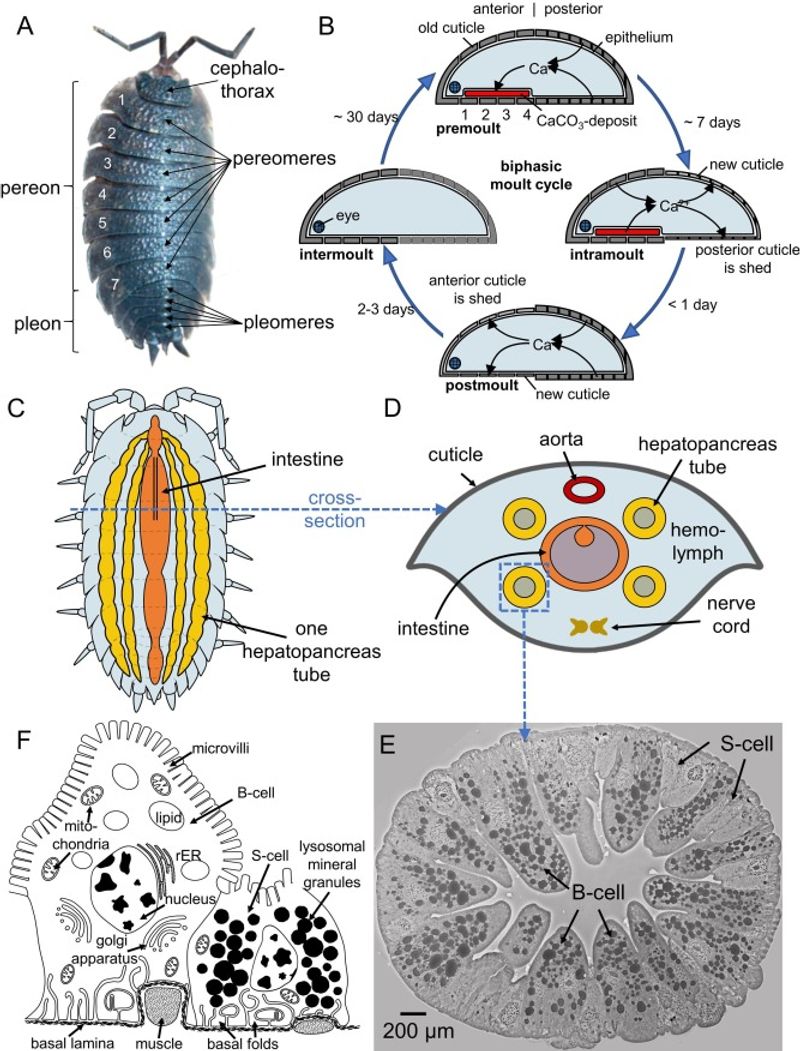
Researchers studying soil contamination have paid close attention to terrestrial isopods for decades, and for good reason. Certain species, particularly Porcellio scaber and Armadillidium vulgare, have been documented taking up metals from their food and environment and storing them in internal tissues under particular exposure conditions.
Early histochemical research on heavy metals in Porcellio scaber identified metal-containing structures inside the hepatopancreas, an organ that handles digestion and detoxification in crustaceans. Lead, copper, zinc, and cadmium were found concentrated in specialized cellular compartments, essentially mineral deposits locked inside the animal’s own tissue rather than circulating freely through its body.
That storage process is not the same across all metals. Copper and zinc are nutrients that isopods, like most animals, actually need in small amounts to survive.
At low concentrations they support enzyme function and other biological processes. At excessive concentrations, though, both become harmful, and the hepatopancreas can show structural damage when exposures climb high enough.
Lead and cadmium occupy a different category entirely. Neither has a known beneficial role in animal biology, and research comparing cadmium and lead accumulation across three terrestrial isopod species found that body burdens and tissue effects varied considerably depending on the species tested and the exposure level involved.
Results from one species cannot simply be applied to every pillbug in every garden.
High metal exposure can also cause visible damage to hepatopancreas cells, including distorted tissue architecture and signs of cellular stress. The animals may regulate, excrete, or sequester metals depending on the element and the dose, but none of those responses makes the isopod immune to harm at sufficiently high concentrations.
The key qualifier running through all of this research is that it describes specific studied species under controlled or known contamination conditions. A garden pillbug living under a flower pot on ordinary suburban soil is operating in a very different environment than the organisms in these laboratory and field studies.
Bioaccumulation Does Not Equal Soil Cleanup
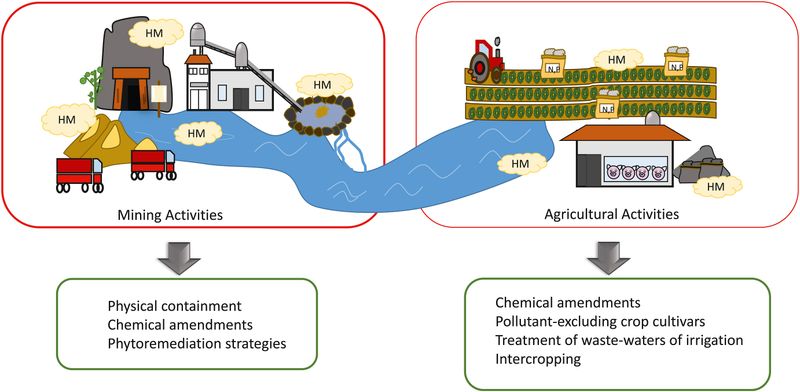
The phrase “cleanup crew” implies that pillbugs are pulling contaminants out of your soil and making the ground safer over time. That framing goes further than the research actually supports, and getting the distinction right matters for anyone making real decisions about a garden bed.
Bioaccumulation means an organism takes up and retains a substance at a higher concentration than what exists in its surroundings. It describes what happens inside the animal, not what happens to the soil.
The soil ecotoxicology review of terrestrial isopods focuses on toxicology, tissue storage, and biomonitoring. It does not establish pillbugs as a method for reducing total or bioavailable metal concentrations in backyard garden soil.
Genuine remediation would require something different: a measurable, meaningful reduction in soil contamination over time, plus a practical way to remove the contaminated biomass from the site. Phytoremediation, for example, uses plants that pull metals into their above-ground tissue, which farmers or land managers then harvest and dispose of safely.
Even that approach has significant limitations for metals like lead.
Pillbugs do not work that way. A metal stored in an isopod’s hepatopancreas is not destroyed.
The animal may later excrete part of that load, transferring the contaminant back into the soil or litter. It may die and decompose, releasing the stored metals back into the environment.
It may be eaten by a bird, a toad, or a ground beetle, moving the contaminant up the food chain. Sequestration inside a living animal is a temporary holding state, not a permanent solution.
Even if a garden contained thousands of pillbugs and each one carried a measurable metal load, the total mass of contaminant stored in their collective tissues would be trivially small compared to the amount bound to soil particles across a few square feet of a genuinely contaminated bed. The math does not support the cleanup claim.
None of this makes pillbugs harmful or useless. They are effective decomposers, and their metal-accumulating behavior makes certain species genuinely valuable as biomonitoring tools for researchers.
The correction is simply this: a crustacean containing a pollutant is not the same thing as the soil being cleaned.
A Pillbug Cannot Diagnose Your Soil
Researchers have used terrestrial isopods as living samplers in contaminated landscapes, collecting specimens from sites near smelters, landfills, and industrial zones and analyzing their tissue metal content to map pollution patterns. That scientific use is legitimate and well-documented.
The leap from “researchers use isopods to study contamination” to “counting roly-polies in my garden tells me whether my soil is safe” is where things go wrong.
A study on Armadillidium vulgare near a municipal solid waste landfill illustrates how carefully controlled the research context has to be. Investigators collected animals from specific mapped locations, accounted for body size, let animals depurate (clear their guts) before analysis, and compared results across multiple sampling points.
That level of rigor is what makes the data meaningful. None of it translates into a backyard observation tool.
Metal accumulation in any individual pillbug depends on far more variables than most gardeners can track. The species matters, because different isopods regulate and store metals differently.
Diet matters, because what the animal has been eating determines much of its metal exposure. Soil chemistry and pH affect how available different metal forms are for uptake in the first place.
Body size and age shift the numbers. Season and temperature influence physiology.
Even whether the animal has recently fed or cleared its gut affects the result.
The terrestrial isopod ecotoxicology review underscores that body burdens must be interpreted against all these background variables to mean anything. A pillbug with elevated copper tissue levels might reflect contaminated soil, or it might reflect a diet heavy in copper-rich leaf litter from certain tree species, or a combination of both.
There is also a fundamental gap between isopod exposure and human or plant exposure. EPA guidance on brownfields and urban agriculture notes that total soil metal concentrations and biologically available fractions can differ substantially depending on soil pH, organic matter content, and the specific chemical form of the contaminant.
What a pillbug absorbs from decaying litter is not a reliable proxy for what a tomato root or a child’s hand picks up from the same patch of ground.
Use Soil Testing When Pollution Has a Credible Source
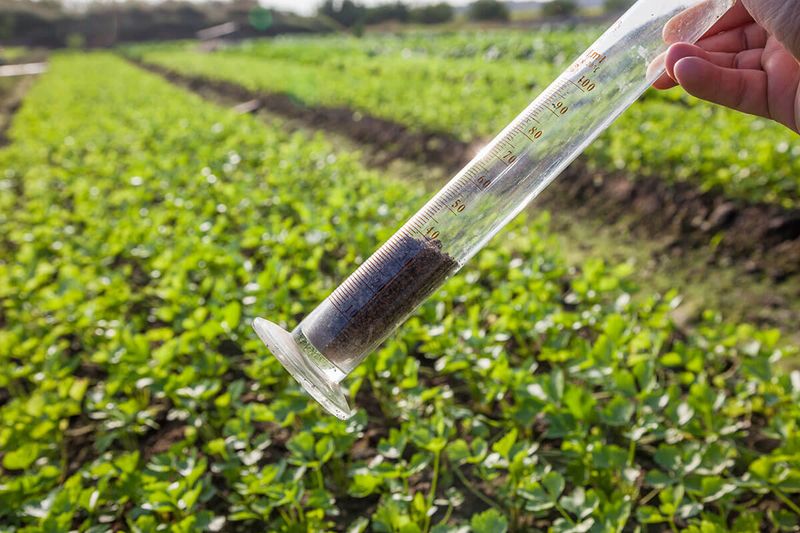
Pillbug counts are not a substitute for a laboratory soil test, but knowing when to actually get one can feel unclear. The answer comes down to whether your garden has a credible pollution source nearby, not whether you happen to see a lot of roly-polies.
EPA’s lead-in-soil guidance identifies several situations that warrant testing: living in or near a home built before 1978 with deteriorating exterior paint, gardening near a busy road where decades of leaded gasoline exhaust settled into the soil, proximity to former industrial sites, old orchards where lead arsenate pesticides were historically used, land near mines or smelters, or gardens built on imported fill of unknown origin. Any of those conditions gives you a factual reason to send a soil sample to a lab.
State university extension services are a practical starting point for finding certified testing labs. Many land-grant universities run soil testing programs at low cost, and some county extension offices can walk you through collecting samples correctly, which matters because improper sampling can skew results.
The EPA also notes that state extension offices may specifically offer lead testing guidance for home gardeners.
If a test comes back showing elevated lead or other contaminants, the response is practical and manageable. EPA guidance for urban agriculture on brownfields recommends options such as covering contaminated soil with a thick mulch barrier, switching to raised beds filled with clean purchased soil, washing produce thoroughly, peeling root crops, and keeping soil and dust from being tracked into the home.
Those are real exposure-reduction steps.
Pillbugs never replace that process. A yard full of roly-polies does not make contaminated ground safe for vegetables, herbs, children playing nearby, or pets that dig.
The crustaceans living in your soil are not monitoring lead levels on your behalf, and their presence or absence should never be read as a signal that testing is unnecessary.
Manage Plant Damage, Not the Mere Presence of Pillbugs
Most of the time, pillbugs under a flower pot are doing nothing harmful. They are recycling dead plant tissue, staying out of sight, and moving on when conditions dry out.
The question worth asking is not whether they are present, but whether your plants are actually showing damage.
Pillbugs usually stick to decaying organic matter, but they can shift their feeding behavior when populations grow large, conditions stay persistently wet, or the supply of dead material runs short. Missouri Botanical Garden’s sowbug and pillbug resource notes that seedlings, transplants, strawberries, and other tender low-growing plant tissue are most vulnerable.
Damage typically appears as irregular feeding on stems at or near the soil surface, or on fruit touching the ground, such as strawberries resting directly on damp mulch.
When actual plant injury is occurring, habitat management is the right first response. Move rotting debris and thick mulch layers away from vulnerable plant stems, because that material is both food and shelter.
Reduce excessive watering or improve drainage so the immediate soil surface dries out between waterings. Better air circulation around low-growing plants removes the humid microclimate pillbugs prefer.
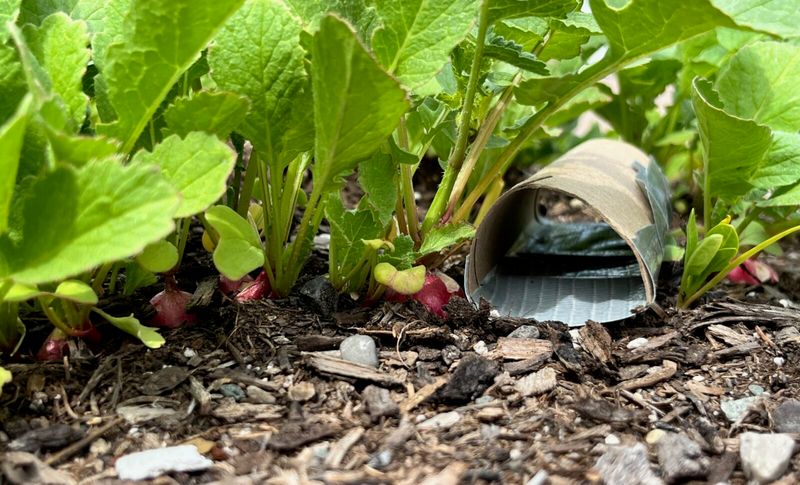
Physical barriers work well for seedlings and transplants. A small collar of cardboard or plastic pressed lightly into the soil around each stem gives young plants time to toughen up before pillbugs can reach them.
Iowa State University Extension’s sowbug guidance emphasizes that control is usually unnecessary unless visible damage is actively occurring.
Broad pesticide applications are not warranted simply because pillbugs are present. Extension advice on roly-polies in the garden consistently frames them as largely beneficial decomposers in most garden situations.
Spraying a chemical to eliminate a population that is quietly breaking down leaf litter trades a minor nuisance for a real disruption to soil biology.
One more caution: adding more organic mulch is sometimes suggested as a way to give pillbugs an alternative food source and draw them away from living plants. That can help, but a heavy layer of damp mulch also expands their habitat and can make the problem worse near seedlings.
Match the response to the actual situation rather than applying a single rule.
The Safe Takeaway for Flower-Pot Roly-Polies
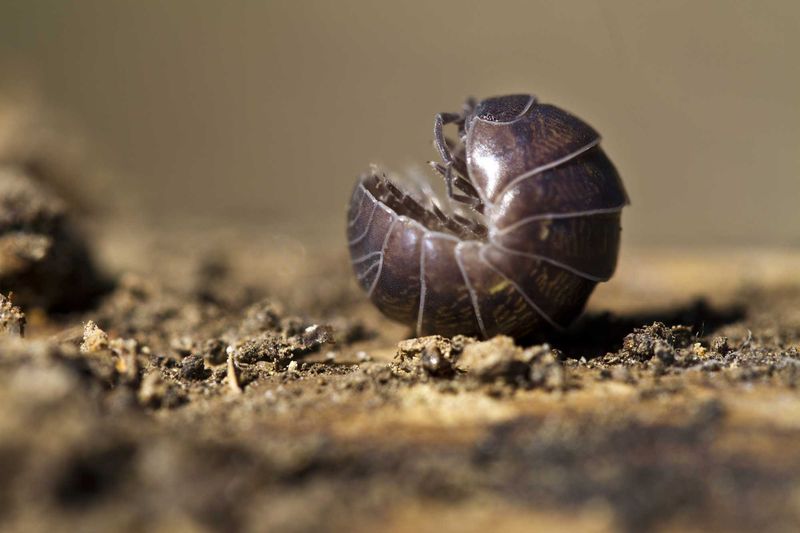
A pillbug under a flower pot is almost certainly there because the spot is shady, damp, and close to something decomposing, not because your soil harbors toxic metals. Treat it as a decomposer doing ordinary work, and leave it alone unless your plants start showing actual feeding damage.
Terrestrial isopod research confirms that certain studied species can accumulate metals in their tissues under particular exposure conditions, which makes them useful subjects for environmental monitoring. That finding does not make your garden pillbugs a remediation system, and it does not make their presence a warning sign about contamination either.
If your garden has a credible pollution source, such as peeling paint on a pre-1978 home, a former orchard, or a busy road nearby, get a laboratory soil test as EPA recommends and follow the exposure-reduction steps that come with the results. If your plants are being chewed near the soil line, apply targeted habitat management rather than broad pesticides.
The roly-poly curled up under your pot is neither a hazard to dismiss nor a miracle worker to celebrate. It is a small crustacean doing a modest, genuinely useful job, and knowing exactly what that job is puts you in a better position than any headline about free cleanup crews.