
If These 14 Flowers Fill Your North Carolina Yard, Hummingbirds Show Up All Season Long
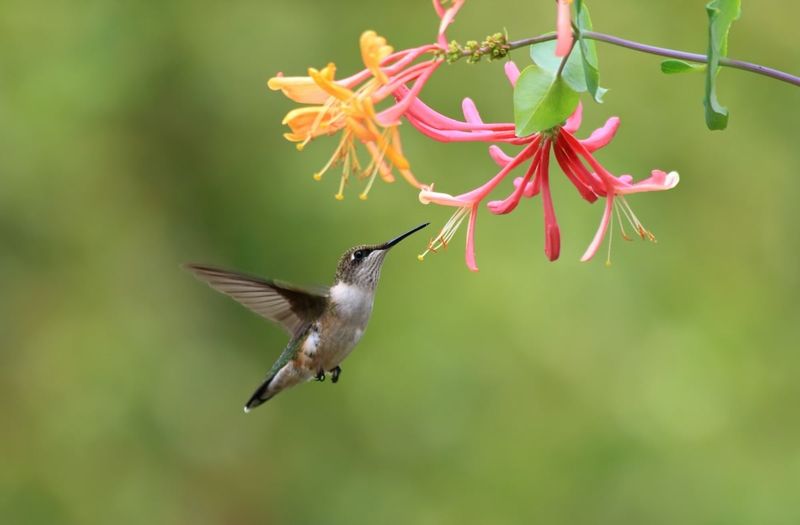
Watching a hummingbird zip around your yard is one of the best rewards a North Carolina garden can offer. The trick is planting flowers that keep the nectar flowing from early spring migration all the way through fall.
Below are 14 blooms that hummingbirds can’t resist, each with its own bloom season and its own reason to earn a spot in your beds. Plant a mix of them, and you’ll have tiny winged visitors dropping by for months.
1. Cardinal Flower (Lobelia cardinalis)
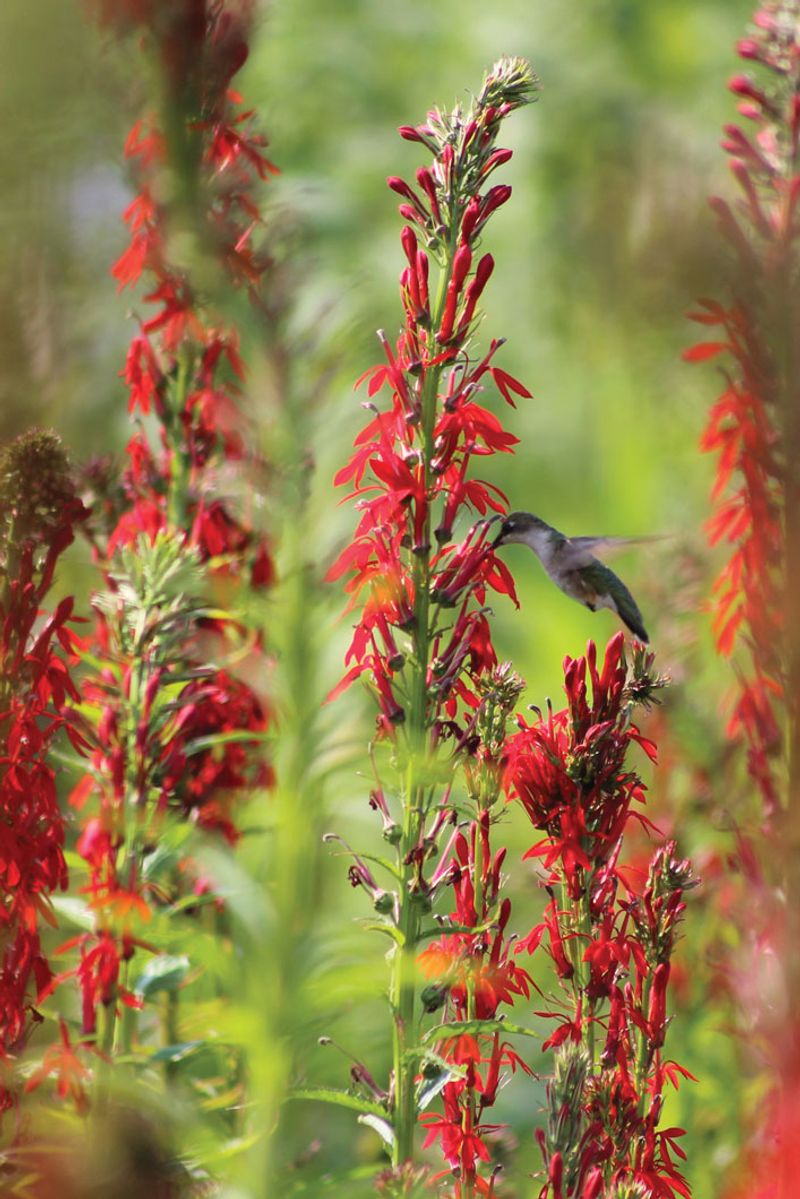
Few flowers stop a hummingbird in its tracks like the fiery red spikes of Cardinal Flower. From late June through August, those tall scarlet stalks fill in right when fledglings and migrating birds need the most fuel.
What sets it apart is timing. While spring bloomers fade, this native perennial hits its peak in the heat of summer, covering a gap other plants leave open.
It handles standard garden soil once it settles in, and it gently self-seeds so you get fresh plants year after year. Give it a spot that stays a little damp, and it rewards you without much fuss.
2. Lantana
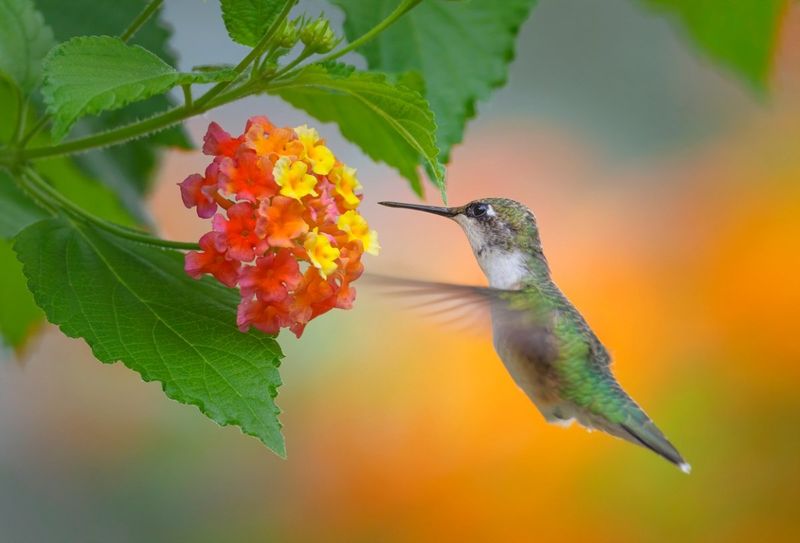
If you tend to forget the watering can, Lantana is your friend. This tough annual shrugs off drought and keeps pumping out rich clusters of tiny tubular flowers from spring straight through fall.
The long bloom window is the real draw here. Instead of a short burst, you get months of color that hummingbirds and butterflies both flock to.
Plant it in a hot, sunny spot where fussier flowers wilt, and it thrives on the neglect. Few blooms give you this much reliable nectar for this little effort.
3. Bee Balm (Monarda)
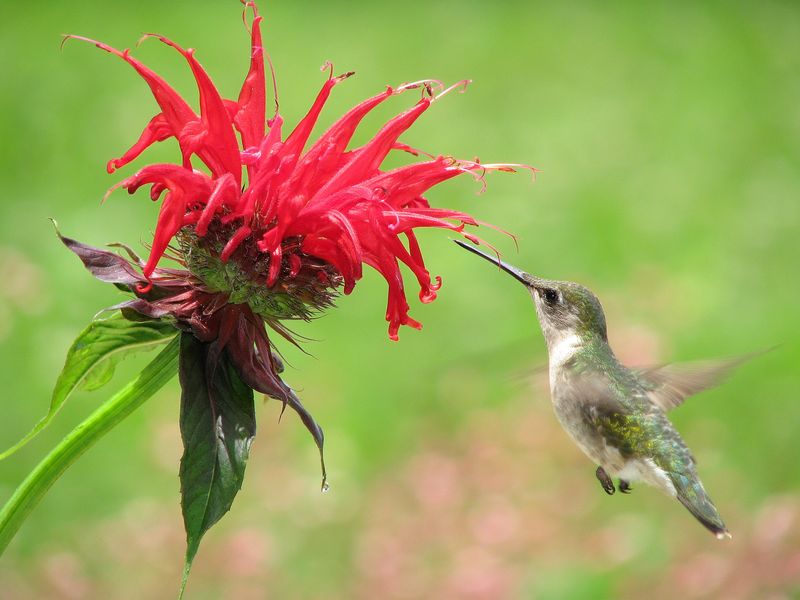
Bee Balm looks a bit wild and shaggy, and hummingbirds absolutely love it for that. Its spiky clusters of red flowers sit up high where a hovering bird can reach every bloom.
Here’s a handy trick that keeps it on the list: cut Scarlet Bee Balm (Monarda didyma) back after its first flowering, and it often pushes out a second flush of blooms. That means more nectar later in the season.
As a North American native, it feels right at home in Carolina soil and comes back stronger each year. Give it good air flow to keep the leaves happy.
4. Foxglove (Digitalis)
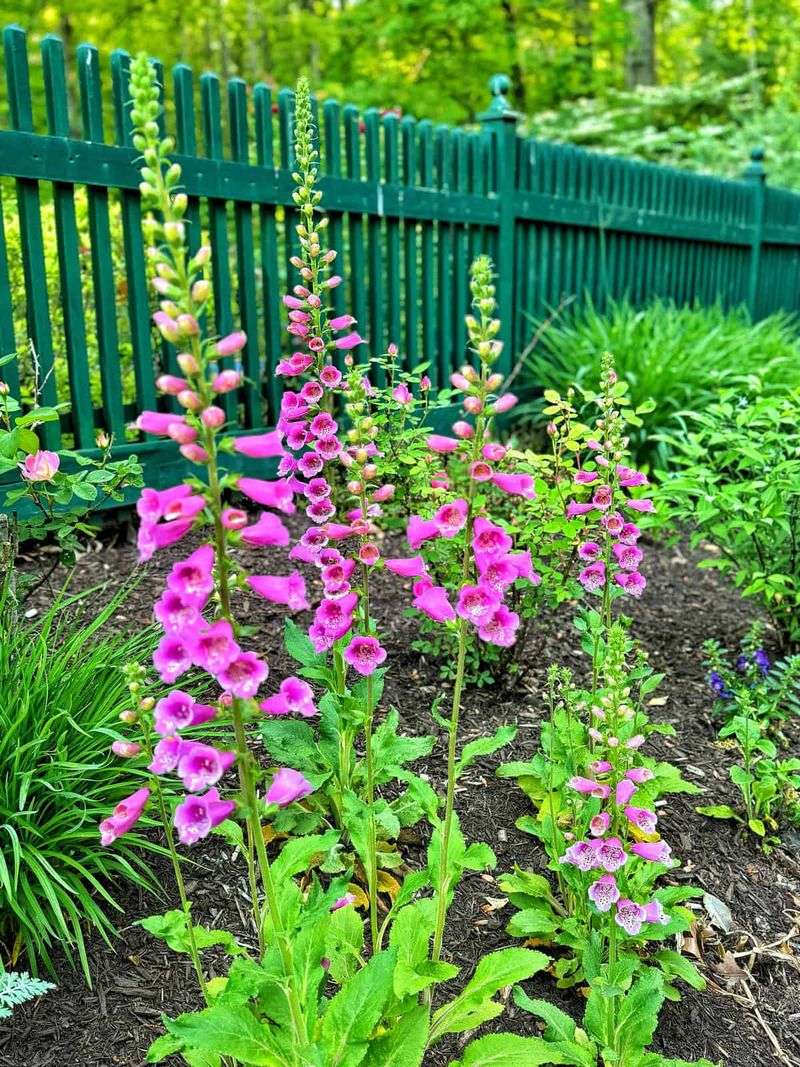
Got a shady corner where nothing seems to bloom well? Foxglove steps in with its tall stalks of tubular flowers, thriving in partial shade where most nectar plants sulk.
The hybrid varieties are the standouts. Digiplexus types are non-stop bloomers that can keep flowering right up to the first frost, stretching your hummingbird buffet deep into fall.
Those bell-shaped blooms are practically built for a hummingbird’s beak. Tuck it along a fence or under light tree cover and let it fill the gaps sunnier flowers can’t.
5. Columbine (Aquilegia canadensis)
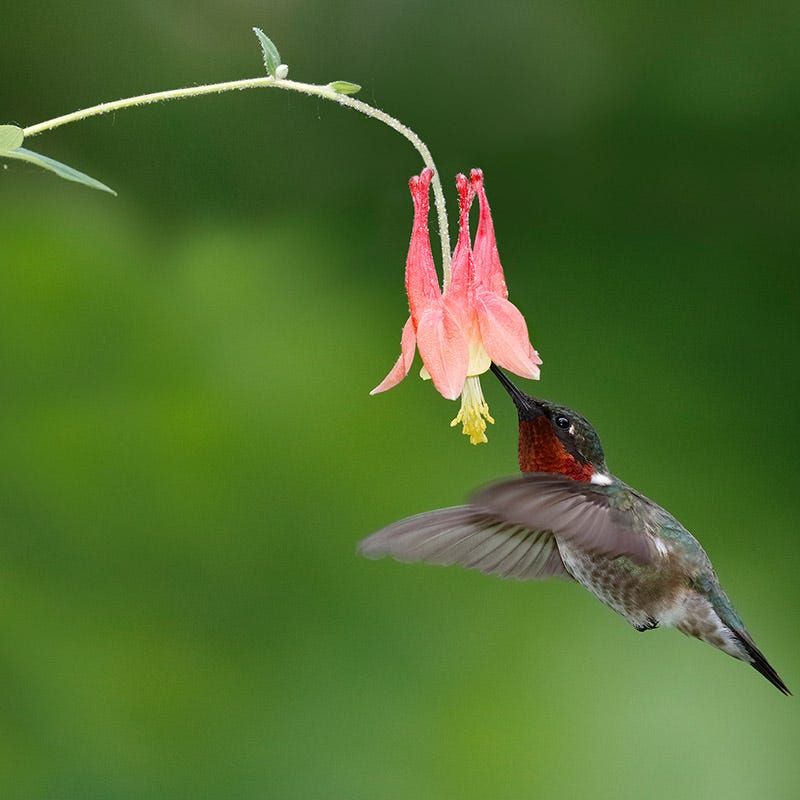
When the first male hummingbirds arrive in North Carolina after their long flight north, Columbine is often the flower waiting for them. Blooming heavily from April into May, it is one of the earliest food sources of the year.
That early timing is exactly why it matters. Those spring blooms deliver high-energy nectar right when tired, hungry birds need it most, before summer flowers have even woken up.
The Eastern Red Columbine, with its dangling red and yellow blossoms, is a woodland native that settles in easily. It’s a quiet workhorse that kicks off the whole hummingbird season.
6. Cuphea (Vermillionaire Mexican Cigar Flower)
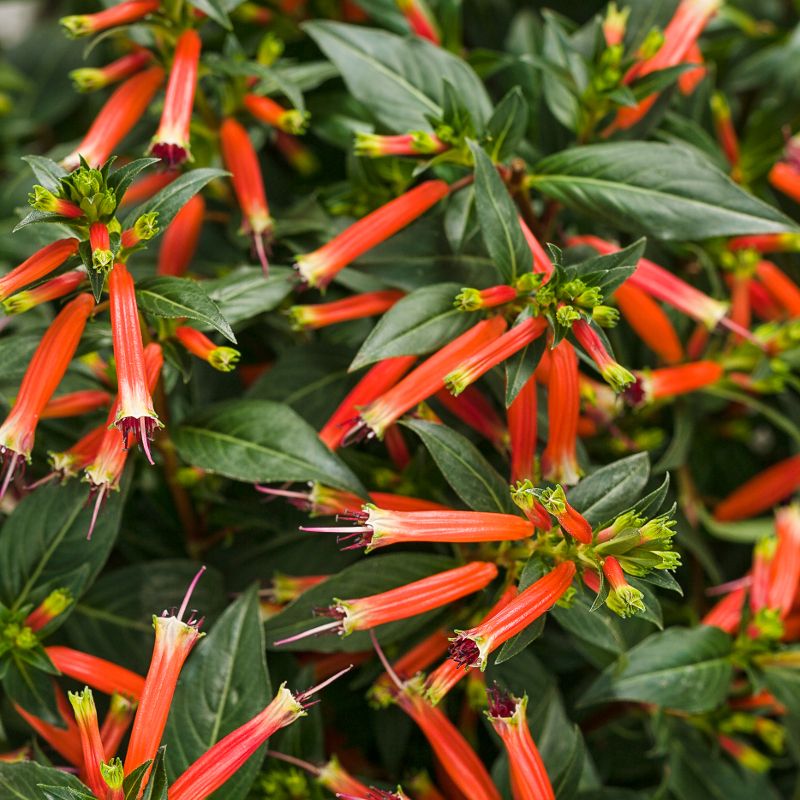
Nicknamed the cigar flower for its slim tube-shaped blooms, Cuphea is a heat-lover that just won’t quit. The ‘Vermillionaire’ variety blooms all summer long and laughs at high temperatures.
Its endurance in blazing heat is what earns its place. While other flowers droop by August, Cuphea keeps offering fresh orange-red tubes from summer until frost.
Those little flowers are the perfect shape and size for a hummingbird to sip from all day. Pop it in a container or a sunny bed and it becomes a constant snack station.
7. Trumpet Honeysuckle (Lonicera sempervirens)
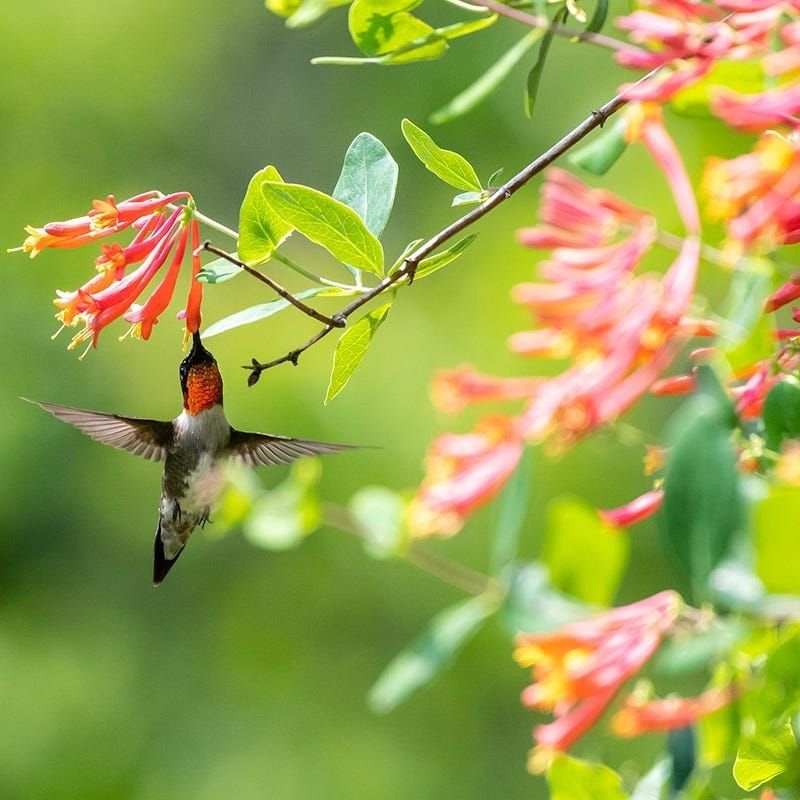
The name says it all: Trumpet Honeysuckle produces long, tubular red and orange flowers shaped like tiny trumpets, and hummingbirds treat them like personal fuel pumps.
Unlike bushy flowers, this one climbs. Train it up a trellis, fence, or arbor and you get a vertical wall of nectar that birds can work from top to bottom.
It’s a native vine, so it plays nicely in a pollinator garden without the aggressive spreading of some invasive honeysuckles. Give it something to grab onto and full sun, and it rewards you with steady blooms.
8. Salvia (Sage)
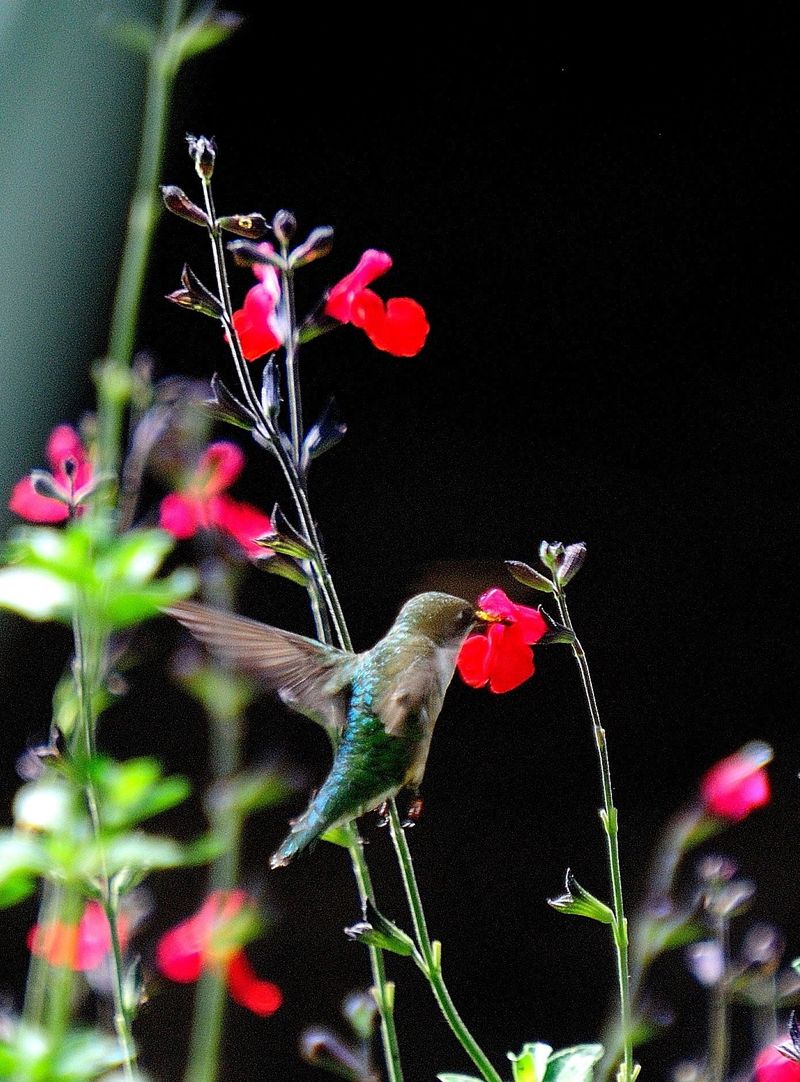
Salvia is basically hummingbird candy. Its deep, tubular flowers are packed with nectar, and birds visit them again and again throughout the day.
The variety range is what makes it so useful. ‘Hot Lips’ (Salvia microphylla) blooms reliably from May all the way to October, while Mexican bush sage (Salvia leucantha) flowers late and feeds birds during fall migration.
Mix a few types and you cover nearly the entire season with one plant family. They love full sun and shrug off dry spells, making them low-worry additions to any bed.
9. Crocosmia (Crocosmia Lucifer)
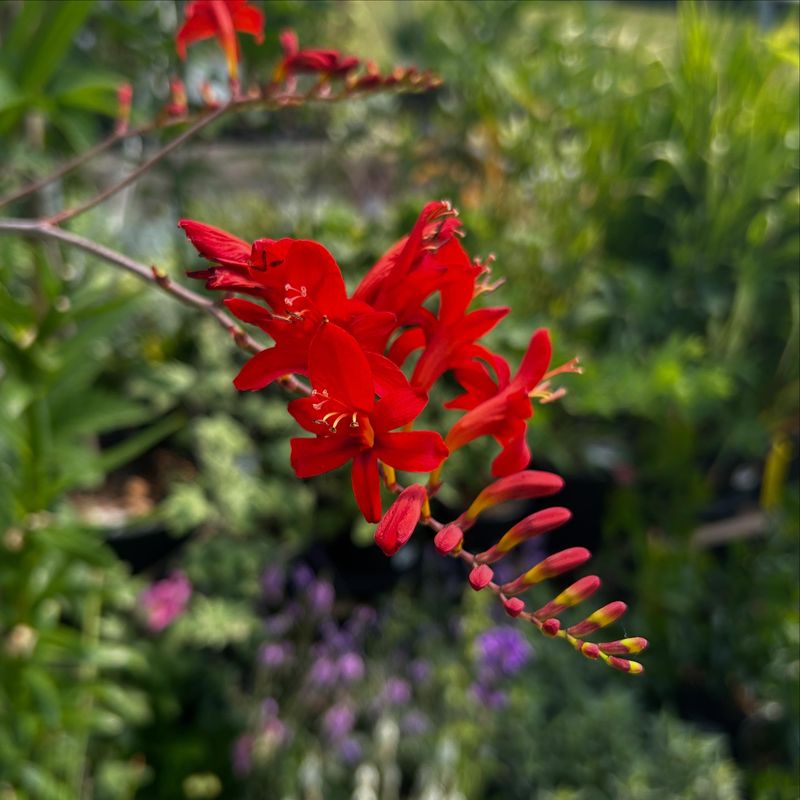
With arching sprays of bright red blooms on tall, wiry stems, Crocosmia ‘Lucifer’ brings a fiery, exotic look that hummingbirds home in on from across the yard.
Once established, it delivers an extended run of flowers in sunny spots. A little dappled afternoon shade can even help the blooms last longer, stretching the show.
The flowers line up along the stem like a row of red flags, giving birds plenty of stops in one visit. Plant it in a sunny corner and let it multiply into a bold, cheerful clump.
10. Buddleia (Butterfly Bush)
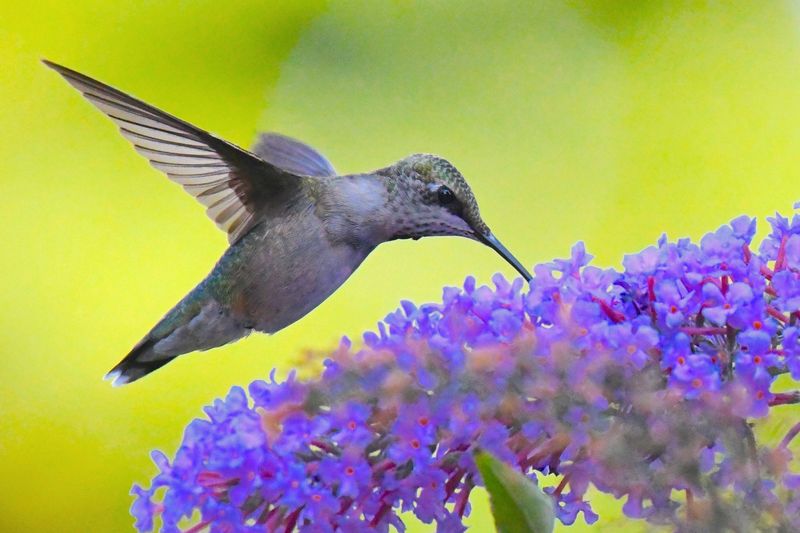
Butterfly Bush earns its name with butterflies, but hummingbirds crash the party too. Its long trusses of tiny flowers act like a magnet for anything with wings.
Being a shrub sets it apart from the smaller blooms on this list, and it stays semi-evergreen in North Carolina winters. That gives your garden some structure along with the nectar.
Give it full sun for the best flowering, and deadhead spent blooms to keep new ones coming. One heads-up: some varieties can be invasive, so trimming those old flower heads also helps keep it in bounds.
11. Garden Phlox
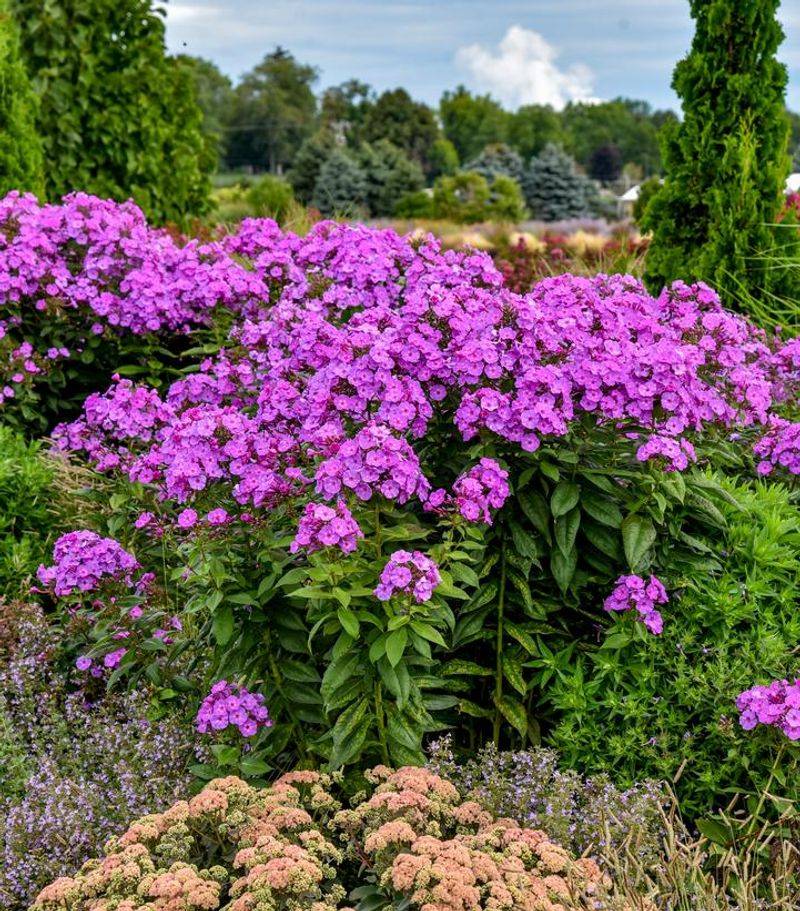
Garden Phlox brings soft, fragrant color to the middle of the season, unrolling dome-shaped clusters of pink, purple, and white tubular flowers from mid-summer into early fall.
Its sweet spot in the calendar is the reason it belongs here. When spring flowers are long gone, phlox steps up to keep the nectar coming during the warm months.
Snip off the spent flower heads and you’ll often coax a longer bloom period out of it. Plant it toward the middle or back of a bed where those tall clusters can shine.
12. Hummingbird Mints (Agastache spp.)
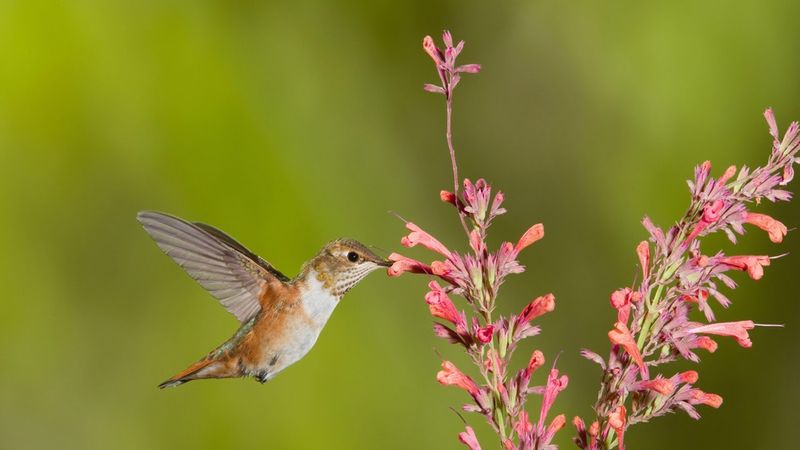
Rub the leaves of an Agastache and you’ll catch a minty, fragrant scent, but the flowers are what draw the crowds. These aptly named Hummingbird Mints bloom from summer into fall.
Their long, upright flower spikes give birds an easy landing zone loaded with nectar. The fragrant foliage is a nice bonus that also tends to keep deer browsing elsewhere.
Regular deadheading keeps the blooms coming week after week. Give it sun and decent drainage, and it becomes a dependable late-season stop for traveling hummingbirds.
13. Hibiscus
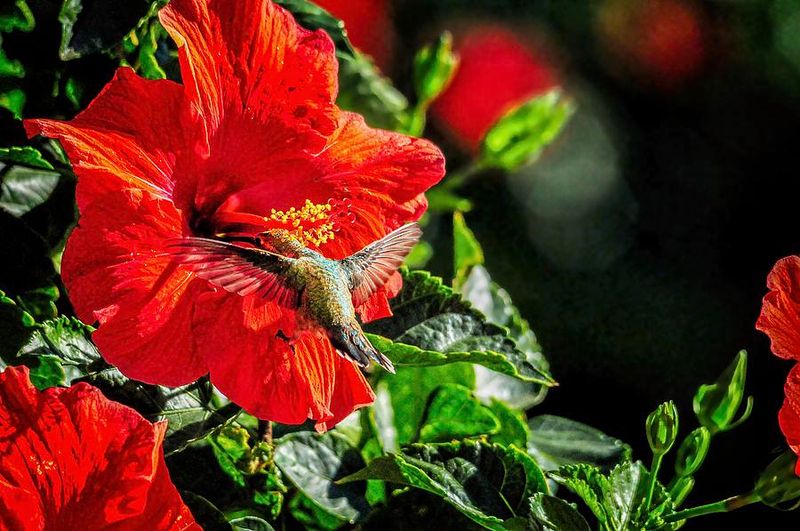
Big, bold, and impossible to miss, Hibiscus flowers look like they were designed to grab attention, and hummingbirds agree. Their wide, colorful blooms make a dramatic statement in any yard.
What makes them handy is scale. A single plant covered in dinner-plate-sized flowers gives birds a generous target and gives you a stunning focal point at the same time.
Various Hibiscus species draw hummingbirds in, from hardy garden types to showier tropical varieties. Give them sun and steady moisture, and those giant blooms keep the visitors coming back.
14. Petunias
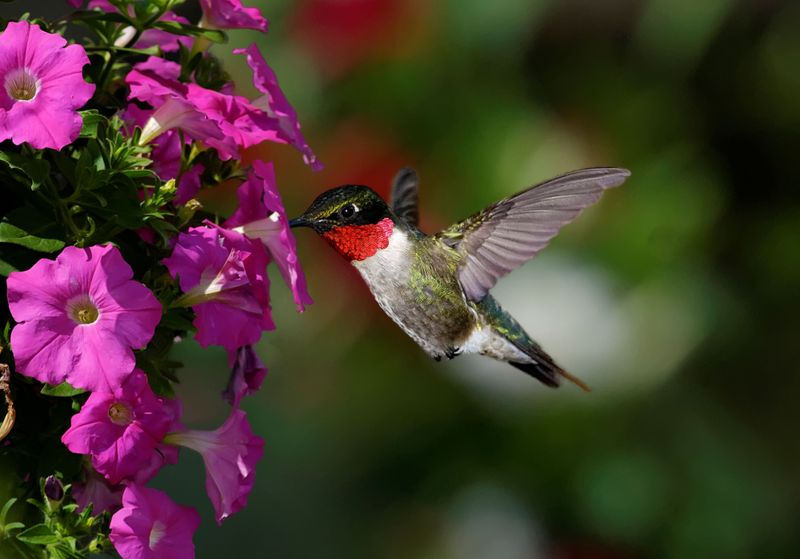
Sometimes the humble classics do the job best, and petunias prove it. These everyday annuals show up on hummingbird favorite lists because their trumpet-shaped flowers offer easy sips of nectar.
Their real strength is flexibility. Petunias thrive in hanging baskets, window boxes, and beds, so you can place nectar right where you’ll enjoy watching the birds.
They bloom generously all season with a little deadheading and regular water. Cheap, cheerful, and widely available, they’re an easy win for filling gaps between your bigger perennials.