
What It Really Means When Goldfinches Swarm Your North Carolina Yard In Late Summer
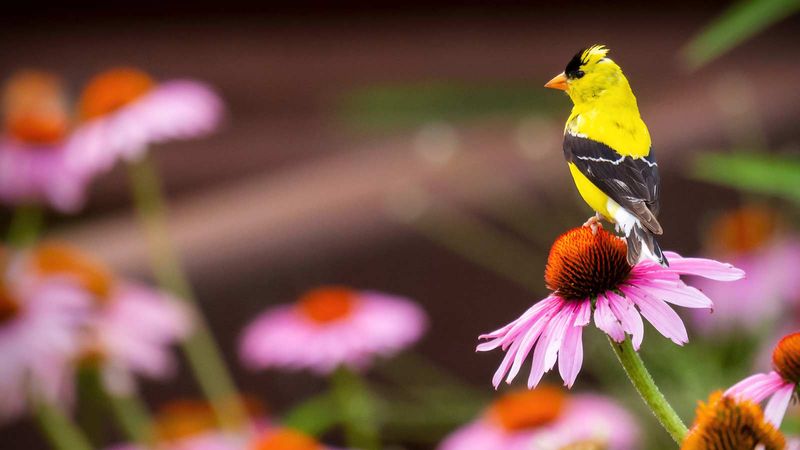
Spot a sudden flash of yellow at your coneflowers or feeder in late July or August and it is easy to wonder what the birds are trying to tell you. American Goldfinches gathering in your yard most likely have a straightforward reason for showing up: your property is offering something they can eat right now.
Understanding what is actually drawing them in helps you make smarter choices about your plants, your feeders, and how you manage your yard through the rest of the season.
Start with the food source, not a mystery
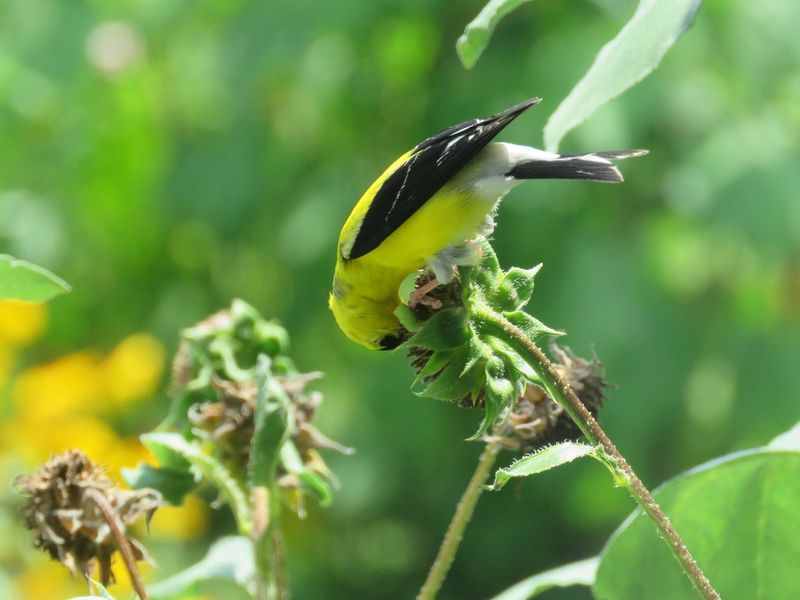
American Goldfinches are overwhelmingly seed-eaters, and when a group of them shows up in your yard in late summer, the most straightforward explanation is that your property is offering food they can reach. Cornell Lab’s American Goldfinch life history account describes the species as strongly associated with weedy fields, open woodland edges, gardens, and suburban yards where seed-producing plants are available.
Their preferred foods include seedheads from plants in the daisy family, grasses, seeding weeds, sunflowers, asters, and trees, along with whatever a well-stocked feeder puts in front of them.
That food source can be a garden bed full of maturing coneflowers just as easily as a nyjer tube feeder you filled last week. Both can draw a flock, and it is worth separating those two scenarios before drawing any larger conclusions.
If the birds are clinging to actual plant stems and pulling seeds from dried flower heads, your planting is directly supplying their meal, and that tells you something meaningful about the habitat your yard provides. If they are gathering only at a feeder, the feeder itself is doing the work, and that does not tell you much about whether the surrounding property has especially strong open-edge habitat or unusually rich natural food.
A few explanations are easy to dismiss. Goldfinches are not showing up because a storm is on its way, and their presence does not predict an early or harsh winter.
Those ideas make for a satisfying story, but the sources that describe goldfinch behavior point consistently to food, habitat, seasonal breeding activity, and movement, not weather forecasting. The birds are practical creatures, and when you see a yard full of them, the honest first question is simply: what are they eating, and where is it coming from?
Late summer combines several goldfinch activities
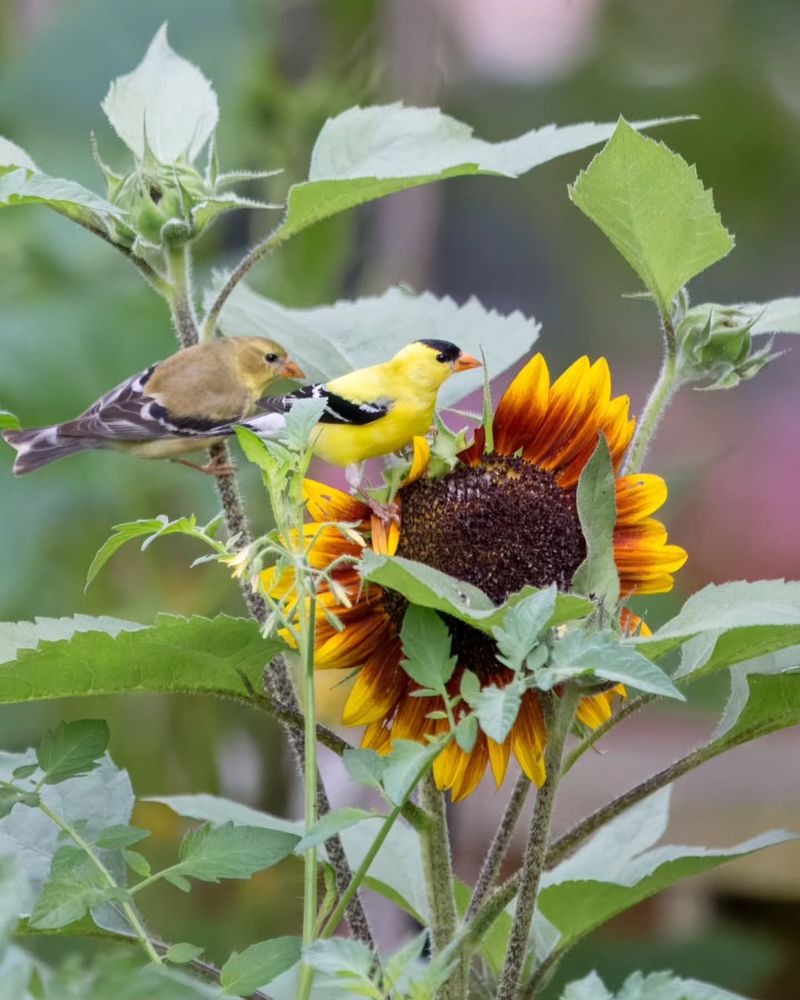
Most people think of goldfinches as a winter feeder bird, but late summer is actually one of the busiest periods in this species’ annual cycle. According to the Birds of North Carolina account for the American Goldfinch, the species breeds across most of the state, with larger numbers present in winter.
What makes goldfinches unusual is how late in the season they reproduce: their main nesting activity commonly falls in July and August, later than almost any other songbird in the region.
That late breeding schedule means a yard full of goldfinches in August could include birds that are still wrapping up nesting, adults that have already finished and are beginning to flock together, young birds from earlier broods that are now feeding independently, and possibly individuals moving through from other areas. Cornell Lab notes that goldfinches also undergo a complete molt of body feathers in late summer, so the same bird may look noticeably different from week to week.
Newly ripened seed is becoming available across the landscape at this same time, which adds another pull toward yards and gardens where plants are setting seed.
Regional differences matter here. Goldfinches breed reliably across the Piedmont, mountains, and Sandhills, but the species is less consistently a summer breeder in the extreme eastern and southeastern portions of North Carolina, including parts of the Coastal Plain.
Audubon’s field guide entry confirms that goldfinch populations shift substantially between seasons, and North Carolina sits in a zone where year-round residents, late-season breeders, and early-moving individuals can all overlap in August. A “swarm” is not necessarily one type of bird doing one thing; it is more likely a mix of activities converging at a reliable food source.
Watch where the birds actually feed
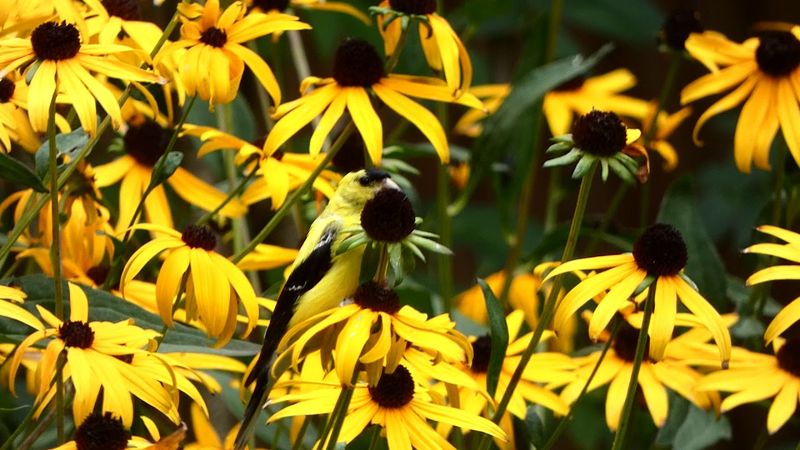
Paying attention to where goldfinches are actually feeding gives you far more useful information than simply counting birds. A goldfinch gripping a coneflower stem, bending the dried head toward its bill, and picking out seeds one by one is demonstrating directly that your planting is supplying food.
The same goes for birds working through black-eyed Susan seedheads, clinging to sunflower discs, or foraging at the base of ornamental grasses. That kind of direct feeding on garden plants is solid evidence that the vegetation itself is doing something useful.
Compare that to a group of goldfinches clustered at a nyjer tube feeder. The Cornell Lab life history page notes that goldfinches commonly use nyjer and sunflower feeders, and there is nothing wrong with that.
But feeder use alone says very little about whether the surrounding garden is rich in natural food or whether the broader yard provides the open-edge habitat the species favors. The feeder is doing the attracting in that situation, not the planting.
A related point worth keeping in mind: even when goldfinches are actively feeding on your garden seedheads, that does not automatically mean nearby shrubs or saplings are supporting a nest. The Cornell overview describes goldfinches as foraging in loose flocks outside the breeding period, which means birds from multiple territories or from entirely different parts of the landscape can converge on a single productive patch of food.
Audubon similarly notes that flock foraging is a normal behavior outside of nesting season. Watching where and how the birds feed gives you a real diagnostic tool; the flock’s size alone does not.
Leave useful seedheads standing through fall
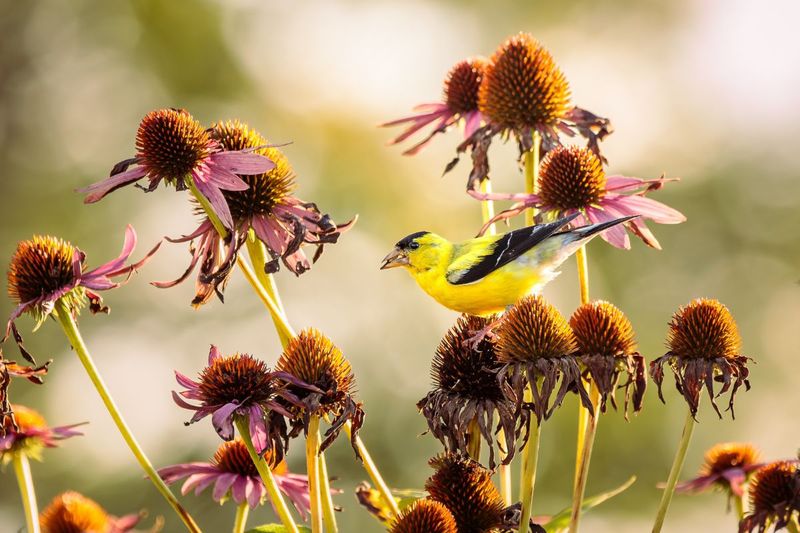
One of the most practical things a North Carolina homeowner can do after watching goldfinches work through a garden is resist the urge to cut everything back at the end of summer. Leaving a substantial portion of mature seedheads standing through fall extends natural food availability during a period when the birds are actively foraging and building up resources.
This does not mean abandoning the entire garden to disorder, but it does mean making deliberate choices about which plants stay and which come out.
Black-eyed Susan is a strong candidate to leave standing. The NC State Extension Gardener Plant Toolbox entry for Rudbeckia fulgida confirms that American Goldfinches eat its seeds, making it a reliable native plant with a documented payoff for late-season foragers.
Purple coneflower earns a similar recommendation: the NC Native Plant Society’s bird-friendly coneflower guide explicitly advises leaving the dried seedheads rather than keeping the garden overly tidy, noting that goldfinches depend on them as a food source. Sunflowers, asters, and ornamental grasses round out a short list of plants worth preserving through the fall months.
Cornell Lab’s life history account lists sunflowers, asters, thistles, grasses, and tree seeds among the goldfinch’s important food plants, which maps closely onto what many NC gardeners already grow. The practical approach is to identify which areas of the yard can hold standing stems safely, clear paths, address any genuine hazards, remove invasive plants that are setting seed, and let the rest stand.
Leaving every plant indefinitely is not the goal; leaving enough to matter is. A yard that offers a mix of retained seedheads and managed edges provides more than a yard that is either completely cut back or completely untouched.
Match native plants to your North Carolina site
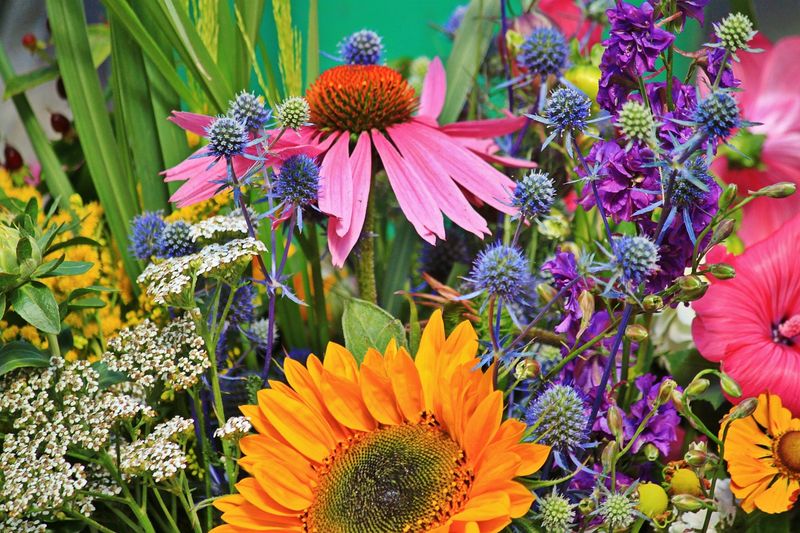
North Carolina covers a wide range of growing conditions, and a planting recommendation that works in the Piedmont may not be the right fit for a sandy Coastal Plain lot or a mountain garden at higher elevation. Before adding plants specifically to support goldfinches and other seed-eating birds, check sunlight exposure, soil moisture, drainage, and your general region rather than following a single statewide list.
Three native, seed-producing plants come up consistently in North Carolina sources and deserve attention. Black-eyed Susan, documented on the NC State Extension Plant Toolbox, is a reliable choice across much of the state and a confirmed goldfinch food plant.
Appalachian sunflower, native across much of the Piedmont and Coastal Plain, is detailed on the NC State Extension Appalachian sunflower page and produces seeds attractive to a range of birds; suitability still varies by site, so verify conditions before planting. Purple coneflower performs well in many NC settings and, as noted in the previous section, carries a direct endorsement from the NC Native Plant Society for goldfinch habitat value.
One approach to firmly avoid: planting nonnative or invasive thistles to attract goldfinches. The NC Native Plant Society’s plant gallery and invasive-plant guidance makes clear that invasive species cause real harm to native plant communities, and several thistle species are invasive in North Carolina.
Native seed-producing plants accomplish the same feeding goal without the ecological cost. The NC Native Plant Society’s education resources and the recommended native species list are practical starting points for finding regionally appropriate choices.
Planting natives supports more than goldfinches; it provides seeds, shelter, and insects for a broader range of wildlife, though one season of bird visits should not be read as proof that the yard has achieved some defined level of ecosystem health.
Use feeders as food sources, not habitat evidence
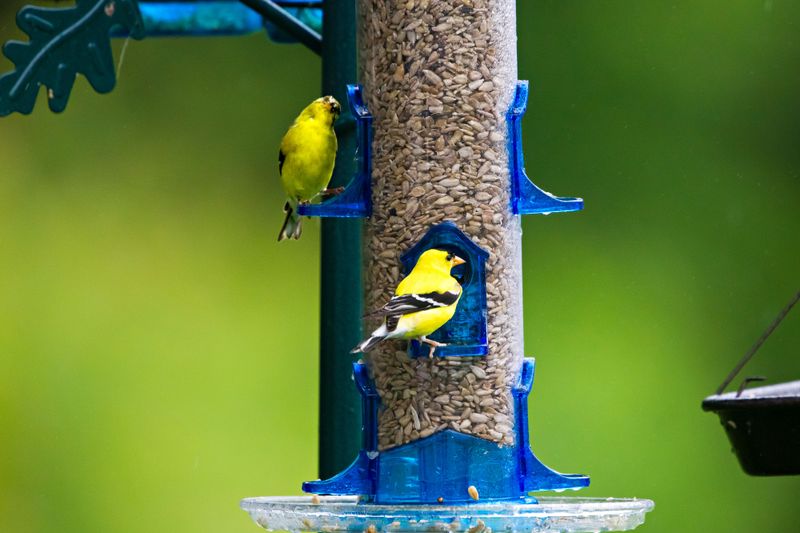
A nyjer or sunflower feeder can pull goldfinches into your yard completely on its own, regardless of whether the surrounding property has rich natural food or particularly strong open-edge habitat. That is worth saying plainly because it cuts both ways: a feeder is a genuinely useful tool for supporting birds, and it is also an independent variable that can explain a flock’s presence without saying anything about the quality of the garden around it.
Commercial nyjer seed, the small black seed sold specifically for finch feeders, is not the same as planting thistle in your yard. Cornell Lab notes that commercial nyjer is imported and heat-sterilized, which reduces its ability to germinate and spread.
You can offer it freely without worrying that you are introducing an invasive plant. Tube feeders, hopper feeders, platform feeders, and hanging mesh feeders can all work; goldfinches are adaptable at feeders and tend to use whatever style allows them to access the seed comfortably.
A helpful overview of seed types and feeder matches is available in Cornell Lab’s bird-seed guide.
Feeders do have real limits as a habitat tool. They supply food, but they cannot provide nesting cover, shelter from predators, or the structural diversity that a yard with shrubs, saplings, and varied plantings offers.
If your goal extends beyond short-term foraging support, feeders work best as a complement to native plants and retained vegetation, not a replacement for them.
Keeping feeders clean is not optional. Cornell Lab’s feeder-cleaning guidance recommends cleaning seed feeders roughly every two weeks, and more often during wet weather or heavy bird use.
Discard any seed that has clumped, smells off, or shows visible mold. Penn State Extension’s feeder disease guidance and CDC wildlife guidance both support using a diluted bleach solution, rinsing thoroughly, and allowing feeders to dry completely before refilling.
A feeder with wet, old seed can spread disease through a flock quickly, and a clean feeder is a safer one for every bird that visits.
Protect birds without overreading the flock
A late-summer gathering of goldfinches invites a few conclusions that feel logical but do not hold up under scrutiny. Flock presence cannot locate a nest, confirm that all the birds you see are local breeders, or signal that winter is arriving early.
Those are tempting readings, but none of them follow reliably from the observation of birds at a feeder or seedhead patch.
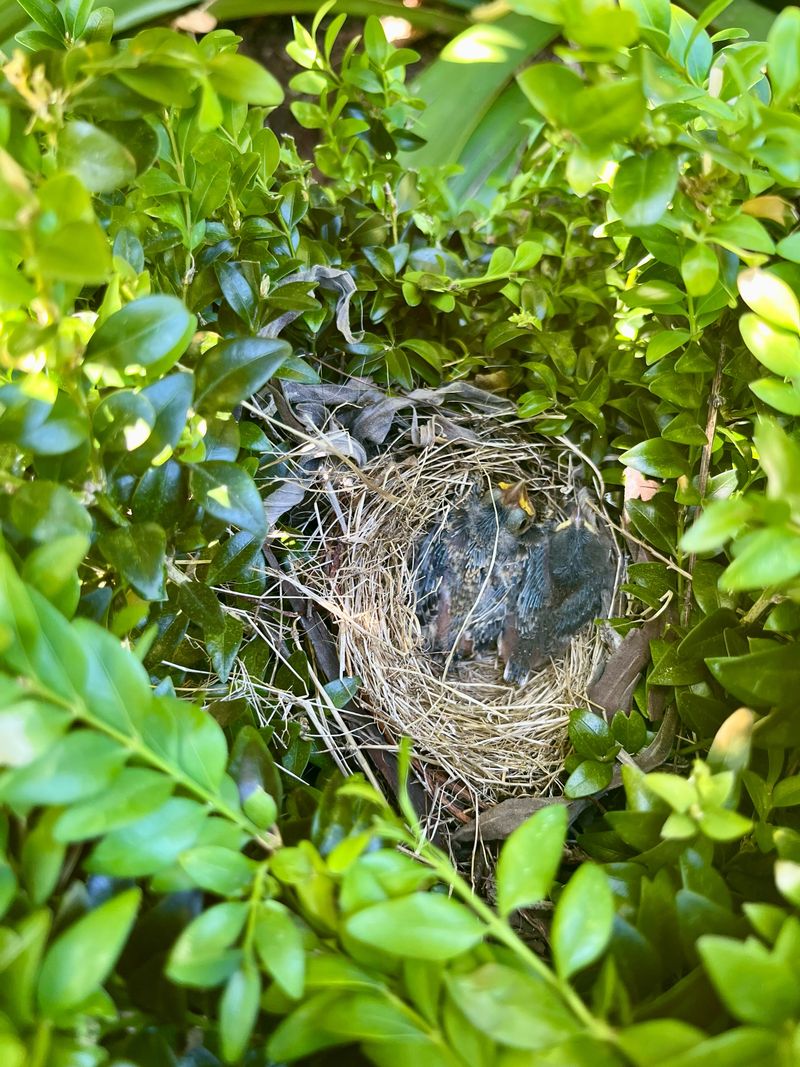
What the flock can tell you, combined with the species’ known nesting schedule, is that some caution around late-season pruning is genuinely warranted. Cornell Lab’s life history account describes goldfinch nests as typically placed in shrubs or saplings, and nesting activity can extend into July and August.
Before cutting back a shrub heavily in late summer, a quick visual check for a nest cup is a reasonable precaution. You do not need to leave every shrub untouched indefinitely, but assuming a late-season shrub is empty without looking is an easy mistake to avoid.
The Birds of North Carolina account notes that both breeding birds and winter residents occur in the state, which means the same yard can attract local nesters, post-breeding flocks, and birds moving through from elsewhere, sometimes all at once in late summer. Bright yellow plumage on a male is not a reliable indicator of whether that bird is a local breeder or a visitor from a different area; goldfinches molt body feathers twice yearly, and appearance shifts during the season.
Sick or dead birds near a feeder require a careful response. Avoid handling them with bare hands.
Keep pets away from the area. Contact the NC Wildlife Resources Commission or a licensed wildlife rehabilitator if you find a sick bird that cannot fly or is behaving abnormally.
CDC guidance on wildlife recommends removing feeders and birdbaths for two weeks if a sick or dead bird is found nearby, then cleaning them thoroughly with a diluted bleach solution before putting them back into use. That temporary pause protects the rest of the birds that visit your yard.
Treat the gathering as a useful observation
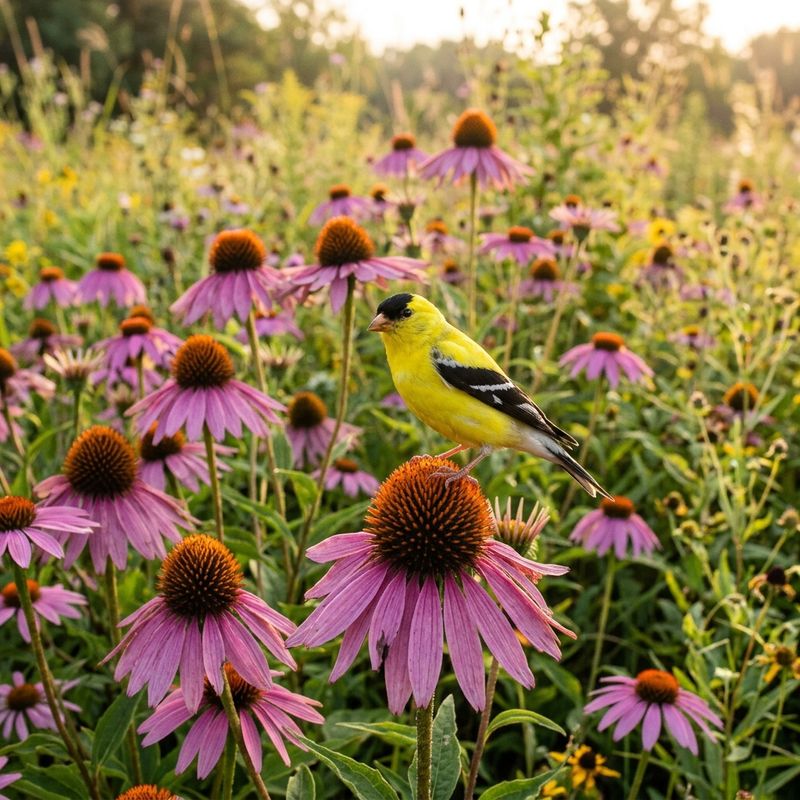
A yard full of goldfinches in late summer is a genuinely useful signal, as long as you read it at the right scale. The birds are telling you that your property is offering accessible food right now, whether that comes from garden seedheads, naturalized vegetation, a well-placed feeder, or some combination of all three.
That is a meaningful piece of information, and it is worth acting on.
The practical response is straightforward. Leave a portion of mature seedheads on coneflowers, black-eyed Susans, sunflowers, asters, and grasses rather than cutting the entire planting back at once.
Choose site-appropriate native plants when you add to the garden, and consult the NC Native Plant Society’s education resources to match species to your specific region and conditions. Watch whether the birds are feeding on plants or relying entirely on a feeder, because those two observations lead to different conclusions about what your yard is actually providing.
Keep feeding equipment clean and seed dry. Retain nearby shrubs and saplings where possible, since Cornell Lab confirms that goldfinches nest in exactly those structures.
Resist the urge to draw conclusions beyond what the observation supports. The flock is not proof of nesting, a migration event, a weather shift, or a yard that has achieved some defined level of ecological health.
What it does confirm is that your yard is useful to birds right now, and that is a reasonable place to build from. A yard that feeds goldfinches in August is already doing something right; the goal is simply to keep doing it with clear eyes.