
If You Let Rain Rush Off Your Roof Into The Storm Drain, Here’s The 623 Gallons One Barrel Quietly Saves
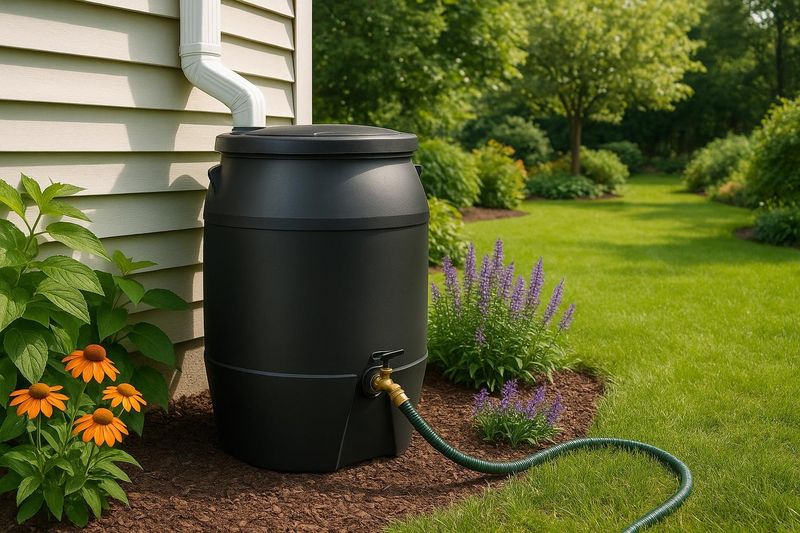
Every time it rains, your roof sheds a surprising amount of water that flows off, hits the ground, and heads somewhere else entirely. A 1,000-square-foot roof receiving just one inch of rain can generate roughly 623 gallons of theoretical runoff before a single drop reaches any barrel.
A standard rain barrel holds about 55 gallons, so the gap between what the roof produces and what one container can store is enormous. Understanding that gap is exactly what turns a rain barrel from a feel-good purchase into a tool that actually works for your garden.
The roof can produce 623 gallons before the barrel gets involved
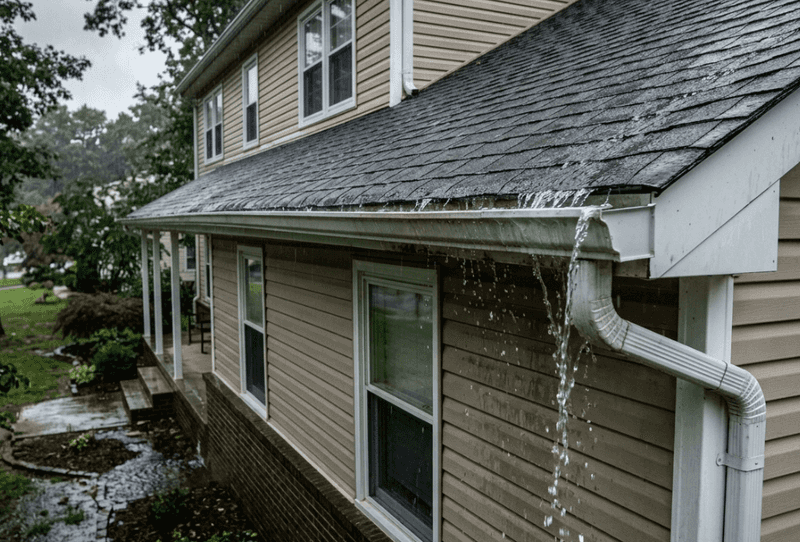
Rain does not land gently on your roof and wait around. The moment it hits, it starts moving toward your gutters, gathering speed and volume as it goes.
The standard formula for estimating that volume is straightforward: roof catchment area in square feet, multiplied by rainfall in inches, multiplied by 0.623. Plug in a 1,000-square-foot roof and 1 inch of rain, and the result is approximately 623 gallons of theoretical runoff.
That number describes potential roof runoff generated by a specific storm-and-roof combination, not a container’s capacity, a guaranteed savings figure, or a universal result for every home. EPA’s NEWR Calculator methodology uses this same 0.623 conversion coefficient to estimate gross rainfall capture, and it is the right place to start any honest runoff calculation.
The math is sound; the number is simply describing runoff, not stored water.
Where that runoff ends up depends entirely on the property. It might reach a street gutter and eventually enter a storm drain, soak into a lawn, flow into a dry well or rain garden, or some combination of all of the above.
The EPA’s rain barrel overview notes that a barrel can reduce the amount of runoff leaving a property, but it does not redirect every drop. The 623-gallon figure is the starting point for understanding scale, not the finish line for what gets saved.
Roof size is also the decisive variable here. A 750-square-foot roof in the same storm would produce roughly 467 gallons; a 1,500-square-foot roof would approach 935 gallons.
The example of 1,000 square feet is a useful reference, not a residential standard.
Which roof area actually feeds your barrel?
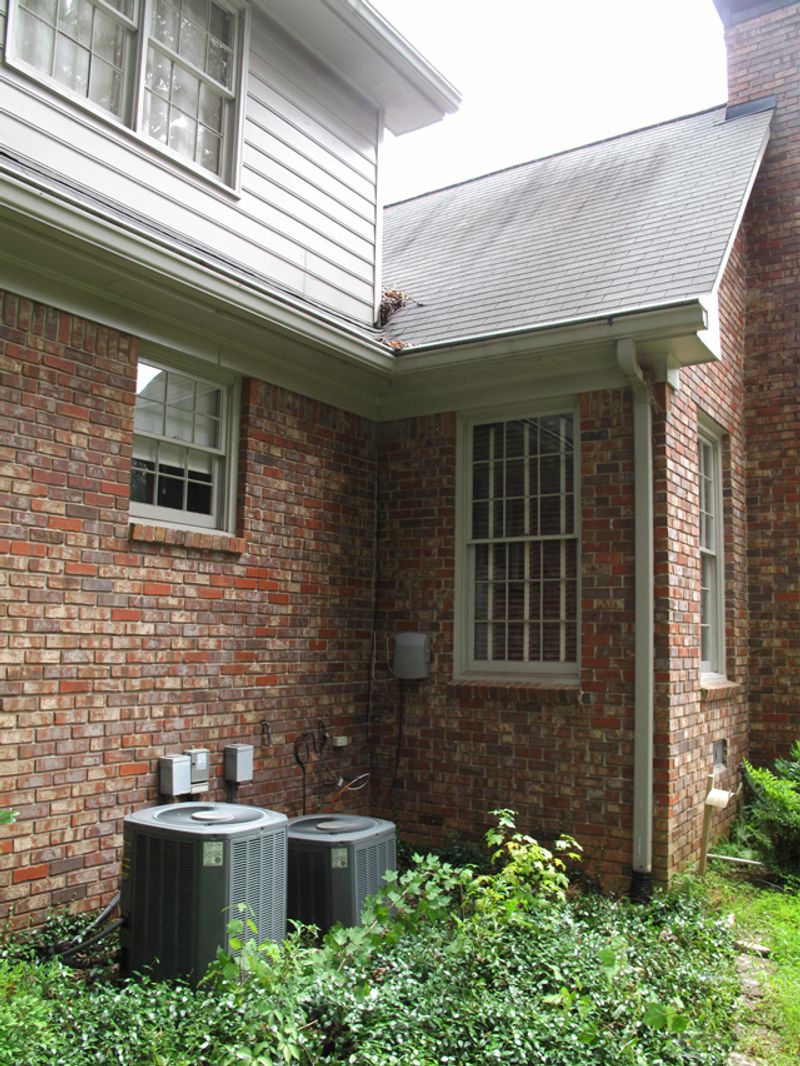
Most houses have more than one downspout, which means the entire roof does not drain into a single barrel. Before buying storage, a gardener needs to figure out which section of roof feeds the particular downspout where the barrel will sit.
That connected section, not the whole house footprint, is the actual catchment area for the calculation.
Measuring it takes a little rooftop math. Walk around the house, find the downspout you plan to use, and estimate the horizontal area of roof that slopes toward it.
A garage roof section, for example, might cover only 300 square feet. At 1 inch of rain and 0.623 gallons per square foot, that section produces about 187 gallons of theoretical runoff, not 623.
Change the rainfall to half an inch, and the result drops to roughly 93 gallons. The formula scales proportionally in both directions.
The Department of Energy’s rainwater harvesting calculator is designed to estimate collection based on roof area, local rainfall data, and storage capacity, and it reinforces the point that the connected section matters more than the whole-house number. Entering a smaller area produces a smaller and more honest estimate of what a barrel connected to that downspout might realistically receive.
The practical questions this raises are worth writing down before shopping: Which gutter drains to the chosen downspout? How many square feet does that section cover?
What is the typical rainfall for a meaningful storm in your area? How much storage would you need to hold the estimated collectible volume?
Answering those four questions first prevents the common mistake of buying one barrel for a roof section that could fill four.
The usable total is lower than the roof’s theoretical output
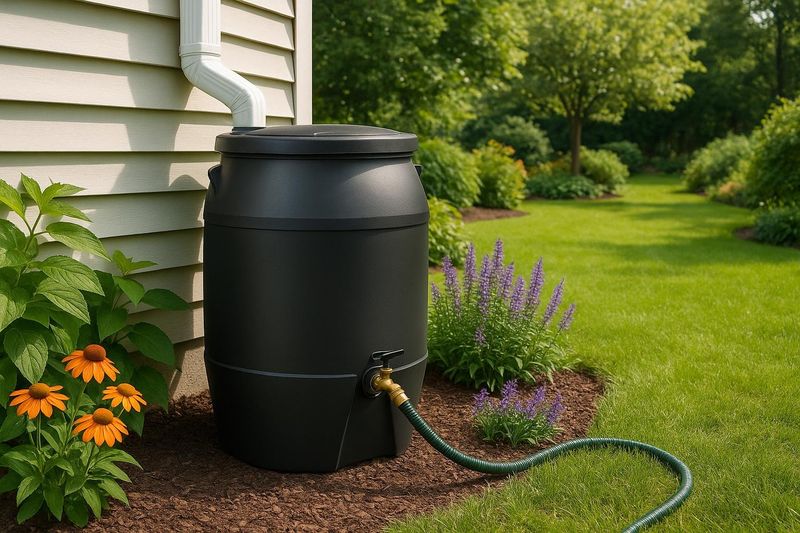
The 623-gallon figure is a ceiling, not a floor. Between the moment rain hits shingles and the moment water reaches a barrel, a series of losses chip away at the total.
Evaporation takes some water before it ever reaches the gutter. Splash-off at the roof edges loses more.
Gutters clogged with leaves or debris divert or slow flow. Roof pitch, material, and age all affect how much water runs cleanly toward a downspout versus soaks into organic debris or escapes elsewhere.
EPA WaterSense at Work materials apply a collection efficiency of roughly 80% as a working example, which reduces the 623-gallon theoretical figure to about 498 gallons for a 1,000-square-foot roof receiving 1 inch of rain. That 80% is an illustrative estimate, not a guaranteed rate for every roof.
A gutter in poor condition, a roof covered with pine needles, or a first-flush diverter that redirects the initial flow could push efficiency lower.
First-flush diversion is worth mentioning here because it is both useful and widely misunderstood. A first-flush diverter redirects the first portion of runoff, which tends to carry the highest concentration of accumulated roof debris, bird waste, and dust, away from the barrel.
That can reduce some contaminants reaching storage, but it also means a portion of the early runoff does not enter the barrel at all, reducing the collected volume further.
The DOE harvesting calculator accounts for these variables when generating location-specific estimates. The takeaway is simple: work from collectible water, not theoretical runoff, when sizing your system and setting expectations for how much the barrel will hold after a typical storm.
Why a 55-gallon barrel fills long before the storm ends
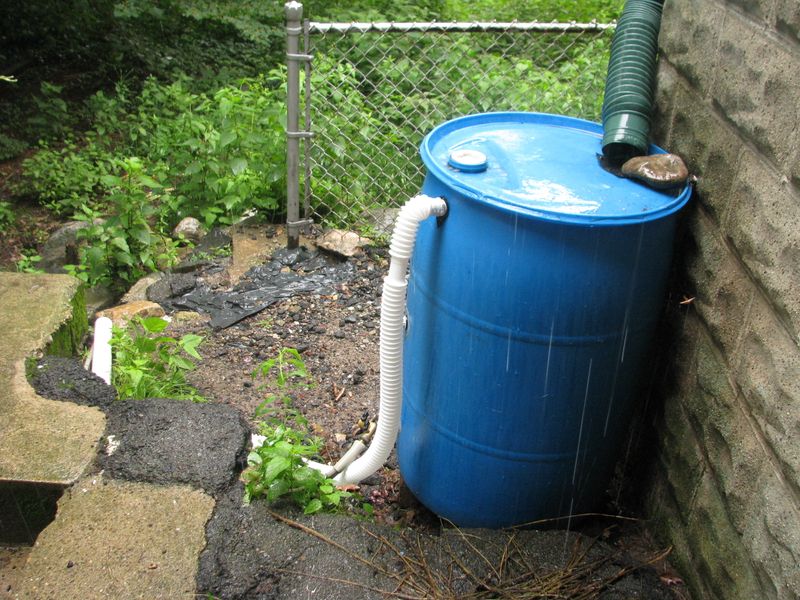
Here is the storage contradiction at the heart of the 623-gallon headline: a typical residential rain barrel holds about 50 to 80 gallons, with 55 gallons being the most commonly used size. The example roof can shed hundreds of gallons during a single inch of rain.
Those two numbers are not describing the same thing, and treating them as equivalent leads to a serious mismatch between expectation and reality.
A barrel fills once and then overflows. During a 1-inch rain event on a 1,000-square-foot roof, a 55-gallon barrel would reach capacity early in the storm.
The remaining runoff, potentially more than 400 gallons even after collection losses, has to go somewhere. That overflow could represent eight or nine additional 55-gallon barrel capacities if no water is drawn down during the storm and no additional storage is available.
Penn State Extension’s rain barrel guide makes this point directly, noting that a barrel captures roughly its own capacity before the rest bypasses it through the overflow outlet.
The amount a barrel actually saves depends on several starting conditions. If the barrel was already half-full from a previous storm, it has only 27 or 28 gallons of available capacity before it overflows.
If the gardener has been drawing water down regularly between storms, the barrel might be empty and ready to capture its full volume. EPA’s estimated environmental benefits report notes that rain barrels can capture multiple barrelfuls over time when they are emptied between events, which is a more accurate picture of cumulative savings than any single-storm figure.
The practical lesson is that a barrel’s value comes from consistent use between rains, not from passive storage during one big storm. A barrel that gets emptied onto the garden every few days captures far more water over a season than one that sits full and overflows every time it rains.
A safe setup treats overflow as part of the system
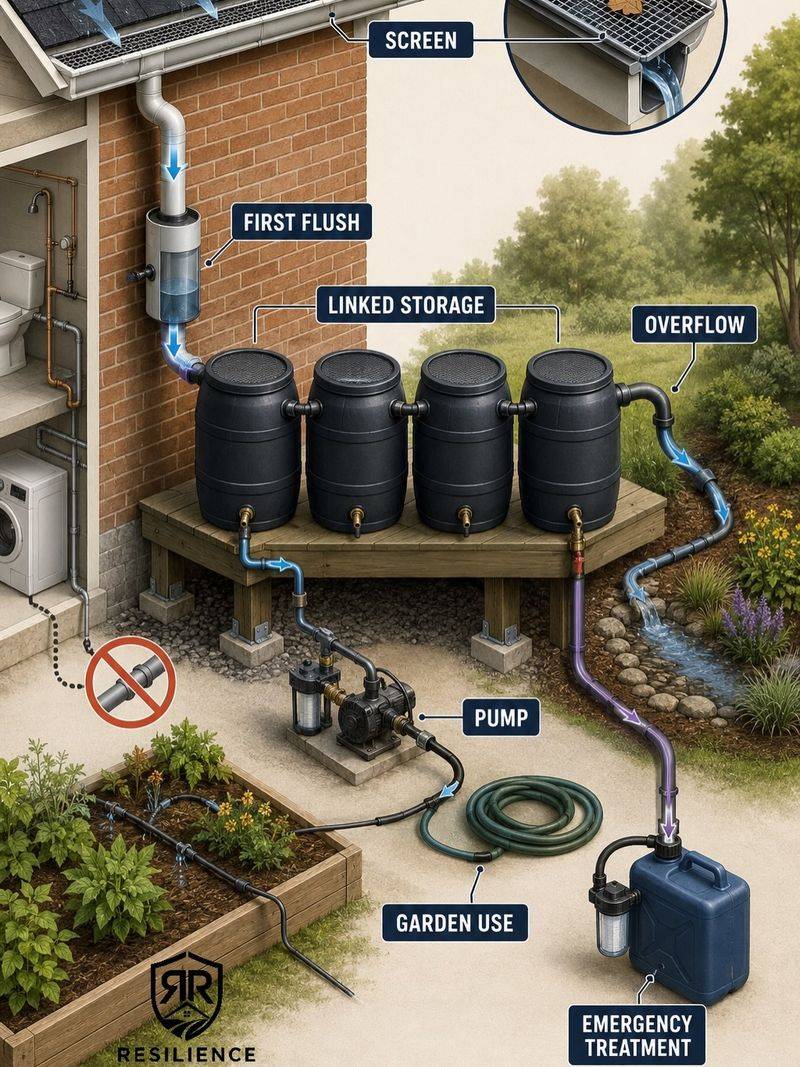
Overflow is not an afterthought. When a 55-gallon barrel fills during a substantial rain, the water has to exit somewhere, and where it goes is a design decision, not something to figure out after the barrel is already installed.
Directing overflow toward the home’s foundation can cause basement moisture problems, erosion along the footing, or damage to the siding. A proper overflow outlet routes excess water toward a lawn, garden bed, rain garden, or other approved drainage area well away from the structure.
The EPA’s rain barrel guidance describes a rain barrel as a tool that reduces or delays some runoff, not one that eliminates it. That framing matters because it sets the right expectation: the barrel will help slow and capture some water, but the overflow system must handle the rest safely.
A hose or pipe attached to the barrel’s overflow port and directed at least six to ten feet from the foundation is a reasonable minimum.
Penn State Extension recommends a screened inlet or secure lid on every barrel to keep debris and mosquitoes out of the stored water. The screen needs to be fine enough to block mosquito entry, since even small gaps can allow breeding.
Penn State’s companion resource on backyard rain barrels also recommends a secure spigot near the base, positioned high enough off the ground to fit a watering can underneath.
A first-flush diverter fits into this picture as a way to redirect some of the initial, more contaminated runoff away from the barrel before the cleaner mid-storm water enters storage. CDC guidance on rainwater collection and Oregon State Extension’s rainwater harvesting guide both note that first-flush diversion can reduce some contaminants, while making clear it does not purify the water or make it safe to drink.
Think of it as one layer of a thoughtful system, not a substitute for proper design.
What the collected water belongs on—and what it does not
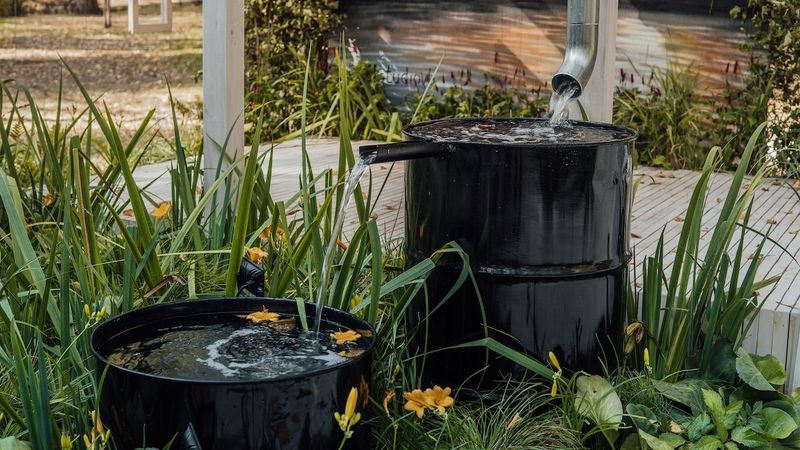
Stored roof runoff is genuinely useful in the garden, but the plants it goes on matter. Flowers, shrubs, ornamental grasses, lawns, and other non-edible landscape plants are the clearest and safest targets for rain barrel water.
These uses keep the water away from anything a person will eat, which is the right boundary to draw when the source is an open roof.
Roof runoff picks up contaminants on its way to the barrel. Depending on the roof material, age, and surrounding environment, that water may carry bird and animal waste, accumulated dust, pollen, atmospheric pollutants, particulates from nearby roads, residues from roofing materials, and debris from gutters.
CDC’s overview of rainwater collection and health identifies microbial contamination, including bacteria and other pathogens from animal waste, as a real concern in collected roof water. The water is not automatically clean simply because it fell from the sky.
University of Minnesota Extension’s rain barrel guidance recommends keeping untreated barrel water away from edible plant portions, which is a practical and honest position for a national audience. Guidance on using barrel water for vegetables varies by jurisdiction, system design, and how the water is applied, so a blanket recommendation to water vegetable gardens from an untreated barrel is not appropriate here.
Root vegetables and low-growing edibles that contact the soil are especially worth keeping away from this water source.
Penn State Extension and Oregon State Extension’s garden rainwater guide both discuss roof material as a factor in water quality, noting that older or treated roofing can leach chemicals that remain in stored water. The safe, practical answer for most backyard gardeners is to use barrel water on ornamental beds and lawns, enjoy the water savings, and keep the kitchen garden on municipal or well water until a specific system is designed and evaluated for that purpose.
The barrel needs maintenance between storms
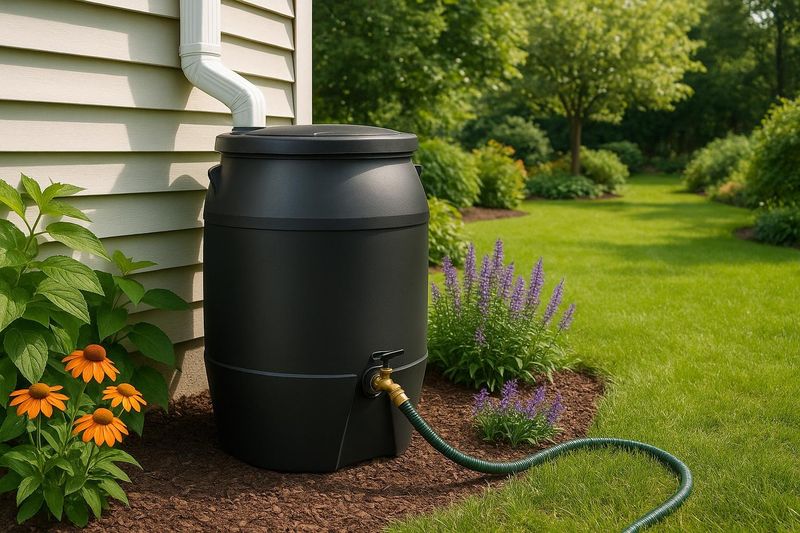
A rain barrel that sits unattended between storms can become a liability faster than most people expect. Standing water in a warm container is attractive to mosquitoes, and an open or poorly screened barrel can become a breeding site within days.
Keeping the inlet and overflow openings covered with fine mesh screens is the first line of defense, but the screens need regular inspection because debris, algae, and insects can compromise them over time.
Penn State Extension’s backyard rain barrel resource recommends cleaning the barrel at least once a year, inspecting fittings and screens regularly, and using stored water frequently so it does not sit stagnant for weeks. University of Minnesota Extension echoes that advice, adding that draining or disconnecting the barrel before freezing weather prevents cracking and hardware damage in cold-climate regions.
CDC guidance recommends emptying rain barrels at least every ten days during mosquito season to interrupt any breeding cycle, and Penn State’s mosquito prevention guidance identifies open or poorly maintained water containers as common breeding sites. No screen or lid is a permanent guarantee against mosquitoes if the hardware degrades, so treat inspection as a seasonal habit rather than a one-time installation step.
Before connecting a barrel or modifying a downspout, check your local rules. Rainwater harvesting regulations vary significantly across states, counties, municipalities, and homeowners associations.
The DOE’s rainwater harvesting tool and DOE Best Management Practice 14 on alternative water sources provide useful starting points for understanding federal facility guidance and can point homeowners toward relevant state-level frameworks. Some jurisdictions require permits; others restrict collection volume or plumbing connections entirely.
The real win is matching storage to the roof
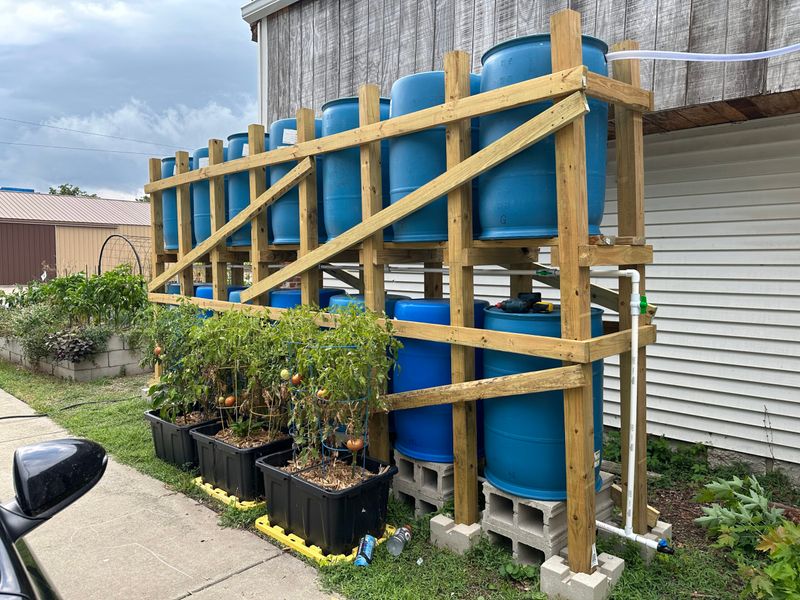
The 623-gallon figure earns its place in this conversation as a motivation, not a promise. A 1,000-square-foot roof receiving one inch of rain can generate roughly 623 gallons of theoretical runoff, and knowing that number helps a gardener understand the scale of what is flowing off the property during an ordinary storm.
What one standard barrel stores is a different and much smaller number, roughly 55 gallons at a time, and the gap between those two figures is where smart system design lives.
Matching storage to the roof means calculating the connected section, applying a realistic collection efficiency, choosing storage that fits the available space and budget, planning a safe overflow route, and committing to using the water between storms. EPA’s NEWR Calculator resources and EPA’s Soak Up the Rain overview both support this approach, framing a barrel as a tool that reduces and delays some runoff rather than one that captures it all.
Penn State Extension reinforces that a barrel emptied regularly between events captures far more water over a full season than one left to sit full and overflow. The roof’s runoff potential is real; a well-matched, well-used barrel is how a small fraction of that potential becomes water your ornamental garden actually drinks.