
If You Water Your Tomatoes This One Smarter Way, Here’s The Bigger Harvest You’ll Pull All Summer
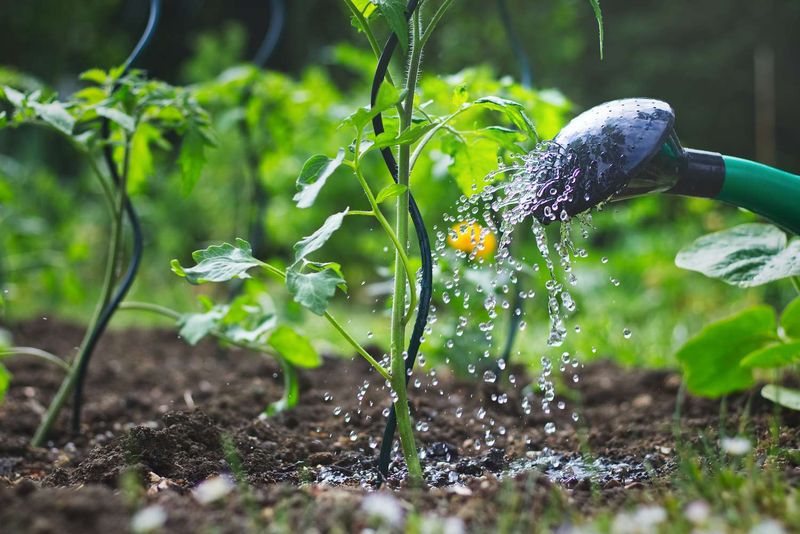
Most tomato problems that show up mid-summer, like cracked fruit, black-bottomed tomatoes, and plants that wilt even after a good rain, trace back to one overlooked habit: inconsistent watering. The fix is not pouring on more water every day.
Keeping the moisture in your soil relatively steady, so roots never go from bone-dry to flooded, is what gives tomatoes the best chance to produce healthy, marketable fruit all season long.
The goal is steady moisture, not a daily drench
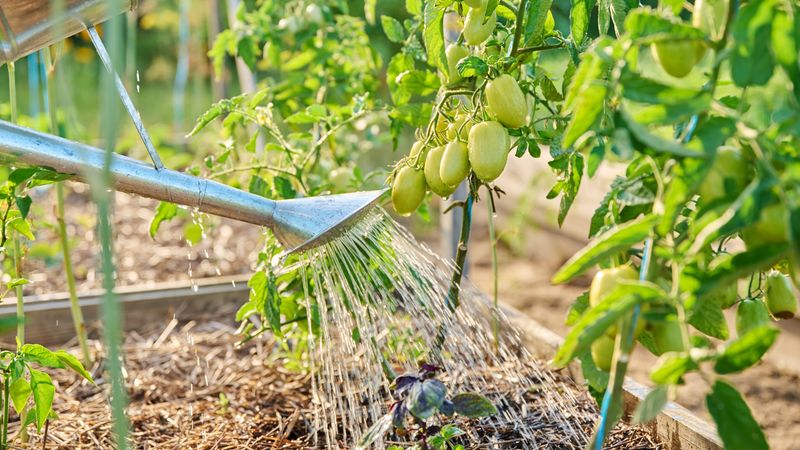
Tomatoes are not drought-tough plants hiding behind a tough exterior. They need a consistent supply of water in the root zone, and when that supply swings between too dry and too wet, the plant shows it in some of the most frustrating ways a backyard gardener can face: flowers dropping before fruit sets, fruit cracking open just before harvest, or the flat, leathery black patches of blossom-end rot appearing on fruit you have been watching for weeks.
The smarter watering habit is not about applying more water on a fixed daily schedule. UMN Extension guidance on irrigation strategies for vegetables identifies flowering, fruit set, fruit enlargement, and ripening as especially moisture-sensitive stages for tomatoes, and connects fluctuating soil moisture with reduced fruit number, size, and marketable yield.
That does not mean you can ignore watering during the earlier weeks when seedlings are establishing and plants are putting on vegetative growth, because adequate moisture matters throughout the season.
A field study on deficit irrigation of micro-irrigated tomatoes found that reducing water below full irrigation levels lowered marketable yield and affected fruit quality, though commercial-field results will not translate as a guaranteed outcome in every backyard.
The honest expectation is this: a routine that maintains relatively even soil moisture in the active root zone can reduce preventable water-stress losses and improve the proportion of healthy, marketable tomatoes you bring in. It cannot override cultivar genetics, pollination conditions, extreme heat, soil fertility, disease pressure, or the many other factors that shape a final harvest.
Think of smarter watering as removing one of the most common, correctable obstacles between your plants and a good summer crop.
Check the soil before you reach for the hose
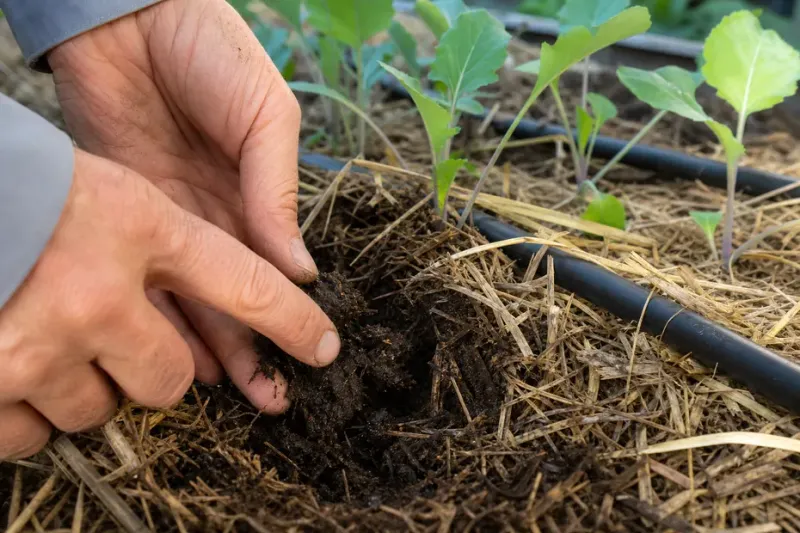
A dry surface crust on the soil is one of the most misleading signals in the garden. The top inch can look and feel like dust while the root zone three to four inches below is still holding adequate moisture from the last time you watered or from a recent rain.
Grabbing the hose based on surface appearance alone is how gardeners end up overwatering without realizing it.
Before you water, push a trowel or your finger two to three inches into the soil near the plant base. If the soil at that depth feels moist, the plant does not need water yet.
UMN Extension’s tomato growing guide recommends checking soil moisture this way rather than relying on surface appearance, and notes that shallow watering that wets only the top inch or two has not reached the active root zone where tomatoes actually absorb water.
The commonly cited weekly benchmark of about 1 inch of water, or the broader 1 to 2 inch range, is a useful starting point, not a fixed prescription. Sandy soil drains faster and may need more frequent attention.
Heavy clay holds water longer. Mulched beds lose less to evaporation.
Hot, windy weeks in July push water needs up, while a cloudy, cooler stretch can mean the soil stays moist for several extra days.
Colorado State University Extension’s vegetable irrigation guide points out that gardeners should count recent rainfall toward the weekly total before adding irrigation. A simple habit of checking the weather and the soil together before watering prevents the overwatering that can leach nutrients, reduce tomato flavor, and stress roots just as much as drought does.
Soak the root zone thoroughly when it needs water
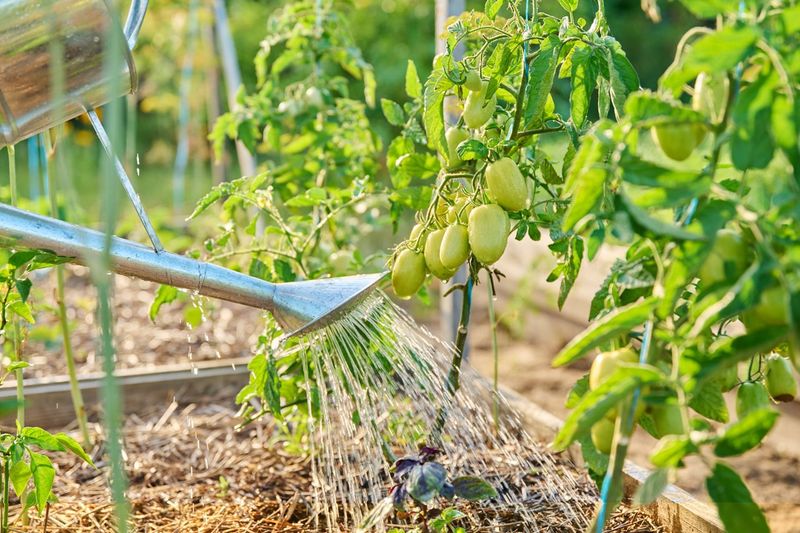
When the soil check tells you it is time to water, the goal is to wet the entire active root zone in one thorough application, not to sprinkle the surface and move on. Tomato roots can extend 12 to 18 inches deep and spread outward from the stem, so water that only wets the top two inches of soil is not reaching most of where the plant feeds and drinks.
Frequent, light watering does more harm than many gardeners expect. UMN Extension notes that shallow watering encourages roots to stay near the soil surface, where they are far more exposed to heat and drying out between waterings.
A plant with shallow roots is more vulnerable to drought stress during the hot stretches of summer, not less, even if you water it every day with a small amount.
Apply water slowly around the plant base and give it time to soak in rather than run off. After watering, go back and use your trowel to check how deeply the water actually penetrated.
If the moisture stops at two or three inches, the application was not long enough. You are aiming to wet the soil to a depth of at least six inches, and ideally deeper for established plants.
Measuring what you deliver is more reliable than guessing from how long a hose or sprinkler runs. WSU Extension’s home garden tomato guide recommends placing a straight-sided can, like a tuna or soup can, in the watered area and measuring the water collected.
That number tells you how much water you actually applied, which takes the guesswork out of hitting your weekly target. Once you know how long it takes your setup to deliver an inch, the routine becomes much simpler to repeat.
Deliver water at the soil surface
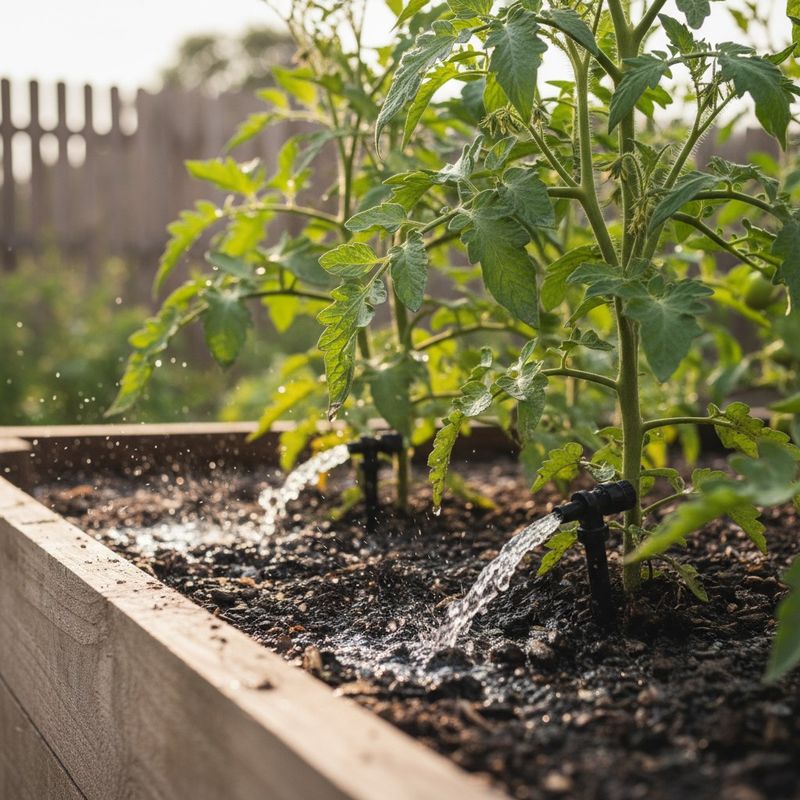
Where the water lands matters almost as much as how much you apply. Spraying tomato foliage from above with a sprinkler or hose wets the leaves and can splash soil particles up onto the lower leaves, creating conditions that favor some fungal diseases.
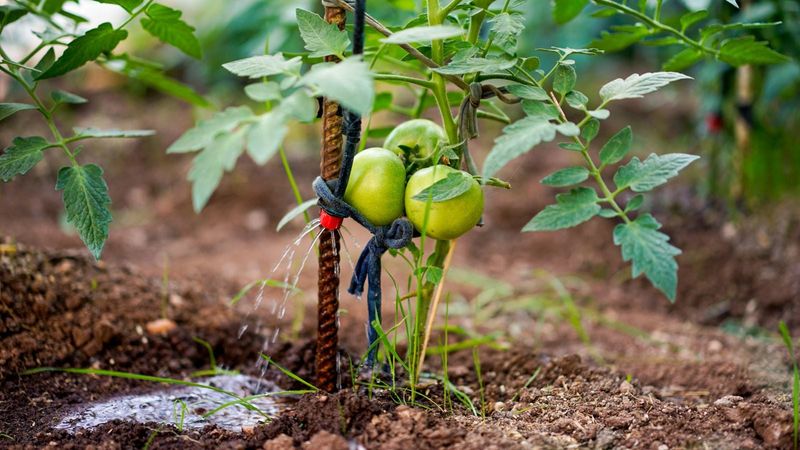
Utah State University Extension’s irrigation guidance recommends directing water onto the soil around the plant base rather than overhead, and highlights drip irrigation and soaker hoses as methods that deliver water close to the root zone while reducing evaporation and runoff.
A drip line or soaker hose does not have to be expensive or complicated to install. Even a basic soaker hose looped around your tomato plants and connected to a standard outdoor faucet gives you a low-pressure, soil-level delivery system that keeps leaves dry.
UMN Extension notes that if you use a hand hose, directing it at the soil rather than the plant canopy achieves a similar benefit. Morning is generally the better time to water because any moisture that does land on leaves has hours of daylight to evaporate.
Mulch works alongside your delivery method to stretch every watering further. A two- to three-inch layer of straw, shredded leaves, or wood chips laid over the soil surface slows evaporation, moderates soil temperature, and buffers the moisture swings between waterings.
UMN Extension’s tomato disorders resource also notes that mulch reduces soil splash onto lower leaves, which is a practical bonus during rainy stretches. Keep the mulch pulled back an inch or two from the main stem so it does not stay pressed against the base of the plant, where trapped moisture can invite rot.
Keep moisture consistent during key fruit-making stages
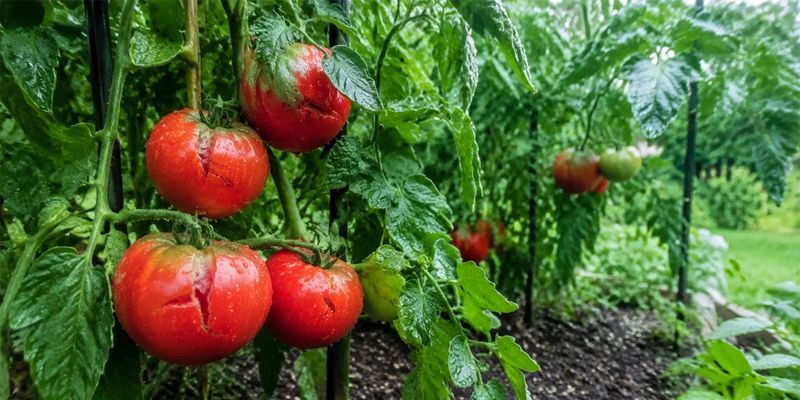
Once tomato plants start flowering, the stakes around soil moisture go up considerably. Flowering, fruit set, fruit enlargement, and ripening are the stages where water stress does the most visible damage in the shortest amount of time.
UMN Extension’s irrigation strategies guide identifies these as especially moisture-sensitive periods and connects fluctuating moisture with reduced fruit number, diminished size, and losses in marketable yield. That said, adequate watering still matters during establishment and the vegetative growth phase that comes before flowering, so do not treat early-season moisture as optional.
The pattern that causes the most damage is letting the soil dry out significantly and then flooding it, either from a heavy irrigation session or a sudden downpour after a dry spell. When fruit is actively enlarging, that sharp swing from dry to wet pushes water into the fruit faster than the skin can stretch, and the skin splits.
Cracking is also influenced by cultivar, rapid growth, heat, and humidity, so consistent moisture reduces the risk but does not eliminate it entirely.
Blossom-end rot follows a similar pattern. UMN Extension explains that the dark, leathery patches at the blossom end of the fruit develop when calcium cannot move into the rapidly developing tissue fast enough.
Fluctuating soil moisture disrupts that calcium transport even when the soil itself contains adequate calcium. Penn State Extension’s resource on blossom-end rot and rain check notes that large-fruited slicers and some paste types tend to be more susceptible than cherry varieties, though no cultivar is completely immune.
Keeping moisture steadier throughout fruit development is the most reliable way to reduce how often this disorder appears.
Adjust the routine for soil, weather, and containers
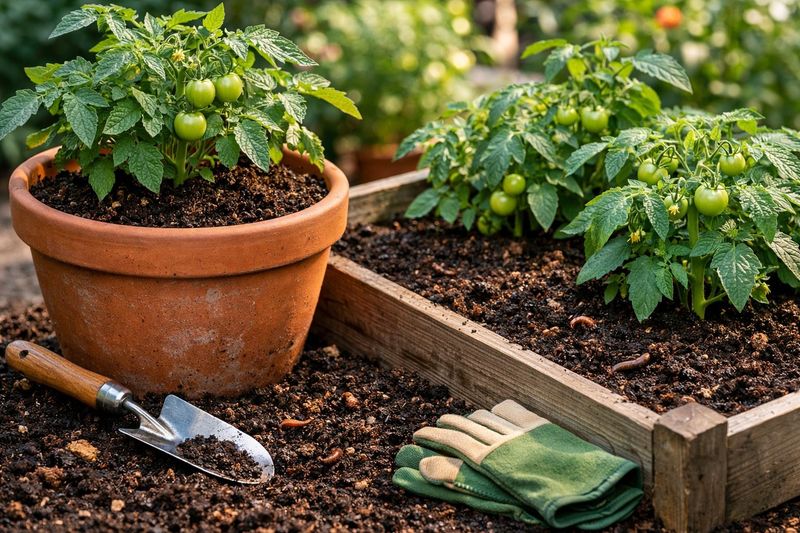
Sandy soil and heavy clay soil behave nothing alike when it comes to water. Sandy soil drains quickly and can dry out to the danger zone within a day or two during a hot stretch, while clay soil holds moisture much longer but can also stay waterlogged after a heavy rain.
University of Arizona Cooperative Extension’s tomato growing guide points out that soil type is one of the primary variables that should guide watering frequency, ahead of any fixed weekly schedule. Raised beds, which often contain a lighter amended mix, tend to drain and dry faster than in-ground beds and generally need more frequent checks.
Weather changes the math quickly. A week of 95-degree days with low humidity pulls moisture out of the soil and the plant at a much faster rate than a mild, partly cloudy stretch.
Wind accelerates that loss further. Add mulch and you recover some of that moisture-holding capacity, but the underlying principle stays the same: check the soil, then decide whether to water.
Container tomatoes operate by their own rules. The limited soil volume in a pot or grow bag means there is far less moisture reserve than in a garden bed.
University of Illinois Extension’s blossom-end rot resource notes that containers can dry out rapidly during hot periods, sometimes needing attention every day. Even so, daily watering should follow a moisture check rather than a fixed assumption, because an overcast, cooler day may leave the container adequately moist.
Morning watering is a practical default because it gives any moisture on foliage time to dry before evening, which Oregon State University Extension’s watering basics guide supports for general disease management. A badly wilted plant, however, should not wait until the next morning.
Water it when it needs it, and then investigate whether the soil drainage, watering frequency, or root health is the underlying cause. CSU Extension reinforces that the goal throughout is adequate, consistent moisture, not a rigid clock-based routine.
Separate watering problems from other tomato symptoms
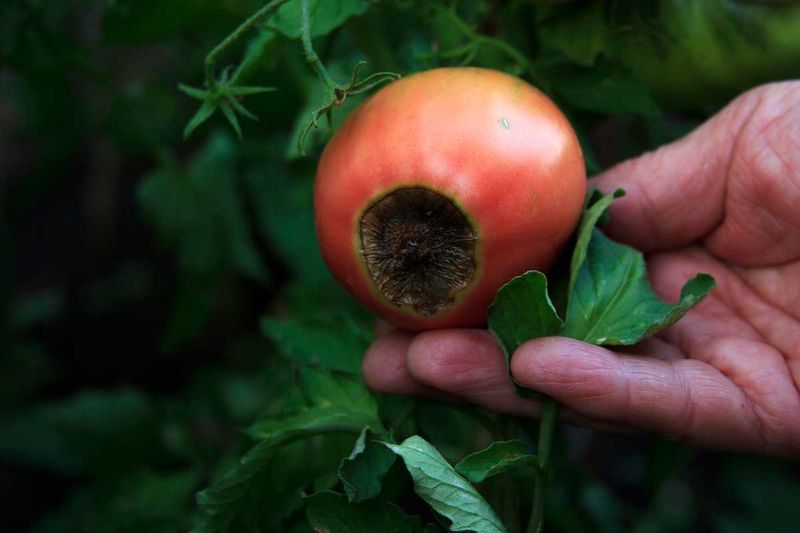
Not every problem that shows up on your tomato plants comes back to watering, and treating them all the same way can waste time and make some situations worse. Blossom-end rot is the disorder most often blamed on watering, and while steadier soil moisture does help reduce it, the explanation is more layered than simply needing more water.
UMN Extension’s tomato disorders guide explains that blossom-end rot develops when calcium fails to reach the developing fruit tissue fast enough. Water-uptake problems, root injury, heat stress, high salinity, rapid fruit growth, and nutrient imbalances can all interfere with calcium transport even when the soil contains plenty of calcium.
Adding calcium amendments without a soil test may not help and could create new imbalances.
Fruit that has already developed blossom-end rot will not recover. Remove affected fruit so the plant can put its energy toward the remaining fruit.
Consistent watering going forward may reduce how many new fruit are affected, but it will not reverse damage already done.
Some gardeners reach for eggshells, Epsom salts, or foliar calcium sprays when they see blossom-end rot. UMN Extension’s review of common soil health home remedies notes that eggshells decompose too slowly to provide timely calcium, and that excess magnesium from Epsom salts can actually interfere with calcium uptake.
University of Illinois Extension questions the effectiveness of foliar calcium sprays because calcium absorption and movement into fruit through leaves is limited. A soil test before adding any amendment is the most reliable starting point.
Flowers dropping without setting fruit is another symptom that often gets blamed on watering alone. University of Arizona Cooperative Extension’s tomato challenges resource identifies high daytime or nighttime temperatures, poor pollination conditions, excessive nitrogen, disease, and wind as common causes of blossom drop, separate from water stress.
When temperatures stay above about 95 degrees during the day or above 75 degrees at night, pollination can fail regardless of how well you water.
Use a moisture check before every next watering
Pulling together the routine is simpler than it sounds. Before you water, push a finger or trowel two to three inches into the soil near the plant base.
If it feels moist, wait and check again the next day. If it feels dry at that depth, water slowly and thoroughly around the base until you are confident the moisture has reached six inches or deeper, then check again with the trowel to confirm.
UMN Extension’s irrigation strategies guide supports this check-first approach as the foundation of consistent moisture management.
Layer in mulch to slow evaporation between sessions, direct water at the soil rather than the leaves, and adjust your frequency when the weather, soil type, plant size, or container situation changes. CSU Extension reminds gardeners that overwatering is a real risk, and the target is adequate, steady moisture rather than saturated soil.
Smarter watering gives your tomatoes a better chance to avoid the preventable losses that come from water stress, but the final harvest still reflects everything else in the growing environment. A plant that never goes thirsty and never sits in soggy soil has one fewer obstacle between it and a good summer of fruit.