
If Your Clematis Vine Grows Leggy With Just A Few Blooms, Here Are 9 Care Mistakes To Fix
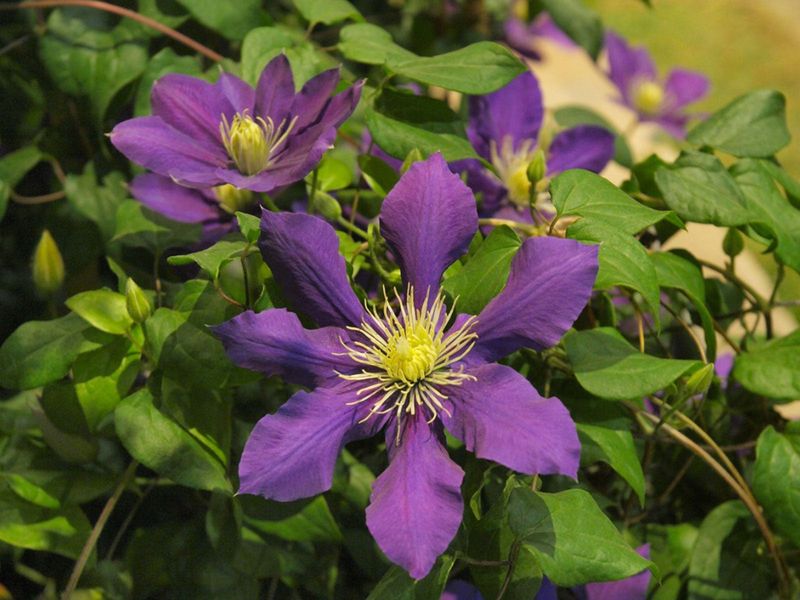
A clematis that shoots up tall and bare, with just a handful of flowers waving at the very top, is one of the most frustrating sights in the garden. The good news is that a leggy, bloom-shy vine almost always points to a small care habit you can fix.
Below are nine common mistakes that leave your clematis looking scraggly, plus the simple changes that bring back full, colorful coverage. Match the problem to your plant and you can turn things around this season.
1. Pruning at the Wrong Time or Incorrectly
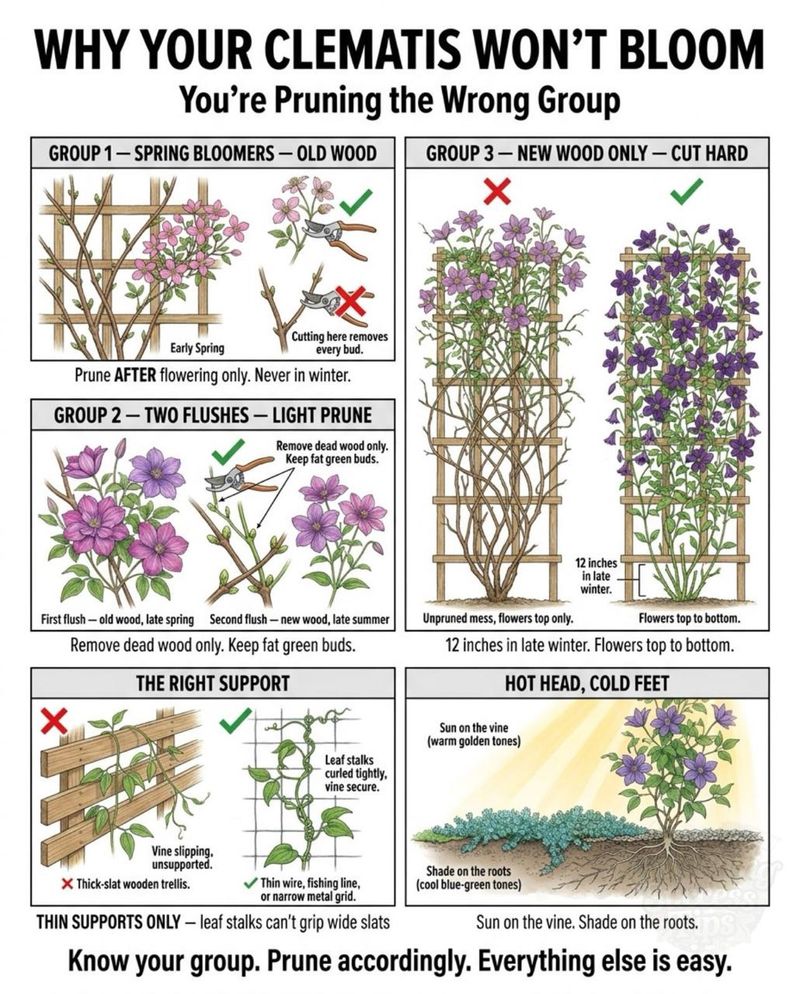
Ask ten gardeners why their clematis flowers only at the top, and pruning is usually the culprit. Clematis fall into three pruning groups, and cutting the wrong way for your group snips off the very buds that would have become flowers.
Group 1 blooms on old wood, so prune only lightly right after it finishes flowering. Group 2 flowers on both old and new wood, so remove dead or weak stems in late winter and trim back to the first fat, healthy buds.
Group 3 blooms on new wood, so cut it back hard every late winter to about 6 to 12 inches from the ground.
If you do not know your group, watch when your vine blooms and note whether flowers appear on last year’s stems or fresh growth. That single clue tells you how to prune, and it is the fastest way to stop a bare, leggy base and get color from bottom to top.
2. Insufficient Sunlight
Clematis in the shade behaves a lot like a kid reaching for a cookie on a high shelf: it stretches, stretches, and stretches some more. That stretching toward light is exactly what leaves you with long, skinny stems and only a few flowers.
Most clematis want at least six hours of direct sun a day to bloom their best. When they get less, the plant pours its energy into growing longer rather than making buds.
Take a look at where your vine sits during the day. If a tree or shrub has grown up and thrown new shade over it, thinning those branches can flood your clematis with light again.
If the spot is hopelessly dark, move the plant in early spring or fall to a brighter fence or trellis and watch how much fuller it grows.
3. Incorrect Planting Depth
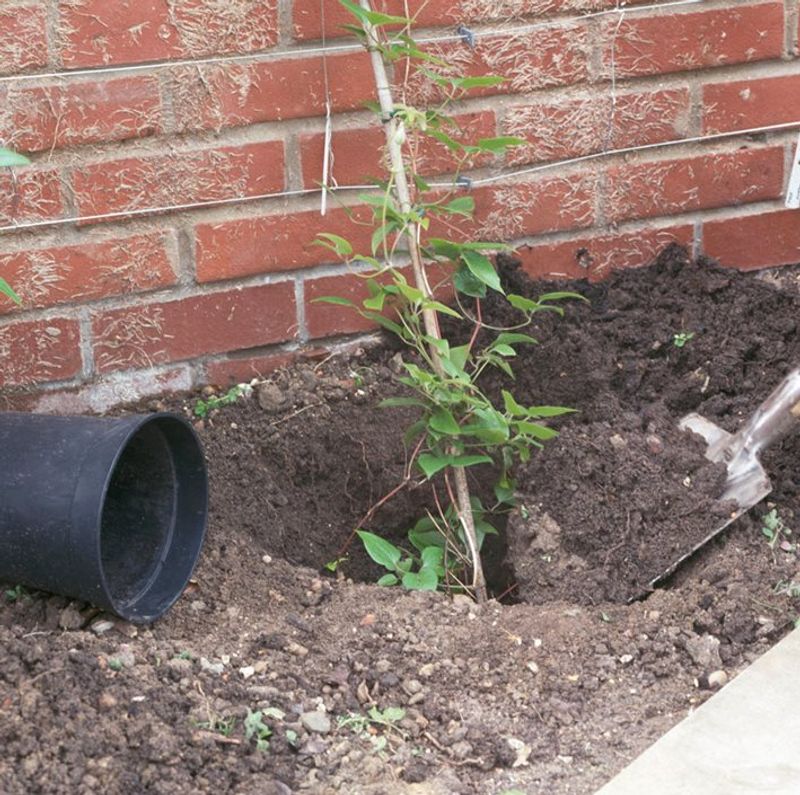
Here is a rule that surprises most folks: clematis actually likes to be planted deep. Setting it too shallow, the way you would most other perennials, is a sneaky reason a vine grows thin and single-stemmed instead of bushy.
Burying the crown, the spot where the roots meet the stems, about 2 to 4 inches below the soil surface encourages new shoots to push up from below ground. More shoots at the base means a fuller plant and far less of that lonely, leggy look.
If your clematis is already in the ground and planted high, you cannot easily re-bury it, but you can mound a few inches of compost over the base to mimic deeper planting. For anything you are about to plant, dig that extra bit deeper and thank yourself next summer.
4. Poor Soil Drainage
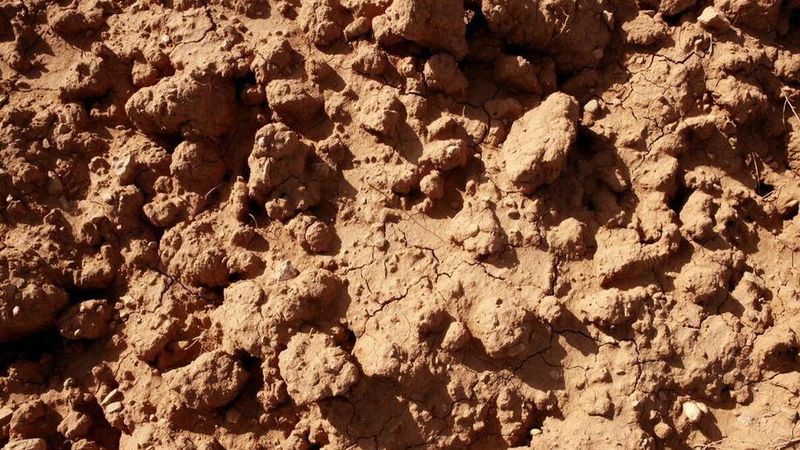
Soggy feet make clematis miserable. The plant loves steady moisture but hates sitting in waterlogged ground, and constantly wet roots can lead to rot, wilting, and a stressed vine that simply refuses to bloom well.
Heavy clay is the usual offender because it holds water like a bathtub. Working in plenty of organic matter, such as compost or well-rotted leaves, opens up that dense soil so water can drain while still keeping the roots pleasantly damp.
Before planting, check your site after a heavy rain. If puddles linger for hours, amend the bed or choose a slightly raised spot.
Good drainage keeps the roots healthy, and healthy roots are what fuel a vine covered in flowers instead of a struggling one with a few sad blooms.
5. Incorrect Fertilization (Too Much Nitrogen)
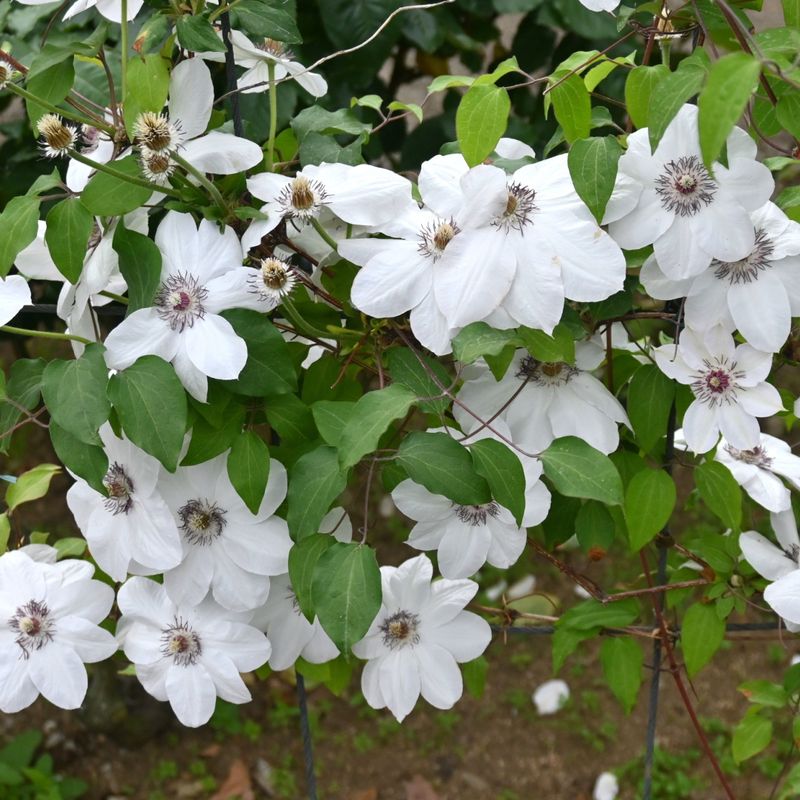
More food does not always mean more flowers, and with clematis it can backfire. Feed it a fertilizer loaded with nitrogen and you will get gorgeous, jungle-thick leaves with hardly a bloom in sight, because nitrogen pushes leafy growth over flowers.
Reach instead for a balanced blend like 10-10-10, or one lower in nitrogen and higher in phosphorus and potassium such as 5-10-10. Those last two numbers are the nutrients that support root strength and flower production.
Feed in spring as growth begins, and maybe once more in summer, but hold off while the plant is budding or in full bloom since feeding then can actually cut your flowers short. A yearly scoop of compost also drip-feeds nutrients gently, which clematis appreciates far more than a nitrogen overdose.
6. Hot Roots and Lack of Root Shade
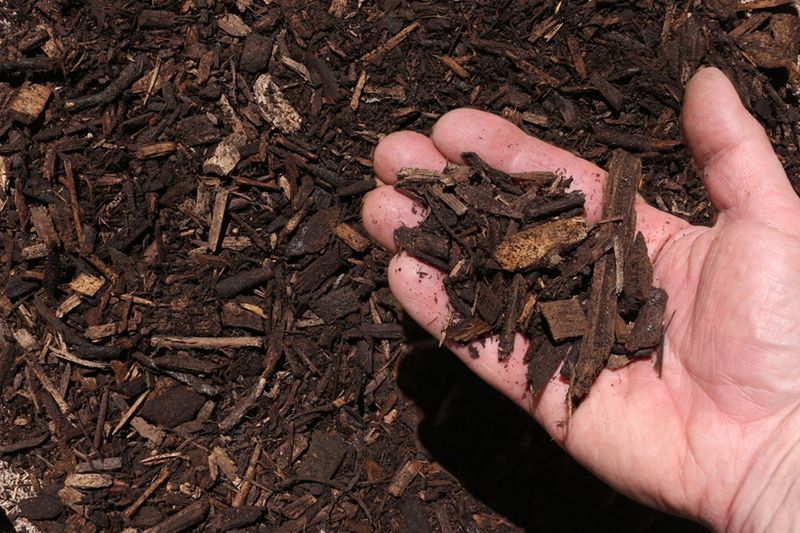
Old gardening wisdom sums up clematis perfectly: it wants its head in the sun and its feet in the shade. When those roots bake in hot, dry soil, the plant gets stressed, growth stalls, and flowering drops off.
Keeping the base cool is easy and cheap. A thick layer of mulch holds moisture and blocks the sun’s heat, while a few flat rocks laid over the root zone do the same job and look tidy.
Better yet, tuck some low-growing perennials or a leafy groundcover around the bottom of the vine. Their foliage shades the soil naturally and hides any bare lower stems, giving you a fuller display while keeping those all-important roots comfortable through summer heat.
7. Inadequate or Inconsistent Watering
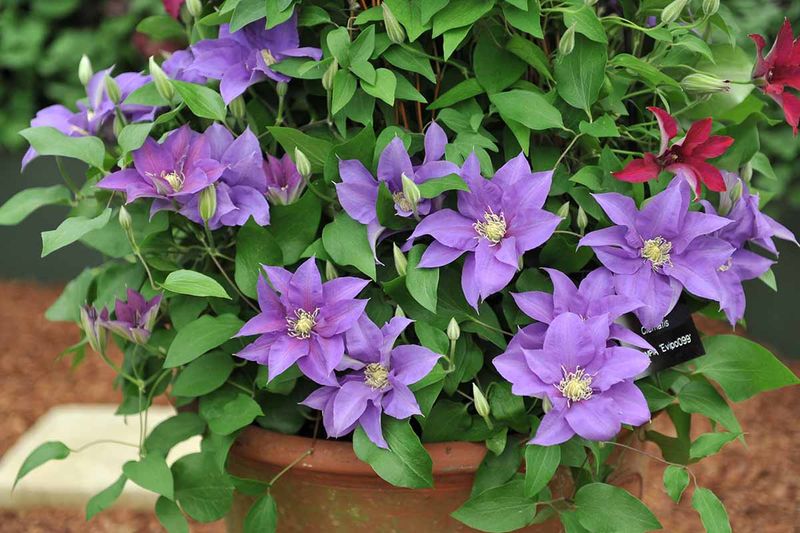
Clematis is thirsty, and it does not like surprises when it comes to water. Let it dry out and you will see slow growth, wilting, and fewer buds; drown it and you invite the soggy-root problems that also shut down blooming.
The sweet spot is steady, deep moisture. Newly planted vines need watering two or three times a week until they settle in, while established plants generally want about an inch of water per week, and more during hot, dry stretches.
A quick finger test tells you everything. Poke into the top inch of soil, and if it feels dry, water slowly and deeply so the moisture reaches down to the roots.
Deep drinks encourage a strong root system, and strong roots are the backbone of a vine loaded with flowers.
8. Lack of Support or Improper Training
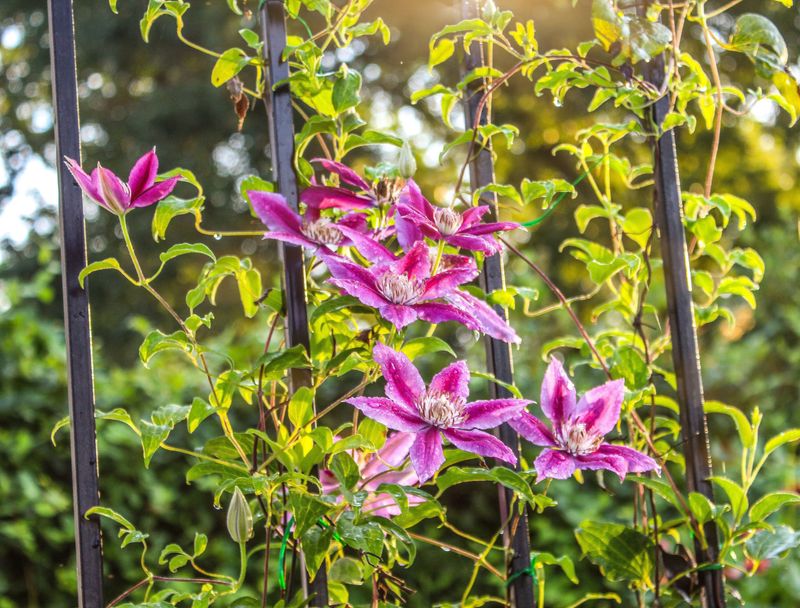
Picture a climber with nowhere to climb: that is a clematis without proper support. Left to fend for itself, it turns into a tangled knot, and any flowers it manages to make end up hidden or bunched at the very top.
Give it something sturdy to grab, whether that is a trellis, an arbor, a fence, or even the branches of a companion shrub. Clematis clings with its leaf stems, so it needs thin structures it can wrap around.
The real trick is training. As new shoots appear, gently guide them out and across the support rather than letting them all race straight up.
Spreading the stems horizontally encourages side shoots and buds along the whole plant, which is exactly how you fill in that leggy gap and get blooms from head to toe.
9. Plant Immaturity
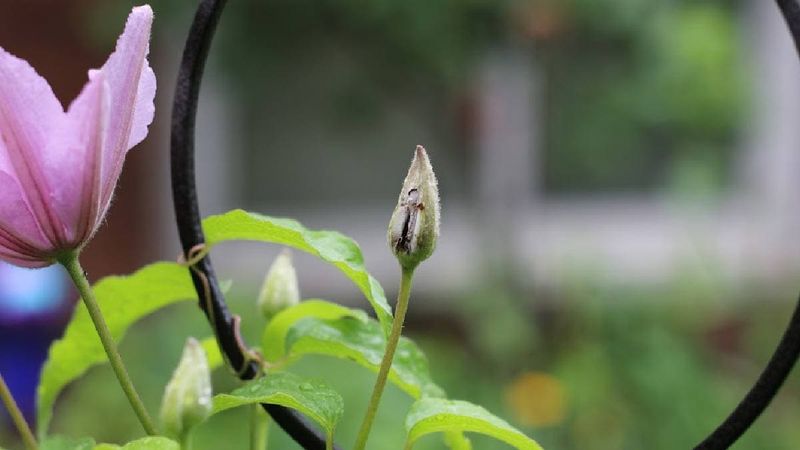
Sometimes there is nothing wrong at all except the calendar. Gardeners describe a young clematis as sleeping the first year, creeping the second, and leaping the third, and that slow start is completely normal.
During those early years, especially with Group 1 and Group 2 types, the plant is busy building roots underground instead of showing off with flowers. It can take one to three seasons before it hits its stride and covers itself in blooms.
So before you blame yourself, consider the plant’s age. Keep giving it good sun, steady water, rich soil, and the right first prunings, and be patient.
That groundwork now sets up the spectacular, flower-packed vine you are hoping for down the road.
Work through these fixes one at a time, matching each to what you see outside, and a thin, stingy clematis can transform into the lush, blooming climber you pictured when you planted it.