
What It Really Means When Bats Start Circling Your North Carolina Yard At Dusk
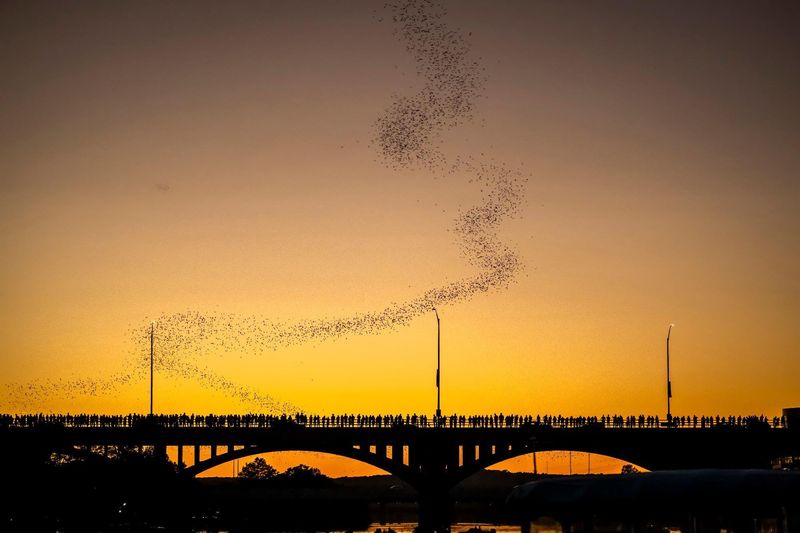
Watching a bat swoop and circle low over your yard as the sky turns orange is one of those backyard moments that stops you in your tracks. North Carolina homeowners across the Piedmont, Coastal Plain, and Blue Ridge see this every summer, and most wonder what it means.
The short answer is good news: a bat flying your airspace at dusk is almost certainly hunting insects, and that makes it a welcome neighbor worth understanding.
Dusk Circling Is Normal Bat Foraging
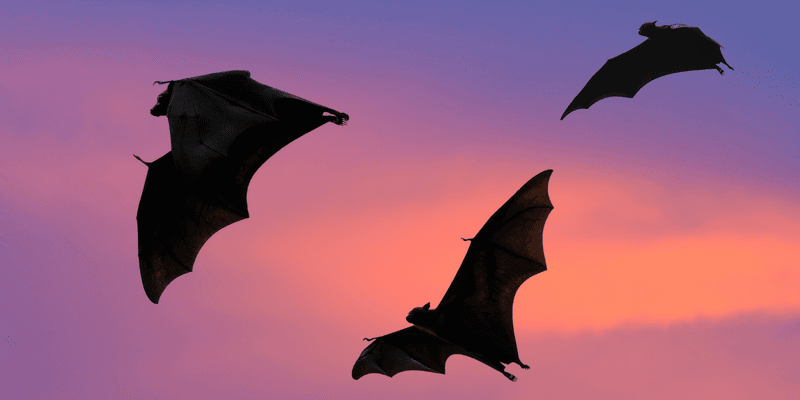
Every evening across North Carolina, bats leave their roosts right around the time the light fades to a warm gray. They are primarily nocturnal animals, but the early evening hours are prime feeding time, and that is exactly when homeowners notice them circling, banking, and looping back over the same patch of yard again and again.
That repetitive flight pattern is not random. Bats use echolocation, a biological sonar system, to detect flying insects in real time, and the swooping arcs you see are the bat tracking, closing in on, and catching prey mid-air.
Circling over a yard, a pond edge, or a tree line at dusk is completely normal behavior. NC Wildlife Resources Commission bat guidance confirms that bats in North Carolina are generally active at night and commonly forage during the early evening and early morning hours.
A bat flying cleanly and purposefully in the fading light is doing exactly what a healthy bat should be doing at that hour.
One thing a dusk silhouette cannot tell you is which species you are watching. North Carolina is home to 17 bat species, and their sizes, wing shapes, and flight speeds can overlap considerably in low light.
Some are fast and high-flying; others hug the water or tree canopy. Without equipment like an acoustic detector, identifying a bat from its evening silhouette is not reliable, so resist the urge to guess.
What you can say with confidence is that the bat is foraging, it is behaving normally, and its presence in your evening airspace is not a cause for alarm.
What the Sighting Can—and Cannot—Reveal
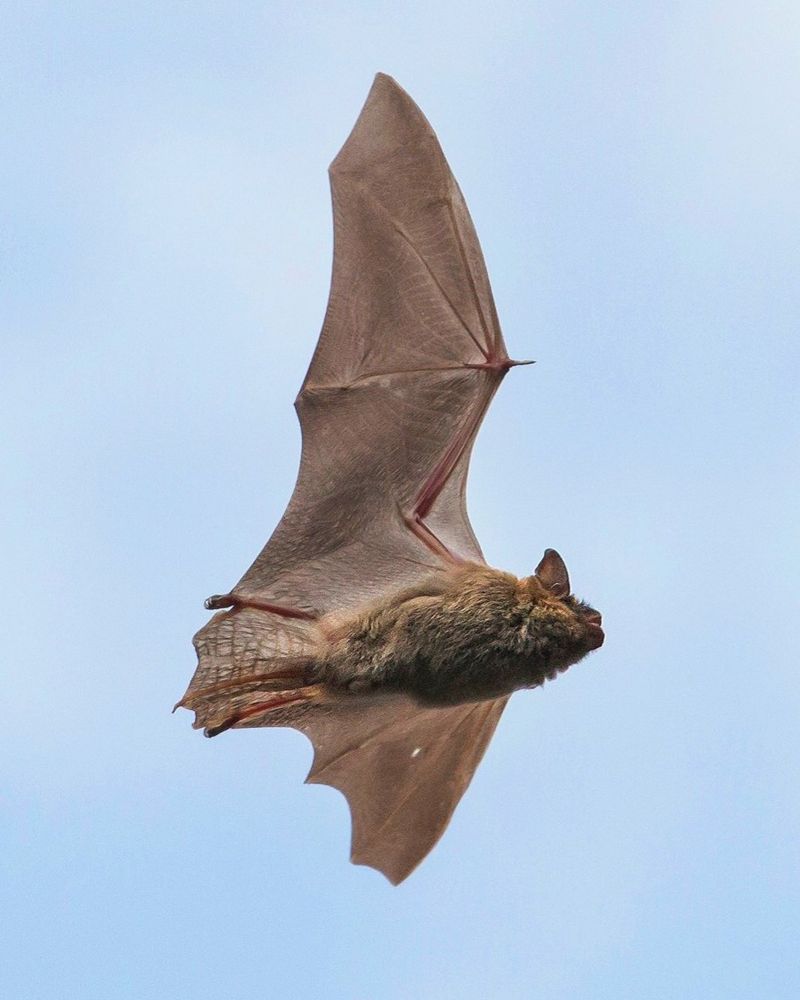
Seeing a bat circle your yard is genuinely encouraging, but the conclusion it supports is narrower than many people assume. What the sighting tells you is that bats are using your evening airspace or nearby habitat for foraging or travel.
That is a reasonable and worthwhile observation, and it is worth appreciating on its own terms.
What it does not tell you is much else. Bats respond to a wide range of local conditions: the presence of flying insects, a nearby pond or stream, a tree line that channels their flight, streetlights that attract moth populations, or simply the fact that your neighborhood sits within a bat’s regular nightly range.
NC Wildlife’s bat species overview notes that different species use different habitats and have different roosting requirements across the state’s regions. A bat flying over your yard may be responding primarily to conditions a block away, or to a creek corridor you cannot even see from your porch.
One observation cannot confirm that your soil is healthy, that your plant diversity is high, that your pesticide use is low, or that your mosquito population is unusually small. Those are complex ecological conditions that require much more than a single wildlife sighting to evaluate.
Framing a bat flyover as proof of a thriving backyard ecosystem feels satisfying, but it sets up expectations the evidence does not support.
Species identification adds another layer of uncertainty. North Carolina’s 17 bat species are spread unevenly across the Piedmont, Coastal Plain, and Blue Ridge, and their silhouettes at dusk look similar to an untrained eye.
You may be watching a big brown bat, an eastern red bat, or any number of other species. Without acoustic monitoring equipment, a confident ID from a backyard sighting is not realistic, and assuming you know the species can lead to incorrect conclusions about its habits and diet.
Bats Help With Insects, Not Guaranteed Mosquito Control
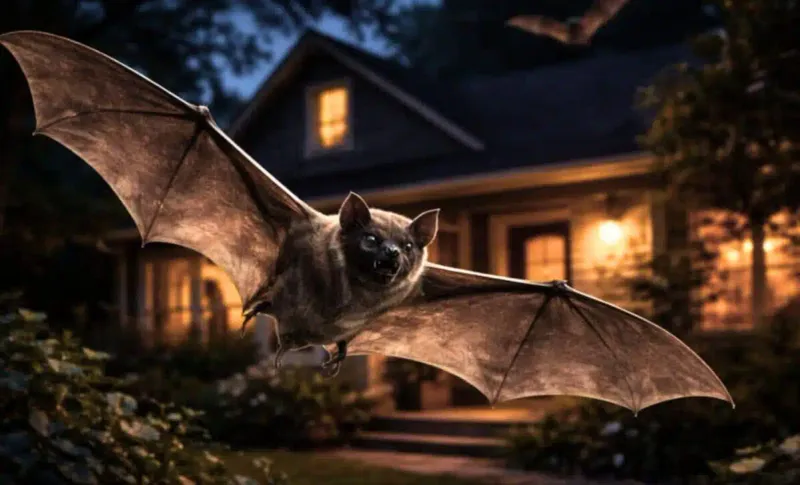
Bats are genuine insect predators, and mosquitoes are part of their diet. That much is true and worth knowing.
Where the story gets more complicated is in the leap from “bats eat mosquitoes” to “bats will control the mosquitoes in your yard.” Those two statements are not the same thing, and extension researchers have been clear about the difference.
NC State Extension’s mosquito-control guidance states directly that bats and birds consume mosquitoes but do not have a significant impact on mosquito populations. University of Florida Extension’s bat and mosquito review reaches a similar conclusion: most bats consume relatively small quantities of mosquitoes, and while large colonies may reduce some nearby insects, they are unlikely to control large mosquito populations.
A few bats circling a residential yard on a summer evening will not produce a measurable drop in the number of mosquitoes biting people on that property.
You may have seen the claim that a single bat eats 1,000 mosquitoes per hour. That figure is not supported by field research on wild bats.
University of Wisconsin mosquito research notes that such numbers typically come from captive or simplified experimental conditions and should not be treated as typical wild behavior. A more grounded reference point comes from the USGS: USGS bat diet data puts a little brown bat’s total nightly insect consumption at roughly 4 to 8 grams.
That is total insects of all kinds, not a mosquito count, and it does not translate into a predictable reduction in human biting.
For practical mosquito management, focus on eliminating standing water around your property. Gutters, plant saucers, tarps, and any container that holds water for more than a few days can produce mosquito larvae.
Integrated pest-management approaches, including larvicides applied to water features that cannot be drained, are far more targeted and effective than waiting for bats to do the job. Bats are worth supporting for their own sake, just not as a substitute for these proven methods.
A Bat-Friendly Yard Protects Evening Habitat
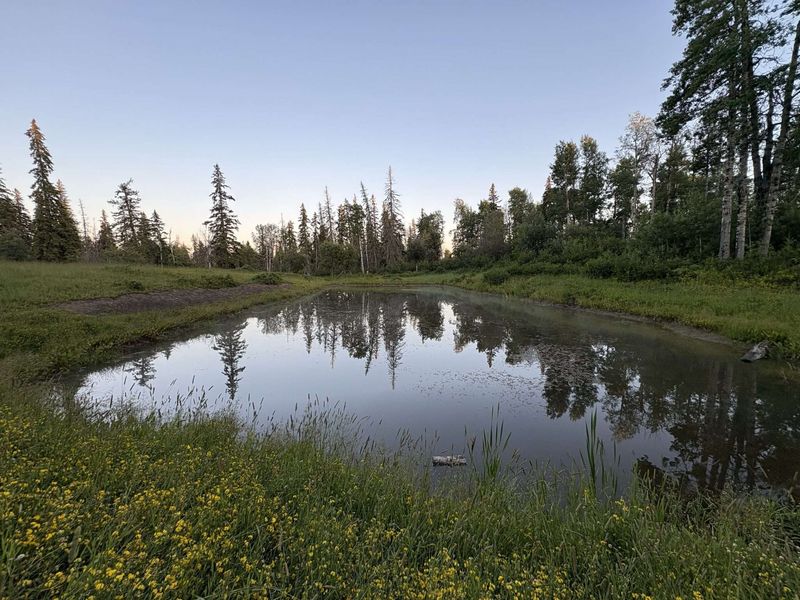
Supporting bats as part of your yard’s wildlife community is a legitimate stewardship goal, and several practical steps can make your property more useful to them without requiring any grand overhaul. The key is thinking about what bats actually need: flying insects, water sources, and safe places to rest.
NC State Extension’s bat stewardship guide recommends protecting water features such as ponds, marshes, streams, and seasonal pools because bats drink on the wing and often forage heavily near water where insects concentrate. If your yard has a garden pond or sits near a drainage corridor, those features already make your property more appealing to foraging bats.
Keeping those water sources clean and undisturbed during evening hours extends their value.
Retaining dead or dying trees, called snags, where it is safe to do so also helps. Many bat species roost under loose bark or in natural tree cavities, and snags that pose no fall hazard to structures or people are worth keeping.
If a large dead tree needs to come down for safety reasons, leaving a shorter standing portion can still offer roosting value.
Reducing insecticide use across the yard supports bats indirectly by keeping the insect base they depend on intact. Published research on insectivorous bat foraging points to insect availability as a primary driver of bat habitat use.
Broad-spectrum insecticides applied frequently reduce that availability, which can make a yard less attractive to bats over time. Spot-treating specific pest problems rather than blanket spraying is a reasonable middle ground for most homeowners.
Avoiding disturbance of any known roosting or hibernating colony nearby is equally important. These are protected animals in North Carolina, and disrupting a roost, especially during breeding or hibernation periods, can harm individuals and the colony as a whole.
Stewardship here means leaving known roost sites alone unless there is a genuine building-access problem that requires a formal exclusion plan.
A Bat House Offers a Roost, Not a Pest-Control Promise
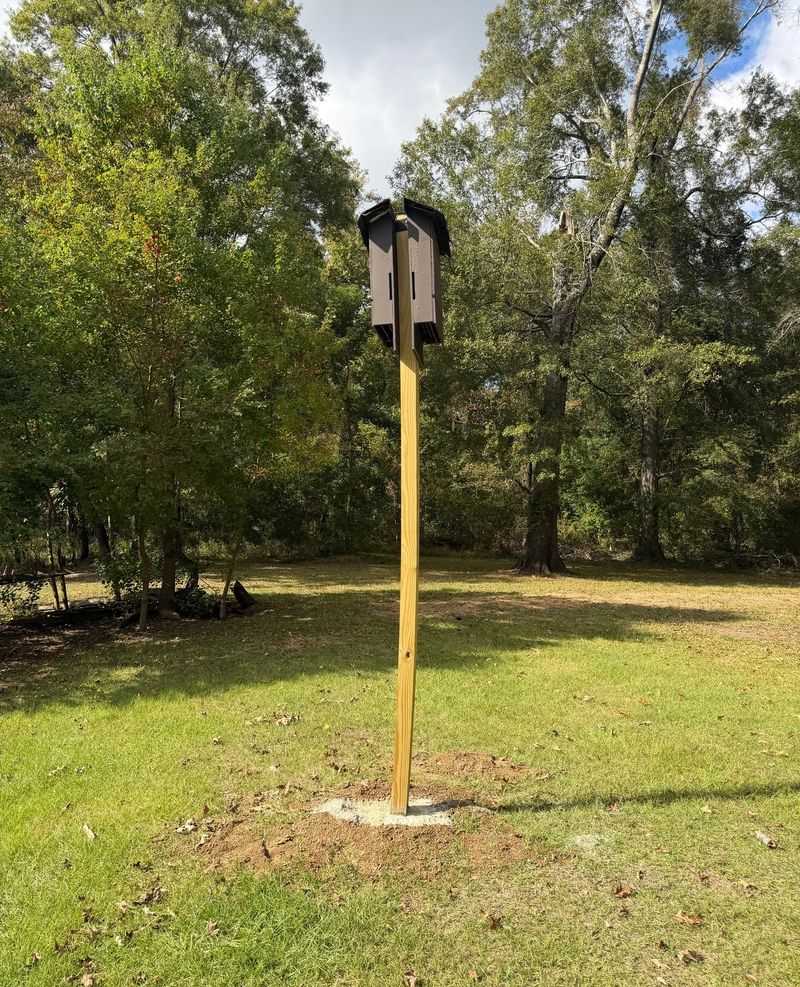
A bat house is one of the most popular wildlife-stewardship additions a North Carolina homeowner can make, and for good reason: it offers bats an alternative roosting site that keeps them out of attics and chimneys while providing genuine habitat value. Before installing one, though, it helps to set realistic expectations about what a bat house will and will not do.
Occupancy is not guaranteed. Bats are selective about roost sites, and a newly installed box may sit empty for a season or two before any bats move in, if they ever do.
NC State Extension’s bat guide notes that it can take up to two years for bats to discover and begin using a bat house, and some boxes are never occupied regardless of placement. Installing a bat house and then expecting fewer mosquitoes by midsummer is likely to disappoint.
Placement matters more than most homeowners realize. NC Wildlife’s bat house placement guidance recommends mounting the box at least 10 feet above the ground, with roughly seven hours of direct summer sun to keep the interior warm enough for roosting.
Pole mounting is generally preferred over mounting directly on a building wall, partly because it allows for better sun exposure and partly because it reduces the chance of bats finding their way into the structure itself.
Location relative to water also matters. Placing a bat house within a quarter mile of a permanent water source, a pond, a creek, or a wetland, increases the odds of occupancy.
Keep the box away from high-traffic areas, children’s play spaces, and any spot where falling guano would land on a frequently used surface. A bat house positioned over a backyard patio or a playground creates unnecessary cleanup and contact concerns.
Think of the box as conservation infrastructure: useful habitat that supports the local bat population, not a device that delivers a predictable pest-control outcome.
Outdoor Visitors and House Intruders Need Different Responses
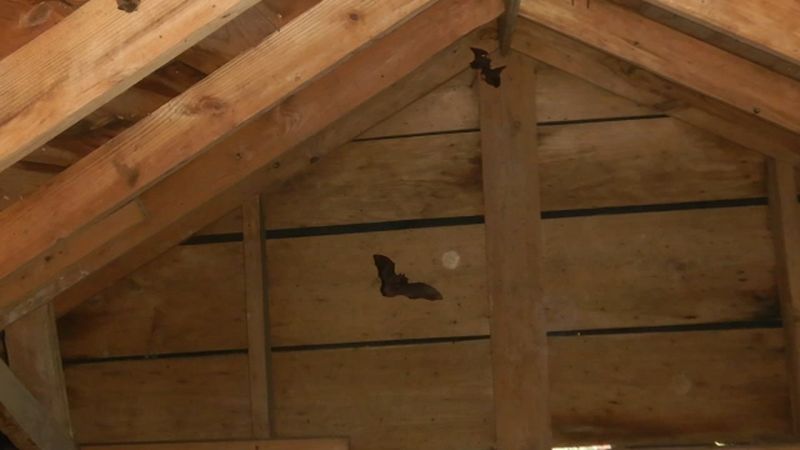
Welcoming bats as evening visitors to your yard and excluding them from your attic are not contradictory goals. You can genuinely support bat habitat outdoors while taking responsible steps to keep bats out of your living spaces, and understanding the difference between those two situations will help you respond appropriately to each one.
When bats are roosting inside a building, the first and most important rule is to avoid sealing openings while bats are still present. Trapping bats inside a structure can kill them, and in North Carolina, it can also put you in legal trouble.
NC Wildlife’s bat protection rules make clear that all bats in the state are protected as nongame wildlife, and exclusions must be handled carefully.
North Carolina enforces a bat-eviction moratorium from May 1 through July 31 each year. During that period, female bats are raising pups that cannot yet fly.
Sealing entry points while a maternity colony is present traps the young inside, where they die. NC Wildlife’s 2025 pre-season advisory specifically encourages homeowners to complete any exclusion work before May 1 or to wait until after July 31 when pups are flying on their own.
The recommended approach outside the moratorium window is a one-way exclusion device, a tube or netting that lets bats exit but not re-enter. Once all bats have left, the entry points can be sealed permanently.
NC Wildlife’s exclusion resource guide outlines this process and recommends working with a wildlife removal professional who is familiar with bat biology and state regulations. Attempting a DIY exclusion during the wrong time of year or without understanding bat behavior can cause more harm than the original problem.
The outdoor bats circling your yard at dusk deserve to stay there; the ones in your attic need a safe, legal exit plan.
Handle Indoor, Grounded, or Dropping-Producing Bats With Care
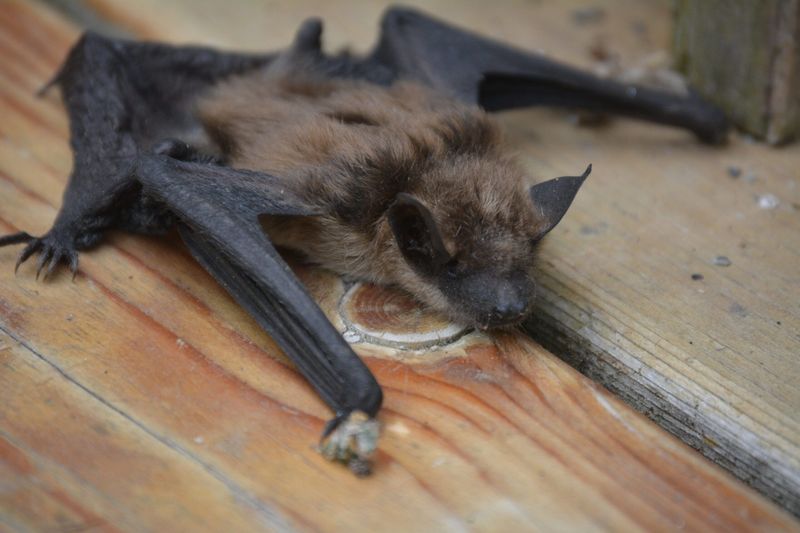
A bat flying cleanly outdoors at dusk is a normal, low-concern event. The picture changes when a bat turns up indoors, is found on the ground, cannot fly, or seems unusually easy to approach.
Those situations call for a different response, and the most important first step in all of them is the same: do not touch the bat.
CDC rabies prevention guidance for bat contact is direct on this point: bat bites can be very small and may go completely unnoticed, especially during sleep. A bat found in a room where someone was sleeping, even if no one remembers waking up, is a situation that warrants a call to your local health department or animal control.
NC DHHS rabies control guidance confirms that public-health officials can help assess whether exposure evaluation or post-exposure prophylaxis is needed. A bat’s appearance tells you nothing reliable about whether it carries rabies, so the assessment has to come from health professionals, not from how the bat looks or acts.
If a bat is inside your home and you need to contain it safely while waiting for help, close interior doors to limit where it can go, open a window or exterior door if possible, and keep people and pets out of the room. Do not swat at it or try to catch it bare-handed.
If animal control needs to test the bat, it must be recovered intact.
Guano accumulations require their own precautions. Large deposits of bat or bird droppings can harbor Histoplasma capsulatum, a fungus whose spores cause histoplasmosis when inhaled.
CDC histoplasmosis information notes that the fungus grows in soil and organic material enriched by droppings. NIOSH guidance on histoplasmosis prevention recommends wetting the material thoroughly before removal to prevent dust and spores from becoming airborne.
Never dry-sweep, vacuum without a HEPA filter, or use a leaf blower on a substantial guano deposit. Wear an N95 or better respirator and disposable gloves, and bag the material in sealed plastic before disposal.
The Good-News Read Is Bat Habitat, Not a Mosquito Guarantee
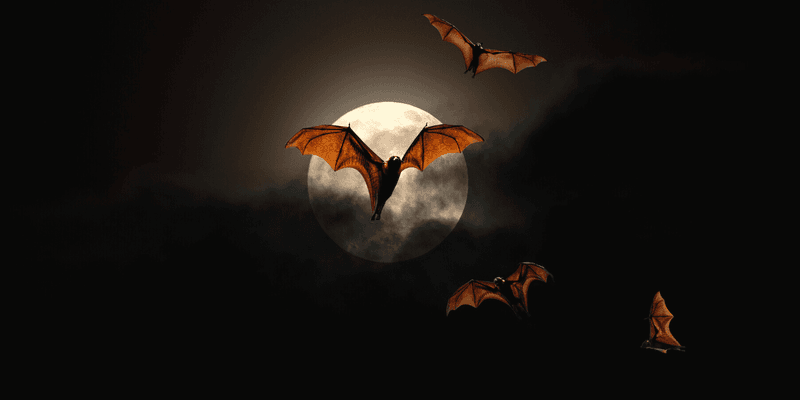
When bats start circling your North Carolina yard at dusk, the most accurate read is a straightforward one: bats are using your neighborhood’s evening insect habitat, and that is worth a quiet moment of appreciation. NC Wildlife confirms that all 17 of the state’s bat species are protected nongame wildlife, and seeing them active near your property means the local landscape is offering them something useful, whether that is insects, water, travel corridors, or roosting opportunities nearby.
Supporting that activity is a reasonable stewardship goal. Protecting water features, reducing broad insecticide use, and considering a well-placed bat house all contribute to bat-friendly conditions without requiring you to overhaul your yard.
NC State Extension’s bat habitat guidance frames these steps as habitat support, not pest-control strategies, and that framing holds.
The sighting does not diagnose your yard’s overall ecological health or confirm that mosquito populations are being suppressed. For mosquitoes, NC State’s mosquito-management guidance points to standing-water elimination and targeted integrated pest management as the practical tools.
Bats are welcome company on a summer evening; the standing water in your gutters is still your responsibility. A yard that supports bats outdoors, manages building access responsibly, and handles any health concerns by the book is doing right by both the wildlife and the people who live there.