
If Your Fall Cauliflower Grows Loose, Yellow Heads Instead Of Tight White Curds, You Skipped One Blanching Step
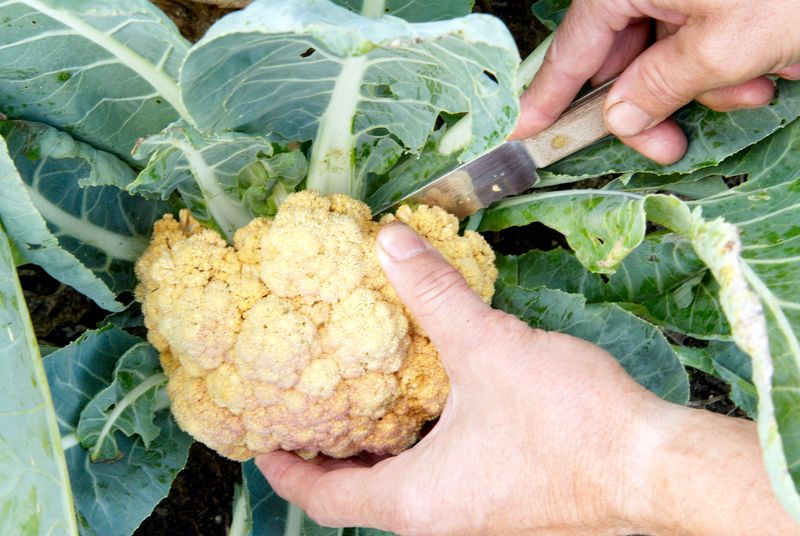
Pulling a cauliflower head out of the garden only to find it yellow and falling apart is genuinely discouraging after weeks of careful tending. Most gardeners assume they missed a single step, but the truth is that yellow curds and loose curds usually come from two separate problems. Knowing the difference means you can fix the right thing next time, and one easy leaf-covering habit really does protect your white heads from turning color.
Yellow curds and loose curds point to different problems
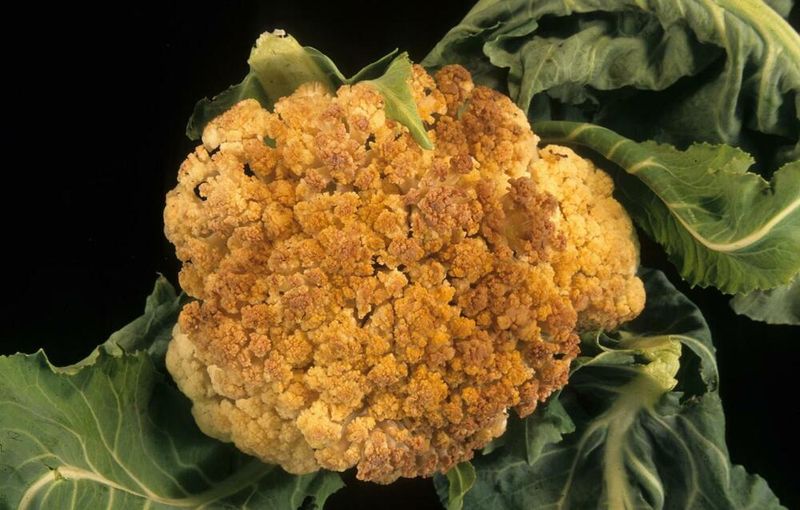
Walk up to a cauliflower plant and you might see a yellow head, a loose one, or both at once, and it is tempting to blame a single missed step for all of it. Sunlight is the most common reason a white curd turns yellow, green, or even purplish. When the developing head sits uncovered under direct sun, pigments form in the exposed tissue and the bright white color fades fast.
Loose or separated curds tell a different story. Oregon State University’s vegetable guide identifies heat stress, drought, inconsistent soil moisture, rapid growth, high nitrogen, and overmaturity as the main drivers behind curds that pull apart or develop a coarse, ricey texture. Those are growing-condition problems, not a light-exposure problem, and covering the head with its own leaves would not have prevented them.
Leaf tying, which gardeners call blanching, blocks sunlight from reaching a developing curd. That is genuinely useful for protecting color on standard white varieties. What it cannot do is tighten a head that has already separated or reverse the effects of heat and water stress that happened earlier in the season.
University of Minnesota Extension notes that cauliflower is a demanding crop with a narrow window of good conditions, and that quality problems often trace back to temperature and moisture rather than any single technique. Keeping the two symptoms straight, yellowing from sun versus looseness from stress, is the first step toward diagnosing what actually went wrong in your garden this season.
Blanching keeps sunlight off the developing curd
The word “blanching” trips up a lot of gardeners because it means two completely different things depending on context. In the kitchen, blanching means briefly boiling or steaming a harvested vegetable before freezing it. Colorado State University Extension’s freezing guide explains that postharvest blanching stops enzyme activity that degrades flavor and texture in the freezer. That has nothing to do with what happens in the garden.
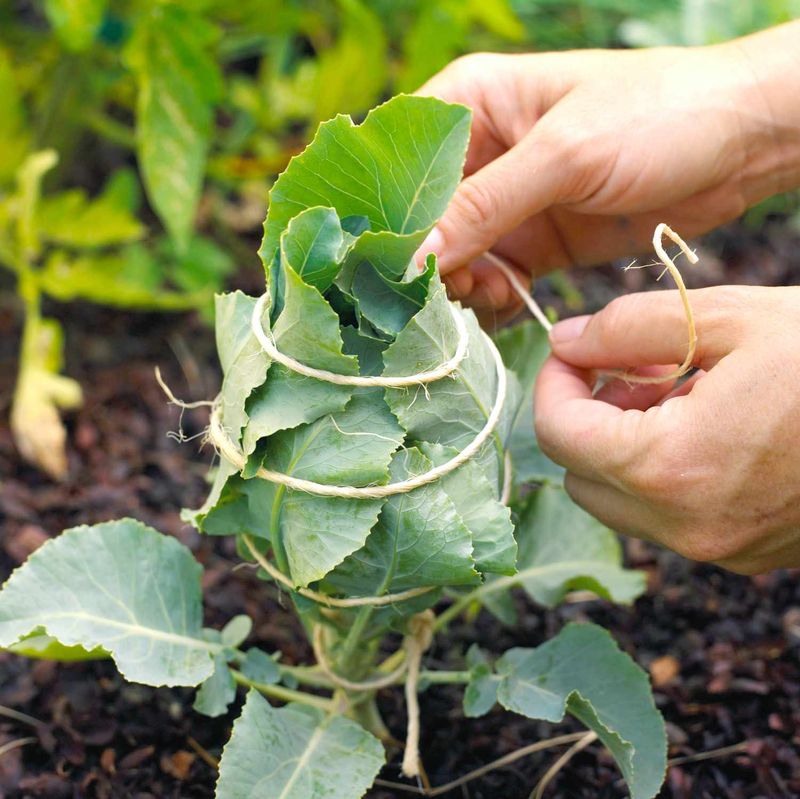
In the vegetable bed, blanching a cauliflower means folding the plant’s own outer leaves over the developing head to shade it from the sun. University of Illinois Extension describes it as pulling large leaves up over the curd and securing them so light cannot reach the white surface. The goal is straightforward: without that shade, sunlight triggers pigment development in the exposed tissue, and the curd shifts from bright white to yellow, green, or purple depending on the variety and conditions.
Oregon State University confirms that light exclusion is the mechanism behind the practice. A curd that stays shaded holds its white color through the rest of its development. One important boundary to keep in mind: this technique prevents or reduces further sun-related discoloration on a curd that is still forming. If the head has already separated into loose, ricey sections, covering it with leaves will not bring it back together.
That kind of damage calls for a different diagnosis and, in most cases, a prompt harvest before things get worse.
Tie the leaves when the curd is about 2–3 inches wide
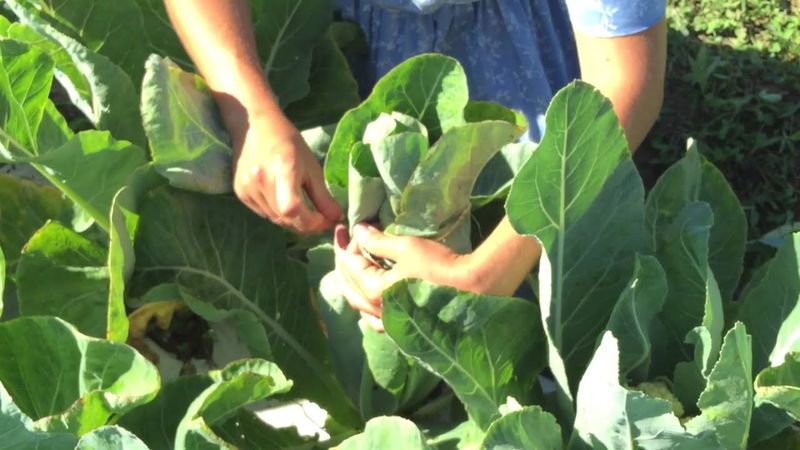
Timing matters more than most gardeners expect with this technique. Too early and there is barely anything worth covering; too late and the curd has already been sitting in full sun long enough to pick up color. The right moment is when the visible white head measures roughly 2 to 3 inches across, about the size of a large egg or a small fist.
At that point, go out to the plant and select three or four of the largest outer leaves. Pull them up and over the head so they arch across the curd like a loose tent. University of Illinois Extension recommends fastening them with soft string or a rubber band, keeping the bundle snug enough to stay in place but not so tight that the leaves crush the curd or press against it. The head still needs room to grow, and air needs to move through the bundle.
University of Maryland Extension specifically cautions against pulling the leaves into a tight seal, particularly during warm or humid weather, because trapped moisture under a sealed cover can encourage rot. A loose, breathable wrap is the goal every time.
A few practical notes worth keeping in mind: check the plant every day or two after tying, because a fast-growing curd can press against the leaves sooner than expected. Also, resist the urge to tie before a proper curd has formed. Early buttoning, where a tiny, premature head forms before the plant matures, is a stress response that leaf tying cannot fix. Wait until the head is genuinely developing and clearly white before you reach for the string.
Check the cover for several days
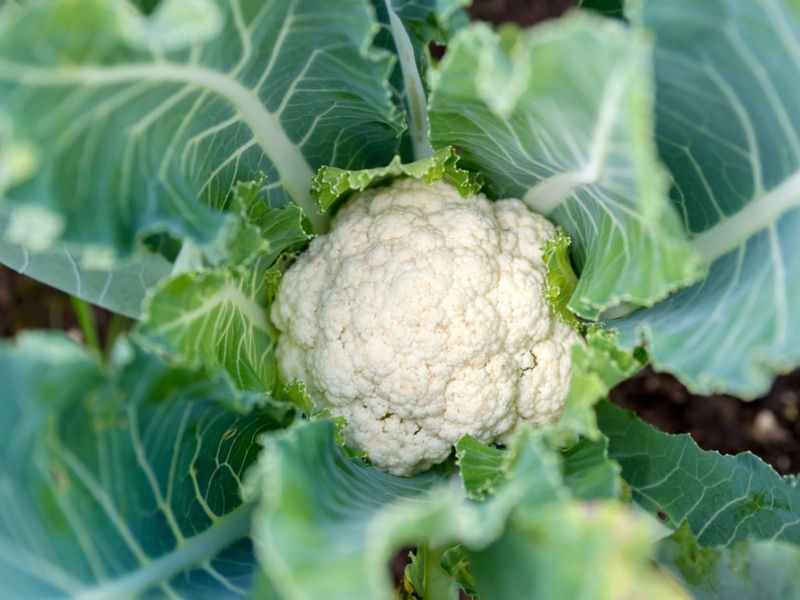
Tying the leaves is not a one-and-done task you can forget about until harvest day. Conditions change quickly in a fall garden, and what looks fine on a dry afternoon can become a problem after a rainy night.
University of Maryland Extension notes that blanching generally takes about four to eight days, though that window shifts considerably depending on the weather. In hot conditions the head can fill out and reach harvest size in as few as three to five days. During cool fall weather, the same process might stretch to eight to twelve days or even longer. Checking the curd every couple of days lets you catch it at peak quality rather than finding it overripe.
Wet or humid weather adds a specific risk. When moisture collects under a tightly wrapped bundle of leaves, poor airflow creates exactly the conditions that favor fungal rot. If you tied the leaves loosely as recommended, some air movement should already be happening, but after heavy rain or a stretch of foggy mornings it is worth gently lifting the cover to look at the curd surface. Any soft spots, dark patches, or off-smells are signs to act immediately rather than waiting.
University of Illinois Extension advises harvesting before the head becomes overripe, and regular checks make that timing much easier to judge. Once the curd is compact, firm, and smooth and the head has reached a good size for the variety, cut it promptly. Leaving a tied head on the plant longer than necessary in hopes of more size is where many gardeners lose an otherwise good harvest.
Fall weather helps, but moisture and heat still shape the head
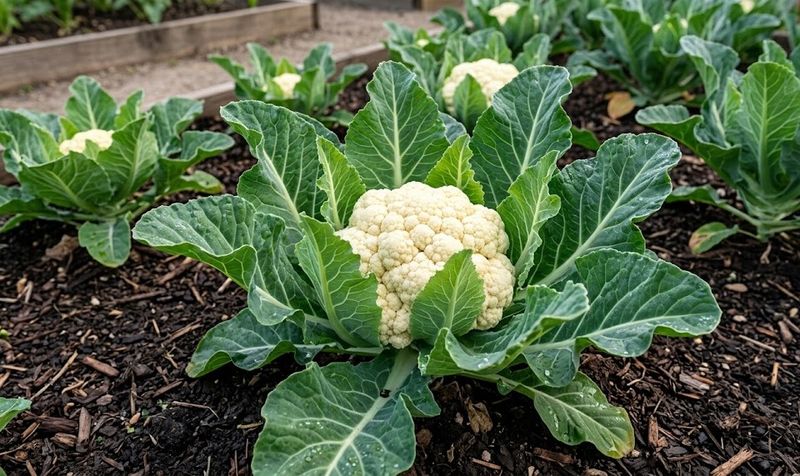
Planting cauliflower for a fall crop is a smart move, and cooler temperatures genuinely do help. Consistent mild weather during head formation supports firmer, denser curds and makes it easier to hold quality through harvest. That said, a fall planting date is not a guarantee against the problems that make cauliflower frustrating to grow.
University of Minnesota Extension recommends thorough, consistent watering whenever rainfall falls short, and warns that drought stress during head development leads to poor texture and quality. An unusually warm stretch in September or early October can push curd development in the same direction as a summer heat wave, producing loose, leafy, or ricey heads regardless of when you planted.
Fertility management also plays a role that surprises many home gardeners. Bayer Vegetable Seeds’ cauliflower head formation overview points to excessive nitrogen as a contributor to loose, leafy curd development. When a plant pushes too much vegetative growth too quickly, the head can form before the plant has the structure to support a tight, dense curd. Rapid, uneven growth from heavy nitrogen feeding or a sudden flush of rain after a dry spell creates similar conditions.
Oregon State University also lists transplant stress, pest pressure, and earlier growing-point injury as factors that can prevent a normal head from forming at all. University of Illinois Extension notes that cold injury, insect feeding, and mechanical damage early in the plant’s life can all interfere with head formation later. Leaf tying cannot undo any of those earlier events, which is why managing the whole season matters, not just the final few days before harvest.
Some cauliflower should stay uncovered
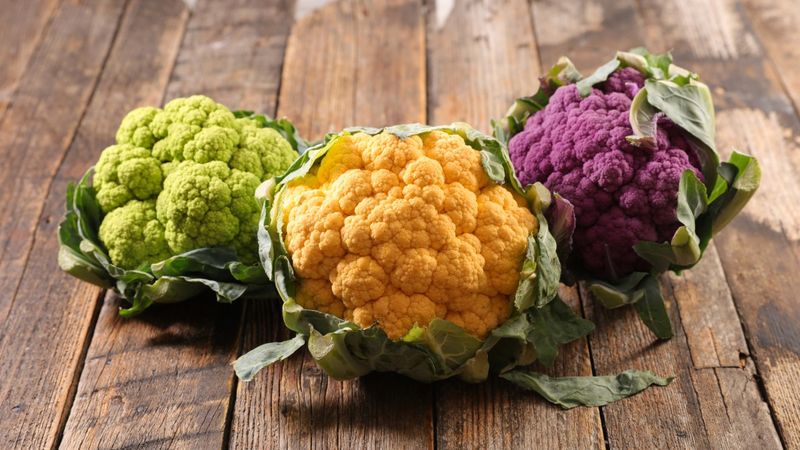
Before tying every cauliflower plant in the garden, it helps to know which ones actually need it. Applying this technique to the wrong varieties can work against you rather than for you.
University of Minnesota Extension is clear on this point: orange, green, purple, and Romanesco cauliflower varieties need light exposure to develop their characteristic colors. Covering those heads with leaves would block the very process that makes them worth growing. Self-blanching or self-wrapping white varieties, which produce leaves that naturally curl inward over the developing curd, may not need manual tying at all. Check your seed packet or plant tag to find out what type you have before reaching for the string.
There is also a diagnostic boundary worth knowing when leaves on the plant start turning yellow. Yellowing of the outer foliage is not the same as sun discoloration of the curd, and the two should not be treated the same way. University of Minnesota Extension’s plant diagnostic tool flags yellow V-shaped lesions on leaves, black veins in the stem tissue, wilting, or spreading yellowing of the foliage as possible signs of black rot or another disease rather than ordinary sun exposure on the curd. Those symptoms call for a separate response, which might include removing affected plant material, improving air circulation, or adjusting irrigation practices, not tying leaves over the head.
Keeping these categories separate prevents a lot of wasted effort. Tie the leaves only on standard white, non-self-blanching varieties when the curd is actively forming and the goal is color protection. For everything else, let the plant develop as intended and respond to specific problems with the right tool for the job.
Harvest a loose head before quality falls further
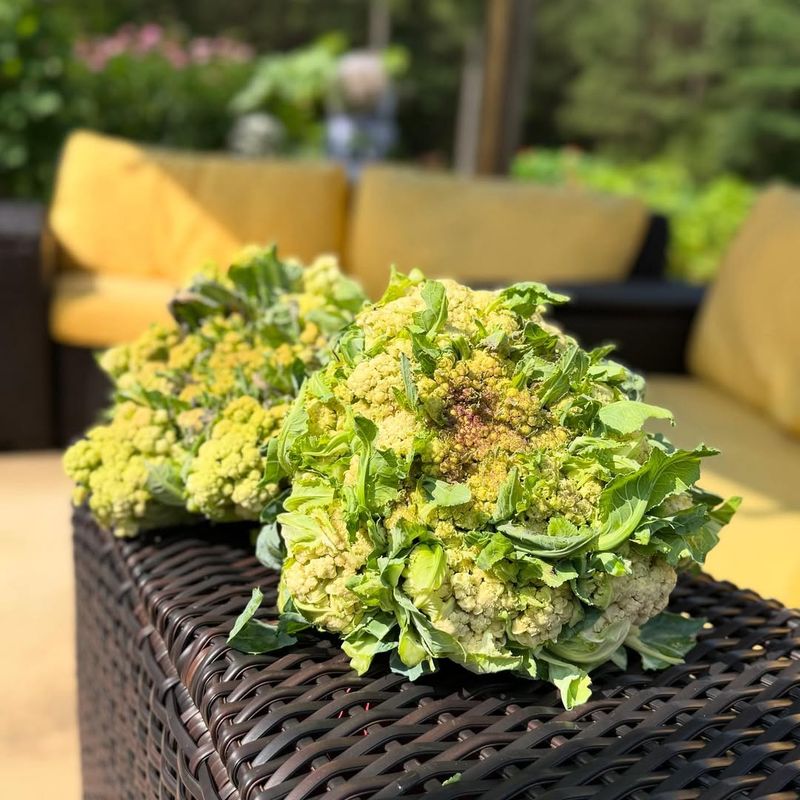
Once a curd has already separated into loose sections, the decision is simple: harvest it now. Tying the leaves over a head that is already ricey or opening up will not pull the florets back together. It will only delay the harvest while quality continues to drop.
University of Illinois Extension advises cutting the head when it is compact, firm, and smooth, before individual flower sections visibly separate or the surface takes on a coarse texture. Once that separation starts, it moves quickly, especially in warm weather. A University of Minnesota Extension vegetable IPM update notes that early harvesting of a stressed head may reduce the final size but can prevent further decline, which is a reasonable trade.
On the question of whether a slightly yellow or off-color head is still worth eating, the answer depends on what you are looking at. Sun-related discoloration on an otherwise firm, solid curd is a cosmetic issue, not a spoilage sign. UC Davis Postharvest Research distinguishes surface discoloration from the actual quality and safety warning signs: soft or wet tissue, mold, mushiness, dark decay spreading through the head, or any foul odor. Those are reasons to discard the head, not just trim around them.
The honest takeaway from all of this is that leaf tying is worth doing early and doing right on standard white varieties, but it is one piece of a larger picture. Managing soil moisture consistently, watching nitrogen levels, timing the planting so curd development lands in cool weather, and harvesting promptly when the head is ready will do more for your fall cauliflower than any single technique on its own.