
If Your Garden Beds Turn Into A Slug Buffet After Every Rain, These Sharp Barriers Stop Them Cold
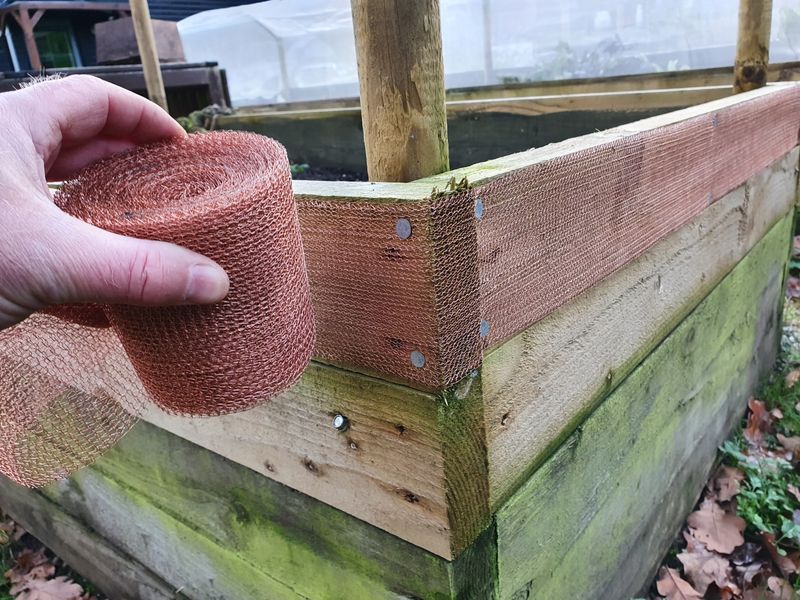
After a rainy night, finding your hostas or lettuce riddled with jagged holes is genuinely frustrating. Many gardeners immediately blame slugs, and sometimes they are right, but wet weather alone does not prove slugs are the culprit. The good news is that once you confirm what is actually eating your plants, a well-installed copper barrier can meaningfully reduce slug movement into a small bed or container. This guide walks you through the investigation, the installation, and the realistic expectations that come with it.
Wet weather is a reason to inspect, not proof of slug damage
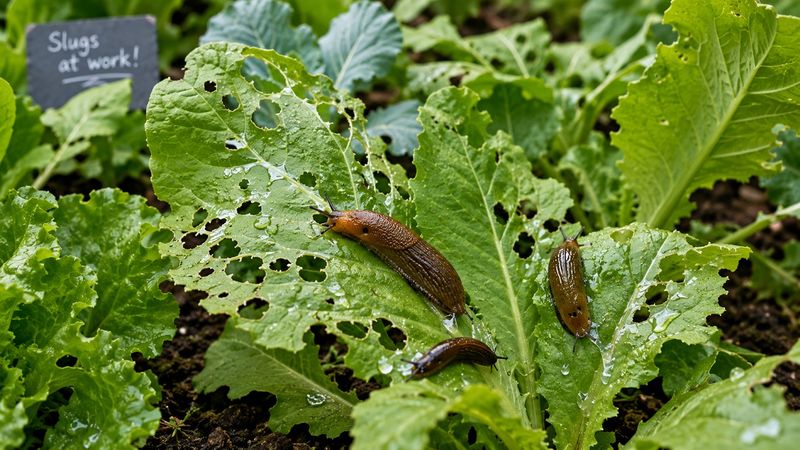
Rainy nights change the math for slugs. Cool temperatures, high humidity, and wet soil surfaces create the conditions slugs prefer for nighttime movement, so a stretch of cloudy or rainy weather is a reasonable prompt to check your plants more carefully. But the rain itself cannot tell you what is damaging your leaves.
Leaf holes have many possible authors: caterpillars, earwigs, flea beetles, cutworms, or even mechanical damage from wind and hail can all leave marks that look similar at a glance. Iowa State University Extension notes that slug damage typically appears as irregular holes in leaves, often between the veins rather than along the edges, and is accompanied by shiny, dried slime trails. Those trails are the most reliable field sign you have.
The best time to look is after dark with a flashlight, or very early in the morning before slugs retreat to shelter. Flip over low leaves, check the base of stems, and look along the soil line. If you find live slugs feeding, or trails leading to fresh damage, you have your confirmation. If you find holes but no slime and no slugs after two or three inspections, keep an open mind about other causes.
Oregon State University Extension describes peak slug activity as occurring at night under moist conditions, with temperatures above roughly 50 degrees Fahrenheit, low wind, and high humidity. That profile fits a lot of late-summer evenings after rain, which is exactly why the timing feels so predictable. Still, confirming slugs before investing in a barrier saves you from solving the wrong problem entirely.
Copper has the strongest case among the barriers reviewed
Walk into any garden center and you will find a shelf of slug-deterrent products: bags of crushed eggshells, coffee grounds, horticultural grit, bark mulch, and wool pellets, all marketed with roughly the same confidence. The evidence behind them is not equal, and that distinction matters when you are deciding where to spend your time and money.
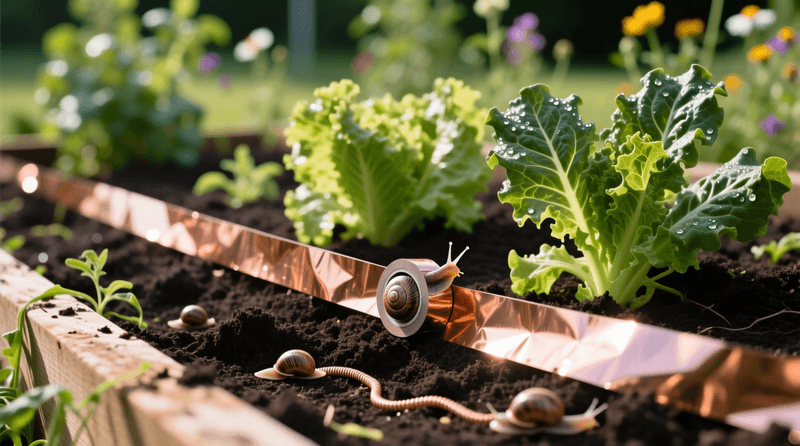
Copper stands apart from the rest. University of Minnesota Extension and UC IPM both describe copper as interacting with slug mucus in a way that produces an unpleasant, shock-like response, which discourages crossing. That is a plausible mechanism backed by extension guidance, which puts copper in a different category from materials that are simply rough or scratchy.
The case for eggshells and coffee grounds is much weaker. UC IPM states directly that crushed eggshells and coffee grounds have not been shown to deter slugs in controlled settings. Horticultural grit, bark mulch, and wool pellets face similar questions about real-world performance.
Even copper is not a guaranteed fix. An RHS field-realistic lettuce trial tested copper tape alongside several other barriers and found no measurable reduction in leaf damage from any of them under those conditions. The RHS review of slug and snail research also notes that while some copper and copper-salt studies showed efficacy in laboratory settings, field results have been more limited and inconsistent. That does not mean copper is useless, but it does mean the promise should be framed narrowly: a properly installed copper barrier may reduce slug movement into a small, bounded growing space, not eliminate slugs from your garden.
Build a wide, continuous perimeter that slugs cannot easily bypass
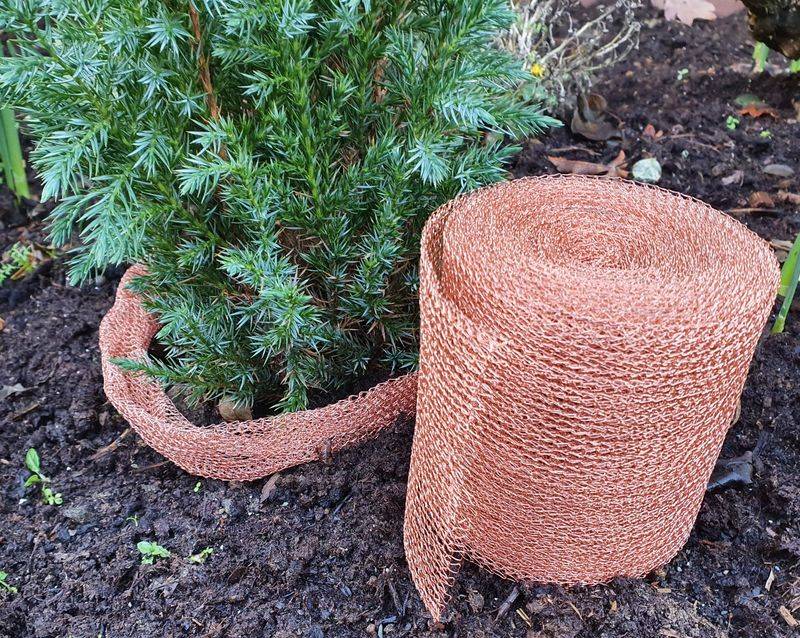
The width of a copper barrier is one of the most frequently misunderstood variables. A narrow decorative tape strip, the kind sold on a small roll for houseplants, may simply be too easy for a slug to bridge without making full contact. Extension guidance puts practical minimums in a range: OSU recommends roughly a 3-inch-wide copper band, while UC IPM recommends 4 to 6 inches for garden applications. UMN adds that the strip needs to be wide enough to accommodate the full body length of the slug attempting to cross.
Those figures are practical starting points from extension sources, not universal thresholds with a guarantee attached. What matters as much as width is continuity. A gap of even a few millimeters gives slugs a path through. Use copper foil, copper flashing, or copper mesh rather than laminated tape, which may prevent the slug’s body from making direct contact with the copper surface at all.
For a raised bed or planter with a vertical wall, UC IPM recommends extending part of the barrier below the soil line to prevent slugs from crawling underneath. The recommended burial depth varies by application: UC IPM gives 1 to 2 inches for home landscape use, while UC IPM’s nursery guidance describes burying several inches for vertical screens. When in doubt, err toward more burial rather than less.
Copper edges can be genuinely sharp, especially freshly cut flashing. Fold the top edge over, use a rubber mallet to flatten it, or cover it with a cap strip before the bed is accessible to children or anyone reaching in to weed. UMN specifically flags sharp copper edges as a safety concern, particularly around young children. Taking thirty seconds to fold or cover that edge is worth it.
Remove interior slugs and eliminate bridges before relying on copper

A copper perimeter does one thing: it discourages slugs from crossing into the protected space. It does nothing about the slugs already living inside it. If you install a barrier without first clearing the bed, you have built a fence that keeps your problem in rather than out.
UC IPM specifically recommends hand-picking existing slugs from inside a raised bed, planter, or collar before installing a copper barrier and relying on it for protection. Go out after dark with a flashlight, collect slugs into a container of soapy water, and repeat for two or three nights until you are not finding any more. Check under pots, boards, and dense foliage at the base of plants, since slugs and their egg clusters hide in cool, moist spots during the day.
After installation, bridges become the main vulnerability. A single hosta leaf drooping over the copper, a mulch pile pushed against the outside of the bed, or a weed stem leaning across the band gives slugs a dry path over the barrier without touching the copper at all. RHS guidance on slug barriers notes that slugs can sometimes stretch over collars or reach plants through adjacent materials, reinforcing why keeping the perimeter clear matters as much as the copper itself.
Oxidation is a slower problem. Copper darkens over time, and a heavily oxidized surface may be less effective than a clean, bright one. UC IPM notes that debris fouling and oxidation can reduce barrier performance. Wipe the band with a dry cloth occasionally during the growing season, keep mulch pulled back from the base of the barrier, and replace sections that have corroded heavily or been physically damaged.
UMN reinforces that maintaining a clean, continuous perimeter is what makes the difference between a barrier that works and one that just looks like it should.
Choose a bounded target instead of trying to shield the whole garden
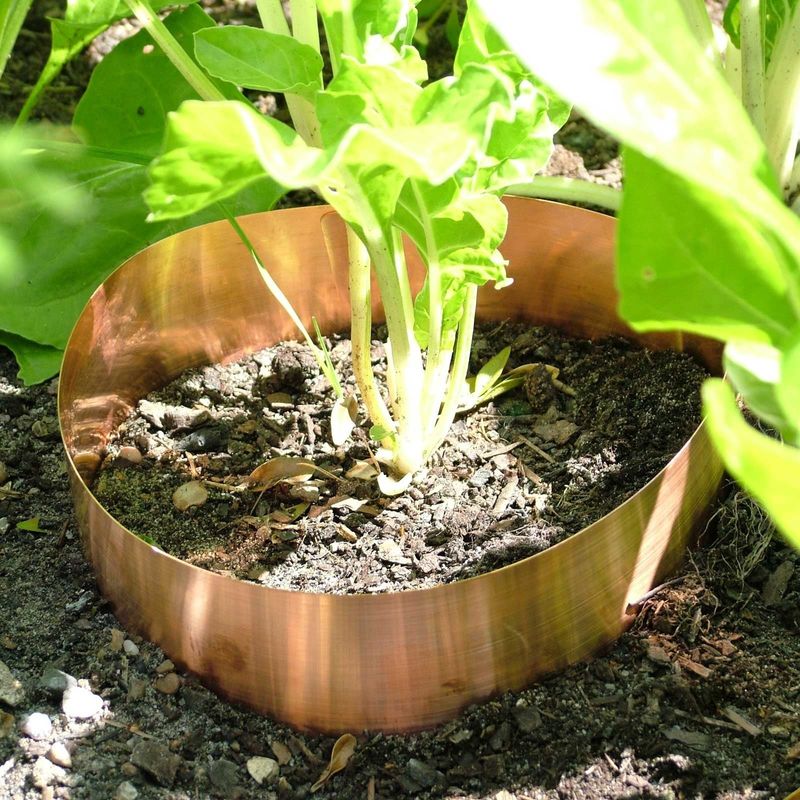
Copper exclusion works best when the protected perimeter is small enough to maintain properly. A single raised bed, a large container, or a cluster of high-value pots is a realistic target. Trying to ring an entire in-ground garden with copper is a different project: more linear footage to keep clean, more gaps to watch, and more opportunities for bridges to form along a sprawling edge.
UMN states directly that copper barriers are most practical for small gardens and containers, where a continuous, clean perimeter is actually achievable. That is not a knock on the method; it is an honest description of where the method fits.
Small horizontal collars around individual plants are a tempting shortcut, but they come with more failure points. RHS guidance cautions that slugs can sometimes stretch over a collar or access a plant through the soil beneath it, especially if the collar sits loosely or the plant’s leaves extend beyond the copper ring. A perimeter around a whole bed or container gives slugs a longer, more consistent barrier to contend with, which is harder to defeat than a small ring around a single stem.
Safety placement also becomes easier when the target is small. UC IPM and UMN both flag sharp copper edges as a concern. When the protected area is a container on a patio or a single raised bed in a defined spot, you can fold the top edge over, position it away from foot traffic, and keep children from casually reaching in. A sprawling perimeter through an open garden is harder to make consistently safe and consistently slug-resistant at the same time.
Reduce damp hiding places and monitor activity after installation
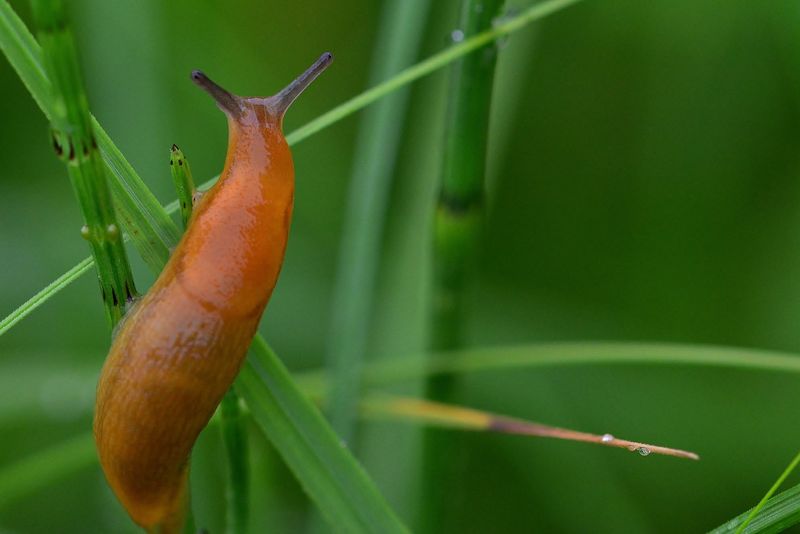
Copper exclusion protects a bounded space, but the slugs living in the surrounding yard are not going anywhere. Supporting the barrier with habitat changes and monitoring gives you a more complete picture of what is happening and reduces the pressure on the perimeter itself.
Start with watering. UC IPM Pest Notes on snails and slugs recommends watering in the morning rather than in the evening, using drip or soaker irrigation where possible, and avoiding wet foliage at night. Wet soil surfaces and damp leaves at dusk are exactly what slugs move toward. Morning watering gives the soil surface time to dry before peak slug activity begins after dark.
Removing daytime shelter is equally useful. Boards, flat stones, excess leaf litter, dense weeds close to the bed, and piles of debris all provide the cool, moist hiding spots slugs use during daylight hours. Iowa State University Extension recommends clearing these materials from near susceptible plants as a straightforward nonchemical step. You will not eliminate every slug, but you will reduce the number sheltering close to your barrier.
You can also turn that shelter instinct into a monitoring tool. Place a damp board, a shingle, or a folded piece of newspaper near the bed, then check underneath it in the morning. Oregon State University Extension recommends this approach as a practical nonchemical trap. Slugs collected this way can be dropped into soapy water.
Checking the trap every few mornings also tells you whether pressure on your barrier is increasing or decreasing over time.
Diatomaceous earth comes up often in this context, but it has a significant limitation in wet-weather situations. OSU’s slug management guidance and UMN both note that diatomaceous earth loses effectiveness once it absorbs moisture. Any barrier you apply before rain will be ineffective by morning. It is not a reliable primary control for the rainy conditions that increase slug activity in the first place, and it should not be treated as a substitute for copper exclusion or habitat management after wet weather.
Measure success as reduced damage, not a slug-proof garden
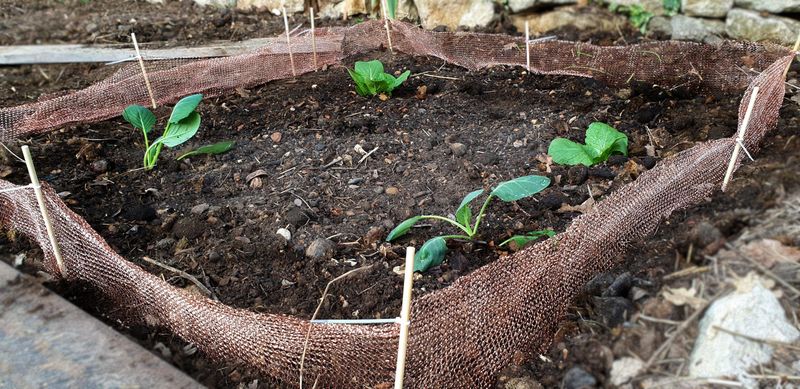
After you have confirmed slugs, chosen a small target area, installed a wide and continuous copper perimeter, cleared interior slugs, and begun checking for bridges and debris, the question becomes: how will you know if it is working? The honest answer is that you are looking for reduced leaf damage over time, not zero slugs and zero holes.
Results vary with weather, site drainage, shade, species, the quality of your installation, and local slug pressure. Penn State Extension notes that slug activity and damage potential differ meaningfully by region, season, and site conditions, which is why no single barrier width or timing recommendation applies universally. A copper barrier that performs well in a dry summer may face much heavier pressure during a wet one.
The RHS field trial that found no measurable damage reduction from copper tape is a legitimate reason for humility, not a reason to dismiss copper entirely. The trial used tape under specific field conditions; your installation with wider flashing, a buried edge, and regular maintenance may perform differently. The point is to treat copper as a reasonable physical-exclusion trial for a small, high-value area rather than a substitute for the full picture: habitat cleanup, morning watering, monitoring shelters, and hand-picking all remain part of a realistic management approach. UC IPM recommends combining exclusion with sanitation, reduced shelter, trapping, and hand-picking for exactly this reason.
A garden with fewer slug-friendly hiding spots, drier nighttime surfaces, and a clean copper perimeter around its most valued bed is in a genuinely better position than one relying on any single fix. That modest, maintainable improvement is the realistic goal.