
If Your Meyer Lemon Keeps Dropping Fruit And Flowers At Once, Here’s The Quiet Trade-Off It’s Making
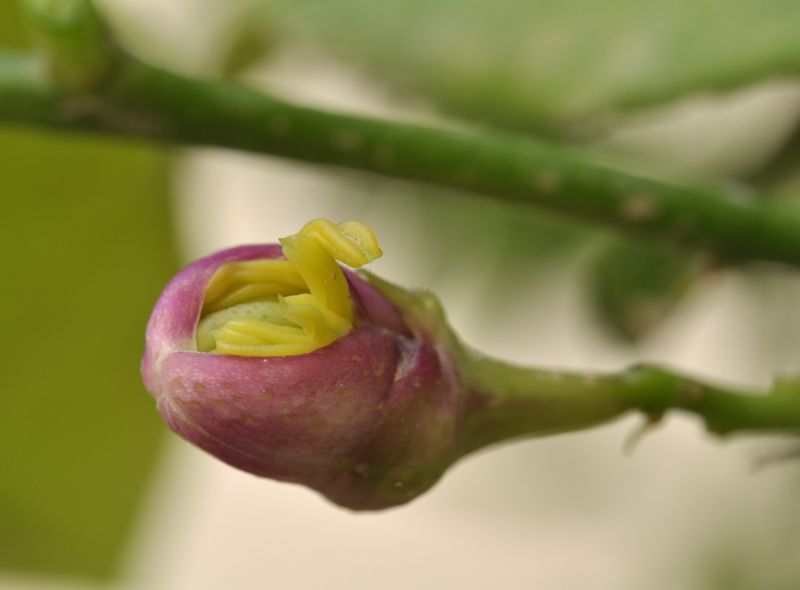
Watching your Meyer lemon drop flowers and tiny fruit at the same time can feel like something has gone seriously wrong. Before you reach for the fertilizer or start pruning, it helps to know that citrus trees routinely shed reproductive structures after bloom, and container-grown trees often set far more young fruit than they can ever carry.
What looks like failure is often the tree running a kind of internal balancing act, adjusting its load to match its resources. Understanding that process can turn a moment of panic into something much more manageable.
The same week can bring two kinds of normal shedding
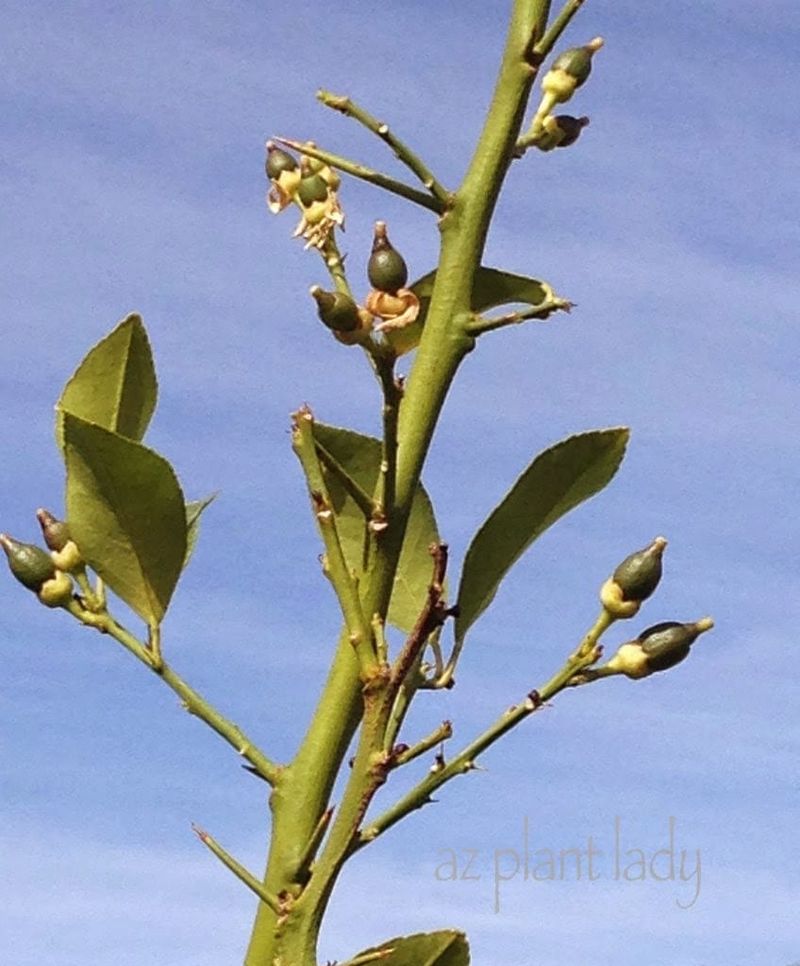
Meyer lemon trees can shed flowers and tiny fruitlets during the same stretch of days, and both types of drop may be happening for entirely different reasons at once. Flowers that did not develop into fruit or were shed through normal abscission fall alongside very young fruitlets the tree has decided it cannot support.
Citrus is naturally self-thinning, adjusting its fruit load to match the foliage and available resources after every bloom cycle.
UC IPM guidance on citrus fruit drop describes small-fruit drop as normal and generally unavoidable, particularly while fruitlets are very small, and notes that a tree retaining at least some fruit and carrying healthy foliage is not necessarily in trouble. The drop can continue until fruitlets reach roughly half an inch in diameter, so a few weeks of falling material does not automatically mean something has failed.
Container-grown trees face an added wrinkle. University of Maryland Extension guidance on dwarf citrus notes that potted citrus typically produces more immature fruit than it can support, and losses of up to 75 percent may occur in potted dwarf citrus generally.
That figure is a general range for container citrus, not a fixed rule for Meyer lemons specifically, so use it as context rather than a benchmark.
A dense, green canopy that still holds some young fruit is the key reassuring sign here. The tree is not failing because the ground beneath it has petals and pea-sized fruitlets on it.
What matters more than the fallen material is whether the remaining foliage looks vigorous and whether at least a few fruitlets are still attached and growing.
Look closely at what fell before naming the cause
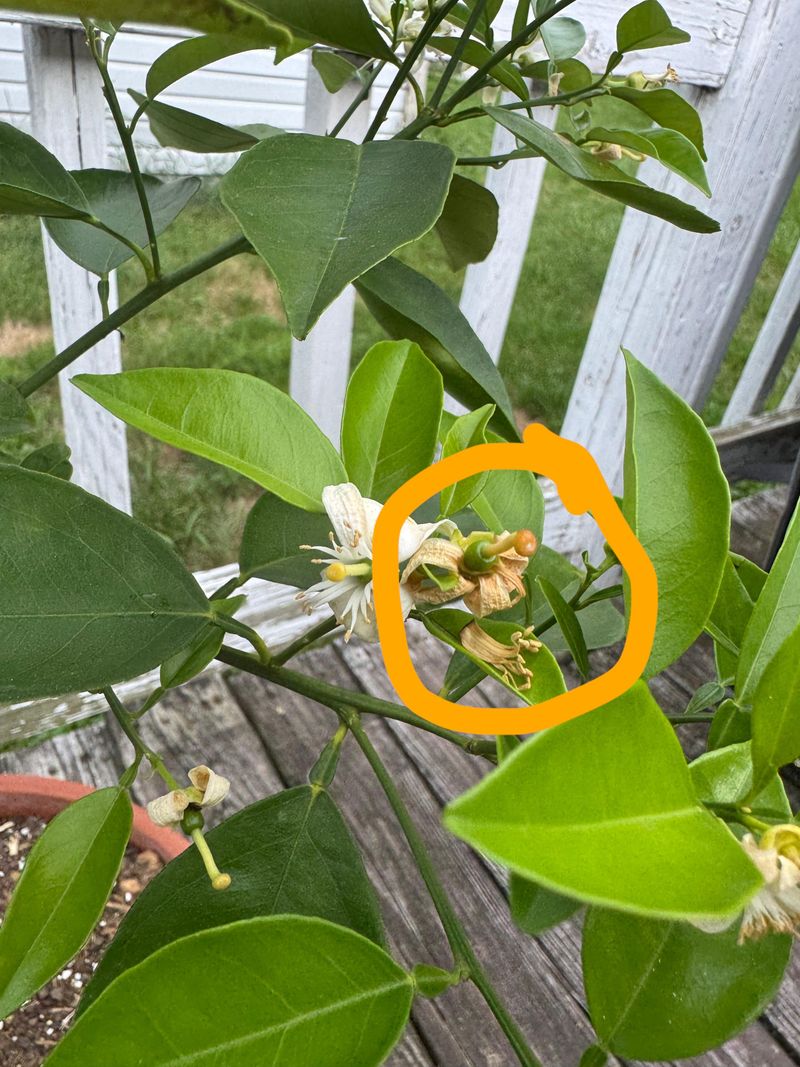
Not everything that falls from a Meyer lemon tells the same story, so sorting through the fallen material before drawing conclusions is worth the extra minute. A flower that drops with its small green ovary still attached is a different observation from a flower that fell completely, petals and ovary together.
When petals drop but the green ovary stays on the branch, fruit development may have begun. When the entire flower detaches, pollination failure or normal developmental abscission may be involved, though fallen material alone cannot establish which one caused the drop.
Tiny fruitlets, roughly the size of a pea or a small marble, represent a later stage of development than a freshly opened blossom. Losing those is more consistent with the self-thinning that follows bloom, while losing flowers before fruit sets suggests something earlier in the process.
UC IPM notes that small-fruit drop after bloom is common and often unavoidable, which means a mix of fallen flowers and fruitlets during the same week may simply reflect two overlapping normal processes rather than one single problem.
Meyer lemons add another layer of complexity because they do not restrict flowering to one annual event. University of Maryland Extension points out that Meyer lemons primarily ripen from fall to winter but may produce fruit throughout the year, and UF/IFAS gardening guidance confirms that flowering and fruit production can overlap across seasons.
A tree carrying older fruit while simultaneously flowering and shedding new blossoms is behaving exactly as the variety tends to behave.
Mature fruit dropping from the branch is a separate diagnostic question from the early flower-and-fruitlet loss described here, and it warrants its own assessment rather than being grouped with the post-bloom thinning wave.
The quiet trade-off is a metaphor, not a sugar diagnosis
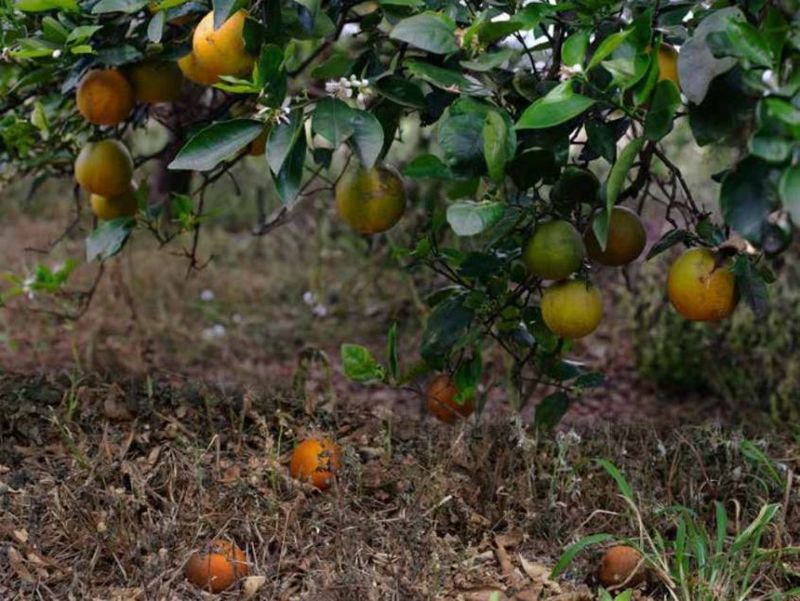
The phrase “quiet trade-off” is a useful way to picture what regulated abscission looks like from the outside: the tree sheds some reproductive structures so that others can continue developing. Calling it a trade-off makes the biology easier to picture, but it is a metaphor, not evidence that the tree is making a conscious choice or that one specific shortage is always the cause.
Plants do not deliberate, and the abscission process is regulated by a web of interacting signals rather than a single trigger.
Timing matters when thinking about what those signals might be. Early flower drop, which can happen shortly after bloom, does not necessarily mean the tree is running low on carbohydrates.
Research published in Scientia Horticulturae indicates that early flower abscission in citrus can occur while carbohydrate reserves remain relatively high, whereas later fruitlet drop is more consistently associated with competition for carbohydrates as the developing fruit begin to make larger demands. Treating every drop event as a sugar shortage misreads the timing.
Water status, temperature swings, nutritional imbalances, hormone levels, pollination outcomes, pest pressure, and other stress signals can all feed into the abscission process. A review in the New Zealand Journal of Crop and Horticultural Science reinforces that citrus fruit drop involves multiple interacting factors, which is why a single episode of simultaneous flower and fruitlet loss rarely reveals one exact mechanism on its own.
Practically speaking, this means that rushing toward one fix, such as adding fertilizer because the tree must be hungry, can miss the actual contributing factor entirely. The more useful first step is to read the pattern of what fell, check the foliage, and run through the care conditions before deciding whether anything needs to change at all.
Read the canopy and the pattern of loss together
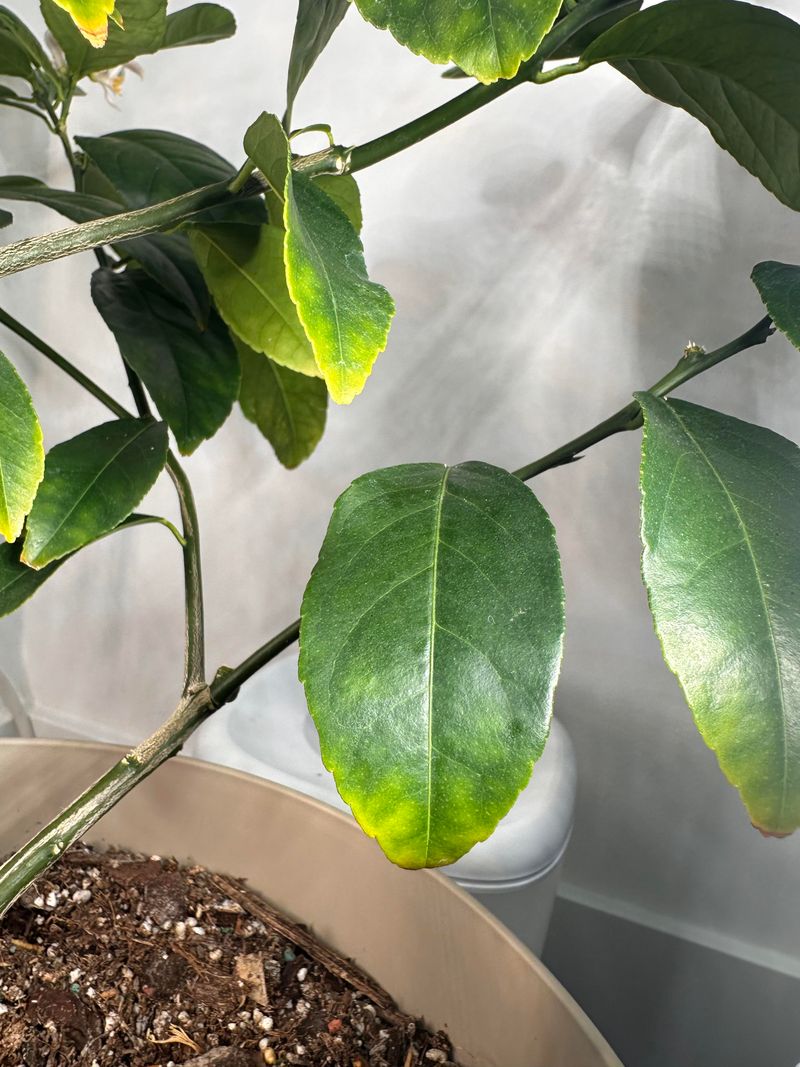
Before changing anything about how you care for the tree, spend a few minutes reading what the canopy and the fallen material are actually telling you together. A tree dropping flowers and small fruitlets while keeping its foliage dense, green, and free of spots or curling is behaving very differently from one that is also losing leaves, showing yellowing, or carrying fruit with decay on the skin.
Those two pictures call for different responses.
Start with the foliage. UC IPM guidance points out that a dense, healthy leaf canopy is what allows a citrus tree to support fruit, and that excessive pruning removes the very leaves that supply carbohydrates to developing fruitlets.
If the canopy looks full and the tree is still holding some young fruit, the early wave of shedding is more likely to be the normal post-bloom thinning described in the previous sections.
The pattern of what fell matters just as much. Flowers and small fruitlets dropping while the rest of the tree looks healthy is a different concern than a sudden loss of nearly all fruitlets combined with yellowing leaves, twig dieback, or fruit that looks misshapen or poorly colored.
University of Maryland Extension guidance notes that pests such as scale, mites, aphids, and whiteflies can weaken citrus, and that those problems generally show up with additional visible signs beyond fruit drop alone.
Fungal or water-mold problems can cause decay on fallen fruit, which is another clue worth checking. If the fruitlets or flowers that dropped look rotted rather than simply dry and detached, moisture management or root health may need a closer look.
USDA APHIS information on citrus greening describes the characteristic accompanying symptoms of that disease as blotchy asymmetrical leaf mottling, twig dieback, and small, misshapen, poorly colored fruit. Fruit drop alone is not enough to diagnose citrus greening or any other specific disease, so look for that full picture of symptoms rather than reacting to fallen material by itself.
Stable care can reduce avoidable stress-related drop
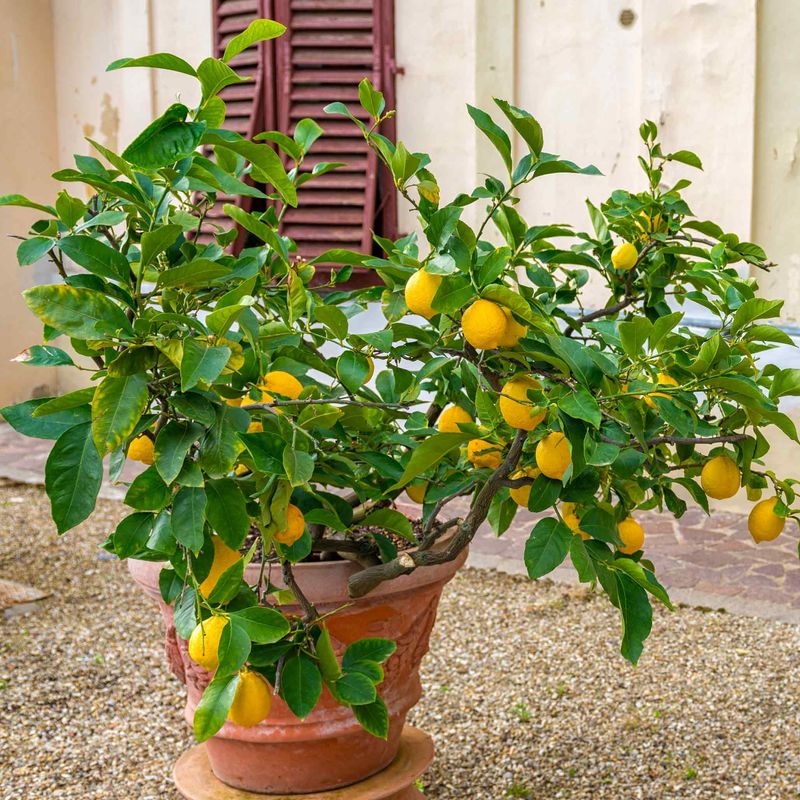
Consistent, moderate care is the most reliable tool a container gardener has for reducing the portion of drop that stress causes, though it cannot eliminate the normal developmental shedding that comes with every bloom cycle. The goal is to remove avoidable stressors without overcorrecting in ways that create new ones.
Moisture is usually the first variable to check. Oregon State Extension guidance links both inadequate and excessive water to flower and fruit drop in citrus, which means the target is evenly moist, well-drained soil rather than either extreme.
The root ball should never sit in standing water, but it should not be allowed to dry out completely between waterings either. A finger pressed an inch or two into the soil is a quick, reliable check.
Hot, dry, or windy weather raises the stakes. UC guidance on citrus care notes that hot, dry, and windy conditions can increase fruit drop, so those periods call for more frequent monitoring rather than a fixed watering schedule.
Arizona Cooperative Extension irrigation guidance identifies leaf curling as an early visible sign of water stress in citrus, which makes it a useful prompt to check soil moisture before the tree reaches a more severe deficit.
Temperature changes deserve equal attention for container trees. Penn State Extension guidance on growing lemons and Washington State University Meyer lemon guidance both note that moving a container tree abruptly between indoor and outdoor conditions, exposing it to cold drafts, or subjecting it to sharp day-to-night temperature swings can trigger leaf, flower, or fruit drop.
Acclimating the tree gradually over several days when moving it between environments gives it the best chance of adjusting without shedding a new flush of reproductive structures.
Even with all of these conditions managed well, some normal shedding will continue. Stable care can reduce avoidable stress-related drop, but it is not a complete override of the developmental processes the tree runs on its own schedule.
Light, indoor pollination, and feeding each solve a narrower problem
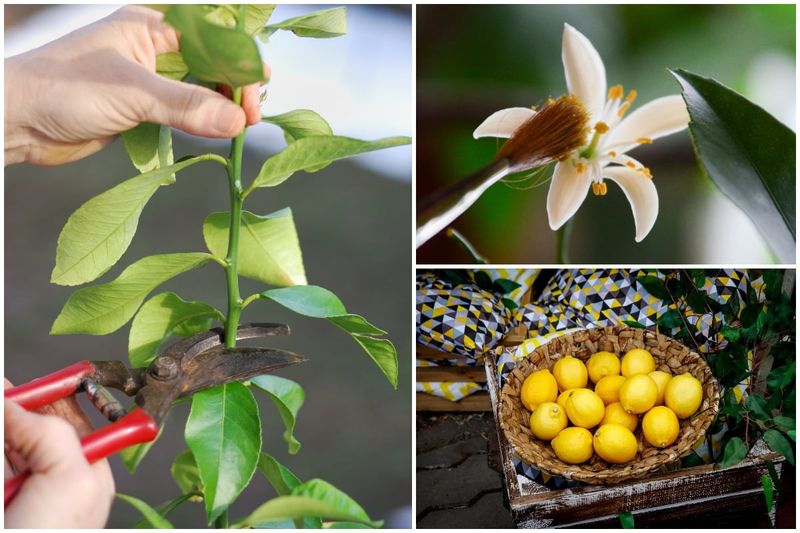
Several interventions that get recommended for dropping Meyer lemons are genuinely helpful, but only under specific conditions. Matching the fix to the actual situation matters more than applying every possible remedy at once.
Indoor pollination is a good example. Meyer lemons are generally self-fertile, meaning a second tree is not required for fruit to set.
UF/IFAS guidance on Meyer lemons confirms this, and outdoor trees typically have access to insects and air movement that handle pollen transfer without any help. Indoors, those conditions may be absent, and a small, dry, soft paintbrush used to dab pollen from one flower to another can improve fruit set when windows are closed and no insects are present.
This step is worth trying for an indoor tree during bloom, but it is not a universal remedy for every dropped flower.
Light is another factor with a specific threshold. University of Maryland Extension recommends at least six hours of bright light daily for indoor citrus and notes that inadequate light can contribute to poor flowering or fruiting.
A tree placed in a dim corner or moved away from its best window during winter may shed more flowers than one with consistent, bright exposure. A grow light can supplement natural light when window conditions fall short.
Feeding during active growth follows a similar logic of precision over enthusiasm. Label-directed fertilizer applied during the growing season supports the tree’s nutritional needs, but adding fertilizer as an emergency response to fruit drop is unlikely to help if the actual cause is pollination, temperature, or root moisture.
UC IPM guidance notes that both inadequate and excessive nutrition can be associated with fruit-drop problems, and indoor citrus generally should not receive winter fertilizer when the tree is not in active growth.
Aggressive pruning and unapproved chemical fruit-retention treatments are worth avoiding entirely. Removing large amounts of foliage reduces the carbohydrate supply the tree needs to support fruit, and UC IPM guidance on preharvest fruit-drop control with 2,4-D makes clear that published chemical programs are crop-, variety-, timing-, concentration-, and label-specific.
Those treatments are not appropriate as home remedies for a backyard Meyer lemon.
Normal fruitlet thinning differs from a tree in decline
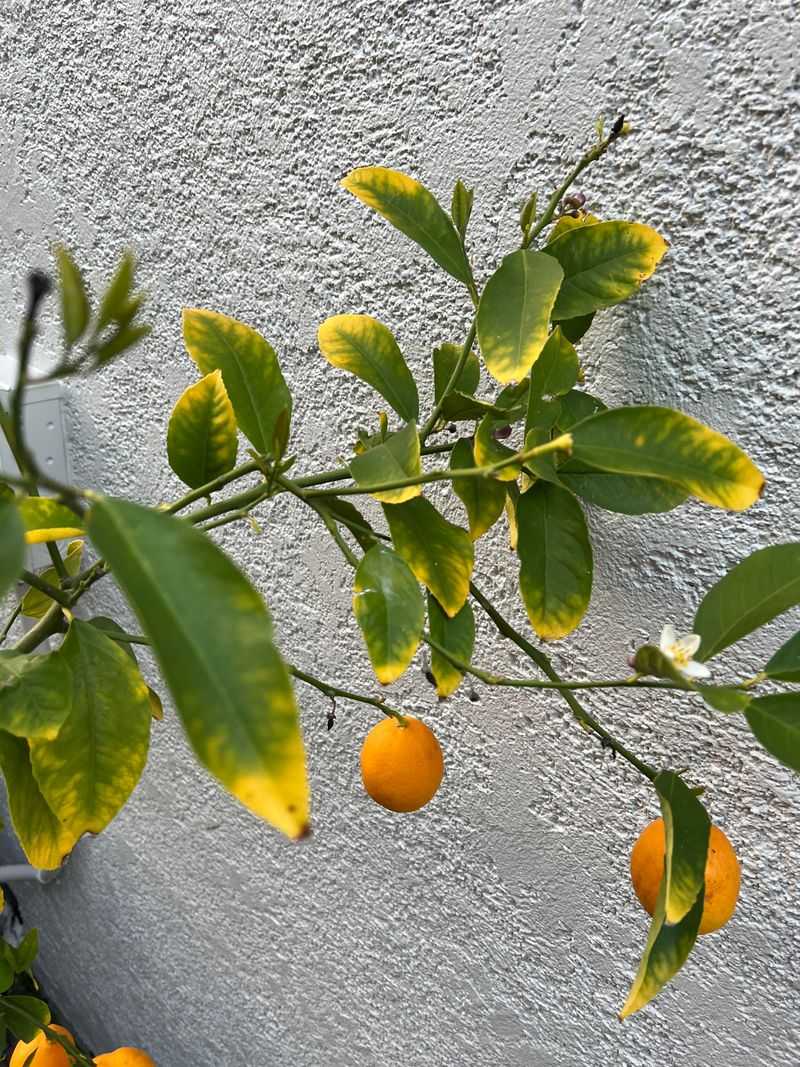
A modest early wave of dropped flowers and tiny fruitlets, when the tree stays green, vigorous, and holds onto at least some developing fruit, fits the profile of ordinary post-bloom thinning. That pattern does not require intervention beyond the consistent care described in previous sections, and it may repeat with every flush of bloom the tree produces across the season.
The picture changes when the loss goes beyond that baseline. Near-total loss of all young fruitlets, mature fruit falling before it ripens, severe leaf drop, blotchy asymmetrical leaf mottling, twig dieback, small or poorly colored fruit, visible pest activity, or decay on fallen material are all signs that something beyond normal thinning may be involved.
UC IPM guidance treats those combinations as warranting investigation rather than reassurance alone.
Citrus greening, also called HLB, is one serious possibility in parts of the United States, but it cannot be diagnosed from fruit drop alone. USDA APHIS information on citrus greening and the Asian citrus psyllid and California Department of Food and Agriculture HLB pest profile both describe a full cluster of symptoms: asymmetrical blotchy leaf mottling, twig dieback, small misshapen fruit with poor color, and general decline.
Its geographic distribution also varies across the US, so local extension resources are the right place to check whether it is a realistic concern in your area.
When the warning signs stack up, contacting your local cooperative extension office or a certified plant health professional gives you access to region-specific diagnosis rather than a process of guessing. A tree that drops a few flowers and fruitlets while looking otherwise healthy is almost certainly running its own quiet balancing act; a tree in persistent, visible decline deserves a closer look.