
If Your Peace Lily Wilts And Droops Overnight, Here’s The 15-Minute Check That Perks It Back Up
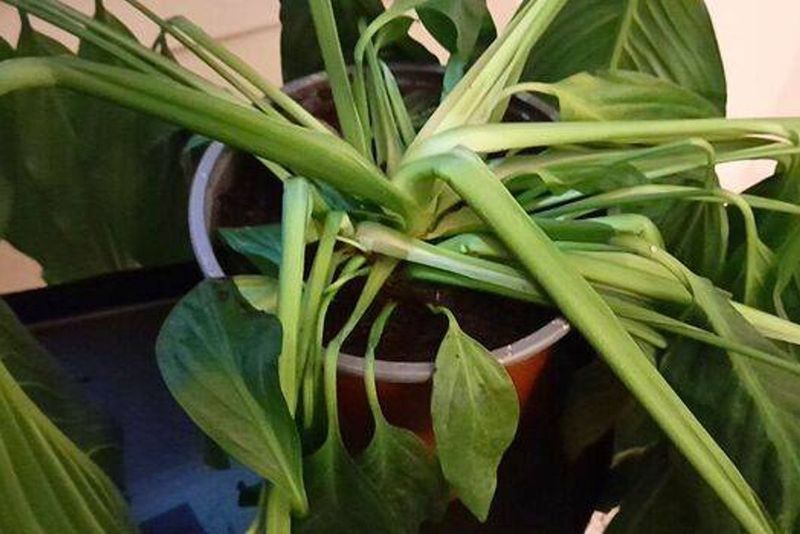
Finding your peace lily completely collapsed in the morning is a rattling sight, especially when it looked fine the night before. The good news is that a quick initial check of the soil and drainage can tell you exactly what to do next, without guessing.
That check will not guarantee the plant bounces back in 15 minutes, but it will point you toward the right response fast, and that matters more than any timeline.
Check the soil before you reach for water
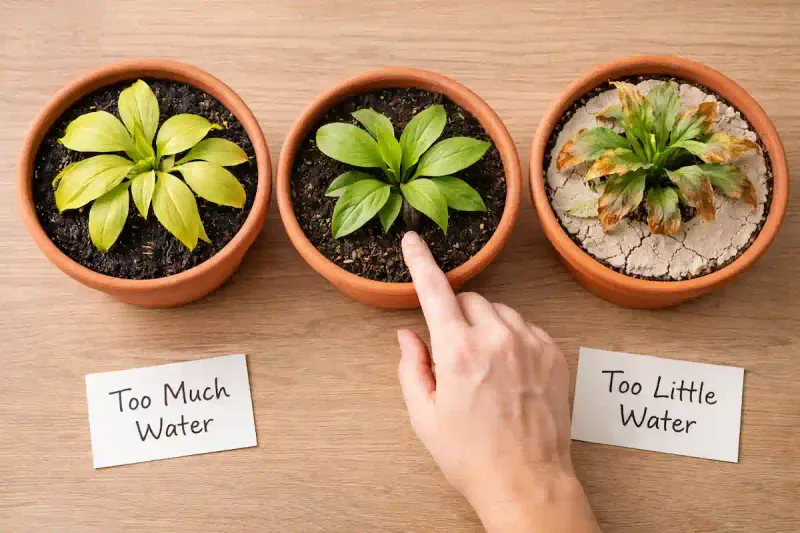
A suddenly collapsed peace lily is alarming, but the safest first move is not to grab the watering can. The plant’s soil holds the answer you need before you do anything else.
Push your finger about 1 to 2 inches into the potting mix and notice what you feel.
If the mix feels dry at that depth, underwatering is a strong possibility. Dry roots cannot pull water up through the plant, so leaves go limp.
Iowa State University Extension explains that wilting can result from either too little water or too much, because waterlogged or rotting roots also fail to supply leaves with moisture. Both problems look almost identical from the outside.
If the mix feels wet or damp, watering is the wrong response. Adding more water to already saturated soil can make things worse, not better.
The finger test takes about ten seconds and immediately splits your options into two clear paths.
While you have your hands near the pot, check two more things. First, confirm that the pot has a drainage hole at the bottom.
University of Illinois Extension notes that proper drainage is essential for healthy roots. Second, look inside the saucer or decorative outer pot for standing water.
A pot sitting in collected water can stay saturated even when the top of the mix seems fine.
This initial check does not promise a recovery on any particular schedule. What it does is give you honest information so your next action helps rather than harms.
Dry soil sends you toward watering. Wet soil sends you toward drainage and root inspection.
Neither path skips the assessment step.
Dry soil calls for thorough watering and drainage
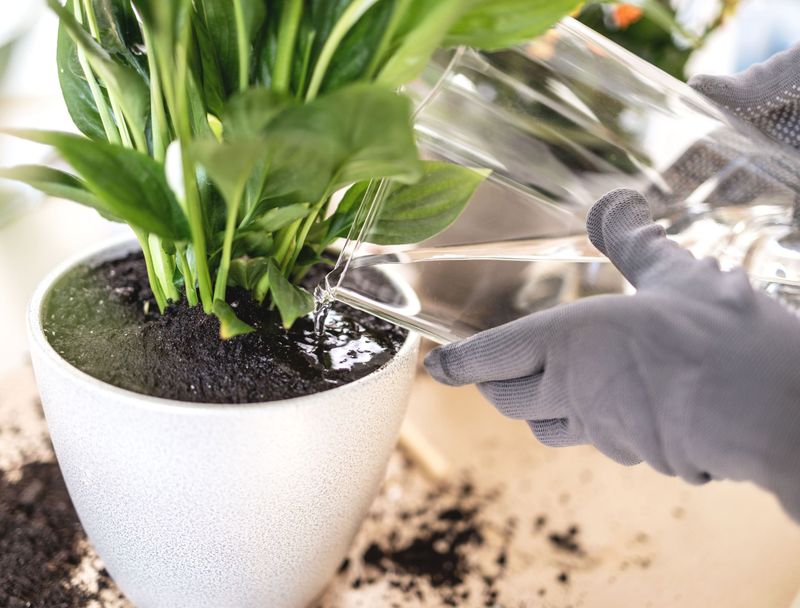
Once you confirm the mix is dry about an inch or two below the surface, slow and thorough watering is the right move. Use water that is close to room temperature.
Illinois Extension advises against cold water for houseplants, since a sudden temperature shock can stress roots that are already struggling.
Pour water slowly and evenly across the surface of the mix, giving it time to absorb rather than rushing it through. Keep going until you see water flowing steadily from the drainage hole.
That exit flow tells you moisture has reached the root zone rather than just wetting the top layer.
Sometimes a pot that has gone very dry develops a hydrophobic root ball, meaning the water runs straight down the sides of the container without soaking in. If you notice water escaping from the hole almost immediately but the mix still feels dry, the root ball may not have absorbed much at all.
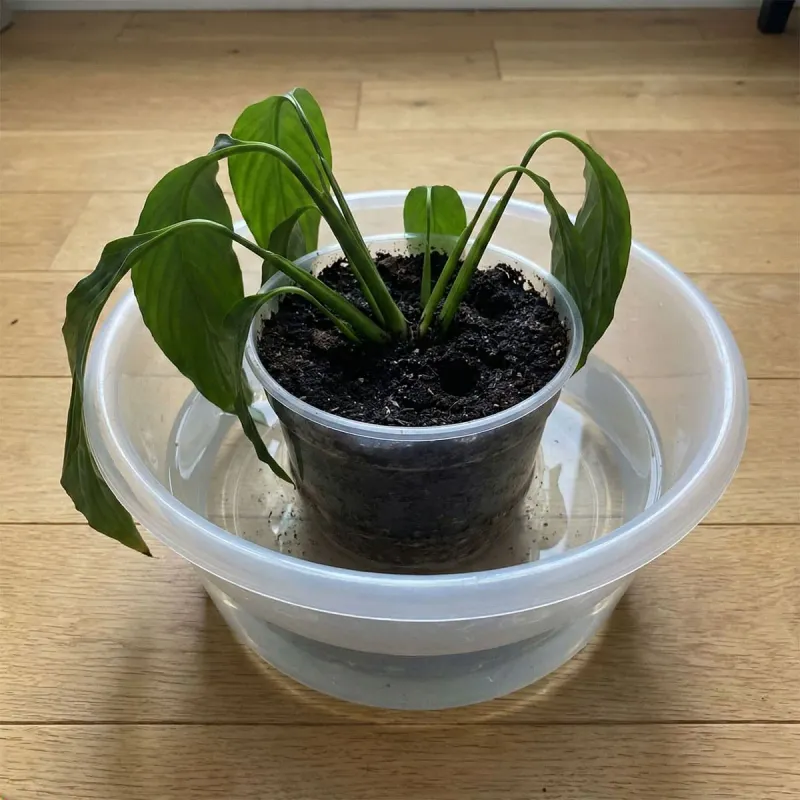
In that case, a second slow pass or a brief soak, setting the pot in a shallow basin of water for 15 to 20 minutes, can help the mix rehydrate more evenly.
After watering, empty whatever collects in the saucer or outer decorative container. Iowa State Extension recommends removing excess water from the saucer after about 30 to 45 minutes so the pot does not sit in pooled water.
Leaving it there undoes the work you just did.
A plant that was wilting from temporary water stress may begin to lift its leaves within a few hours, though recovery speed varies. Extension sources confirm that peace lilies can revive after watering when dryness is the cause, but no universal 15-minute deadline exists.
A quick improvement is encouraging, not a guaranteed outcome, and it does not mean watering was always the correct call without the soil check first.
Wet soil means you should stop watering
Wet or damp soil when you do the finger test is a clear signal: adding more water right now is likely to cause harm. Roots need both water and air in the soil, and when the mix stays saturated too long, roots begin to break down.
Damaged roots cannot move water to the leaves even when water is all around them, which is exactly why an overwatered plant can look just as wilted as an underwatered one.
Start by pulling the pot out of any decorative outer container and checking for standing water inside it. Pour that water out.
Iowa State Extension is direct on this point: peace lilies should not sit in water. Even a thin layer left in the saucer keeps the root zone wetter than the plant can tolerate over time.
Next, look at the drainage hole itself. A hole clogged with compacted roots or debris will trap water inside the pot no matter how carefully you water.
Clear any visible blockage gently. If water cannot exit freely, the pot’s drainage system is not working and the problem will repeat.
There is a useful distinction worth making here. A plant watered just a few hours ago may have wet soil that is still draining normally, and that is fine.
The concern is a pot where the mix has felt wet for days, where the saucer has been full, or where no drainage hole exists at all. That is prolonged saturation, and it puts roots at risk.
One common workaround that does not help: placing a layer of gravel in the bottom of a pot. Illinois Extension explains that gravel in the bottom actually creates a wetter zone just above it, which can worsen drainage rather than improve it.
A proper drainage hole is the only reliable fix. Iowa State confirms that waterlogged conditions are a recognized cause of wilting in houseplants.
Persistent wilt requires a root and pot check

When a peace lily stays collapsed after you have checked the soil and responded correctly, the next step is looking at the roots. Persistent wilting despite wet soil is one of the clearest signals that root damage may be involved.
This is not a certain diagnosis, but it is a reasonable thing to investigate before doing anything else.
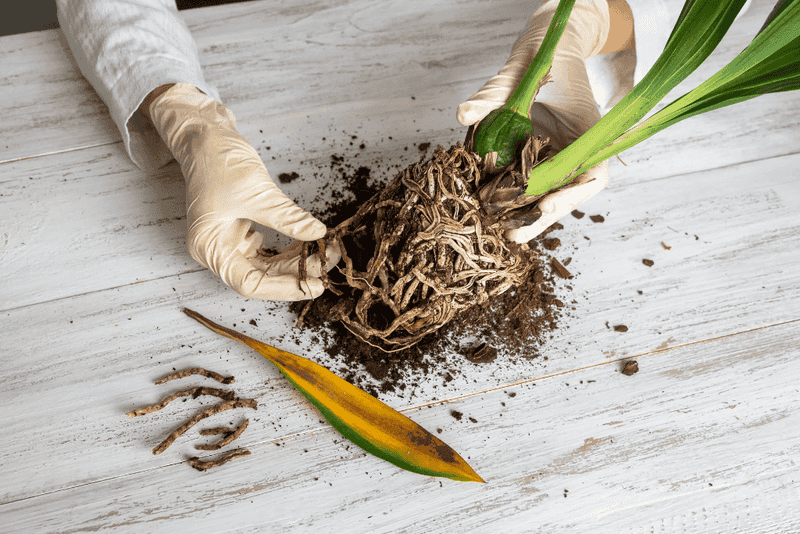
Slide the plant out of its pot carefully. Healthy roots are typically firm and white or light tan.
Roots affected by prolonged saturation often look brown, feel soft or slimy, and may have an unpleasant odor. Iowa State Extension identifies these clues as signs of poor cultural conditions that can lead to root deterioration.
A few other signals can support the same suspicion. Yellowing leaves alongside wet soil, a foul smell coming from the pot, fungus gnats hovering around the base of the plant, or a soft and discolored crown near soil level all point toward conditions that may have been damaging the root system over time.
None of these details confirms root rot on its own, but together they build a picture worth acting on.
If you find clearly damaged roots, trim away the brown, mushy sections with clean scissors or pruning shears. Iowa State notes that repotting into fresh, well-drained mix may be necessary when root damage is serious.
Choose a pot that has a drainage hole and is not dramatically larger than the root ball, since excess soil around the roots holds moisture longer than the plant can use it.
Two things to avoid during this process: more water and fertilizer. Watering again before roots can function pushes the saturation problem further.
Fertilizer does not treat root damage and excess salts in the mix can add stress to already compromised tissue. The goal right now is to give surviving roots a clean environment and a chance to recover, not to push the plant into growth it cannot support.
Check the room for cold, heat, or harsh light
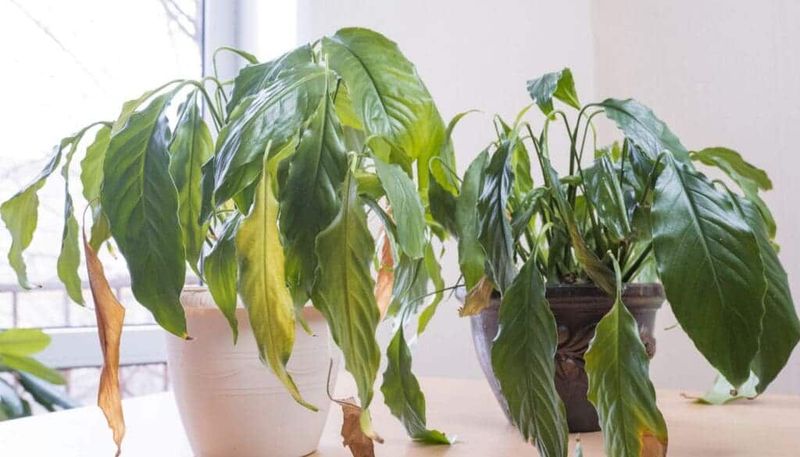
After working through the soil-based diagnosis, it is worth scanning the room for conditions that might have shocked the plant overnight. Peace lilies are tropical plants with real sensitivity to temperature and light extremes, and a single bad night near a cold window or heating vent can cause visible collapse by morning.
Cold is one of the more likely environmental culprits for sudden wilting. University of Florida IFAS research on chilling injury in Spathiphyllum documents that temperatures below roughly 55 degrees Fahrenheit can cause chilling damage in peace lilies, and prolonged exposure below 40 degrees can injure leaves, stems, and roots.
A plant sitting against a drafty single-pane window in winter, or one that was near an open door on a cold night, may have experienced exactly that kind of stress.
Heat and direct sun create a different kind of problem. NC State Extension notes that peace lilies prefer bright, indirect light and can suffer under direct sun exposure, which raises their water demand sharply and can scorch or stress leaves.
A plant moved to a sunny spot, or one left near a heat register blowing dry, warm air, may wilt from increased transpiration even with adequate soil moisture.
University of Arkansas Extension also flags air conditioning and heating vents as sources of temperature stress for houseplants. Check whether the plant sits in the path of a vent, an exterior door, or a drafty gap around a window frame.
Low humidity can contribute to brown leaf tips and general stress over time, and University of Georgia Extension notes it as a factor in houseplant health. That said, low humidity alone is not a well-established trigger for sudden overnight collapse, and addressing it will not fix wet soil or damaged roots.
Move the plant away from the cold or heat source first, then reassess.
Use recovery as evidence, not a deadline
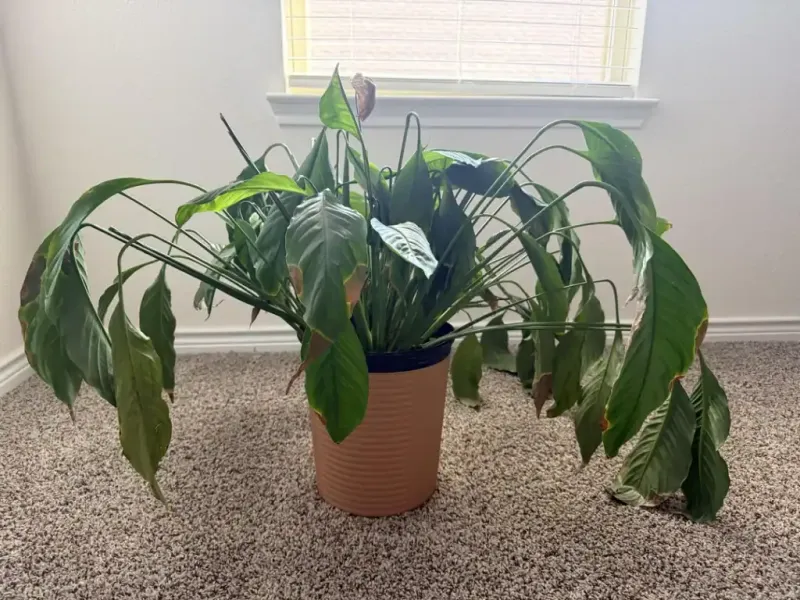
Watching a peace lily slowly lift its leaves after you water it is genuinely encouraging. That response is consistent with temporary water stress, and it means the roots were functional enough to move water back into the leaves once moisture was available.
Take that as good information, not as proof that the plant is fully recovered or that watering was always the right call without the soil check.
Recovery speed varies. Some plants perk up noticeably within a few hours.
Others take a full day or more, depending on how long they were dry, how compromised the root system is, and how much moisture the mix can now hold. Extension sources confirm that peace lilies can revive after appropriate watering, but no reliable universal timeline exists for every plant in every condition.
If the plant remains collapsed after you have watered dry soil correctly, that is a signal to broaden your investigation rather than water again. Repeated watering without reassessing the soil adds saturation on top of a problem that may already involve root stress.
Illinois Extension guidance supports withholding additional water when a plant fails to recover as expected, rather than assuming more water will help.
In the days after the episode, keep the plant in bright, indirect light and let the soil guide your next watering decision. Illinois Extension recommends checking soil moisture rather than following a fixed schedule, since the right watering interval changes with light levels, temperature, pot size, and how quickly the mix dries.
Empty the saucer if water collects there, and resist the urge to push for a faster recovery by adding fertilizer or misting the leaves. Neither addresses root function, which is where the real work of recovery happens.
Prevent the next collapse with condition-based care
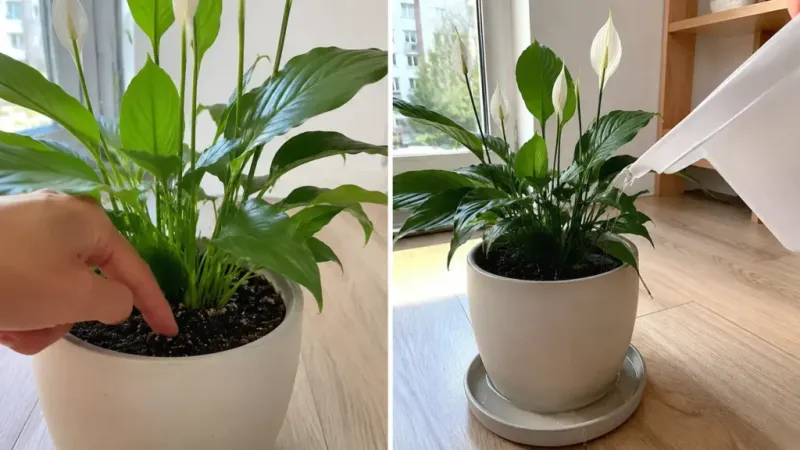
The most reliable way to avoid another overnight collapse is to stop watering on a fixed schedule and start watering based on what the soil actually tells you. How quickly a peace lily’s potting mix dries out depends on light, temperature, humidity, pot size, plant size, the mix itself, and how well the container drains.
Illinois Extension makes this point clearly: no single watering frequency fits every plant in every home.
Before each watering, push your finger into the mix to about 1 to 2 inches. If it feels dry at that depth, water thoroughly and drain.
If it still feels damp, wait and check again in a day or two. University of Florida IFAS guidance on Spathiphyllum describes peace lilies as preferring evenly moist but not soggy soil, and emphasizes that the pot should not sit in water between waterings.
That balance, moist but draining, is easier to maintain by feel than by calendar.
Keep the pot out of direct sun and away from cold drafts or heating vents. NC State Extension describes bright, indirect light as the ideal condition for peace lilies indoors.
Consistent placement in a stable environment reduces the risk of stress-related wilting between waterings.
One more thing worth knowing if you have pets: peace lilies contain insoluble calcium oxalates, which can cause oral irritation, drooling, vomiting, or difficulty swallowing if a cat or dog chews on the leaves or stems. The ASPCA lists peace lily as toxic to cats and dogs for this reason.
They are not the same as true lilies in the Lilium family, which carry a different and more serious toxicity profile, but they are still worth keeping out of reach of curious animals.
The safe shortcut is simple: check, then act
Every response to a wilted peace lily starts in the same place: the soil. Dry mix about 1 to 2 inches down means water slowly and thoroughly until it drains from the bottom, then empty the saucer.
Wet mix means stop, check the drainage hole, remove standing water, and look at the roots if the plant stays collapsed. Iowa State Extension confirms that both underwatering and overwatering can produce the same wilted appearance, which is exactly why the soil check comes before any action.
If neither soil condition fully explains the wilt, look at the environment: cold drafts, direct sun, or heat sources near the plant. Persistent collapse after a correct response points toward root damage or environmental stress that needs more than water to fix.
Iowa State’s houseplant care guidance reinforces that diagnosis should always precede treatment.
The quick initial check described here is a practical starting point, not a guarantee. Some plants recover noticeably after the right intervention; others need more time or further attention.
What the check reliably delivers is a safer first move, and that is the part worth trusting every time.