
What It Really Means When A Bobcat Slips Through Your North Carolina Yard At Dusk
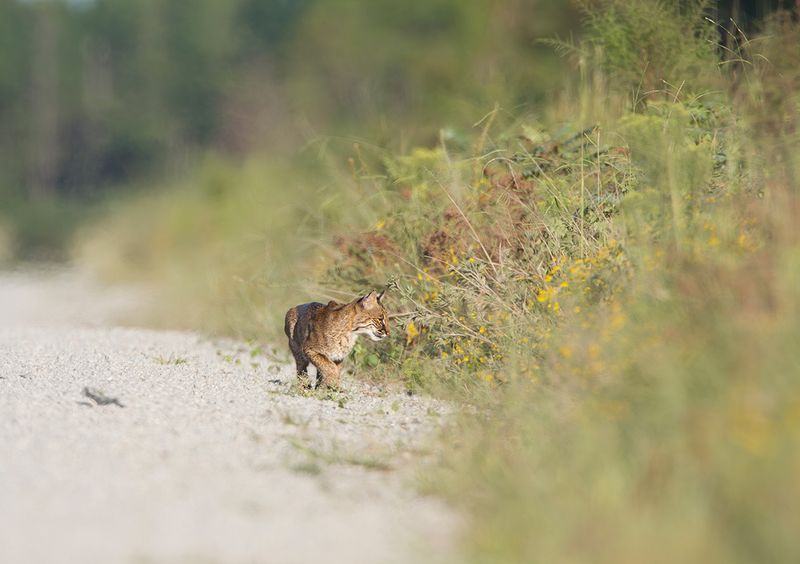
Catching a bobcat moving through your yard at dusk is the kind of moment that stops you mid-step. These spotted, short-tailed cats live across North Carolina, yet most people go years without ever seeing one up close.
Knowing what that quiet crossing actually means, and what it does not mean, can turn a startling moment into a calm, informed response.
A dusk crossing is usually ordinary
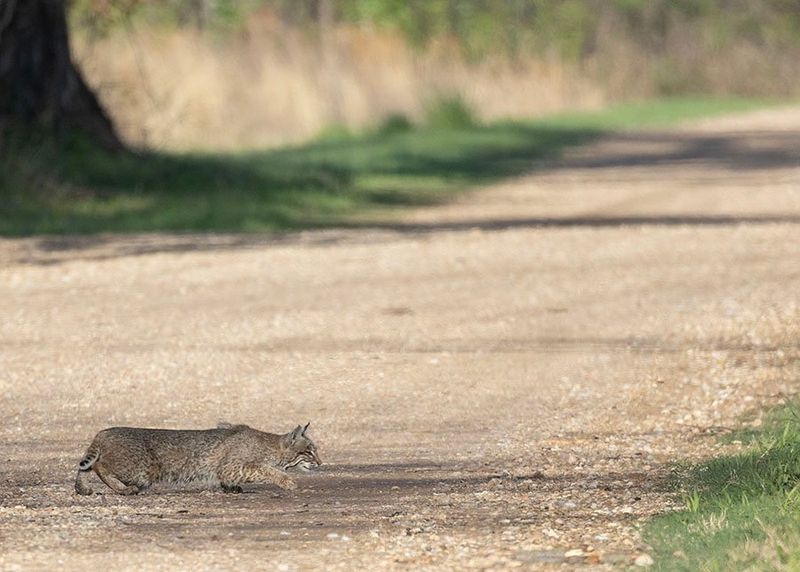
Spotting a bobcat near your home at dusk is far less unusual than it might feel in the moment. North Carolina Wildlife Resources Commission (NCWRC) guidance describes bobcats as common and widespread throughout the state, present in every county from the Blue Ridge to the Coastal Plain.
Their presence in a neighborhood is, in the agency’s own words, “not a cause for concern.”
Bobcats are crepuscular by nature, meaning they are most active around dawn and dusk. That timing is simply how they hunt, not a sign that something is wrong.
North Carolina Division of Parks and Recreation mammal records confirm that bobcats remain active year-round, adjusting their movements with prey availability and season rather than disappearing into dormancy.
Bobcats are also solitary and notably secretive. Most people who live near suitable habitat never see one, even when the cats are regularly moving through the area.
A single pass through a yard does not mean the animal is denning under a deck, has taken up residence in the neighborhood, or has lost its wariness of people. Home ranges can span from less than a mile to 30 square miles depending on sex, age, and habitat, so your yard may simply be one stop along a much larger nightly route.
The sighting confirms a crossing, not a diagnosis
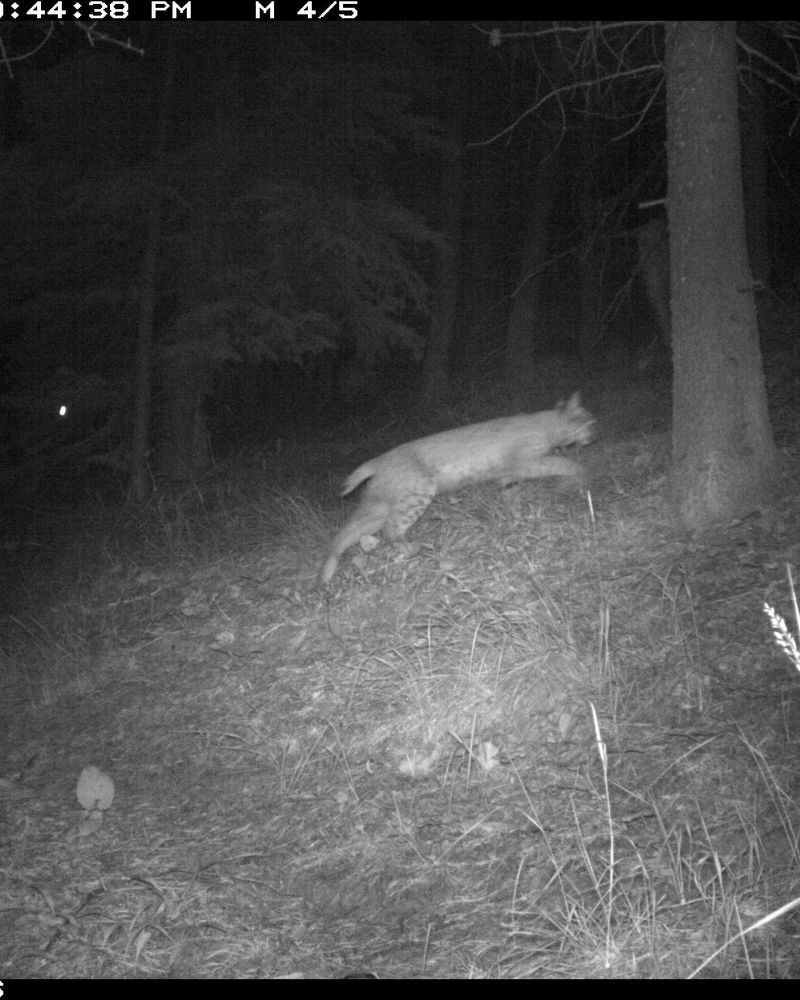
What a bobcat sighting firmly establishes is this: the animal used or crossed that space at least once. That is a meaningful observation, but it is a narrow one.
One visit does not certify that the yard is a healthy ecosystem, that the surrounding neighborhood has connected wildlife habitat, or that prey is abundant nearby.
The animal may be transient, moving through a home range that stretches well beyond your property line. Research on space use and movement of urban bobcats shows that these cats navigate developed landscapes by threading through natural areas, vegetated corridors, and patches of cover within otherwise built environments.
That research supports the general possibility that nearby cover or prey could explain the visit, but it does not let you draw precise conclusions about your specific North Carolina neighborhood.
Roads and development can restrict how freely bobcats move between patches of habitat. USGS findings on roads and bobcat movement found that major roads compress home ranges and can limit connectivity, while related USGS work on gene flow in fragmented urban landscapes and published research on urbanization and wild felid occupancy reinforce that fragmentation affects where bobcats can go.
These studies come largely from California and other regions, so their findings describe general landscape principles rather than the conditions of any individual North Carolina yard.
A sighting may be consistent with the surrounding landscape offering some usable cover, movement opportunity, or prey. It can also reflect a transient animal or local attractants, and it does not establish connectivity or ecological health.
Holding both possibilities at once is the most accurate read of what you actually witnessed.
What may be drawing it through the neighborhood
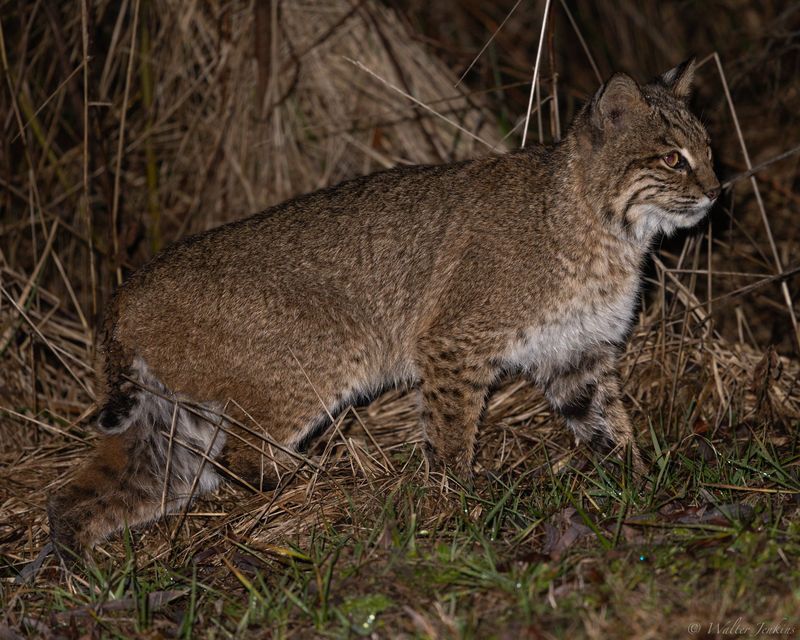
Several things could plausibly explain why a bobcat passed through your yard, and they are not mutually exclusive. Wooded lots, brushy fence lines, early-successional patches with dense low growth, and vegetated drainage corridors all provide the kind of cover and travel routes that bobcats use within developed areas.
NCWRC’s bobcat wildlife profile identifies wooded habitat with thick understory, brush piles, and transitional areas as important to the species.
Prey availability matters just as much as cover. NCWRC identifies rabbits and mice as primary prey, with birds, cotton rats, squirrels, opossums, raccoons, snakes, and occasionally deer also documented in their diet.
If any of these animals move regularly through or near your yard, the landscape may already offer enough to attract a passing bobcat.
Local attractants unrelated to natural prey can also pull wildlife closer to homes than they would otherwise come. Spilled birdseed beneath feeders draws rodents, and rodents draw predators.
Unsecured garbage, compost left uncovered, and outdoor pet food left on a porch can all function as indirect attractants that bring wildlife into contact with residential yards. NCWRC guidance on feeding wildlife responsibly specifically flags these accumulation points as factors that can encourage repeated wildlife visits.
Urban bobcat research supports the idea that prey availability helps explain why bobcats use developed areas, but the same research makes clear that a single visit cannot tell you which factor was decisive. Studies on urban bobcat space use note that these cats adapt their routes to what is available, not to what a homeowner might prefer to believe about their yard.
The honest answer is that you may never know exactly what drew this particular animal through on this particular evening.
The bobcat is part of the food web—not a pest-control service
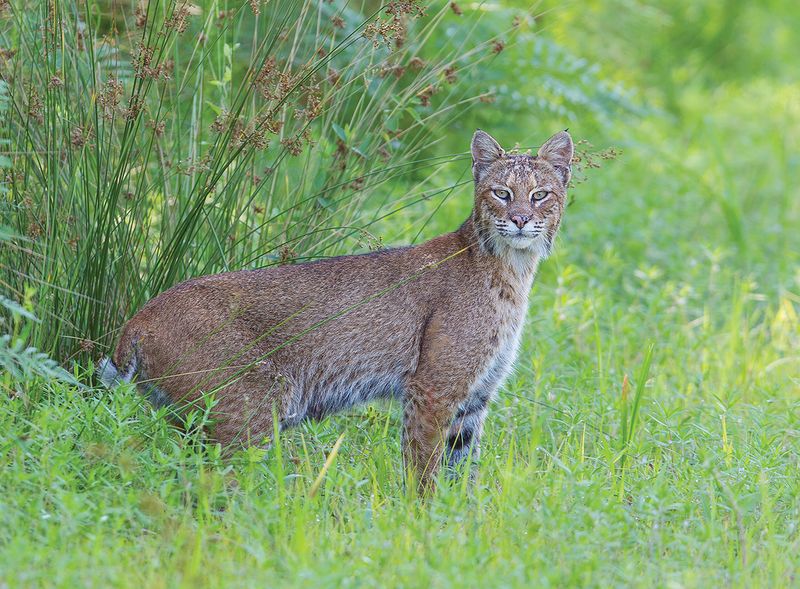
Bobcats are generalist predators, and their diet reflects whatever prey is most available in a given area. A coastal North Carolina diet study documented in peer-reviewed research on bobcat movements and illumination recorded rabbits, birds, cotton rats, deer, squirrels, raccoons, and voles among prey items.
That breadth confirms the bobcat’s role as one predator within a food web, not a specialist targeting any single species.
NCWRC places rabbits and mice at the top of the prey list, which means a bobcat moving through an area with those animals present is behaving exactly as expected. Its presence may reflect that prey exists nearby, not that prey has been eliminated.
Framing a bobcat as evidence that rodents are gone gets the relationship backward.
Homeowners sometimes wonder whether a resident bobcat would handle their tick problem, clear out feral cats, or reduce raccoon activity. The available evidence does not support those promises.
Research on attracting wildlife for pest control on farmland shows that predator-based pest management is complicated even in agricultural settings with intentional design. A single, wide-ranging bobcat passing through a residential yard is not a reliable pest-control agent for any specific problem a homeowner wants solved.
The more accurate framing is ecological rather than transactional. Bobcats occupy a predator role in the food web that connects rabbits, rodents, birds, and reptiles to the plants and insects that support them.
Their presence, when it occurs, is one thread in a larger web, not a targeted service. Appreciating that role without assigning it a specific household job is both more honest and more useful.
Steward the habitat without inviting the animal closer
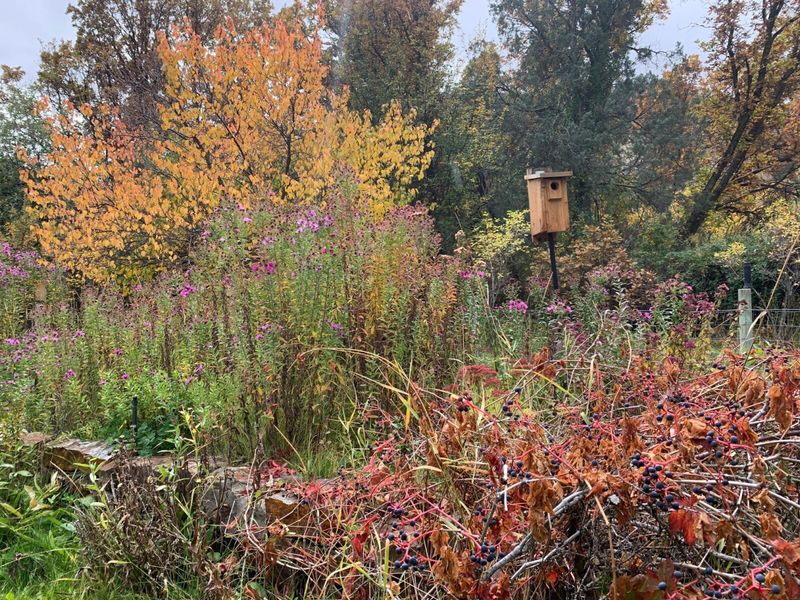
A bobcat crossing your yard is a reasonable prompt to look at how the surrounding space is managed, not to redesign it as bobcat habitat. Retaining native vegetation, brushy edges, and early-successional patches supports insects, birds, rabbits, reptiles, and other wildlife across the food web.
NCWRC’s habitat control guidance identifies early-successional areas as important for rabbits, songbirds, beneficial insects, and other species, while NCWRC supplemental shelter recommendations note that brush piles provide cover and support invertebrates, reptiles, birds, and small mammals. These features benefit the broader community of wildlife, not a single species.
NCWRC priority habitat management guidelines reinforce that native vegetation and connected cover serve many species simultaneously. Adding a native shrub border or leaving a brushy corner undisturbed is a legitimate stewardship decision, but there is no basis for promising it will bring a bobcat back.
Frame these choices as support for the wider food web rather than as a lure for any particular predator.
Attractant control is the other half of responsible management. Feed pets indoors or remove uneaten food before dusk, keep garbage in containers with tight-fitting lids, and clean spilled birdseed from beneath feeders regularly.
NCWRC guidance on feeding wildlife responsibly explains that accumulated seed draws rodents, and rodents can draw predators closer to homes than is comfortable or safe for either party.
NCWRC specifically recommends removing bird feeders if a bobcat is appearing frequently and rodents gathering beneath them seem to be a contributing factor. That recommendation pairs neatly with habitat stewardship: support native cover for the food web, but do not unintentionally concentrate prey right outside the back door.
Protect pets and livestock during an encounter
Giving the animal space is the single most important thing to do when a bobcat is visible in or near the yard. Do not approach it, attempt to corner it, chase it, or try to capture or handle it.
Bobcats are generally wary of people and will move on if left alone, but any wild animal that feels trapped or threatened can respond defensively.
Small pets left outside unattended are at genuine risk. Bring cats indoors and supervise dogs during any encounter, and consider keeping small pets inside during the crepuscular hours when bobcats are most active.
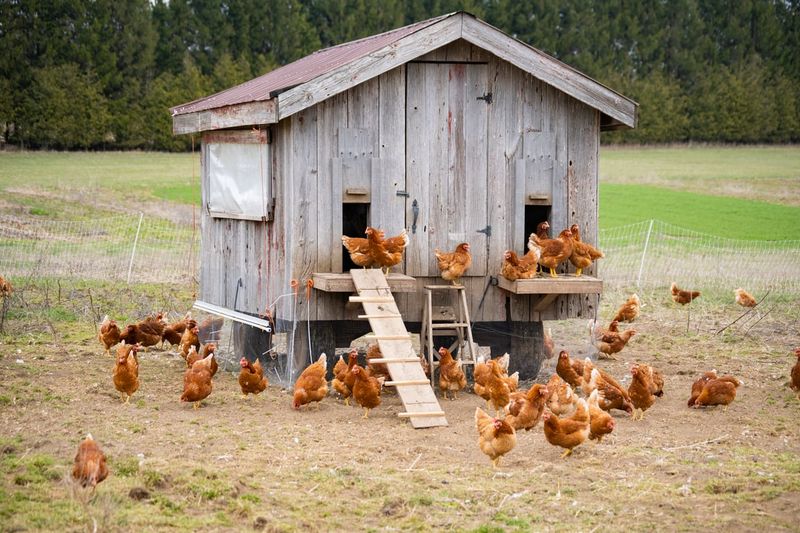
NCWRC’s bobcat wildlife profile acknowledges that bobcats have occasionally taken domestic cats and small livestock, including poultry, sheep, and goats. That is not a routine outcome, but it is a documented one.
Chickens and other small livestock need genuinely predator-proof housing, not just a latched door. NCWRC recommends predator-proof fencing with hardware cloth rather than standard chicken wire, wire buried or bent outward at the base to prevent digging, and a solid roof or wire top over the entire run.
A bobcat is athletic enough to climb, and a covered run removes that vulnerability entirely.
None of this requires treating every dusk as a crisis. Most bobcat sightings end with the animal moving quietly out of view within minutes.
The practical steps above are worth taking regardless of whether a bobcat has been seen, because they protect animals from the full range of predators common in North Carolina neighborhoods, including foxes, raccoons, and dogs.
Know when to call for help
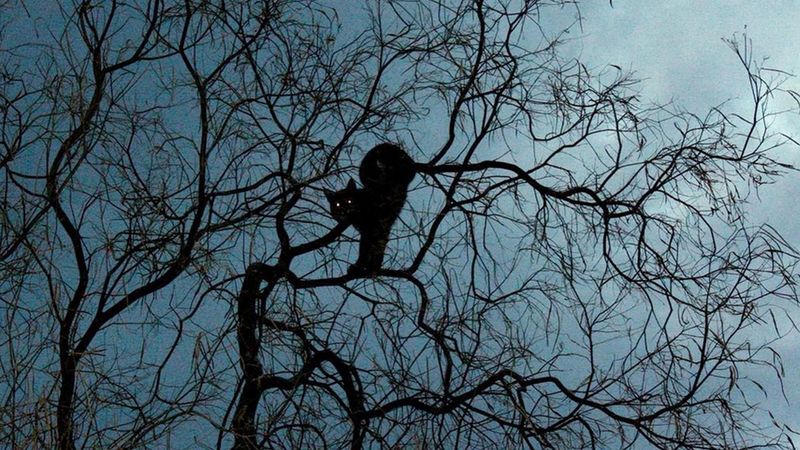
A single bobcat crossing a yard at dusk, behaving normally, and continuing on its way does not require a phone call to anyone. That is ordinary wildlife behavior, and giving the animal space is the correct response.
Certain situations, however, do warrant professional guidance, and knowing the difference matters.
Contact NCWRC or a qualified wildlife professional if a bobcat repeatedly approaches people, lingers near a food source without moving on, shows unusual aggression, or returns so frequently that it has clearly lost its normal avoidance of human activity. Physical signs that justify an urgent call include stumbling, paralysis, severe injury, disorientation, collapse, or any inability to move normally.
North Carolina Parks records and NCWRC’s bobcat damage control document both clarify that daytime activity alone is not a reliable indicator of illness. Assess what the animal is doing, not just when it appears.
Bobcats are classified as potential rabies-vector animals in North Carolina. CDC guidance on rabies recommends washing any bite or scratch wound immediately and thoroughly with soap and water, then contacting a healthcare provider or local health department to discuss potential exposure.
CDC wildlife contact guidance reinforces that wild animal bites always require medical evaluation. Bobcat rabies detections are uncommon compared with raccoons, skunks, and foxes in North Carolina, but the risk is real enough to treat any contact seriously.
The NCWRC Wildlife Helpline is reachable at 866-318-2401, and the agency’s published email is [email protected]. NCWRC’s wildlife problem resource page and their contact page provide updated routing for conflict situations.
Do not attempt to trap, relocate, or manage the animal yourself. NCWRC is clear that bobcats cannot simply be relocated, and homeowner-led attempts increase risk for both the person and the animal.
The useful takeaway from one quiet visit
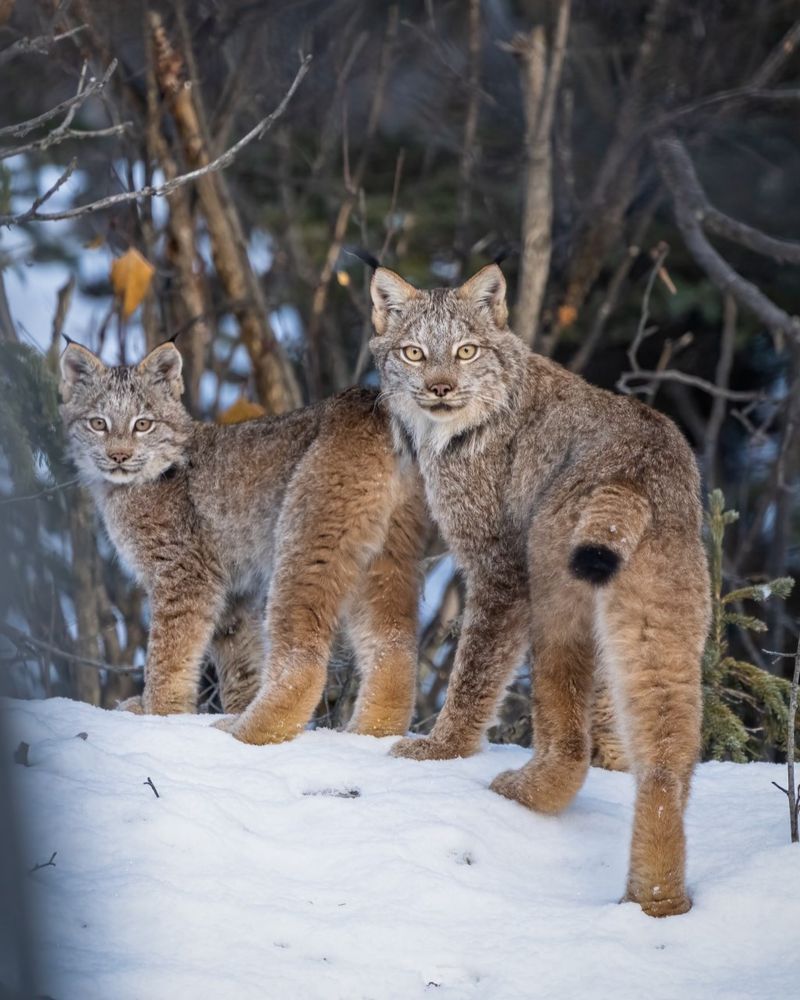
One bobcat crossing a yard at dusk is a confirmed sighting, not a certification. The animal used or moved through that space on that evening.
Whether it reflects nearby cover and prey, a transient cat on a wide nightly circuit, or an indirect attractant like rodents gathered beneath a feeder, the visit alone cannot answer those questions with certainty.
The practical response is compact. Observe from a distance and let the animal move on.
Remove or secure food attractants, bring small pets inside, and make sure poultry housing is genuinely predator-proof. Maintain native vegetation and brushy cover for the broader food web rather than as a targeted strategy to draw any one species back.
NCWRC guidance on responsible wildlife feeding and the agency’s bobcat page together cover most of what a homeowner needs to act sensibly after a sighting.
Supporting good habitat on private land benefits far more than one passing predator. The most useful identity a North Carolina homeowner can carry after a bobcat sighting is not bobcat manager, but careful neighbor in a landscape that still has room for wild things to move through it.