
Why Your Hydrangeas Bloomed Weak This Year – And The Late-Summer Step That Protects Next Spring’s Buds
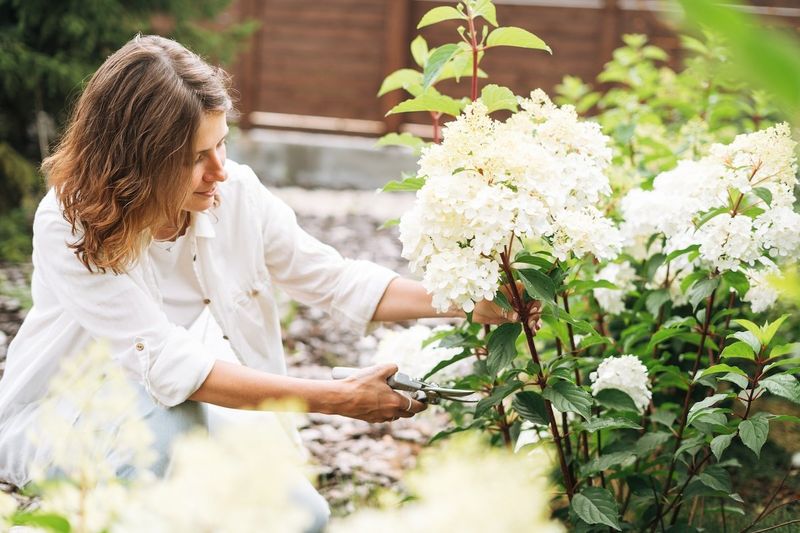
Staring at a hydrangea that barely bloomed this summer is genuinely frustrating, especially when you did everything you thought was right. The good news is that one disappointing season does not mean your plant is failing.
For many hydrangeas, a single late-summer habit – or the decision to stop a harmful one – can protect the flower buds already forming for next spring.
A weak hydrangea bloom does not mean the plant is lost
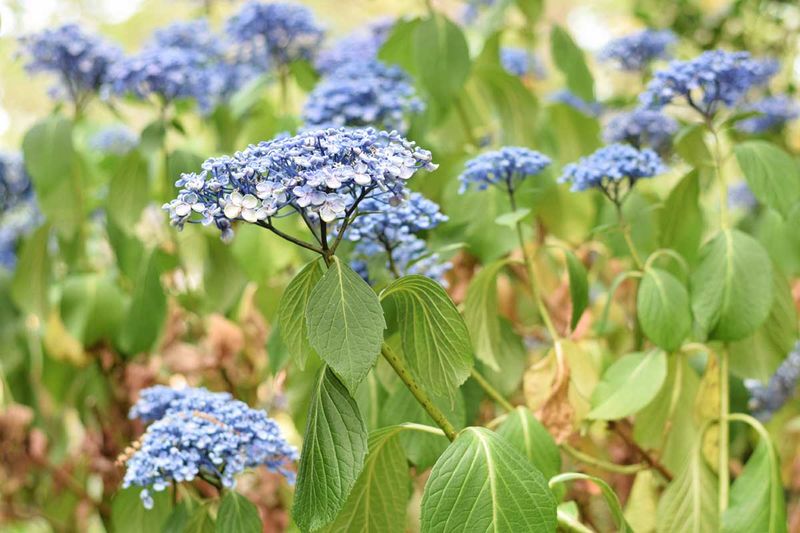
One summer of sparse or undersized flower heads can feel like a verdict, but most hydrangeas are far more resilient than that single season suggests. Late-summer care can protect the buds your plant is already forming for next year, though no single task guarantees a bigger flower display.
The honest goal is to reduce preventable bud loss and give your plant the best possible chance.
Incorrect pruning is a well-known reason hydrangeas bloom weakly, but it is far from the only one. University of Maryland Extension guidance on hydrangea problems identifies drought, excessive heat, poor light, deer browsing, late frosts, and severe winter conditions as equally credible causes of a reduced flower display.
Plant age, cultivar hardiness, and prior exposure to cold injury round out the list.
Weak flower heads can also follow a season of excess nitrogen, which pushes the plant toward lush foliage at the expense of blooms. So before assuming you pruned at the wrong time, think back through the summer: Was there a stretch of intense heat or drought?
Did deer visit the yard? Did a late frost arrive after buds had already swelled?
Any of those events can thin a flower display on an otherwise healthy plant.
What this article focuses on is the most preventable late-season mistake: removing healthy stems from old-wood hydrangeas at a time when next year’s flower buds may already be forming. According to University of Maryland Extension pruning guidance, understanding when and whether to cut is the first step toward protecting the following year’s bloom.
The plant is most likely not lost – it just needs you to put the pruners down for now.
Identify the hydrangea before you reach for pruners
Knowing which hydrangea you have is not optional – it is the single most important step before any pruning decision. Cut the wrong type at the wrong time and you may remove every flower bud the plant spent months developing.
Get the identification right and the rest of the late-summer plan becomes much clearer.
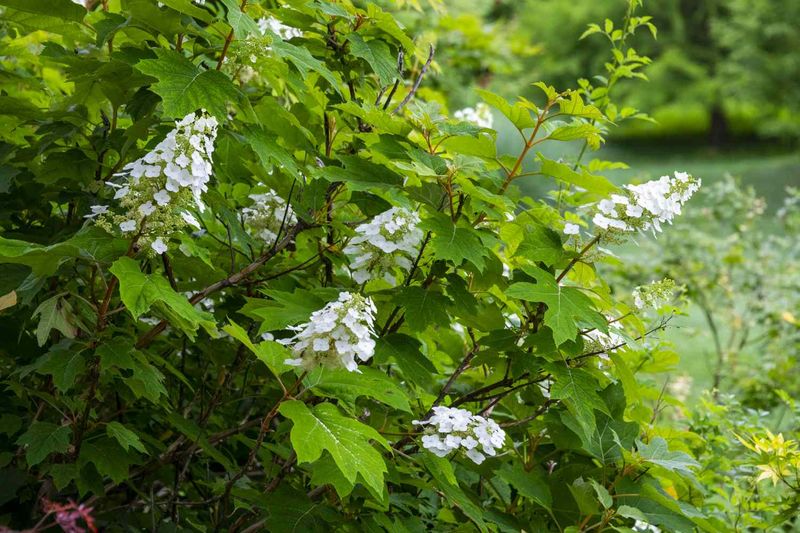
Bigleaf hydrangea (Hydrangea macrophylla), oakleaf hydrangea (H. quercifolia), and mountain hydrangea (H. serrata) are the group most gardeners need to handle carefully. University of Illinois Extension guidance on hydrangea timing confirms that these species generally bloom on old wood, meaning the stems that survived last winter carry the buds for this coming season’s flowers.
Those buds begin developing during the summer and fall before the bloom year, so late-season cuts can wipe out next year’s display entirely.
Bigleaf hydrangeas are the classic mophead or lacecap types with big rounded flower clusters, often in pink, blue, or purple. Oakleaf hydrangeas have distinctive lobed leaves that turn red in fall and elongated, cone-shaped white flower heads.
Mountain hydrangeas look similar to bigleafs but tend to be more cold-tolerant and slightly smaller overall.
Panicle hydrangea (H. paniculata) and smooth hydrangea (H. arborescens) work on a completely different schedule. Illinois Extension notes on panicle hydrangeas explain that these species bloom on new wood – growth produced in the current season – so their pruning happens in late winter or early spring, not after summer flowering.
Cutting them back in fall does not cost them next year’s flowers.
Reblooming cultivars such as the Endless Summer series or Incrediball Blush add one more layer of nuance. University of Minnesota Extension guidance on hydrangea pruning explains that these cultivars can produce flowers on both old and new wood, but removing old-wood buds may still eliminate the first and often largest flush of bloom.
When in doubt, check the plant label, look up the cultivar name online, or contact your local cooperative extension office before cutting.
In late summer, leave healthy old wood alone
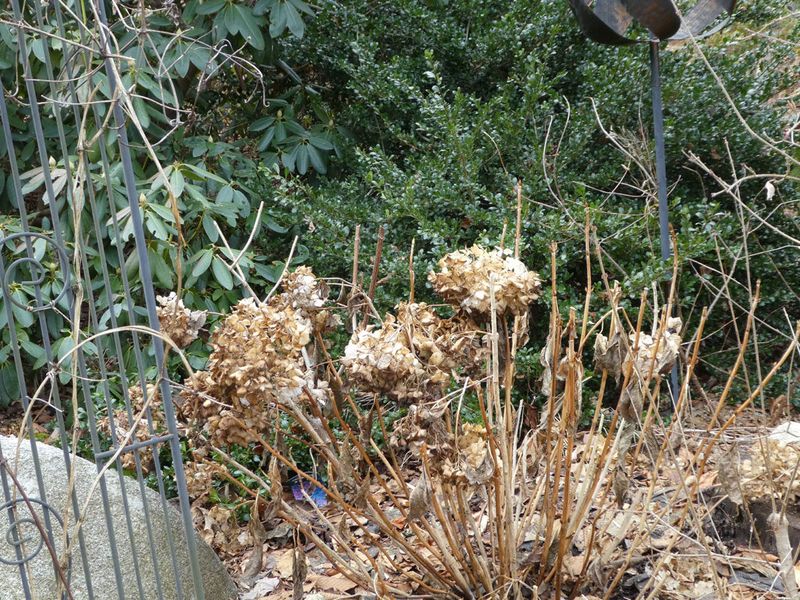
After the window for post-bloom pruning has closed, the most protective thing you can do for an old-wood hydrangea is simply stop cutting. Healthy live stems on bigleaf, oakleaf, and mountain hydrangeas may already be carrying the buds that will open into flowers next spring.
Removing those stems in late summer, fall, or winter can mean walking outside next June to find almost nothing in bloom.
University of Minnesota Extension’s hydrangea pruning guide is direct on this point: cutting back old-wood types late in the season removes the buds that were already set for the following year. Many gardeners do this with good intentions – tidying up the plant, removing faded flower heads, or reshaping a shrub that sprawled over the summer – without realizing the cost.
The plant looks fine afterward, but the bloom potential is gone until the following cycle.
If you are reading this in late summer and the plant was not pruned immediately after flowering, the safer path is to preserve every healthy stem you can. Illinois Extension’s timing guidance reinforces that reshaping old-wood hydrangeas outside the post-bloom window trades next year’s flowers for a neater appearance now – a trade most gardeners would not willingly make.
There is a reasonable exception for dead, diseased, or clearly damaged wood. University of New Hampshire Cooperative Extension’s pruning fact sheet notes that removing dead canes is appropriate and does not cost the plant viable buds, since those canes are already gone.
The key distinction is between wood that is genuinely dead – brown all the way through, brittle, no green under the bark – and wood that simply looks weathered or carries faded flower heads. When in doubt, scratch a small spot on the stem with your fingernail: green underneath means leave it alone.
Maintain even moisture without chasing every wilt
Hydrangeas can look dramatically stressed on a hot afternoon even when the soil holds plenty of moisture. Running for the hose every time leaves droop is an understandable instinct, but it can lead to overwatering – which creates its own set of problems.
Checking what the soil is actually doing before adding water is a better habit than reacting to what the leaves look like at 3 p.m.
University of Maryland Extension’s hydrangea problem guide specifically notes that bigleaf hydrangeas may wilt during high heat even when the root zone remains adequately moist. Push a finger two inches into the soil near the plant’s base – if it feels cool and damp, the plant is not in drought stress.
If the soil feels dry and crumbly at that depth, watering is genuinely warranted.
During stretches of real drought, consistent moisture matters for the plant’s overall health and for protecting whatever buds are already forming. Water deeply and less frequently rather than giving the plant a light daily sprinkle, which keeps moisture near the surface and encourages shallow roots.
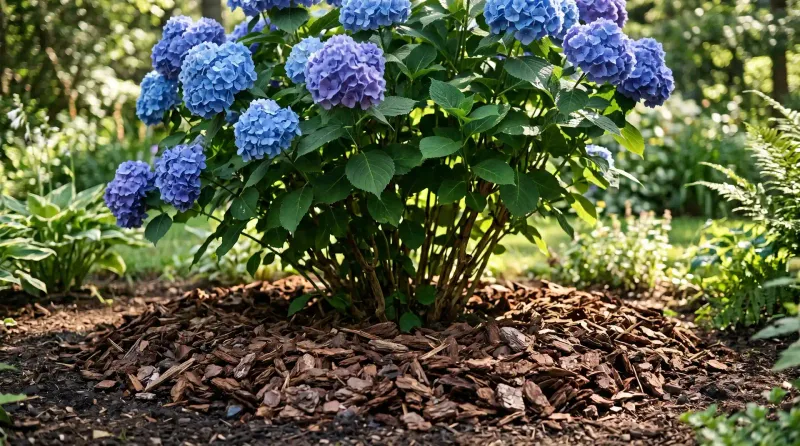
A mulch layer applied around the base of the plant handles a lot of the moisture-management work passively. University of Maryland Extension’s home landscape best management practices support applying roughly 2 to 3 inches of mulch to conserve soil moisture and moderate soil temperature through summer heat and early fall temperature swings.
Keep the mulch pulled back a few inches from the plant’s stems – piling it against the crown traps moisture and can invite disease or rot. Avoid going deeper than 3 inches, where excessive buildup can prevent air and water from reaching the roots at all.
Protect vulnerable plants from winter bud loss
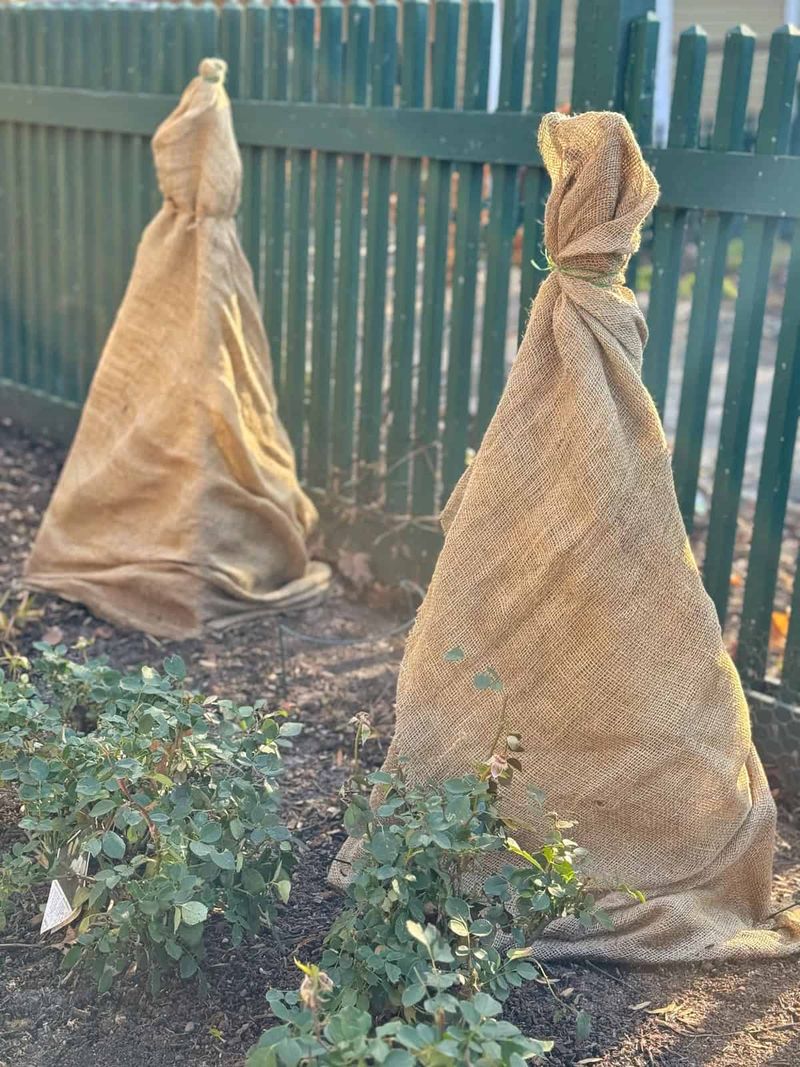
Not every hydrangea needs to be bundled up for winter, and not every gardener needs to worry about this step at all. Winter protection belongs primarily in cold or exposed sites where vulnerable bigleaf or mountain hydrangeas face the kind of temperature swings that can kill overwintering buds before spring ever arrives.
If you garden in a mild climate and your bigleaf reliably blooms each year, you may not need to do anything beyond what the previous sections already described.
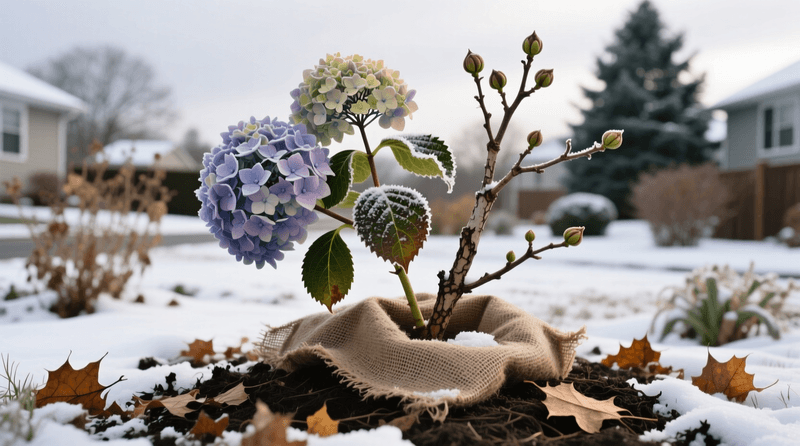
For gardeners in colder zones or on exposed sites where late freezes arrive after buds begin to swell, a simple enclosure can reduce bud loss. University of New Hampshire Cooperative Extension’s pruning fact sheet describes using a wire or mesh cage placed around the plant and filled loosely with dry leaves as one site-appropriate option.
The goal is to buffer the stems and buds from the most extreme temperature drops and desiccating winds, not to create a sealed, airtight enclosure.
Install the protection after the plant has gone dormant in fall but before the harshest cold arrives. UNH Extension guidance on winter protection for bigleaf hydrangeas recommends removing the enclosure in spring once the danger of severe frost has passed or once buds begin visibly expanding, whichever fits your local conditions – and to do it carefully so you do not snap off swelling buds in the process.
Even with protection in place, a severe winter or an unusually late hard freeze can still claim buds. Protection improves the odds of a flowering season; it does not guarantee one.
Choosing a cultivar rated for your hardiness zone in the first place is the most reliable long-term strategy for gardens where winter bud loss is a recurring problem.
Use the correct pruning window next season
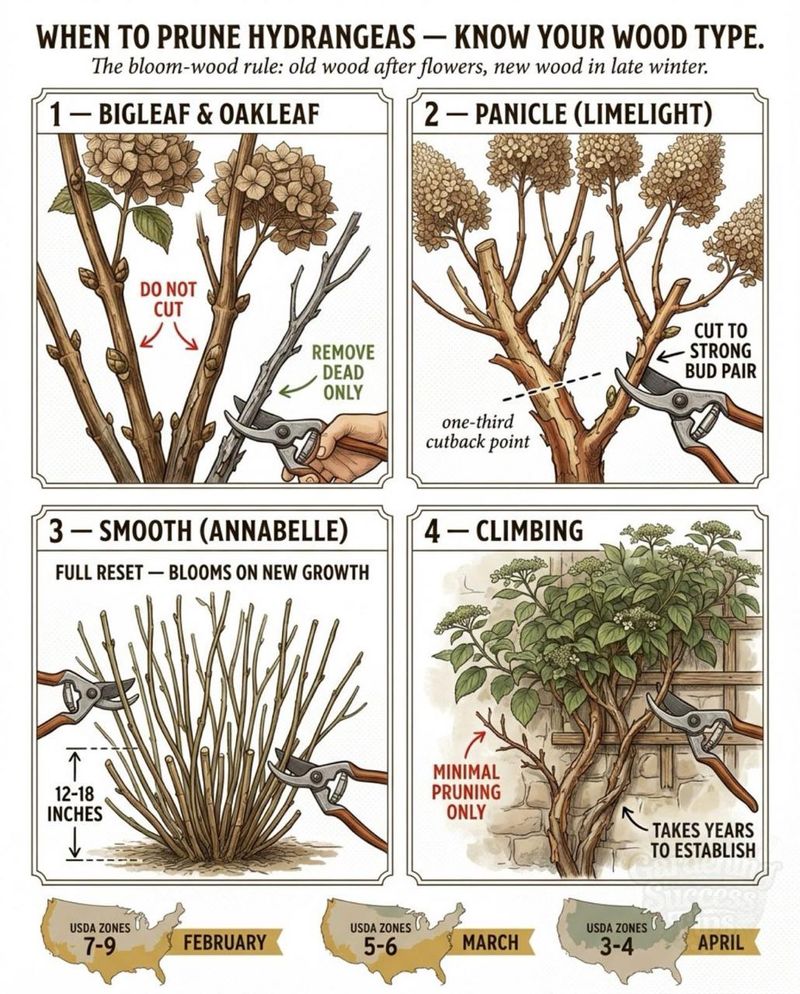
Planning ahead now – while this season’s disappointment is still fresh – makes next year’s pruning decisions much easier to get right. The calendar for old-wood hydrangeas and new-wood hydrangeas runs in opposite directions, so knowing which type you have keeps you from repeating a costly mistake.
For bigleaf, oakleaf, and mountain hydrangeas, the general rule is to do any necessary pruning immediately after flowering fades. Illinois Extension’s hydrangea timing guidance advises completing any needed pruning before the plant begins setting next year’s buds – and that process can begin as early as late summer, which is why waiting until fall feels safe but often is not.
Pruning right after the last flower fades gives you the widest margin before new buds start forming.
Regional and cultivar differences are real. A bigleaf hydrangea in Georgia may finish flowering and begin bud development on a different timeline than the same species in Minnesota.
University of Minnesota Extension’s best-bloom guide reinforces that timing varies and that checking with your local cooperative extension office for region-specific guidance is worthwhile. The principle stays the same – prune soon after bloom – but the exact dates shift.
Panicle and smooth hydrangeas follow a different schedule entirely. University of Maryland Extension’s pruning guide explains that because these types flower on new wood grown in the current season, late-winter or early-spring pruning is generally appropriate for them.
Cutting panicle or smooth hydrangeas back in late winter encourages vigorous new stems that will carry the season’s flowers. That is the opposite of what you do for old-wood types – and it is exactly why identification has to come first.
For this late summer, the immediate instruction remains: leave healthy live stems on old-wood types alone. Next year’s pruning plan starts the moment this season’s flowers begin to fade.
Avoid shortcuts that promise larger flower heads
When a plant disappoints, the instinct is to do something – add fertilizer, adjust the soil, remove spent flowers, and generally intervene. With hydrangeas, several of the most popular late-summer interventions either have no meaningful effect on bloom size or can actively work against next year’s flowers.
Late-summer fertilizing is one of the most common missteps. University of Georgia Cooperative Extension’s guide to growing bigleaf hydrangea cautions that excess nitrogen pushes plants toward producing lush, leafy growth at the expense of flower development.
Applying a high-nitrogen fertilizer in late summer can also stimulate tender new growth that has no time to harden before cold arrives, leaving the plant more vulnerable to winter damage – not less.
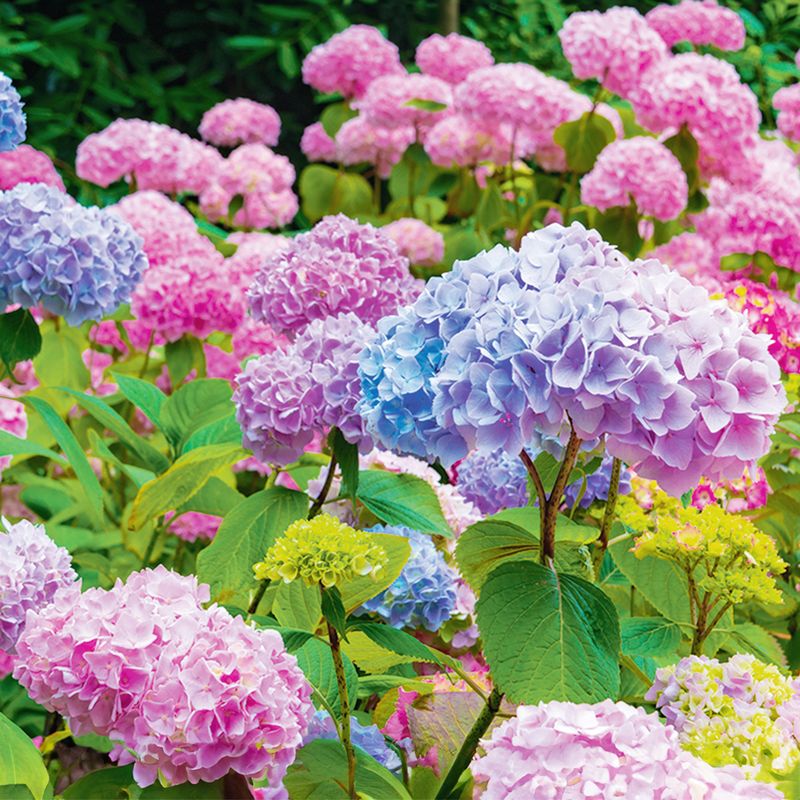
Soil pH gets a lot of attention in hydrangea circles, but its role is narrower than many gardeners realize. Penn State Extension’s guidance on why hydrangeas fail to bloom clarifies that pH primarily affects flower color in susceptible bigleaf cultivars – lower pH tends to shift blooms toward blue, higher pH toward pink – but changing pH is not a reliable method for producing larger or more numerous flower heads.
Aluminum sulfate, often applied to push flowers blue, can damage roots if misapplied and should not be treated as a routine bloom booster.
Deadheading is worth addressing separately. Removing faded flower heads is mainly a cosmetic choice on standard bigleaf, oakleaf, and panicle hydrangeas, and University of Maryland Extension’s pruning resource confirms it is not necessary for plant health.
On reblooming cultivars, deadheading may speed the arrival of a second flush of flowers, but that is different from enlarging next spring’s bloom. The broader lesson here connects back to what the earlier sections established: weak flowering often has several causes, and adding products or performing extra tasks rarely addresses the real ones.
Protect the buds first, then judge next year’s flowers
Here is where everything in this article comes together into a short, practical checklist you can act on before the season turns. Start by confirming which hydrangea you have, because every other decision flows from that identification.
For old-wood types – bigleaf, oakleaf, and mountain hydrangeas – stop routine late-season pruning on healthy stems right now. University of Minnesota Extension’s best-bloom guidance and University of Maryland Extension’s problem management resource both point to the same conclusion: preserving live stems preserves the buds those stems are carrying.
Check soil moisture during dry spells and water when the soil is genuinely dry two inches down, not when leaves droop on a hot afternoon. Apply 2 to 3 inches of mulch around the base, keeping it away from the stems, to conserve moisture and buffer soil temperature through fall.
Add winter protection only if your site and climate make it genuinely necessary for vulnerable bigleaf or mountain hydrangeas. None of these steps guarantee a bigger flower display next spring – they protect the plant’s opportunity to bloom and reduce the bud loss that would otherwise be preventable.
A plant that keeps its buds through winter still faces spring frosts, summer drought, and the limits of its own cultivar. What you are doing now is keeping the door open.
Whether the flowers walk through it next June depends on a season you have not lived yet.