
Inspecting and Sealing Entry Points in Summer to Reduce Stink Bugs Indoors in North Carolina
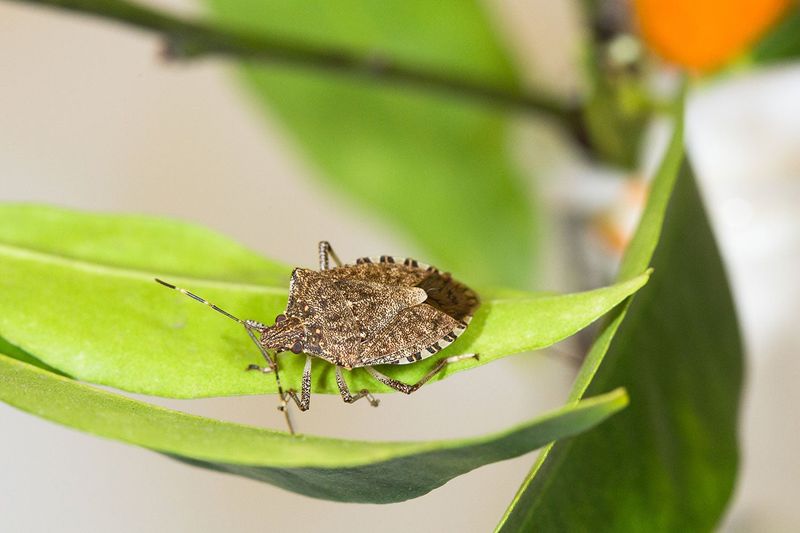
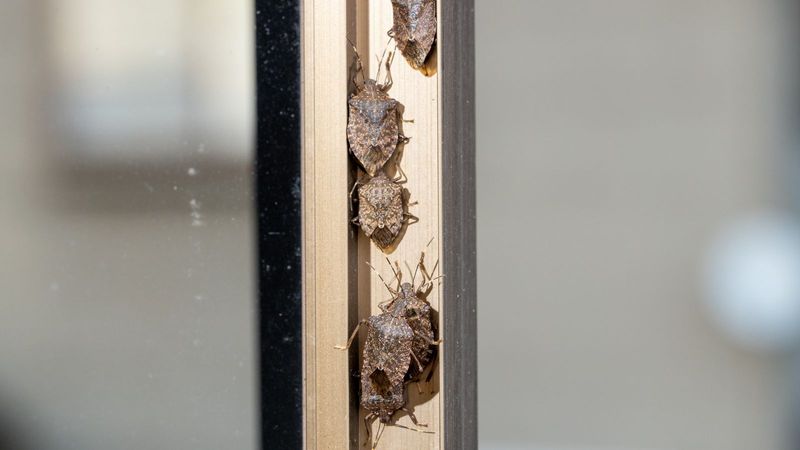
Every fall, some North Carolina homeowners find stink bugs clustered on a sunny porch wall or crawling across a window. Brown marmorated stink bugs are looking for a dry, tucked-away place to wait out winter, and a house can fit the bill.
The good news is that you have a calm, practical plan that does not need a spray can. Here is when to check your home, what to look for, and how to protect the helpful insects in your yard while you do it.
House gaps offer brown marmorated stink bugs protected shelter
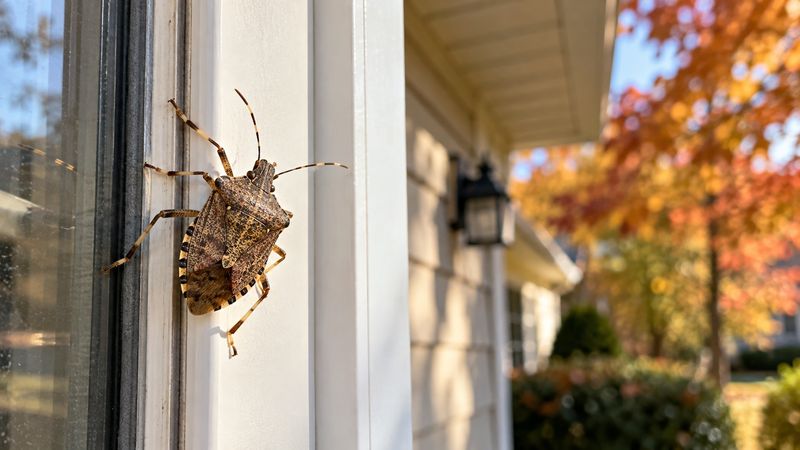
Brown marmorated stink bugs look for dry, protected spaces to ride out the cold months. In North Carolina, they commonly gather on the sunny sides of buildings in September and October, and some slip inside through small openings.
NC State Extension’s FAQ explains that they enter through gaps and shelter indoors, which is why a few bugs on the porch can turn into a few dozen in the house.
Porch siding matters only where it has a way in. A tight, well-fitted wall gives them little to work with, while a loose board end, a open seam, or a void behind trim can serve as either a doorway or a hiding place.
The bugs are not chewing on your siding, and they are not damaging the wood. They simply want shelter.
Large numbers can occasionally clog equipment such as heat pumps, but they usually do not harm property, according to NC State’s overview of the species in North Carolina. The real issue is nuisance and odor when they end up indoors.
That shapes the goal here. Closing the right gaps can cut down on how many bugs get inside, but it cannot promise a bug-free home.
Pressure also varies across the state, so your neighbor’s experience may not match yours.
When should North Carolina homeowners seal?
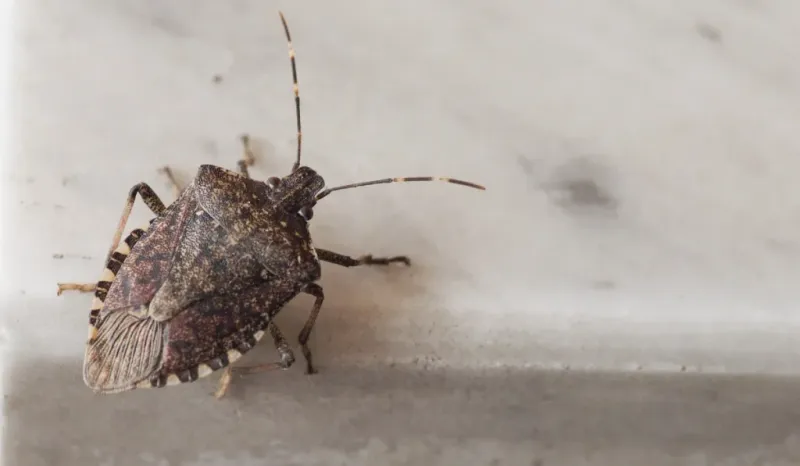
Summer is the sweet spot. NC State Extension advises letting overwintered bugs leave in spring, then sealing appropriate openings before they start seeking shelter again in late August.
That window gives you a stretch of warm, dry weather to work in, and it means no bugs are sealed inside the walls.
Timing matters because of what happens if you seal too late. NC State warns that closing gaps in fall or winter may trap bugs that are already inside.
Those trapped bugs can then wander toward lights and living spaces.
You may also hear that if you miss the fall window, spring will be worse. That claim is not supported.
Overwintering adults do not feed or lay eggs, and NC State notes they generally leave their shelters in spring and are seldom found indoors again until late summer.
So if bugs are already around this fall, there is no need to panic or rush a caulk gun to the wall. Put the repair job on your July calendar instead, and handle any strays indoors in the meantime.
Start at porch siding, then trace the entry routes
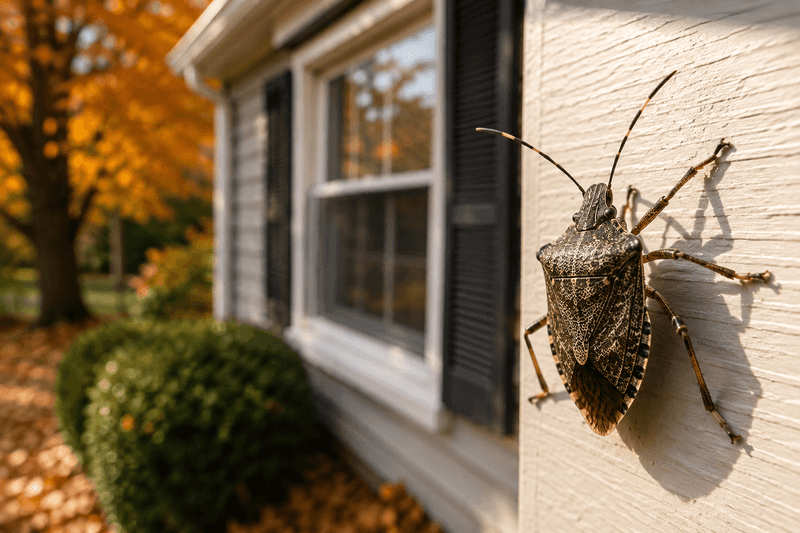
Begin with a slow walk around the house, starting at the porch. Look along siding seams, board ends, corner trim, and any place where a panel sits loose.
A flashlight helps you spot shadows that mark a gap or void.
From there, follow the likely routes inward. NC State Extension lists window and door frames, screens, attic louvers, siding gaps, and openings around pipes, faucets, and other utility lines.
Check the edges of window frames, the bottom of door thresholds, and the spot where a hose bib or cable passes through the wall.
Small gaps count. A brown marmorated stink bug can fit through an opening as small as 3 by 7 millimeters, roughly the width of a few stacked pennies on edge in one direction.
A crack you could barely slide a thin credit card into may be big enough.
You do not need to fix every spot on the list. Note only the places where you actually find a gap, a torn screen, or a loose seal.
Jot them down or snap a photo so your summer repair day is quick and focused.
Close gaps without compromising ventilation
Once you have your list, match each gap to a simple fix. Caulk handles narrow cracks around window trim and siding joints.
Weatherstripping suits doors and operable windows, and foam sealant fills larger voids around pipes and utility lines, as NC State Extension recommends.
Screens deserve a look too. Patch or replace torn window screens, and repair screen vents where appropriate so the screen stays intact while air still moves.
Here is the key distinction. Some openings are access gaps, and some are vents your house needs to breathe, such as attic or crawl space ventilation.
Do not block those. Fixing a screen over a vent is smart, but plugging the vent itself can cause moisture and airflow problems.
Choose exterior-grade products for outdoor work and follow the label for each one. Think of this job as a useful prevention step, not a guarantee.
You may still find a straggler now and then, but fewer open doorways usually means fewer visitors.
A tidy porch does not require stripping the yard

The cleanup here is about the building, not the garden. Sealing gaps and fixing screens is the target.
You do not need to rake the beds bare or yank out shrubs to deal with brown marmorated stink bugs.
The reason comes down to what these bugs prefer. University of Kentucky Extension says they generally overwinter in dry, protected sites, not in shrubs, mulch, or leaf litter, which are often too moist.
A thick layer of leaves under your dogwood is not their usual bedroom.
Meanwhile, that same ground-level layer shelters a lot of life you probably value. University of Maryland Extension guidance on managing yards to sustain insect communities supports keeping habitat for insects that live in suburban gardens.
Clearing everything could remove homes for beetles, bees, and other helpers without solving the stink bug problem.
Keep the garden doing its job and put your energy into the dry, protected spaces on the house itself, like gaps behind trim and around utilities. That is where a caulk gun beats a rake.
Why routine spraying is the wrong first move
Spraying porches, siding, or indoor corners is not the best first step. NC State’s household guidance favors exclusion and physical removal over insecticide sprays, and it warns that garden pyrethroid products can kill many beneficial insects.
That matters because your yard already has allies. NC State documents native predators of brown marmorated stink bug eggs, including lady beetles, ground beetles, lacewings, and spiders.
Not every pesticide harms every beneficial species, but broad-spectrum products can. If you ever consider one, follow the specific product label and the site rules exactly.
Identification is the next safeguard. North Carolina has native stink bugs, and some of them are predators that eat other insects.
NC State’s species overview makes clear that not every stink bug is an invasive pest.
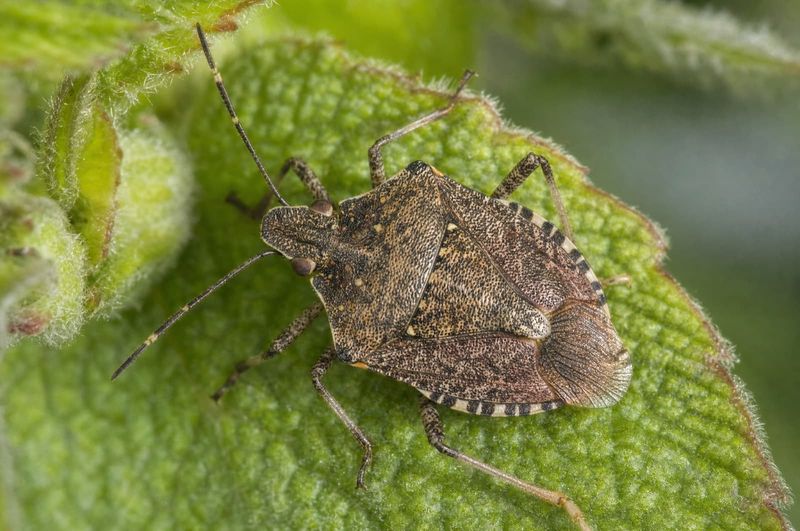
One handy clue is the antennae. Brown marmorated stink bug adults have pale bands on them, and NC State’s publication offers side-by-side comparisons with look-alikes.
Check before you remove or treat anything outdoors.
If bugs are already indoors, remove them without crushing
A few stragglers inside are normal, and you have simple options. Capture a bug in a jar and put it in the freezer, or drop it into a bowl of soapy water.
A dedicated vacuum works too, and you can freeze the contents afterward, as NC State Extension describes.
Gentle handling is the trick. Crushing or agitating the bugs worsens the odor, so skip the tissue squish.
Slide the jar lid under them calmly and move on.
Do not carry them outside and let them go. NC State advises against releasing captured bugs outdoors because they may come right back to the house.
Spring sightings can look alarming, but they have a simple explanation. Overwintering adults do not feed or lay eggs, and as NC State explains, they generally leave shelters in spring.
A bug on a March window is likely an overwintered adult waking up, not proof that they bred in your walls or that new ones just got in.
Make summer exclusion the goal, not a promise of a bug-free spring
The plan is straightforward. Let overwintered bugs head out in spring, inspect and repair the right openings in summer before late August, and leave your yard habitat and helpful insects alone.
NC State Extension’s timing advice is the backbone of it.
Sealing may reduce indoor nuisance, but it will not guarantee a bug-free house. Nothing shows that missing a fall sealing window makes spring worse.
A tight house and a thriving garden can share the same address.