
Why Your Christmas Cactus Leaves Go Wrinkly Indoors, and How to Choose the Right Watering Step
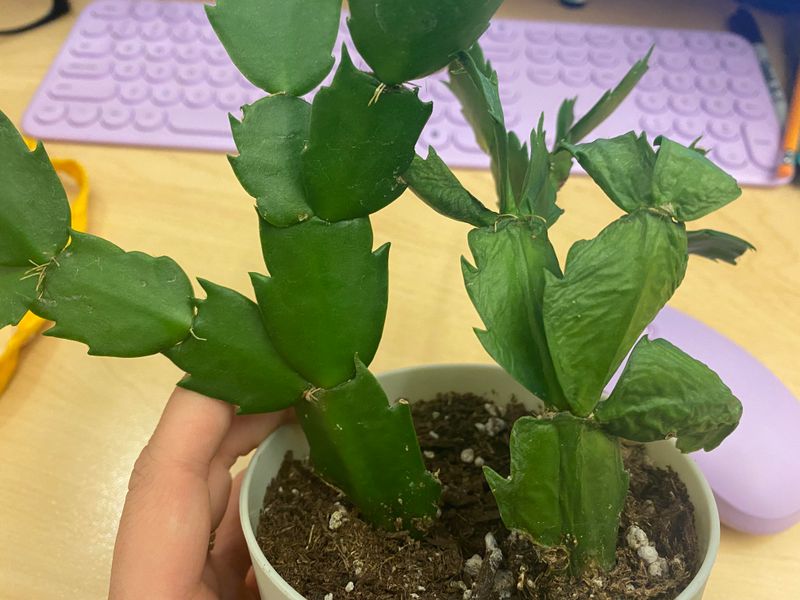
Limp, wrinkled segments on a Christmas cactus can make any plant owner panic. It is easy to think the plant just needs water, but that is only one possibility.
The potting mix holds the clue that tells you what to do next. Here is how to read it, step by step, so you can help your plant without guessing.
Wrinkling is a symptom, not a watering instruction
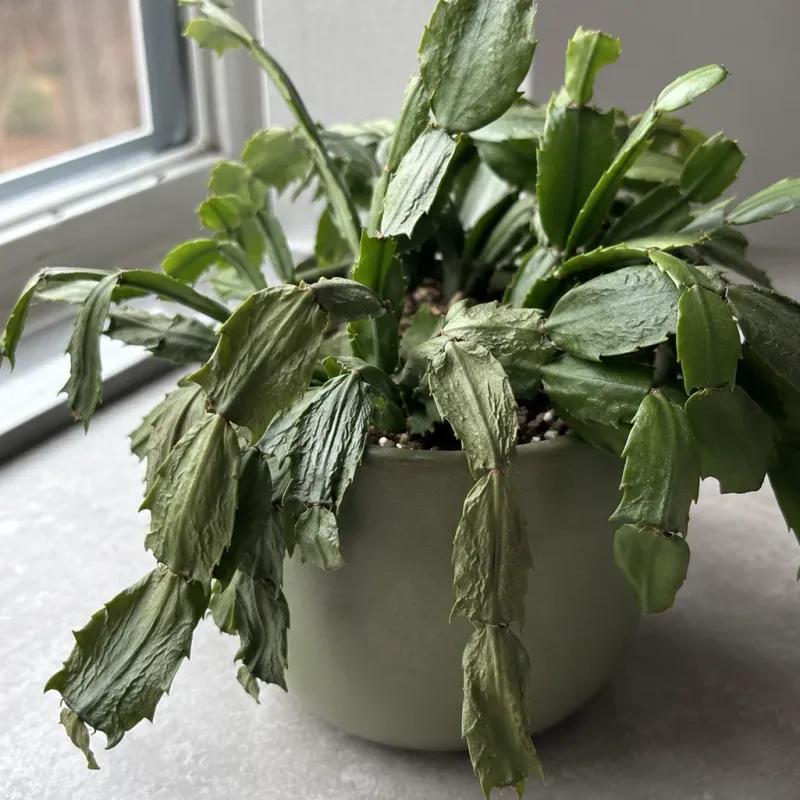
Soft, shriveled segments look like a plant begging for a drink. That is a reasonable guess, but it is only a guess.
A wrinkled or wilted look is a symptom, not a diagnosis, and several problems can cause it. An Ask Extension answer on Christmas cactus points to root problems, improper watering, crowded roots, and too little light as possible factors.
Here is the tricky part. Too little water can make segments go limp, and so can soil that stays wet for too long.
University of Minnesota Extension notes that excess water can cause wilting, and Iowa State Extension says overwatering can lead to limp growth and root rot. Wet roots that are damaged cannot take up water well, so the plant can look thirsty while sitting in damp mix.
That means two plants with identical wrinkles may need opposite care. One needs a thorough drink.
The other needs watering paused and drainage fixed. Looking at the segments alone will not tell you which plant you have.
One more note: the name Christmas cactus is often used loosely for several holiday cacti, including Thanksgiving and Easter types. Their care is similar but not always identical, so treat the advice here as a good general guide.
The next step is simple and free: check the mix.
Check the mix before you reach for the watering can
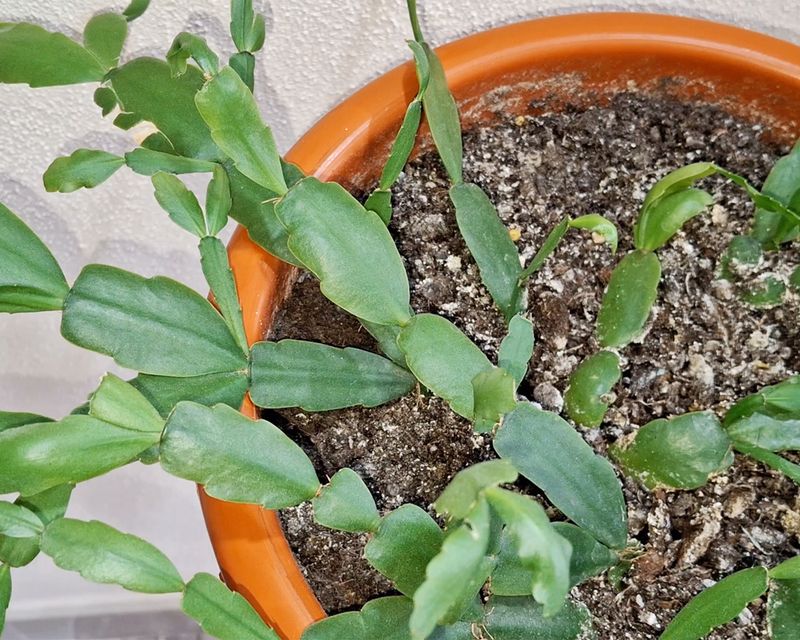
Your finger is the best tool you own for this job. Push it about an inch or two into the potting mix and notice what you feel.
Dry and crumbly mix points one direction, while cool, damp, or soggy mix points the other. Guidance such as this Ask Extension response centers on checking the soil rather than guessing from the plant’s look.
Next, lift the pot or peek into the saucer. Standing water in a saucer or inside a decorative outer pot is a common hidden problem.
Then confirm the pot has drainage holes and that they are not blocked by compacted mix or roots.
A fixed calendar cannot do this work for you. A sunny, warm room dries a pot much faster than a cool, dim one, and the same plant can need water at very different times through the year.
Minnesota Extension also advises holding off when the mix is wet.
Once you know whether the mix is dry or soggy, you know which path to follow. Dry leads to the next section, and soggy leads to the one after it.
A dry mix calls for a thorough drink
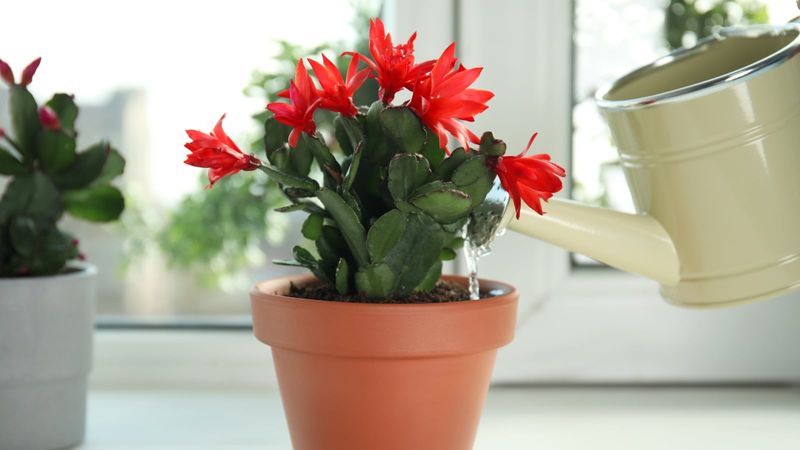
If the mix feels dry all the way through, thirst is a likely suspect. In that case, water thoroughly.
Pour until water runs out of the drainage holes, then let the pot drain completely. A quick sprinkle on top often wets only the surface and leaves the roots dry.
Draining matters as much as drinking. Setting the pot in a sink for a few minutes works well, and then it can go back in its saucer once the dripping stops.
Ask Extension guidance supports watering and letting the excess drain.
Skipping water on a dry plant is not a cure. Iowa State Extension advises that holiday cacti should not stay dry, and too little water can stress the plant and cause bud drop.
Treating this plant like a desert cactus is a common mistake.
Be patient afterward. Segments may take a long time to firm up, and Ask Extension notes that recovery can take months, with no reliable timeline.
If the plant keeps declining even after the mix has been properly watered, look at light, root crowding, and the roots themselves.
Soggy soil needs a drainage reset
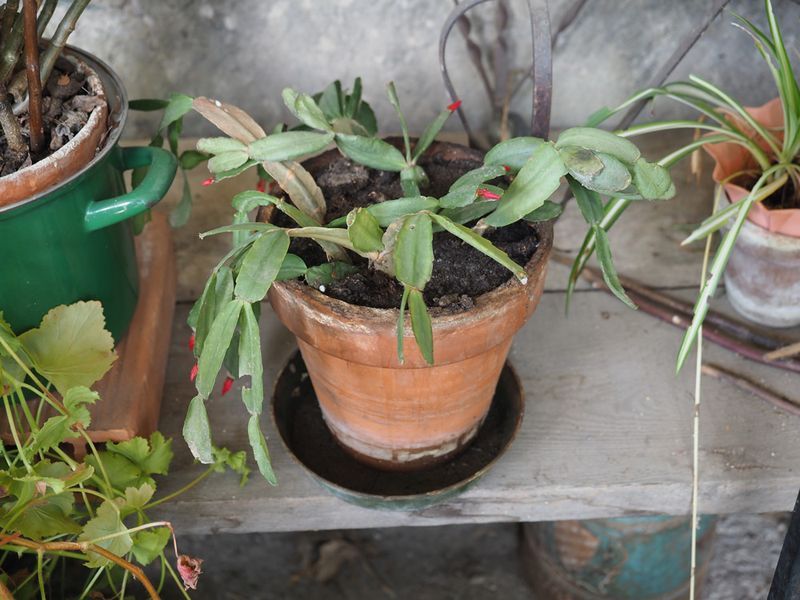
Mix that feels wet or soggy changes the plan completely. Put the watering can away for now.
Adding water to a saturated pot can make roots struggle even more.
Start with the easy fixes. Empty any water sitting in the saucer or decorative pot, and make sure the pot has holes that drain freely.
Minnesota Extension recommends well-drained conditions for holiday cacti, and a pot sitting in runoff works against that.
If the mix is heavy and stays wet for days, a lighter, well-draining mix may help. Penn State Extension describes good drainage as a core part of holiday cactus care.
Moving the plant to a spot with better airflow and bright, indirect light can also help the mix dry.
The goal here is to correct constantly wet conditions, not to leave the plant in a drought. Iowa State Extension cautions against letting these plants stay dry.
Once the top layer of mix has dried somewhat, check again and water if it is no longer damp.
When decline continues, inspect the roots

Sometimes a plant keeps sliding even after you have paused watering and fixed the drainage. That is the moment to look at the roots.
Soggy mix plus continued decline is the combination that justifies it. Limp segments by themselves do not prove root rot.
Slide the plant out of its pot gently and brush away some mix. University of Florida guidance on houseplants describes healthy roots as firm and light in color, while soft, brown or black roots are consistent with rot.
That advice covers houseplants in general, so it is a useful guide rather than a holiday cactus rule.
For holiday cacti specifically, Minnesota Extension describes dark, mushy roots as part of root and stem rot. If you see mostly firm, pale roots, the problem may lie elsewhere, such as dry conditions, light, or crowding.
Treat what you find as information, not a verdict. Mixed roots, some healthy and some soft, call for careful observation and fresh, well-draining mix.
No step here guarantees a rescue, so keep expectations realistic.
Mushy lesions point beyond routine watering
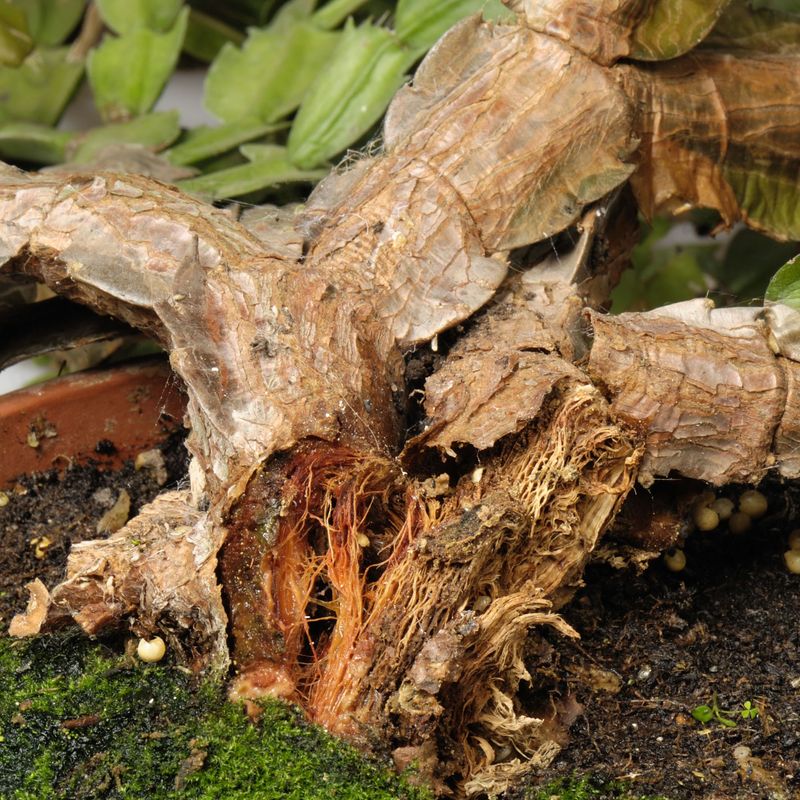
General limpness is one thing. Dark, wet, mushy spots on the segments are another.
So is a plant that is collapsing at the base. These signs can point to disease or stem rot rather than a simple watering slip.
Minnesota Extension describes root and stem rot in holiday cacti and advises discarding plants with certain diagnosed infections. Penn State Extension also covers diseases that affect Christmas cactus, which shows that not every decline comes down to how much water you gave.
Not every wrinkled plant has a disease, though, and most limp plants will not have mushy lesions. Look closely before deciding.
If the segments are simply soft or shriveled and the mix has been too wet or too dry, go back to the moisture check.
If you do see spreading dark, wet damage, keep the plant away from your other houseplants and consider asking your local extension office for help with identification. No home treatment is guaranteed to save a plant in this condition, so it helps to be prepared for either outcome.
Build a watering routine around the plant’s conditions
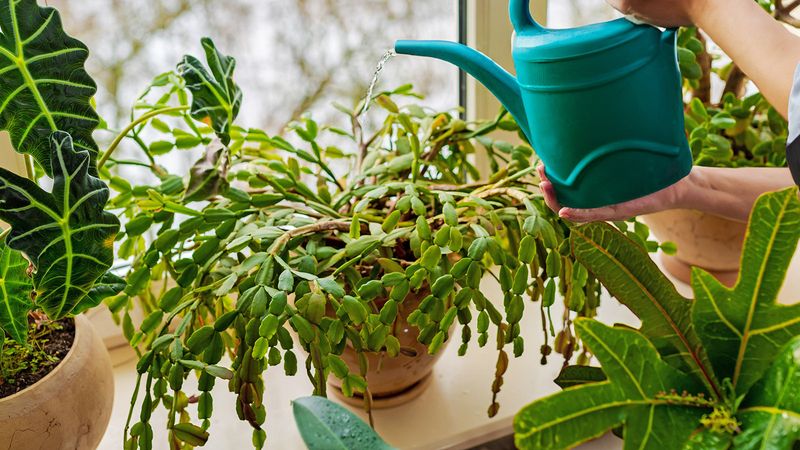
A good routine starts with the setup. Use a well-draining mix and a pot with drainage holes, and never leave the pot standing in runoff.
Minnesota Extension and Penn State Extension both stress drainage for holiday cacti.
Between waterings, let the mix dry somewhat, then water thoroughly. Guidance differs on exactly how dry is right, so a cautious middle path works best.
Iowa State Extension notes these plants should not stay bone-dry, especially while budding or flowering, when dryness can stress them or cause buds to drop.
Skip the rigid schedule. A bright, warm room may need water more often than a cool one, and the plant’s needs shift with the season.
Feeling the mix each time takes seconds and beats any calendar.
Keep in mind that checking the mix guides your next step but does not promise quick results. Ask Extension notes that recovery can take months.
A plant that feels steady, damp but never swampy, is already getting what it needs.