
Your Christmas Cactus Isn’t The Only One – 15 Houseplants That Bloom Right Through Winter On A Windowsill
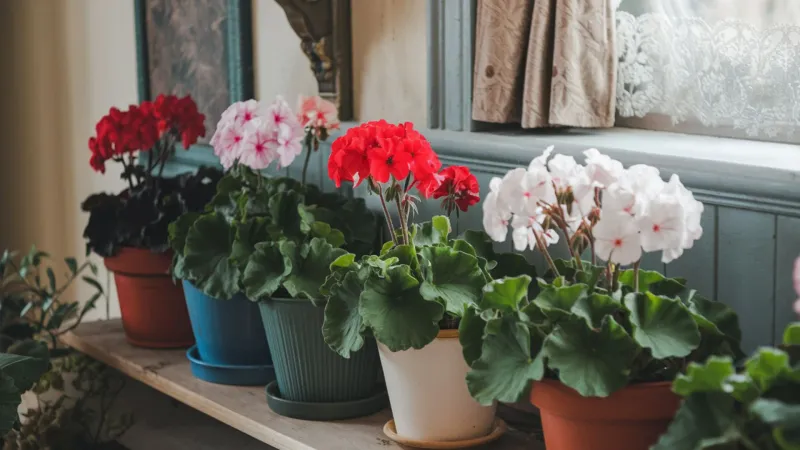
Winter can make a windowsill feel gray and bare, especially once the holiday cactus finishes its show. The good news is that plenty of other houseplants are happy to flower when the days are short and cold.
Picking the right ones means color and even fragrance from December to March, with less worry about doing something wrong. Here are 15 reliable bloomers, plus the simple fixes that keep each one flowering.
1. Christmas Cactus
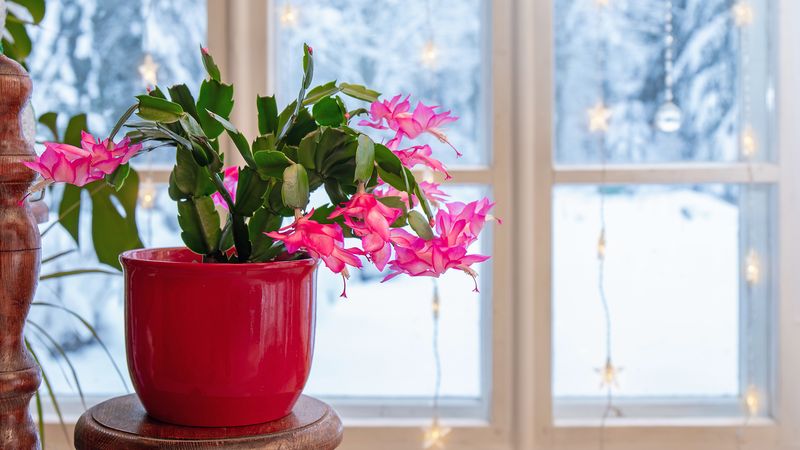
Start with the plant that inspired the list, because most people who own one are quietly worried it won’t bloom again. If your Christmas cactus dropped its buds or stayed green all season, the usual culprit is warmth and too much evening light, not a lack of care.
Buds form when the plant gets 12 to 14 hours of total darkness each night, starting around September, along with cool temperatures near 50 to 55°F for six to eight weeks. A spare bedroom or a closet overnight can do the trick.
Once flowers open, nights around 55 to 60°F help them last longer.
Keep it in bright, indirect light and away from heaters. Pads turning reddish usually mean too much sun.
Water evenly while it blooms, then let the soil dry before watering after the flowers fade.
2. Kalanchoe
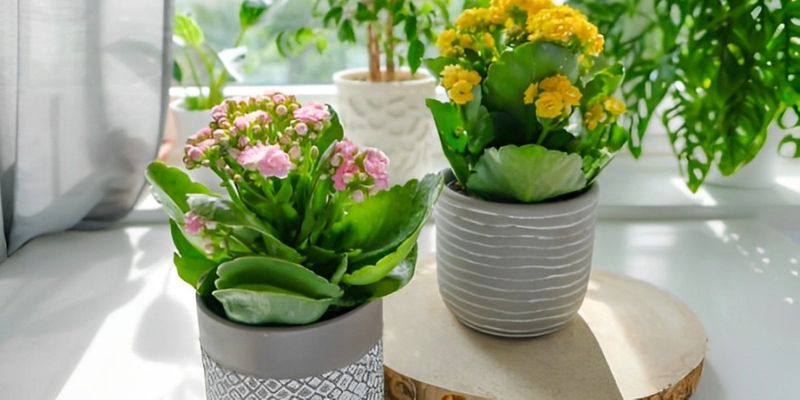
Think of kalanchoe as the forgiving friend of the group. It’s a succulent, so it shrugs off the occasional missed watering that would sulk a fussier plant.
Those tight clusters of crayon-bright flowers in red, orange, yellow, and pink can last for weeks. A south-facing windowsill suits it nicely, and it actually prefers cooler rooms over toasty ones.
The biggest mistake is kindness with the watering can. Let the soil dry out fully between drinks, and never let the pot sit in a saucer of water.
Like the Christmas cactus, kalanchoe sets buds when nights get long, so keeping it away from lamps in the evening during fall may help it rebloom.
3. Phalaenopsis Orchid
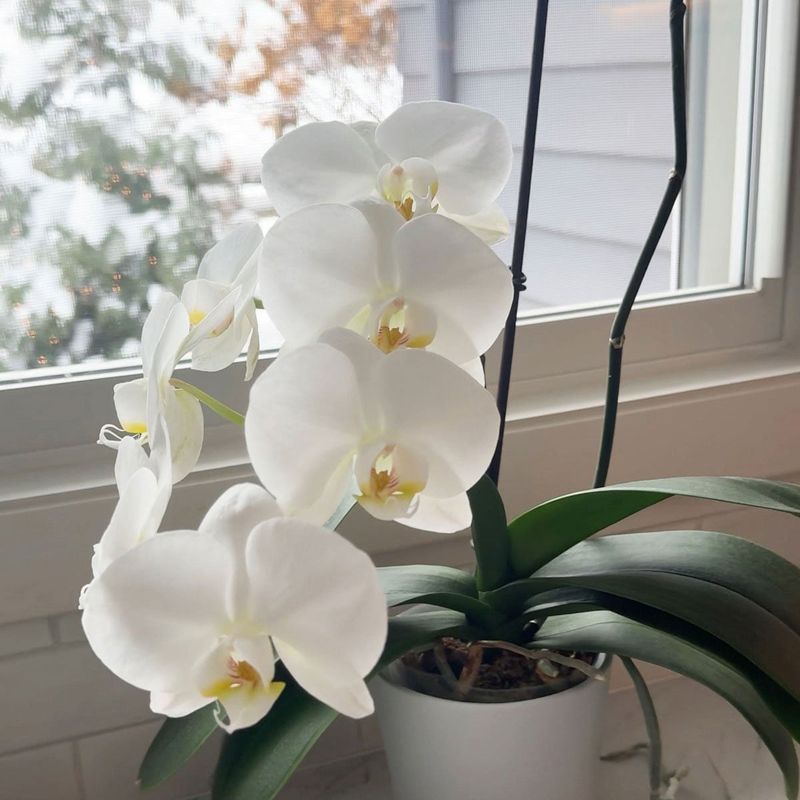
Grocery store orchids have a reputation for dying fast, but the moth orchid is honestly one of the easiest bloomers you can own. Its flower spikes often hold for two or three months, which beats almost anything else here.
Bright, indirect light and a steady room temperature keep it content. Cold drafts from a window glass are the real danger in winter, so pull the pot back a few inches on frigid nights.
Water thoroughly with tepid water about once a week, letting the top inch of mix dry first. Skip the ice cube trick.
A pebble tray adds welcome humidity, and fertilizer can wait unless you see new leaves or roots growing.
4. Cyclamen
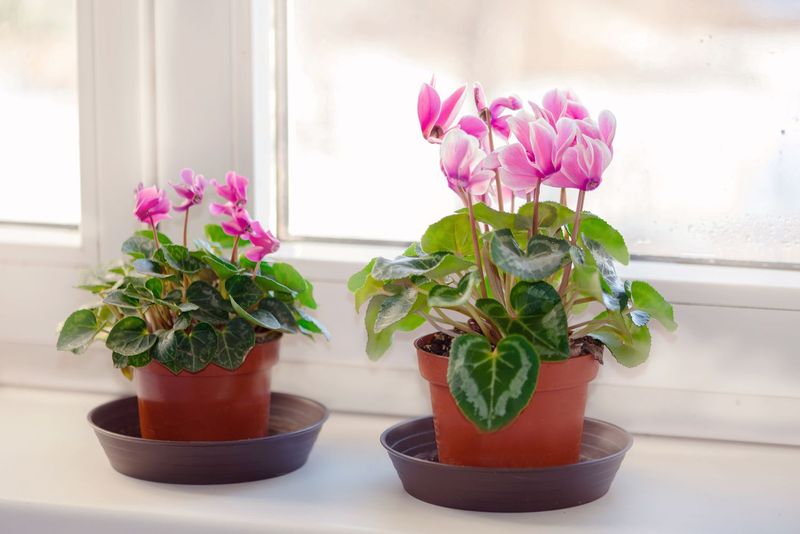
Picture tiny butterflies hovering over marbled heart-shaped leaves. That’s cyclamen, and it loves the chilly window most plants hate.
Daytime temperatures of 60 to 70°F and nights of 50 to 65°F are perfect. Warm rooms are why so many cyclamen collapse right after the holidays.
Water around the outer rim of the pot rather than over the center, which can rot the crown. When leaves yellow in spring, don’t panic.
It’s going dormant, so move it somewhere cool and dark with little water, then bring it back out in fall for another winter show.
5. Jasmine
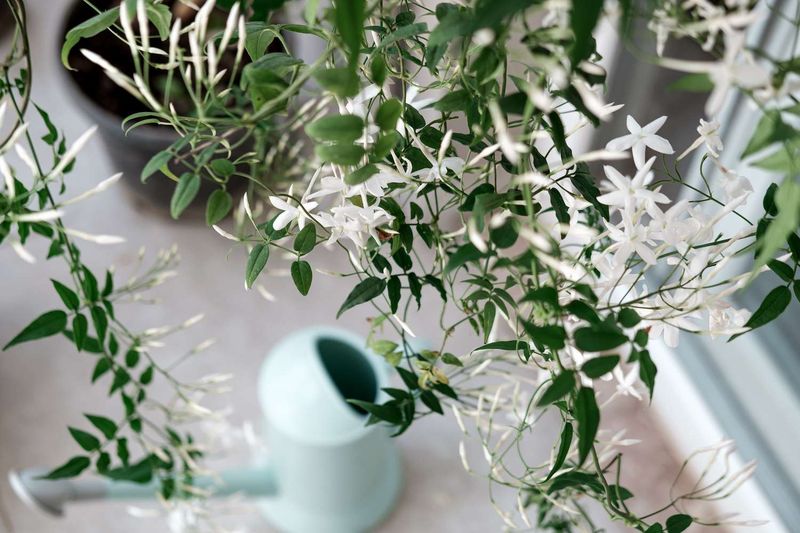
Walk into a room with blooming jasmine in February and you’ll smell it before you see it. Few houseplants can perfume a whole space the way pink jasmine does in late winter.
Bring it indoors before frost, then give it bright, indirect light and a cool spot. Those cool nights are the signal it needs to set buds.
Soil should stay lightly moist but never soggy, and you can ease off watering as growth slows. If your jasmine refuses to flower, a room that’s too warm is the most likely reason.
6. Begonia
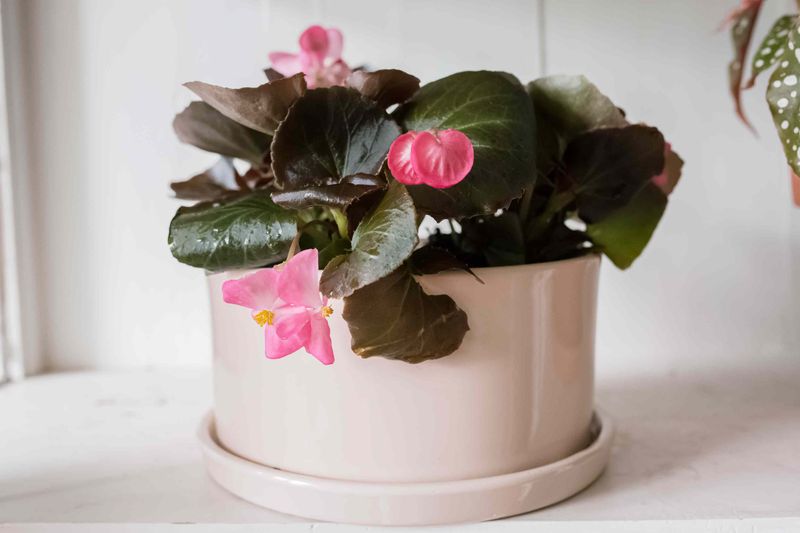
Some plants take a winter nap. Wax and rhizomatous begonias simply keep going, flowering on and off all year.
Because they don’t go dormant, they need very bright light indoors, just not harsh, scorching sun. Keep the soil lightly moist and feed sparingly through the cold months.
If you’re bringing outdoor begonias inside, do it gradually so they adjust to lower light and drier air. Dropping leaves at first is common and usually settles down within a couple of weeks.
7. Primrose
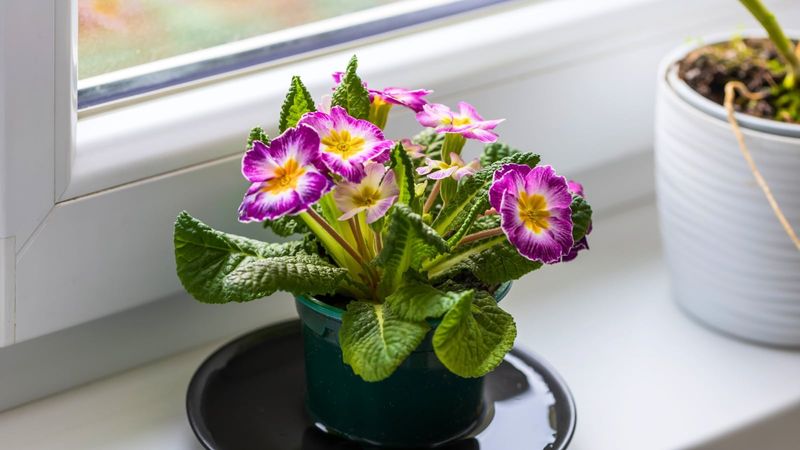
Primroses are a little bit of April handed to you in January. Those cheerful rosettes of yellow, blue, red, and purple show up in stores right when everyone needs a lift.
Keep them cool, ideally mid-60s by day and mid-50s at night, with bright light but no direct sun. Constant moisture matters a lot.
A dry primrose wilts dramatically, though soggy soil is just as harmful.
Many people treat them as temporary, but with cool, humid conditions they can rebloom. After frost danger passes, you can also plant them out in a shady garden bed.
8. Peace Lily
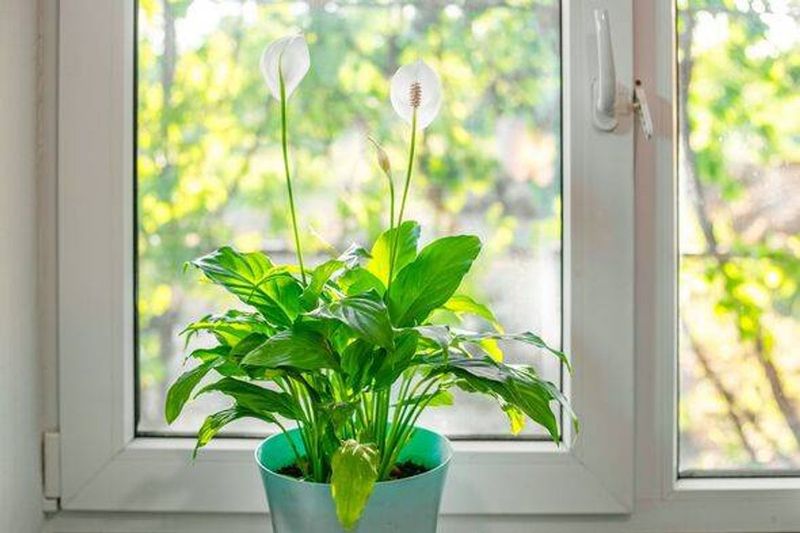
Here’s a plant that tells you when it’s thirsty by flopping over, then perks right back up after a drink. That built-in warning makes the peace lily a comfort for nervous growers.
In winter, though, overwatering is the more common mistake. Growth slows, so let the topsoil dry before watering again.
For flowers, light is the key. Peace lilies tolerate shade, but they bloom best in bright, indirect light, and a south or west window helps in short days.
Group it with other plants or use a pebble tray to fight dry furnace air.
9. Anthurium
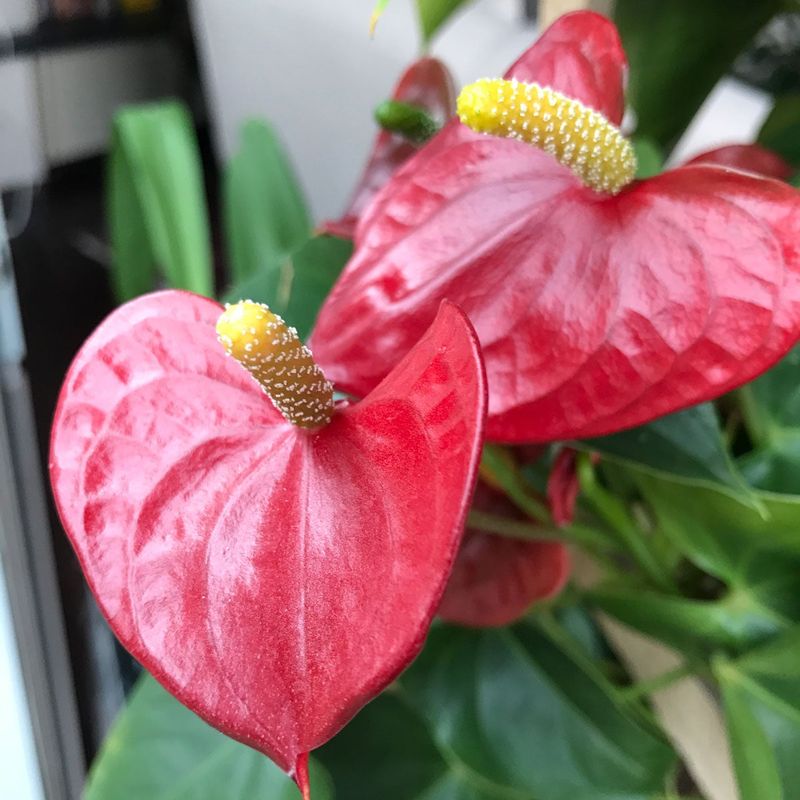
Those shiny red hearts look almost plastic, and guests often touch them to check. They’re actually modified leaves called spathes, which is why each one lasts for weeks.
Anthurium is a true tropical, so it wants warmth. Keep rooms at least 55°F, ideally 70°F or higher, and add humidity if your air is dry.
An east or west window with a sheer curtain is ideal, since direct sun can scorch the leaves. Water when the top two inches of soil are dry, and less often in winter.
10. African Violet
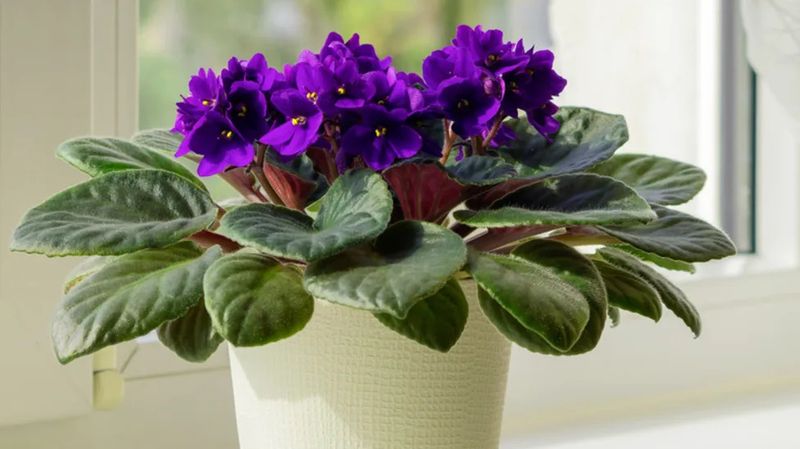
Grandma’s windowsill probably had a row of these, and there’s a reason. African violets bloom over and over all year, winter included, in a pot small enough to fit anywhere.
Bright light is what keeps the flowers coming, so a sunny spot works well in winter when the sun is weaker. If your violet is all leaves and no blooms, move it closer to the window.
Water evenly with room-temperature water, ideally from the bottom. Cold water on those fuzzy leaves can leave pale spots.
11. Poinsettia
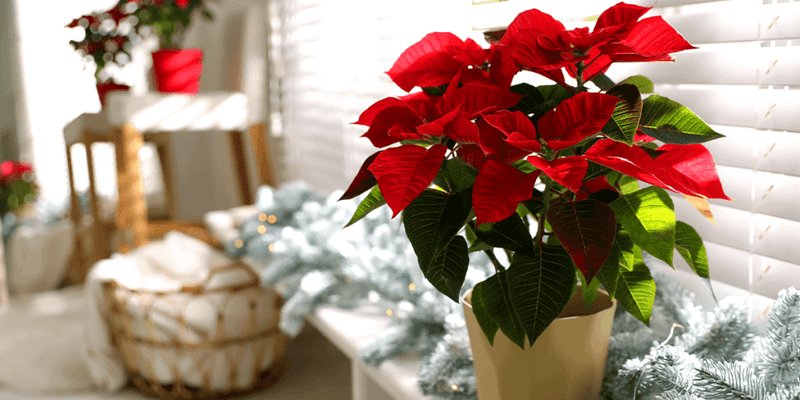
Most poinsettias end up tossed in January, but yours can stay bright well into late winter. The color comes from bracts, not petals, and they hold a long time with a little attention.
Bright, indirect light and steady moisture are the basics. Remove any foil wrap so water can drain, because soggy roots cause the sudden leaf drop many people blame on themselves.
Keep it away from cold glass, drafts, and heat vents. Quick temperature swings are the other big reason leaves fall.
12. Amaryllis
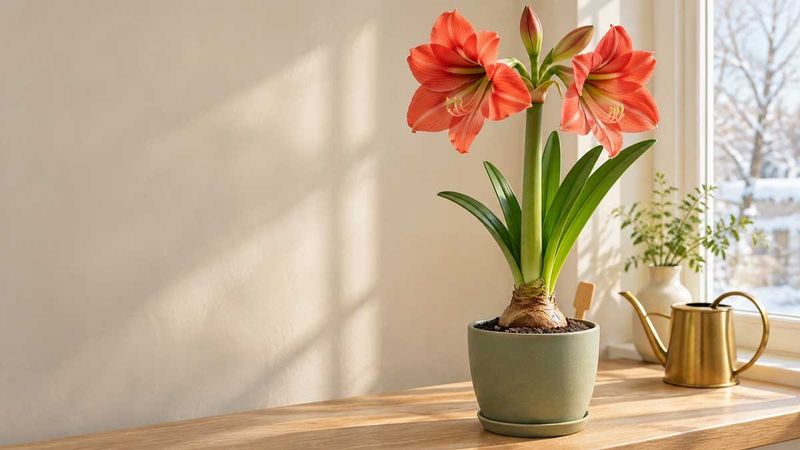
Plant a bare bulb, and six to eight weeks later you get flowers the size of your hand. Amaryllis is the showstopper of winter, blooming anywhere from December through March.
Set the pot in a bright window and turn it every few days, since the stalk leans toward the light. Water lightly until growth appears, then more regularly.
After the blooms fade, cut the flower stalk but keep the leaves. Letting them grow all summer recharges the bulb for another round next winter.
13. Bromeliad
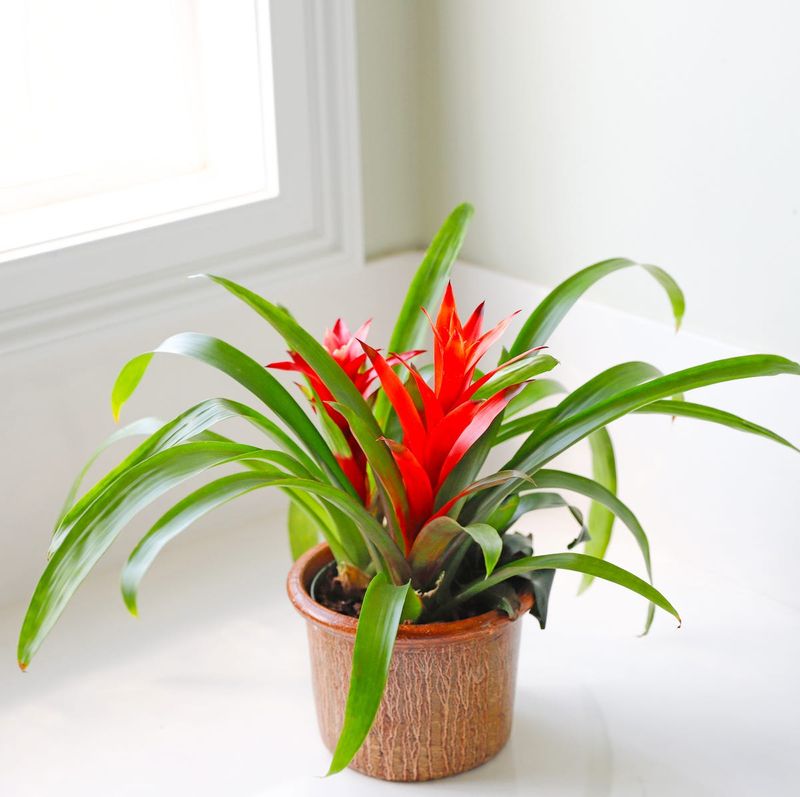
Bromeliads drink differently from nearly everything else on your sill. Water goes into the central cup of leaves, not just the soil.
Fill that vase about once a week, dumping out old water first so it stays fresh, and keep the potting mix only slightly damp. Average to warm rooms between 60 and 80°F suit them well.
The colorful flower spike can last for months. Fun fact: the pineapple is a bromeliad, so you’re growing a cousin of your fruit bowl.
14. Lipstick Plant
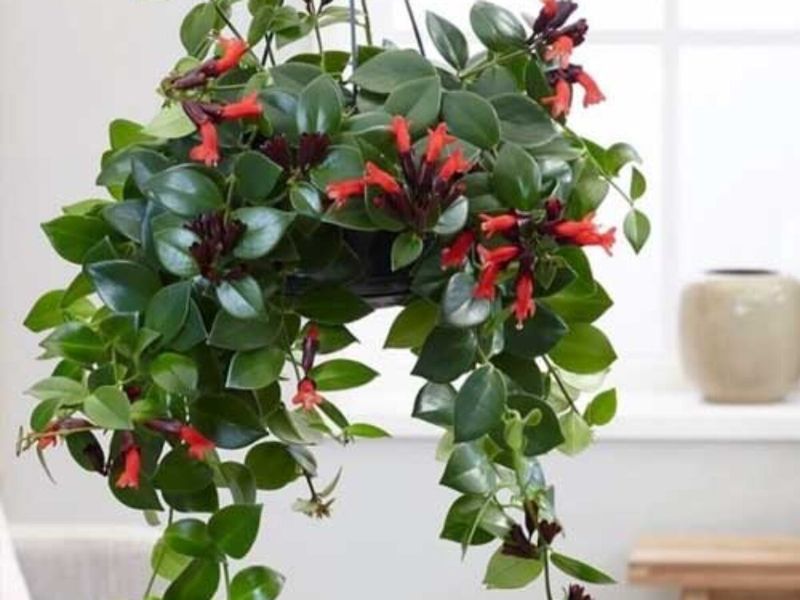
The name is no exaggeration. Red tubular flowers poke out of dark burgundy cases that look just like a tube of lipstick.
Trailing stems make it lovely in a hanging pot near a window. Give it warmth and bright, indirect light, and it rewards you with long-lasting blooms.
Water thoroughly once the top inch of soil is dry. Not enough light is the most common reason it stops flowering.
15. Geranium
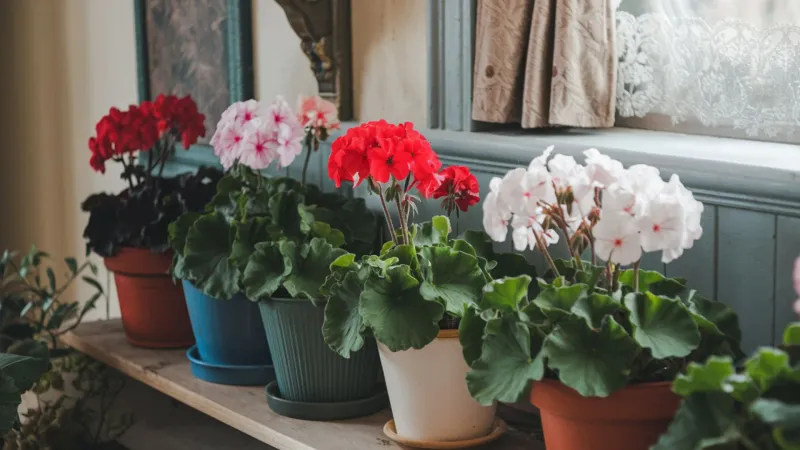
Before you let frost take your summer geraniums, consider bringing one inside. Pelargoniums can keep blooming on a sunny windowsill all winter with surprisingly little fuss.
Light is everything here, so a south-facing window is best. If stems get long and leggy, pinch them back to encourage bushier growth and more flower buds.
Let the soil dry between waterings, since geraniums hate wet feet, especially in cool rooms. Snip off faded flowers and you may get color until spring planting time.