
Leaves Smothering Your Lawn Right Now Can Damage the Grass Underneath by Spring: Mow Manageable Amounts Instead of Raking
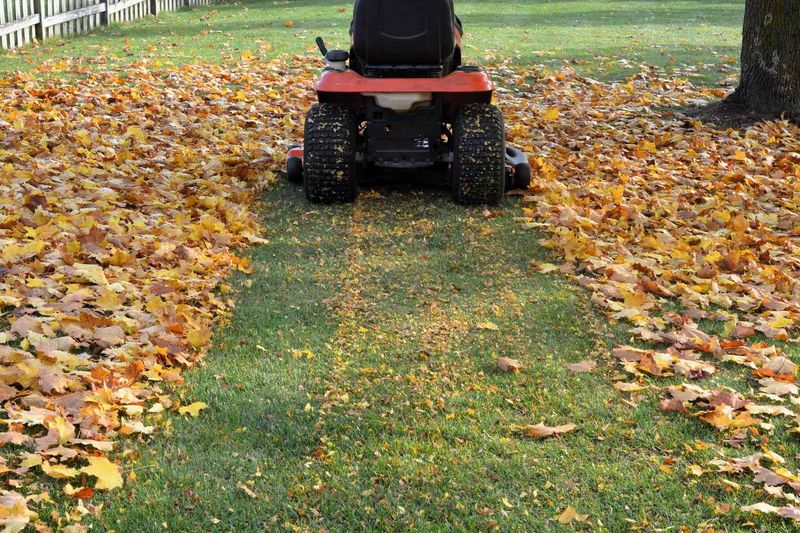
Those fallen leaves covering your lawn look harmless, but a thick blanket can leave the grass underneath struggling by spring. The good news is that you may not need to rake every last one.
For many yards, running the mower over the leaves can chop them into bits that tuck into the grass. Here is how to tell when mowing works and when it is time to scoop up the extra.
Dense leaves can damage turf, but spring death is not inevitable
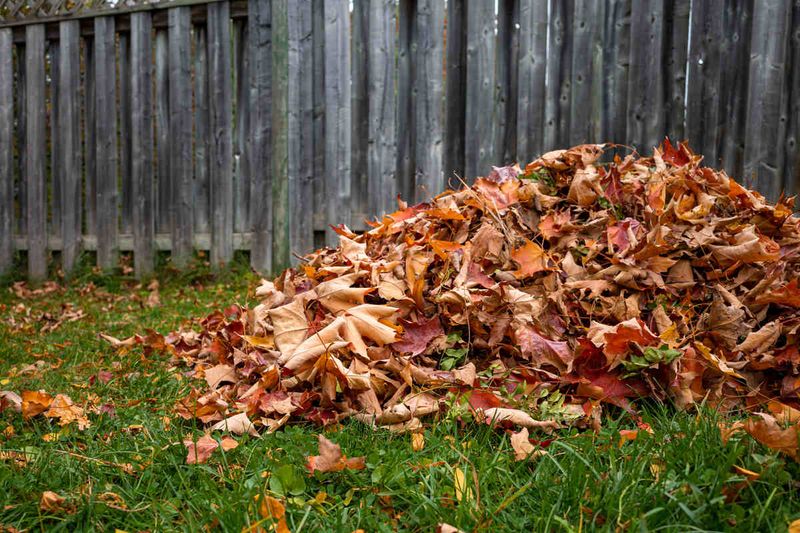
Wet, heavy leaves piled on a lawn can block light, hold moisture against the grass, and add to winter injury. Whole, unshredded leaves are the biggest worry because they pack down into a mat.
So the title’s warning has some truth, but grass does not automatically die under leaves.
In a 2023 Wisconsin trial described by WinterTurf researchers, even heavily smothered plots mostly recovered by summer. Weeds moved in more easily while the grass was bouncing back, though.
That means a thick leaf layer can cost you a thinner, weedier lawn, even when the turf survives.
Keep in mind that those results came from experimental plots with set leaf depths. A later three-year Wisconsin study is still preliminary.
It suggested about two inches of shredded leaves looked reasonable over winter, while four inches were highly likely to cause winter damage. Those numbers are early observations, not a promise that any depth is safe on your lawn.
Your own yard, grass type, and winter weather all matter. That is why the smartest plan is to manage leaf cover instead of ignoring it or panicking.
For a manageable amount of leaves, mowing them into small pieces can replace routine raking. For the rest, the later sections explain how to collect what your lawn cannot handle.
Fine fragments return organic matter and nutrients
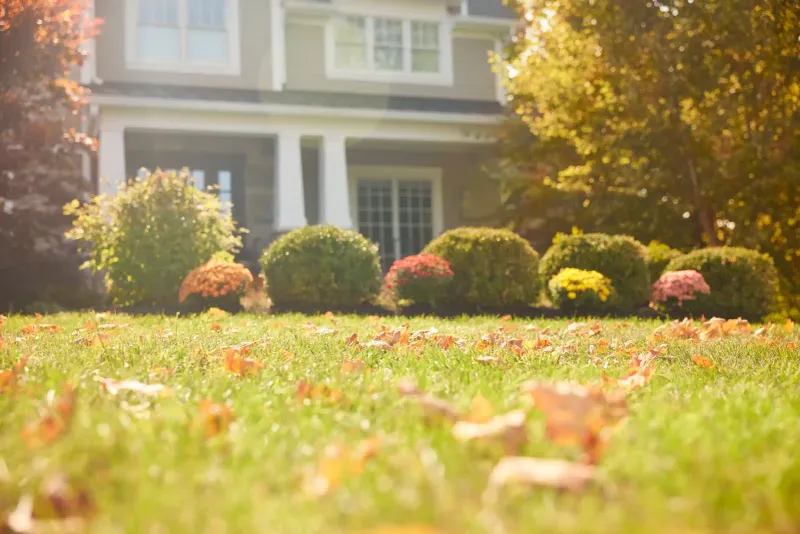
Picture two lawns. One has whole leaves lying flat like shingles on a roof.
The other has leaves chopped into pieces about the size of confetti, sifted down among the grass blades. Only the second one is what mulch mowing aims for.
Small fragments slip between the blades and stay close to the soil, where they can break down over time. As they decompose, Virginia Cooperative Extension notes they return organic matter and nutrients to the turf.
Think of it as a slow, gentle contribution rather than a quick boost.
That slow pace is the catch. Leaf mulch does not work as an instant or complete fertilizer treatment.
The same Virginia Tech review of Purdue research found that leaf mulching did not take the place of appropriate nitrogen fertilization.
Whether your lawn needs fertilizer still depends on the grass you grow and how you care for it. University of Connecticut guidance also supports mulch mowing as a leaf option when it is done carefully.
Treat the leaf bits as a bonus for soil health, and keep your regular feeding plan in place.
Start before fallen leaves form a thick mat
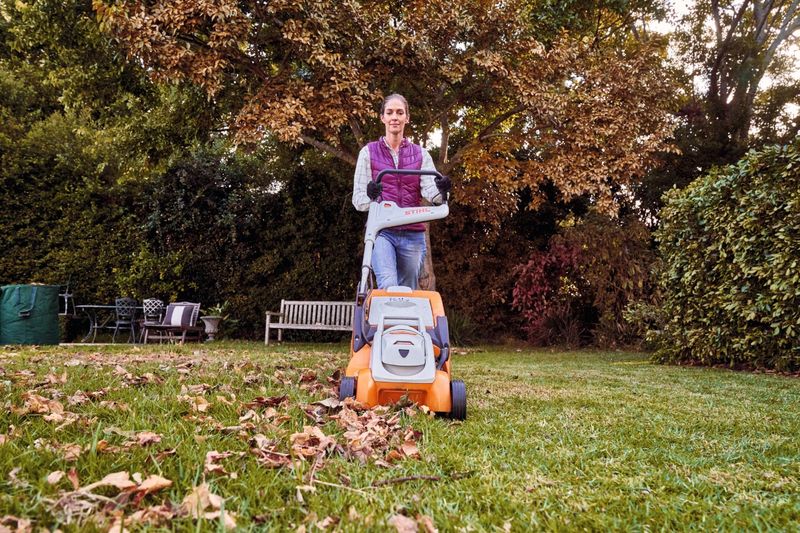
Timing does most of the work. A light layer of leaves is far easier to chop than a deep drift that built up over three weeks.
So mow regularly through fall, and do not wait for one big cleanup day.
Virginia Cooperative Extension recommends mowing leaves before they pile into a thick mat. Each pass handles a small amount, and the mower is less likely to bog down.
Check the moisture, too. University of Minnesota Extension suggests dry leaves, while Virginia Tech says slightly moist leaves can cut down on dust.
Soggy leaves chop poorly and strain the mower. A safe middle ground is to wait for a dry afternoon, or for leaves that are only a little damp.
Before you start, walk the lawn and pick up sticks and limbs. They can fly out from under the mower or damage the blade.
Wear eye protection and a dust mask, especially when the leaves are dry and dusty.
A few minutes of prep makes the mowing itself smoother and safer.
Mow until the fragments settle between the grass blades
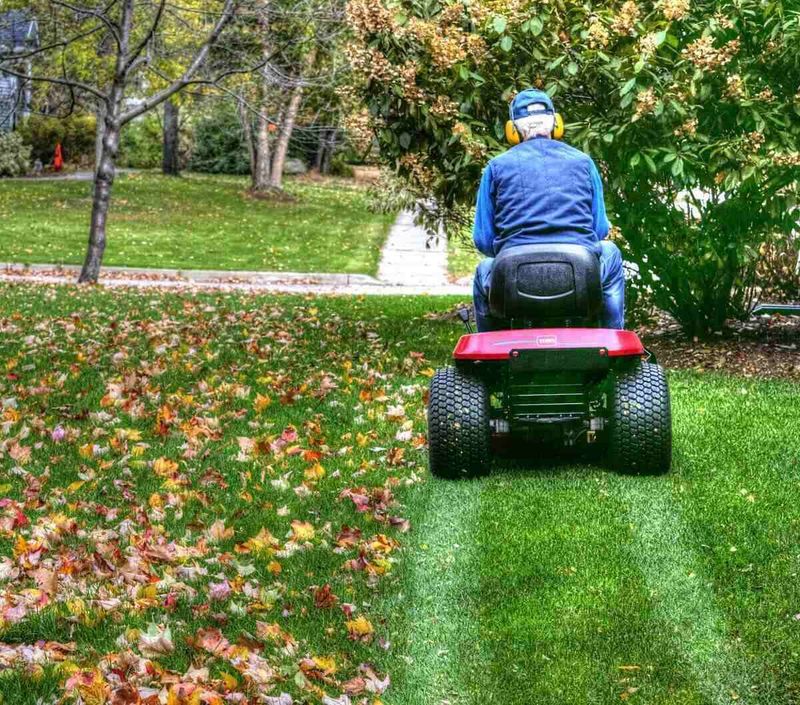
If your mower has a mulching blade, use it. It is built to cut material into smaller pieces and keep it circulating under the deck.
A standard rotary mower can still do the job, but it may need several passes.
According to Virginia Cooperative Extension, crisscrossing the lawn, first one direction and then across it, helps chop leaves more finely. Go slowly enough that the mower is not choking on the load.
Now look at what is left behind. The goal is small fragments that sift down into the turf while the grass stays visible.
Clumps, flakes, or a blanket of leaf bits sitting on top mean the job is not finished.
No particular mower or number of passes guarantees a safe result. Your leaf type, leaf amount, and mower power all change the outcome.
University of Connecticut guidance also advises mowing when the turf is dry.
After each session, walk across the lawn and judge the residue with your own eyes. Adding one more pass is fine, but if the pieces still look like a layer, the next step is collecting them.
Collect what mowing leaves behind as a dense layer
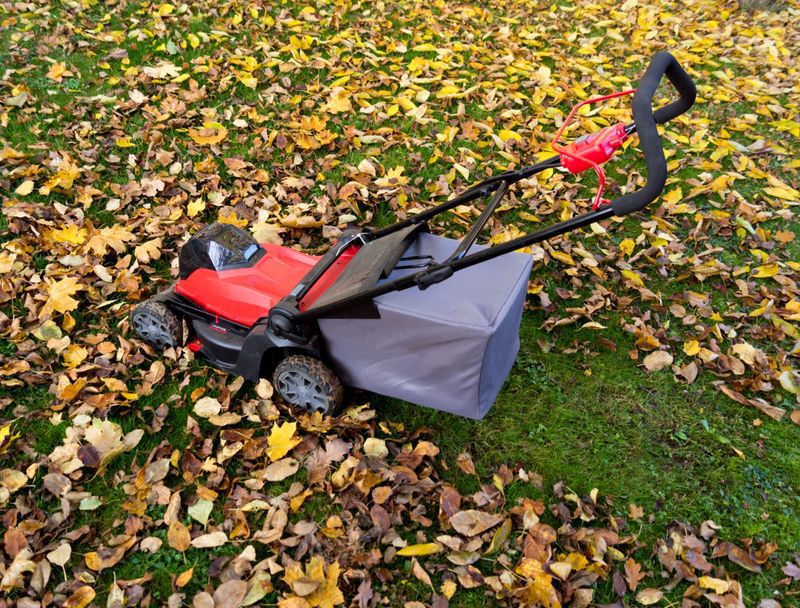
Here is a simple rule. If a dense layer remains after mowing, or you cannot see the grass, collect the extra instead of forcing more leaves into the lawn.
Extension groups measure this in different ways, so no single number works for every yard. Minnesota Extension uses visibility, advising you to begin bagging when less than half of the lawn surface shows.
UConn talks about coverage, suggesting no more than 20 percent of turf covered after each mulching event.
Those are two different measures, and neither one is a universal cutoff. Wisconsin work looked at depth over winter instead.
Its preliminary findings are experimental observations, and they are not a promise that any one depth is safe on your lawn.
So rely on what you can see: fine fragments, visible grass, no mat. Anything beyond that is better off collected.
Collected leaves are not waste. Pile them in a compost bin, or reuse them as mulch around shrubs and in garden beds.
Use some intact leaves beyond the lawn
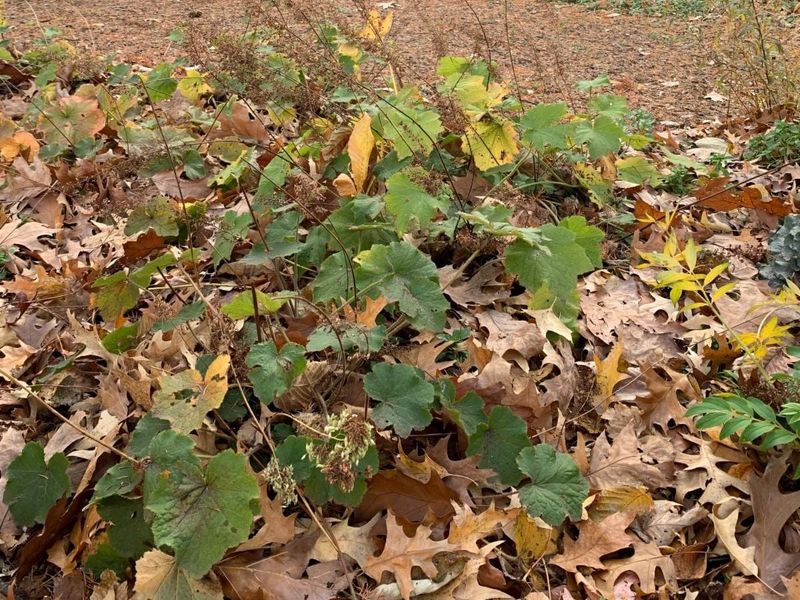
Not every leaf has to be shredded. If you like the idea of helping wildlife, you can leave some intact leaf litter in garden beds or a corner of the yard.
Illinois Extension notes that insects use leaves as winter shelter.
This is an option, not a requirement. It also differs from leaving a dense layer on turf, since beds and designated spots do not have grass underneath that needs light.
Mulch the manageable cover, keep your grass visible, and collect the excess.
A lawn does not need a perfect leaf-free finish to come through winter in good shape.