
Limp Christmas Cactus Segments in Heating Season: Check the Pot Before You Blame the Heat
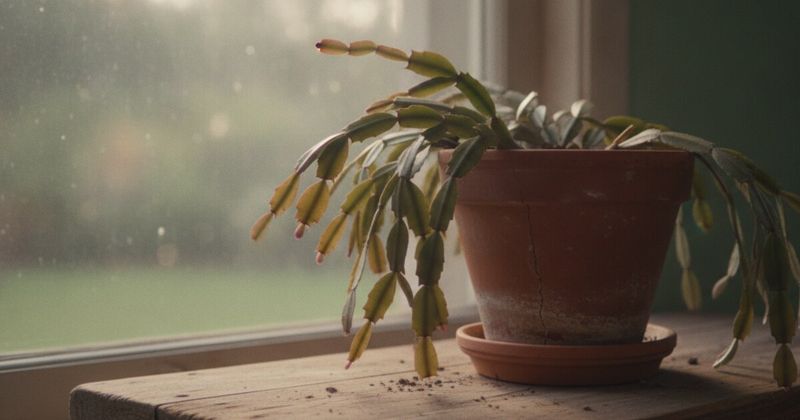
Your Christmas cactus looked fine in October, and now the segments are drooping just as the furnace starts running. It is easy to panic and blame the heat or grab the watering can.
But limp stems are a clue, not an answer, and a few quick checks can tell you what your plant is really asking for. Here is how to look before you change anything.
Limp segments are a symptom, not a diagnosis
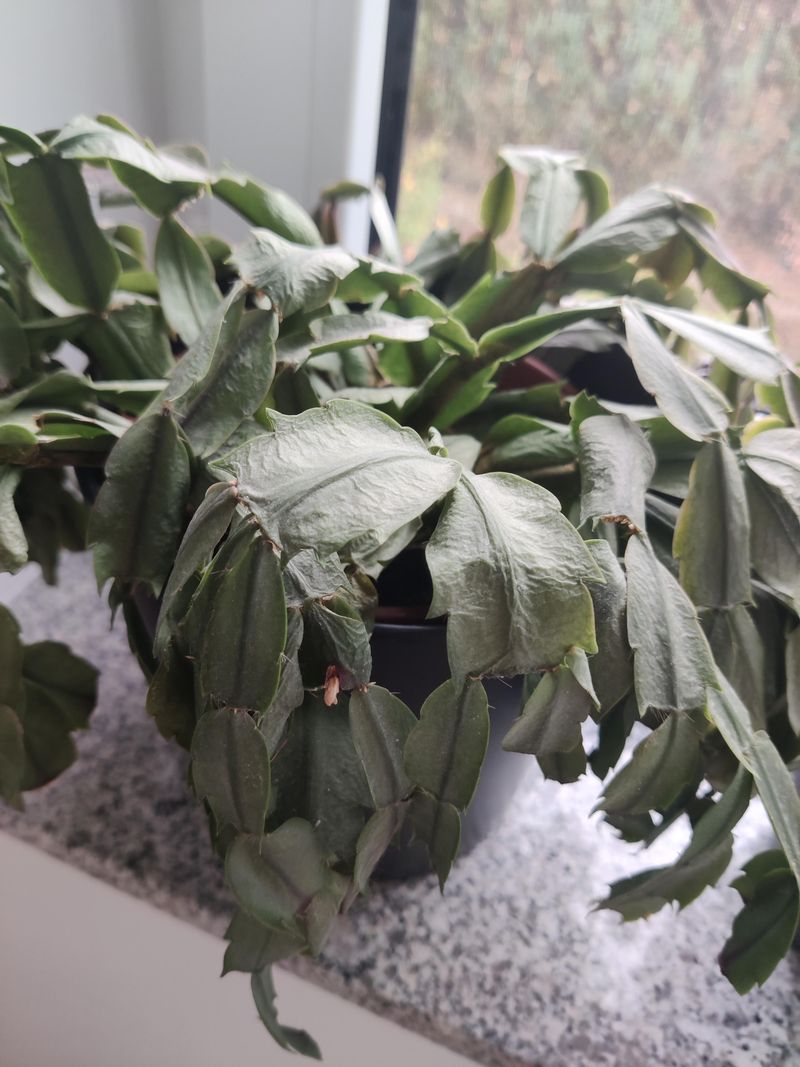
When the heat kicks on and your Christmas cactus goes floppy, two explanations jump out. One says the heating system is cooking the plant.
The other says the plant is thirsty. Either one could be partly true, but neither is proven just because the segments look sad.
Here is the tricky part. Limp or shriveled segments show up when a plant is too dry, and they also show up when the mix stays soggy and the roots are damaged.
UConn Extension’s holiday cactus guidance treats both underwatering and overwatering as possible reasons for wilting, and University of Minnesota Extension points to similar causes. Roots that are rotting or injured cannot move water up to the stems, so a plant sitting in wet mix can wilt just like a dry one.
That is why the same droopy look can call for opposite responses. A bone-dry pot needs a careful drink.
A pot that is still wet needs you to hold off and look at drainage. Guessing wrong, especially by pouring more water on a plant that is already struggling, can make things worse.
Indoor heat can still be part of the story. Warm, dry air from vents and fireplaces is a real stressor, and a pot near a heat source can dry out faster than you expect.
But heat is something to check alongside the soil, not a verdict you hand down first.
So before you move the plant, mist it, or water it, slow down. Put a finger in the mix, lift the pot, and look at the drainage.
Those two minutes tell you more than the shape of the stems ever will.
Holiday cacti need moisture, but not soggy roots
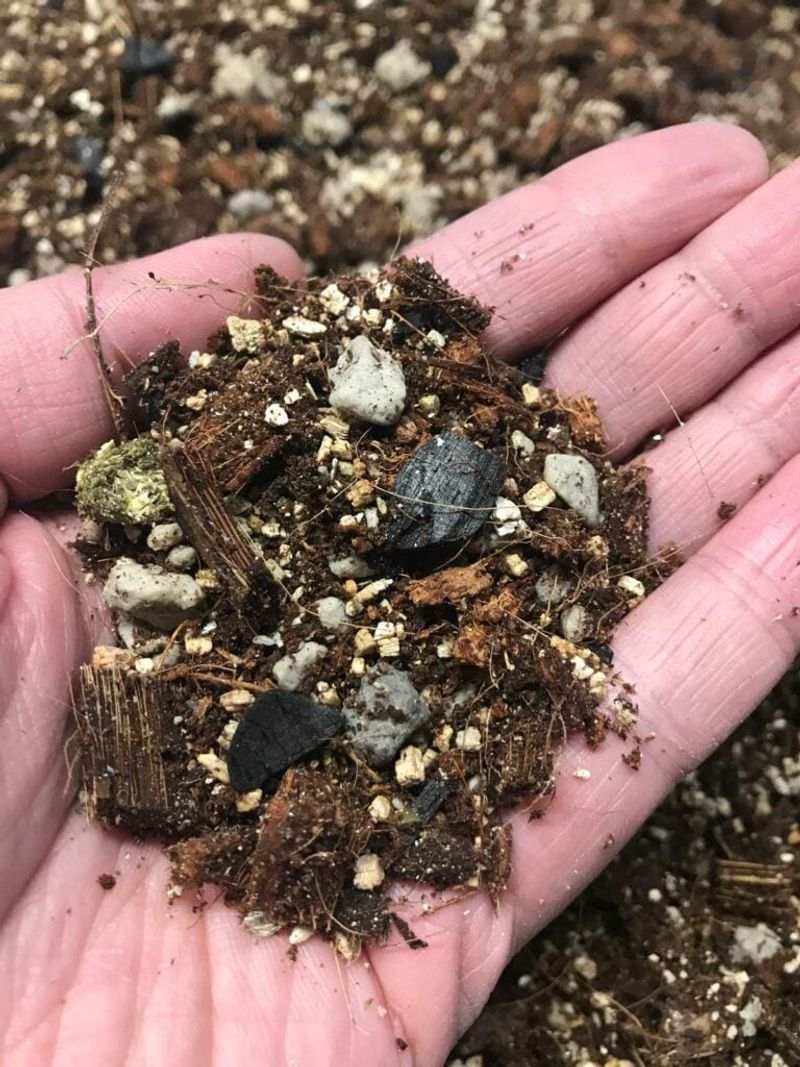
Despite the name, your Christmas cactus is not a desert plant. Holiday cacti are rainforest epiphytes, which means that in nature they grow on tree branches, tucked into bits of leaf litter and bark.
Their roots get rain and air, then dry off quickly.
That background explains why the old advice to treat any cactus like a desert plant can mislead you. A true desert cactus can sit dry for long stretches.
A holiday cactus does not handle that well, and it also struggles when its roots sit in waterlogged mix. University of New Hampshire Extension describes a freely draining medium and warns against both prolonged drought and soggy soil.
Think of the goal as a middle path. The roots want moisture, but they also want air around them.
A chunky, fast-draining mix in a pot with holes lets water pass through and leaves small pockets of air behind.
You may notice that advice varies about how much the mix should dry between waterings. That is normal, because the right rhythm depends on your pot size, the mix, the light, and how warm and dry your room is.
A plant in a small clay pot near a sunny window will dry faster than one in a large plastic pot in a cooler corner.
So skip the fixed schedule and the all-or-nothing rules. Aim to avoid both bone-dry neglect and constant sogginess, and let the pot itself tell you where you are.
What does the pot tell you?
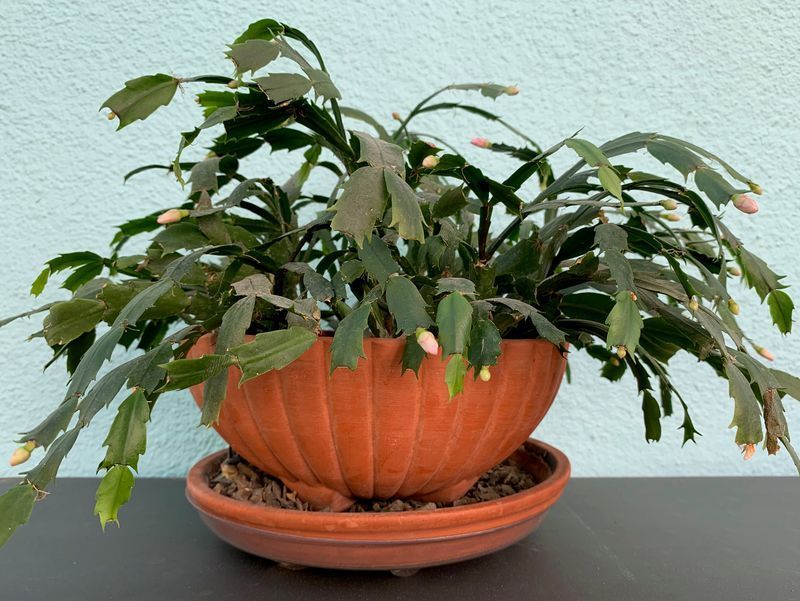
Calendars cannot see inside your pot, but your fingers and your arms can. A short inspection gives you better information than any weekly routine, and it works whether your plant is limp or perfectly healthy.
Start with the surface. UF/IFAS suggests watering when the top inch of mix feels dry.
Push a finger in and see what you find. Damp and cool means you can wait, while dry and crumbly means the plant may be ready for a drink.
Next, lift the pot. A pot full of wet mix feels noticeably heavy, and one that has dried out feels light.
North Carolina Cooperative Extension also points to checking that the pot feels light and that the container drains. Once you have lifted it a few times, your hands learn the difference quickly.
Then confirm the drainage. Look for holes in the bottom and make sure they are not clogged with compacted mix or roots.
A pot without holes holds water at the bottom, where roots can sit in it unnoticed.
Finally, check the saucer or decorative cachepot. Water that collects there can keep the lower mix wet for days, so empty it after watering.
Keep in mind that drying speed changes with the room. Heating season, bright windows, small pots, and clay containers can all speed things up, while cool corners slow them down.
Because of that, the same plant may need a different rhythm in January than it did in September.
A very dry plant needs a measured recovery
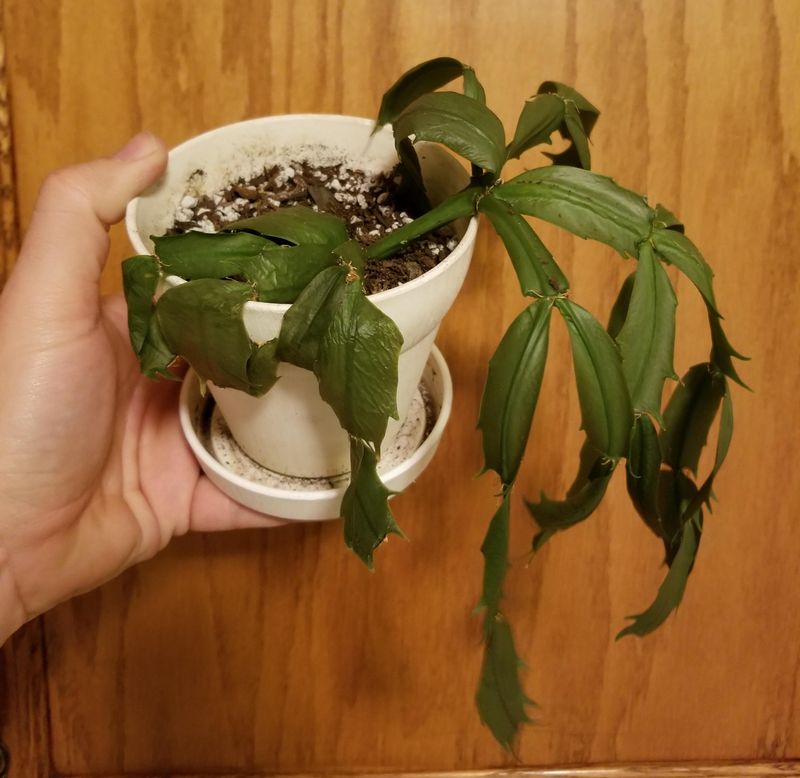
Suppose your inspection shows crumbly mix, a very light pot, and soil pulling away from the edges. That points toward a plant that has gone too dry.
In this case, a drink is the right move, but how you give it matters.
It is tempting to soak the pot heavily to make up for lost time. Resist that urge.
UConn Extension cautions against flooding a plant that has been severely underwatered and recommends smaller, more frequent waterings during recovery. Parched roots may be weakened, and a sudden deluge can leave them sitting in soggy mix.
In practice, that might mean giving a modest amount of water, letting it soak in, and checking again in a day or so. If the top layer is dry again, add a little more.
Always let extra water drain out and empty the saucer afterward.
Your decision should come from what you see in the mix, not from how limp the stems look. A plant can look dramatically droopy and still have damp soil, so the pot is the deciding clue.
Give the plant time. Segments that have shriveled may take a while to firm up, and some may not bounce back fully.
Recovery is not guaranteed, but steady, moderate watering gives the roots a fair chance to work again.
Wet mix calls for a different response
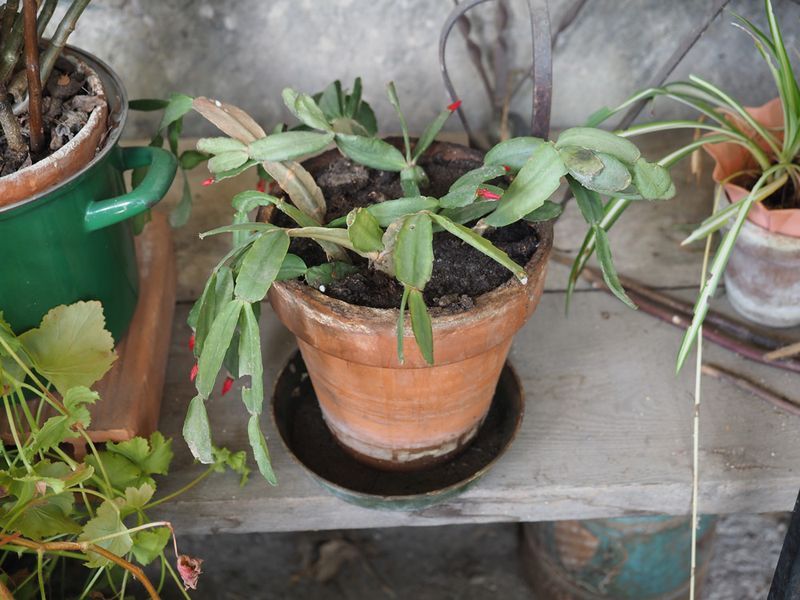
Now picture the opposite finding. You press a finger into the mix and it is cool, dark, and damp, yet the segments are limp.
Adding water here would be the wrong reflex, because the problem is probably not thirst.
Start by looking for standing water. Check the saucer, the cachepot, and the bottom of the container.
Holiday gift plants often arrive wrapped in foil or tucked into a decorative pot with no outlet, and water can collect there unnoticed for weeks.
Next, look at drainage. Are the holes blocked?
Has the mix turned dense and heavy so water lingers? University of Wisconsin Extension notes that these plants need a mix that drains well.
Mix that stays wet for a long time can leave roots short of air.
When roots lack air, they can become damaged and stop moving water to the stems. That may be why a plant in wet soil still wilts.
UConn Extension lists excess water among the reasons for wilting. Damaged roots are a possibility, not a confirmed diagnosis, so avoid jumping to conclusions about rot.
A sensible next step is simply to stop watering, empty any standing water, and let the mix dry to a more comfortable level. Make sure the pot can drain freely from now on.
Then watch how the plant responds over the next week or two.
Keep direct heat and abrupt changes away from the plant
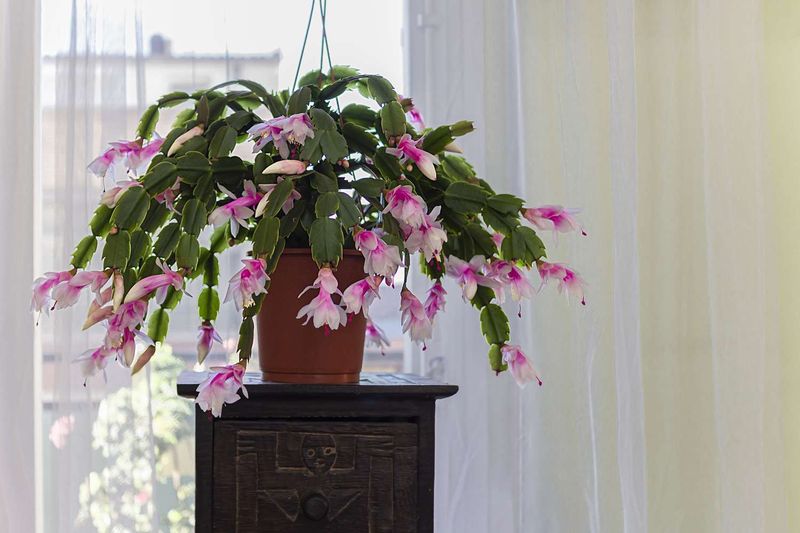
Once you have checked the pot, it makes sense to look at where the plant lives. Heating season creates a few hot spots that holiday cacti do not enjoy, and moving the plant away from them is a low-cost step.
Aim for bright, indirect light. UF/IFAS advises keeping the plant away from heat sources such as vents and fireplaces.
A blast of hot, dry air from a register can dry the mix quickly and stress the stems.
Watch for drafts too. A spot beside a door that opens often, or a windowsill with cold air leaking in, can swing the temperature around.
Those swings matter most when buds are forming. University of Wisconsin Extension warns that changes in light or temperature after buds start forming may cause them to abort.
Try to avoid sudden moves as well. Shifting a budding plant from a cool room to a warm one, or rotating it constantly, adds to the changes it has to handle.
If you do need to move it, pick a spot and let it settle.
These steps reduce exposure to known stressors. They do not prove that heat caused your limp segments, and they cannot promise that buds will stay or that flowers will come.
Treat them as good housekeeping that sits alongside the soil check.
Wilting and bud drop are different clues
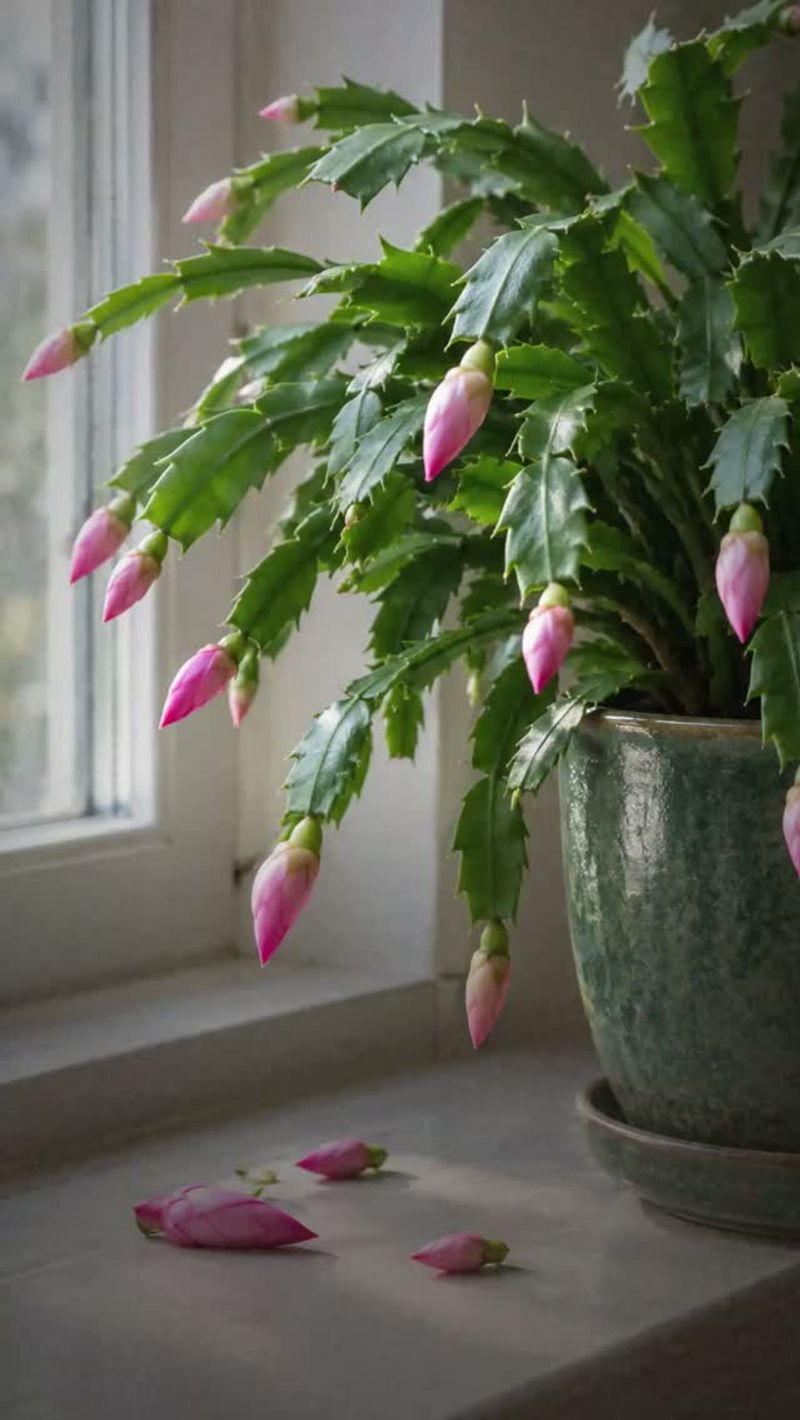
A droopy stem and a fallen bud may look like one big failure, but they are separate problems. Limp segments point you toward the roots and the mix.
Buds that shrivel or drop off point toward a wider list of possible causes.
UConn Extension associates bud drop with several factors, including high temperatures, drafts, low humidity, and watering problems. Heat may be one contributor, but it is not the only suspect.
That is why blaming the furnace alone can send you in the wrong direction.
Misting is a popular idea for dry winter air, yet it has not been shown to cure limp segments. If your home has low humidity, that may be worth noting for bud drop, but it does not replace checking the mix and drainage.
Flowering itself depends on light and temperature. Iowa State University Extension explains that short days and suitable temperatures matter, and that artificial light at night in fall can interfere with flowering.
A plant parked beside a lamp that runs every evening may struggle to set buds.
Plants sold as Christmas cactus may also be other holiday types or hybrids, and University of Wisconsin Extension notes that cultivars can respond differently. Because of this, timing may not match your neighbor’s plant.
No single adjustment guarantees blooms.
Check first, then make one careful adjustment
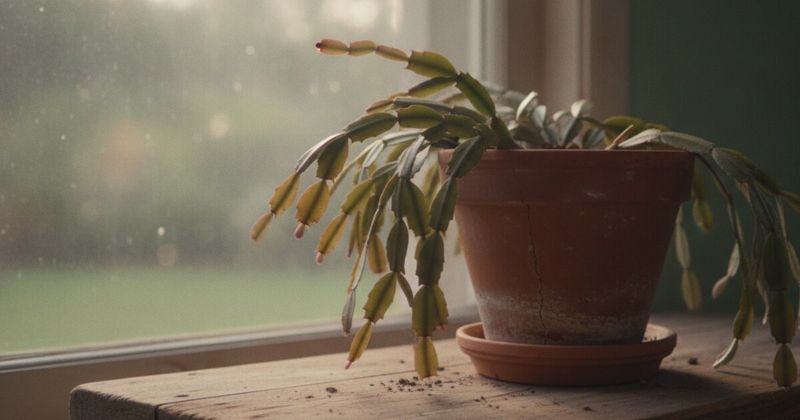
Next time your holiday cactus droops, press a finger into the mix, lift the pot, and make sure the water can drain. Then match your response to what you find: small, repeated drinks for very dry mix, and patience plus better drainage for mix that stays wet.
If a vent or draft is nearby, move the plant to a spot with bright, indirect light. UConn Extension and UF/IFAS offer helpful backup.
A limp stem is the plant asking a question, and the pot usually holds the answer.