
Mushrooms in Your Lawn After Rain Can Signal Fungal Activity in That Spot
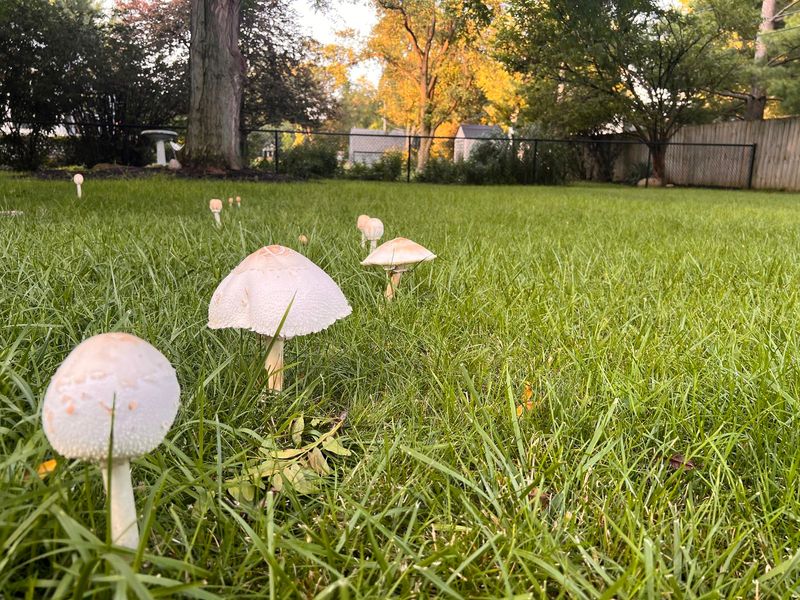
You wake up after a stormy night and find a cluster of mushrooms where there was only grass the day before. It looks strange, and it is easy to worry that something has gone wrong.
In most cases, those mushrooms are a sign that a fungus is busy at work in one small patch of your yard. Here is what they can tell you, what they cannot, and what to do about them.
Rain brings the fungus into view
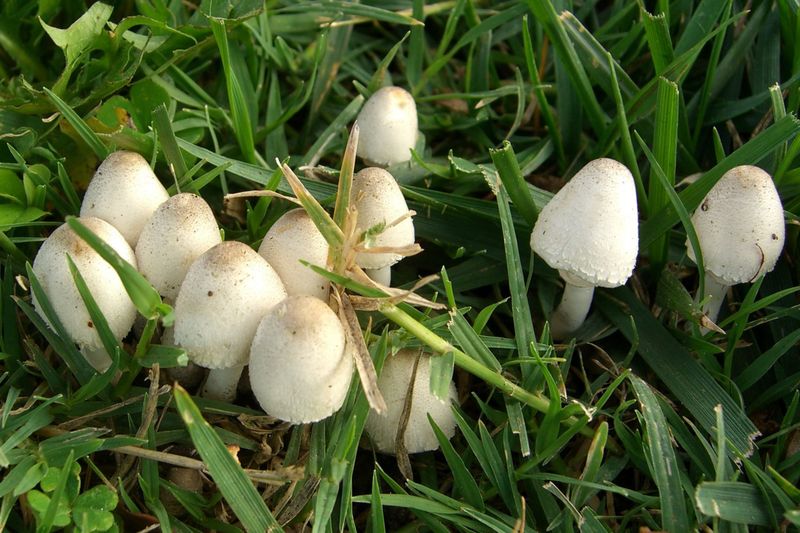
Sunrise after a downpour can turn a plain lawn into a mushroom field. Wet conditions often prompt a fungus living in the soil or thatch to send up mushrooms, which are its visible fruiting bodies.
According to Illinois Extension guidance, rain and other wet spells are common triggers for this flush.
Think of a mushroom like an apple on a tree. The apple is the part you notice, but the tree has been growing all along.
In the same way, the mushroom is only a small part of the fungus. Most of the fungal growth stays hidden in the soil or thatch as thin threads.
That means the fungus was probably there before the mushrooms showed up. The rain did not create it.
The rain simply gave it the right moment to produce something you could see.
So a sudden flush after a wet week is not proof of a brand new lawn problem. Many lawns host fungi quietly for years, and you only notice them when the weather lines up.
If the grass around the mushrooms looks normal, you can usually take a breath and keep watching rather than rushing to fix anything.
The mushrooms often fade within a few days once the ground dries out. If they return after the next soaking rain, that is also a normal pattern for many lawn fungi.
A mushroom patch may mark buried food
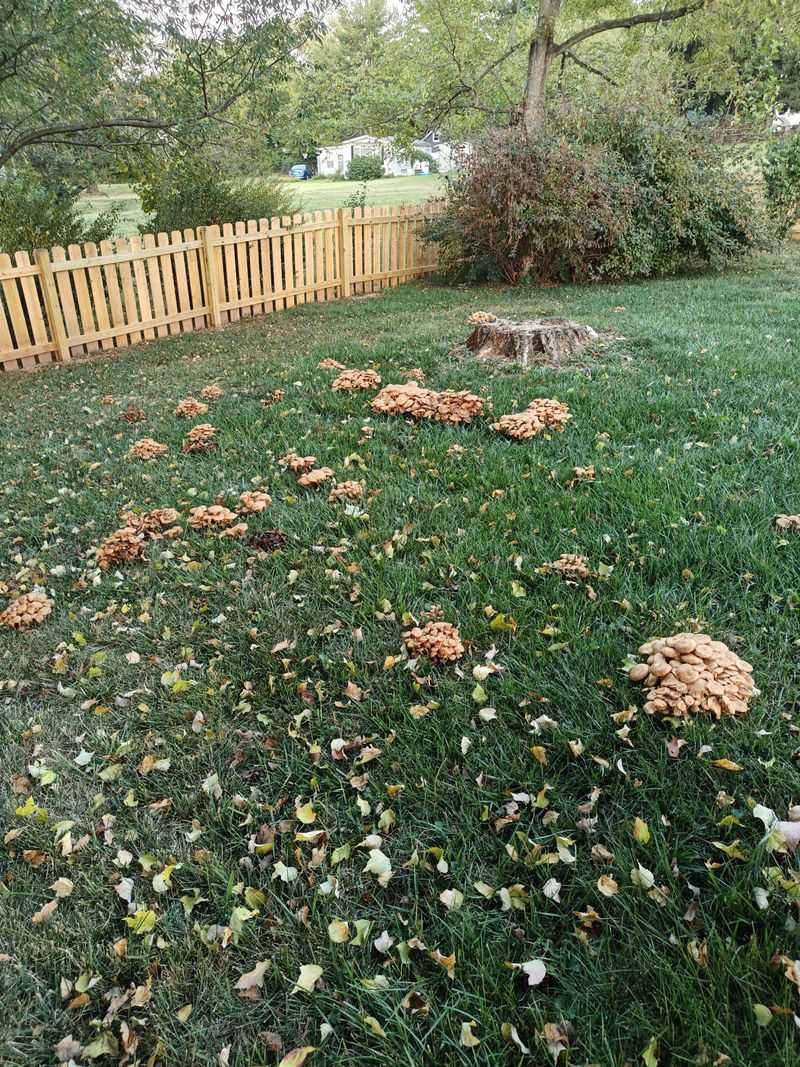
Fungi need something to eat, and many lawn species feed on dead organic material. That can include old tree roots, a buried stump, logs, construction debris, or thatch.
When mushrooms pop up in one spot, there may be a food source right underneath it.
Picture a yard where a tree was cut down years ago. The stump might be gone from view, but the roots can stay underground and slowly break down.
A fungus can feed on that wood for a long time, and mushrooms may appear above it whenever conditions are damp. Illinois Extension lists these kinds of buried materials as common fungal food in lawns.
Fungi also play a larger role in nature as decomposers. A USDA Forest Service field guide describes the ecosystem jobs that common macrofungi perform, including breaking down dead material.
The key idea is that a patch points to a local food source. It does not give a verdict on your whole lawn.
Two patches on opposite sides of your yard may have completely different causes, such as one over old roots and another in a thick layer of thatch.
If you remember where a tree, fence, or building once stood, check there first. That history often explains why mushrooms keep returning to the same place.
Decomposition is not a soil test
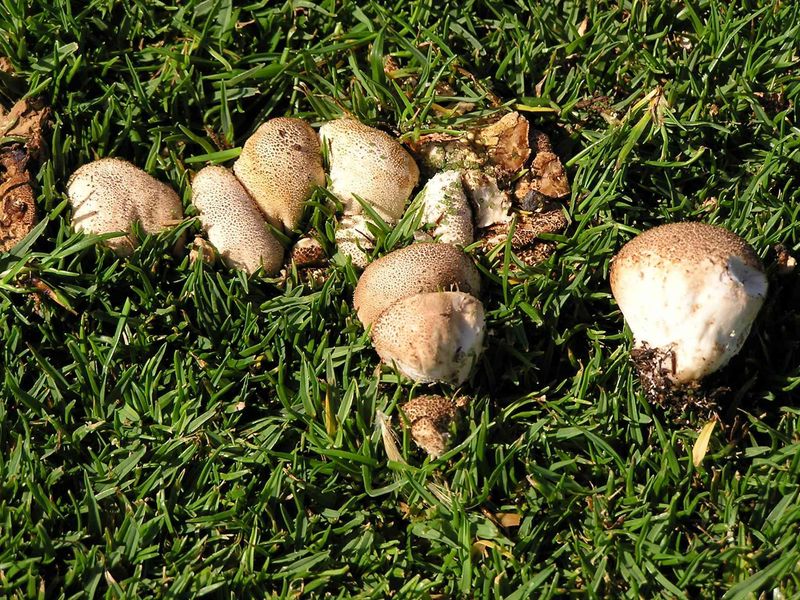
Breaking down dead material and recycling its nutrients is a normal, useful process. Fungi do this work in forests, gardens, and lawns every day.
When mushrooms appear, they can tell you that fungal activity and decomposition are happening in that spot.
That is where the good news stops. Mushrooms cannot certify that your soil is fertile, well drained, or healthy overall.
They also cannot show that your lawn care is working. The headline idea that mushrooms say something good about your soil is only true in a narrow sense, and it applies to one patch at a time.
Here is a practical example. A yard with a buried scrap of lumber can grow plenty of mushrooms while the soil elsewhere is compacted or low in nutrients.
Another yard with rich, loose soil might show no mushrooms at all. The mushrooms simply track food and moisture for a particular fungus.
The Illinois Extension page describes several different causes and effects for lawn fungi, which is a good reason not to treat mushrooms as one simple signal. The USDA Forest Service guide also shows how varied fungal roles can be.
None of this means fungi are bad for your lawn. Most are doing ordinary cleanup work.
If you want real answers about fertility, a soil test from your local Extension office is the better tool.
Look for circles or arcs
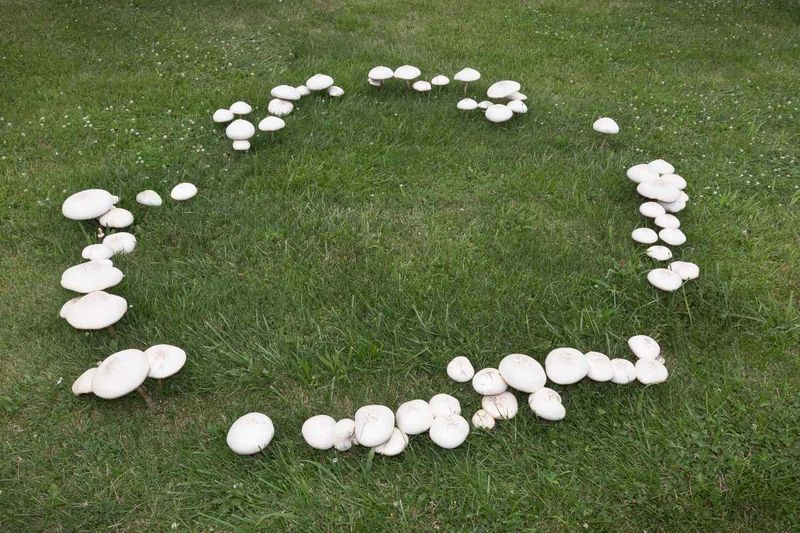
Scattered mushrooms and fairy rings are not the same thing. Ordinary lawn mushrooms may pop up here and there with no pattern.
A fairy ring forms a circle or an arc, sometimes small and sometimes many feet across.
What the grass does inside that pattern can vary a lot. According to Illinois Extension, fairy rings can show up as a band of lush green grass, as mushrooms with little visible change in the turf, or as thin, brown, or dead grass.
So a green ring and a dead ring can both be fairy rings.
Many fairy-ring fungi break down organic matter without directly attacking the grass. Still, dense fungal growth in the soil can repel water, which stresses the turf and sometimes kills it.
Extension guidance notes this water-repelling effect.
A simple check is to walk around your yard after rain and look for curved lines of mushrooms or color changes. If you spot a ring, notice whether the grass looks dry or stressed along it.
Keep in mind that a description alone cannot confirm what is happening in your lawn. If the grass in a ring is dying, your local Extension office can help you sort out the next step.
Most lawn mushrooms need no treatment
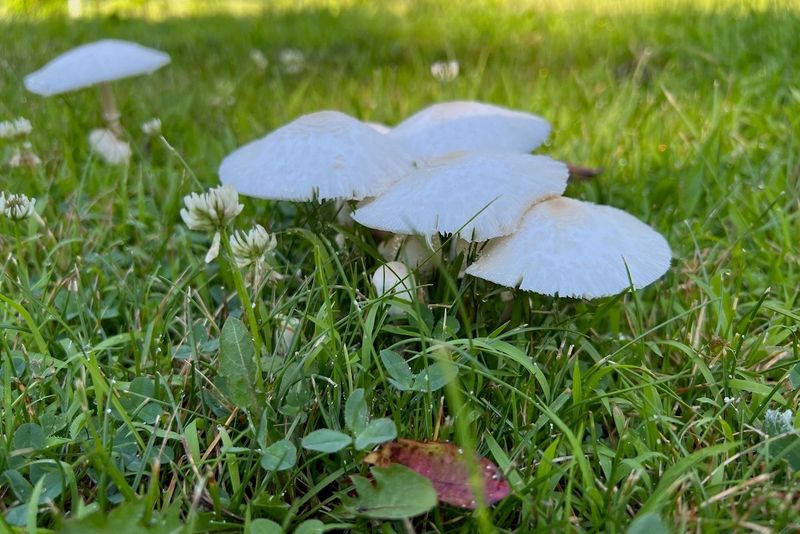
If mushrooms are not causing a problem in your lawn, you generally do not need to remove them. They usually vanish on their own when the weather dries out.
Leaving them alone is a perfectly reasonable choice.
Things change when children or pets might touch or eat them. In that case, Illinois Extension suggests breaking them up, raking them, or mowing them off.
If you pick them by hand, wear gloves.
Keep in mind that removing the mushrooms does not remove the fungus. The threads underground stay put, so new mushrooms may appear after the next good rain.
That is normal, and a quick sweep with the rake is often all it takes.
You may be tempted to grab a fungicide from the garden center. The same Extension guidance says there are no recommended fungicides for ordinary lawn mushrooms, and fungicides are typically ineffective against fairy rings.
Spraying costs money and does not give you a reliable fix.
A better plan is to match your response to the situation. Ignore harmless-looking flushes in a quiet corner, clear patches where kids and pets play, and pay attention to the turf if you see rings with thin or brown grass.
Keep unidentified mushrooms out of meals
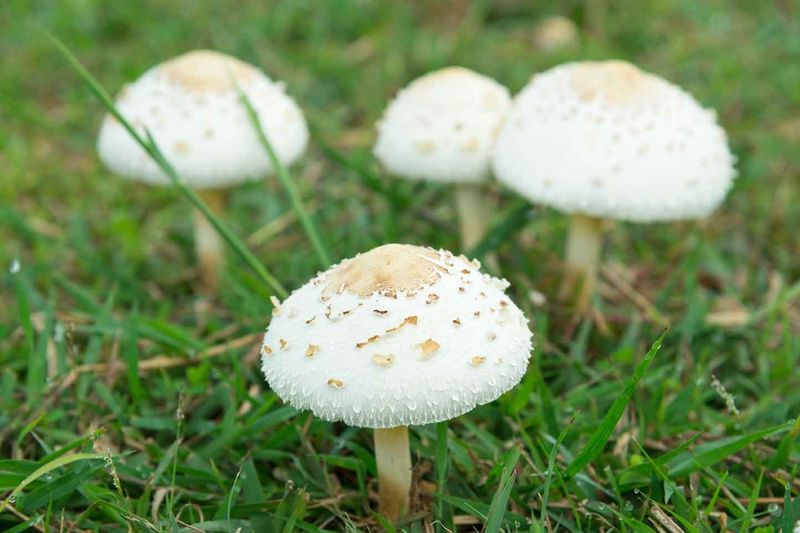
Seeing a mushroom in your yard is not an emergency, and touching one is not the same as eating one. The real concern is ingestion.
Never eat a mushroom that came from your lawn unless it has been identified by a trained expert.
Some lawn mushrooms may be poisonous, and Illinois Extension notes this on its lawn mushroom page. It is just as wrong to assume all of them are dangerous as it is to assume all are safe.
The trouble is that identifying wild mushrooms is hard.
Poison Control explains in its wild mushroom warning that look-alikes make identification risky, even for people who feel confident. A safe-looking mushroom can closely resemble a harmful one.
If someone eats a wild mushroom, call Poison Control right away at 1-800-222-1222. Do not wait for symptoms to show up, and do not try to figure out the mushroom type yourself first.
If young children or curious pets spend time in your yard, clearing mushrooms before playtime is a simple way to lower the risk.
Read the patch, not the whole lawn
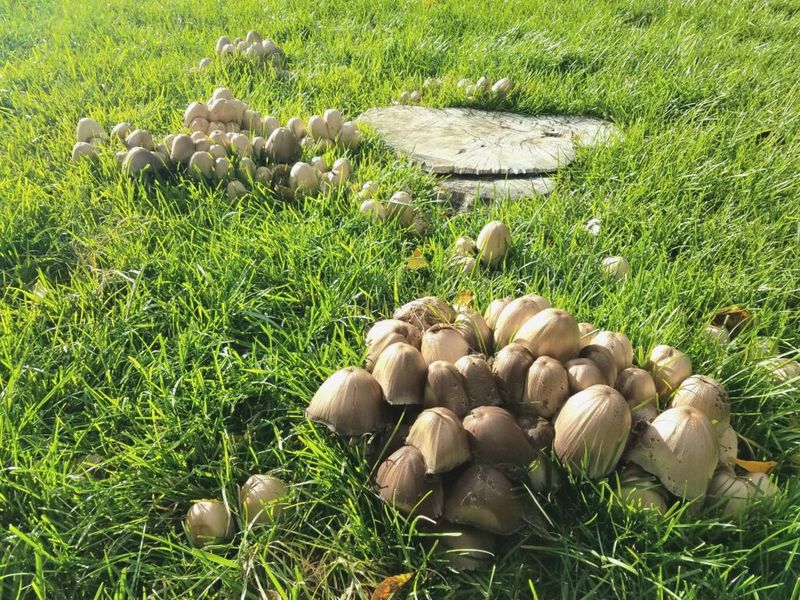
Mushrooms after rain usually point to fungal activity and decomposition close by. That is a normal process, and it is not automatically a lawn emergency.
Still, they speak only for their own patch and say nothing certain about your soil overall, as Illinois Extension makes clear.
Next time you spot a flush, take a quick look at the grass pattern for circles or arcs that could be fairy rings, and clear them from spots where children or pets play.
A mushroom is a short note from the soil, not a full report card.