
Peace Lily Leaves Turning Black? Here’s The Common Cause And How To Bring It Back
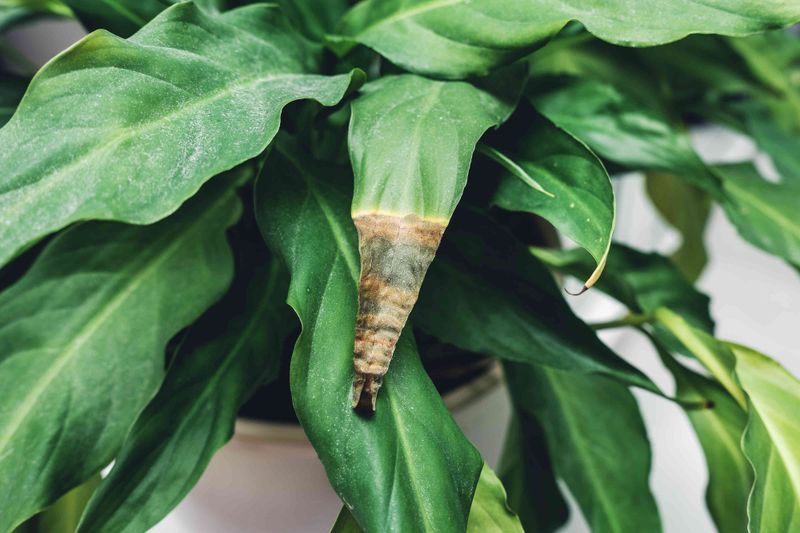
Few things stop a houseplant lover mid-step like spotting black leaves on a peace lily that looked perfectly healthy last week. The damage can spread quickly, and the instinct to water, fertilize, or move the plant right away can sometimes make things worse. Black foliage on a peace lily does not always trace to one single mistake, and figuring out what actually went wrong makes all the difference between a plant that recovers and one that keeps declining. A little careful observation before reaching for any fix puts you ahead of most common mistakes.
Start with the pattern, not the panic
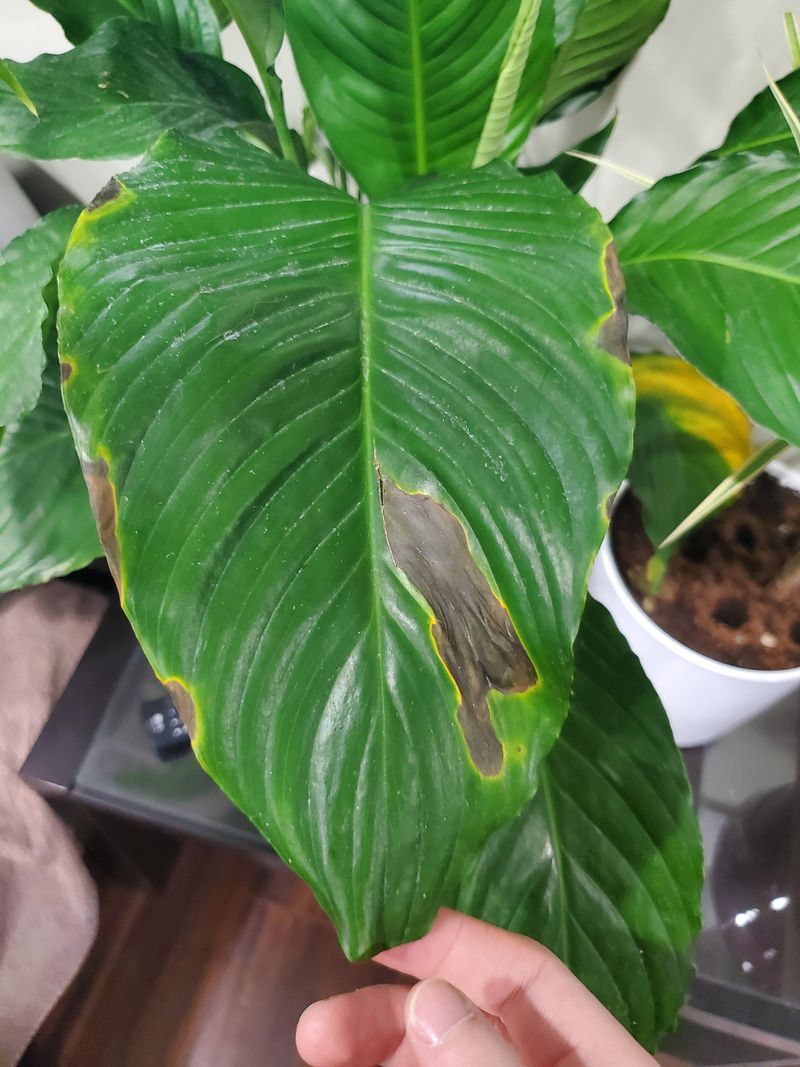
Black on a peace lily leaf is not one symptom but several, and each pattern points in a different direction. Before changing anything about how you care for the plant, spend two or three minutes looking closely at what the damage actually looks like and where it appears.
Crisp, dry, brittle tips or margins that crumble when touched are a different problem from soft, water-soaked, spreading blackness that feels mushy. Distinct circular or irregular spots, especially if they carry a yellow halo or are causing leaves to drop, look different again from either of those. A black coating that smears or rubs off on your finger, particularly when the leaf surface feels sticky underneath, is different from dead leaf tissue entirely.
Once you have looked at the texture and shape of the damage, check a few more things before drawing any conclusions. Push your finger two or three inches into the potting mix and note whether it feels wet, barely damp, or bone dry. University of Connecticut Extension notes that overwatered plants often develop black leaf edges and stems, while inconsistent watering and underwatering can cause leaf damage too, which means soil moisture alone does not settle the question. Look for wilting, yellowing, or a sour smell from the mix, and check the undersides of leaves and stem joints for sticky residue or tiny insects.
Iowa State University Extension points out that houseplant symptoms often have multiple contributing factors, so a quick triage like this narrows the likely causes without pretending that color alone proves a diagnosis. Gathering these clues first keeps you from applying the wrong fix and buying time to make a genuinely useful correction.
When blackening points to wet roots
Prolonged wet soil is one of the most common indoor-care explanations for black peace lily foliage, but it is not the only one, and the appearance of the damage matters before you assume this is the culprit. The pattern associated with wet-root stress tends to be soft, spreading, and water-soaked rather than crisp and dry.
When roots sit in saturated soil for too long, they lose access to oxygen and begin to break down. Virginia Cooperative Extension guidance on container watering explains that roots need oxygen as much as they need moisture, and prolonged saturation, compacted mix, inadequate drainage holes, or a pot left sitting in standing water can all deprive roots of the air they require. Watering frequently is not automatically the problem; the key issue is whether the mix stays wet long enough to suffocate the roots.
One of the more confusing signs of wet-root damage is wilting. A peace lily with compromised roots may droop even when its soil is soaking wet, because damaged roots can no longer move water up into the plant effectively. University of Florida Emerging Pathogens Institute guidance on diagnosing houseplants confirms that wilting alone cannot distinguish underwatering from root damage caused by saturation.
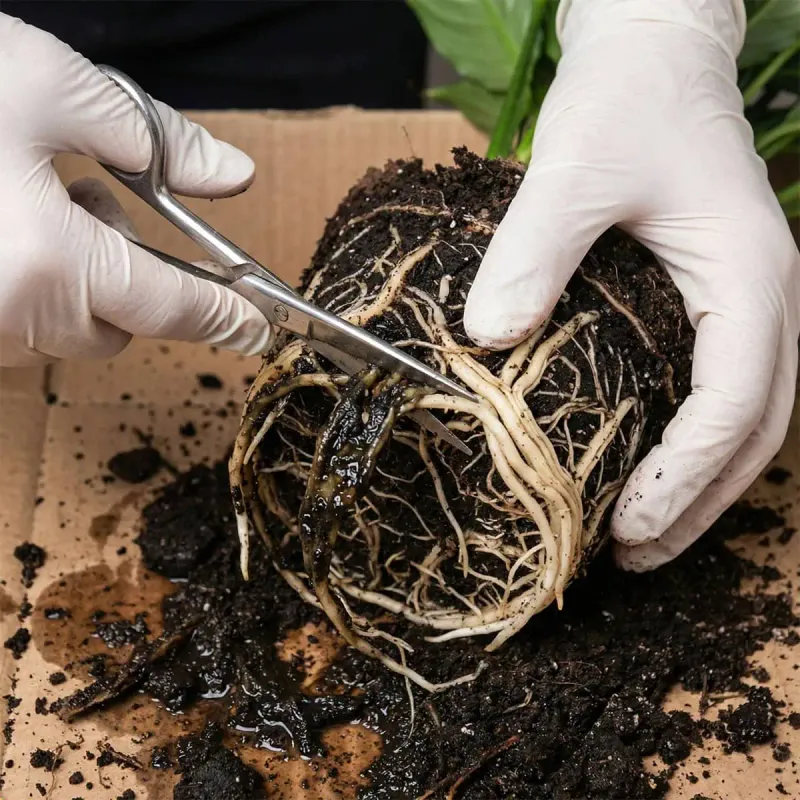
To get a clearer picture, gently lift the plant from its pot and look at the roots. Healthy roots are firm and light-colored, often white or pale tan. Roots that have suffered from prolonged wetness are frequently soft, brown or black, and may smell unpleasant. University of Maryland Extension recommends checking for mushy stems, foul-smelling mix, and soft dark roots together as a cluster of signs that point toward root rot, rather than relying on black leaf tips alone.
If the roots look mostly healthy and firm, wet-root stress is less likely to be the primary cause of the blackening.
Crisp tips can signal dry stress or buildup
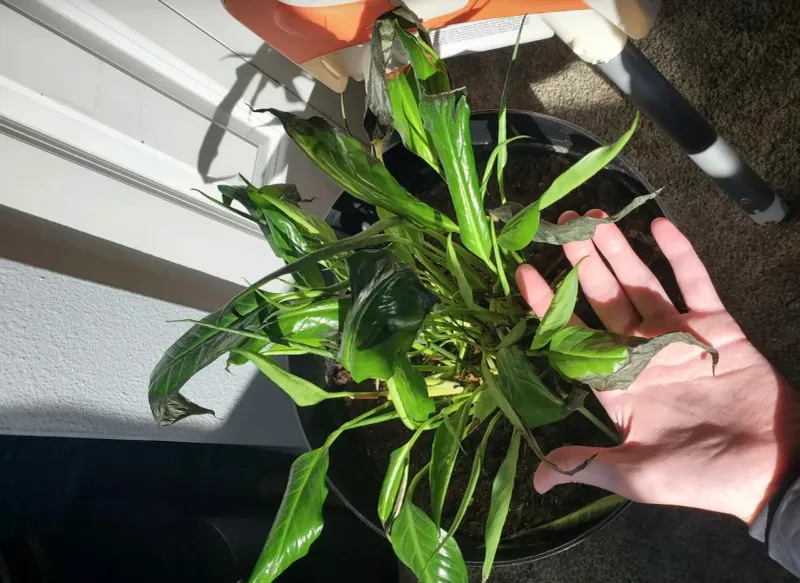
Not every case of black on a peace lily leaf has anything to do with wet soil. When the damaged tissue is dry and brittle rather than soft, and when it starts at the very tip or along the margin rather than spreading inward from a water-soaked patch, the explanation is more likely to involve dry conditions, chemical buildup, or too much light.
Underwatering and inconsistent watering are two of the more overlooked causes. A plant that swings between bone-dry soil and heavy soaking can develop tip damage even if it is never truly overwatered. NC State Extension’s profile of Spathiphyllum notes that peace lilies prefer consistently moist but not soggy soil, and erratic moisture cycles stress the root system in ways that show up as leaf-tip damage. Low indoor humidity can also contribute to dry, brittle margins, especially during winter when heating systems pull moisture from the air.
Excess fertilizer or accumulated soluble salts in the potting mix are another documented cause of tip burn. Iowa State University Extension lists excess fertilizer and salts alongside fluoride and water chemicals as causes of leaf-tip damage in houseplants. Fluoride, which is present in many municipal water supplies, can accumulate in the soil over time and cause tip necrosis in sensitive plants like peace lilies. UC IPM’s houseplant problem notes also identify fluoride toxicity as a specific concern for certain tropical foliage plants.
A word on misting: it is sometimes suggested as a quick fix for low humidity, but wet foliage can increase the risk of leaf-spot disease, and misting will not repair already damaged tissue or correct dry soil or salt buildup. University of New Hampshire Extension recommends grouping plants together or using a humidifier as more reliable ways to raise ambient humidity around houseplants. Use the texture and location of the damage, along with your recent care habits, as clues rather than assuming any single cause is responsible.
Recognize disease, cold, light, and pest clues
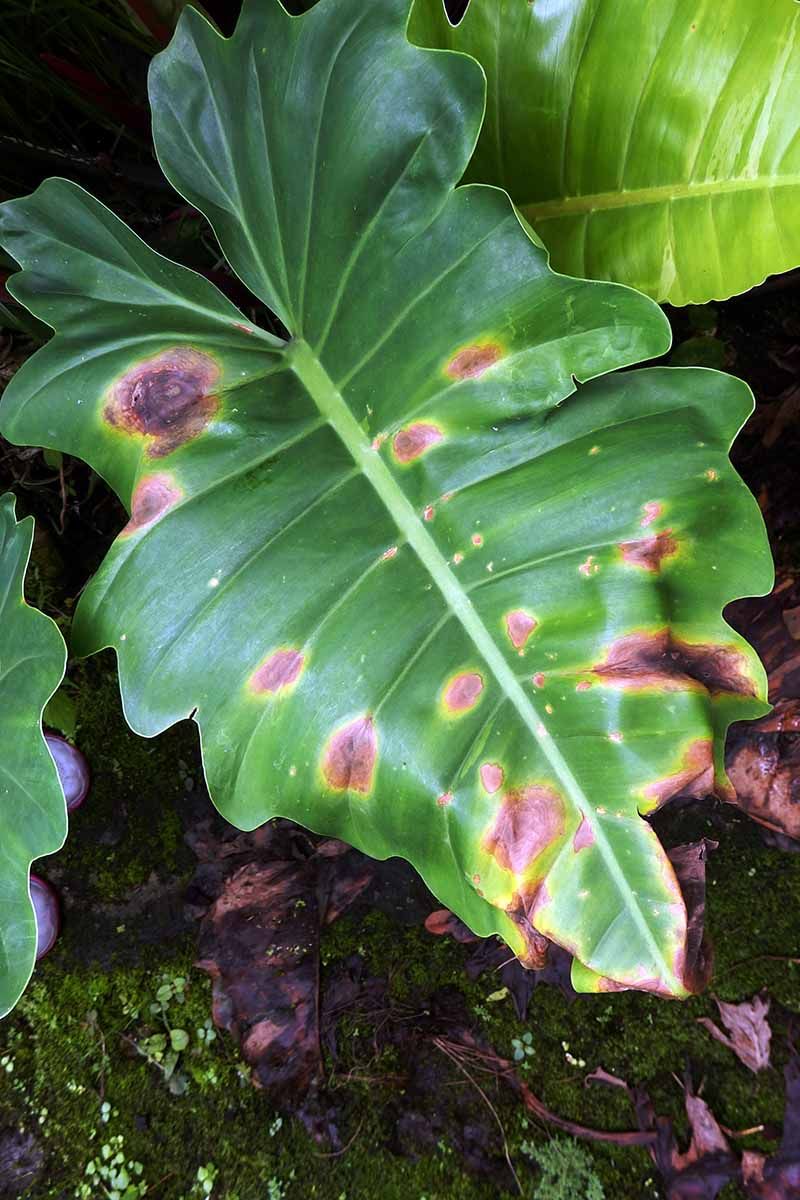
Some black damage on peace lily foliage has nothing to do with watering at all. Certain patterns point toward disease, environmental injury, or insects, and recognizing these early prevents the wrong treatment from making things worse.
Circular or irregular black spots with yellow halos, lesions that expand rapidly, or leaves that drop from the plant are signs worth taking seriously as possible leaf-spot disease. University of Maryland Extension’s guidance on fungal leaf spots recommends removing affected leaves promptly, improving air circulation around the plant, and avoiding splashing water onto foliage during watering. Clemson Extension’s houseplant disease resource adds that pruning tools should be disinfected between plants when disease is suspected to avoid spreading the problem. These steps matter more than any spray treatment applied without a confirmed diagnosis.
Cold injury is a separate and often overlooked cause. UF/IFAS documentation on chilling injury in Spathiphyllum describes damage that begins at leaf tips and edges, progresses inward, and turns black after exposure to cold temperatures, including drafts from windows in winter or air-conditioning vents that blow directly on the plant. Even brief contact with a cold surface can trigger this response in a plant that originates from tropical environments. Moving the plant away from cold glass, exterior walls, and air vents is the corrective step.
Direct sunlight is another environmental cause. Peace lilies tolerate lower light than many houseplants, and bright direct sun can scorch leaves, producing bleached or darkened patches that look different from tip burn but are still environmental rather than disease-related. Moving a damaged plant into deep darkness is not a useful recovery strategy, but shifting it to bright, indirect light protects existing foliage while new growth comes in.
Finally, a removable black coating on leaves that also feel sticky to the touch is likely sooty mold, a fungus that grows on the honeydew secreted by sap-sucking insects. Texas A&M AgriLife’s sooty mold resource and UC IPM’s mealybug guidance both emphasize that the mold itself is a symptom, not the root problem. Aphids, scale insects, whiteflies, and mealybugs are common culprits. Addressing the insect infestation is the priority, after which the sooty coating can be wiped away gently with a damp cloth.
Use a root-first reset for suspected rot
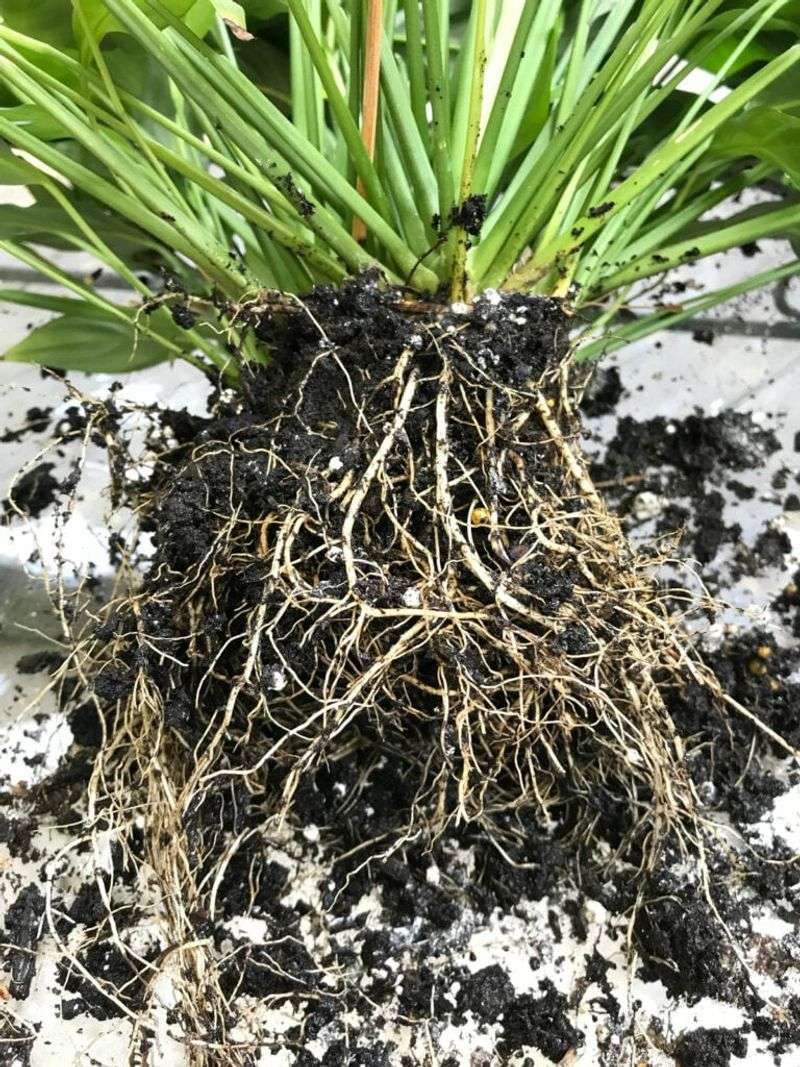
When the evidence points toward wet-root stress, a systematic reset gives the plant its best chance of recovery. The goal is to remove the source of damage, create conditions where roots can breathe, and give any surviving root system a clean start in fresh mix.
Begin by stopping all watering while the potting mix remains wet. Check that the container has drainage holes; a pot without them traps water no matter how carefully you water. Empty the saucer after every watering session so the plant is never sitting in standing water. Clemson Cooperative Extension’s peace lily factsheet specifically flags good drainage as essential, and notes that an oversized pot can also keep the mix wet for far longer than roots can tolerate, because the plant’s roots do not reach the outer portions of the soil where moisture lingers.
If the mix has been wet for an extended period and the plant shows wilting, yellowing, soft stems, or a sour odor, it is worth removing the plant from its pot entirely to inspect the roots. Shake away as much of the old mix as possible and look carefully at what you find. Firm, light-colored roots are still functional. Soft, brown or black roots that feel slimy or fall apart when touched are already dead and should be cut away cleanly with scissors or pruning shears.
Disinfect the blades with rubbing alcohol between cuts if the rot appears to have spread widely.
University of Connecticut Extension and Clemson’s houseplant disease guide both support repotting surviving roots into fresh, porous potting mix in a container that fits the remaining root system rather than one that is too large. A well-draining mix that does not compact tightly around the roots gives the plant the oxygen it needs to rebuild. If most of the roots are soft and dark with very few firm ones remaining, University of Maryland Extension acknowledges that discarding the plant may be the more practical decision, as a root system that is mostly gone cannot support recovery.
Correct watering, light, temperature, and water quality
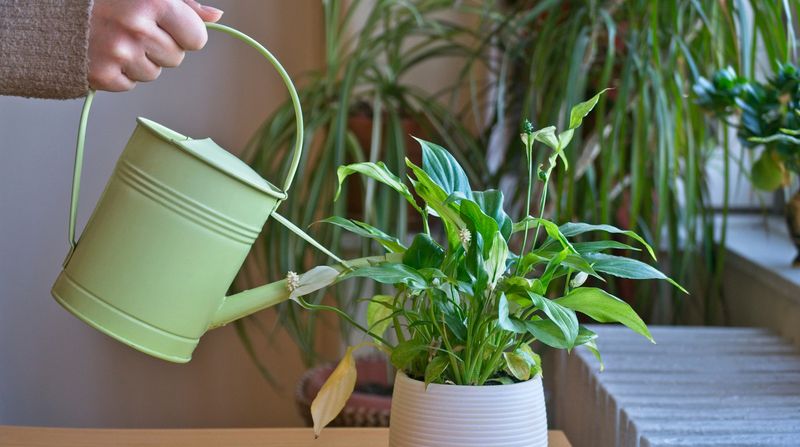
After identifying and addressing the likely cause of the blackening, shifting the plant’s ongoing care reduces the chance of a repeat. Each element of the environment plays a role, and adjusting them together is more effective than fixing just one.
Watering rhythm matters more than a fixed schedule. Check the potting mix before adding water by pushing your finger two or three inches in; if it still feels moist, wait. When the mix has dried somewhat but before it pulls away from the sides of the pot, water thoroughly and let the excess drain completely from the bottom. Clemson Extension and NC State Extension both describe peace lilies as preferring moist but not soggy conditions, with the mix allowed to dry somewhat between waterings rather than staying consistently saturated.
Light and temperature adjustments protect foliage that has already been stressed. Bright, indirect light suits peace lilies well; direct sun can scorch leaves, while very low light slows the recovery of new growth. Keep the plant away from heating vents, air-conditioning outlets, cold windows, and exterior drafts. UF/IFAS chilling injury documentation reinforces that even moderately cold air exposure can damage tropical foliage, so a spot away from drafty windows in winter is worth the effort to find.
Fertilizer should be paused while the plant is under stress. Excess fertilizer and accumulated salts can burn roots and cause the same kind of tip damage you are trying to correct. Resume only after the plant shows healthy new growth, and use a dilute application rather than a full dose.
When salt or fluoride buildup is a plausible cause of dry tip damage, thoroughly leaching the potting mix can help. Water the pot heavily and let it drain completely several times in one session to flush accumulated minerals. Michigan State University Extension’s fluoride toxicity resource and University of Illinois Extension both note that switching to a lower-mineral water source can benefit sensitive plants when tap water fluoride or salt content is suspected. Iowa State Extension supports reconsidering water quality as part of diagnosing tip burn, though distilled water is not a universal requirement for every peace lily in every household.
Track recovery by new growth
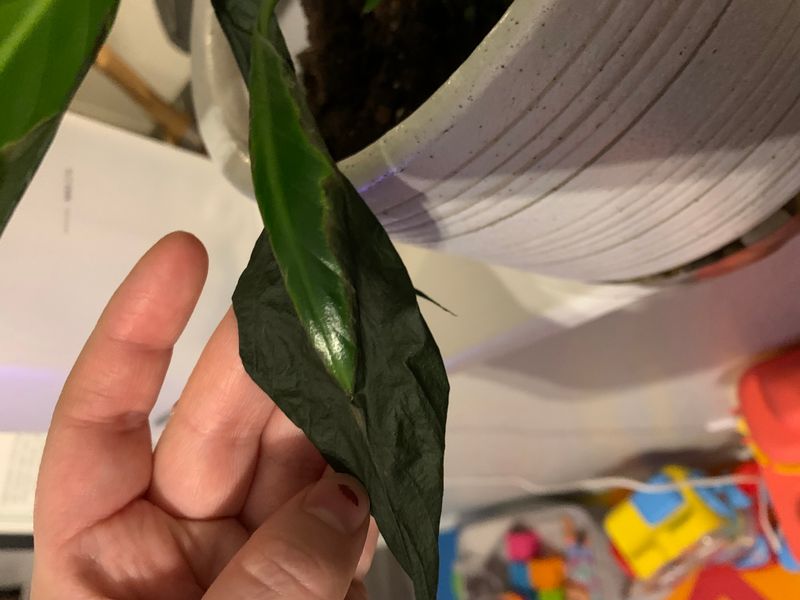
Once corrective care is in place, the most important thing to understand is that existing black or brown tissue will not turn green again. Recovery shows up in new growth, not in the restoration of damaged leaves.
Fully dead leaves can be removed at the base, and damaged portions can be trimmed for appearance. Cut just inside the dead tissue with clean scissors so a thin brown line remains rather than cutting into healthy green tissue, which can create new entry points for disease. Iowa State Extension is clear that trimming stops the visual spread but does not reverse damage; new blackening will continue if the original cause has not been corrected. Avoid stripping the plant of most of its foliage at once, as some functional leaves are needed for the plant to continue photosynthesizing while it recovers.
Watch for a few specific signals over the following weeks. Clean, fully green new leaves emerging from the center of the plant are the clearest sign that the root system is functional and recovery is underway. Monitor how quickly the potting mix dries between waterings, whether any soft tissue or odor returns, whether spots appear on new growth, and whether insect activity shows up on leaf undersides. Penn State Extension and University of Maryland Extension both recommend reassessing the diagnosis if damage continues to progress after care changes are made, since a pattern that does not improve under the expected fix often means a different cause is at work.
A peace lily that pushes out healthy new leaves after a corrective reset has already told you what you needed to know.