
Peace Lily Leaves Turning Yellow After Repotting? Check These Conditions Before Assuming Transplant Stress
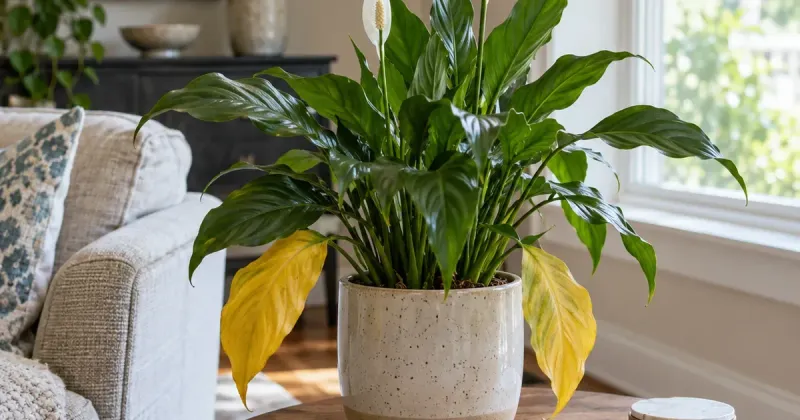
You repotted your peace lily to give it a better home, and now a leaf is turning yellow. It is easy to panic and start watering, feeding, or digging the plant back up.
Repotting stress is one possible reason, but it is not the only one. A few quick checks can help you figure out what is going on without buying anything.
Yellow leaves after repotting are a clue, not a diagnosis
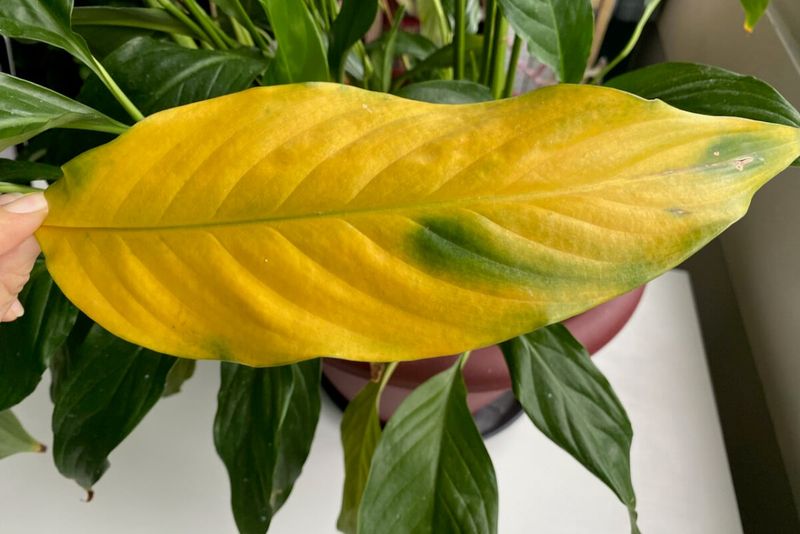
A single yellow leaf on a freshly repotted peace lily can feel like proof that you did something wrong. Take a breath.
Yellowing after a repot is a clue worth following, but it is not a verdict.
Disturbing the roots can stress a plant, and Mississippi State Extension guidance on indoor plants notes that repotting-related stress can lead to yellowing or leaf drop. So transplant stress is a reasonable suspect.
The trouble is that timing alone cannot prove it.
Peace lily leaves can also turn yellow from too much water or too little water, and the two problems can look surprisingly similar. South Dakota State Extension’s peace lily guide points to watering as a common trigger.
Houseplant yellowing more broadly can come from poor drainage, low light, cold exposure, pests, or disease, as UC IPM’s houseplant problems page explains.
That list may sound long, but you do not need to chase every cause. Your plant just moved into a new pot, so a few checks cover most of the ground: how steady its light is, how wet the soil really is, and whether extra water can drain away.
The next sections walk through each one.
Think of the yellow leaf as a reason to look closely at the plant’s conditions, not as a message you can fully decode. Looking first and acting second keeps you from making the problem worse.
Root disturbance can explain the timing
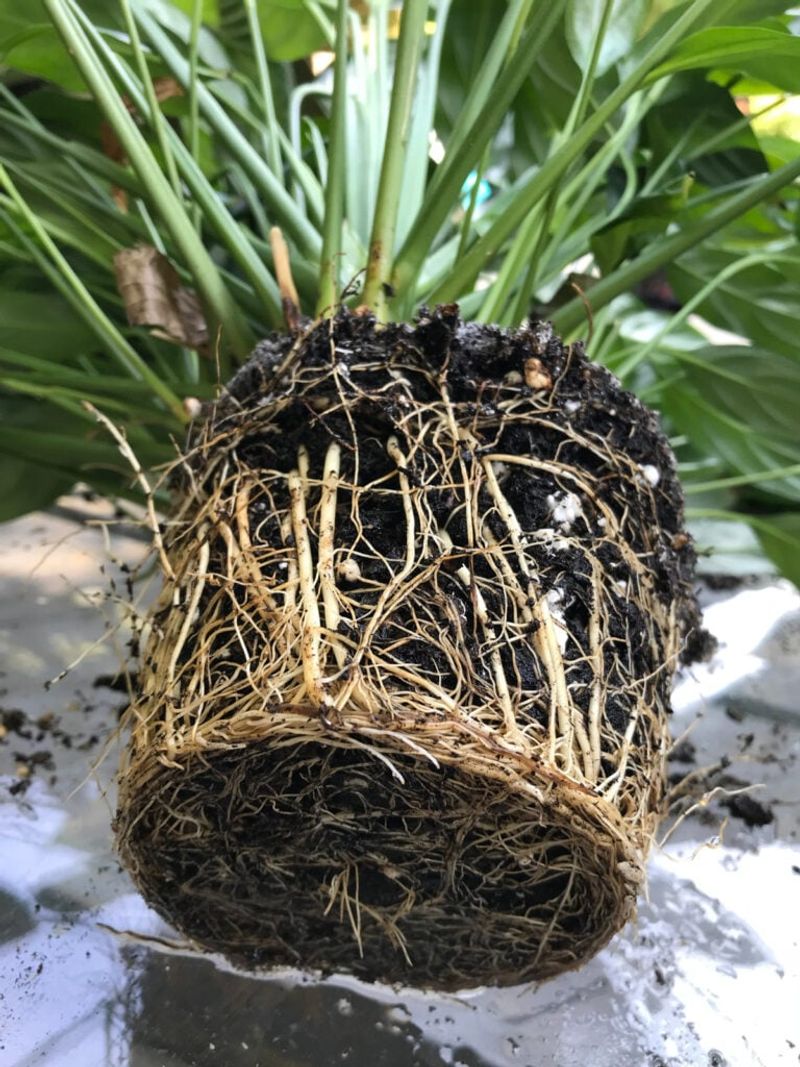
Roots are the plant’s drinking straws. When you lift a peace lily out of its old pot, loosen the root ball, and settle it into fresh soil, some fine roots can be torn or bruised.
Fewer working roots means less water reaching the leaves, even when the soil is damp.
That gap can show up as stress, including yellow leaves or leaf drop. Mississippi State Extension describes this kind of repotting stress.
It is a plausible explanation for what you are seeing, though not a confirmed one.
What about the season? Illinois Extension’s repotting advice says repotting goes best when a plant is actively growing, typically in spring or early summer.
A fall repot happens when growth is slowing, so recovery may be less smooth.
That does not mean a fall repot was a mistake. Montana State Extension says a plant with a genuine stress-related need can be repotted at any time.
Maybe the old pot had cracked, or the roots were badly crowded. If so, you made a reasonable call.
So there is no need for guilt. Treat the timing as one piece of the puzzle, then move on to the conditions you can actually control today.
Keep its light and location steady
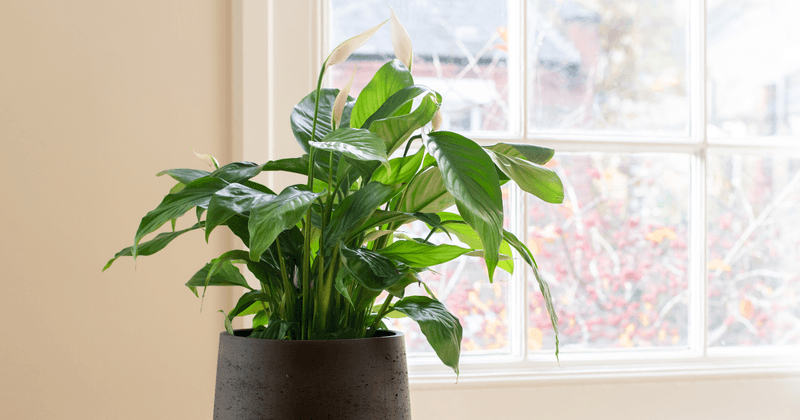
Light is the easiest thing to fix, and it costs nothing. Aim for bright, indirect light, such as a spot near a window where the sun never hits the leaves directly.
South Dakota State Extension recommends bright, indirect light and a warm location for peace lilies.
Direct sun can scorch leaves, which adds a second problem on top of a stressed root system. Very dim corners are not ideal either.
UC IPM lists inadequate light and low temperatures among causes of yellowing and leaf drop in houseplants.
Once you find a good spot, leave the pot there. A plant that is busy rebuilding roots does not need a new window every few days.
Constant shuffling swaps one set of conditions for another and makes it harder to tell what is helping.
Do check the neighborhood, though. Cold drafts from a door or window glass, and warm blasts from a heat vent, can both stress a peace lily.
Fall is when many of us switch the heat on, so a spot that worked in August may feel different now.
Keep expectations realistic. Moving the plant to a better location will not cure yellow leaves overnight.
Steady light simply removes one variable while the plant settles.
Should you water it now?
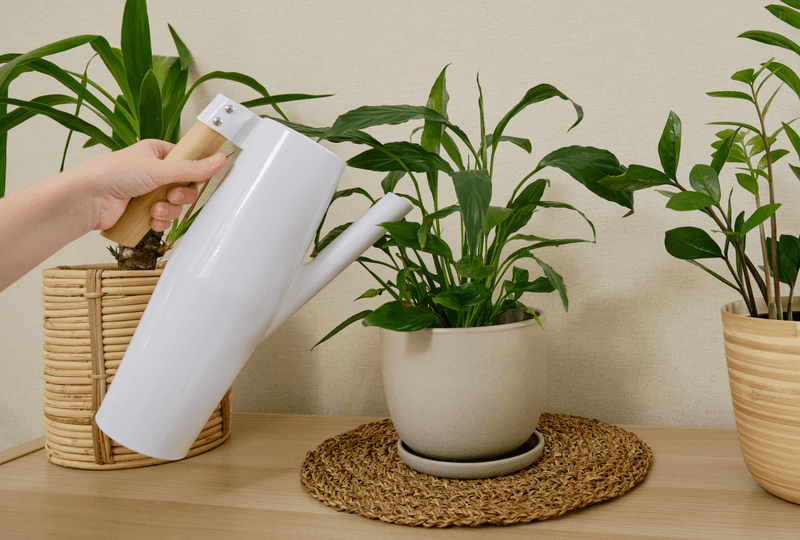
Skip the calendar and use your finger. Push it about an inch or two into the soil and see what you find.
That reading, not the yellow leaf, should decide whether you water.
Peace lily soil should stay moist but not soggy, with a little drying between waterings. Both extremes can cause yellowing.
South Dakota State Extension and UF/IFAS both stress consistent, moderate moisture for this plant.
If the top layer feels dry and the pot feels light, it is time to water. Pour slowly until water runs out of the drainage holes, then let the excess drain away.
Virginia Tech’s guide to watering container houseplants backs this approach of watering thoroughly rather than giving small sips.
If the soil still feels damp, wait and check again in a day or two. Adding water because the plant looks unhappy can push a wet root zone further into trouble.
Season matters too. In fall and winter, lower light and slower growth mean soil often dries more slowly, as Illinois Extension’s overwintering tips suggest.
A summer rhythm of weekly watering may now be too much, so keep reassessing.
Drainage matters when the soil stays wet
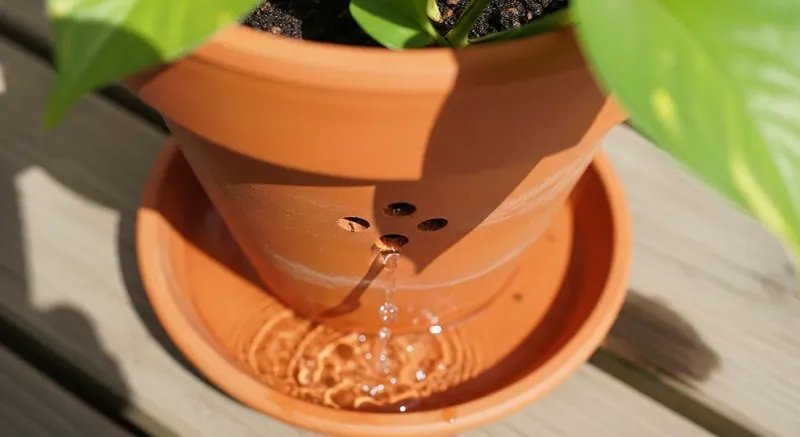
Lift the pot and look underneath. Does it have at least one drainage hole, and is that hole clear?
Then check the saucer or decorative outer pot, because water collecting there keeps the bottom of the soil soggy.
Empty any standing water after you water. A pot sitting in runoff can stay wet for days, which is a problem for roots that are already recovering.
Roots need air as well as water. Persistent wetness and poor drainage reduce oxygen around them and can contribute to root rot, a point made in Virginia Tech’s watering guide.
A pot much bigger than the root ball can make this worse, since the extra soil holds moisture the roots cannot use. University of Wisconsin-Madison Extension covers pot size and drainage in its houseplant care advice.
You may hear that a layer of gravel in the bottom of the pot improves drainage. Illinois Extension calls this a myth, since water can sit perched in the soil above the gravel.
Skip it.
Here is the line between patience and action. If the soil stays wet, leaves turn soft, or the plant wilts even though the soil is damp, more water is not the answer.
Those signs call for a closer look at the roots and drainage, as Mississippi State Extension guidance on indoor plant care points toward.
Hold fertilizer while the plant settles
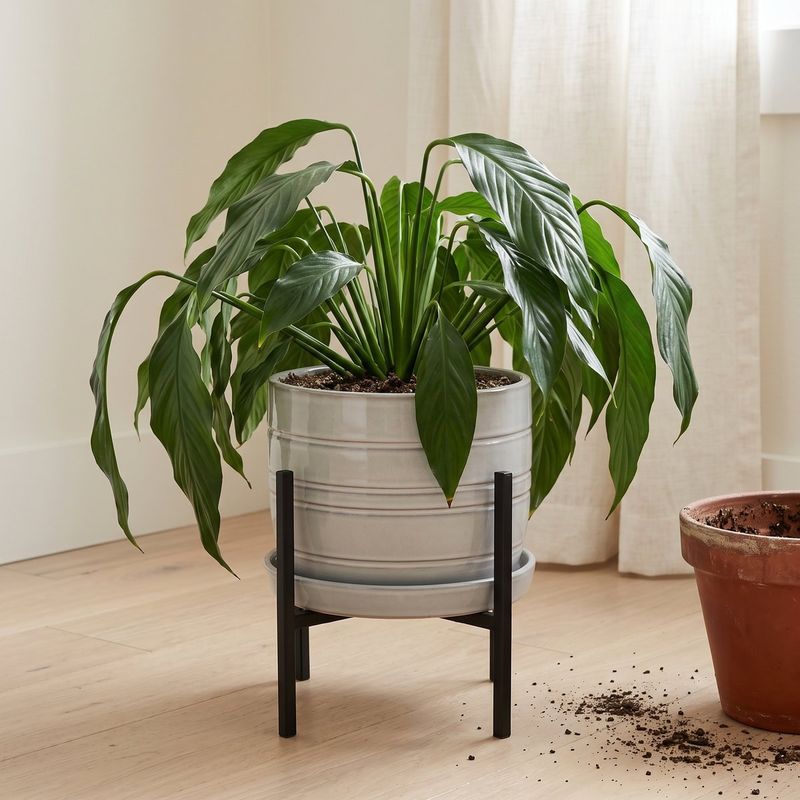
A yellow leaf makes many gardeners reach for the fertilizer bottle. Resist that urge for now.
Plant food will not fix a root system that is still recovering, and it could add stress.
Roots need time to reestablish in their new soil. Montana State Extension advises waiting at least two weeks after repotting, and Mississippi State Extension says to wait until roots reestablish, usually about two to four weeks.
A safe rule is to hold off for at least two weeks and until the plant looks like it is settling.
Fresh potting mix often has some nutrients already, so your plant is not going hungry in the meantime.
What about the yellow leaf itself? If a leaf is completely yellow and clearly dying, you can remove it neatly with clean scissors, cutting near the base of its stalk.
University of Maryland Extension’s grooming advice treats this as routine tidying.
Be clear about what trimming does. It makes the plant look better and keeps dead tissue from hanging around, but it does nothing for whatever caused the yellowing.
Leaves that are only partly yellow can stay put while you keep checking light, moisture, and drainage.
Use a simple routine, then reassess
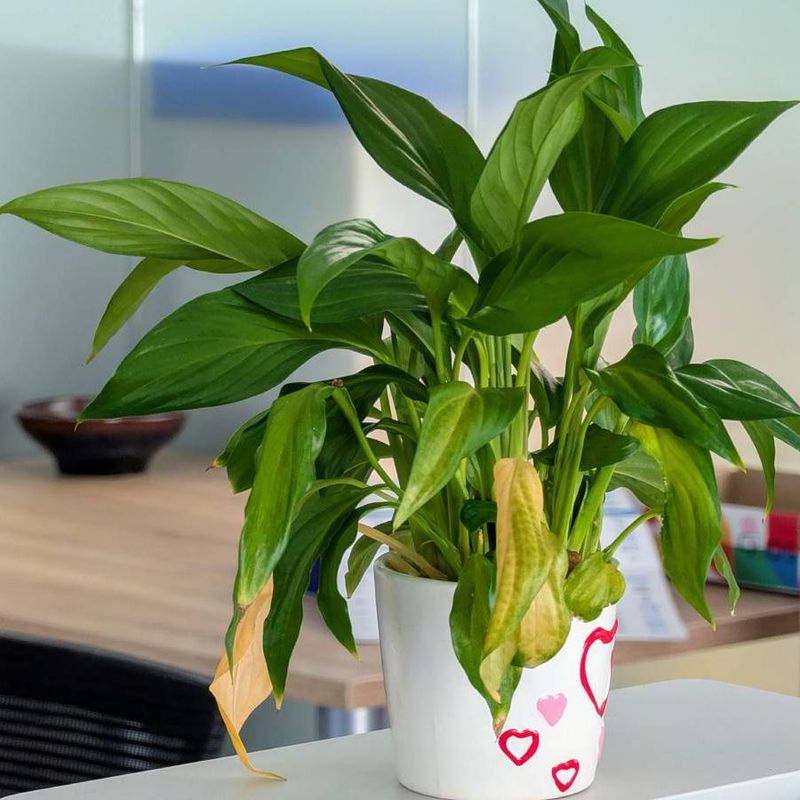
Here is the no-buy routine: steady bright, indirect light, a soil check before every watering, drainage that actually drains, and no fertilizer while the plant settles. It is practical care, not a guaranteed recovery plan, and nobody can promise how fast a peace lily will bounce back.
Watch for signs that call for a closer look at the roots and drainage: soil that stays wet, soft leaves, wilting despite wet soil, or decline that keeps going. Those are reasons to investigate, as Virginia Tech’s watering guide suggests, rather than watering again or repotting for presumed shock.
A peace lily usually gives you time to look before you leap.