
Spotted Lanternfly Egg Masses Look Like Dried Mud, And Here’s Where They Turn Up On North Carolina Patio Furniture
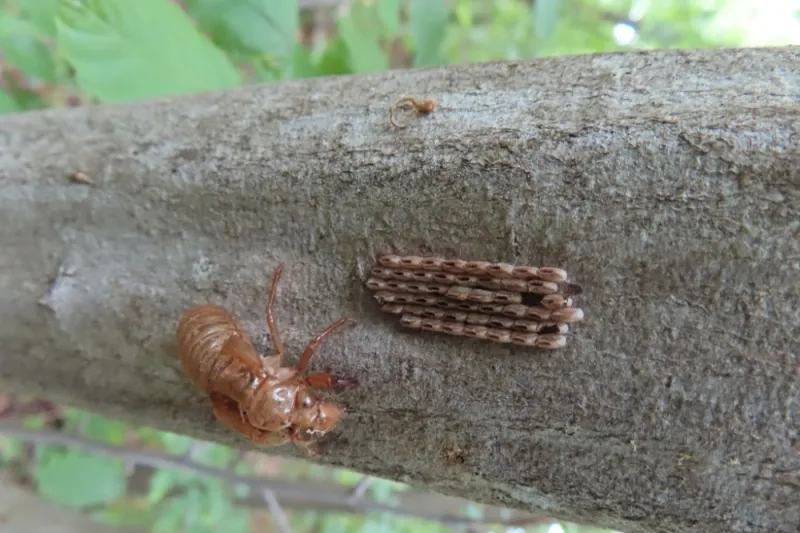
That little gray smudge under your patio chair might not be mud at all. Spotted lanternflies, an invasive pest now settled in several North Carolina Piedmont counties, hide their eggs in plain sight on outdoor furniture.
Each mass can hold 30 to 50 eggs that hatch in spring and go after the trees, vines, and native plants you have worked hard to grow. Knowing exactly where to look this fall and winter is one of the simplest ways to protect your yard.
1. Chair Legs Near the Ground
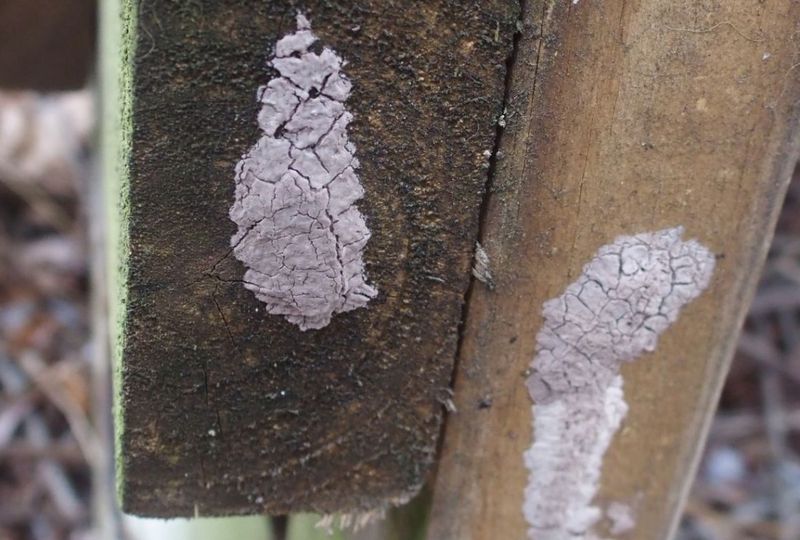
Picture a cool October afternoon in Davidson County. You fold up the patio chairs for winter and notice a crusty gray streak on one leg, about the size of your thumb.
Most folks wipe it off as dirt, but a female spotted lanternfly may have left it there weeks ago.
Chair legs are a favorite spot because they are upright, solid, and close to the trees where adults feed. Females like vertical surfaces for laying, and a slim metal or wooden leg fits the bill.
Check the inside of each leg, where the mass is shielded from rain and your eyes.
Fresh masses can look shiny and creamy white. Within days they dull to a tan or gray putty that cracks like dried clay.
2. Underside of Table Tops
Here is a trick worth stealing from NC State Extension scouts: get low. The bottom of a patio table is shady, dry, and almost never seen, which makes it prime real estate for a mother lanternfly.
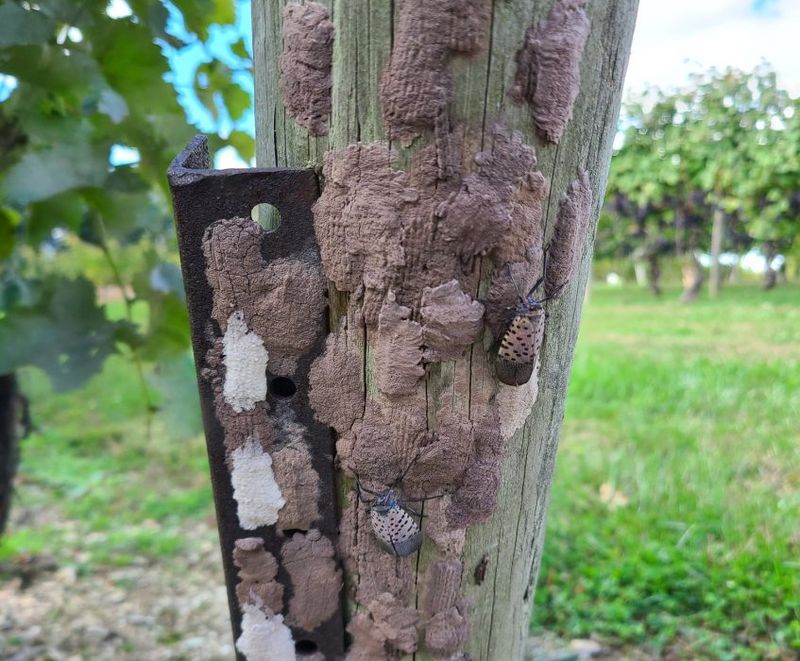
Crouch down with a flashlight and scan the whole underside, especially along support braces and the lip where the top meets the frame. Egg masses usually run 1 to 1.5 inches long and look like someone smeared wet cement and let it dry.
Older ones may have lost their waxy coating, showing neat rows of tiny seed-like eggs.
Glass tables are not safe either. Lanternflies will happily lay on the metal frame below the glass.
3. Seat Bottoms and Cushion Frames
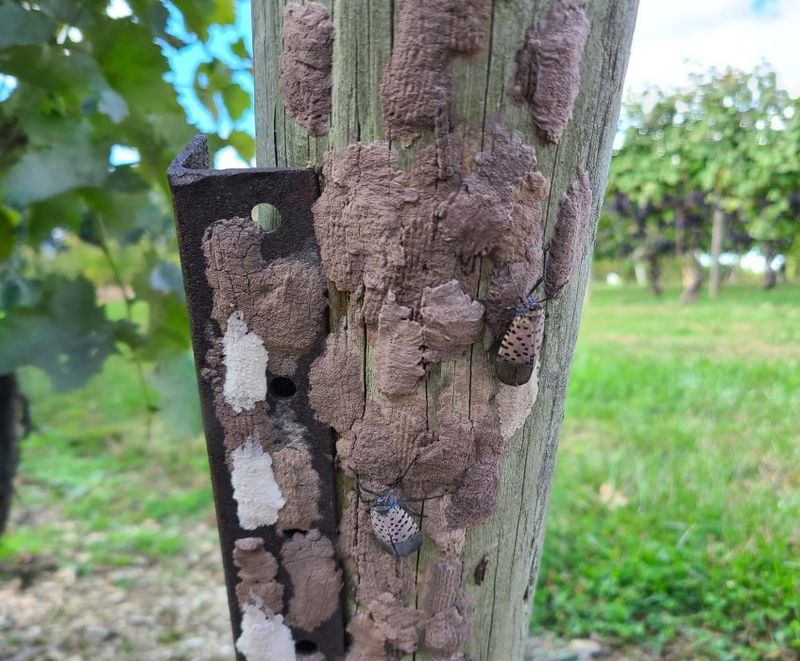
Flip that Adirondack chair over. Seriously, go do it this weekend, because the bottom of the seat is one of the sneakiest hiding spots on any patio set.
Resin, vinyl, painted wood, aluminum, lanternflies are not picky about material. The underside of seat slats and the frames that hold cushions offer just what a female wants: a hard surface tucked out of the wind.
Gliders and rockers have extra crevices worth checking too.
Take cushions off before you store them and run a hand along the frame. A rough, raised patch that feels like dried mud deserves a closer look.
4. Folds, Hinges, and Umbrella Bases
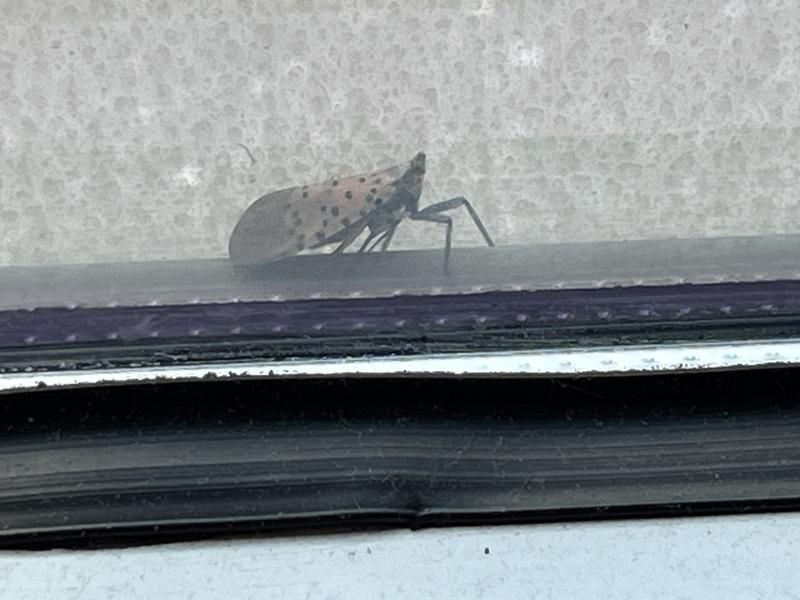
Folding furniture is handy for us and, sadly, handy for lanternflies. Every hinge, joint, and fold creates a snug little pocket where an egg mass stays protected all winter.
Umbrella poles and heavy bases deserve special attention. A pole stands straight up like a tree trunk, and the base sits low and shaded.
Slide the umbrella closed and look along the ribs and around the crank.
Fun fact: researchers believe lanternflies first reached the U.S. as egg masses on a stone shipment. Folded items that travel are perfect hitchhiking vehicles, so check before you haul a camp chair to the beach.
5. Grills, Planters, and Nearby Patio Gear

Lanternflies do not stop at chairs and tables. Anything solid sitting around your patio is fair game, from grill carts to large ceramic planters to that stack of pavers by the shed.
Grills are worth a slow walk-around, particularly the side panels and wheels. Planters, bird baths, and fence posts close to your seating area often get masses too, since adults gather on nearby trees like tree-of-heaven and maples before laying.
If you spot tree-of-heaven in your yard, that invasive is the lanternfly’s top host. Replacing it with a native such as eastern redbud or sourwood helps cut the welcome mat.
6. Telling Egg Masses Apart From Look-Alikes
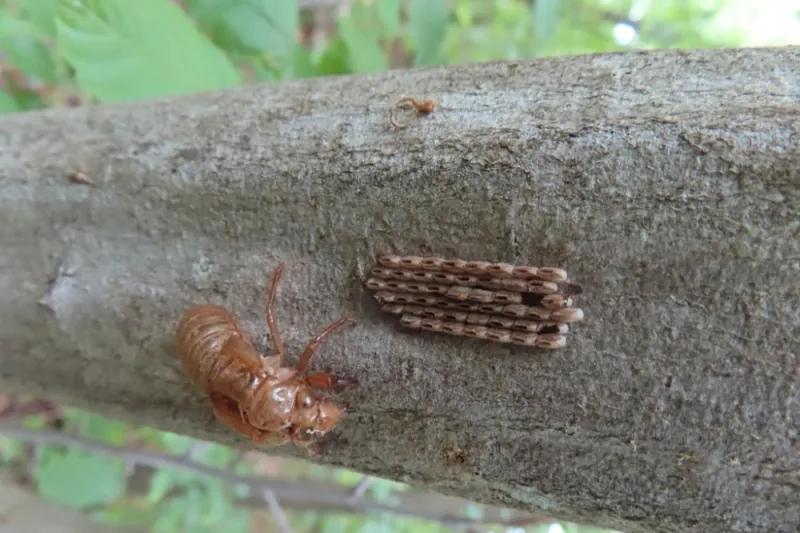
Not every lump is an enemy. Good stewards double-check before scraping, because some look-alikes belong to insects that help your yard.
Praying mantis egg cases are foamy, tan, and puffy, sitting raised off the surface like a tiny loaf. Wheel bug eggs come in neat clusters of bottle-shaped eggs.
Lichen is crusty and often greenish or blue-gray, with frilly edges, and grows rather than being laid.
A lanternfly mass is flat, smeared, and putty-like, usually gray-brown. When in doubt, snap a photo and compare it with identification guides from NC State Extension or NCDA&CS.
7. Scraping and Destroying Eggs Safely
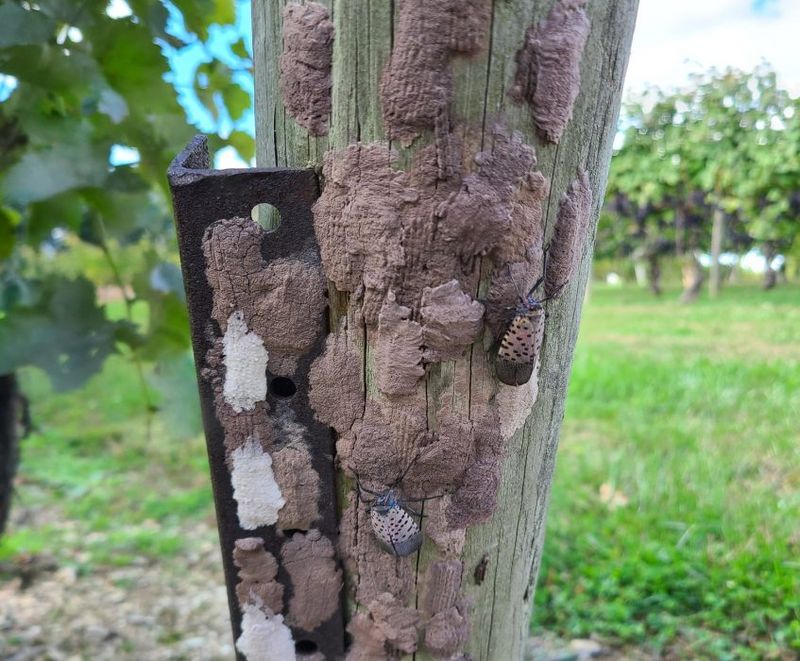
Grab an old gift card and a zip-top bag. Those two items are really all you need.
Hold the open bag under the egg mass and scrape downward with firm, steady pressure so eggs drop straight in rather than scattering across the patio. Pour in some rubbing alcohol or hand sanitizer, seal it, and toss it in the trash.
Crushing the eggs firmly also works if you hear them pop.
Stick to masses you can reach from the ground, skip the ladder. And while poking around patio edges and stone walls in winter, leave leaf piles and rocks undisturbed, since box turtles may be overwintering nearby.
8. Timing Your Checks and Reporting Finds
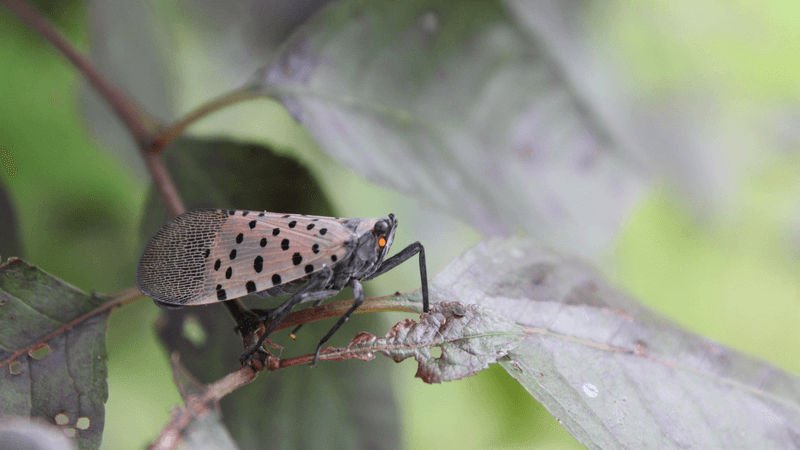
Lanternflies first showed up in North Carolina in 2022, in Forsyth County near the Guilford line. Since then, confirmed populations have popped up in counties like Davidson, Rowan, Caswell, Caldwell, and Rockingham.
Adults lay most eggs from September through November, until a hard freeze. That makes mid-October through early spring your inspection window, before nymphs hatch in April or May.
A quick monthly lap around the patio does the job.
Found one in a county without known populations? Take a clear photo and report it through the NCDA&CS online tool.
Your sighting can help officials slow the spread and protect grapevines, hardwoods, and the native plants your backyard wildlife depends on.