
Plant This Native Perennial Now And Goldfinches May Strip Its Seed Heads Into December
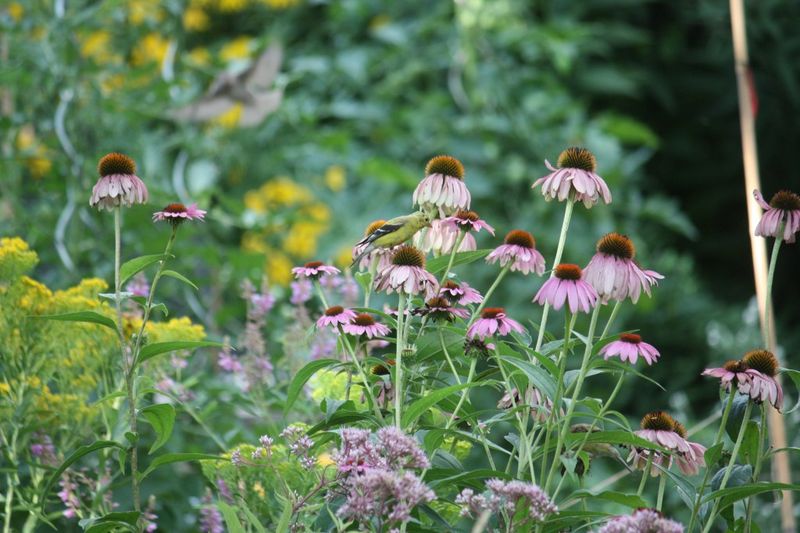
Eastern purple coneflower is a North Carolina native that can keep doing useful work in your yard long after summer ends. When its petals drop and the spiky seed heads dry out, American goldfinches may show up to pick them clean well into the colder months.
One well-placed planting can add a potential late-season food source and give you a front-row seat to some of fall’s best backyard bird activity.
Choose the specific coneflower that fits North Carolina
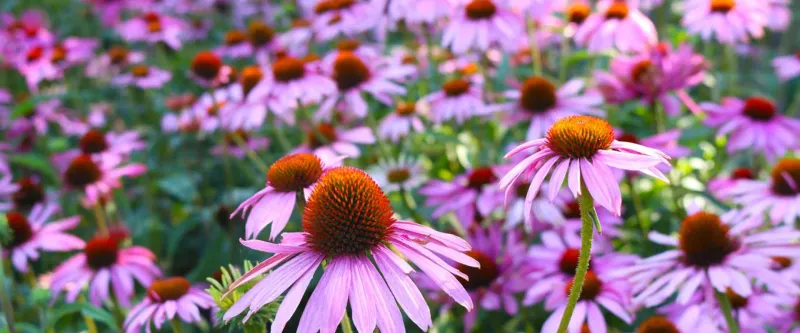
Walk through any garden center this fall and you will find shelves full of plants wearing the label “coneflower,” but that broad term covers several different species with different native ranges. The plant you want for a North Carolina yard and for potential goldfinch seed is eastern purple coneflower, Echinacea purpurea.
NC State Extension’s plant profile for eastern purple coneflower lists it as native across all three of the state’s major regions: the Coastal Plain, the Piedmont, and the Mountains.
Knowing the species name matters because related coneflowers are not the same plant. Echinacea simulata, for example, is native primarily to the central Midwest and does not share the same North Carolina provenance.
Buying a plant simply labeled “purple coneflower” without checking the Latin name can mean you end up with something that is not truly native to your corner of the state.
In the garden, Echinacea purpurea is a sturdy, upright herbaceous perennial that typically reaches 3 to 4 feet tall at maturity. Its flowers carry drooping magenta-pink petals surrounding a raised, spiky orange-brown cone that becomes the seed head birds use.
The plant grows in full sun or partial shade and becomes reasonably drought tolerant once its roots are established, making it a practical fit for a wide range of North Carolina residential yards.
This species can supply seed for goldfinches when it grows well and produces viable seed heads, but that outcome depends on site conditions, plant age, and whether you choose a form capable of setting normal seed. Picking the right species is the first step toward making that outcome possible.
The dried heads can offer a late-season seed resource
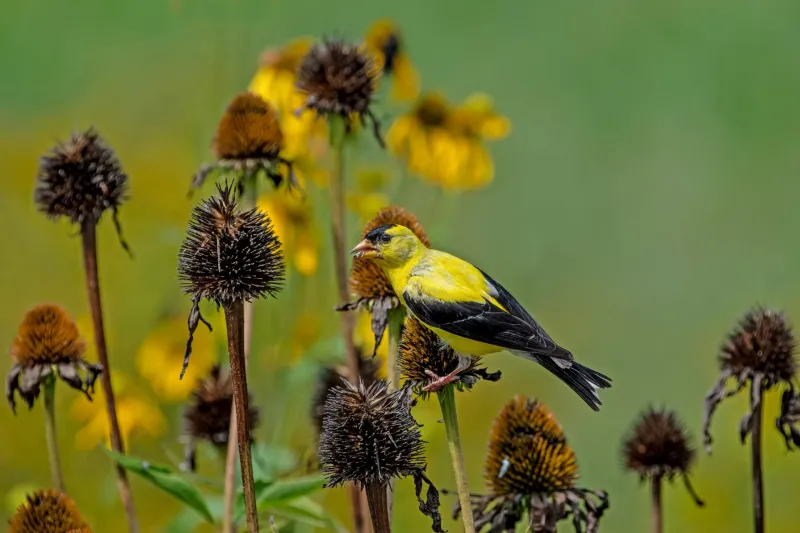
After the petals fall away in late summer, the raised cone at the center of each Echinacea purpurea flower does not disappear. It dries in place on the stem, and as it cures, it holds onto small, edible seeds that can attract birds through fall and into winter.
NC State’s eastern purple coneflower profile includes a photograph of an American goldfinch feeding directly on the seed heads in late fall and specifically recommends leaving some heads intact so they can produce seed for birds.
American goldfinches are primarily seed eaters. Cornell Lab of Ornithology’s goldfinch overview describes seeds as the core of their diet and notes that they are strongly attracted to composite flower heads, which is exactly what a dried coneflower cone is.
That food preference makes Echinacea purpurea a reasonable match for what goldfinches are already looking for in fall.
NC State’s landscaping for wildlife publication confirms that goldfinches commonly feed on the seeds of related coneflower species in fall and winter, and NC Wildlife recommends leaving dried flower heads on purple coneflowers, black-eyed Susans, and native asters through winter to support songbirds.
That said, none of these sources establish a fixed calendar window for how long the seed heads remain productive in any individual yard. Seed depletion, weather, wind, snow load, and stem collapse can all shorten the available period.
The honest framing is that dried heads can remain a food opportunity after flowering and frost, with the actual duration varying by conditions rather than following a predictable schedule.
Buy a form that can produce viable seed
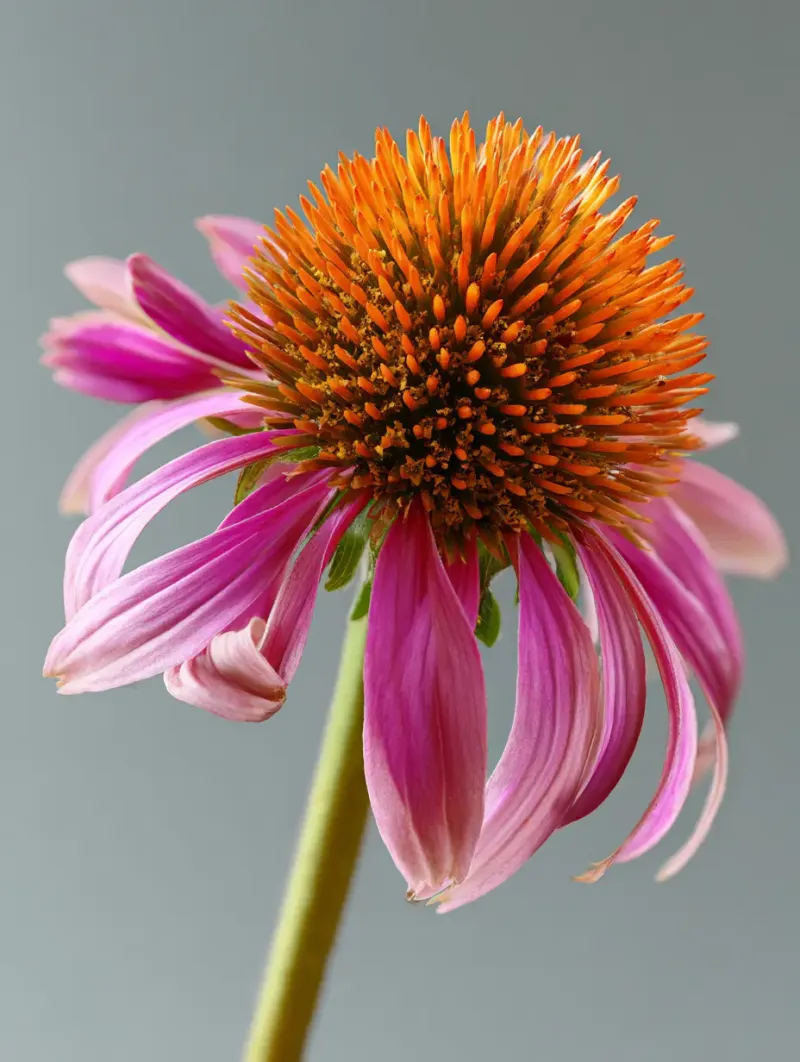
Not every plant sold as a coneflower will do the same job for birds. Some heavily bred ornamental cultivars and double-flowered hybrids produce distorted flower structures that may set little or no viable seed.
A plant that looks striking in a pot may deliver almost nothing to a foraging goldfinch once the season turns.
University of Wisconsin Extension research on coneflower hybrids found that some ornamental forms have compromised seed production compared to the straight species. That does not mean every cultivar is a poor choice, but it does mean you cannot assume decorative flower form and wildlife value go hand in hand.
When bird food is your primary reason for planting, the safest path is to choose the straight species, Echinacea purpurea, or a cultivar that is explicitly described as producing normal, single-petaled flower heads with a prominent central cone. NC State’s plant profile documents the standard form with its raised, seed-bearing cone as the one goldfinches use.
Look for that cone structure when you are shopping, and read the cultivar description before you buy.
At a reputable native-plant nursery, staff can often tell you whether a specific cultivar sets viable seed. Asking that single question before you leave the parking lot can save you from planting something that looks right but underdelivers.
When in doubt, the straight species is a reliable fallback that skips the guesswork entirely.
Match fall planting to the season and the site
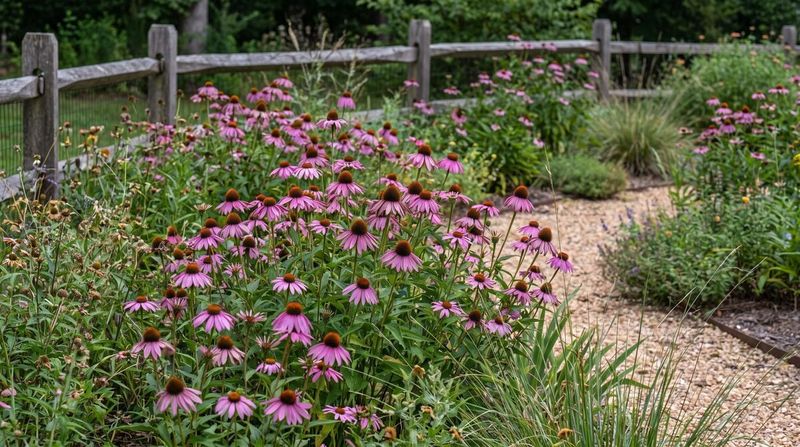
Fall is a practical planting window for container-grown perennials across North Carolina’s Coastal Plain, Piedmont, and Mountains when the weather cooperates. NC State’s Landscape Management Calendar notes that fall planting allows roots to settle in while cooler air reduces the stress on above-ground growth, giving the plant a head start before the following spring.
That root establishment period is one reason fall is often preferred over a late-summer planting for perennials.
Site selection matters as much as timing. Eastern purple coneflower performs best in full sun or partial shade with reasonably well-drained soil.
Soggy or consistently wet spots are a poor fit because standing water around the crown can cause root rot, especially during winter. A raised bed, a slope, or a spot that drains freely after rain will serve the plant better than a low area that holds moisture.
After planting, water the transplant thoroughly to settle the soil around the roots and eliminate air pockets. Continue watering during any dry stretches while the plant is getting established, since fall in North Carolina can bring dry spells even after the heat breaks.
A 2- to 3-inch layer of light mulch around the base helps retain soil moisture and moderates temperature swings without smothering the crown.
Clemson’s coneflower guide points out that plants started from seed can take two or more years to reach substantial flowering size, and a small transplant may spend its first season building roots rather than producing a large crop of blooms. Plan for the plant to grow into its full potential over several seasons rather than expecting a heavy seed display in the same fall you put it in the ground.
Leave some structure standing through winter
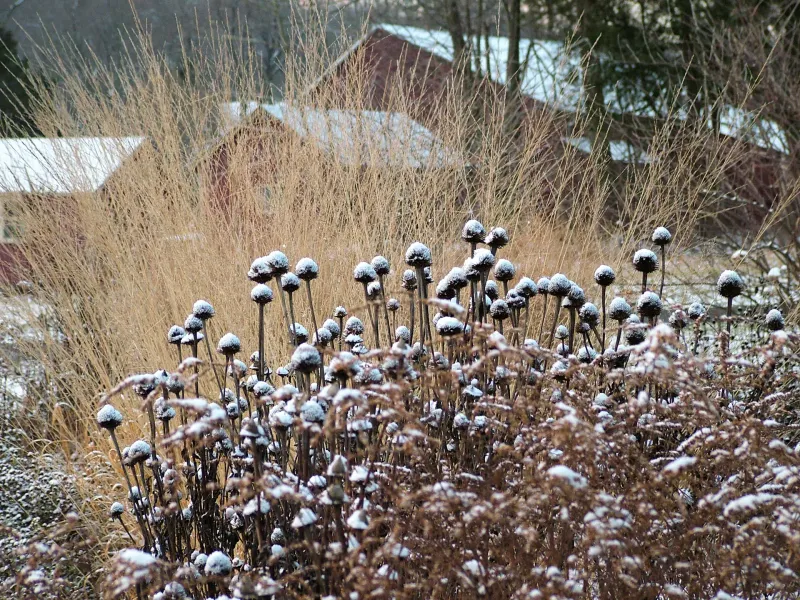
Reaching for the pruners every time a flower fades is a habit worth breaking if you want to give goldfinches a chance at the seed heads. Deadheading spent blooms keeps a garden tidy, but it also removes the exact structure birds are looking for once fall arrives.
Leaving at least some mature heads and stems standing through winter is the practical trade-off between a clean garden and a useful one.
NC State’s garden cleanup guide for pollinators uses coneflower as a specific example of a perennial whose seed heads can remain in place through the cold months. The same guide notes that hollow or pithy dead stems can also provide overwintering habitat for native stem-nesting bees, so leaving the structure benefits more than one group of wildlife.
The recommended approach is to hold off on cutting until late winter or early spring, then clear the old stems before new growth pushes up from the base. NC State’s plant profile suggests that if earlier cutting is necessary for appearance or safety reasons, retaining roughly 12 to 24 inches of dead stem still provides some habitat value for stem-nesting bees while reducing the visual clutter.
One important exception: diseased plants should not stay in the ground simply for wildlife value. NC State Extension’s purple coneflower clinic explains that aster yellows, a disease that causes distorted green flower structures and abnormal growth, can spread through the garden.
Plants showing those symptoms should be removed and placed in the trash, not the compost bin, and certainly not left standing as a supposed wildlife resource.
Treat December feeding as a possibility, not a promise
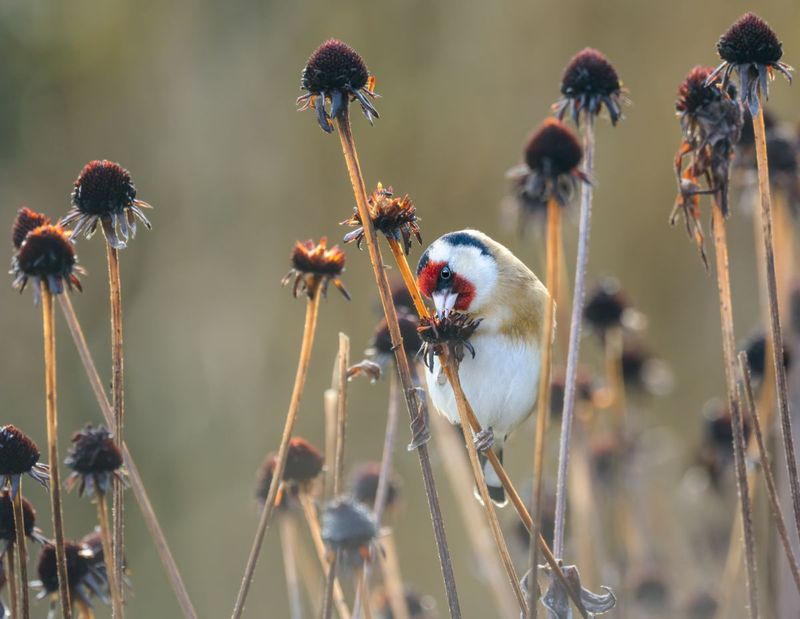
The idea that goldfinches will reliably strip coneflower seed heads through December is appealing, and the underlying biology makes it plausible. NC State’s native plant landscaping guide supports fall and winter feeding on coneflower seed, and NC Wildlife’s responsible feeding guidance recommends leaving heads through winter specifically to support songbirds.
December falls within that winter window, so continued use into that month is a reasonable expectation rather than a wild guess.
What the sources do not provide is a guaranteed schedule. Whether birds visit your specific plant in December depends on several variables that no single planting can control.
Viable seed production is the first hurdle: a plant that did not set a full crop of seed has less to offer. The rate at which birds consume available seed matters too, since a small cluster of coneflowers can be worked through quickly by an active flock.
Weather adds another layer of uncertainty. Heavy rain, ice, or snow can dislodge seeds or collapse stems before birds have a chance to use them.
Wind can strip loose seeds from the cone. Cornell Lab notes that goldfinches draw on a broad range of seed sources and will shift their foraging based on what is available locally, so a yard’s coneflower may or may not be the most attractive option on any given December day.
Clemson’s coneflower factsheet reinforces that a newly planted specimen may produce limited flowers and seed in its first season, meaning December activity is especially unlikely from a plant put in the ground this fall. The realistic frame is that you are building a resource that may pay off this winter or become more dependable as the plant matures over the next few seasons.
Build a varied native food supply over time
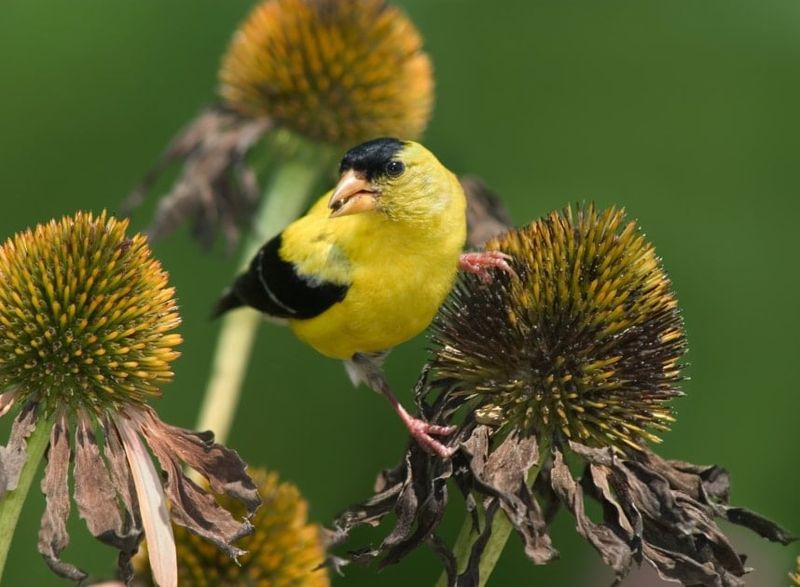
Goldfinches are opportunistic foragers with a long list of preferred plants. Cornell Lab’s goldfinch profile lists composite flowers, native thistles, sunflowers, and a variety of weedy-field plants as regular food sources.
A bird may visit your yard and spend its time on a patch of native asters rather than the coneflower you planted specifically for it, and that is perfectly normal foraging behavior.
NC Wildlife’s bird sanctuary guidance and their responsible feeding recommendations both emphasize plant diversity rather than relying on any single species. Adding black-eyed Susan (Rudbeckia fulgida), a North Carolina native whose seeds goldfinches also eat in fall, alongside native asters, sunflowers, and seed-producing grasses gives birds more reasons to stay and more options across the season.
If you want to supplement natural seed sources with a feeder, nyjer seed (sometimes called thistle seed) is a commercially produced option that goldfinches readily accept. Cornell Lab’s seed guide clarifies that commercial nyjer is processed and does not germinate into invasive thistles, which is an important distinction.
Do not plant invasive thistle species to attract birds; those plants spread aggressively and cause real harm to North Carolina natural areas, outweighing any short-term bird benefit.
Think of the coneflower as one useful piece of a larger native planting rather than a standalone solution. Each native species you add broadens the habitat value and gives the birds in your yard more food, cover, and opportunity across more months of the year.
Plant for the resource, then watch what the yard provides
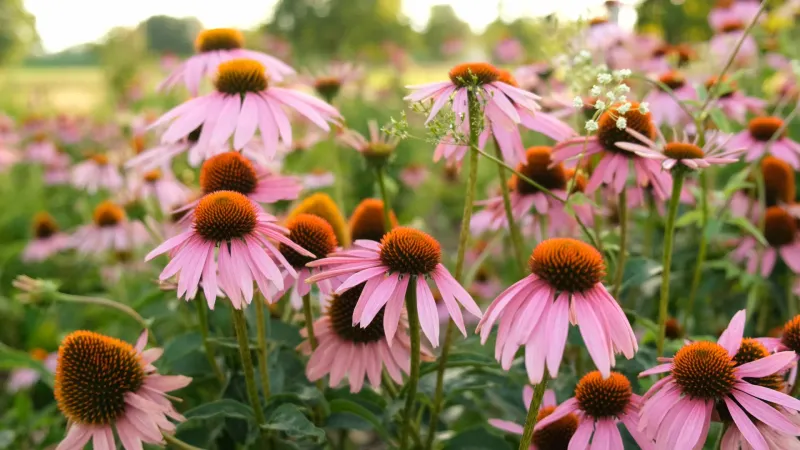
Putting an eastern purple coneflower in a suitable North Carolina site this fall is a straightforward act of backyard stewardship. Choose Echinacea purpurea or a cultivar with a normal, seed-bearing cone, place it in full sun or partial shade with well-drained soil, water it during dry spells while it roots in, and then resist the urge to cut every spent head at season’s end.
NC State’s plant profile documents exactly this use, with goldfinches feeding on standing dried heads in late fall.
What happens next depends on the plant, the season, and the birds in your neighborhood. A mature, well-established coneflower in a yard with other native seed sources has a reasonable chance of attracting goldfinches from fall into winter.
NC State’s wildlife landscaping guidance and NC Wildlife’s stewardship recommendations both point toward leaving these heads standing as a genuine contribution to songbird habitat. A newly planted specimen may take a season or two to deliver on that promise.
Patience is the real investment here. A coneflower that spends this winter building roots may become one of the most productive spots in your yard by the following fall, and the birds that find it then will likely return season after season.