
Pruning Your Fig Tree: Keeping Last Year’s Shoots Can Preserve Brebas, and Here’s Where To Cut
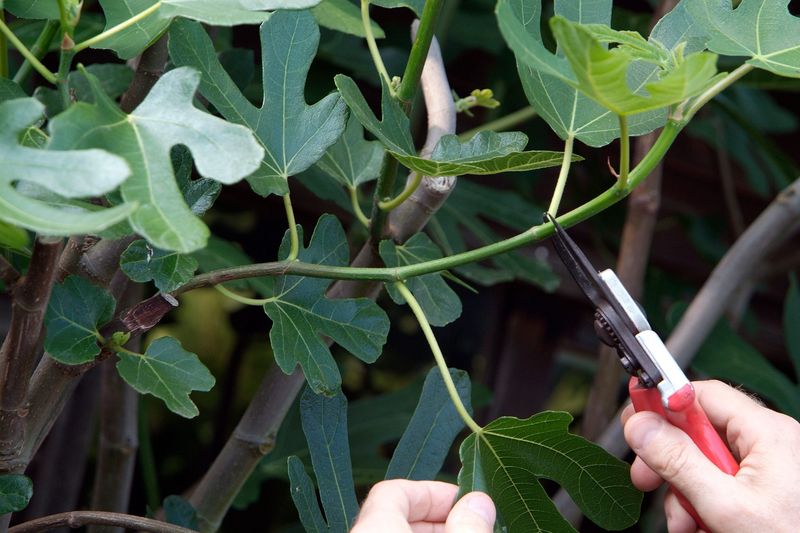
Pruning a fig tree can feel risky when you love the fruit it gives you. The good news is that a mature fig does not have to be pruned to keep producing.
Still, some of the wood you keep or remove can decide whether you get that early, first-of-the-season crop called brebas. Here is how to read your tree, make clean cuts, and protect both your harvest and your skin.
Which crop are you trying to protect?
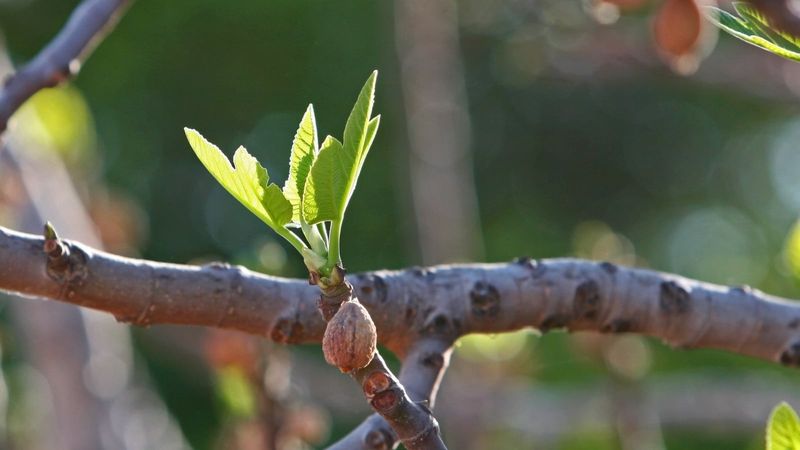
Your fig tree may grow two different crops, and they grow on different wood. Brebas are the early figs, and they form on last season’s shoots.
The main crop, which is usually the bigger harvest, commonly forms in the leaf joints of the current season’s new growth.
That detail matters when you read advice like “next summer’s figs grow on the branches you keep.” It is only fully true for brebas. University of California IPM guidance notes that mature fig trees set fruit on current-season growth, so removing old wood does not wipe out your harvest.
Not every fig behaves the same way. Rutgers Extension explains that many figs can produce both crops, but not every variety does, and some commonly grown types produce mainly a second crop.
Some figs, such as San Pedro and Smyrna types, also have different pollination and cropping habits, as UC Master Gardeners describe.
Your climate plays a part too. Winter injury can kill last year’s shoots, and that can cut the breba crop no matter what you do with your pruners.
Start by asking which crop you care about most. If you love those early figs, the wood you keep matters.
If the main crop is your goal, you have far more freedom.
A fig tree can fruit without annual pruning
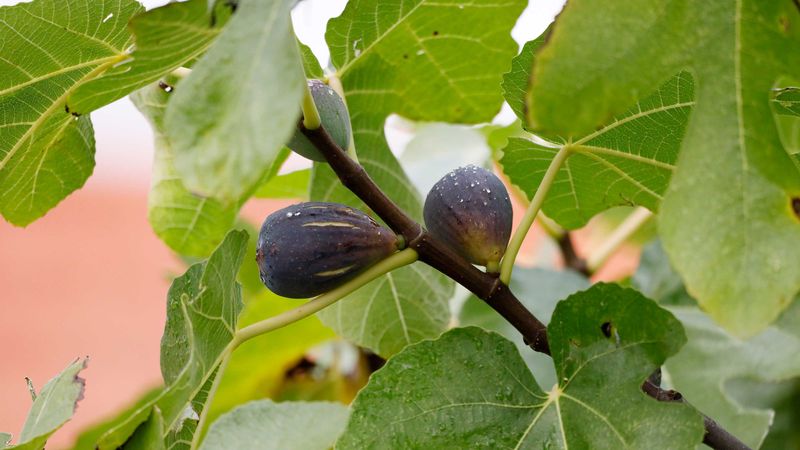
If you have skipped pruning for a few years, relax. Your tree is not in trouble.
UC IPM says mature fig trees tolerate a wide range of pruning, from very little to quite a lot.
UF/IFAS agrees that figs do not need pruning to be productive. So the choice to prune is about management, not a requirement for fruit.
There are good practical reasons to pick up the pruners. Dead or broken branches should come out.
So should branches that rub or cross each other, and limbs hanging so low that fruit sits in the dirt or the mower hits them.
You may also want to manage height so you can reach the figs, or thin the canopy so air and light get inside. Those are real benefits, but they are not the same as a guaranteed bigger crop.
Pruning does not universally raise yield, and some varieties do fine with a light touch.
Think of it this way: if the tree is healthy, reachable, and fruiting well, you can leave it alone. If something is dead, tangled, or too big for your space, a few smart cuts will help.
Decide what problem you are solving before you cut.
Keep some full-length shoots for brebas
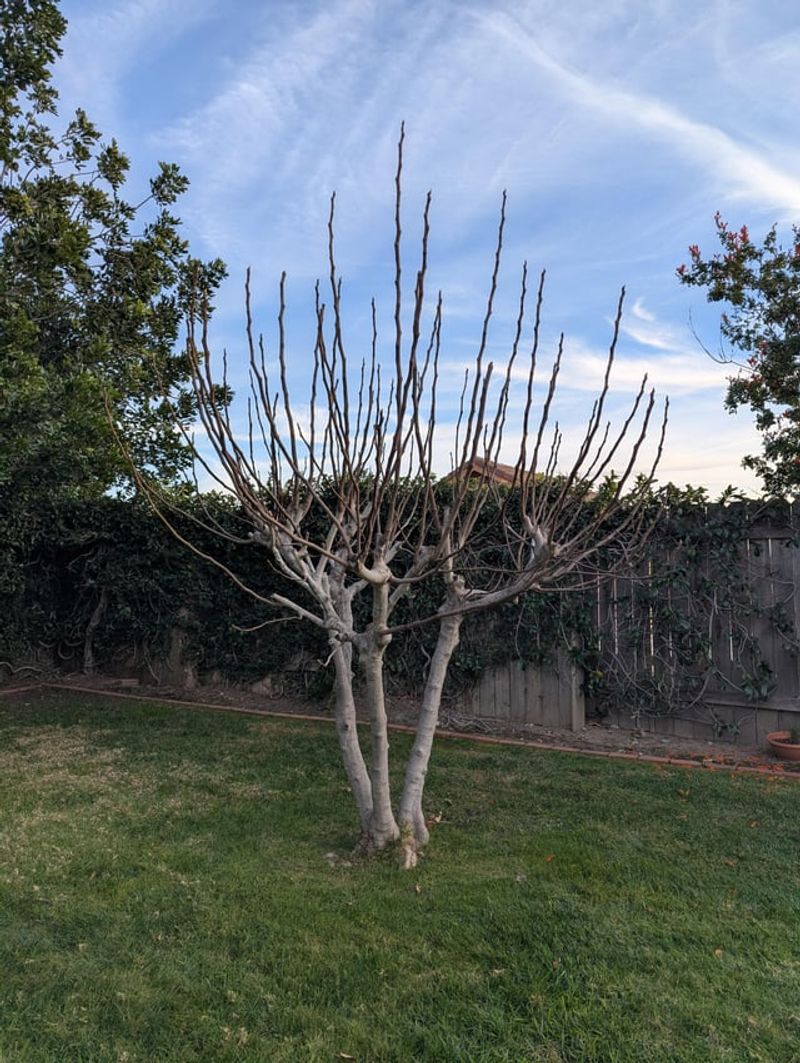
Want brebas? Then leave some of last year’s shoots at full length.
Rutgers Extension says brebas form near the ends of those shoots, so the tips are the part to protect.
Picture a long, pencil-thick shoot that grew last summer. If you trim it back by half, you cut off the zone where early figs would have formed.
You lose some brebas, though the tree can still push new growth that carries the main crop.
A simple approach is to keep a handful of healthy, well-placed shoots uncut and do any trimming elsewhere. Choose shoots that are not crowding the center and have plump, undamaged tips.
Check your tree’s habits before you plan around brebas. Some varieties produce few or none, and some mainly crop later in the season, as UC Master Gardeners point out when they separate fig types by cropping traits.
Local weather matters as well. In a cold area, tips may die back over winter, and brebas may not ripen before the season turns.
If you see black or brittle tips in spring, that is winter injury, and you can trim to live wood after you know what survived.
Remove unwanted branches at the branch collar
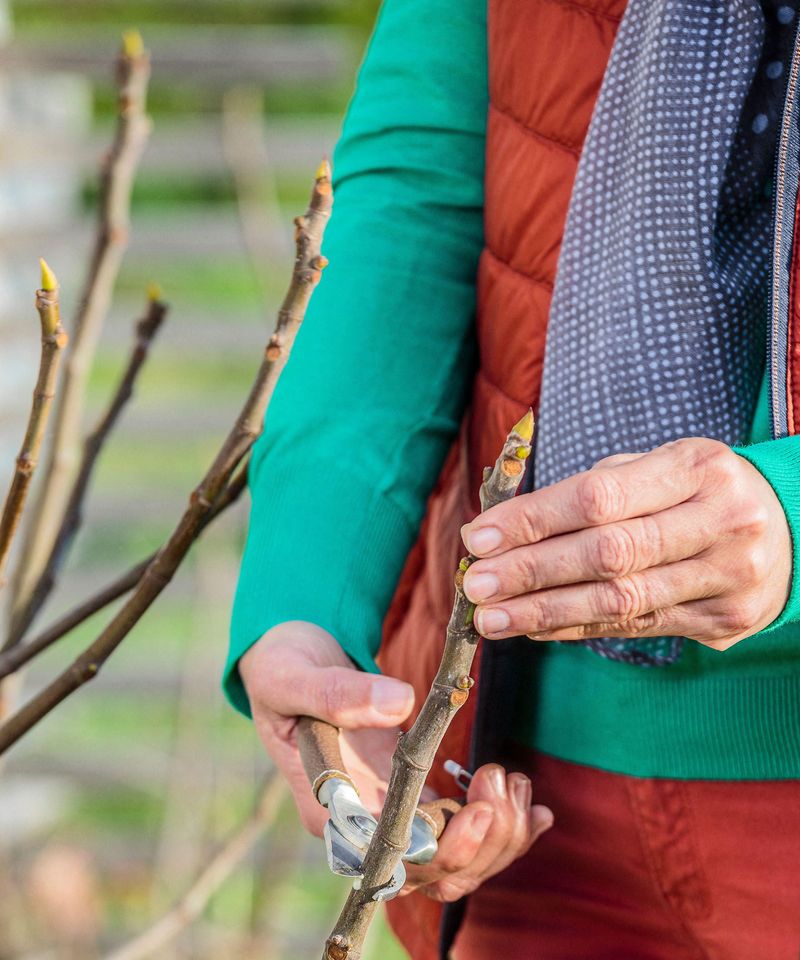
When a whole branch has to go, the cut location is what counts. Look at the base where the branch meets the trunk or a larger limb.
You will see a slightly swollen ring called the branch collar, and a rough line of bark above it called the branch-bark ridge.
Make your cut just beyond those landmarks. Iowa State University Extension advises cutting outside the collar and ridge so the tree can seal the wound properly.
Two mistakes are common. Cutting flush to the trunk removes the collar and leaves a bigger wound.
Leaving a long stub gives dieback and decay a place to start.
Good candidates for removal include dead wood, broken limbs, branches rubbing against each other, and limbs growing straight into the center of the tree. Use sharp, clean tools so you get a smooth cut rather than torn bark.
For a heavy branch, take off most of the weight first with a cut farther out, then make the final cut at the collar. That prevents the limb from tearing bark on its way down.
Shorten a shoot back to a bud or branch
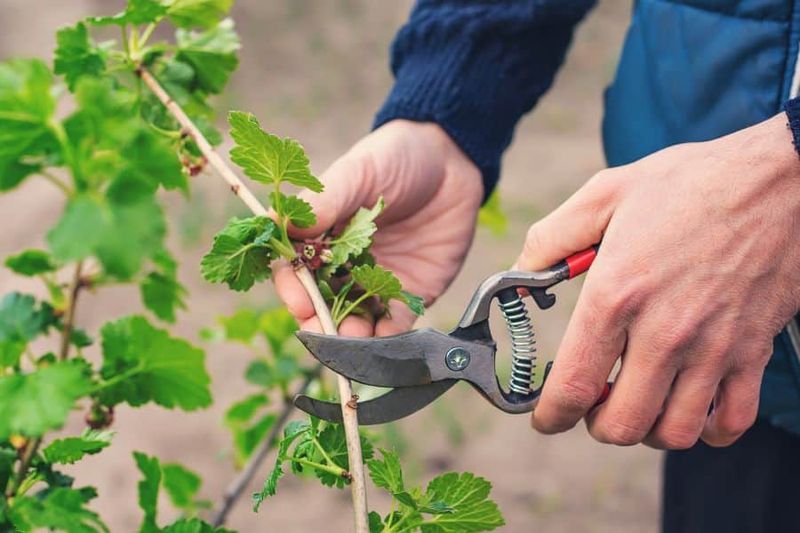
Shortening is a different job from removing a branch. You are not taking the whole limb.
You are trimming it back to a spot that can carry on growing, either a bud or a side branch.
Avoid chopping a shoot at a random point. Advice reproduced by Ask Extension from Clemson guidance points to cutting back to a bud or branch rather than leaving a bare stub.
Bud direction shapes the tree. If you cut just above an outward-facing bud, new growth heads away from the middle of the canopy, which helps keep the center open.
A tip in the Controlling fig tree growth answer describes using this approach to guide growth.
Tie the cut to your goal. If you want brebas, remember that they sit near shoot tips on last year’s wood, as Rutgers explains, so shortening those shoots gives up some of that early crop.
If the tree is simply too tall or wide, consider trimming a few shoots back to side branches while leaving others at full length. That spreads out the loss rather than taking it all from one place.
When should you prune in your region?
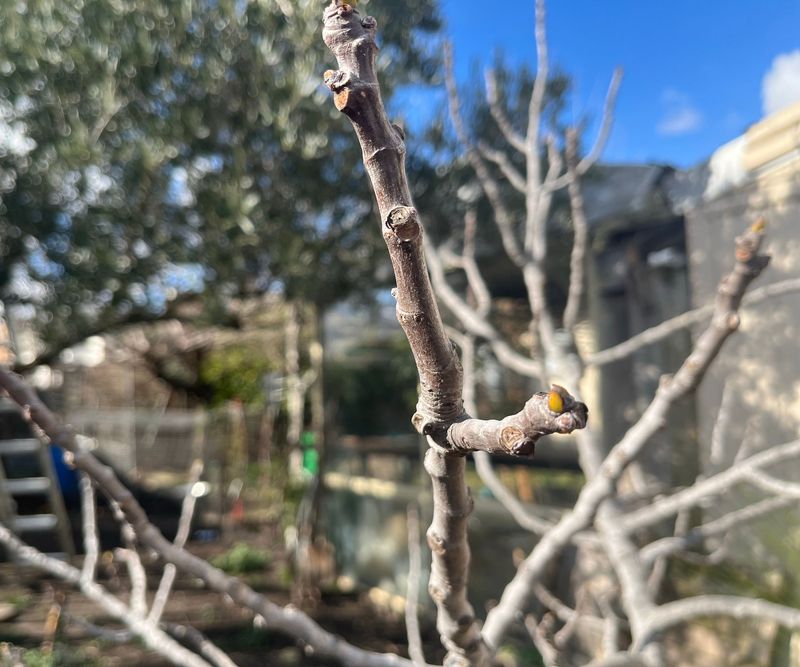
There is no single date that works across the country. Timing depends on where you live and what you want from the cut.
In colder areas, structural pruning usually happens in winter after the harshest weather has passed but before spring growth starts. Guidance reproduced by Ask Extension follows that pattern, and NC State Extension suggests late winter just before growth begins.
Florida is different. UF/IFAS recommends pruning after harvest in late summer and warns that heavy winter pruning can eliminate the next year’s crop.
Waiting until the end of winter in colder places has a practical benefit. You can see which tips were damaged by frost and cut to live wood instead of guessing.
Heavy cuts carry a cost anywhere. Rutgers notes that severe pruning can sharply reduce the first crop.
A hard size reduction may trigger lots of new growth, but it can remove fruiting wood too.
Instead of following a calendar from another state, check with your local extension office. They know your frost dates and your fig varieties, and they can tell you what timing fits.
Protect your skin from fig sap
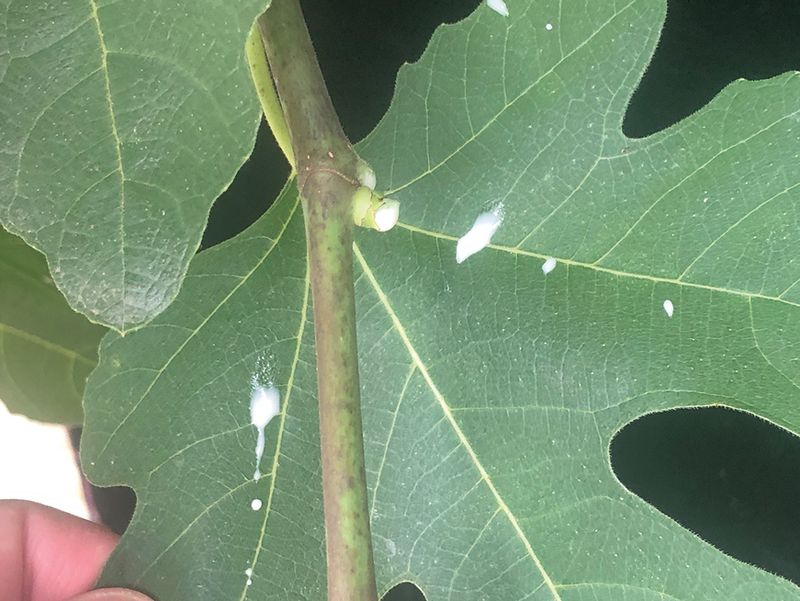
Fig pruning has a hidden hazard. The milky sap can irritate skin, so gloves and long sleeves are a smart habit every time you work on the tree.
Bare-handed pruning is not worth the risk.
UF/IFAS advises protective clothing when handling figs and fig wood. A University of California Cooperative Extension article explains that sap on skin followed by sunlight can cause phytophotodermatitis, a painful reaction that sometimes blisters.
Not every splash leads to a reaction. Still, the risk is real enough that you should not shrug it off, especially on a bright day.
If sap gets on your skin, wash it off with soap and water as soon as you can and keep that area out of the sun. Wipe your tools and wash your gloves afterward so you do not carry sap to your face or arms.
Wear eye protection when cutting overhead, since sap can drip. If you notice redness, burning, or blisters after pruning, a medical professional can help.
Keep the wood that matches your harvest goal
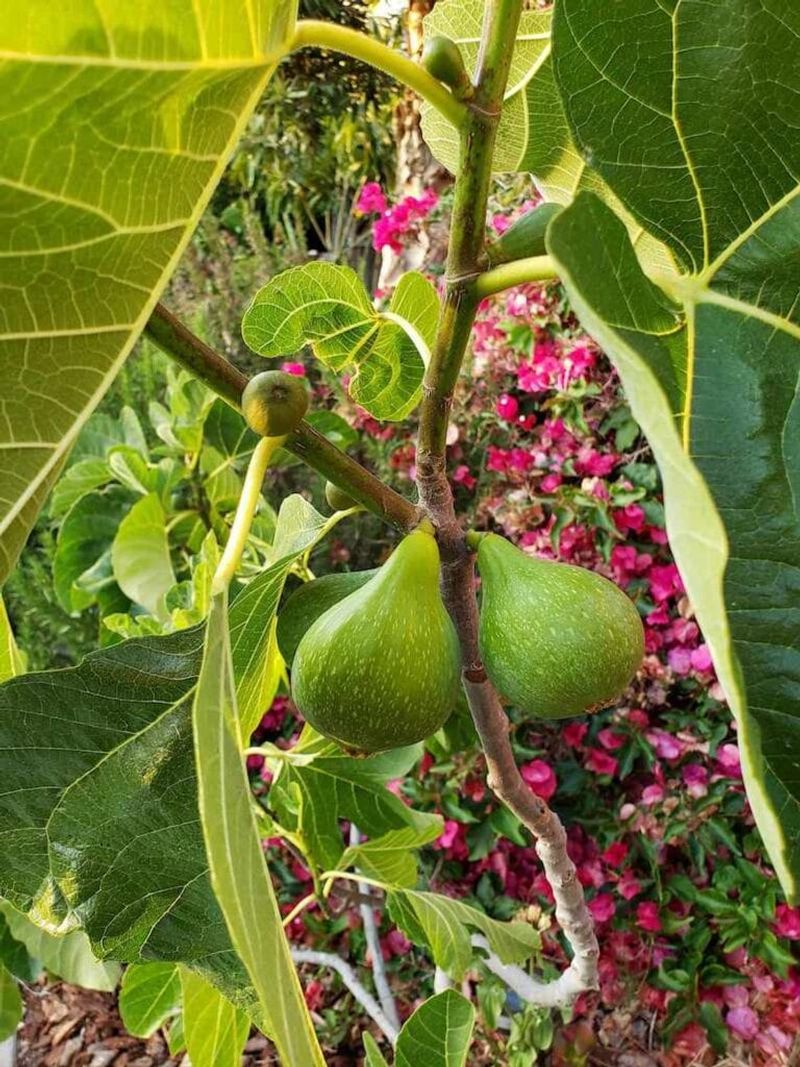
Here is the simple rule. If brebas matter to you, keep some previous-season shoot tips, as Rutgers describes.
Otherwise, prune only for tree condition, access, or size, since UC IPM says the main crop commonly grows on new shoots.
Follow timing that fits your region, such as the post-harvest guidance from UF/IFAS in Florida. Your fig tree already knows how to make fruit, and your job is mostly to stay out of its way.