
Purple Lovegrass for a Sunny, Well-Drained Driveway Edge in North Carolina
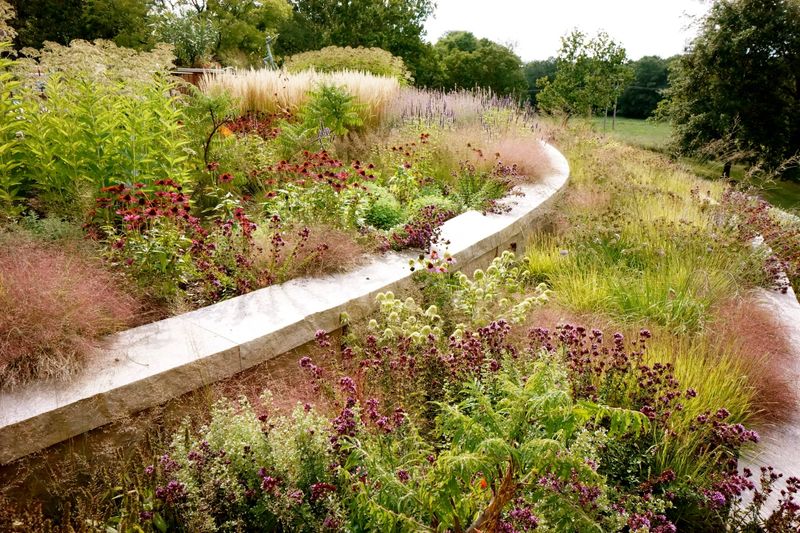
Along many North Carolina driveways, there is a thin strip where lawn grass looks tired by midsummer. Heat bouncing off the pavement and packed soil can make that spot hard on plants.
Purple lovegrass, a native grass, may be a good fit for some of these sunny edges. Here is how to tell if your strip is one of them.
Pavement can make an edge a harder place to grow
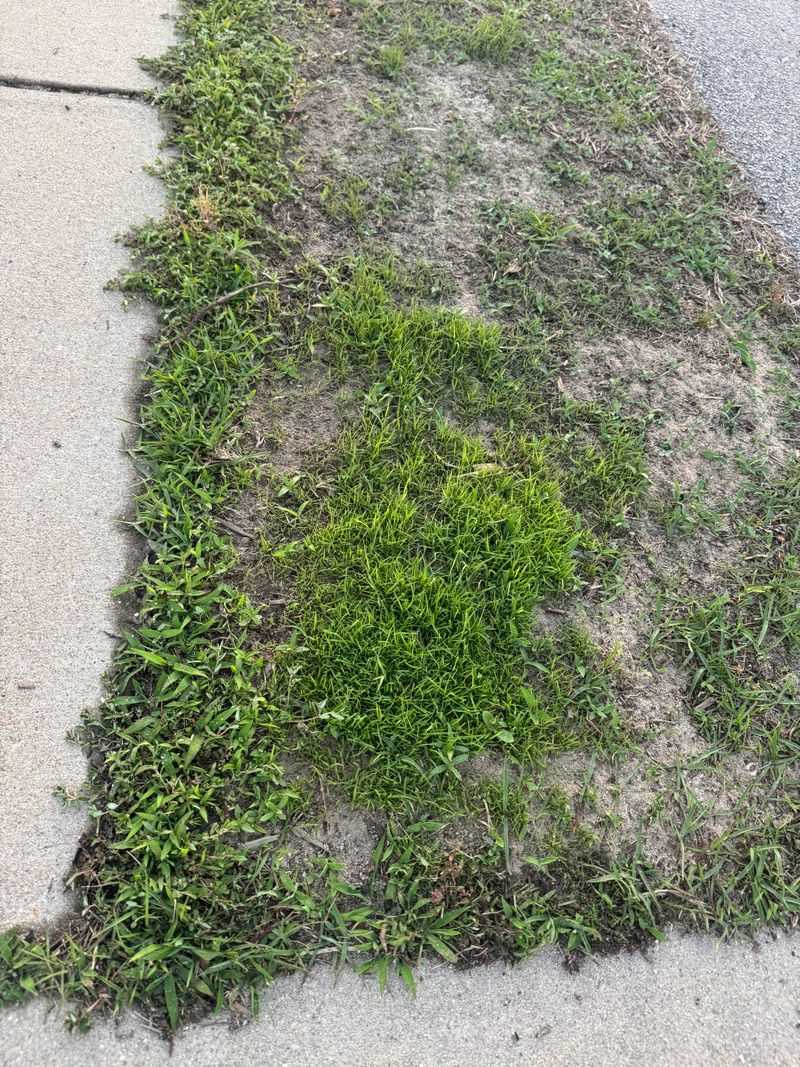
Walk out to the edge of your driveway on a July afternoon and you can feel it. Pavement soaks up sun and gives the heat back, so the plants beside it get hit from above and from the side.
NC State Extension’s native plant handbook notes that pavement reflects heat and that urban sites can have disturbed soils and altered drainage.
Those details matter because a driveway edge is not the same as a garden bed. Builders often scrape, fill, and pack the soil near hard surfaces.
Water may run off the pavement or drain unevenly, so one spot can stay dry while another collects water after storms.
These are stresses, not a guarantee of failure. Plenty of lawns do fine beside driveways, especially where the soil is decent, the spot gets some shade, or someone waters now and then.
If your grass looks healthy, there is no reason to rip it out.
But if the same patch keeps browning, thinning, or turning to bare dirt, the site is probably telling you something. Look at when it struggles, how hot the pavement gets, and how the soil feels when you push a screwdriver into it.
Those clues help you choose a plant that matches the conditions instead of fighting them. No single plant fits every strip, and this one is no exception.
What purple lovegrass offers in a narrow space
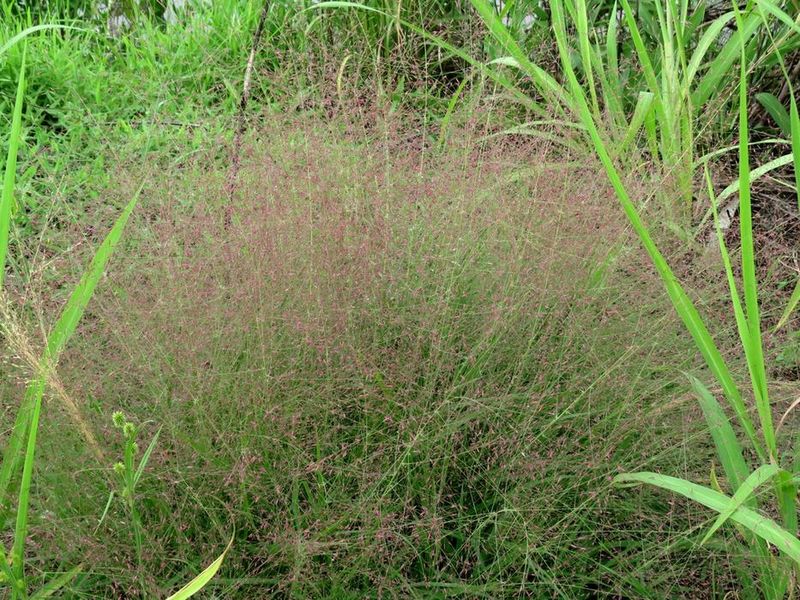
Purple lovegrass (Eragrostis spectabilis) is a native grass that stands out for tight, sunny places. In my view it is the strongest statewide fit among the plants researched for this kind of spot, though that is a judgment about site match and not a title it has officially earned.
NC State’s Plant Toolbox lists it for the Coastal, Piedmont, and Mountain regions of North Carolina.
It stays fairly small, about 8 to 14 inches tall and 10 to 16 inches wide. That is far more manageable along a walkway than taller native grasses such as little bluestem, which can reach 2 to 4 feet in upright clumps.
In late summer it sends up a hazy cloud of purplish flower heads.
The plant likes open, full sun and well-drained, slightly dry soil. NC State says it tolerates hot, dry conditions and grows naturally along roadsides and in sandy fields.
That history is why it makes sense beside pavement.
Native status does not make it right for every yard, though. A shady strip, ground that stays soggy, or very compacted soil may be a poor match even for a plant that grows wild in your county.
Match the plant to the sun and drainage you actually have.
Frogfruit is sometimes suggested for similar spots. It creeps and mats instead of forming clumps, and state flora records place its native range chiefly along the coast, so it is not a safe statewide pick.
Expect clumps, not instant sod
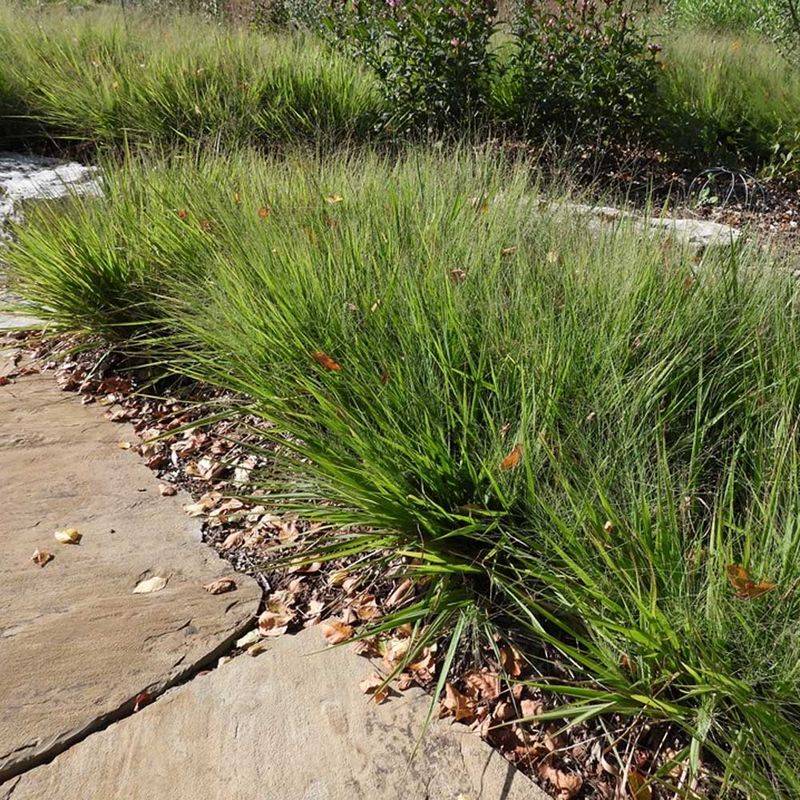
Picture a row of soft green tufts with a little soil showing between them. That is a realistic look for purple lovegrass, especially in the early years.
It spreads slowly by rhizomes, which are underground stems, and it grows in clumps.
That habit is described in NC State’s plant profile, which calls the spread slow. It does not describe a fast sod-former or a solid carpet.
If you want a green strip that looks like a mowed lawn from day one, this plant will disappoint you.
Think of it as a low, spreading ornamental planting instead. The clumps have texture and movement, and over time they may creep toward each other.
I will not give you a timeline, because site conditions, sun, soil, and care change how quickly any plant settles in.
Gaps also mean open soil, and open soil invites weeds. Purple lovegrass should not be counted on for weed control, especially while young.
Plan to pull unwanted seedlings by hand and check the strip regularly during the first seasons.
A good test: stand back and ask whether you would be happy with a tidy line of grass clumps and some visible ground. If so, slow growth is easy to live with.
If not, a different approach may suit you better.
Check the site and address compaction
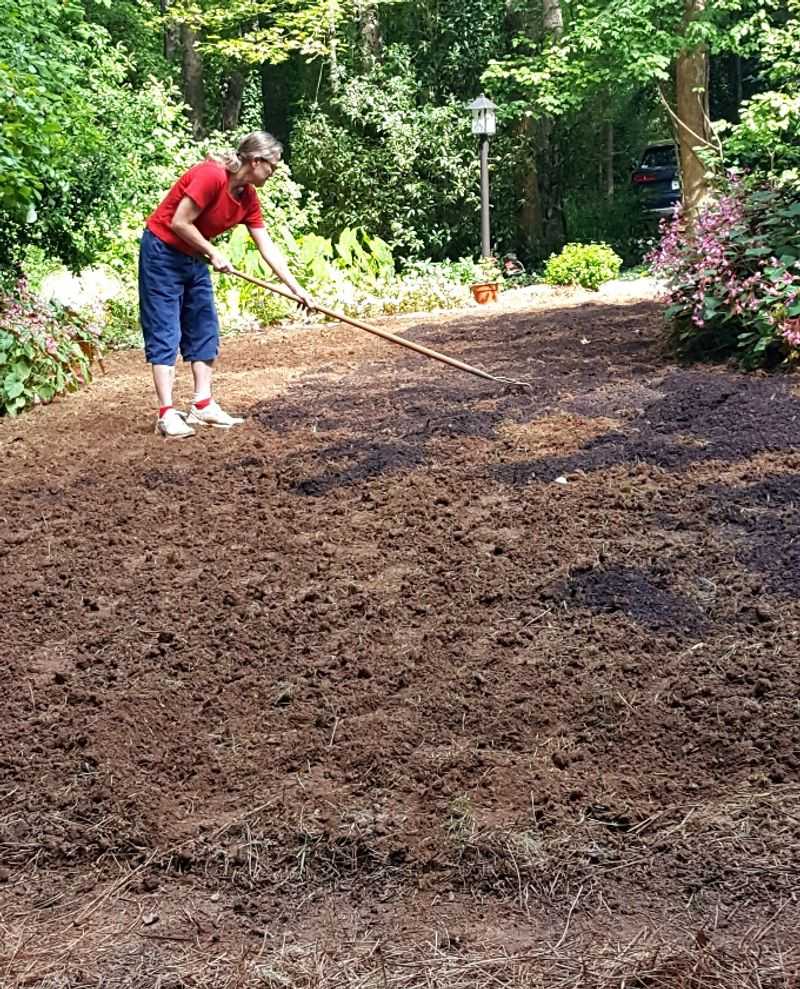
Before buying a single plant, spend a weekend morning studying the strip. Note how many hours of direct sun it gets, where water goes after a heavy rain, and how much room you really have between the pavement and the lawn or bed.
NC State’s handbook advises assessing sun, soil, drainage, and space rather than choosing a plant on toughness alone.
Next, look at moisture. Does water pool there for a day or more, or does it drain quickly and dry out?
Purple lovegrass prefers full sun and well-drained, slightly dry soil, so a spot that stays wet or sits in shade is likely a poor fit.
Then think about compaction. The handbook explains that compacted soil can impede water movement and root growth, and it recommends addressing compaction before planting.
A simple clue is how hard it is to push a screwdriver or trowel into the ground a few days after rain. If it barely goes in, take that seriously.
I am not going to give you a recipe, because the right fix depends on your soil and how bad the damage is. Your county Cooperative Extension office is a good place to ask.
Serious compaction, heavy shade, or soggy ground can undermine the plant no matter how well you care for it, and in that case a different plant or a different use for the strip may be wiser.
Water during establishment and keep traffic light
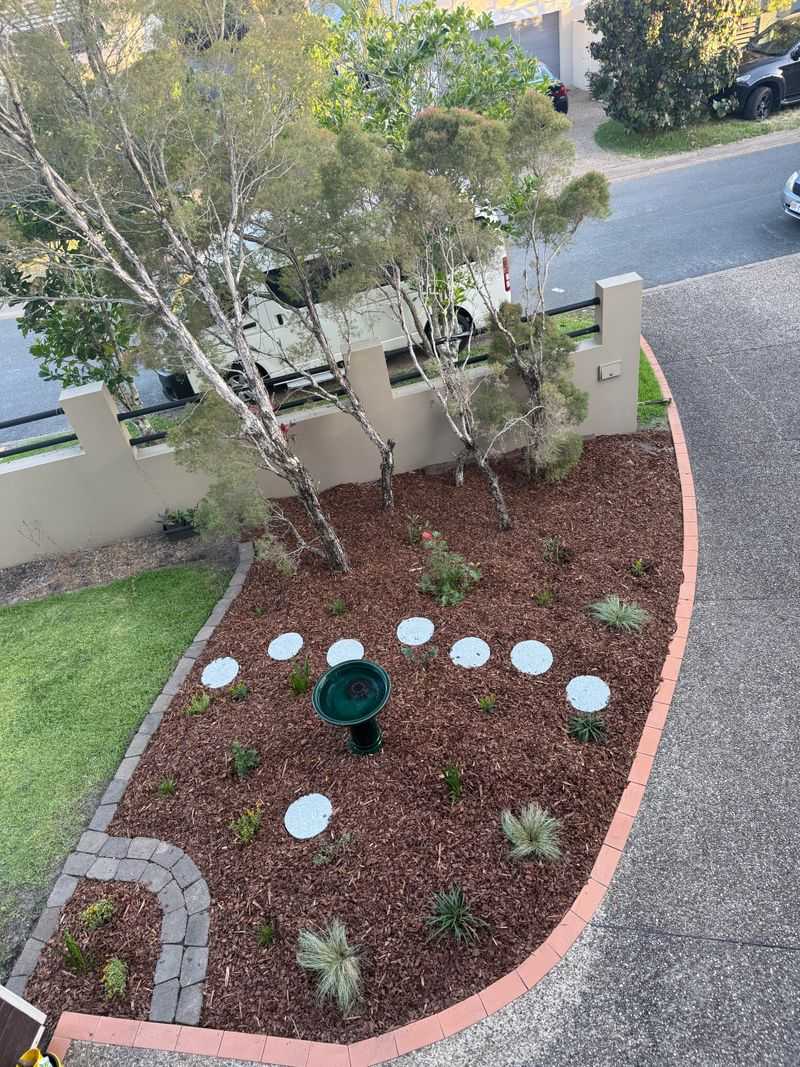
Drought tolerant does not mean you can plant it and walk away. NC State recommends watering new native plants for the first few weeks or until the roots establish.
A small new plant has not yet grown the roots that carry it through a dry spell.
The handbook also cautions that areas where hard surfaces interfere with rainfall infiltration may need extra water even after establishment. Rain that lands on a driveway may run off instead of soaking into the strip beside it.
After a storm, check the soil a few inches down before assuming the plants got a good drink.
Traffic is the other limit. NC State says purple lovegrass can be mowed a few times per year where it gets light foot traffic.
Light is the key word. An occasional step is one thing, but a daily path to the car door or a spot where kids cut across is another.
If people regularly walk through the strip, a stepping stone, a mulched path, or a tougher surface will serve you better. Purple lovegrass is not a heavy-use lawn substitute.
Keep it where feet rarely land, and it has a fair chance of looking good.
Choose it when the conditions match
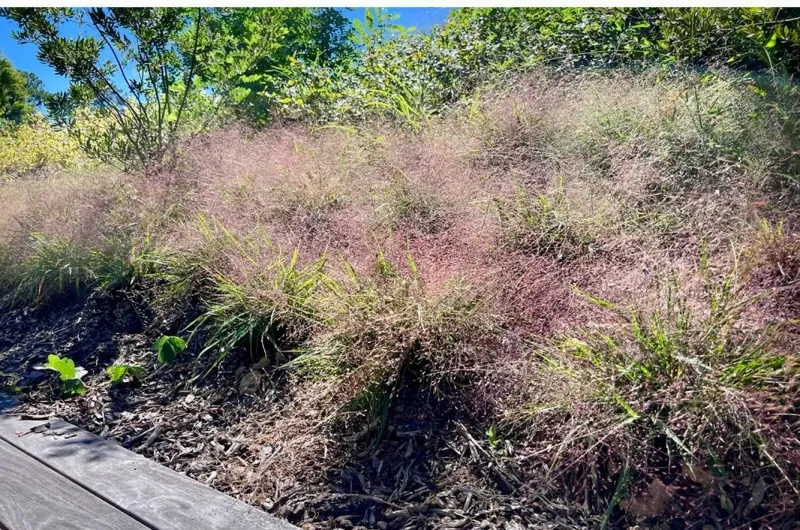
Here is a simple rule. Consider purple lovegrass if your strip gets full sun, drains well, sees only light foot traffic, and you are comfortable with slow, clumping growth.
If any of those pieces are missing, look harder at other options.
It is not a guaranteed fix for every driveway strip, and it will not behave like turf. Expect some patience, some early watering, and some hand weeding while the clumps settle in.
If wildlife matters to you, keep expectations modest. NC State lists it as a larval host plant and notes that its seeds disperse as they mature and fall.
That is useful to know, but it does not predict which animals will show up in your yard.
Sometimes the best plant is simply the one that suits the spot you have. A hot edge may never be easy, but it can still look good.