
What Hummingbirds Remember About Flowers and When Nectar Returns
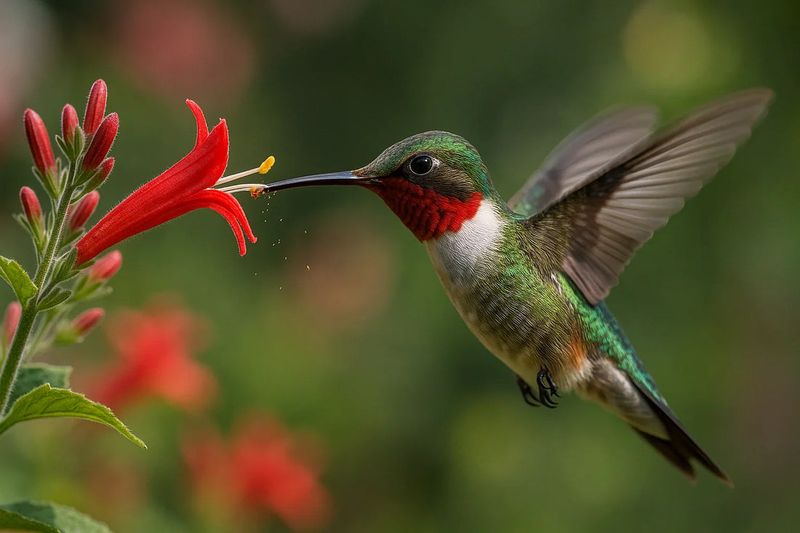
A hummingbird zips up to your feeder, sips for a few seconds, and vanishes. Scientists have found that birds like this can remember where good food was and learn how long a nectar source takes to refill.
That is a lot of bookkeeping for a creature that weighs less than a nickel. Here is what the research really shows, and where the story stops.
What hummingbirds can remember
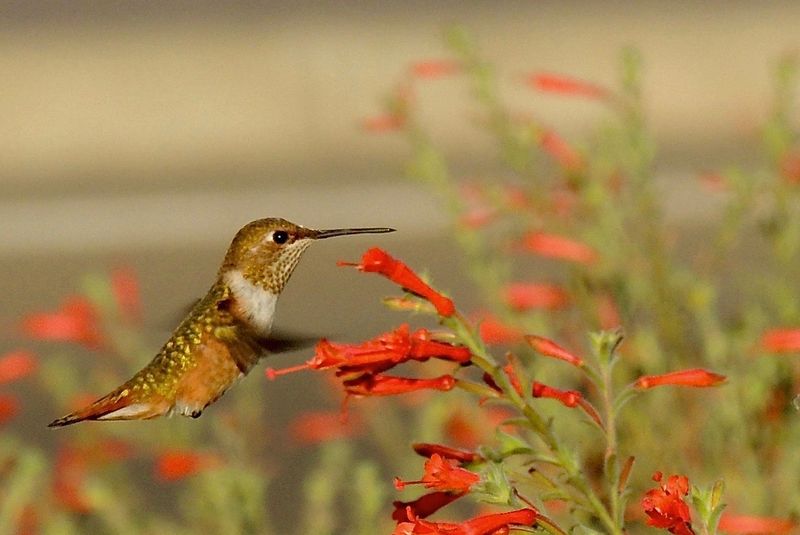
Picture a hummingbird working a patch of flowers. Each stop costs energy, so a bird that remembers where the good nectar was has a real edge.
Researchers have tested this with free-living green-backed firecrown hummingbirds. In a field study of firecrowns, the birds recalled the location, the quality, and the renewal rate of rewarding artificial flowers.
In plain terms, they kept track of where to go, how sweet the reward was, and how fast it came back.
That combination of where and when is the heart of the story. A bird that only knew a place was good might keep returning to an empty flower.
A bird that also learned the refill pace can skip the wait and spend its energy elsewhere.
Now for the limits. The scientists tested particular feeding sites that they set up, not every blossom in a home garden.
Nobody has shown that a hummingbird carries a complete list of every flower in your yard.
The study also covered one species in one kind of setup. It is a strong clue about how hummingbirds forage, but it is not a promise about every bird at every feeder.
Think of it as a window into what these birds are able to learn, not a full description of what your visitor is doing today.
The next section looks at how the timing part was tested, because that is where the numbers get fun.
The refill experiment tested intervals, not a household schedule
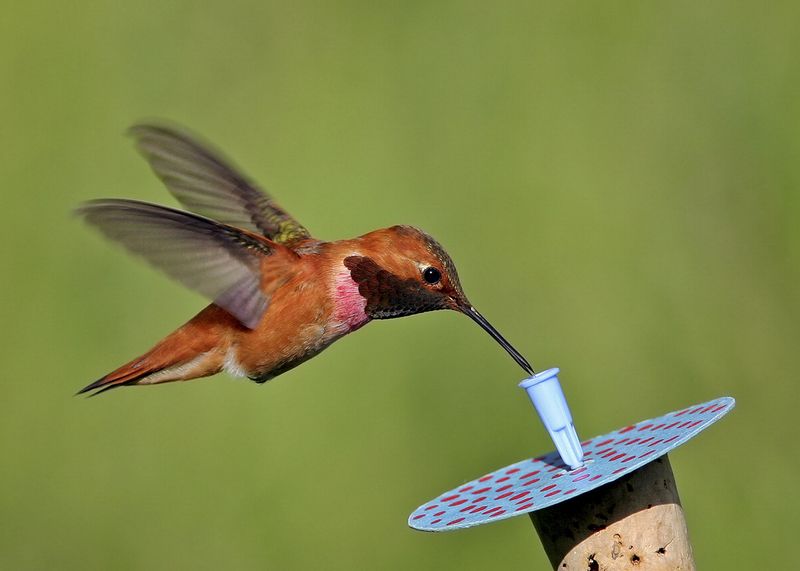
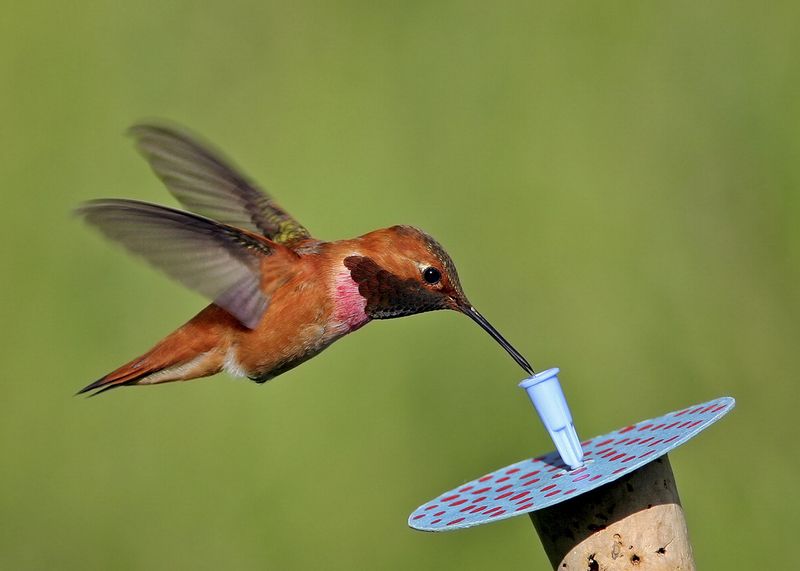
Eight artificial flowers, three wild male rufous hummingbirds, and a stopwatch. That was the setup in a 2006 field experiment on timing.
The flowers sat in a fixed array. Four of them refilled 10 minutes after a bird emptied them, and the other four refilled after 20 minutes.
The clock started when the bird drank, not at a set time of day.
The birds’ return patterns tracked those two intervals. Flowers with the shorter wait tended to get revisited sooner than flowers with the longer wait, and the birds generally came back when or after the nectar had returned.
That does not mean perfect clockwork. Individual visits varied, and some return trips were earlier or later than the timer would suggest.
The pattern held up across the birds, but each single visit was a bit messy.
Here is the key idea. The birds seem to have learned an elapsed interval, a rough sense of how long to wait after emptying a flower.
That is different from knowing the time on a clock.
It is also very different from predicting when a person will top off a feeder. In the experiment, the researchers controlled the refill timing, and nothing in it tested whether birds follow a human caretaker’s routine.
A bird that shows up right after you refill may simply be a regular visitor checking a place that has paid off before.
Location can matter more than a flower’s appearance
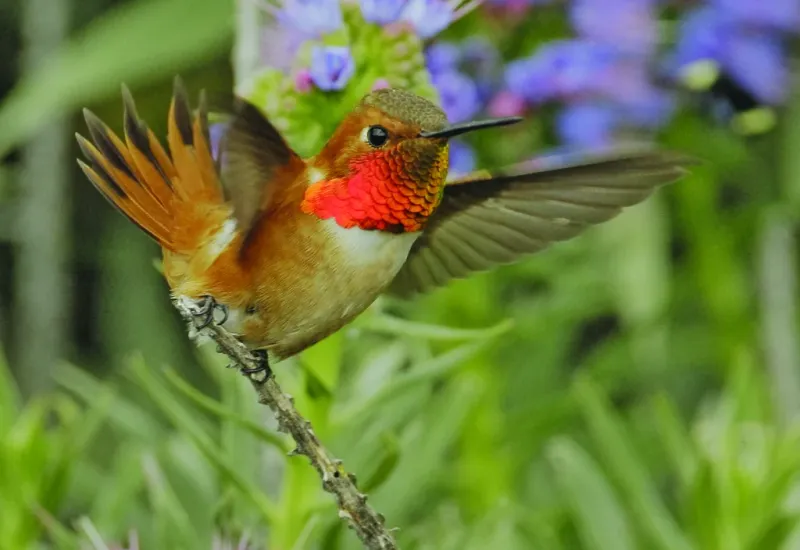
Suppose a bird finds sweet nectar in a bright red flower. Does it remember the red flower, or the spot where the flower stood?
Researchers asked exactly that in a study of rufous hummingbirds. They compared location with the local visual look of the flowers.
In that study, location guided where the birds chose to go, rather than a flower’s color or pattern.
So a hummingbird may head for a rewarding place even when the flower there looks different. For a gardener, that explains why a bird sometimes hovers at an empty spot where a feeder or flower used to hang.
Place memory is not the same as a perfect garden blueprint, though. In research on landmarks, nearby cues mattered for pinpointing where a flower had been.
A bush, a post, or a fence edge may help a bird narrow down the exact spot.
That means a remembered place probably works together with the surroundings. It is not a single, complete, never-changing map of your whole yard.
A practical example: if you move a feeder just a couple of feet, a bird may circle the old position first. It may be using the spot, plus the landmarks around it, to guide the search.
A larger hippocampus offers context, not an IQ score
Brains can offer clues about what an animal needs to do well. In birds, the hippocampal formation is a region linked to spatial memory.
A comparative brain study found that hummingbirds have a relatively large hippocampal formation. That fits a life spent finding scattered flowers and remembering which ones paid off.
Still, size is only a comparison. It does not show that hummingbirds are smart across the board, and it does not match them to human thinking.
The researchers also cautioned that the exact anatomical basis needs careful interpretation, so the brain region is context for the behavior, not a settled explanation.
You may also run into the phrase episodic-like memory. It is a research term for performance that includes elements such as what, where, and when.
A discussion of how scientists deconstruct memory explains why the wording is qualified.
For hummingbirds, it describes a bird acting as if it tracked which flower was sweet, where it was, and how long it needed to refill. It does not prove the bird consciously replays past meals the way a person recalls a dinner.
So the better label for these birds is specialist, not genius. They have a very good toolkit for one demanding job: finding nectar.
At your feeder, watch patterns without overreading them
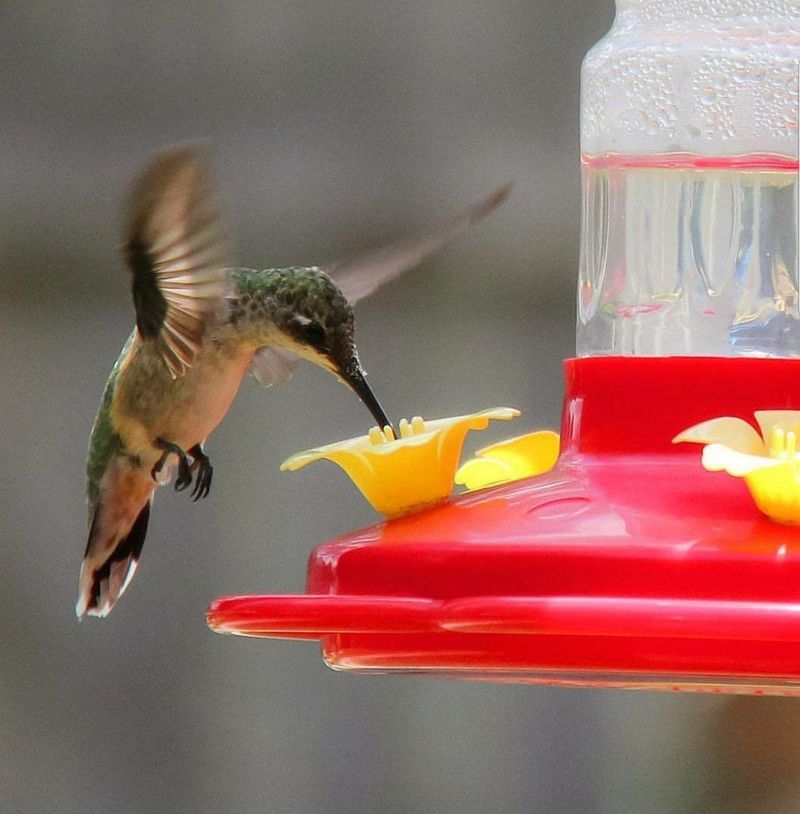
Watching your own feeder can be a lot of fun. If a bird returns again and again, it may be acting on what it learned about rewarding places and how fast nectar comes back.
Just remember what the science covered. In the timing experiment, flowers refilled on a controlled schedule after the bird emptied them.
It did not test whether birds follow a person’s refill routine.
A few gentle ways to notice behavior: jot down roughly when a bird visits, see whether it checks the same perch or spot first, and note whether it lingers longer at some flowers than others. These are just observations, not tests that prove memory.
Many things can change a visit, including weather, other birds, and which individual shows up.
Feeder care is a separate matter from the memory research. Cornell Lab guidance recommends plain table sugar and water, with no honey and no red dye.
Audubon suggests one part white sugar to four parts water, no artificial sweeteners, and a change every day or every other day in hot weather. If the nectar turns cloudy or looks spoiled, clean the feeder right away and refill it with fresh mix.
A remarkable skill with clear limits
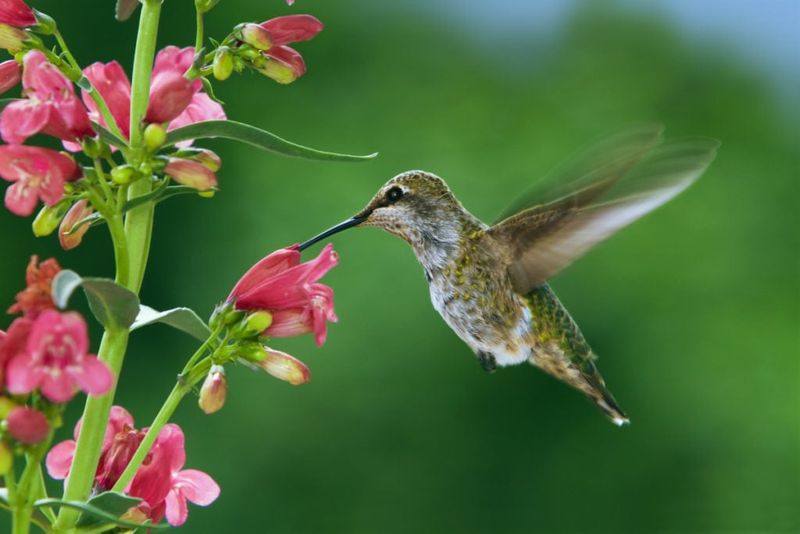
Hummingbirds can learn where good nectar is and how long it takes to come back. The timing work showed return patterns that followed set refill intervals, though not perfectly.
The location work showed that place can guide a return trip.
None of it proves a map of your whole yard or a bird tuned to your schedule. Next time one hovers at your feeder, you are watching a tiny forager keep very good accounts of a few sweet places.