
Removing Bagworm Cases This Winter Can Reduce Spring Bagworm Pressure on Your North Carolina Evergreens
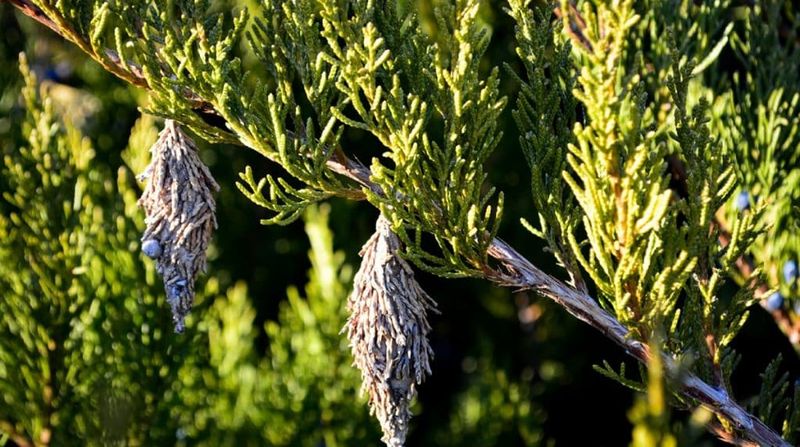
Those little brown sacks hanging from your arborvitae or juniper are not decorations. They are bagworm cases, and some of them hold the next generation of leaf-eating caterpillars.
A few minutes of careful hand-picking in fall and winter can lower the number of larvae that hatch next spring. It will not guarantee a damage-free year, but it is one of the simplest ways to protect your yard.
Bagworms can badly damage North Carolina evergreens
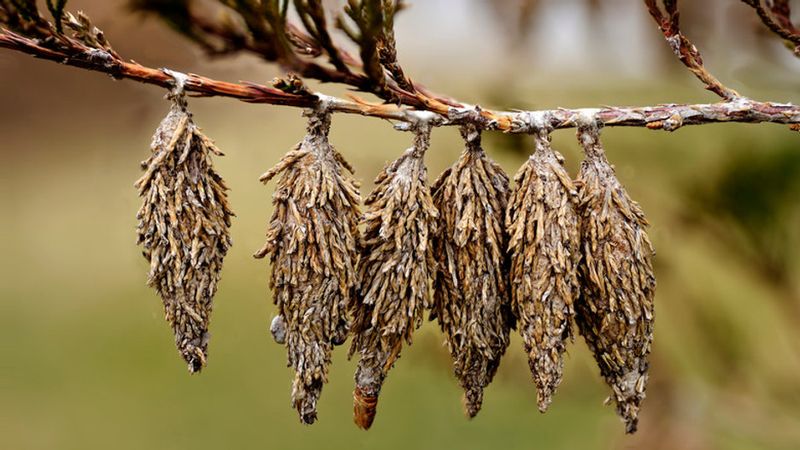
Walk out to your arborvitae on a crisp morning and look closely at the branches. Bagworms occur statewide in North Carolina, from the mountains to the coast, so no part of the state gets a free pass.
NC State Extension’s bagworm guide describes how these caterpillars build cases from silk and bits of the plant they feed on.
Arborvitae is highly susceptible, which matters because it is such a popular privacy screen in residential yards. Juniper and other conifers are also common hosts.
Bagworms favor conifers, but they can feed on many deciduous trees and shrubs too, so a maple or a rose nearby is not automatically safe.
The trouble comes from heavy feeding. NC State’s conifer pest page notes that bagworms can badly defoliate conifers and, in severe cases, kill them.
Many evergreens do not regrow needles well from bare wood, so damage can last.
That is why a quick look at your own plants is worth the time. A single hedge can shelter a surprising number of cases.
Finding them early gives you choices before the caterpillars start to eat in late spring.
Not every brown case contains eggs
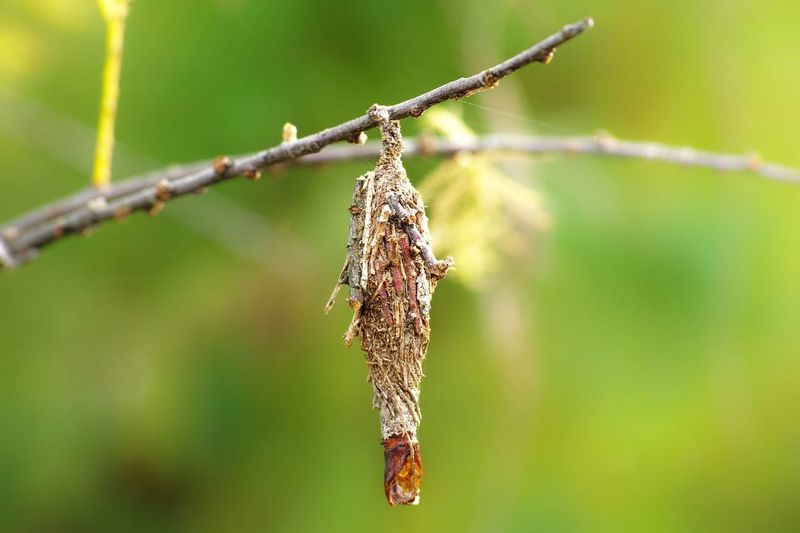
The reason fall and winter removal can help comes down to the bagworm life cycle. In North Carolina, adult males emerge and mate in August and September, according to NC State Extension.
The female never leaves her case, so she lays her eggs inside it in fall.
Those eggs spend the winter tucked in the case and hatch in May or June. A mated female’s case can hold 500 to 1,000 eggs.
Take that case off the plant before spring, and you remove a whole batch of potential caterpillars.
Here is the catch. Not every brown case is a full egg sack.
Some cases are old and empty, and others may still hold larvae or pupae. NC State says many cases contain eggs, not all of them, as noted in its conifer pest guidance.
You cannot tell what is inside just by looking at the outside. A plump case and a faded one can look much alike from a few feet away.
So treat every reachable case on an infested plant as worth removing, while knowing that a few may be duds.
Winter scouting helps target localized infestations
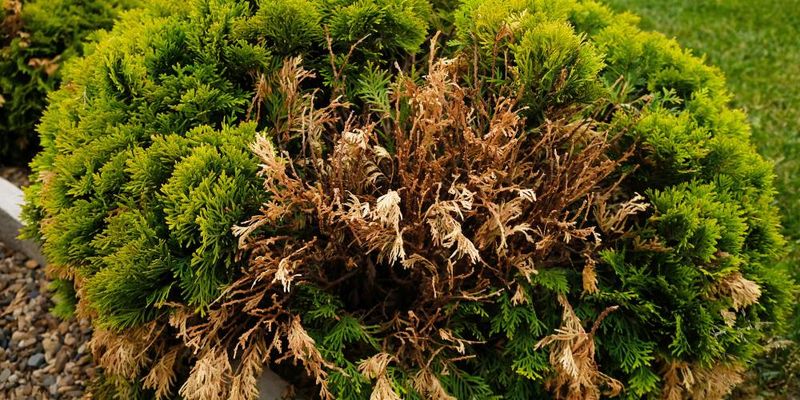
Winter is the easiest time to find bagworm cases. Many deciduous plants are bare, and the brown sacks stand out against green needles.
Pick a mild afternoon, grab a pair of gloves, and take a slow lap around your evergreens.
Start with plants that already show cases or ragged, browning foliage. NC State Extension notes that infestations can be localized, meaning one plant may be loaded while the one beside it is clean.
A hedge is rarely hit evenly.
Check the underside of branches and the inner parts of the plant, where cases hide best. Look at the tops of junipers and the sides of arborvitae facing your house or fence.
Keep your eyes open for cases hanging from other nearby shrubs and trees, since bagworms are not picky about only one host.
Do not assume every plant in your yard carries the same risk. A quick tally helps: note which plants have cases and roughly how many.
That list tells you where to spend your time now and where to look first when spring arrives.
Cut the silk attachment instead of pulling
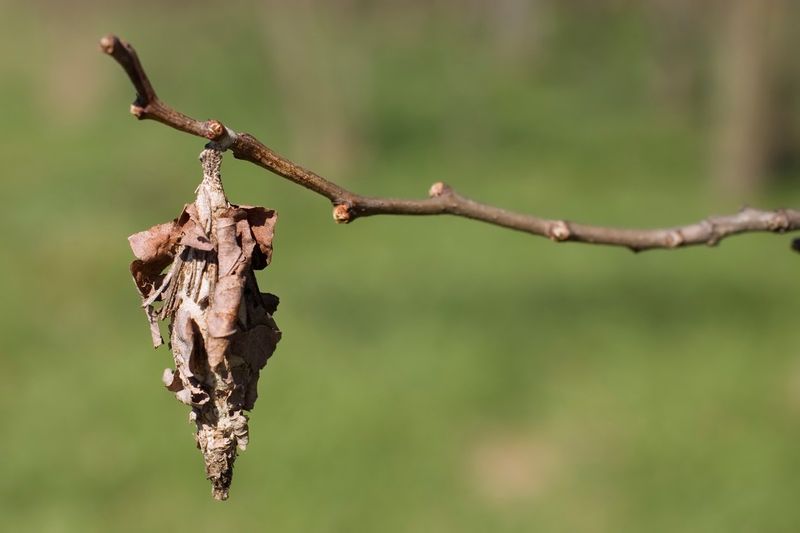
Grab a pair of small pruning snips or sharp scissors and a bucket. Hold the case gently, find the silk strand that wraps the twig, and cut it.
Then lift the case away with the silk still attached to it.
It is tempting to yank the case off, but pulling can scrape needles and tear the twig’s surface. NC State Extension also warns that silk left on a twig can eventually girdle it, squeezing the branch as it grows.
A careful snip avoids both problems.
The Henderson County Extension pest alert backs hand removal for small infestations you can reach. That is the key limit: this job suits a few shrubs, not a towering tree.
Set a firm safety line. Do not climb a ladder in wet weather, lean far over a fence, or stretch from an unstable spot to get a high case.
A missed case is better than a fall.
Work slowly, and collect each case in your bucket as you go. Look back over the branch after cutting to make sure no loose silk loops remain.
Choose a disposal method and follow it
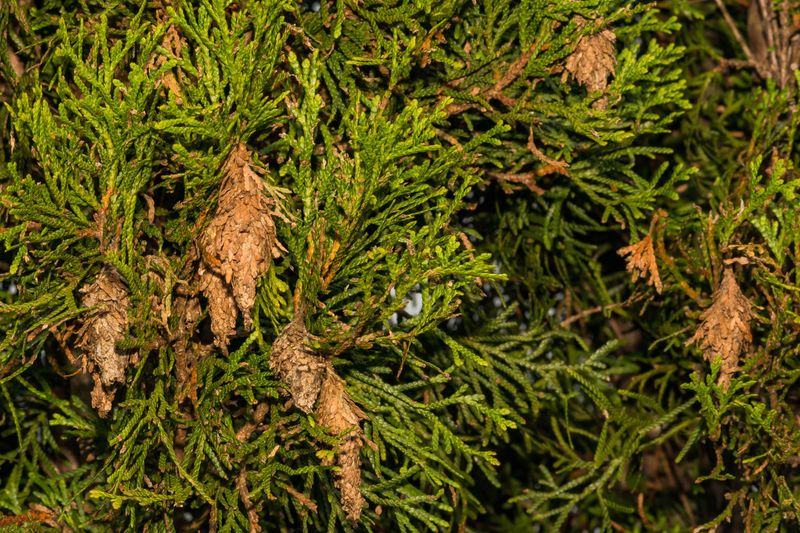
Once the cases are in your bucket, decide what happens next. Extension advice is not uniform here.
Some sources say to destroy the cases, while NC State suggests a different route.
The UMass Amherst Extension fact sheet and the University of Delaware fact sheet favor destroying removed cases, such as sealing them in a bag or submerging them in soapy water. That approach makes sure the eggs inside never hatch.
NC State recommends placing removed cases in an open, dry paper bag so parasitoids can emerge. Bagworms have natural enemies, including parasitoid wasps and birds, and this method gives the wasps a chance to leave.
Be aware that removal can still affect those helpful insects in some way, so no option is perfectly neutral.
Whichever you choose, stick with it. Do not drop the cases beneath the plant or toss them in a corner of the yard, because larvae can hatch and crawl or drift right back to your shrubs.
If you use the paper bag, keep it somewhere dry and away from the plants, such as a shed or garage shelf. If you prefer destruction, seal or soak them the same day.
Monitor for young larvae in spring
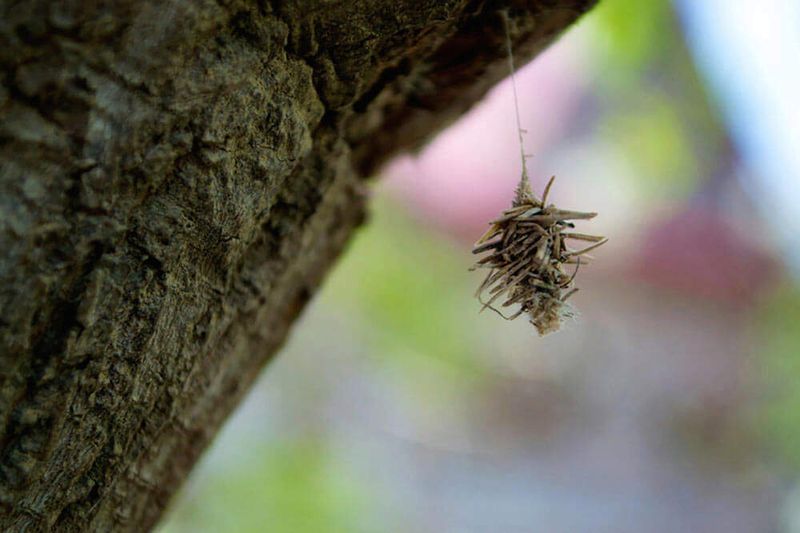
Even a thorough job leaves gaps. You may miss cases high in the plant, and young larvae can drift in from a neighbor’s tree or a nearby infested shrub.
So winter removal lowers the odds of damage but cannot promise a clean season.
Mark your calendar for May and June. NC State Extension says larvae hatch in those months in North Carolina.
Check the plants that had cases last winter, looking for tiny moving cases and fresh browning on needle tips.
If caterpillars show up, act while they are small. Henderson County Extension discusses treatment timing for young bagworms.
Insecticides such as Bt work against young, feeding larvae, not dormant eggs, so spraying in winter does nothing useful.
Use only a product labeled for your site and plant, and follow the label exactly. The NC State conifer pest page is a good place to read more about options.
Hand-pick any new cases you can reach, and handle them with the same disposal method you chose earlier.
Aim to reduce bagworm pressure, not eliminate risk
Inspect infested evergreens, cut off only the cases you can reach safely, dispose of them with a method you trust, and look again when spring hatch arrives. Those steps can reduce bagworm pressure on your plants, but they cannot promise a damage-free season.
Think of it as small, steady care for the shrubs that shelter your yard’s birds. A little attention now can make next May much calmer.