
Robin Nesting on Your Porch Light? What She Needs From You, Even After the Chicks Leave the Nest
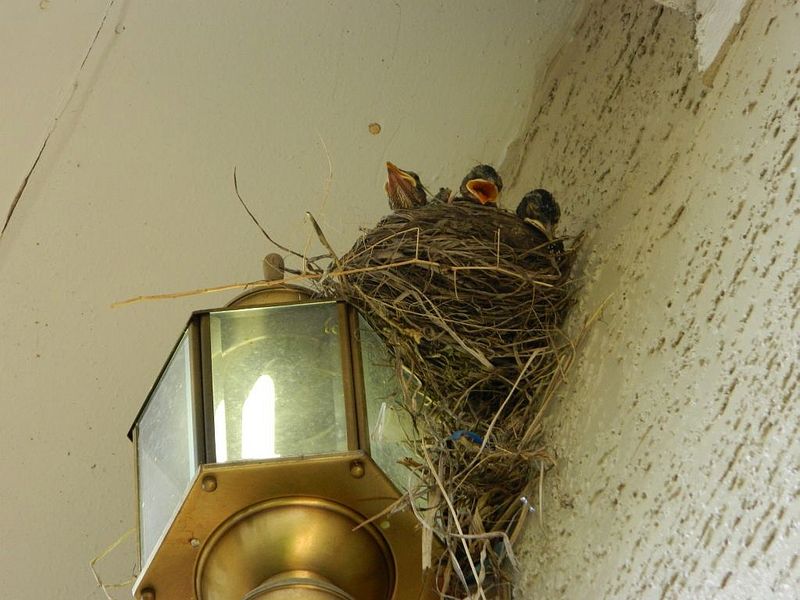
Coming home to find a robin building a nest right on your porch light is a surprise that’s hard to forget. That little bundle of grass and mud is now a home for a growing family, and you have a front-row seat.
A few simple choices can make a big difference for the birds. The best help is often the quietest kind, and it may last longer than you expect.
A porch light is a documented robin nest site
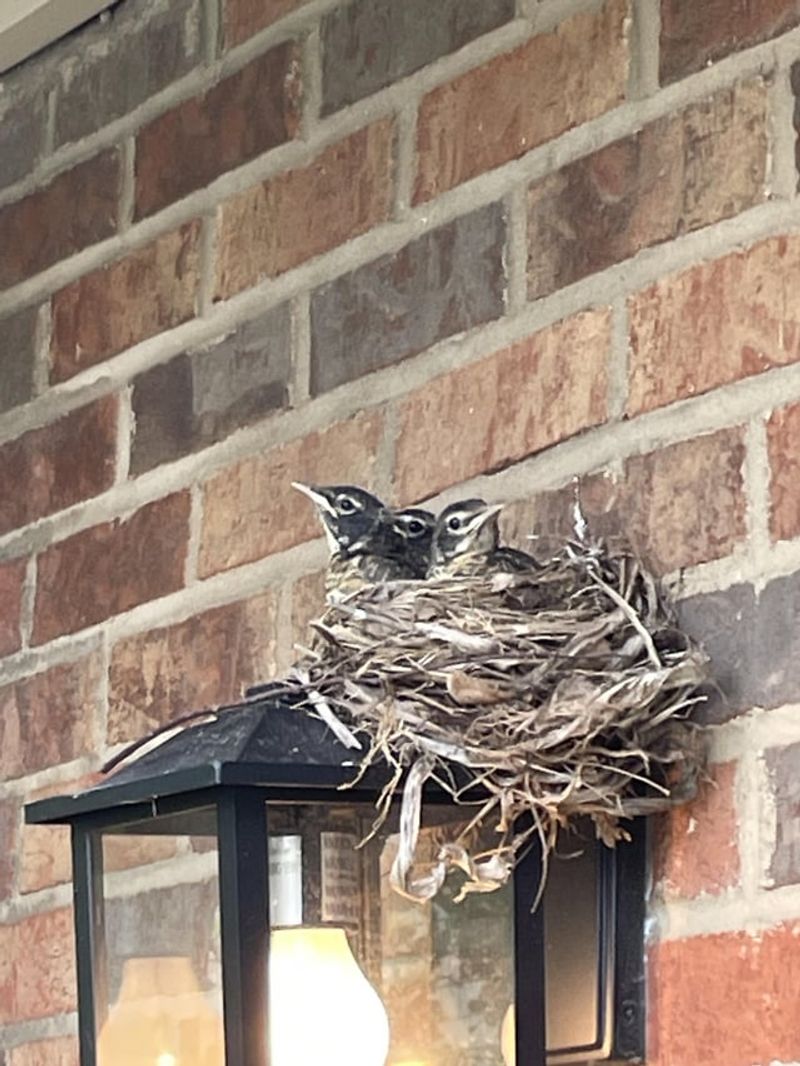
Robins are famous for being adaptable builders. According to the Cornell Lab of Ornithology’s life history page, American Robins nest on outdoor light fixtures as well as on trees, eaves, and other structures.
So if a robin picked your fixture, she is using a recognized nest site, even if it feels like a strange choice to you.
The core response is simple: leave the nest and everything in it alone. Don’t poke, straighten, trim, or peek inside to see how things are going.
The parents know what they are doing, and a finished nest is sturdier than it looks.
You might worry that a nest so close to your daily comings and goings is a problem. Usually, the nest being near your door does not by itself mean you need to step in.
Ordinary activity, like walking past or grabbing the mail, is not the concern. The goal is to skip the extra attention, such as lingering underneath, leaning in for photos, or letting pets hang around the spot.
The rest of this guide walks through the low-disturbance choices that help most. You will see what to do about the light, why feeding is a bad idea, how to read the nest timeline, and what to do if a young bird ends up on the ground.
There is also a section on when it is finally okay to think about fixture work. Think of yourself as a friendly neighbor, not a caretaker.
What should you do with the light?
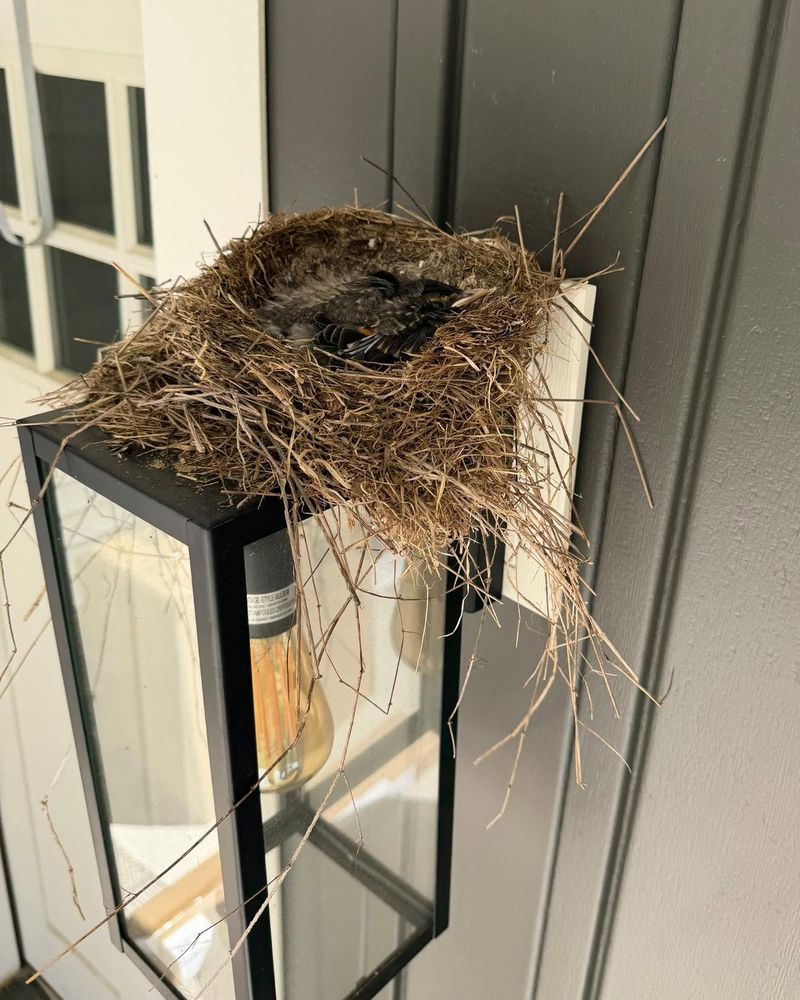
Here is the practical part. If it is safe and practical for your household, you can leave the fixture switched off while the nest is there.
Treat this as a cautious precaution, not a proven rule for robins.
Sources confirm that robins nest on fixtures, as Cornell’s species profile notes. What they do not show is that using a porch light harms a robin brood.
No source reviewed backs up the idea that a particular bulb, or a certain amount of light time, hurts or warms the chicks. So there is no bulb type or time limit to follow here.
If you need that entrance lit for safety, use your judgment. A front step you can’t see at night is its own hazard, and a motion light on a different fixture or a flashlight can fill in.
Switching the light off is about keeping things simple and low-key, since the nest sits right on the fixture.
What you should not do is change the setup by touching the nest. Don’t unscrew the fixture, swap the bulb while birds are there, or shift the nest to a better spot.
The U.S. Fish & Wildlife Service explains that active nests with eggs, chicks, or dependent young are generally protected from being destroyed without authorization.
A quick flip of the wall switch is fine. Anything that requires handling the nest is not.
Let the parents feed and raise the chicks
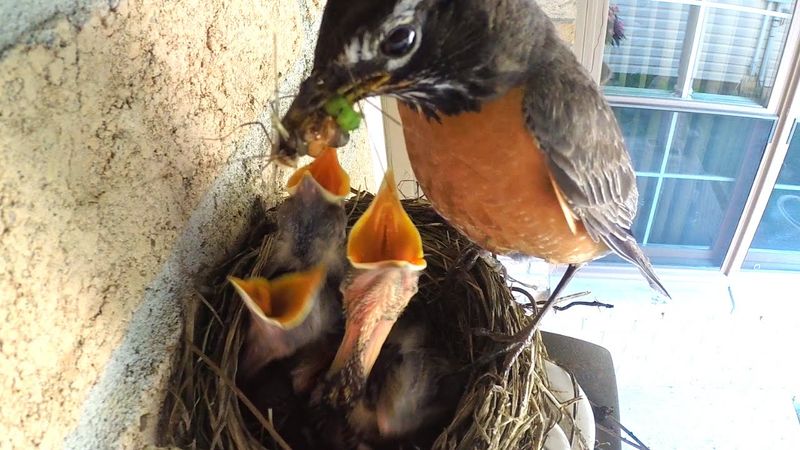
Robin chicks have two full-time providers. Audubon’s field guide notes that both parents feed the nestlings, hauling back worms, insects, and berries all day long.
You don’t need to add anything to that routine.
Resist the urge to help with snacks. Don’t drop food or water into the nest, and don’t try to feed a chick by hand.
Cornell NestWatch explains that the parents supply the food. Tufts Wildlife Clinic warns that the wrong food or feeding method can injure or even kill a young bird.
You can still enjoy the show. Watch from a window or from across the yard, and use binoculars if you have them.
NestWatch’s monitoring guidance recommends keeping disturbance low and using remote viewing where possible.
That means skipping a few tempting habits. Don’t check the nest over and over, climb a stepladder for a look, or fire off camera flashes.
A phone photo from a distance is plenty.
You also don’t have to give up your porch. Coming and going as usual is fine.
Just keep visits short, leave the ladder in the garage, and let the parents get on with the busy work of raising their young.
Treat the nest timeline as an estimate, not a deadline
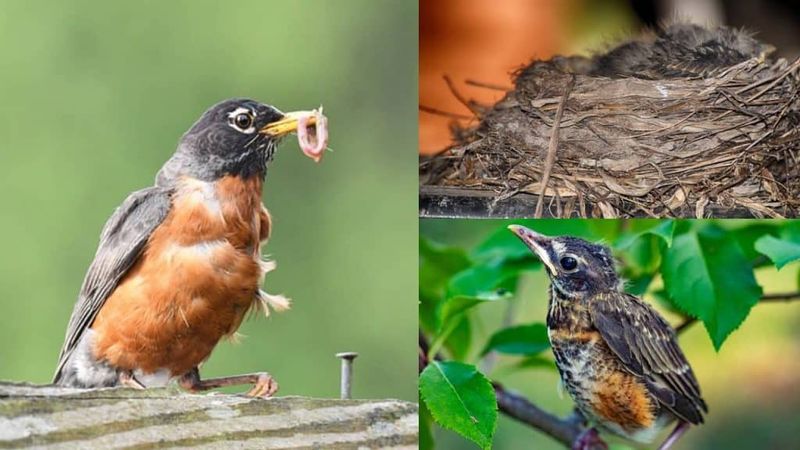
Blue eggs, hatchlings, then feathered youngsters: the robin story moves along in stages. Cornell lists incubation at about 12 to 14 days, and it gives a nestling period of about 13 days.
Other sources see it a little differently. Audubon puts the time from hatching to leaving the nest at roughly 14 to 16 days.
The two ranges don’t match exactly, and that’s the point: real nests don’t run on a schedule.
So use these numbers as a general picture, not a countdown clock. They can’t tell you whether your particular nest is empty or inactive.
A late start, a replacement clutch, or a slow-growing brood can all stretch the timing.
A quiet nest also does not prove it’s abandoned. Parents often sit still or visit briefly, so what looks like nothing happening may be normal.
Checking closely to find out can cause more trouble than it solves.
One more idea matters here. Leaving the nest is not the same as becoming independent.
Young robins can hop out before they fly well, and they keep depending on their parents afterward. The next section explains what that looks like.
A fledgling on the ground may still be in parental care
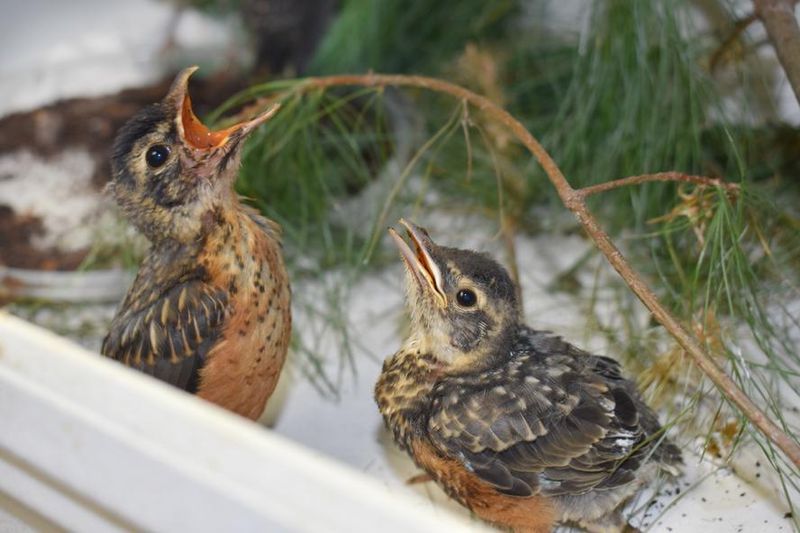
Finding a young robin hopping around your yard can set off alarm bells. But a fully feathered bird on the ground is often a normal fledgling, not an orphan.
Cornell’s advice on found baby birds explains that these youngsters leave the nest before they can fly well.
Robin fledglings have short tails, spotted chests, and a wobbly hop. Their parents are usually close by, and they keep feeding them.
Audubon notes that young robins stay under parental care after leaving the nest, and NestWatch says fledglings are often fed for a few weeks.
Here is what to do. Keep dogs and cats indoors or well away, and watch from a distance so the parents feel safe coming back.
Don’t try to put the bird back in the nest, since it left on purpose.
The picture changes if the bird is hurt or in immediate danger. Look for a visible injury, a bird that is bleeding, or one stuck somewhere unsafe like a busy driveway.
In those cases, Tufts Wildlife Clinic points readers toward a licensed wildlife rehabilitator.
Touching a chick will not make its parents abandon it, so that myth shouldn’t stop you in a true emergency. Still, handling is for real rescue needs only, ideally with a rehabilitator’s guidance.
Wait until dependent young have moved on before considering fixture work
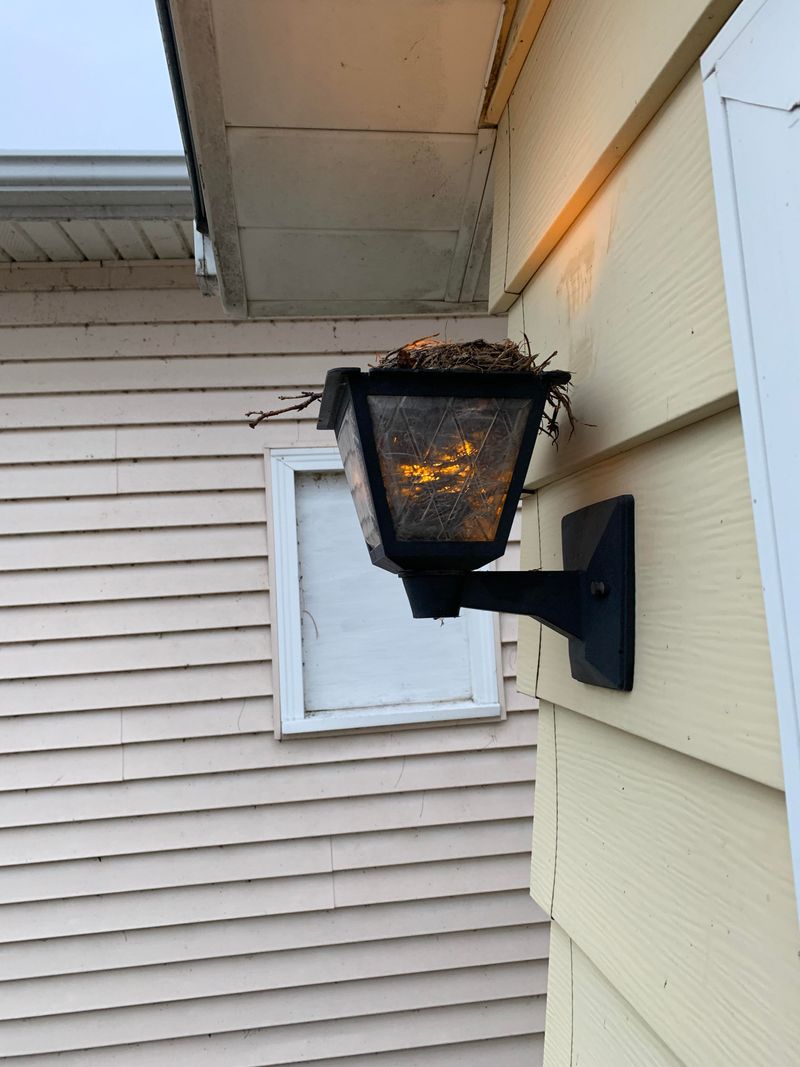
When the chicks hop out, it’s tempting to grab a ladder and reclaim your light. Hold off.
Fledglings may depend on their parents for weeks, and NestWatch is clear that leaving the nest is not independence.
Before any maintenance, make sure no eggs, chicks, or dependent young remain. Parents sometimes return to the same site, and a quiet nest is not proof it is finished.
Watching from a distance for a good while helps you decide.
There is a legal side, too, and it is easy to get wrong. The U.S.
Fish & Wildlife Service says most bird nests are protected under the Migratory Bird Treaty Act. It describes active nests with eggs, chicks, or dependent young as generally not destroyable without authorization.
That does not mean every nest is always illegal to touch, but an active one is not yours to clear.
What if something is truly unsafe? A sparking fixture, exposed wiring, or a fire risk is a genuine concern.
In that case, contact the relevant wildlife agency for guidance instead of improvising a move or dismantling anything yourself. The FWS notes that limited permits may apply in health or safety situations.
Audubon’s description of robin family life is a helpful reminder that the young keep relying on adults after they leave. Patience here is the kindest repair plan.
Give the family space beyond the first flight
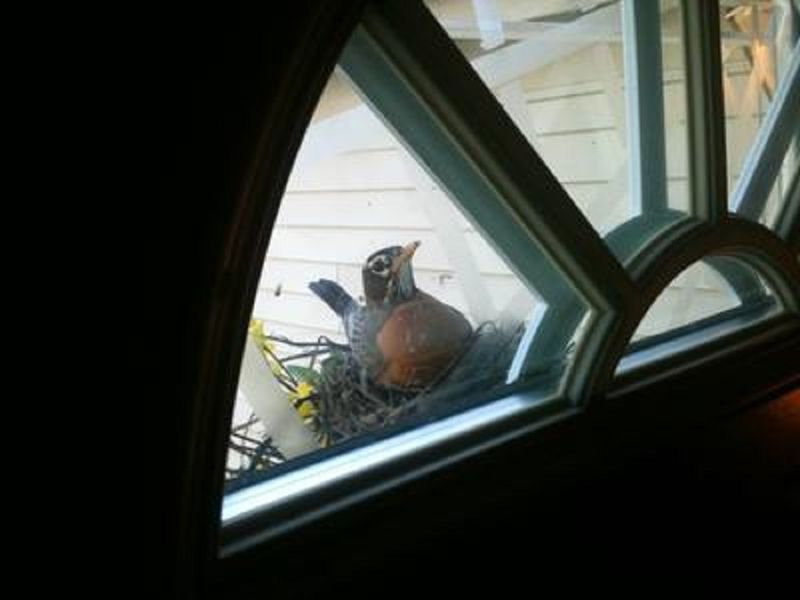
Keep the plan easy: leave the nest untouched, keep pets and curious visitors back, and let the parents do their work. According to Cornell, this kind of nest site is part of how robins live.
Remember that fledging is not independence, so fixture work waits until no dependent young remain, as federal guidance on active nests suggests.
Someday soon, your porch will be quiet again, and you’ll know you were a good neighbor to a very busy family.