
Rooting Rosemary Cuttings Indoors: A Possible Backup Plant for Winter
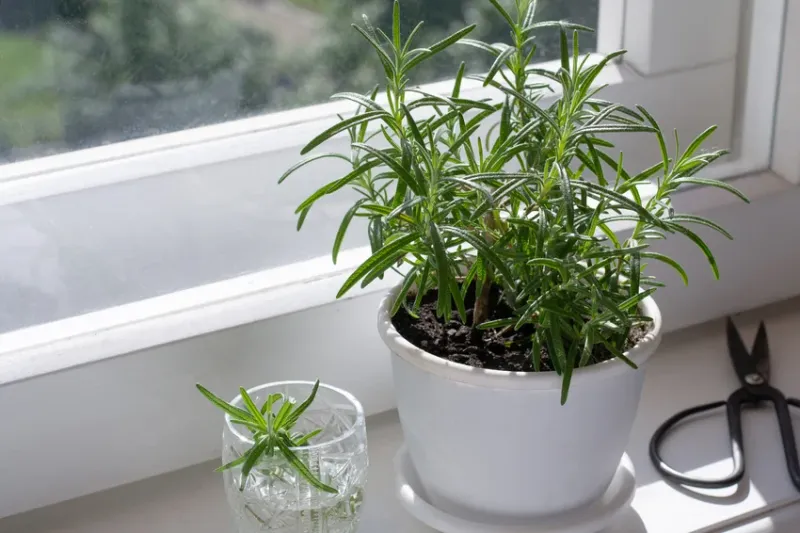
Your rosemary plant may be fine outside, or it may not make it through the cold months where you live. Snipping a few stems and rooting them is one way to try for a backup plant.
It costs almost nothing, but the results can be hit or miss. Here is how to try it, what to expect, and what else you can do.
First frost is a cue, not a universal deadline
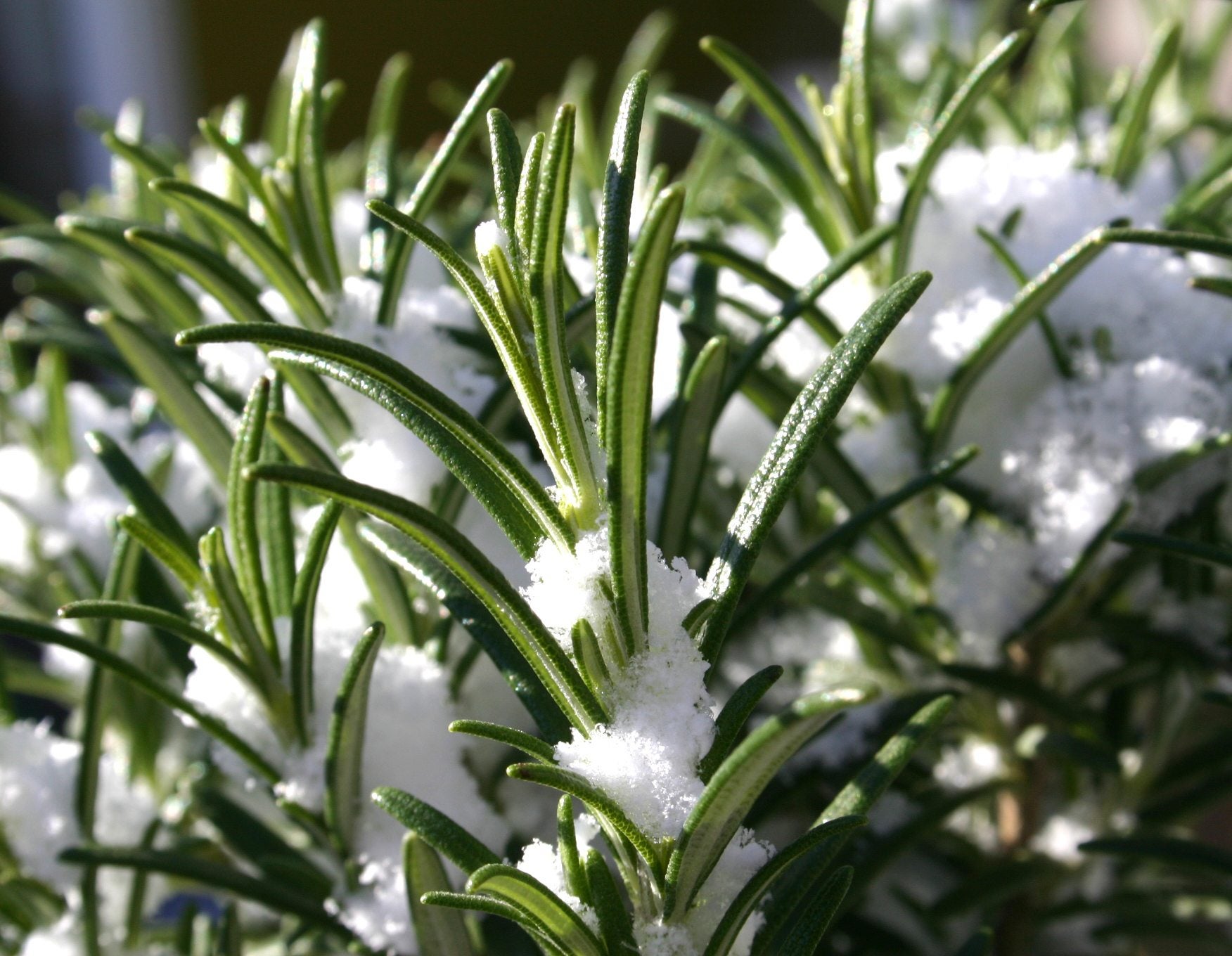
Frost shows up at very different times across the US. In one backyard it might arrive in October, and in another it may not show up until well into winter.
So think of first frost as a local reminder to check on your rosemary, not as a date everyone must hit.
Hardiness matters too. Illinois Extension says rosemary is not reliably hardy in zone 6 or colder.
Wisconsin Extension describes it as generally grown in pots there. In warmer zones, some plants can overwinter outside, and certain cultivars handle cold better than others.
So a rosemary in your yard will not necessarily die just because frost is coming.
Experts also disagree on the best time to take cuttings. A UC Cooperative Extension fact sheet and Wisconsin favor soft, nonflowering growth in late spring or early summer.
A University of Georgia guide lists semi-hardwood cuttings in fall and winter.
That means a late-season attempt is one workable approach, not the single best move everywhere. If your plant is healthy and you are curious, trying a few cuttings costs you very little.
Just treat it as an experiment.
Choose a healthy stem for your attempt
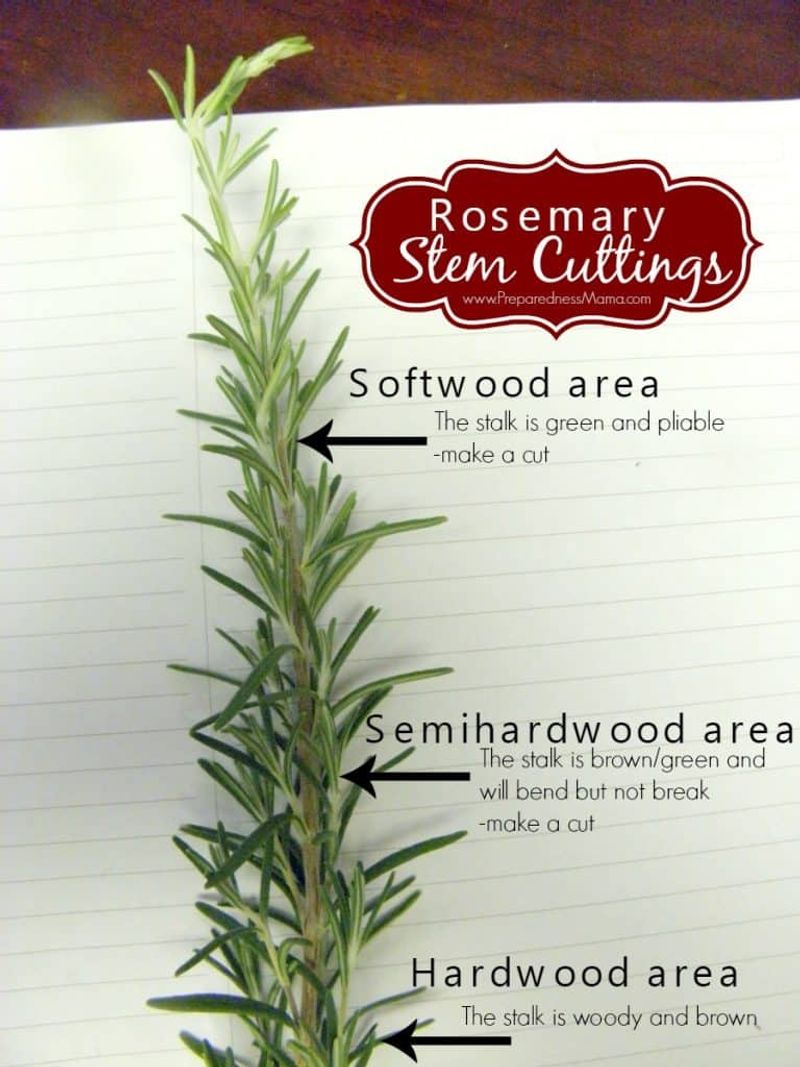
Look for stems that are healthy and green, with no flowers on them. Skip anything limp, spotted, or woody and tired-looking.
Flowering stems tend to put energy into blooms instead of roots.
Length depends on the source. The UC fact sheet calls for cuttings of 4 to 5 inches.
NC State recommends healthy 3 to 5 inch tips. Either range gives you something workable, so cut a few stems rather than just one.
The type of growth is where advice splits. UC and Wisconsin favor soft, new, nonflowering growth in late spring or early summer.
The University of Georgia lists semi-hardwood terminal cuttings for fall and winter, meaning the slightly firmer stem tips.
None of these is the one right answer for every climate and season. If you are cutting in autumn, semi-hardwood tips are the documented fit.
Taking several cuttings of different firmness can also show you what works on your plant.
Root a cutting in water
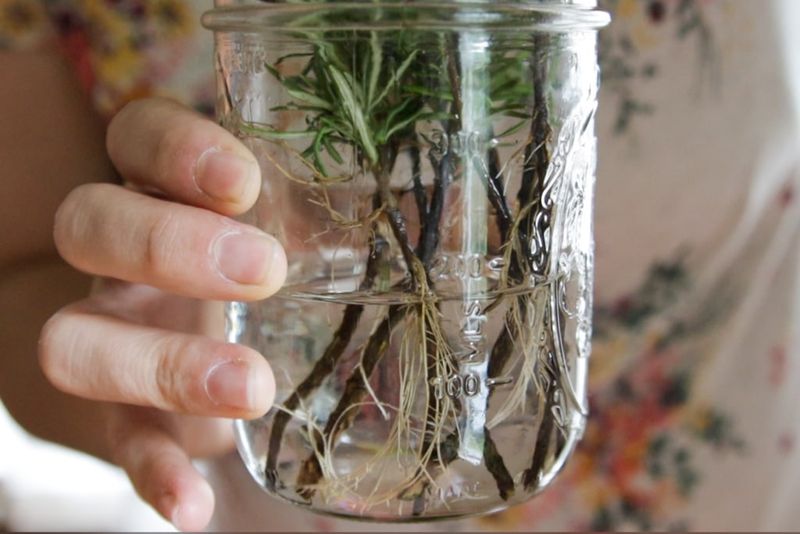
Water is the easiest method to watch, since you can see what is happening at the base of the stem. The UC fact sheet documents it as one way to root rosemary.
It is not guaranteed, and it is not shown to be better than other methods.
Here is the approach from the UC fact sheet. Take a cutting 4 to 5 inches long.
Strip the leaves from the lower 2 inches so the bare stem is exposed.
Then set the bare stem in about 2 inches of water in a glass. Make sure no leaves sit under the waterline.
The same fact sheet reports that softwood cuttings take roughly 2 to 5 weeks to root. Think of that as an estimate.
Your cutting might be quicker, slower, or might not root at all.
If a stem turns brown or mushy, it probably will not make it. Try again with another one.
Starting a few glasses at once gives you better odds than counting on a single stem.
Rooting medium is another option
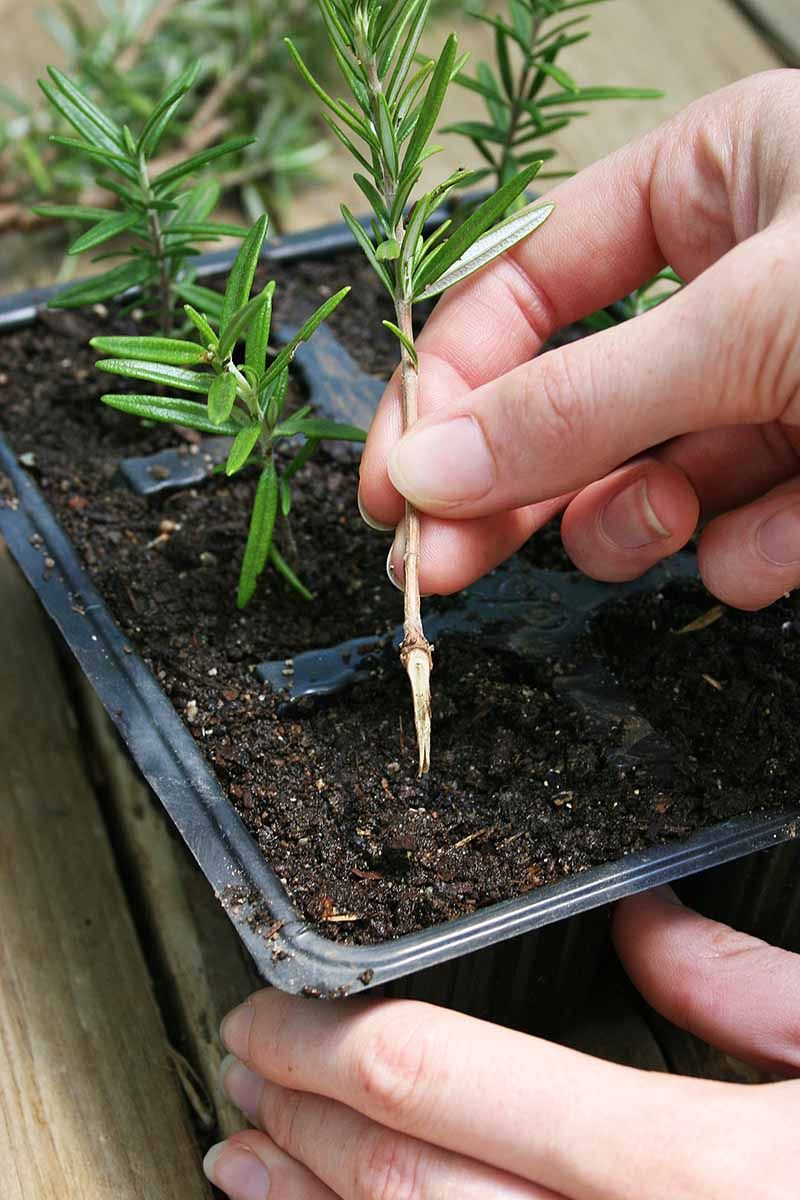
Water is not your only choice. Plenty of gardeners prefer planting cuttings straight into a rooting medium, and the sources document it as well.
Neither method has been shown to beat the other.
NC State recommends healthy, green, flower-free tips of 3 to 5 inches. Push them into a clean, well-draining medium.
Drainage matters because rosemary dislikes sitting in soggy soil.
Keep the medium moist, but not waterlogged. Think of a wrung-out sponge rather than a puddle.
NC State reports roots in about 4 to 6 weeks. It also estimates that 30 to 50 percent of cuttings may root.
In practical terms, expect that some of your stems may fail even when you do everything right.
Those numbers are estimates, not promises for your kitchen. Your light, temperature, and plant all play a part.
Cutting several stems at once is a simple way to improve the odds.
Roots do not promise a winter harvest
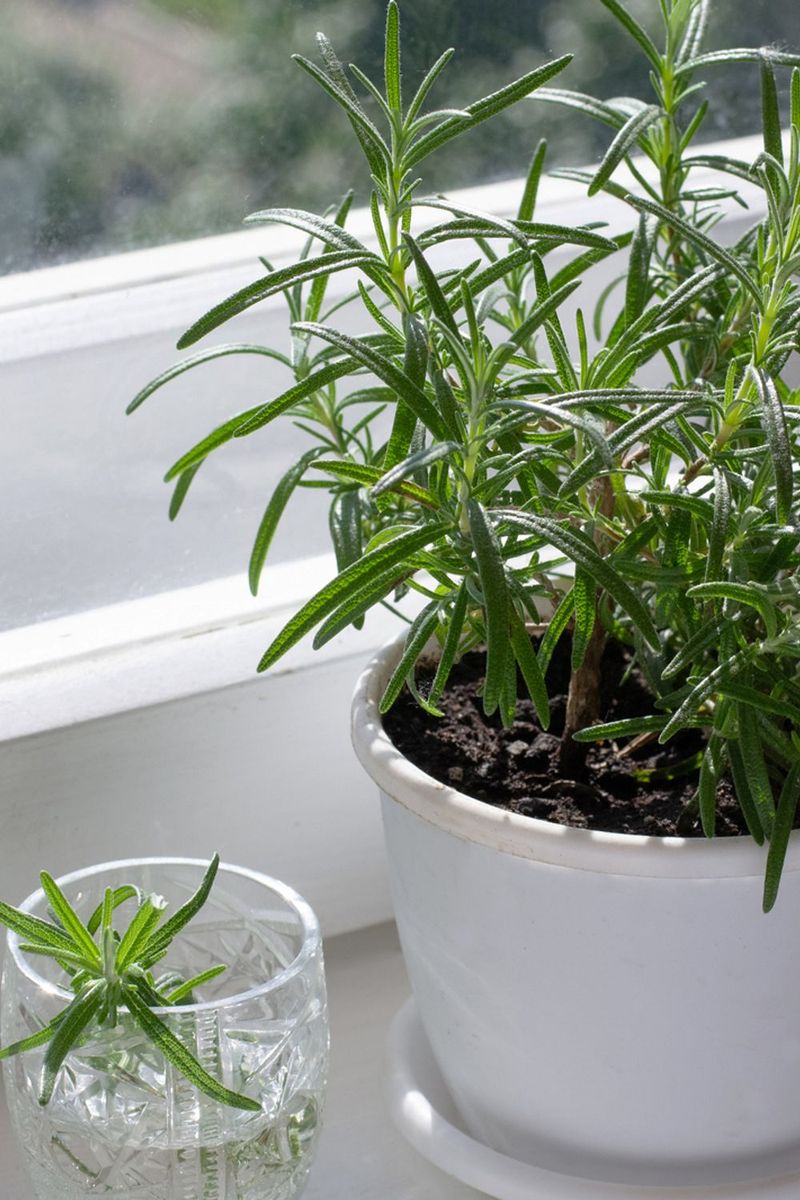
Seeing white roots feels like a win, and it is. But a rooted cutting is still a baby.
It is not a harvest-ready plant.
The rooting estimates from sources like NC State tell you how many cuttings may root and how fast. They do not tell you how much rosemary a new plant will give you.
Illinois Extension notes that rosemary grows slowly in cool, low-light winter conditions.
Light is the big limit. Iowa State says many herbs need at least 8 hours of direct light.
That is general herb guidance, not a rosemary-specific guarantee. A winter windowsill may fall short.
So think of your cutting as a possible backup. If the outdoor plant is lost, you may have a young one ready for spring.
Snipping tiny sprigs for cooking is fine, but do not count on a steady supply all winter.
Give indoor rosemary light and careful watering
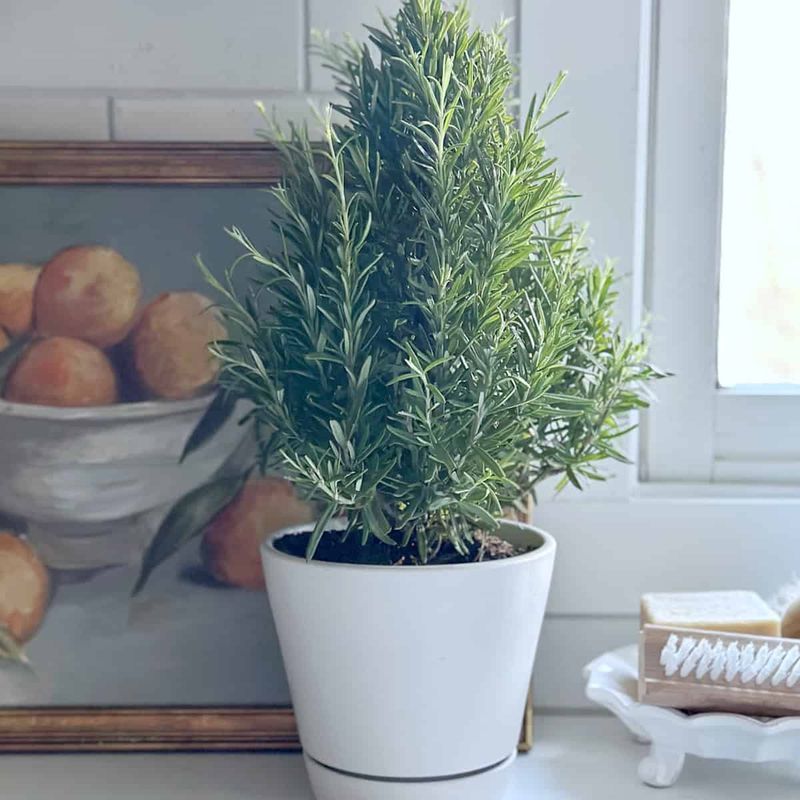
Many windowsills get weak light in winter, especially with short days. Iowa State says many herbs need at least 8 hours of direct light.
It suggests a full-spectrum grow light to supplement, placed 6 to 12 inches from the foliage and run 12 to 16 hours a day.
That is general herb advice. It does not guarantee your rosemary will thrive, but it may help if your window is dim.
Watering is the other half. Rosemary is vulnerable to overwatering and root rot indoors.
Illinois Extension advises a cool, sunny spot and keeping the soil on the dry side.
UNH Extension also stresses bright light and careful watering for winter houseplants.
Use a pot with drainage holes and let the top of the soil dry before you water again. Yellowing or drooping leaves with damp soil often point to too much water.
Even with good care, growth may be slow.
Consider bringing an established container plant indoors
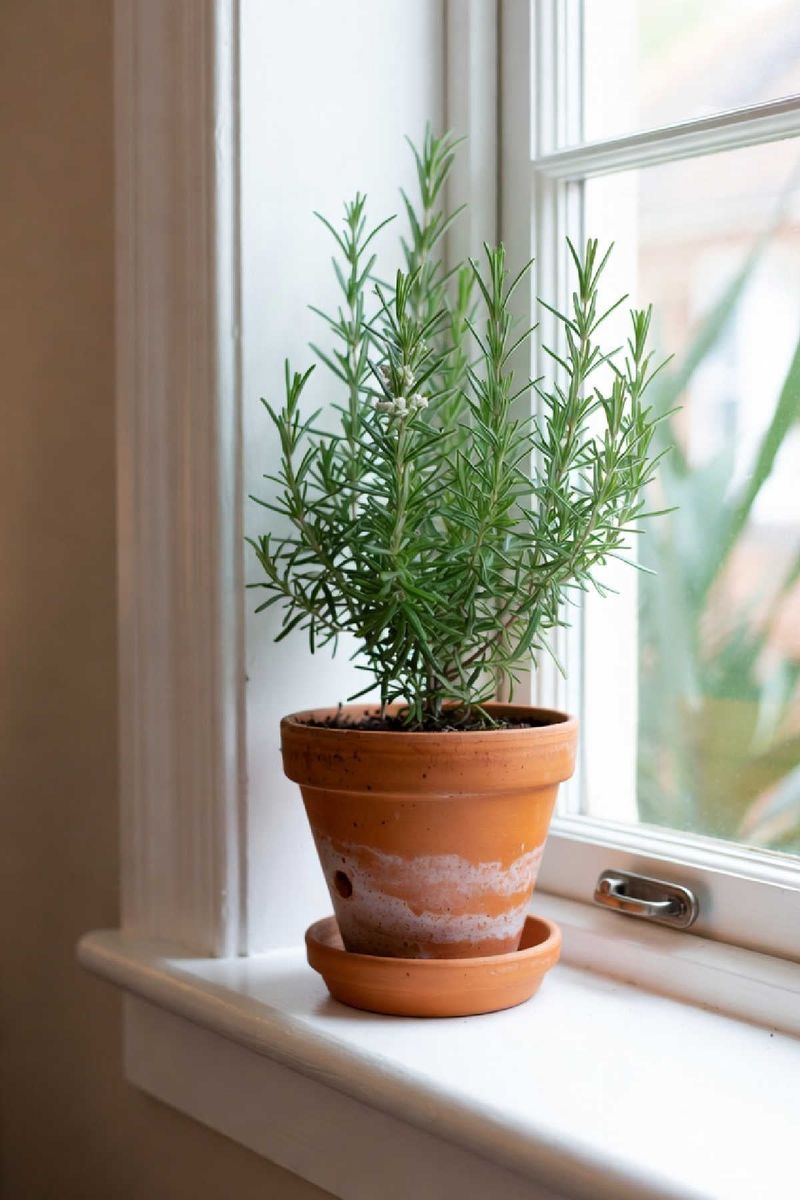
If your rosemary already lives in a pot, you may have an easier option than cuttings. Illinois Extension recommends bringing rosemary indoors before frost in colder regions.
A grown plant already has a root system and some size, so it starts ahead of any cutting.
Place it in the sunniest, coolest spot you have and go easy on the watering, as covered earlier.
Digging a plant out of the garden is a different story. Illinois Extension notes that garden plants may transplant poorly.
Roots get cut, and the shock of moving to a pot and then indoors can be a lot. Do not count on it being as reliable as moving a container plant.
If digging is your only option, take a few cuttings from that plant as insurance. Then you have two chances instead of one.
A cutting is still worth trying if you are curious and have a spare windowsill. Just keep your expectations modest, since rooting and winter harvest both remain uncertain.
Sometimes the best reward is simply a small green sprout waiting for spring.