
See Just How Many Watermelons One Plant Really Gives You When You Get The Conditions Right
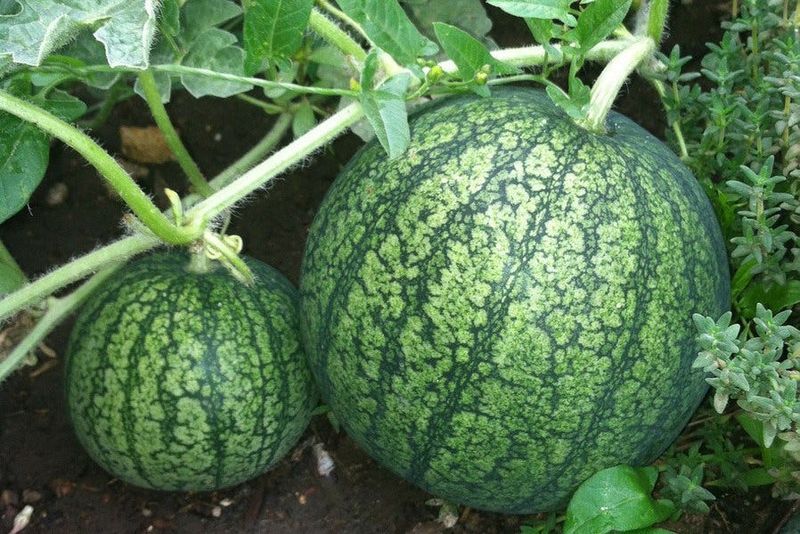
Most gardeners picture a vine buried under a pile of watermelons, but the real number is smaller and more useful than that fantasy suggests. A well-grown plant in good conditions typically gives you two or three solid melons you can actually eat, and knowing that upfront helps you plan your garden space honestly. Getting conditions right does matter, but it raises your odds rather than unlocking some hidden double-digit harvest. Here is what the evidence actually shows and how to make the most of every fruit your plants set.
Plan on two or three good full-size melons
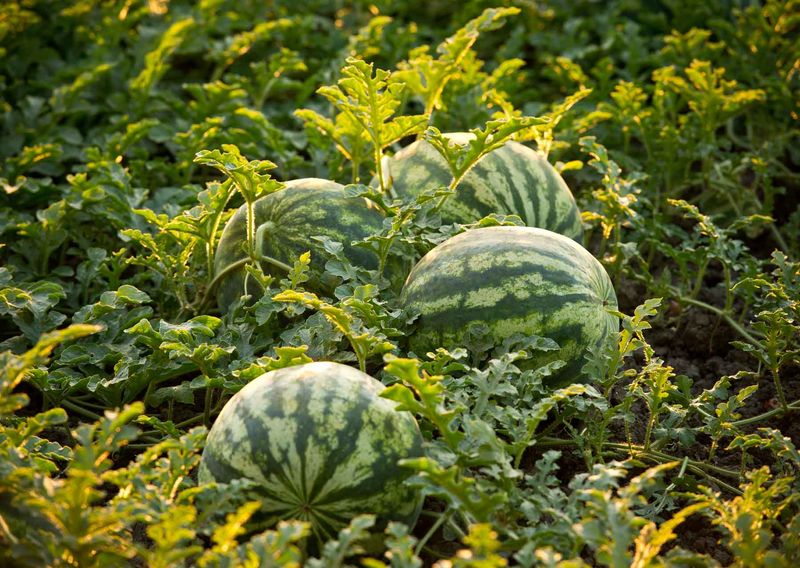
Watermelon vines are impressive growers, and it is easy to assume that a plant covering half your garden must be packing away a huge crop. The realistic planning number, though, is two to three good full-size melons per plant, not ten or fifteen.
A 2021 NC State cultivar trial of standard-size seedless watermelons found an average of 2.1 marketable fruits per plant across all tested varieties, with the strongest performers reaching 2.5 to 2.7 fruits per plant. That trial used commercial-style production, including plastic mulch, drip fertigation, replicated plots, and pollenizer plants, so it represents well-managed growing rather than a casual backyard setup.
UGA Extension separately notes that under average conditions, two to three fruits typically set per plant. That figure describes fruit set, which is the point where a small melon begins to form, not the number of ripe, harvestable melons sitting in your wheelbarrow at season’s end. The distinction matters, and the next section covers it in detail.
Favorable conditions genuinely improve your odds. Warm soil, active pollinators, consistent moisture, and a long enough growing season all push results toward the higher end of the two-to-three range. A plant that faces poor pollination, disease pressure, or a shorter season may land at one melon or even none. Two to three is a planning estimate, not a promise, but it is a well-supported one grounded in trial data rather than gardening folklore.
Separate fruit set from the harvest in your basket
A watermelon plant goes through several distinct stages before you carry anything inside, and mixing up those stages is one of the most common reasons gardeners feel disappointed at harvest time. Understanding each step helps you set honest expectations and catch problems early enough to fix them.
Fruit set happens when a fertilized female flower begins to swell into a small melon. UGA Extension’s commercial watermelon production guide uses the phrase “fruit set” to describe this early stage, where two to three fruits begin developing under average conditions. That is not the same as two to three ripe melons ready to eat.
After fruit set, a developing melon can still abort if pollination was incomplete, leaving a shriveled little fruit that yellows and drops off within days. Others may grow but stay small, develop a misshapen form from uneven fertilization, crack from moisture swings, or rot at the blossom end before they ever reach full size. Even a fruit that grows to full size can fail to ripen properly if the season ends too early or disease strikes the vine late.
Marketable fruit, the term used in the NC State trial, means a melon that reached full size and quality standards in a managed production setting. Harvestable fruit in your backyard means a melon you can actually slice and enjoy. Those two numbers are related but rarely identical, and neither equals the count of flowers that opened or small fruits that briefly formed. Keeping these stages separate helps you read your garden accurately rather than counting every tiny bump on the vine as a guaranteed watermelon.
Mini varieties can increase fruit count without increasing total weight
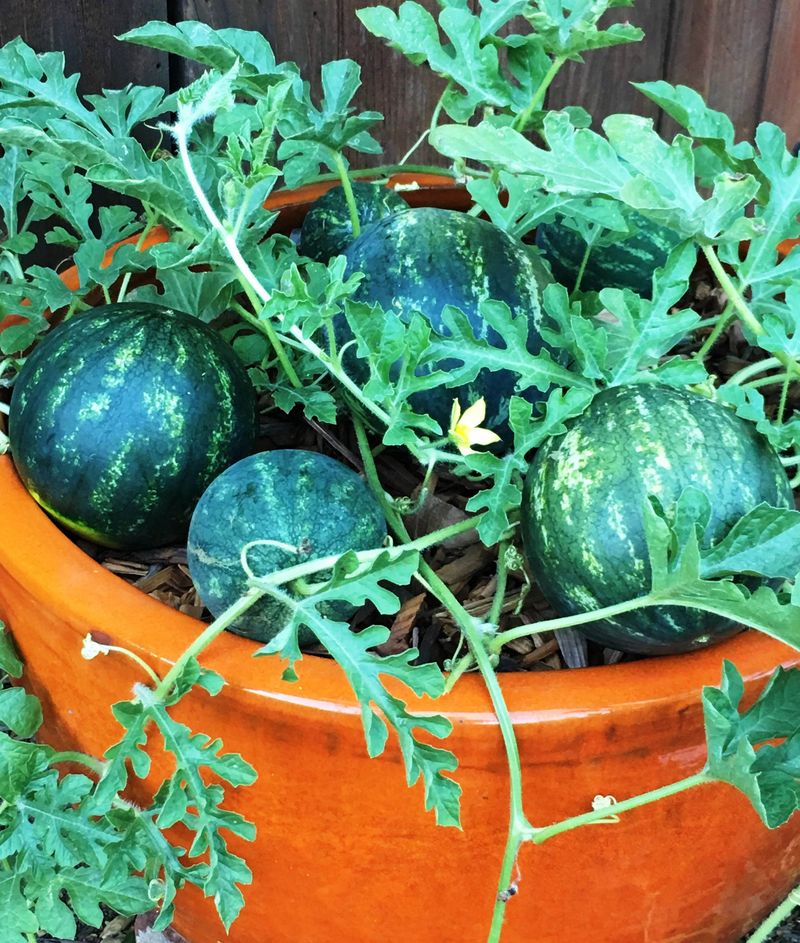
Variety choice changes the answer to the yield question more than almost anything else you can control before planting. Mini and icebox watermelons produce more individual fruits per plant than standard full-size types, but that extra fruit count does not automatically mean more watermelon by weight.
The same 2021 NC State trial that tracked standard seedless varieties also evaluated mini seedless cultivars. Mini types averaged about three fruits per plant across all harvests in that trial, while standard types averaged 2.1 marketable fruits per plant. The average fruit weight tells the other side of the story: standard triploid melons averaged roughly 18.5 pounds each, while mini fruits averaged about 6 pounds each.
Run the rough math and a plant producing three 6-pound minis gives you about 18 pounds total, while a plant producing 2.1 melons at 18.5 pounds gives you nearly 39 pounds. More individual melons does not equal more watermelon on the table.
That does not make mini varieties a worse choice. Smaller melons fit more easily in a refrigerator, ripen faster, and suit smaller households that cannot finish a 20-pound fruit before it turns. If you want more individual melons to share, give as gifts, or harvest over a longer window, a mini variety is a reasonable pick. Just go in knowing you are trading weight for count.
Treat the three-fruit figure as a trial-based reference point, not a guarantee that every icebox cultivar will deliver exactly that number in your garden.
Pollination sets the ceiling on your harvest
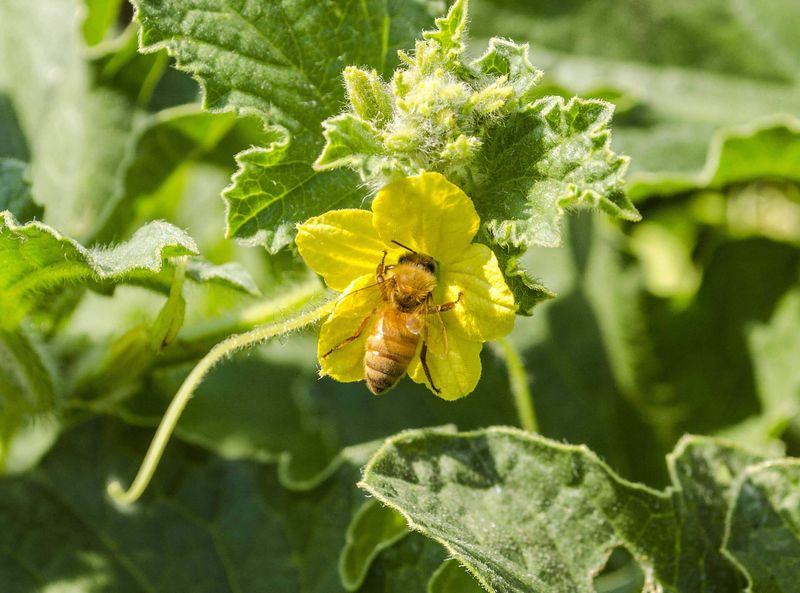
Every melon on your vine started as a successfully pollinated female flower, which means pollination is the single factor that sets the upper limit on how many fruits your plant can produce. No amount of good soil or careful watering can compensate for poor pollination at flowering time.
Watermelon flowers are only viable for roughly one day. A female flower that does not receive adequate pollen during that window will abort, leaving behind a tiny shriveled fruit and a lost opportunity for the season. University of Minnesota Extension guidance on flower and fruit set in cucurbits explains that bees and other insects are essential for moving pollen from male to female flowers, and that poor pollinator activity leads directly to aborted fruit, small melons, or misshapen fruit caused by incomplete fertilization.
Seedless watermelons add an extra layer of complexity. Triploid seedless plants do not produce enough viable pollen to reliably fertilize themselves or each other. Utah State University Extension recommends that seeded diploid pollenizer plants make up roughly 25 to 33 percent of your planting, which works out to about one seeded plant for every three or four seedless plants. A gardener who plants only one seedless variety with no pollenizer nearby may see very poor fruit set no matter how healthy the vine looks.
Oregon State University Extension’s Pacific Northwest watermelon guide reinforces that pollenizer placement matters in practical production, not just in theory. Keep pollenizers close enough that bees move between them and your seedless plants regularly. Avoid applying any pesticide to flowering vines without checking the current product label for bee-hazard warnings and appropriate application timing, since watermelon depends entirely on insect pollinators to set fruit.
Give each plant enough room, water, and balanced fertility
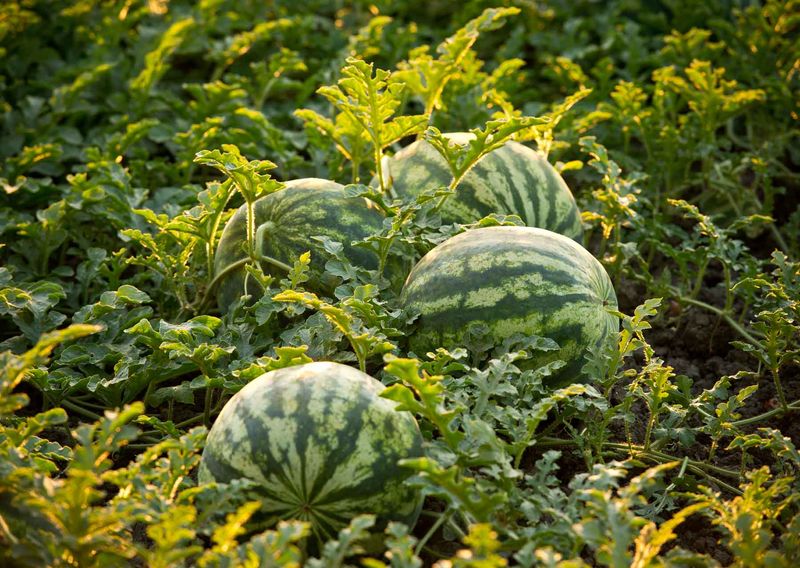
Watermelon vines are not compact plants. They need genuine room to spread, consistent water to keep fruit developing, and a fertility program based on what your soil actually lacks rather than a generic fertilizer schedule.
Oregon State University Extension notes that watermelon production requires significant space per plant, and OSU guidance reports that plants may need roughly 15 to 25 square feet depending on the cultivar and production system. Crowding vines together limits air circulation, increases disease risk, and can reduce fruit size and count.
On the water side, Utah State University Extension recommends deep, consistent watering totaling about 1 to 2 inches per week when rainfall does not supply it, adjusted for your soil type and local conditions. Drip or soaker irrigation delivers water at the root zone rather than overhead, which keeps foliage drier and helps reduce fungal disease pressure across the season.
University of Minnesota Extension specifically warns that too much nitrogen can push a plant toward lush vegetative growth while delaying fruit set. Run a soil test before adding substantial fertilizer, and adjust based on what your soil actually needs rather than defaulting to heavy feeding. Balanced fertility supports both healthy vines and productive fruiting.
Regional conditions across the continental United States also shape results in ways no single setup can fully address. Cool soil early in the season can slow vine establishment and invite disease. NC State’s 2024 watermelon cultivar evaluation highlights how season length and weather variation affect marketable fruit numbers from one year to the next. Drought, flooding, or a stretch of late heavy rain can reduce yields and cause fruit loss regardless of how well you managed everything else.
Choosing a cultivar suited to your region’s season length and planning around your local frost dates gives each plant its best realistic chance.
Choose between more individual melons and larger fruit
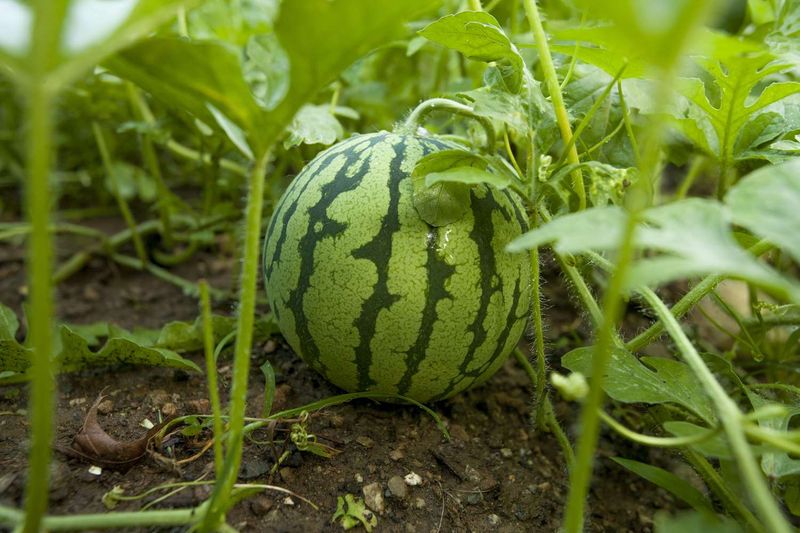
Fruit-load management sounds technical, but it really comes down to a simple question: do you want a few large melons or more individual fruits of moderate size? The answer changes what you do when multiple young melons are developing at the same time.
Oklahoma State University Extension’s watermelon production guide recommends retaining two or three well-shaped fruits per plant when the goal is growing larger full-size melons. Keeping the plant’s energy focused on a smaller number of fruits allows each one to grow larger and develop better quality. This is a deliberate size-management strategy, not evidence that every plant naturally produces a surplus of harvestable melons waiting to be thinned.
Removing misshapen fruit or melons showing early signs of blossom-end rot makes sense regardless of your goal. Those fruits are unlikely to recover, and leaving them on the vine draws resources away from healthy developing melons. OSU horticulture guidance reinforces that targeted removal of defective fruit is a practical quality step.
Removing healthy, well-shaped fruit indiscriminately is a different matter entirely. If your goal is maximum fruit count rather than maximum fruit size, pulling off healthy young melons simply reduces your harvest without a compensating benefit. Decide your goal before the season starts so your fruit-load decisions match what you actually want from the garden.
One more caution: avoid treating vine pruning as a standard yield booster. OSU warns that damaging or pruning roots and vines can slow development and reduce yield rather than improve it. Focus fruit-management effort on what is happening at the fruit itself, not on cutting back healthy vine growth in hopes of redirecting energy.
Protect the fruits until they actually ripen
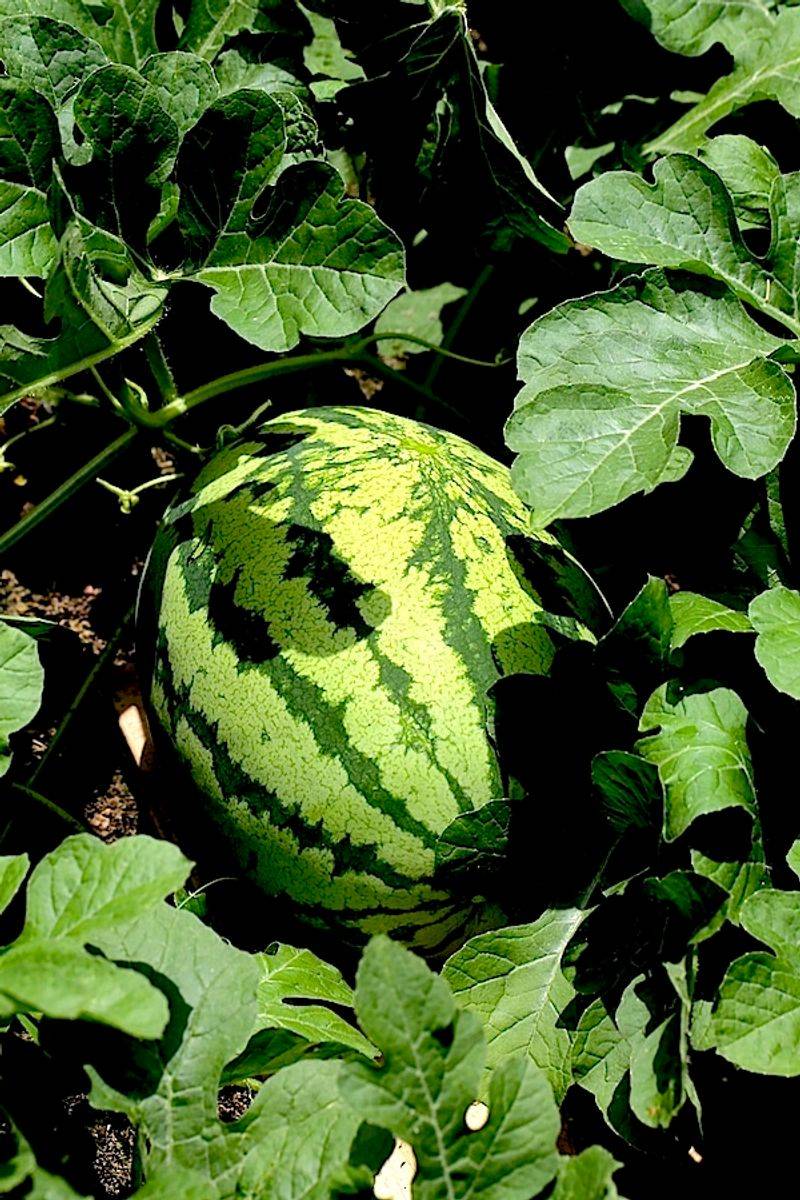
Reaching harvest with two or three sound melons is not guaranteed just because you got them to full size. The final stretch from full-size to ripe-and-ready is where splitting, rotting, and premature picking can quietly reduce the count that ends up in your kitchen.
Moisture management in the weeks before harvest matters more than most gardeners realize. Utah State University Extension recommends easing back on water gradually as fruit approaches maturity rather than abruptly cutting it off or continuing to saturate the soil. Heavy watering late in ripening can cause fruit to split or crack. Drought or wildly uneven moisture swings earlier in the season are linked to blossom-end rot and other quality problems that can make an otherwise full-size melon inedible.
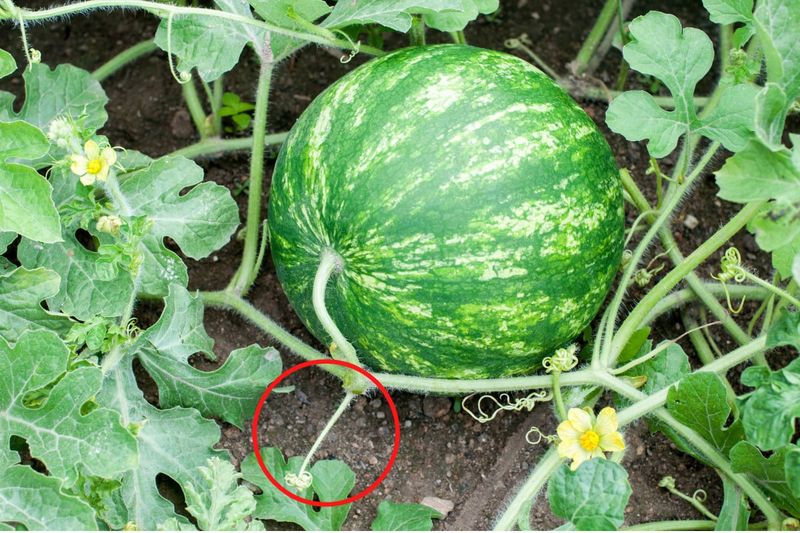
University of Minnesota Extension and OSU horticulture guidance both point to multiple ripeness indicators rather than relying on thumping alone as your main test. Look for a dried or brown tendril closest to the fruit on the vine, a ground spot that has shifted from white to creamy yellow where the melon rests on the soil, and a rind surface that has turned slightly dull rather than shiny. Taken together, those three signs give you a much more reliable read on maturity than sound alone.
Picking too early leaves you with a melon that will not sweeten further off the vine. Picking too late after splitting starts means losing part of the fruit to rot within hours. Both outcomes reduce your useful harvest count. The two-to-three-melon planning estimate is ultimately a count of sound, ripe melons harvested at the right moment, not every fruit that briefly appeared on the vine during the season.
Use two or three melons as your starting plan
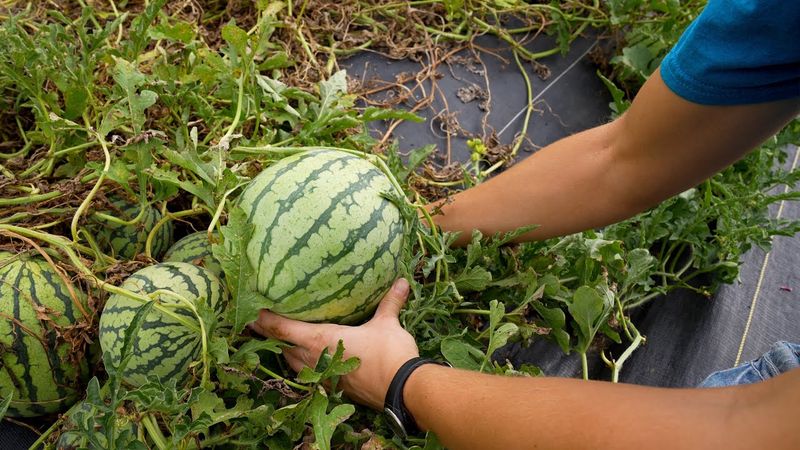
Going into the season with a clear, evidence-based number helps you make smarter decisions about space, pollenizers, variety, and water. For full-size seedless varieties, plan around two to three good melons per plant, a figure supported by the 2021 NC State trial’s average of 2.1 marketable fruits per plant and consistent with UGA Extension’s fruit-set reference of two to three per plant under average conditions.
For mini varieties, treat about three fruits per plant as a trial-based reference rather than a guarantee. Actual results in your backyard can land below or above either figure depending on cultivar, pollinator activity, weather, soil fertility, irrigation, disease pressure, and how long your growing season runs. The evidence does not support planning for a routine double-digit harvest from an ordinary in-ground or raised-bed plant.
Improve your odds by pairing seedless plants with compatible seeded pollenizers, giving vines adequate room, keeping moisture steady through the season, running a soil test before fertilizing, and making deliberate fruit-load choices that match your actual goal. A well-managed plant producing two or three sound, ripe melons is a genuine success, and that is exactly the kind of harvest worth planning for.