
That Dark Shady Corner By The Fence Doesn’t Have To Stay A Dead Zone Any Longer
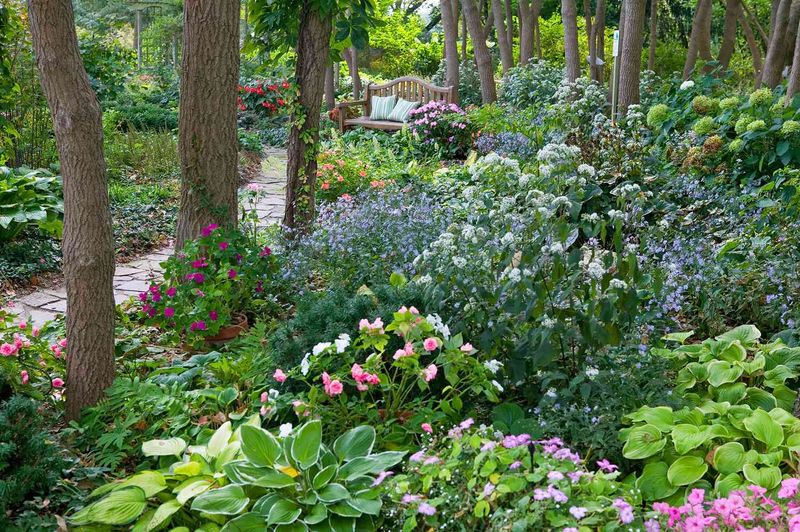
Most yards have at least one spot that gets skipped during planting season – that dim corner by the fence where grass gave up years ago and nothing seems to grow. The good news is that a shady corner can absolutely become something worth looking at, but the key is reading the site before you buy a single plant. Light, moisture, drainage, and soil type all determine which plants will thrive and which ones will quietly fail. Get those four things figured out first, and that forgotten patch of ground has real potential.
Read the corner before you buy plants
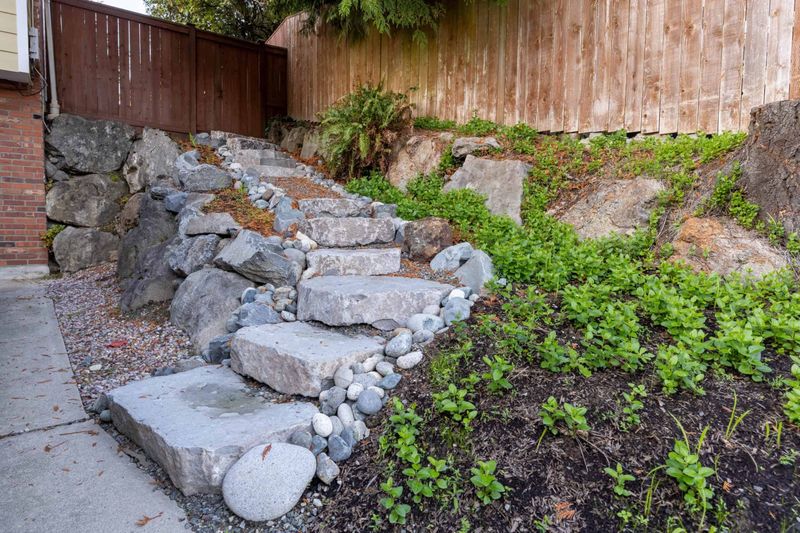
Walk out to that corner on a clear summer day and just watch it. How long does direct sun actually fall on the ground there? Penn State Extension defines full sun as six or more hours of direct light, part sun as four to six hours, part shade as two to four hours, and full shade as two hours or less – and those numbers matter enormously for which plants will survive. Observe during midsummer if you can, because the sun angle is lower in spring and fall, which means a spot that looks bright in April may actually be deep shade by July.
Once you have a light estimate, shift your attention to the soil. Push a finger or a trowel a few inches down and feel whether the soil is wet, moist, or dry. Come back the day after a rain and check again, because a corner that feels dry in a drought might hold water for days after a downpour. A fence corner is not automatically a dry spot – a neighboring tree canopy can intercept rainfall, but roof runoff, a downspout, or a low slope can also funnel water right into the same area.
Check drainage separately from moisture. Dig a hole about a foot deep, fill it with water, and watch how quickly it drains. If water is still sitting there an hour later, you likely have a drainage problem that plants will struggle with regardless of how shade-tolerant they are. University of Minnesota Extension recommends assessing both moisture and drainage before choosing a plant palette, and that advice applies whether you are dealing with sandy soil, clay, or anything in between.
Compaction deserves its own check. Compacted soil can simultaneously feel dry at the surface while holding water just a few inches down, and it restricts root growth regardless of moisture level. If a screwdriver barely penetrates the ground, that is a compaction problem, not just a dry-soil problem. Knowing all four factors – light, moisture, drainage, and compaction – before you walk into a garden center will save you from buying plants that are wrong for the site.
Match moist shade with plants that can handle it
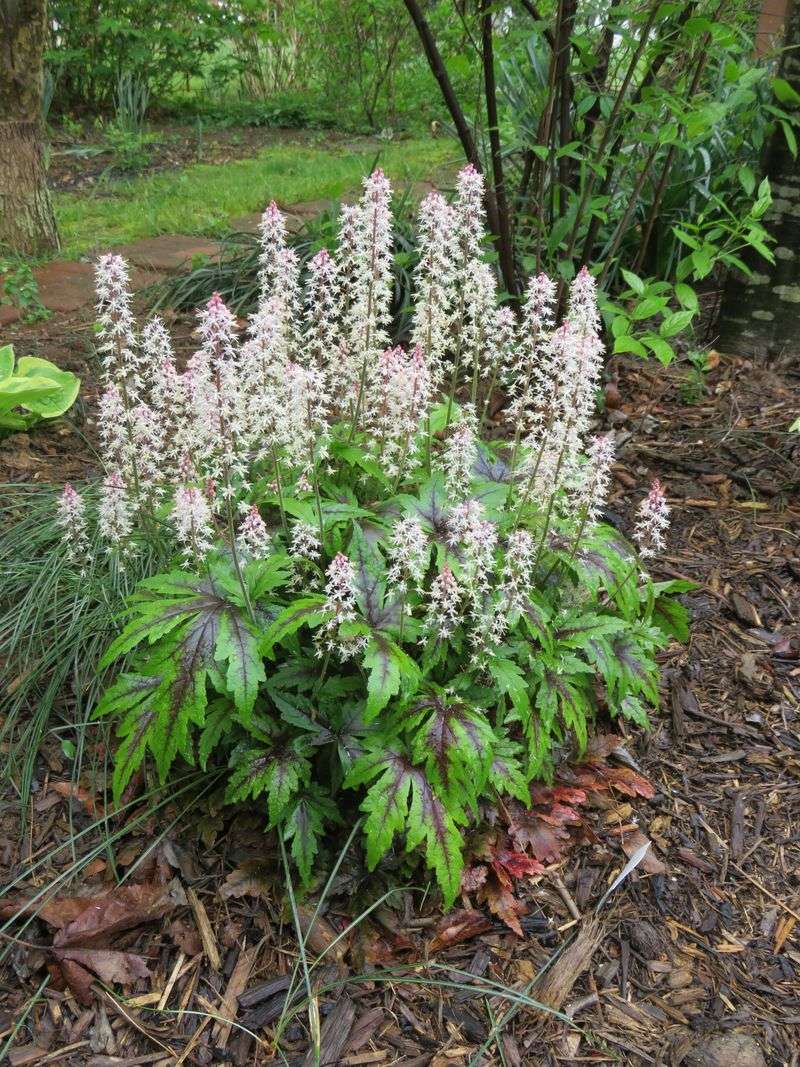
Moist, well-drained shade is genuinely one of the more forgiving conditions a gardener can work with, and there is a solid group of plants that perform well in it. Penn State Extension’s plant guide for shade to part-shade conditions with wet to moist soil lists wild ginger, foamflower, lady fern, Christmas fern, Virginia bluebells, bleeding heart, Solomon’s seal, and jack-in-the-pulpit as examples suited to those conditions. These are starting points for investigation, not a guaranteed prescription for every yard in the country.
Virginia bluebells and bleeding heart are spring bloomers that go dormant by summer, so plan something to fill the gap they leave behind. Lady fern and Christmas fern hold their form much longer and provide reliable texture through the growing season. Solomon’s seal adds an arching, architectural quality that works well against a fence or wall, and foamflower spreads gently to fill gaps at a low height without becoming a problem in most garden settings.
The distinction between moist, well-drained soil and waterlogged clay is not a small one. Moist soil holds consistent moisture without staying saturated, while poorly drained clay can suffocate roots even in plants labeled as moisture-loving. If your drainage test showed slow water movement, address that before planting, or consider raised beds or containers instead of planting directly into the ground.
Regional suitability is worth verifying before you commit. University of Minnesota Extension notes that plant performance in shade gardens depends on local climate, soil type, and moisture availability, so a plant that thrives in a Pennsylvania woodland garden may struggle in a dry Southern summer or a cold northern winter. Check hardiness zone, heat tolerance, and mature size through your local cooperative extension service or a regional plant database before you buy.
Handle dry shade without misreading the soil
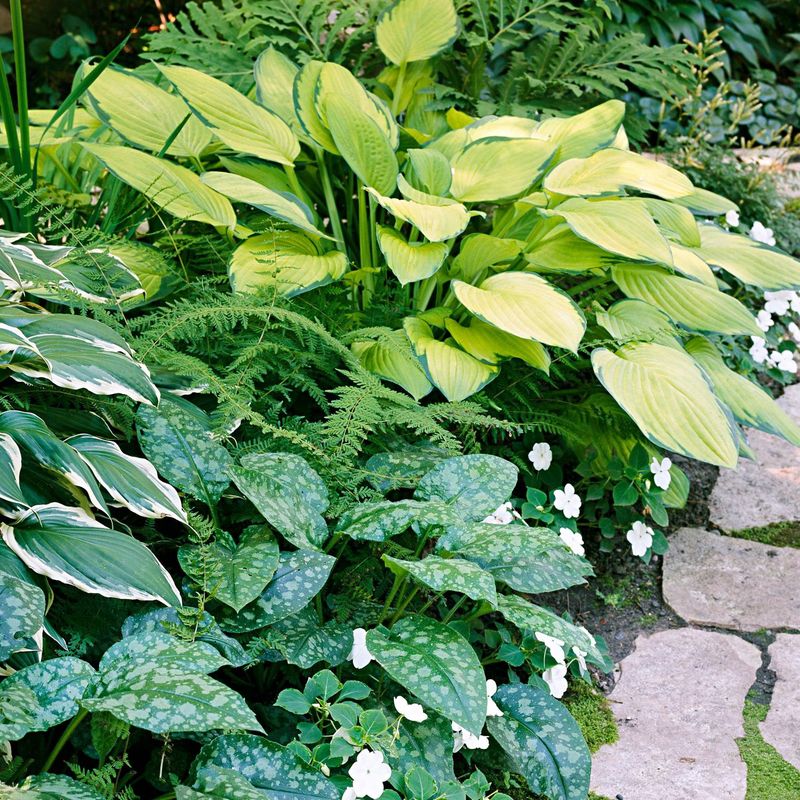
Dry shade is widely considered the most difficult combination in the home garden. Low light already limits photosynthesis and slows growth, and when the soil is also dry – either from tree root competition, canopy interception, nearby eaves, or a foundation wall blocking rainfall – the list of plants that can genuinely cope shrinks considerably. University of Minnesota Extension acknowledges that dry shade beneath trees is one of the hardest conditions to plant successfully, partly because tree roots actively compete for both water and nutrients.
Pennsylvania sedge is one of the more reliable options for dry shade in the upper Midwest and parts of the Northeast. Barrenwort (Epimedium) is another plant worth researching – it is slow to establish but handles dry shade reasonably well once it is settled in. Wild ginger can also work in dry conditions after its first year or two, though it needs consistent moisture during establishment. University of Illinois Extension’s dry shade plant guide offers additional regionally tested options worth comparing against your own site conditions.
Sweet woodruff and selected cultivars of Heuchera or hosta may also perform in dry shade, though hosta in particular tends to look stressed without reliable moisture.
Compaction is not the same thing as dry soil, and treating them as identical will lead you to the wrong solution. Compacted ground can hold water just below the surface while feeling dry on top, or it can prevent infiltration entirely and cause runoff. Penn State Extension’s moisture-based plant guides reinforce why testing both moisture and drainage separately matters before you assign a site to the dry-shade or moist-shade category. If compaction is severe, improving it with organic matter or simply using containers may be more practical than trying to force plants into hostile ground.
Even confirmed dry-shade plants need supplemental water during establishment and during prolonged drought. Applying mulch around new plantings slows evaporation and helps stretch the moisture available in the root zone, which is especially useful in spots where rainfall is regularly blocked by overhead structures or canopy.
Build a layered composition around the feature
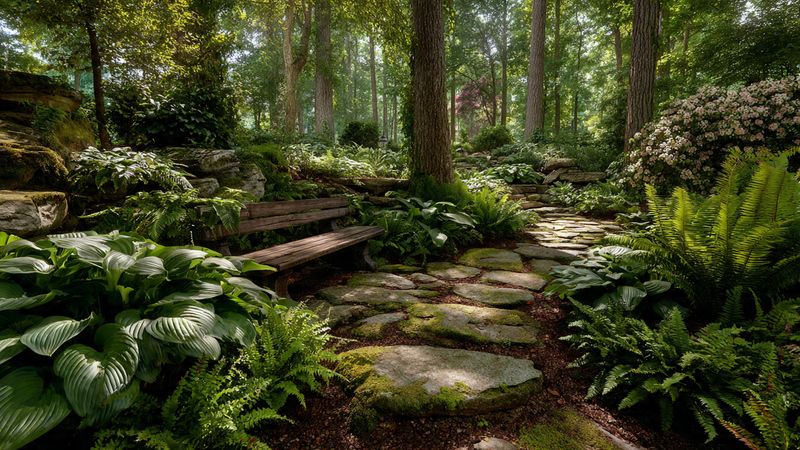
Once you know your light and moisture conditions, the next step is turning that information into a visual plan. A layered approach works much better in a shady corner than a flat row of similar-height plants, because layers create depth and keep the composition interesting from multiple angles. Place the tallest structural plants closest to the fence, where they anchor the back of the bed without blocking light from what sits in front of them.
Medium-height plants go in the middle layer. These can be flowering perennials during their bloom season or foliage plants that carry the design the rest of the year. Vary the leaf shape and texture here – pairing a bold, round hosta leaf with a finely cut fern frond, for example, creates contrast that reads well even on overcast days when colors look muted. In moist shade, this middle layer might include Solomon’s seal or foamflower; in drier conditions, a compact Heuchera cultivar or a clump-forming sedge could fill the same role.
The front edge, where the bed meets a path, bench, or lawn, benefits from low groundcovers or low-growing sedges that visually connect the planting to its surroundings. Illinois Extension specifically recommends low groundcovers as transitions between paving or lawn and taller plantings, noting that they reduce the abrupt visual gap that appears when a tall plant meets a hard surface with nothing in between. Choose groundcovers carefully, though – some spread aggressively and will require ongoing management to stay in bounds.
Where tree roots, existing paving, or severely compacted soil make digging impractical, containers fill the layering role without requiring you to break ground at all. University of Minnesota Extension notes that containers can add both structure and seasonal color to shade gardens, and they have the added advantage of being movable if a plant is not performing well in one spot. Keep in mind that container soil dries out faster than in-ground beds, so they need more frequent moisture checks, particularly during warm weather.
Let foliage carry the design between blooms

Shade gardens bloom, but not continuously, and accepting that early makes planning much easier. The Royal Horticultural Society notes that shade reduces photosynthesis and can limit both growth and flowering, which is why shade gardens are more commonly valued for their foliage, texture, and form than for a long parade of flowers. The most visually successful shady corners tend to treat bloom as a seasonal bonus rather than the main event.
Foliage does the heavy lifting here. Leaf color alone offers a remarkable range – from the blue-green of certain hosta cultivars to the deep burgundy of Heuchera, the silver-marked fronds of Japanese painted fern, and the bright chartreuse of some sedges. Combining bold, large leaves with fine-textured ones creates visual contrast that holds attention across the full growing season. Berries, seedheads, and interesting bark on shrubs extend that interest into fall and winter, when most perennials have gone dormant.
Staggered bloom timing helps the corner contribute something floral across multiple seasons rather than everything peaking at once and then going quiet. Spring ephemerals like Virginia bluebells and bleeding heart give early color; summer-blooming astilbes or wild geranium carry the middle of the season in moist sites; fall asters and white wood aster extend color into September and October in many regions. Penn State Extension’s guide to planting for pollinators points out that most perennials provide strong color for only a few weeks, making staggered timing essential for both visual continuity and pollinator support.
On the pollinator question, a diverse planting with varied flower forms and bloom periods can support a broader range of beneficial insects than a single-species planting. Penn State Extension’s pollinator habitat guidance explains that pollinator value depends on plant species, flower structure, bloom timing, and local insect communities – so individual plants do not attract every pollinator equally. That is not a reason to avoid planting for pollinators; it is a reason to choose a variety rather than relying on a single species to do everything.
Give the planting a careful start
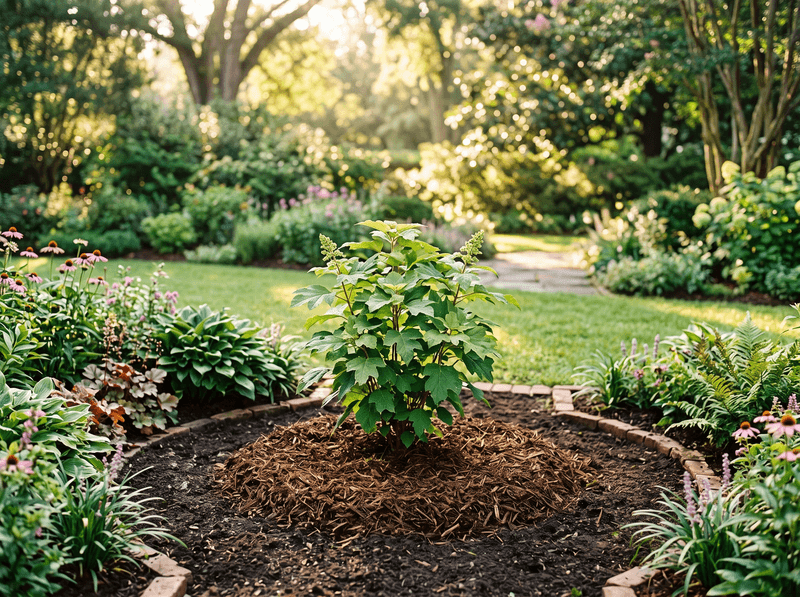
Planting day is not the finish line – it is the beginning of an establishment period that will determine whether your corner thrives or slowly declines. The most common mistake new shade gardeners make is assuming that because a spot is shaded and potentially moist, the plants will look after themselves. They will not, especially in the first growing season.
Watering correctly from the start matters more than watering frequently. University of Minnesota Extension recommends checking soil moisture several inches below the surface and watering deeply rather than shallowly and often – shallow, frequent watering encourages roots to stay near the surface, where they are more vulnerable to heat and drought. Push a finger or a wooden dowel a few inches into the soil near your new plants; if it comes out dry, water thoroughly. If it comes out with damp soil clinging to it, wait another day or two.
Mulch is one of the most practical things you can do for a new shade planting. University of Minnesota Extension recommends roughly two to four inches of mulch for garden beds, kept away from plant stems and tree trunks to prevent rot and pest issues. Mulch moderates soil temperature, slows evaporation, suppresses weeds, and gradually improves soil structure as it breaks down – all of which benefit shade plants that are still developing their root systems.
Before adding any fertilizer or soil amendments, get a soil test. University of Minnesota Extension notes that most shade plants do best in moist, well-drained soil with adequate organic matter, but guessing at what to add can create imbalances that are harder to fix than the original problem. A basic soil test from your state’s cooperative extension service costs very little and tells you what the soil actually needs. Containers in the planting need separate attention – they dry out faster than in-ground beds, and any annuals used for seasonal color will need replacing as temperatures shift.
Avoid shortcuts that create new problems
A few common shortcuts in shade gardening tend to create more work than they save. The first is assuming that shade-tolerant means no light required. The Royal Horticultural Society is clear that even shade-tolerant plants need some usable light, and a completely dark corner under a solid overhang or dense evergreen canopy may not support any planted bed at all. In those situations, a container that can be moved to a brighter spot periodically, a piece of garden sculpture, or a simple lighting feature is a more honest solution than forcing plants into conditions where they cannot function.
Extra fertilizer cannot compensate for inadequate light. Light availability is the primary limiting factor in a shady garden, and University of Minnesota Extension notes that excessive fertilization can create plant-health problems rather than solving a flowering deficit. If a shade plant is not performing, the answer is almost always better site matching, not more nutrients.
Hostas and ferns are genuinely useful shade plants, but they are not universal. Many prefer consistently moist soil and struggle beneath trees, near foundations, or in dry sandy conditions. Check the specific moisture and drainage requirements of any cultivar before planting it in your diagnosed site.
Groundcover selection deserves real care. Illinois Extension warns against assuming any groundcover will perform equally across sun, shade, wet, and dry conditions. Ground ivy is a good example of what to avoid: University of Minnesota Extension classifies ground ivy as an aggressive invasive weed that spreads rapidly and is difficult to remove once established. Some native plants can also spread substantially through rhizomes or self-seeding; Penn State Extension specifically notes that some goldenrods spread aggressively and are better suited to larger naturalized areas than a small corner bed.
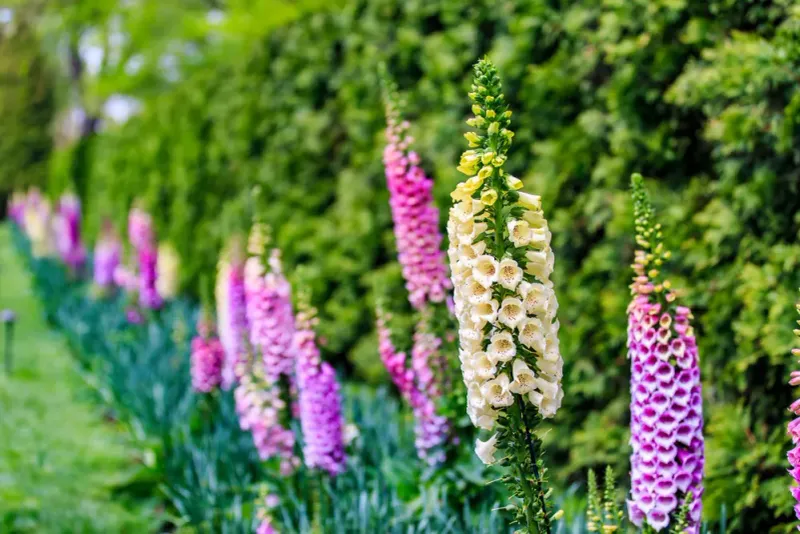
Safety in family- or pet-accessible yards is worth a direct conversation. Some popular shade-garden plants are toxic if ingested. Foxglove, occasionally suggested as a cottage-garden filler, is a serious example: Poison Control warns that all parts of foxglove are potentially poisonous if swallowed, and it should not be planted where children or pets have access without a clear understanding of that risk. Lily-of-the-valley carries similar concerns.
Check any unfamiliar plant against a reliable toxicity resource before including it in a yard where kids or animals spend time.
Let the corner succeed on its own terms
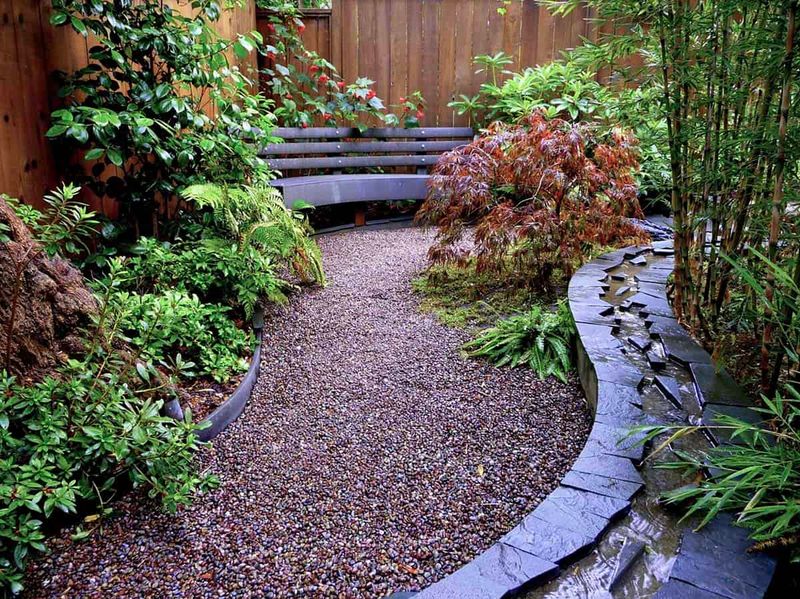
The sequence that actually works is straightforward: measure the light, check moisture and drainage separately, account for compaction, and then choose plants matched to what you found rather than what you hoped to find. Arrange them in layers from the fence outward, give them a proper start with deep watering and mulch, and stay attentive through the first full growing season. University of Minnesota Extension’s shade gardening guidance consistently returns to this same logic: site diagnosis first, plant selection second.
Not every corner will support a blooming perennial bed, and that is fine. The Royal Horticultural Society acknowledges that very dense, dry shade may be better served by containers, foliage-led compositions, or non-plant features than by a traditional planted bed. A well-chosen container, a stone bench flanked by two ferns, or a simple gravel surface with a sculptural element can turn a dead zone into a deliberate space just as effectively as a full planting.
A shady fence corner, bench edge, or path-side bed becomes memorable not by fighting its conditions but by working with them – and the best shade gardens tend to look like they always belonged there.