
The Deadheading Habit That Leaves Your Petunias Thin And Leggy Instead Of Full
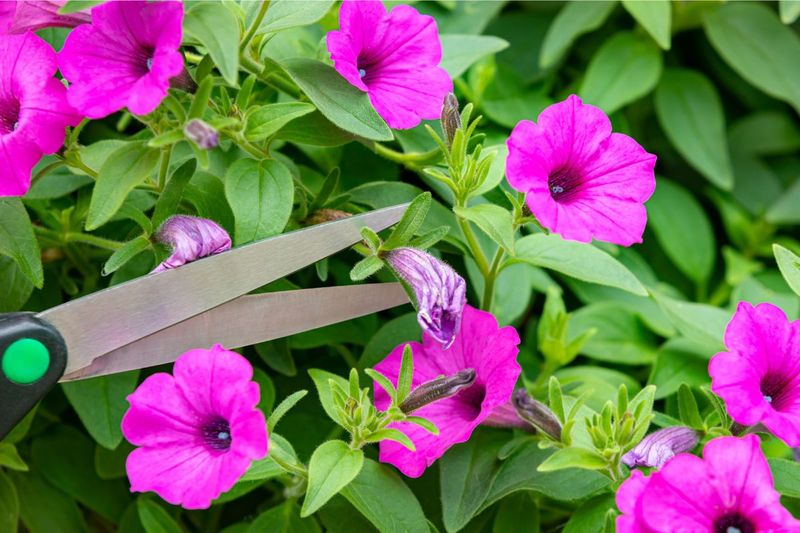
Your petunias look tired, and you are not sure which cut to make. Snipping off just the petals feels like deadheading, but it can leave something behind.
Pinching, trimming, and growing conditions each play a different part in how full a petunia looks. Here is how to match the right cut to what your plant is showing you.
Deadheading and shaping solve different problems
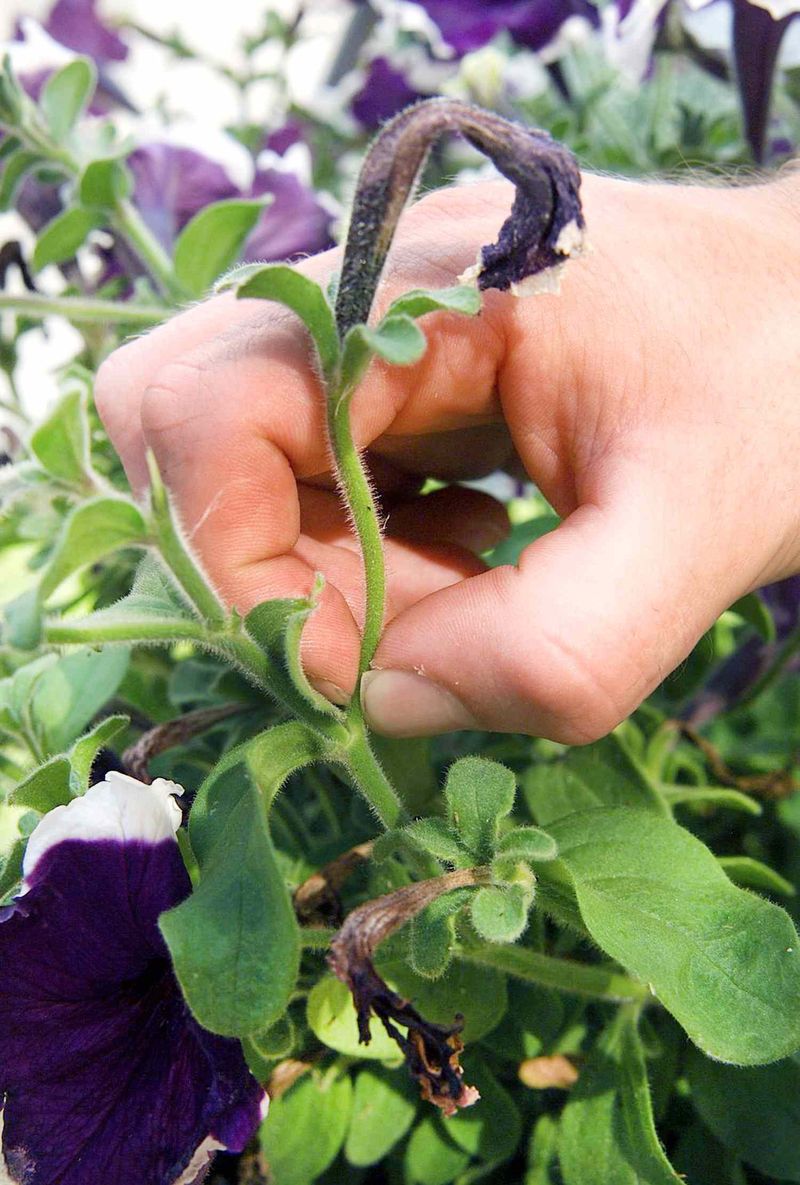
Plucking only the petals off a faded petunia feels like a job done, but the seed-producing structure can stay behind. Mississippi State University Extension explains that petunia seeds form below the flower head, so removing the stalk takes the seed source away with the bloom.
Here is the reassuring part. Nothing in the extension guidance shows that leaving a seed structure behind makes a petunia thin or leggy.
So if your plant looks sparse or floppy, you have not necessarily done something wrong with your snips.
Deadheading and shaping are two separate jobs. Deadheading deals with spent blooms and may limit seed formation.
Shaping deals with stems. Illinois Extension describes pinching as removing growing tips to promote a shorter, fuller plant, which is a different cut aimed at a different goal.
Think of this guide as a way to match the cut to what you see. A plant covered in faded flowers may want one kind of attention.
A plant that is tall and floppy may want another. Some plants simply need a change in their growing conditions rather than any cut at all.
None of these steps is a guaranteed cure, and petunia varieties behave differently. Still, once you know which cut does which job, you can stop guessing and make a calmer, more confident choice at the planter.
Remove a spent bloom with its stalk
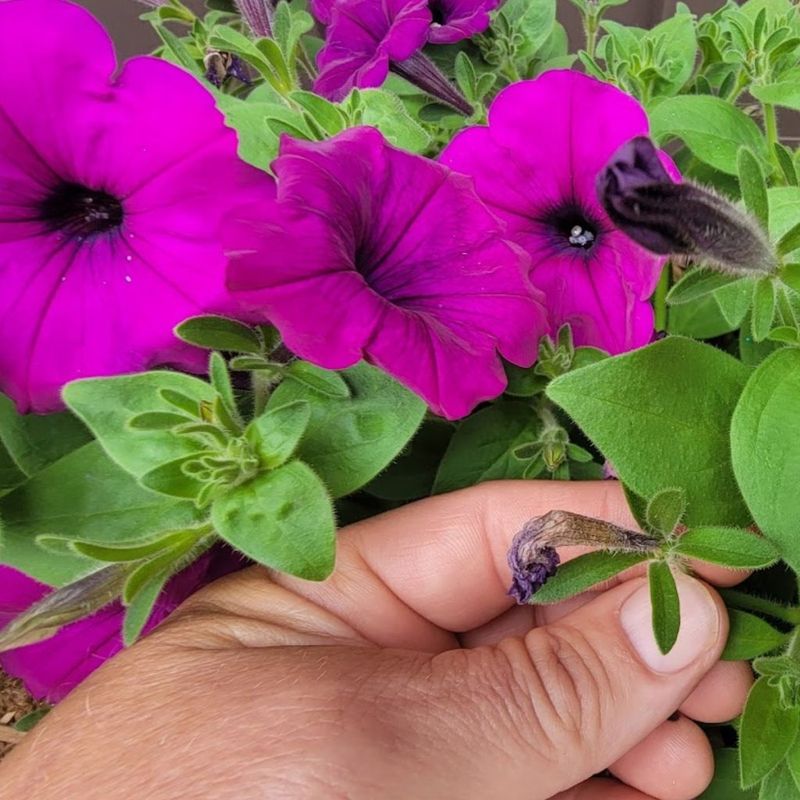
Picture a petunia flower that has gone limp and papery. If your variety benefits from deadheading, the goal is to take away the whole spent bloom, not just its petals.
That means following the little stalk down to where it meets the branch.
According to Mississippi State University Extension, the seeds sit below the flower head. Pinching off the stalk removes that seed source along with the faded flower, which is why petals alone are not enough.
You can use your thumb and fingernail for this, or a small pair of snips. Grab the stalk just under the bloom and pinch or cut it cleanly.
Only the faded flower and its stalk come away.
Notice what you are not doing. You are not cutting back an entire healthy branch every time a flower fades.
Leave the leaves, the side shoots, and any fresh buds exactly where they are.
Keep your expectations realistic, too. Removing a spent bloom is a tidy-up for that flower and its seed source.
It will not fix a plant that is already stretched out, and it does not promise extra flowers. If the plant is leggy, a different cut is called for, which the next sections cover.
Pinch growing tips to encourage branching
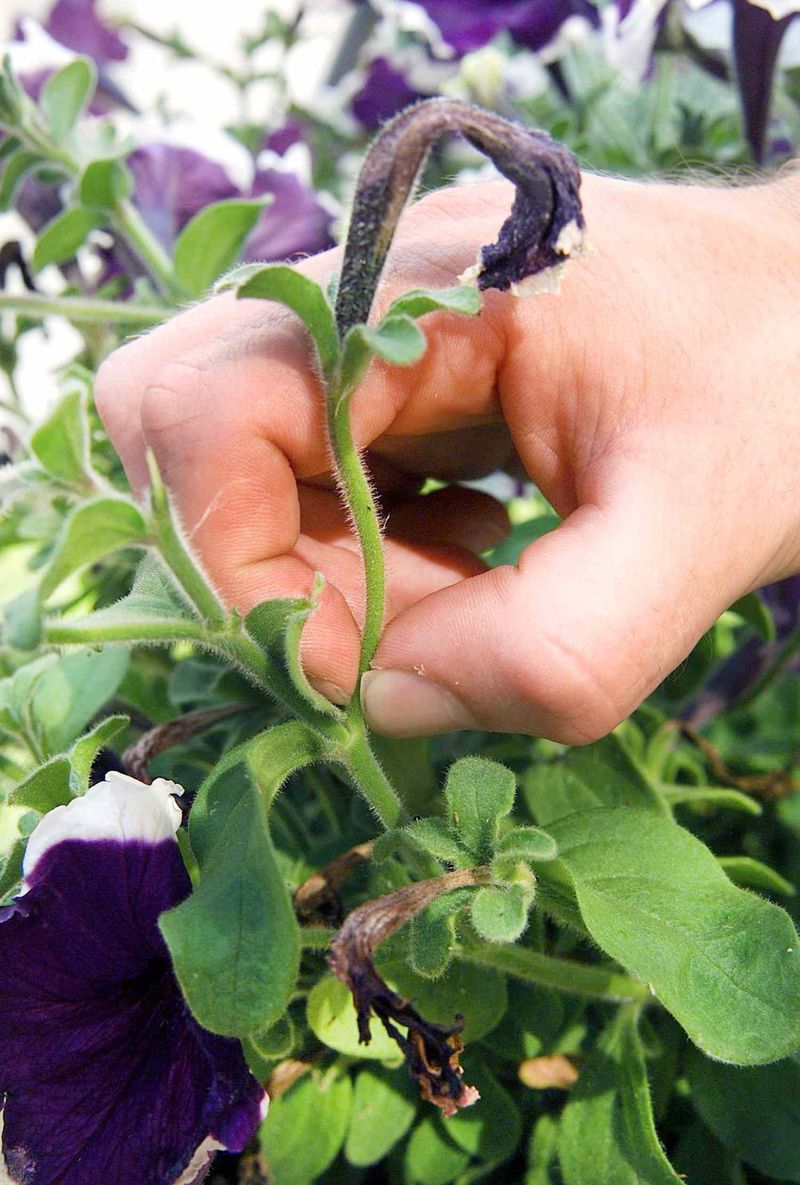
A petunia that is getting tall and floppy is asking for shaping, not just flower removal. Shaping means working on the growing tips at the ends of the stems.
Those tips are where the plant keeps stretching.
Illinois Extension says pinching encourages branching and a shorter, fuller form. When you remove a tip, the plant tends to send growth from the stem below, so you may end up with more branches instead of one long strand.
For a practical rule of thumb, Nebraska Extension advises removing the last few inches of growth to help keep petunias compact. Use clean fingers or snips and take off the end of a stem, just above a set of leaves.
This is routine shaping, and it differs from heavier pruning of old, stretched shoots. Pinching is a light touch you can use while a plant is still holding its shape.
It works best before a plant has gotten very long.
Go gently and watch how your plant responds. One pinch will not turn every petunia into a mound, and some varieties branch well on their own.
If the plant keeps reaching, you can move on to the stronger pruning described next.
Prune established leggy shoots with care
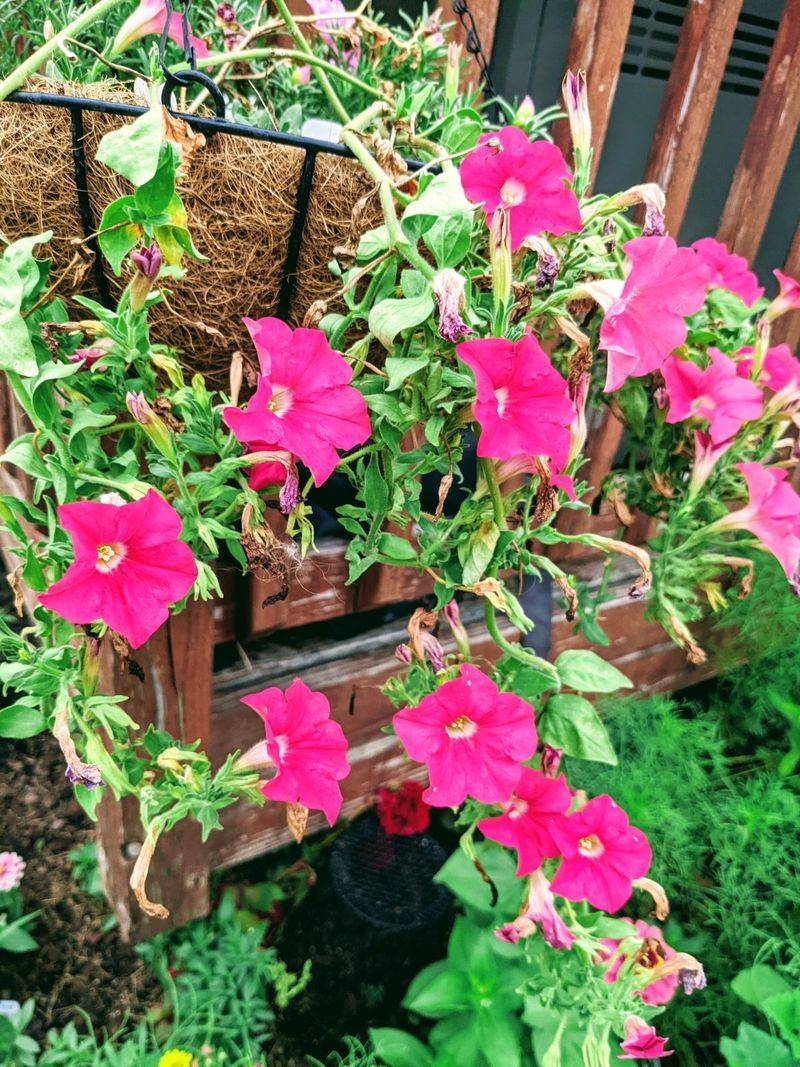
Sometimes a petunia has already stretched into long, bare-looking shoots. Pinching tips will not do much at that point.
A bigger cut may be worth considering.
Clemson Extension recommends pruning leggy shoots to about half their length. It also cautions against taking off all the leaves, so keep foliage on the stems you cut.
Water the plant afterward to encourage new growth.
Compare that with deadheading. Removing a spent bloom takes off one flower and its stalk.
Pruning leggy shoots shortens whole stems, which is a much larger job with a different purpose.
Take your time with it. You can work stem by stem, cutting back the longest ones and leaving leafy growth in place so the plant is not stripped bare.
Then give it a drink and watch for fresh shoots to appear.
Treat this as one option, not a rescue that always works. Legginess can have more than one cause, and a haircut will not solve all of them.
If your plant does not respond, look at its light and watering, which the final section covers.
Check the cultivar before making deadheading routine
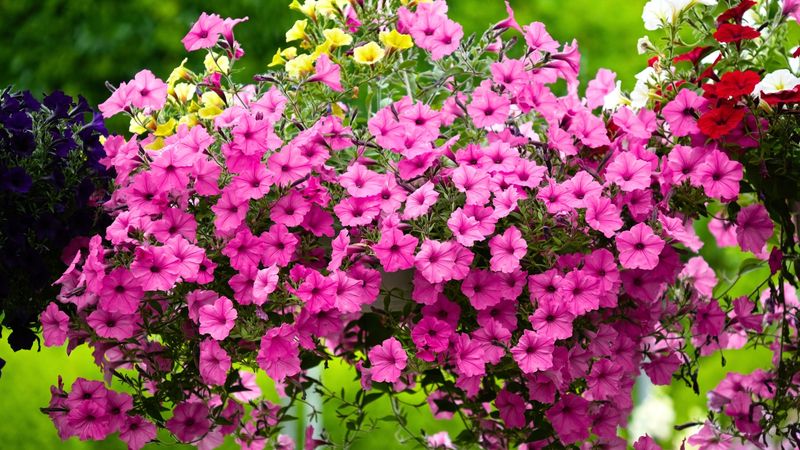
Not every petunia needs you to hover over it with snips. Some varieties drop their own faded flowers, and that changes the whole routine.
Illinois Extension lists petunias among self-cleaning annuals that generally need no manual deadheading. Clemson Extension adds some detail: large-flowered and double types benefit from deadheading, while many smaller-flowered cultivars are self-cleaning.
Wave petunias are a well-known example. The maker says on its Wave Gardening FAQ page that Wave varieties drop faded flowers and generally do not require deadheading or pinching when grown as recommended.
So check your plant tag or the grower’s notes before turning deadheading into a weekly chore. If you have big ruffled or double blooms that turn mushy, a bit of hands-on cleanup may help.
If you have a small-flowered or Wave type, you may be able to relax.
Seed savers play by different rules. If you want seed, leave a few selected spent blooms or seed structures in place instead of removing every one.
Mississippi State’s deadheading advice is aimed at removing the seed source, so skip it on the flowers you plan to keep.
Consider growing conditions before making another cut
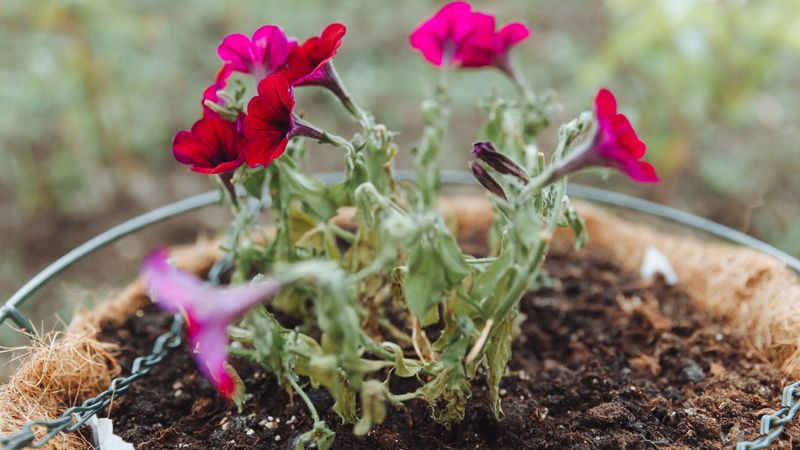
Before you reach for the snips again, look at where your petunia is growing. Petunias generally do best in full sun and well-drained soil.
A plant tucked in shade or sitting in soggy soil may look sparse no matter how carefully you cut.
Colorado State University’s PlantTalk notes that too much water can make petunias leggy. So if the soil stays wet, easing up on watering may matter as much as any pruning.
Once the conditions look right, choose the cut that fits. If your cultivar benefits from deadheading, remove the faded bloom along with its stalk.
If the plant is getting tall or floppy, pinch the growing tips to encourage branching.
If shoots are already long and stretched, consider the leaf-retaining pruning described by Clemson Extension. Each cut has its own job, and none is a promise of a full plant.
Start with light, water, and the plant tag, then pick the smallest cut that fits. A petunia rarely needs more than that.