
The Native North Carolina Groundcovers That Carpet Deep Shade Where Even Liriope Gives Up
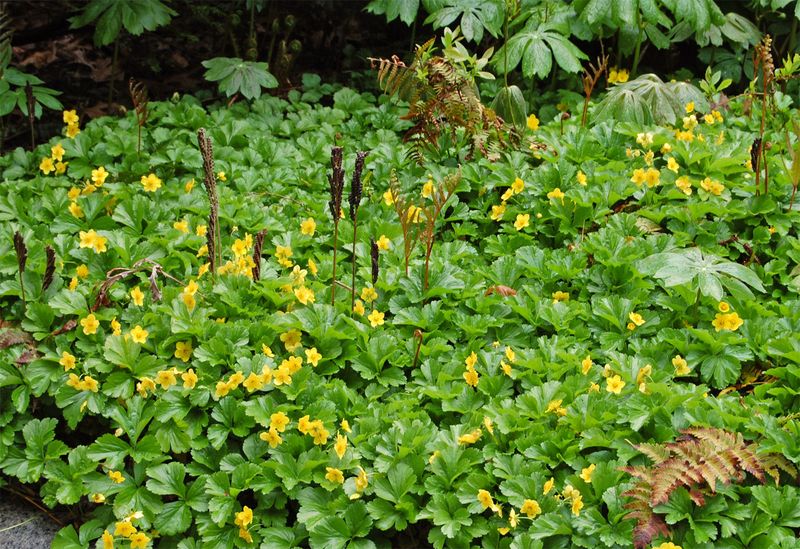
That dark, gloomy patch under your trees where nothing seems to grow? It might feel like a lost cause, especially if even tough old Liriope has thrown in the towel.
The good news is that North Carolina has a whole team of native groundcovers built for exactly those shady spots, and they do double duty by feeding butterflies, sheltering box turtles, and pushing out invasive plants. Here are eight native carpets that thrive where the sun barely reaches.
1. Allegheny Spurge (Pachysandra procumbens)
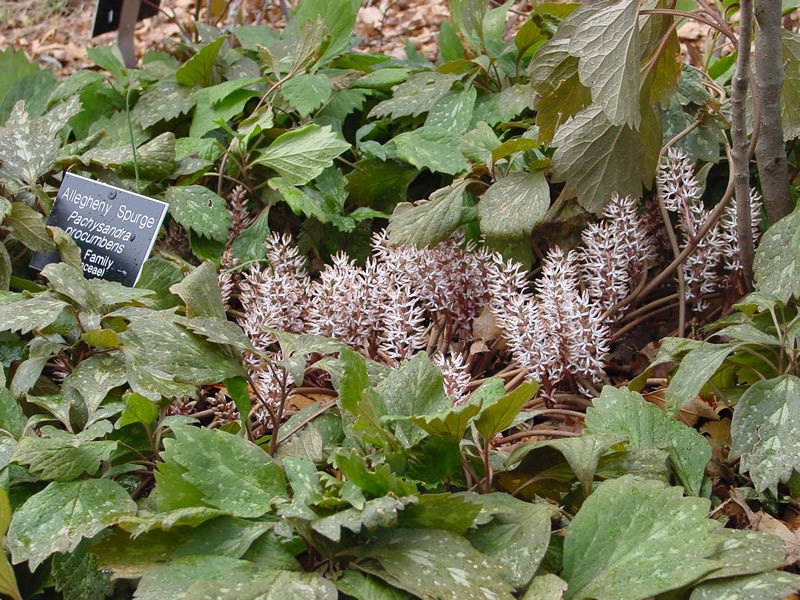
Meet the native cousin that plays by the rules. Allegheny Spurge spreads through underground rhizomes to form a thick evergreen carpet, but unlike its notorious Asian relative Pachysandra terminalis, it stays put instead of taking over your whole yard.
What makes it a standout is how it handles the wet, gloomy corners nobody else wants. It tolerates soggy soil and even occasional flooding, so that damp shady spot along your foundation finally has a taker.
In early spring, fragrant white flower spikes appear and draw in early insects hunting for a meal. For Piedmont gardeners who want an easy, well-behaved evergreen swap, this one carpets the ground and smothers weeds without demanding a thing.
2. Wild Ginger (Asarum canadense and Hexastylis species)
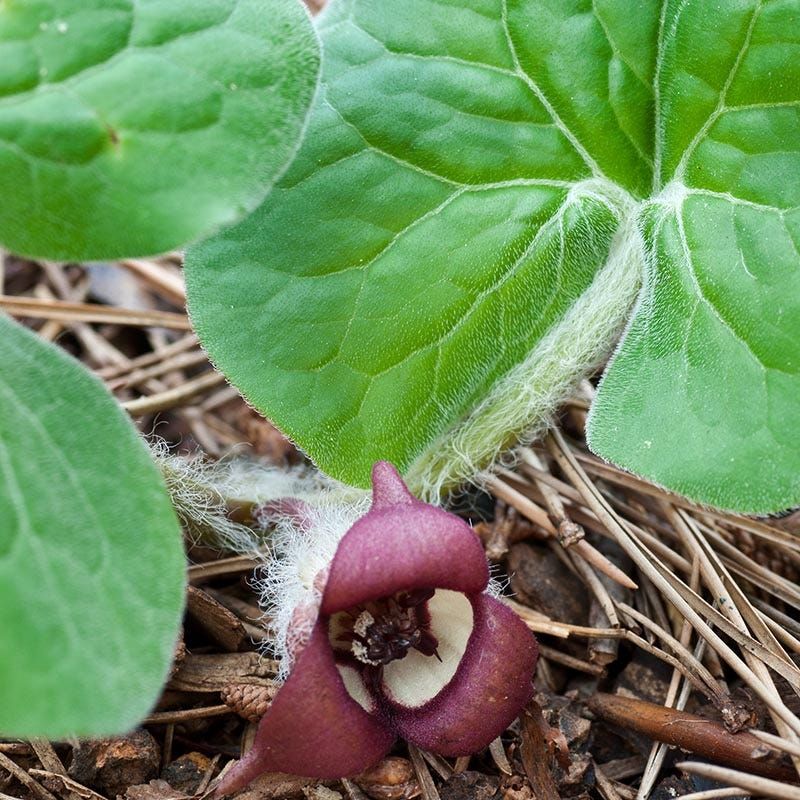
Brush your fingers against the roots and you will catch a spicy, gingery scent, though this plant is no relation to the ginger in your kitchen. Wild Ginger creeps along slowly on rhizomes, building a lush six-to-twelve-inch layer of heart-shaped leaves in rich, moist shade.
Deer tend to leave it alone, which is a small miracle in most NC neighborhoods. Canadian wild ginger also pulls its weight for wildlife, serving as a larval host for the pipevine swallowtail butterfly.
Here is a fun bit of teamwork happening underground: ants gather and disperse its seeds, planting next year’s patch for you. The native Hexastylis heartleaf gingers add glossy evergreen foliage that keeps the ground covered all winter long.
3. Partridgeberry (Mitchella repens)
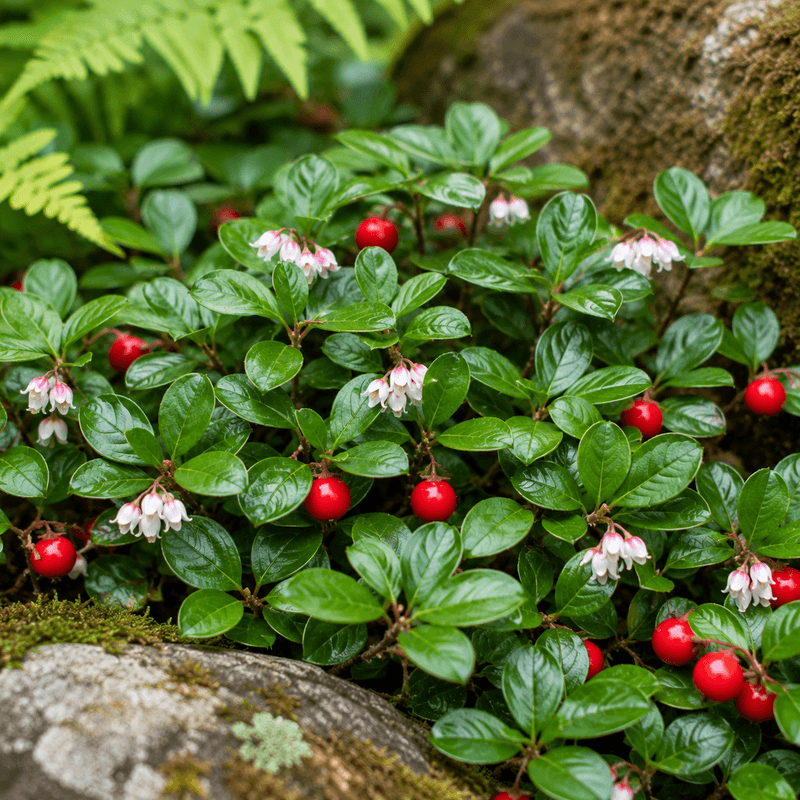
Tiny but mighty describes this little trailing native perfectly. Partridgeberry hugs the ground with small, rounded evergreen leaves and dots them with cheerful red berries that hang around through the cold months.
Because it stays low and green year-round, it gives you interest in a season when most of the garden has gone brown and bare. That winter color matters more than folks realize when the rest of the shade bed looks empty.
Those bright berries are not just for looks either. They feed birds and other wildlife during the lean stretch of the year, turning a quiet corner of your yard into a small pantry for local critters.
4. Foamflower (Tiarella cordifolia)
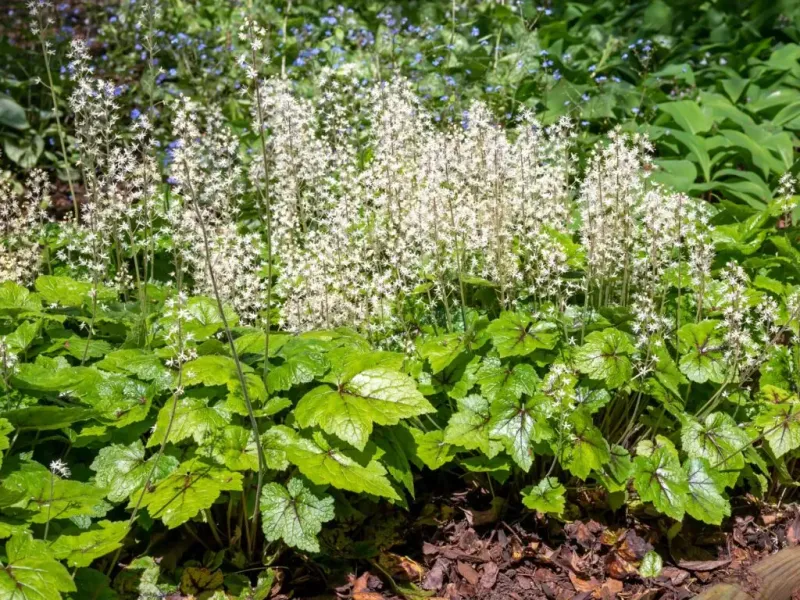
Come spring, Foamflower sends up airy spikes of frothy white blooms that seem to float above its lobed leaves, and the name suddenly makes total sense. It is a woodland perennial that feels right at home in the dappled dark under NC hardwoods.
Moist, shady beds are its happy place, and it stays semi-evergreen so the ground never goes completely bare. That means fewer weeds sneaking in and a softer look than a mulch-only bed.
Beyond the pretty spring show, it earns its keep ecologically, offering blooms that early pollinators appreciate. If your shade is on the damp side, Foamflower fills it with a gentle, cottage-woodland charm that Liriope could never match.
5. Wild Strawberry (Fragaria virginiana)
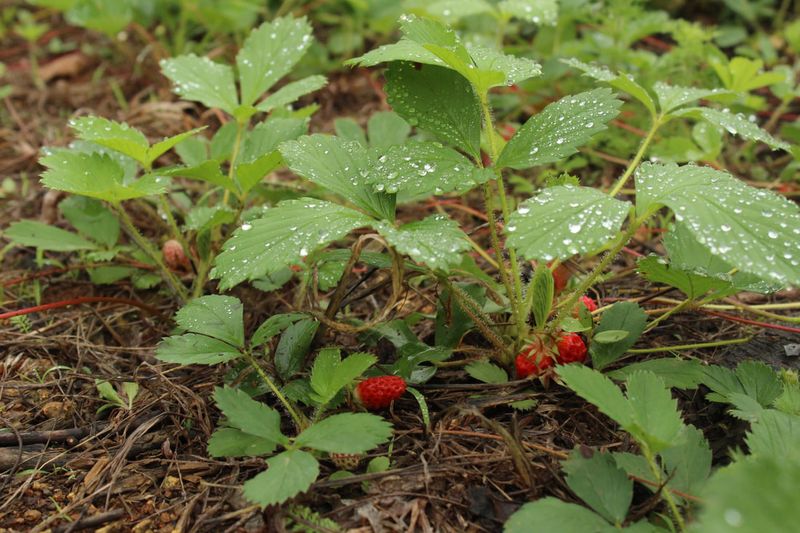
Want to roll out the welcome mat for box turtles? Wild Strawberry does exactly that.
This fast-spreading evergreen native scrambles across the ground with runners, and box turtles use that low cover to hide, snack on the fruit, and sometimes even tuck their eggs among the runners.
For a reader who takes pride in protecting NC’s beloved box turtles, that makes it more than a groundcover. It becomes a safe haven built right into the landscape.
It is also wonderfully adaptable, handling everything from full sun to mostly shade, so it fills those tricky transition zones where light comes and goes. And yes, the small berries are edible, so you and the wildlife can share the harvest.
6. Creeping Phlox (Phlox stolonifera and Phlox subulata)
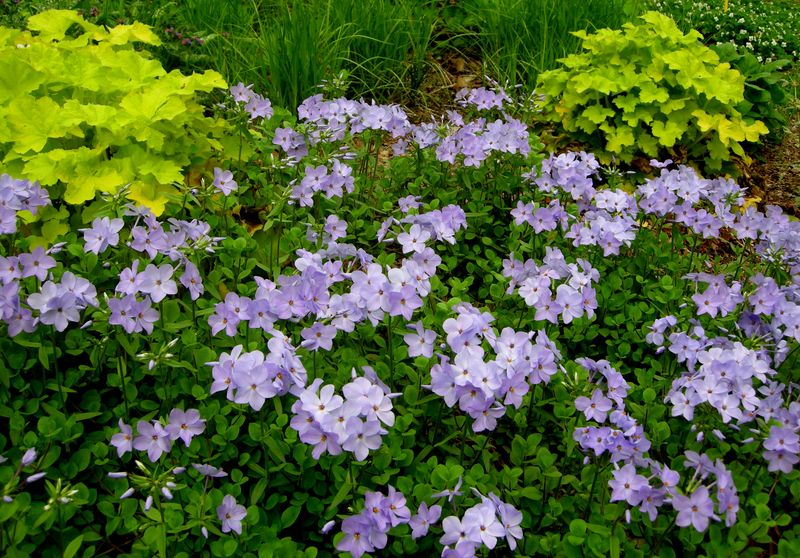
If you crave color, Creeping Phlox delivers a spring fireworks show of pink, purple, and white that blankets the ground. Those early blooms are a lifeline for bees, butterflies, and hummingbirds waking up hungry before much else is flowering.
The two species split the duty nicely. Phlox stolonifera is an Appalachian woodland native that even shrugs off a bit of light foot traffic, while Phlox subulata, the moss phlox, forms dense evergreen mats across the Piedmont and mountains.
Both are erosion fighters too, gripping soil on slopes where bare ground would wash away. Plant them where you want that jolt of early-season color to pull pollinators straight into your yard.
7. Native Sedges (Carex species)
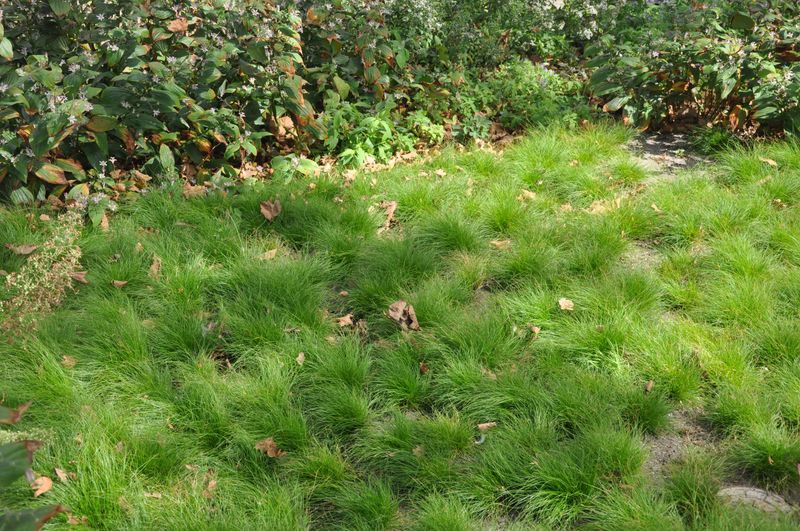
Here is the direct swap you have been looking for. Native sedges are the go-to replacement for invasive Liriope and Mondo grass in shade, giving you that same soft, grassy look without the ecological baggage.
The difference shows up in who uses them. Carex species serve as host plants for wood nymphs, satyrs, and various moths, so your shady border quietly becomes a nursery for native insects.
They keep giving into winter, when their seed heads feed sparrows, chickadees, and finches during the hungriest stretch of the year. Swapping out a sterile invasive for sedges is one of the highest-impact moves a shade gardener in NC can make.
8. Heartleaf Ginger (Asarum arifolium and Hexastylis shuttleworthii)
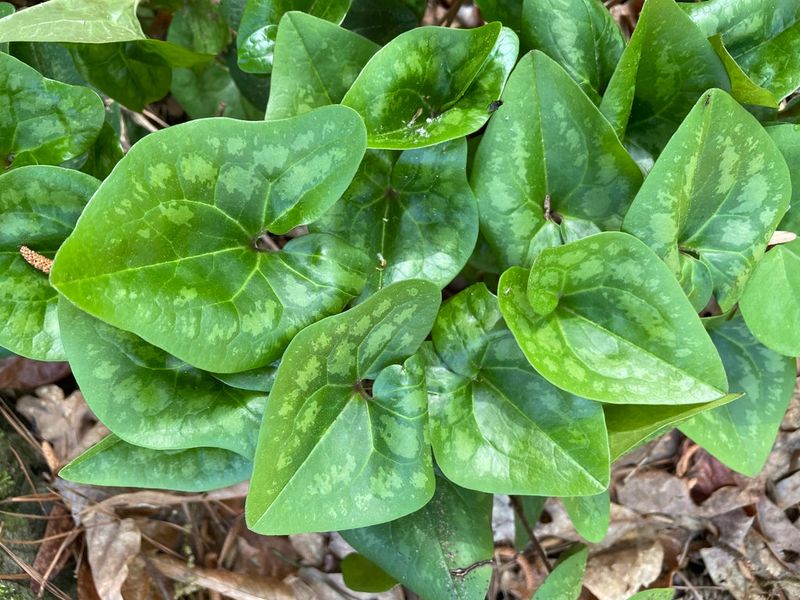
For the deepest, darkest corners where you have nearly given up hope, Heartleaf Ginger steps in with bold, heart-shaped leaves that overlap into a dense evergreen mat. It genuinely thrives in the kind of gloom that defeats most plants.
Patience is the trade-off here. It spreads slowly but reliably, knitting together into a weed-suppressing carpet that gets better every year rather than sprawling out of bounds.
You will spot it most often in Piedmont and mountain NC, where its glossy, sometimes silver-mottled foliage brings a rich, layered texture to the forest floor. Think of it as the finishing touch for shade so deep even Liriope waved a white flag.