
The One Lilac Mistake To Avoid This Fall If You Want Flowers Next Spring
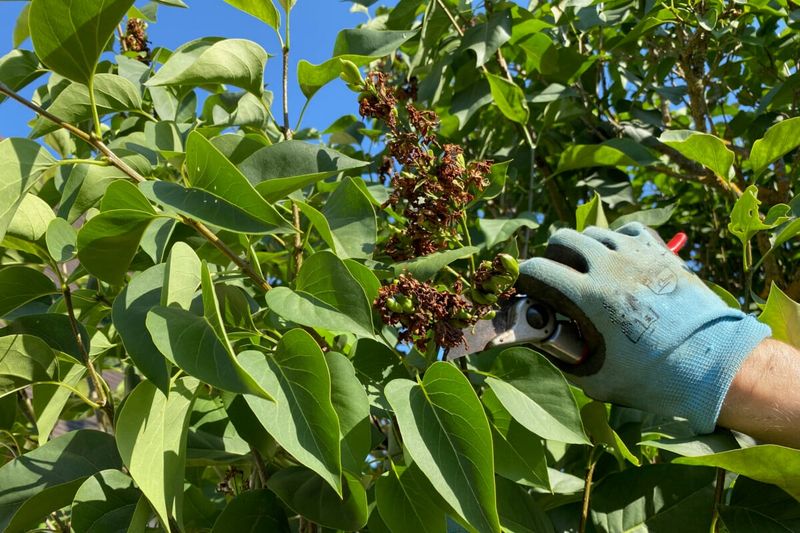
Lilacs are one of the most rewarding shrubs a backyard gardener can grow, but one common fall habit can quietly wipe out next spring’s flower show before the season even begins. The mistake is routine trimming or shaping in autumn, right when those precious flower buds are already sitting on the branches, waiting for spring.
Understanding why this happens, and what to do instead, can make the difference between a lilac covered in blooms and one that greets you with nothing but leaves.
Why a fall trim can cost your lilac spring flowers
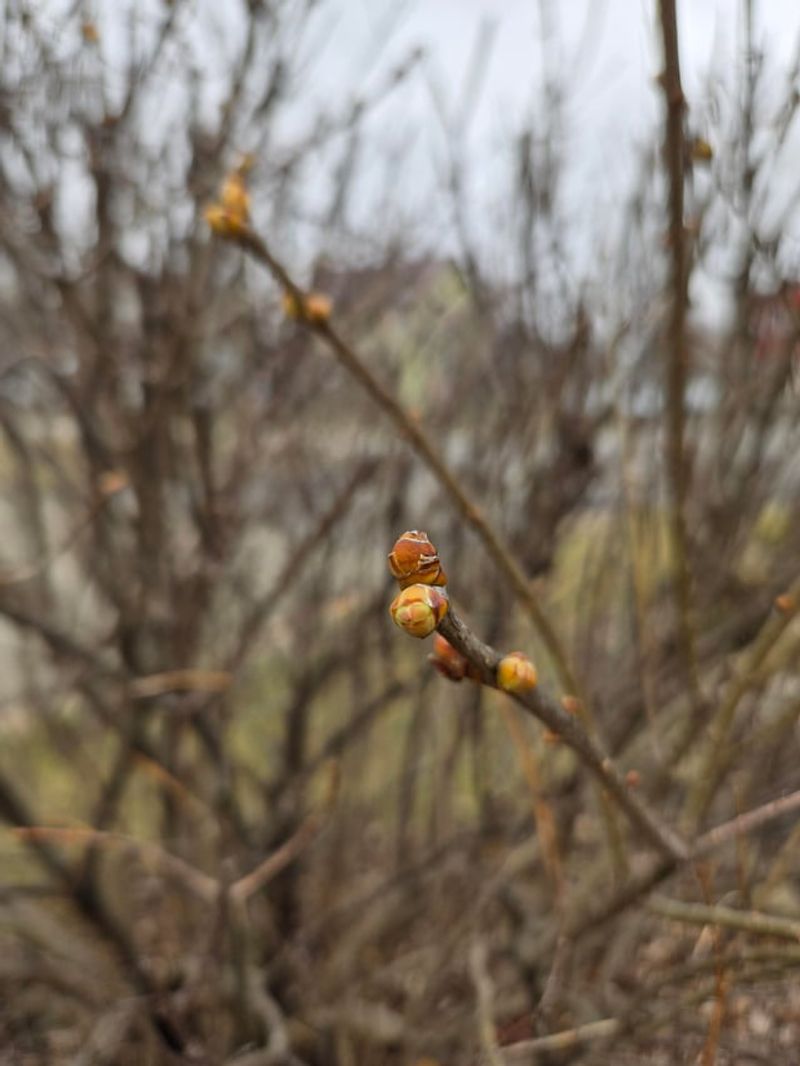
Lilacs work on a schedule that catches a lot of gardeners off guard. After a lilac finishes blooming in spring, the plant spends the rest of the growing season developing buds for the following year.
Those buds form on the growth from that current season, and Iowa State University Extension notes that this bud-setting process is generally complete by mid-summer. By the time fall arrives, next spring’s flowers are already built into the branches.
Reaching for the pruners in September or October to tidy up a healthy shrub means cutting off branches that are carrying those buds. The branches you remove are gone, along with whatever flowers they were holding.
Iowa State Extension cautions that late-season pruning “may remove many” flower buds, reducing how much the shrub blooms next spring.
That said, the consequence is proportionate to how much you cut. Snipping a few branches is different from shearing the whole shrub.
The risk is losing buds on the branches that are removed, which can mean noticeably fewer flowers, not necessarily a bare shrub or any lasting damage to the plant itself. The lilac will almost certainly survive a fall trim; it just may not reward you with as full a bloom as you were hoping for.
One more thing worth knowing: if you grow a reblooming cultivar such as Bloomerang, seeing flowers on your lilac in late summer or fall is completely normal. That is how those varieties are bred to behave, and it is not a sign that something went wrong with pruning.
The timing guidance here applies to standard spring-blooming lilacs.
Prune for shape just after flowering

The window right after your lilac finishes blooming is the best time for routine shaping and size control. At that point, the plant has just completed its flower show but has not yet locked in next year’s buds.
Pruning then lets you shape the shrub without sacrificing what is already developing for the following season.
Rather than giving the whole shrub a haircut with hedge clippers, a more effective approach is to remove selected branches at their origin, cutting back to where a branch meets a larger stem or the base of the plant. Iowa State University Extension recommends removing some of the oldest, thickest stems at the base as a way to encourage younger, more vigorous growth over time.
This keeps the shrub from becoming a tangle of old wood while still preserving its natural form.
When to do this depends on your specific plant, not a single date on the calendar. Lilac species and cultivars bloom at different times across different regions, so “soon after your lilac finishes flowering” is a more reliable guide than any one month.
Watch your shrub, note when the last blooms fade, and plan to prune within a few weeks of that point.
Deadheading, or removing the spent flower clusters after bloom, is a choice rather than a requirement. University of Maryland Extension and Iowa State both note that lilacs will still bloom in subsequent years even if you leave the old flowers on.
Deadheading can improve appearance and may support flowering, but skipping it will not shut down next spring’s bloom.
Diseased shoots call for a different decision
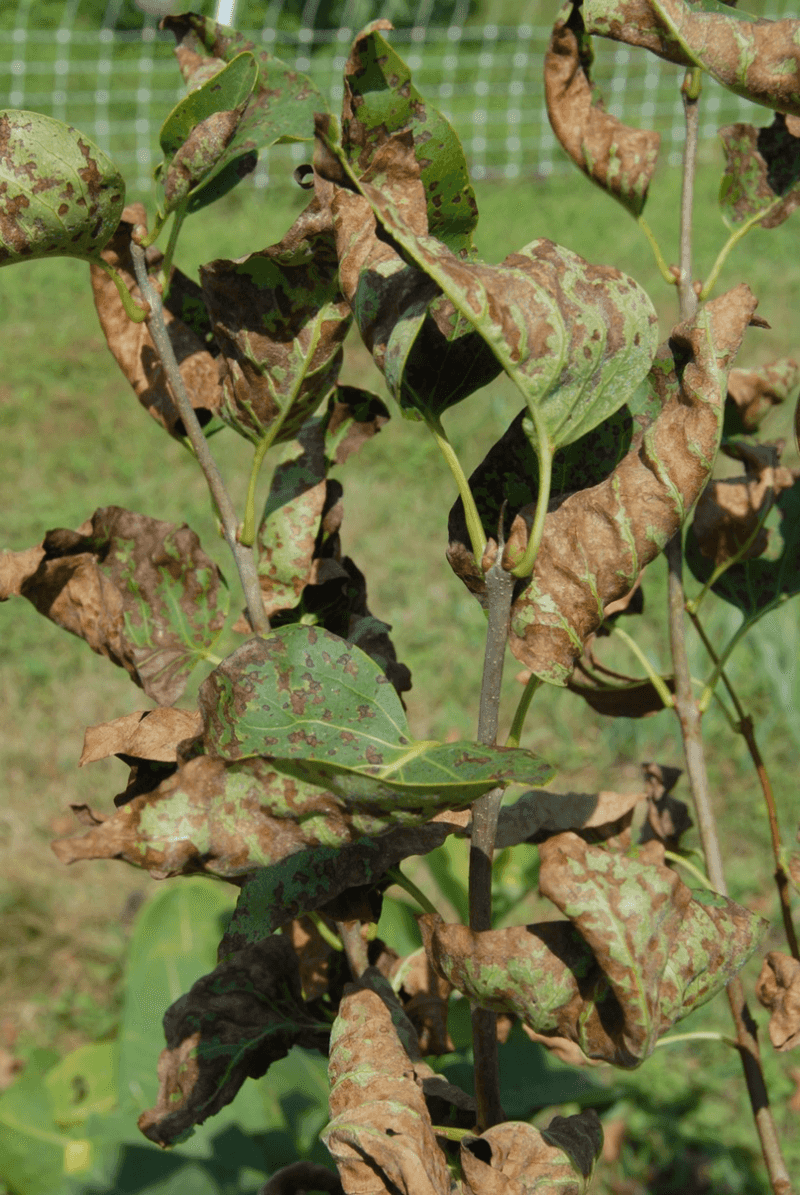
Healthy branches being shaped for size are a completely different situation from shoots that are diseased, dead, or infected. The guidance to hold off on fall pruning applies to elective shaping, not to material that poses a health risk to the shrub.
Common lilac problems include powdery mildew, bacterial blight, and scale. When a branch shows signs of disease, waiting until after next spring’s bloom to remove it is not always the right call.
University of Maryland Extension advises removing diseased shoots promptly during dry weather to limit the spread of infection. Removing dead twigs and infected leaves also helps reduce the fungal spores that can carry disease from one season to the next.
The key distinction is intent. Cutting out a clearly infected or dead shoot to protect the rest of the plant is a targeted response to a specific problem.
That is different from trimming healthy green growth to bring the shrub down to a preferred height or shape. One is maintenance; the other is disease management, and the two follow different rules.
If you do remove diseased material in fall or at any other time, dispose of it away from the garden rather than leaving it on the ground beneath the shrub. Fallen infected leaves and clippings can harbor pathogens over winter and reinfect the plant when conditions warm up again in spring.
Renovating an overgrown lilac means accepting fewer blooms
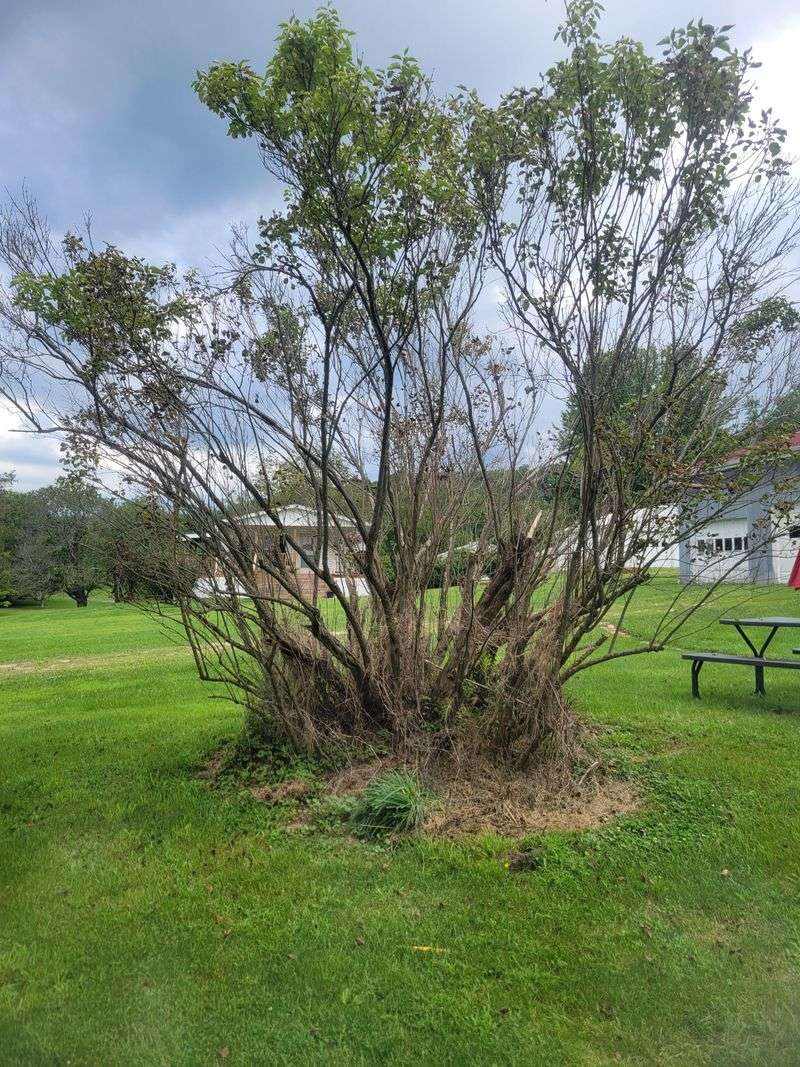
An old, overgrown lilac that has been left to its own devices for years is a different challenge from a well-maintained shrub that just needs a little shaping. When a lilac has grown into a tangle of thick, aging stems with few flowers and poor form, major rejuvenation pruning may be the right move, but the timing and trade-offs differ from routine maintenance.
Iowa State University Extension recommends late winter or early spring for rejuvenating neglected, overgrown shrubs. The trade-off is direct: flowering may be reduced or absent for two or three years while the plant puts its energy into producing new growth.
That is not a side effect to minimize; it is the expected outcome of heavy renovation, and gardeners should go in knowing it.
Iowa State also notes that removing large, old branches can sacrifice some blooms even when it is done at a more favorable time of year. Heavy renovation is a long-term investment in the shrub’s health and future performance, not a way to preserve this spring’s flower show.
If skipping a year or two of blooms is not acceptable, a gradual approach works better. Removing a portion of the oldest stems each year over three or four years spreads out the disruption and keeps some flowers coming each season while still moving the shrub toward a healthier structure.
A lilac without flowers may have another problem
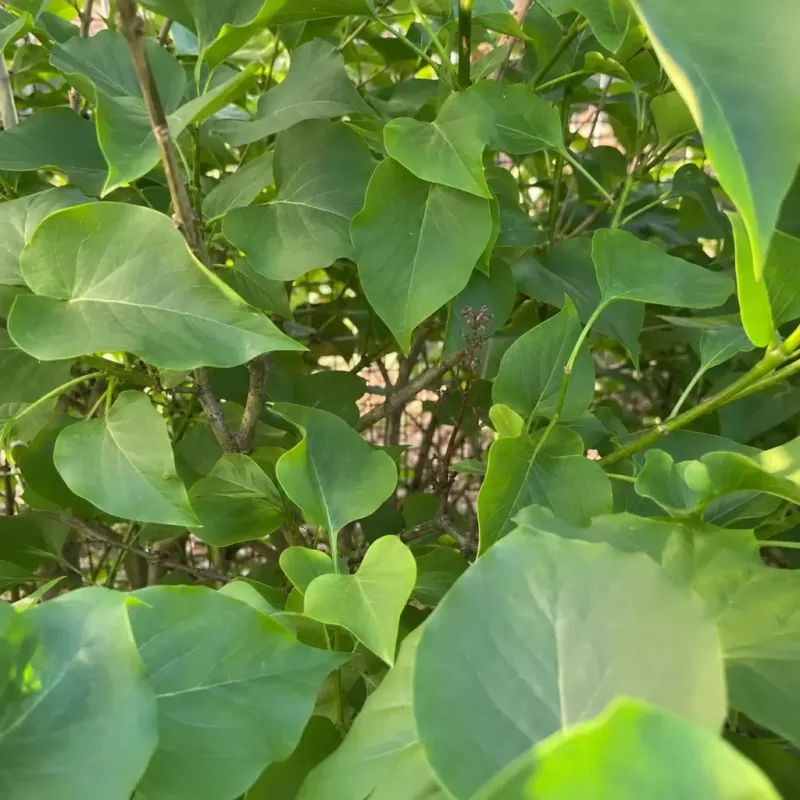
When a lilac stubbornly refuses to bloom, the instinct is often to blame the last pruning session. Pruning at the wrong time is one possible explanation, but it is far from the only one, and assuming it is the culprit can send you in the wrong direction.
Sunlight is one of the most common hidden causes of poor bloom. Lilacs need full sun, generally six or more hours of direct light per day, to flower reliably.
A shrub that has gradually been shaded out by nearby trees or structures may bloom less and less over the years with no pruning change at all. University of Minnesota Extension lists insufficient sunlight among the primary reasons a lilac may fail to bloom.
Soil nutrition can also play a role. Excess nitrogen, whether from heavy fertilizing or runoff from a nearby lawn, pushes a plant toward leafy green growth at the expense of flowers.
A lilac fed too generously may look lush and healthy while producing few or no blooms.
Plant age matters as well. Young lilacs, especially those recently transplanted, often take several years to settle in and begin blooming consistently.
Severe pruning in prior seasons can also set the clock back, as can insufficient winter cold in warmer climates where lilacs need a period of chill to trigger spring flowering. University of Maryland Extension confirms that several of these factors, including excess nitrogen and insufficient sun, are documented contributors to bloom failure.
Before concluding that a missed pruning window is the problem, check the basics: how much direct sun the shrub is getting, what has been applied to the soil nearby, and how recently the plant was moved or cut back hard.
Save healthy shaping for after flowering
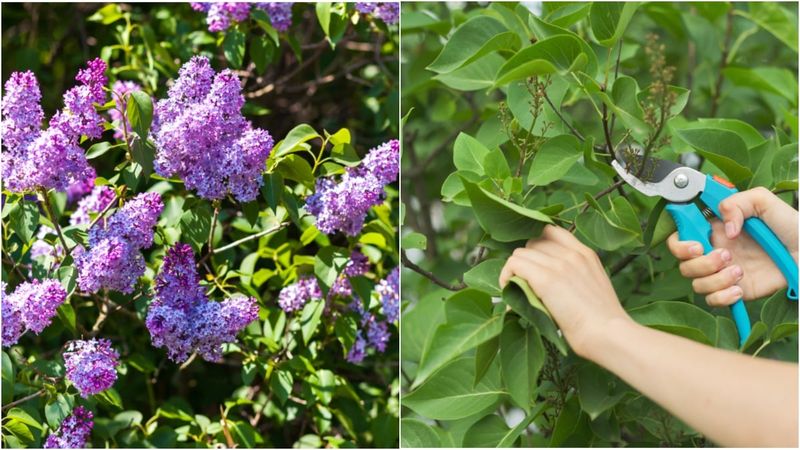
The practical takeaway is straightforward. If your goal is a full flower show next spring, leave healthy lilac branches alone in fall.
The buds for those flowers are already on the plant, and routine shaping right now means cutting some of them off.
Iowa State University Extension and Iowa State’s problem-management guidance both point to the same solution: schedule elective pruning soon after your lilac finishes blooming, not in fall. This rule applies to ordinary size control and maintenance on a healthy, spring-blooming shrub.
It does not apply to diseased or dead material that needs prompt attention, and it is separate from the deliberate trade-offs involved in major renovation. A lilac is a resilient plant, and an occasional mistimed cut will not end its life.
Knowing when to prune, though, is what keeps it generous with flowers year after year.