
The Pretty Lily-Of-The-Valley In Your Shade Bed Carries Related – But Different – Heart Compounds To A Prescription Pill
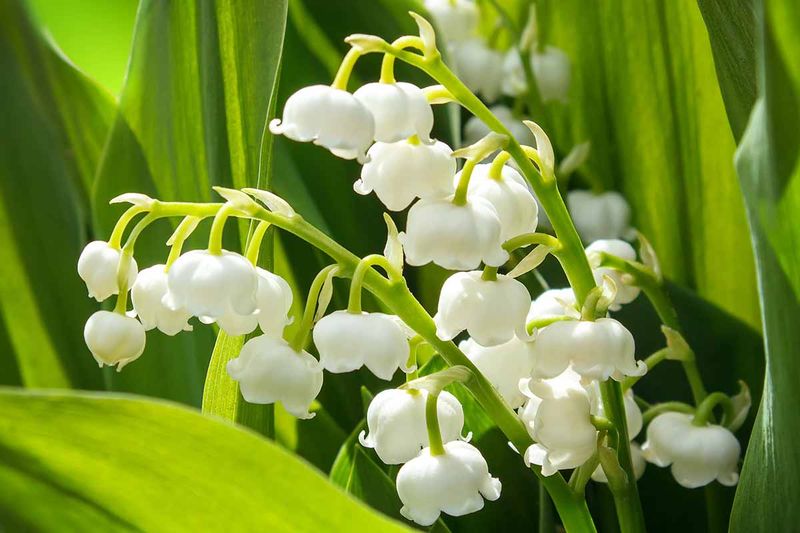
That carpet of nodding white bells in your shade bed looks completely harmless, but lily-of-the-valley is one of the most toxic plants a backyard gardener can grow. Every part of the plant – leaves, flowers, and berries – contains compounds that can seriously affect the heart if eaten.
Knowing exactly what those compounds are, and what to do if a child or pet gets into the plant, is the kind of information that can make a real difference.
Identify the plant before judging the risk
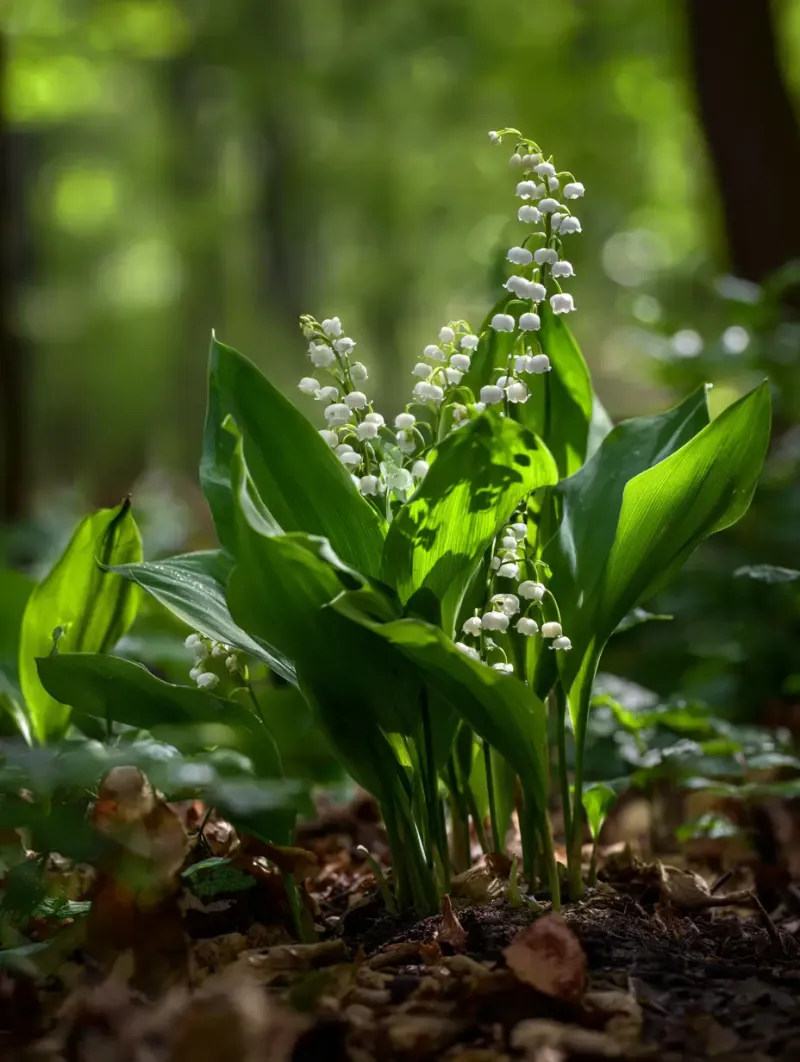
Convallaria majalis is the botanical name for lily-of-the-valley, and using that name matters when you are looking up safety information. Common names can create real confusion: several unrelated plants carry “lily” in their name, and the toxicity warnings, compounds involved, and recommended responses can differ significantly between them.
When you are searching for poisoning guidance, starting with Convallaria majalis keeps you pointed at the right plant.
The plant itself is easy to recognize. Broad, lance-shaped leaves emerge in pairs from the soil each spring, followed by arching stems hung with small, white, bell-shaped flowers.
By late summer, small orange-red berries appear. The ASPCA identifies Convallaria majalis as toxic to dogs, cats, and horses, and MedlinePlus confirms that the flowers, leaves, and fruit are all poisonous if eaten.
Gardeners sometimes assume that only the berries are dangerous because they look like the part a child would pick and eat. The leaves and flowers carry the same toxic compounds.
A child snapping off a flower stem or a dog chewing on a leaf is exposed to the same class of chemicals as someone who swallows a berry.
Simply touching the plant or brushing against it in the garden is a different situation from eating it. The primary hazard described in medical and veterinary references concerns ingestion – swallowing plant material or, as a precaution, drinking water that cut stems have been sitting in.
Keep that distinction in mind as you read the sections that follow, because it shapes every practical recommendation in this article.
Related to digoxin, but not the same drug
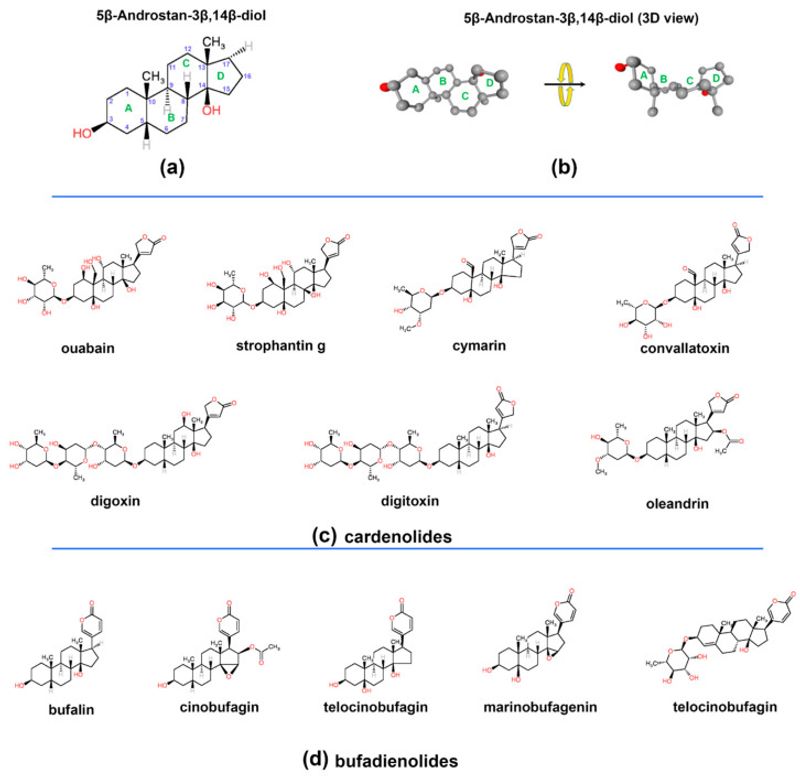
Lily-of-the-valley contains a group of compounds called cardiac glycosides, and the most studied of these is convallatoxin. Digoxin, the prescription heart medication many people have heard of, is also a cardiac glycoside – but it is a distinct chemical extracted from a different plant entirely, Digitalis lanata (woolly foxglove).
Saying that lily-of-the-valley “carries the same heart drug” overstates the connection. A more accurate way to put it: the plant’s compounds and the prescription drug belong to the same broad chemical class, the way that aspirin and ibuprofen are both nonsteroidal anti-inflammatory drugs without being the same medicine.
FDA-approved digoxin prescribing information describes digoxin as a compound derived from Digitalis lanata, with a specific molecular structure, specific dosing, and specific clinical monitoring requirements. Convallatoxin is chemically different and is not the active ingredient in any current prescription product.
One laboratory detail sometimes cited is that standard digoxin blood tests can produce a positive reading in people exposed to convallatoxin. A peer-reviewed study on rapid detection of convallatoxin using digoxin immunoassays found that some assays do cross-react with convallatoxin, but also found that digoxin-specific antibody fragments – used in overdose treatment – did not bind convallatoxin in its experiment.
That result matters clinically: it means that poisoning by lily-of-the-valley compounds is not simply “digoxin poisoning” and that treatment approaches may differ.
The practical takeaway for a gardener is straightforward. Both the plant’s compounds and prescription digoxin can affect heart rhythm, which is why lily-of-the-valley deserves serious respect.
But if someone is treated after a plant exposure, the medical team needs to know it was the plant – not the drug – so they can make the right decisions about testing and care.
Ingestion can affect the gut and the heart
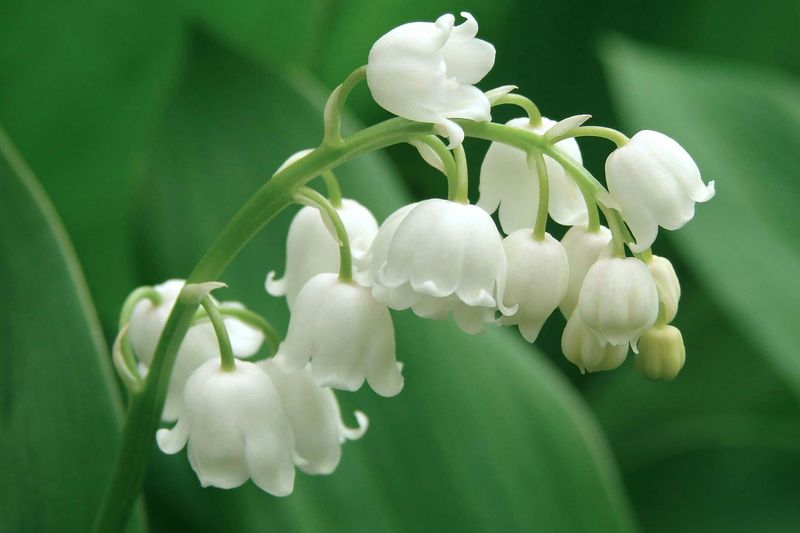
Eating lily-of-the-valley can produce two broad categories of effects: gastrointestinal and cardiovascular. Neither is guaranteed for every exposure, and the severity of any reaction depends on factors like how much was eaten, the person’s size, and their overall health.
Treating these as possible outcomes – rather than certain ones – keeps the picture accurate without minimizing a real hazard.
On the gastrointestinal side, MedlinePlus lists nausea, vomiting, and abdominal pain among the possible effects of lily-of-the-valley poisoning in people. Heart-related effects listed include slow or irregular heartbeat, low blood pressure, weakness, and confusion.
In more serious cases, collapse is possible. These symptoms can develop relatively quickly after ingestion, which is one reason prompt action matters more than waiting to see how things unfold.
Pets face a similar range of possible effects. The ASPCA’s toxic plant entry for Convallaria majalis lists vomiting, irregular heartbeat, low blood pressure, disorientation, seizures, and coma as possible signs in dogs, cats, and horses.
A dog that chews on a stem or a cat that bats at the flowers and then grooms its paws could ingest enough plant material to develop symptoms.
Being near the plant in the garden – walking past it, smelling the flowers, or handling it with gloves – is a very different situation from eating it. The medical and veterinary references reviewed here describe poisoning in the context of ingestion.
Skin contact with the plant is not the same hazard, though washing hands after handling any garden plant is a reasonable habit. The key risk is getting plant material into the mouth and swallowing it.
No dependable two-leaf threshold exists
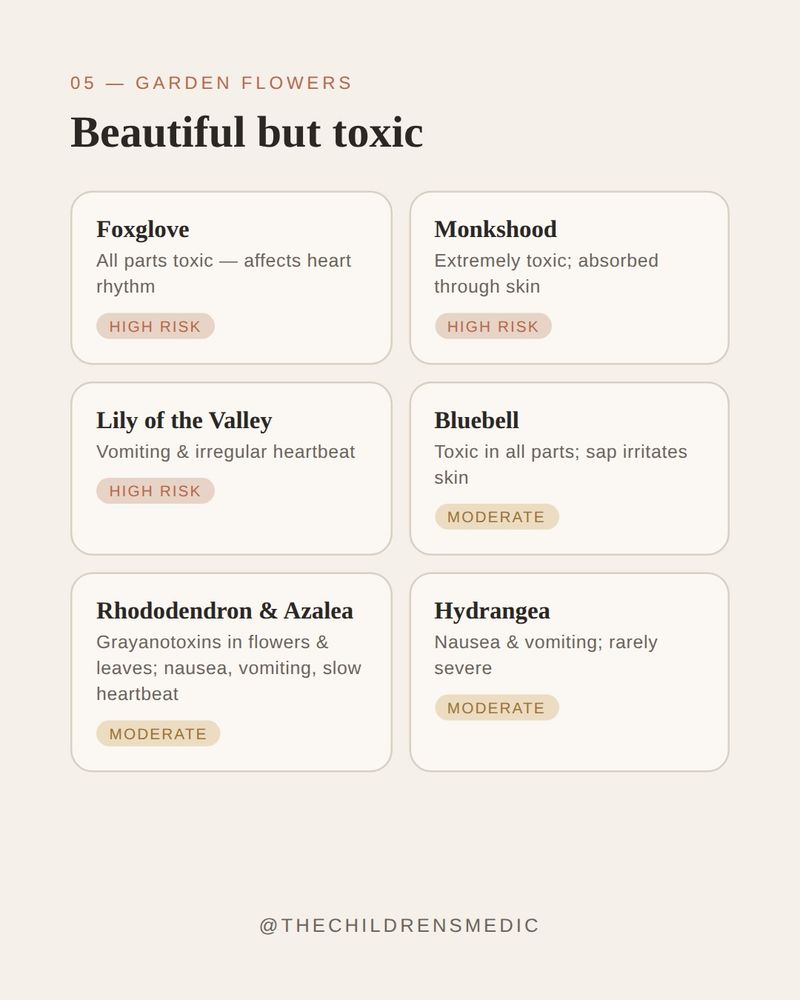
A claim that circulates in gardening and parenting circles is that just two leaves of lily-of-the-valley can kill a child. That specific number sounds precise, but the authoritative sources reviewed for this article – including MedlinePlus and the ASPCA – do not establish any dependable leaf count that predicts severe poisoning or safety.
Toxicity depends on too many variables: the size of the leaves, how much was actually chewed and swallowed, the child’s weight, and individual differences in response.
Using a leaf count to judge an exposure creates a false sense of certainty in both directions. A parent who sees a child eat one leaf might feel reassured when they shouldn’t wait, and a child who ate more than two leaves but feels fine for the first hour might not get the attention they need.
MedlinePlus advises seeking immediate medical help after any lily-of-the-valley ingestion and specifically instructs not to induce vomiting unless poison control or a clinician tells you to do so.
The practical rule that replaces the leaf-count sound bite is simple: any suspected ingestion – one leaf, two leaves, a berry, a flower – warrants a call to poison control or a medical professional right away. You do not need to count leaves or estimate how much was swallowed before making that call.
The number to reach U.S. Poison Help is 1-800-222-1222, and the line is staffed around the clock.
Treat vase water as a precaution, not a measured dose
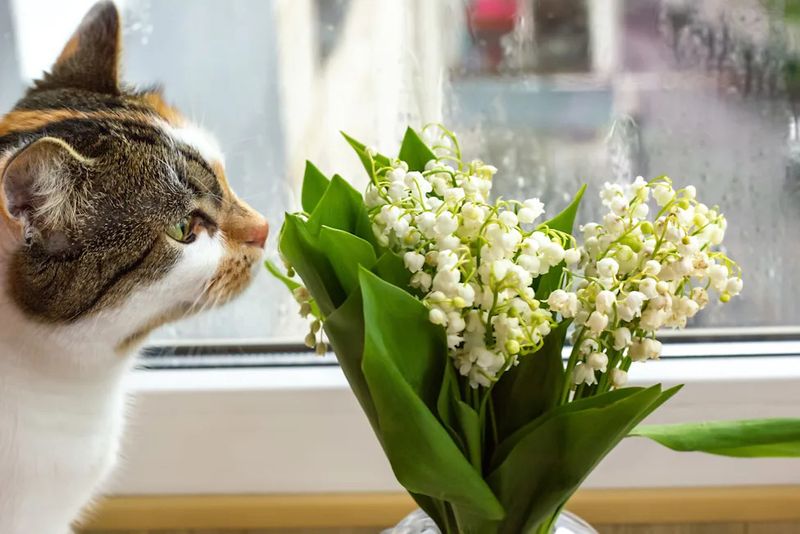
Cut lily-of-the-valley stems release their compounds into the water they sit in, and there are documented cases of poisoning associated with drinking that water. Cornell University’s poisonous-plant reference notes that drinking vase water from lily-of-the-valley has caused poisoning, and an emergency-medicine article in ACEP Now similarly notes that water from cut stems may contain enough toxin to affect someone who drinks it.
Both sources support treating vase water as something to keep out of reach.
What those sources do not establish is a reliable concentration, a specific amount of vase water that consistently causes harm, or a universal risk level that applies to every vase, every person, and every pet. The precaution is real and reasonable; the certainty of a measured dose is not there in the reviewed evidence.
Keeping a flower arrangement on a high shelf or in a room that children and pets cannot enter is the sensible response, not calculating how much water is “safe.”
A separate note on species: FDA guidance about lilies and vase water focuses primarily on true lilies in the genus Lilium and their risk to cats’ kidneys. That warning applies to a different plant group with a different toxic mechanism.
Lily-of-the-valley is Convallaria majalisLilium and affects the heart through cardiac glycosides, so the FDA’s specific vase-water language about species should not be transferred wholesale to lily-of-the-valley arrangements. The precaution for lily-of-the-valley vase water stands on its own evidence – treat it carefully, but do not conflate the two warnings.
Prevent access to plants and arrangements
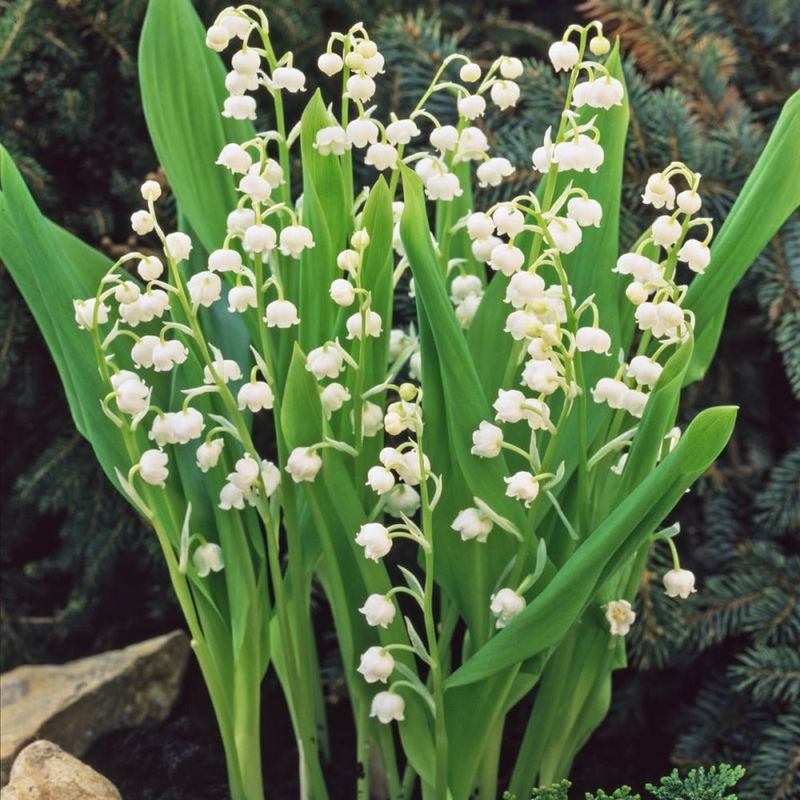
Prevention starts with honestly mapping where the plant grows and who has access to it. Lily-of-the-valley spreads readily and can colonize a large section of a shade bed over several years.
If young children or pets use the yard, knowing the plant’s exact footprint – and trimming it back from paths and play areas – reduces casual contact with leaves and berries.
The Connecticut Poison Control Center recommends keeping harmful plants out of young children’s reach and teaching children not to eat leaves, berries, buds, or flowers from any garden plant. That second part is worth making a habit early: a child who has learned to ask before tasting anything from the garden is safer around every plant, not just lily-of-the-valley.
Cut flower arrangements bring the hazard indoors. Place vases on high surfaces that toddlers cannot reach by pulling a chair over, and keep them in rooms where the family dog or cat does not roam freely.
Discard vase water promptly rather than leaving it sitting out, and rinse the vase before storing it. The ASPCA lists Convallaria majalis as toxic to dogs, cats, and horses, so even a pet that only laps at the vase water deserves the same precaution as one that chews on a stem.
Berries are a particular concern with curious toddlers because they are small, colorful, and look like something edible. Deadheading spent flowers before berries form is one way to reduce that specific risk in yards where young children play regularly.
Get expert help after suspected ingestion
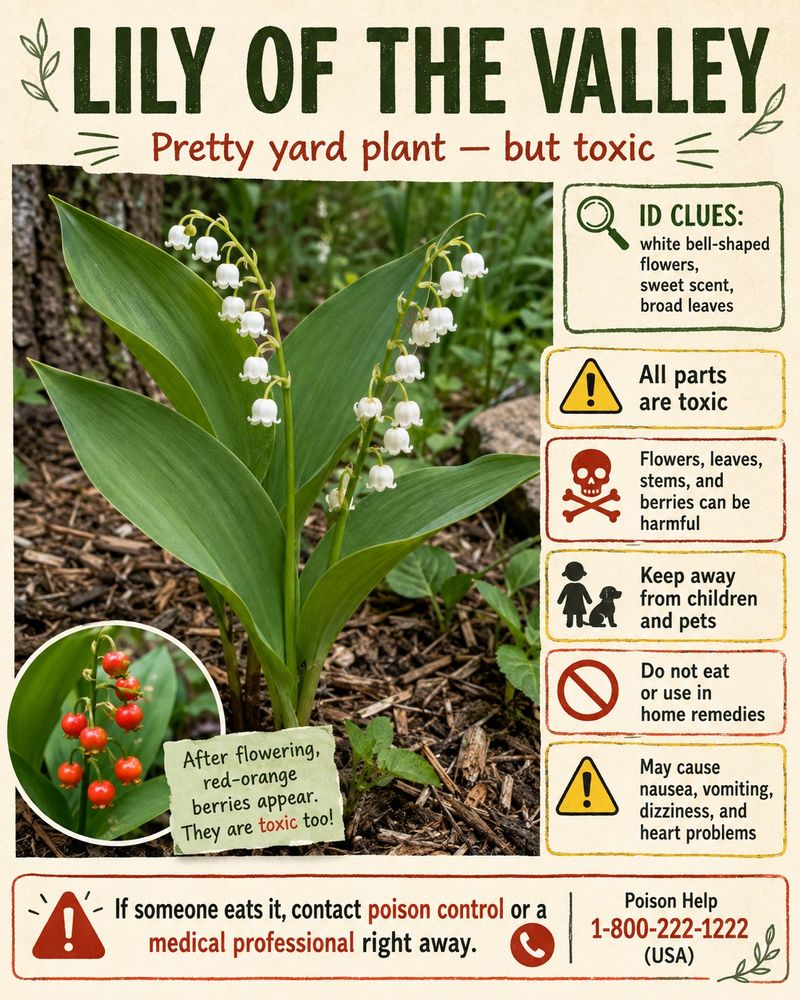
If you think a child has eaten any part of a lily-of-the-valley plant – a leaf, a flower, a berry, or any amount of vase water – call for help immediately. Do not wait for symptoms to appear before deciding whether to act.
MedlinePlus advises seeking immediate medical help and specifically says not to induce vomiting unless poison control or a clinician instructs you to do so. Inducing vomiting without guidance can sometimes cause additional harm depending on what was ingested and how much time has passed.
For a possible human ingestion in the United States, call Poison Help at 1-800-222-1222. The line is available 24 hours a day, seven days a week, and the specialists there can help you assess the situation and decide whether emergency care is needed.
If the person is unconscious, having seizures, or not breathing, call 911 first.
For a pet exposure, the response path is separate. Contact your veterinarian or an animal poison-control service right away.
The ASPCA lists lily-of-the-valley as toxic to dogs, cats, and horses, and the possible signs – irregular heartbeat, low blood pressure, seizures – can develop quickly. Do not try home remedies or wait to see if symptoms pass on their own before calling for professional advice.
When you call, be ready to describe what was eaten, roughly how much, and when it happened. That information helps the specialist or veterinarian give you the most useful guidance.
A plant that looks gentle enough to grow under a wedding arch deserves exactly this level of seriousness when it ends up in the wrong mouth.