
These North Carolina Native Shrubs Keep Flowering Under Big Oaks Where Azaleas Always Struggle
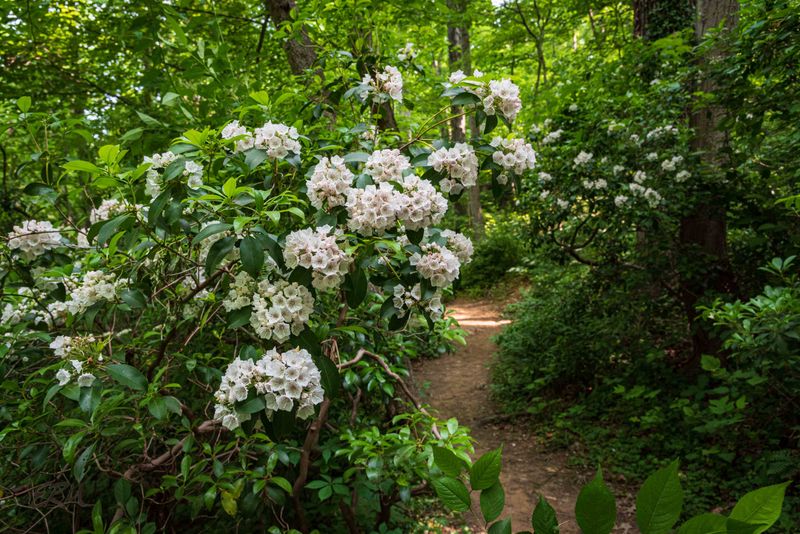
Big oak trees make a yard feel grand, but the ground beneath them can be a tough place for flowers. Oak roots drink up most of the water, and many azaleas planted there end up thin, crispy, and bloomless.
The good news is that North Carolina has its own shrubs that grew up in oak woods and know how to handle the shade and dry soil. Plant the right ones and you get steady blooms plus food and shelter for the bees, birds, moths, and box turtles that already call your yard home.
1. Oakleaf Hydrangea (Hydrangea quercifolia)
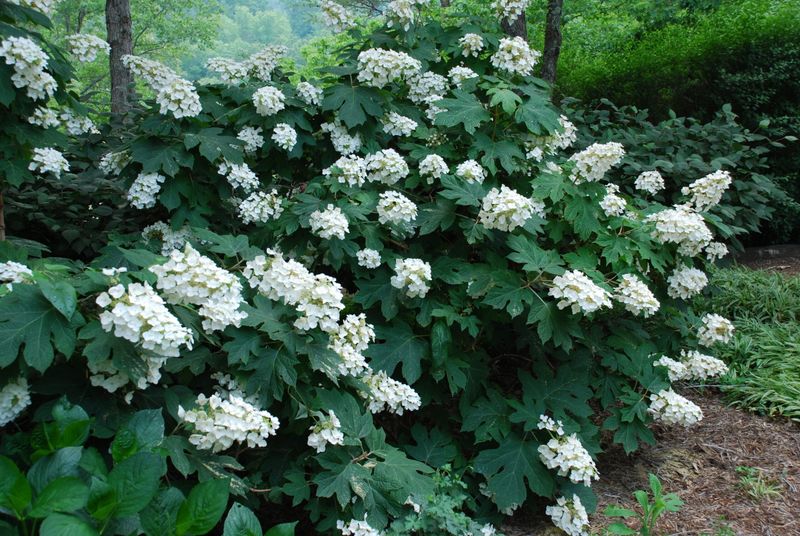
Picture a shrub that wears oak-shaped leaves while living under an actual oak. It almost seems like a joke, but oakleaf hydrangea is one of the most dependable bloomers for dry shade across the Piedmont and Coastal Plain.
In late spring and early summer, it pushes out big white flower cones that slowly fade to pink and then papery tan. Those dried heads hang on for weeks, so the show never really stops.
Come fall, the leaves turn deep burgundy and red, and in winter the peeling cinnamon bark gives you something to look at when everything else is bare.
Unlike bigleaf hydrangeas that wilt the minute the sprinkler skips a day, this native handles root competition far better once established. Water it deeply for the first summer, then mostly let it be.
A loose, layered planting gives songbirds and box turtles shady cover on hot afternoons.
Give it room, since mature plants can spread 6 to 8 feet wide. If you are pulling out an old privet or burning bush near the oaks, this is a handsome swap.
2. Virginia Sweetspire (Itea virginica)
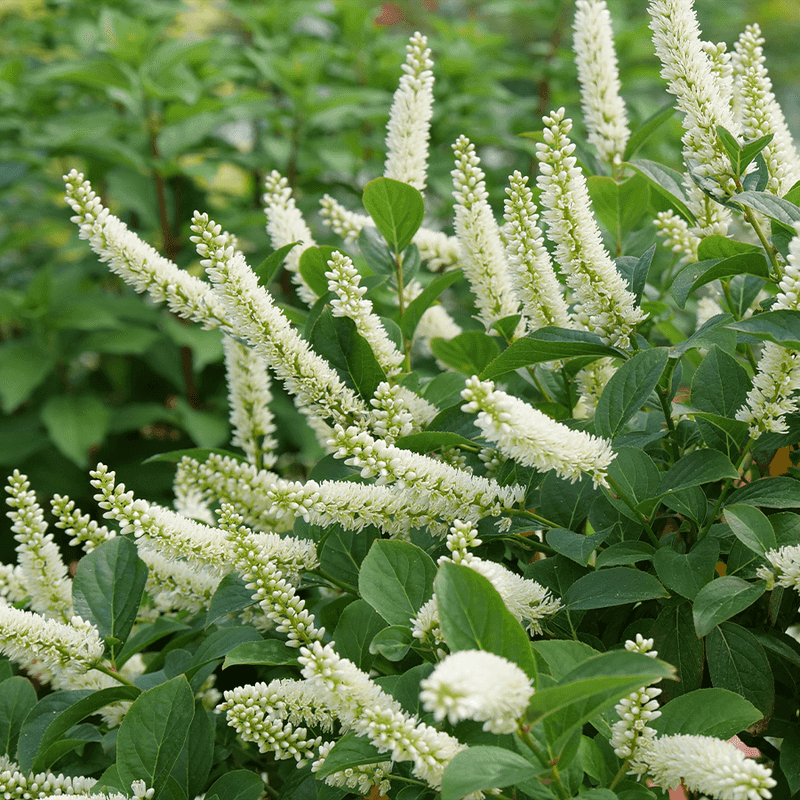
Walk past a sweetspire in early June and your nose will notice before your eyes do. The arching branches drip with white flower spikes that smell faintly of honey, and bees find them fast.
Sweetspire grows naturally along streams and swampy woods in eastern North Carolina, so many people assume it needs wet feet. In practice it adapts well to average garden soil under a canopy, especially if you leave the oak leaves in place as natural mulch.
It can reach about 8 feet in the wild, though many garden plants stay smaller.
The real bonus comes in fall. Leaves turn ruby, orange, and burgundy and often hold their color deep into winter, long after the oaks above have gone brown.
It also spreads slowly by suckers, which helps fill a bare patch under trees without the aggressive takeover you get from invasive English ivy or vinca. Swap the groundcover thugs for a sweetspire colony and pollinators win.
3. Sweetshrub (Calycanthus floridus)
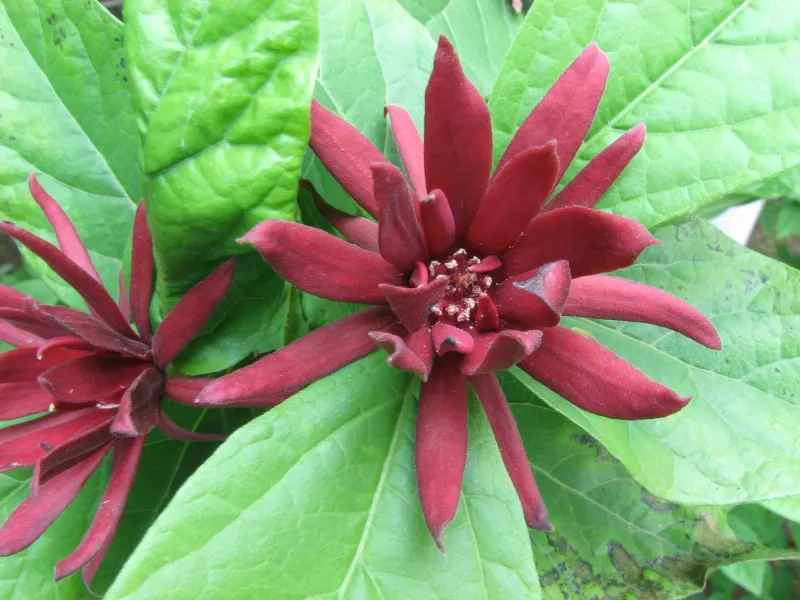
Grandmothers across North Carolina used to tuck sweetshrub blossoms into handkerchiefs and apron pockets. The scent is fruity and spicy, often compared to strawberries, bananas, or ripe apples, and one bush can perfume a whole corner of the yard.
Also called Carolina allspice, this shrub grows wild in woods from the mountains to the coast. That makes it one of the few natives on this list at home in all three of the state’s regions.
It flowers in spring with odd little maroon blooms that look a bit like tiny water lilies, and it often keeps tossing out a few more through summer.
Shade does not bother it much. It may bloom a bit less than in brighter spots, but it stays healthy where azaleas give up.
Fun fact: the flowers are pollinated mostly by small beetles, an older partnership than the one most flowers have with bees. Planting it supports a whole group of native insects people rarely think about.
4. Mountain Laurel (Kalmia latifolia)
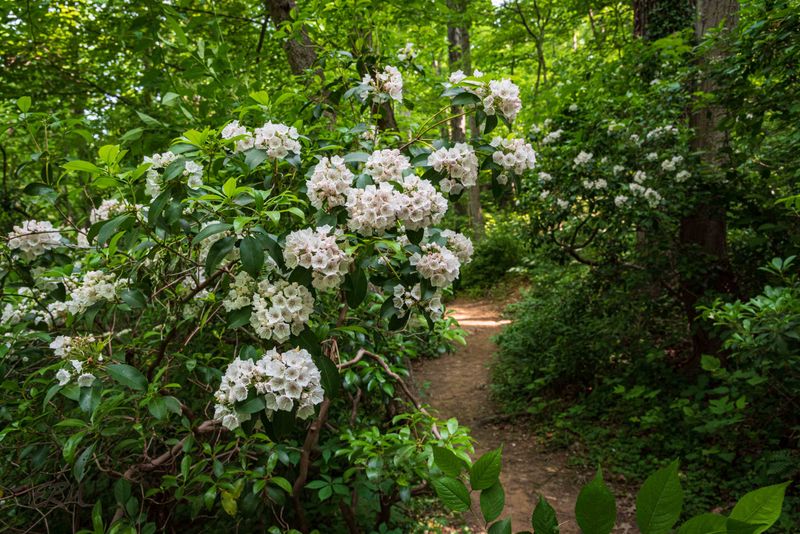
Hike almost any ridge in the Blue Ridge in May and you will wade through clouds of pink and white. That is mountain laurel, and it has been blooming under oaks in North Carolina for a very long time.
The flowers look like tiny folded parasols. Each one has spring-loaded stamens that snap pollen onto visiting bees, a clever trick you can watch up close.
Because it is evergreen, it keeps the space under your trees green all winter and gives birds shelter from cold wind. It handles dry, rocky, acidic soil that would leave an azalea sulking.
Plant it with good drainage and avoid heavy clay that stays soggy.
One caution for families: all parts of mountain laurel are toxic if eaten. Keep it away from spots where young kids or pets like to nibble.
5. Dwarf Fothergilla (Fothergilla gardenii)
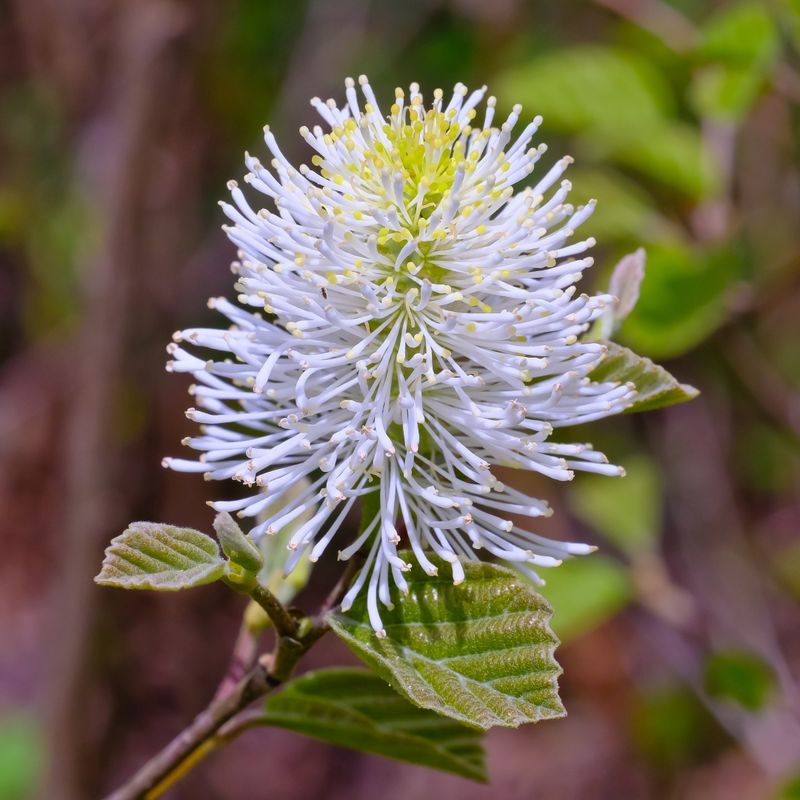
Small yard, big oak? Dwarf fothergilla might be your answer.
It usually stays around 3 feet tall, so it fits along a path or under a window without crowding anything.
In spring, fuzzy white bottlebrush flowers pop out, often before the leaves. They smell a little like honey and give early bees a welcome snack.
Then in fall, the foliage turns yellow, orange, red, and purple, sometimes all on the same branch.
Here is the honest part. Fothergilla flowers best with some sun, so place it at the edge of the canopy or where morning light slips through, not in the darkest spot.
Rich, leafy soil helps a lot, which is one more reason to leave fallen oak leaves where they land.
Native to the Coastal Plain and Sandhills, it is a fine stand-in for non-native dwarf shrubs like boxwood in foundation beds.
6. Aromatic Sumac (Rhus aromatica)
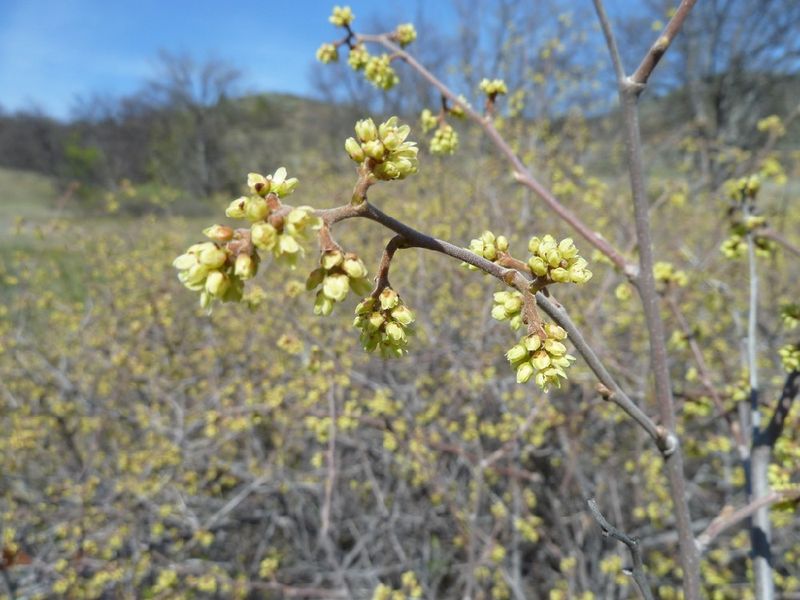
Got a dry, rooty slope under the oaks where nothing will stay put? Aromatic sumac was practically built for that job.
This low, spreading shrub holds soil on hillsides and shrugs off drought. In late winter or early spring, it lights up with clusters of tiny yellow flowers, among the first nectar sources for bees waking up.
By late summer, fuzzy red berries show up, and birds pick them off through fall.
Crush a leaf and you will smell where the name comes from, a sharp, citrusy scent some folks love and others call skunky. It is not poison sumac, and it will not give you a rash.
Steward bonus: it hosts luna moth caterpillars, so planting it gives those big pale green moths one more place to raise a family. For a slope currently covered in invasive English ivy, this is one of the smartest swaps you can make.
7. Piedmont Azalea (Rhododendron canescens)
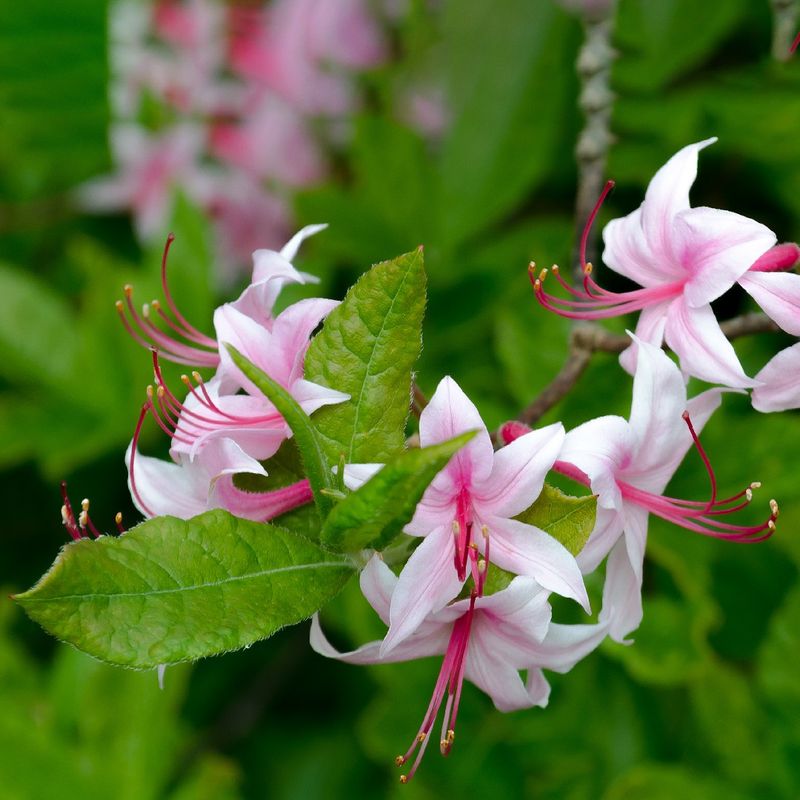
Wait, an azalea on a list about beating azaleas? Yes, and for good reason.
The struggling plants under most oaks are evergreen hybrid azaleas from Asia, bred for showy blooms rather than tough living.
Our native Piedmont azalea is a different creature. It drops its leaves in winter and blooms in early spring with pale pink, honeysuckle-scented flowers on bare stems.
It grows wild in oak woods across the Piedmont and Coastal Plain, so dry shade and root competition are normal life for it.
Those long tubular flowers draw swallowtail butterflies and early hummingbirds. A loose, airy shape also beats the cramped mounds of hybrids, which often get lace bugs and fungus when air cannot move.
Mulch with leaves, water during the first two summers, and skip fertilizer. If you love the azalea look but are tired of babying them, this native gives you the bloom with far less fuss.
8. Strawberry Bush (Euonymus americanus)
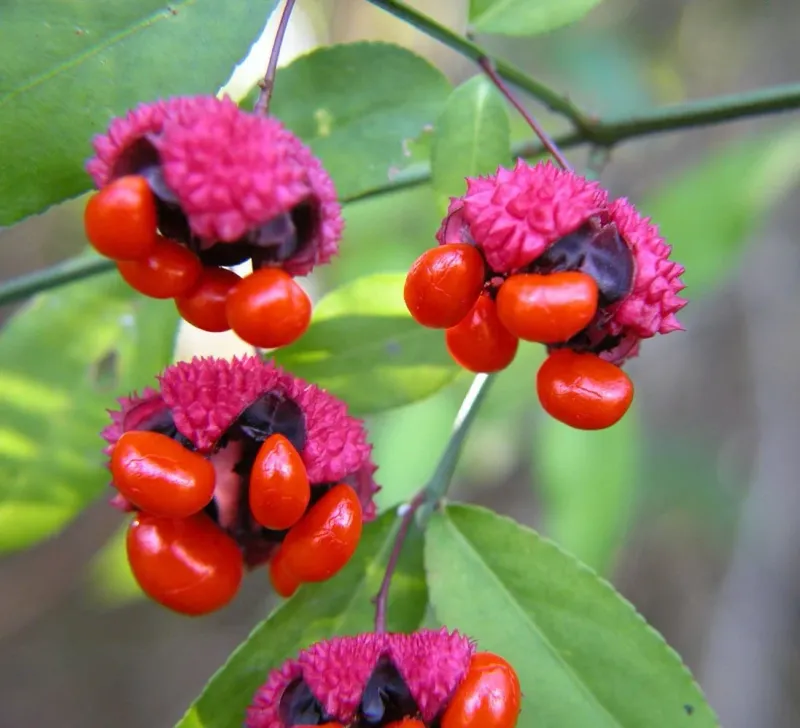
Old-timers call it hearts-a-bustin, and once you see it in October you will understand. Warty, rosy pink capsules split open to reveal bright orange seeds, like tiny jewelry hanging in the shade.
Its spring flowers are small and greenish, easy to miss, but the fall show is the real bloom season for this one. It thrives in deep, dry woodland shade where almost no other shrub will put on any color at all.
Here is a swap worth making. Many NC yards still have invasive burning bush, a close cousin that seeds into nearby woods and crowds out natives.
Strawberry bush gives you fall fireworks without that damage, and birds eat the seeds.
One heads-up: deer love to browse it. If they visit your yard, a simple wire cage for the first few years helps it get established.