
This One Low-Maintenance Herb Makes Your Peonies Grow Stronger With Way Less Effort
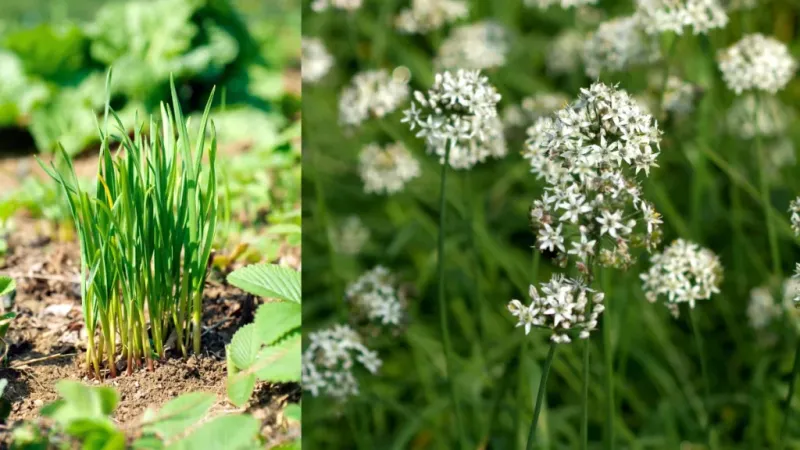
Garlic chives might be the easiest addition you never thought to put near your peonies. They are perennial, drought-tolerant once established, and covered in white flowers that pollinators genuinely love. The catch is that no study has proven they make peonies bloom bigger or cut your workload in half, so the real story is a bit more useful than the headline promises. What garlic chives can offer is a low-effort, pollinator-friendly companion that fits naturally at the edge of a peony bed without demanding much from you.
Garlic chives are a plausible companion for peonies
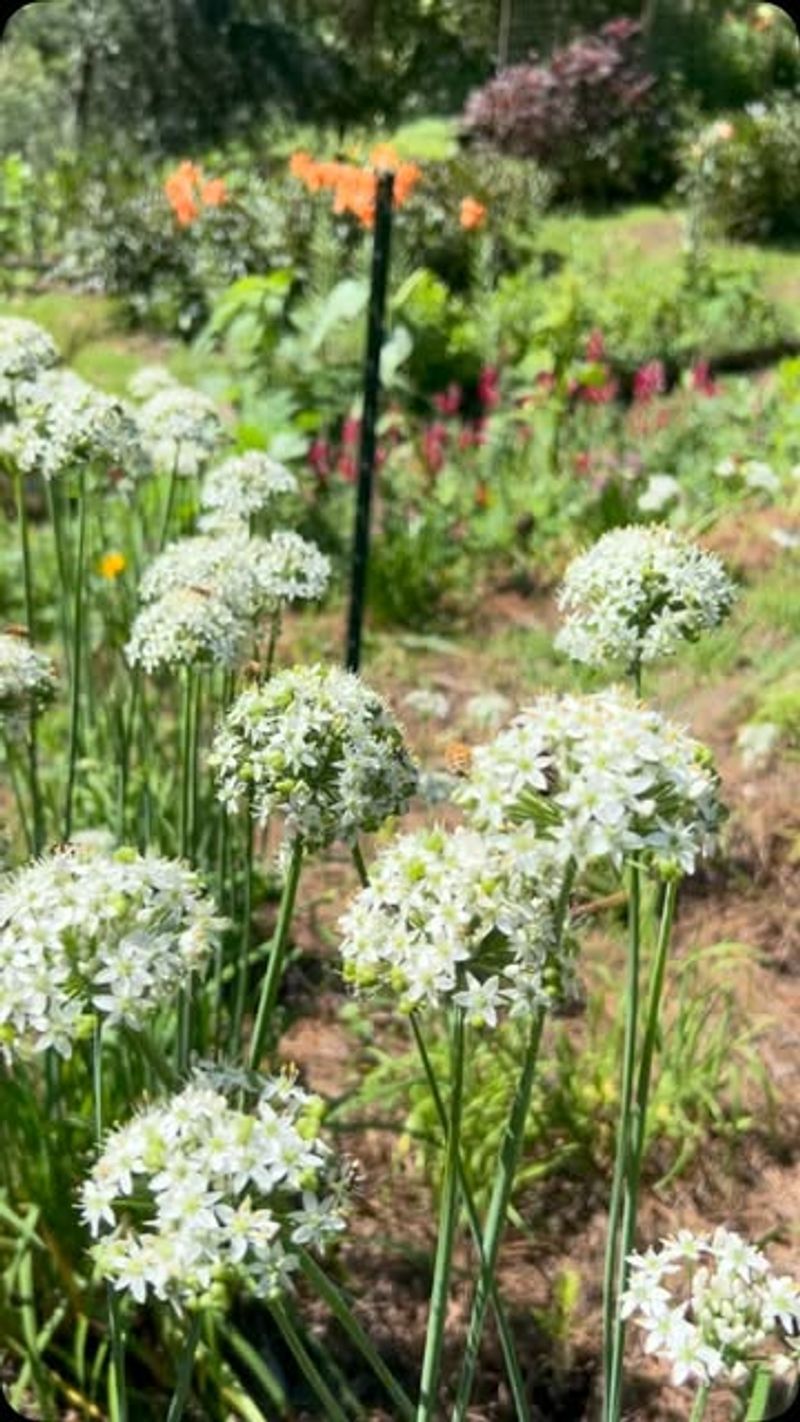
Garlic chives, known botanically as Allium tuberosum, are a perennial herb with flat, strap-like leaves and clusters of small white, star-shaped flowers that bloom in late summer. That garlic-forward scent is one of the easiest ways to tell them apart from ordinary chives, Allium schoenoprasum, which have hollow, grass-like leaves and typically lavender or pink globe-shaped flowers. The two plants are related but not interchangeable, and the distinction matters when you are reading companion-planting advice because the research behind each one is different.
From a practical standpoint, garlic chives check several boxes that make them worth considering near a peony bed. North Carolina Extension’s plant profile notes that garlic chives thrive in full sun and well-drained soil, tolerate drought and humidity once established, and adapt well to container growing. Those preferences line up neatly with what peonies already need, so you are not managing two sets of conflicting requirements.
The white flowers are genuinely useful to pollinators, providing nectar and pollen resources during a period when many summer bloomers have finished. Bees and beneficial insects visit them reliably, which adds biodiversity value to a planting even if you never see a direct effect on your peonies. What the plant’s growing traits do not tell you, though, is whether placing it beside a peony will make that peony flower more freely, develop stronger roots, or need less care from you. Those outcomes have not been demonstrated in peony-specific trials, and setting that expectation clearly upfront is the only honest way to frame what garlic chives actually bring to the bed.
What companion planting may change—and what it cannot prove
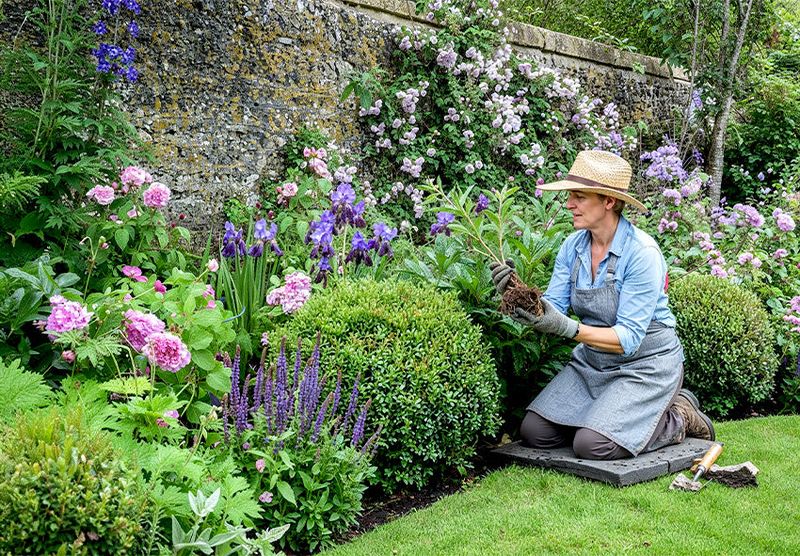
Companion planting works, when it works, through a handful of mechanisms that researchers have documented in various crop systems. A nearby plant might release volatile compounds that make a host plant harder for insects to locate. It might provide shelter or food for beneficial predators. It might disrupt the egg-laying cues that a pest relies on, or simply add enough visual and chemical noise to slow a pest’s host-finding process.
Penn State Extension’s companion planting guide puts it plainly: herbs tend to confuse or interfere with pest behavior rather than acting as universal repellents, and that distinction matters when you are deciding how much to expect from any single companion.
Some of the more interesting evidence involves allium plants in agricultural settings. A 2024 study on garlic as a companion for Brassica rapa found that garlic reduced green peach aphid infestation, suggesting that garlic-related volatile compounds can influence pest behavior under the right conditions. Separate research in cotton systems showed that garlic and onion volatiles affected aphid settling behavior in intercropped plots. These findings point to a plausible mechanism, but they involve garlic and onion in vegetable or field-crop contexts, not garlic chives growing beside ornamental peonies.
Transferring those results directly to a backyard peony bed would require a lot of assumptions. The pest species, plant densities, volatile concentrations, weather conditions, and surrounding landscape all shape whether any companion effect shows up in practice. No published trial has tested garlic chives specifically beside peonies to measure root vigor, flower count, or pest pressure. So while the mechanism is real in some systems, calling garlic chives a proven solution for peony pest problems or a reliable way to increase bloom would go well beyond what the evidence supports.
The more defensible framing is that garlic chives add plant diversity and possible volatile interference to a bed, with results that are uncertain and variable for peonies specifically.
Peony vigor still depends on the growing conditions
Before any companion herb enters the picture, peonies need their basic requirements met. Full sun is non-negotiable for most varieties; plants in partial shade tend to produce fewer flowers and weaker stems. University of Connecticut Extension’s peony factsheet emphasizes fertile, well-drained soil as a foundation, and notes that wet or poorly drained conditions increase the risk of root and crown problems that no companion plant can prevent.
Planting depth is one of the most common reasons a peony fails to flower. Herbaceous peony eyes should sit roughly one to two inches below the soil surface. Deeper planting keeps the plant alive but suppresses blooming, sometimes for years, and no amount of companion planting will fix a crown that is buried too far down. If your peony leafs out every spring but rarely flowers, depth is the first thing to check before blaming soil, pests, or anything else.
Water management follows a similar pattern of specificity. Matthaei Botanical Gardens’ peony care guide recommends deep, consistent watering during the first growing season to help new plants establish, with supplemental irrigation during drought or extreme heat directed at the soil rather than the foliage. Wet foliage contributes to disease pressure, so how you water matters as much as how often.
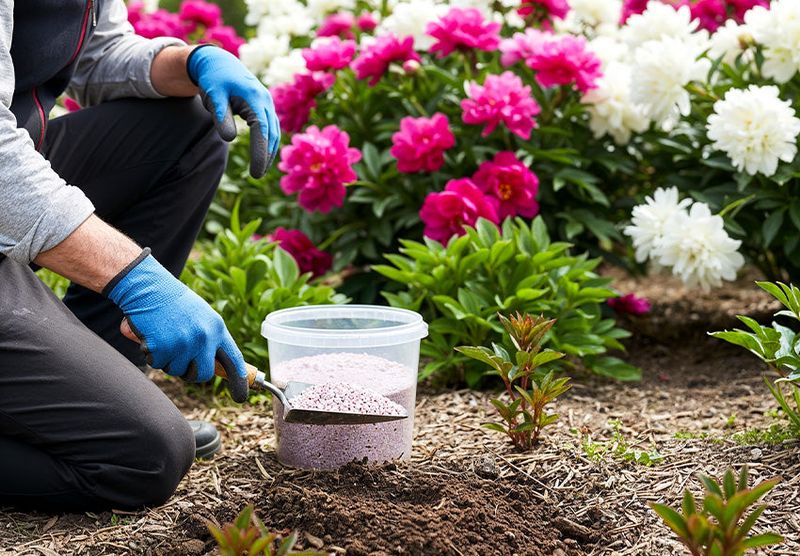
Fertilizer is another area where less is often more. Excess nitrogen pushes leafy growth at the expense of flowers, so a soil test is a smarter starting point than routine feeding. Garlic chives do not fertilize peonies, fix nitrogen, or create a nutrient exchange between the two plants. Any organic matter benefit would come from decomposing plant material in the soil, not from a living companion relationship.
The herb can share a bed with peonies, but it cannot substitute for the sun, drainage, correct depth, appropriate water, and restrained feeding that actually drive peony performance.
Place the herb beside the peony, not inside its crown
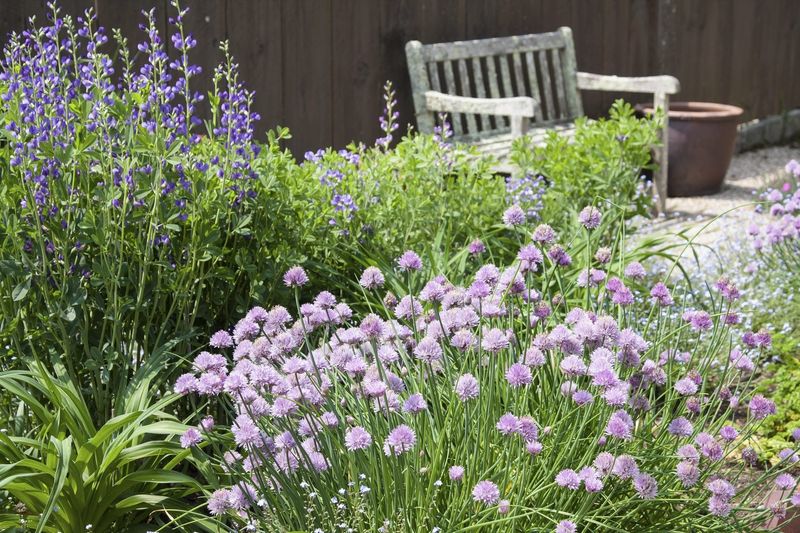
Placement is where companion planting theory meets practical peony care. Tucking garlic chives directly into the center of a peony crown is a setup for problems: dense foliage traps moisture, limits air movement, and puts competing roots right where the peony needs undisturbed space. A better approach is to treat garlic chives as a separate edging along the front of the bed, or to grow them in a container positioned nearby. Either arrangement lets the two plants share visual space without the garlic chives crowding the peony’s crown.
This recommendation comes from peony-care principles rather than from any tested garlic-chive spacing trial. UConn Extension’s peony guidance consistently points to good air circulation and avoidance of competing roots as factors in peony health, and those two priorities shape how any companion plant should be positioned. Applying that logic to garlic chives is a reasonable inference, not a proven formula with a specific distance attached to it.
Container placement has an added advantage when it comes to spread. Garlic chives can move through a bed more aggressively than expected once they are established, and keeping them in a pot gives you easy control over where they go. You can move the container, replace the plant, or pull it entirely without disturbing the peony’s root zone at all. For raised-bed growers especially, where space is limited and root competition is more concentrated, a container along the edge of the bed is often more practical than planting directly in the soil.
One clump of garlic chives, wherever you place it, does not protect an entire peony bed. Any pest-interference effect depends on plant density, the specific insects present, and conditions that vary from garden to garden. The goal here is a tidy, manageable companion with biodiversity benefits, not a perimeter defense system.
Manage garlic chives before self-seeding becomes a problem
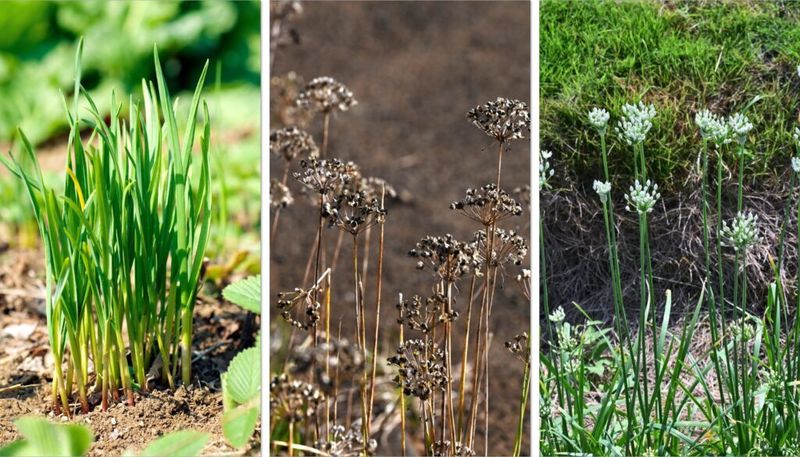
Calling garlic chives low-maintenance is accurate, but only if you stay ahead of one habit: they self-seed readily. Each flower head can produce a surprising number of seeds, and once those seeds scatter into a bed, you will spend more time pulling seedlings than you ever planned. The fix is straightforward: deadhead the plants after flowering, before seed pods have a chance to mature and drop. That one task, done at the right time, keeps the plant from outgrowing its welcome.
North Carolina Extension notes that garlic chives spread both by seed and by underground structures, and several university extension sources recommend growing them in containers or contained beds where spread would create a management problem. Garlic chives are resilient and persistent once established, which is part of what makes them easy to grow, but that same resilience means they can colonize more space than you intended if they are not managed. Whether they cross into formally invasive territory depends on your specific region, so checking with your local extension office is worthwhile if you are uncertain.
Household and pet safety deserve a mention here as well. North Carolina Extension lists garlic chives as having low-severity poison characteristics, which means they are not considered universally safe for every household, pet, or livestock situation. Before planting them in a yard shared with animals, checking current veterinary or plant-toxicity guidance for your specific situation is a sensible step rather than assuming all-clear.
The upkeep ask is genuinely small compared to most garden plants: deadhead in late summer, divide clumps every few years to keep them tidy, and contain them if spreading is a concern. That is a reasonable trade for a perennial herb that comes back reliably, tolerates drought, and feeds pollinators without needing much from you in return.
Garlic chives cannot replace peony disease and pest care
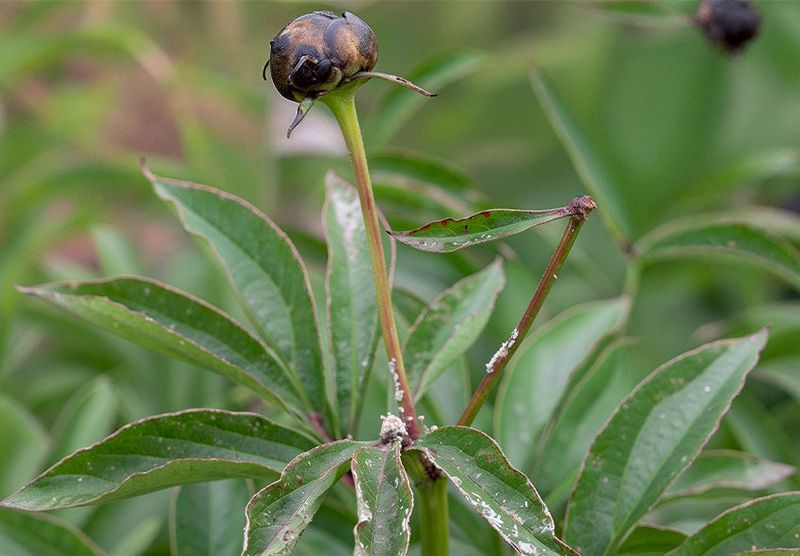
A companion herb at the edge of a peony bed does not change what happens when a real problem develops. Botrytis gray mold, leaf spot, root rot, thrips, and Japanese beetles all require diagnosis and a response based on what is actually happening with the plant. UC IPM’s peony pest management guidelines lay out the cultural controls that consistently reduce disease pressure: good air circulation around plants, prompt removal of infected foliage, fall cleanup of debris where pathogens overwinter, and soil-directed watering that keeps foliage dry. Garlic chives do not substitute for any of those practices, and relying on them in place of sanitation could allow problems to get worse while you wait for a companion-planting effect that may never arrive.
Ants on peony buds are a point of confusion worth clearing up directly. Kansas State University Extension explains that peonies produce nectar from their buds that naturally attracts ants, and this is normal behavior rather than a sign of infestation or disease. Ants are temporary visitors and may even provide some indirect protection from floral-feeding insects. They are not evidence that the plant needs a companion herb, an insecticide, or any intervention at all.
Broad insecticide applications aimed at ants can harm the beneficial insects that you are actually trying to support with a pollinator-friendly companion planting.
Garlic-chive extracts and essential oils sometimes come up in pest-management conversations because concentrated allium compounds have shown activity in laboratory settings. A note of caution applies here: the storage-pest research cited in this area does not establish effectiveness, dosage, plant safety, or non-target safety for homemade preparations applied to ornamental peonies or their surrounding pollinators. Making or applying your own garlic-chive extract based on laboratory findings is a step beyond what the evidence justifies, and the effects on peonies, beneficial insects, and nearby plants have not been tested in that context.
When a peony shows symptoms you cannot identify, the right move is a proper diagnosis, either through your local extension office or a reliable plant diagnostic lab, followed by label-compliant cultural or chemical controls if they are warranted. A companion herb is an addition to a healthy system, not a repair for a struggling one.
Use garlic chives as an optional ally, not a shortcut
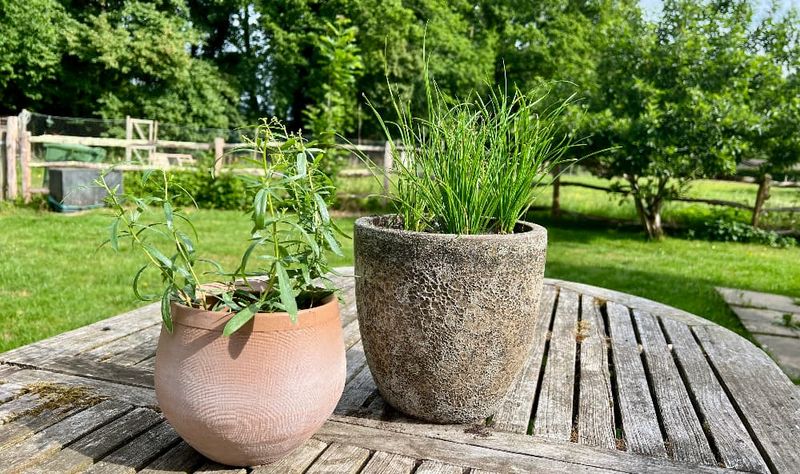
Adding a contained clump of garlic chives near a well-sited peony is a genuinely reasonable choice for a backyard gardener who wants a low-effort perennial, some extra pollinator activity, and a possible companion-planting effect without a complicated setup. The plant earns its place on its own merits: it comes back every year, handles drought once established, and produces flowers that beneficial insects visit reliably. Those are real benefits, even if none of them translate directly into stronger peony roots or bigger blooms.
Any effect on pest pressure near the peony remains indirect and uncertain. Garlic chives’ volatile compounds may influence some insect behavior in some conditions, but that is a plausible possibility rather than a guaranteed outcome for peonies. The foundation of strong peony performance is still what it has always been: full sun, well-drained fertile soil, correct planting depth, appropriate water, good airflow, fall sanitation, and fertilizer applied only when a soil test says it is needed. UConn Extension’s peony factsheet and Penn State’s companion planting guide both support that framing: get the fundamentals right first, then consider companions as an addition to a healthy system.
Success with this combination looks like a tidy, diverse planting that is easy to maintain, not a transformation in how your peonies perform. Deadhead the garlic chives in late summer, keep them out of the crown, and enjoy the pollinators they bring. A peony that is already well-grown does not need rescuing by a companion herb, but it is a better host for one.