
Those Gnats Hovering Over Your Houseplants All Winter Are Coming From Wet Soil, Not The Plant Itself
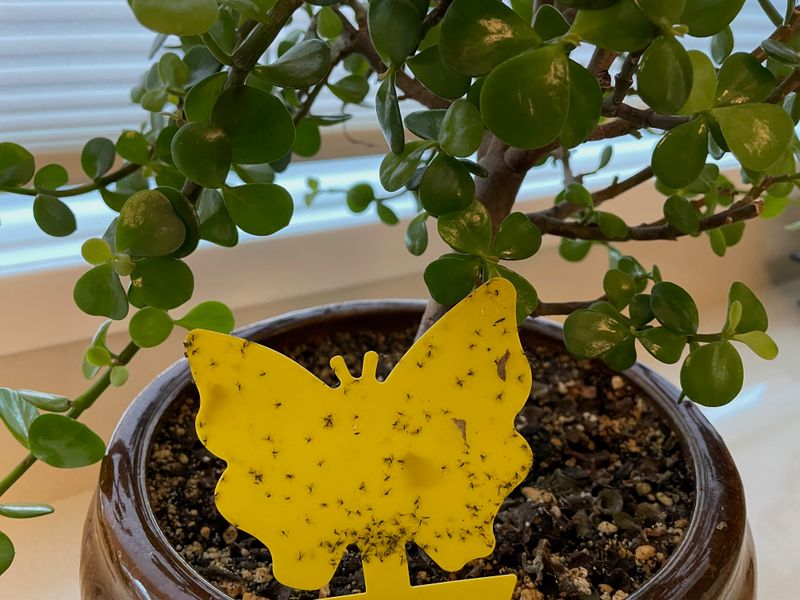
Tiny flies drifting around your pothos or peace lily can make you worry you’ve done something wrong. The good news is that these pests are usually more annoying than dangerous.
When the flies are fungus gnats, the clue often points to damp potting mix rather than a sick plant. A few small changes to how you water may make a real difference.
First, make sure the flies are fungus gnats
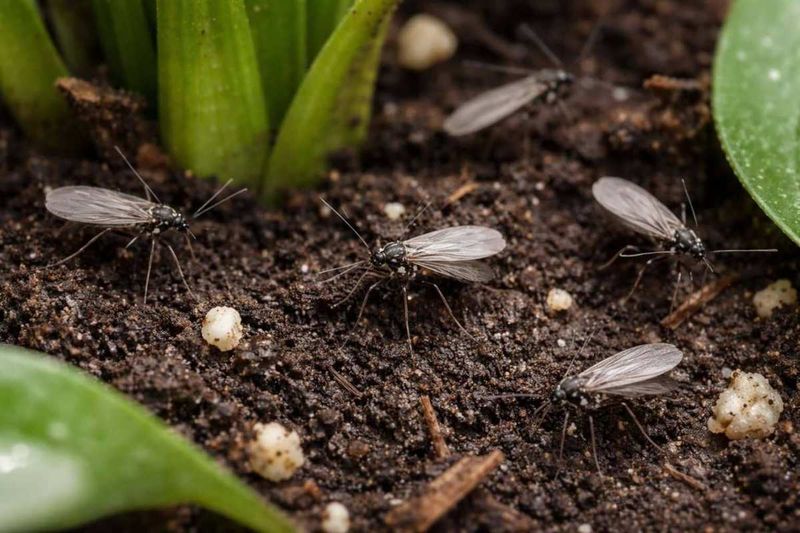
Before changing anything about your watering, take a minute to figure out what you are actually looking at. Fungus gnats are small, dark, slender flies that tend to hover near pots, crawl across the soil surface, or gather around windows and lamps.
They are weak fliers, so they often seem to bounce around the plant instead of zooming away.
A simple test can help. Watch the flies for a few minutes and see whether they cluster around one pot or seem to rise from the growing mix when you disturb it.
University of Maryland Extension suggests checking whether the flies are emerging from a plant or from a drain, because moist debris in drains can support breeding too.
Lookalikes are common. Fruit flies are usually drawn to ripe produce and kitchen trash, and drain flies are fuzzy, moth-like insects that hang around sinks and tubs.
University of Wisconsin-Madison Extension also notes that fungus gnats are one of several small flies that turn up indoors.
Seeing flies near a plant is a clue, not proof. The pot may be the source, or it may simply be where the flies landed.
Sorting that out first keeps you from fixing the wrong problem.
The larvae live in the damp mix, not on the leaves
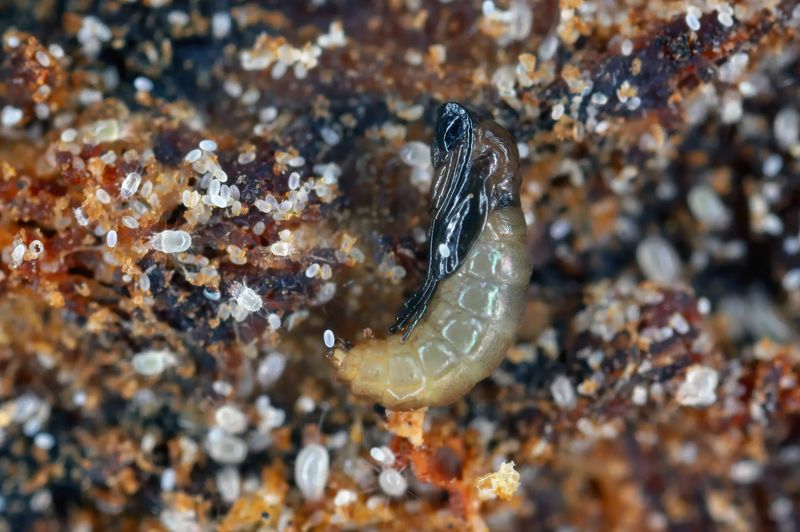
Here is the part that surprises many plant owners: the flying adults are only half the story. Fungus gnat larvae live in the growing mix itself, where they feed mainly on fungi and decaying plant matter.
That is why moist, organic potting mix suits them so well.
Larvae may also nibble on roots. UC IPM explains that the adults generally do not damage plants or bite people, and that serious harm in ordinary home settings is uncommon.
Seedlings and young plants are the more vulnerable ones, since their small root systems have less to spare.
If you have a mature fiddle-leaf fig or snake plant, a few gnats are most likely a nuisance rather than a threat. Watch for slow growth, yellowing, or wilting despite decent care, which could hint that larvae are working on the roots in large numbers.
University of Wisconsin-Madison Extension describes a similar picture.
This life cycle explains why wiping leaves or spraying the air rarely helps. The breeding happens below the surface, so the most useful steps are the ones that change conditions in the mix.
A moist pot is favorable to gnats, though it does not prove that this pot is where they started.
Why can the problem linger through winter?
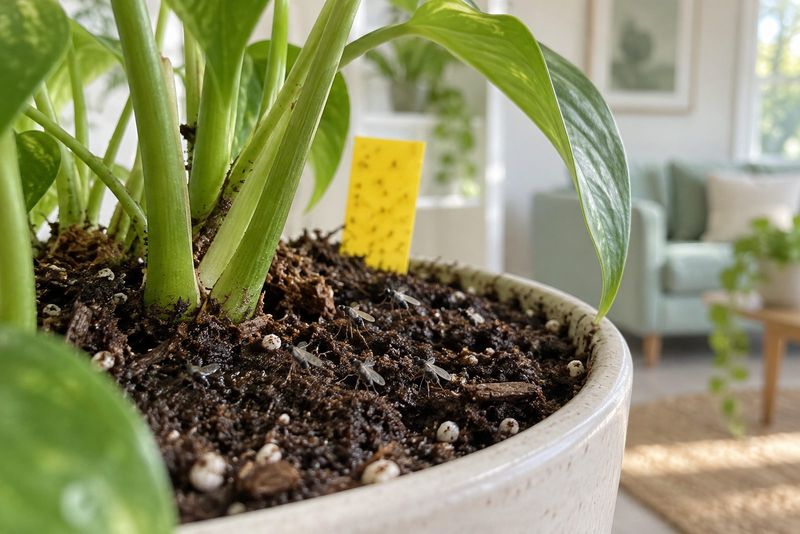
Winter changes how plants behave. With shorter days and cooler rooms, many houseplants slow their growth and use less water.
If you keep watering on the same schedule you used in summer, the mix can stay damp for longer than the plant needs.
That is an easy pattern to fall into, and it is nothing to feel bad about. Colorado State University Extension describes how consistently moist growing media favors fungus gnats indoors.
Still, winter is not the only time gnats show up, and the season does not cause the problem by itself. Gnats can ride in on new plants or potting mix, or drift in from outdoors.
We also spend more time inside in cold months, so we may simply notice the little flies more, as Illinois Extension mentions in its look at household nuisance pests.
A good next step is to reassess, not to blame. Feel the mix in a few pots and compare how quickly each one dries now versus a few months ago.
Your plants are not failing, they just have different needs in January than in July.
Let the surface dry without stressing the plant
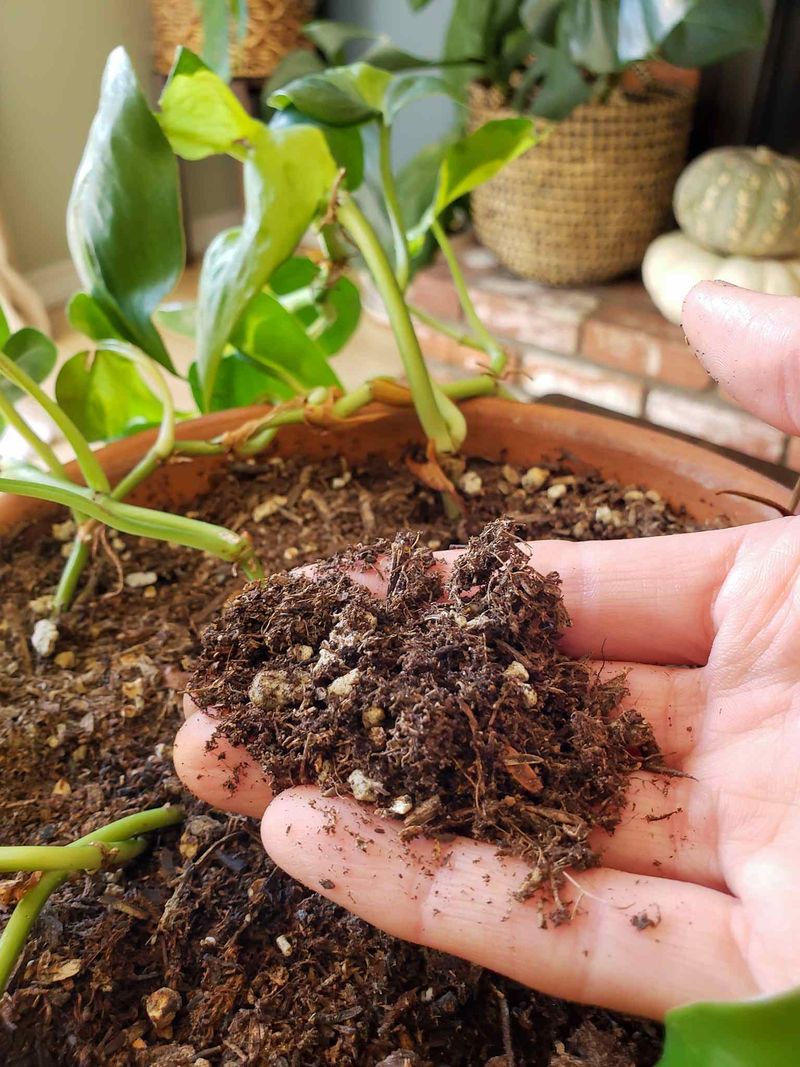
For a confirmed pot-associated problem, the core fix is called dry-down. It means letting the surface layer of the mix dry out between waterings.
It does not mean drying the whole root ball or letting your plant wilt.
The finger test is the easiest tool. University of Wisconsin-Madison Extension suggests allowing roughly the top inch to dry, and Colorado State University Extension points to the top one to two inches.
Push a finger in that deep. If the mix still feels damp, wait a day or two and check again.
Plants differ, so use judgment. A snake plant or a ZZ plant is happy with drier mix, while a peace lily or a fern prefers to stay more evenly moist.
University of Tennessee Extension notes that watering needs vary by plant, pot, light, temperature, and season. For moisture-loving plants, aim for a surface that is not constantly soggy rather than a dry pot.
Bottom watering can help here. Setting the pot in a shallow dish of water for a short time lets the mix soak up moisture from below, which may keep the surface less wet.
It does not replace checking whether the plant is ready for water, and you should empty the dish afterward.
Watch the plant itself as you adjust. Drooping leaves or crispy edges mean you have gone too far, so back off and water a little sooner next time.
Clear away standing water and decaying debris
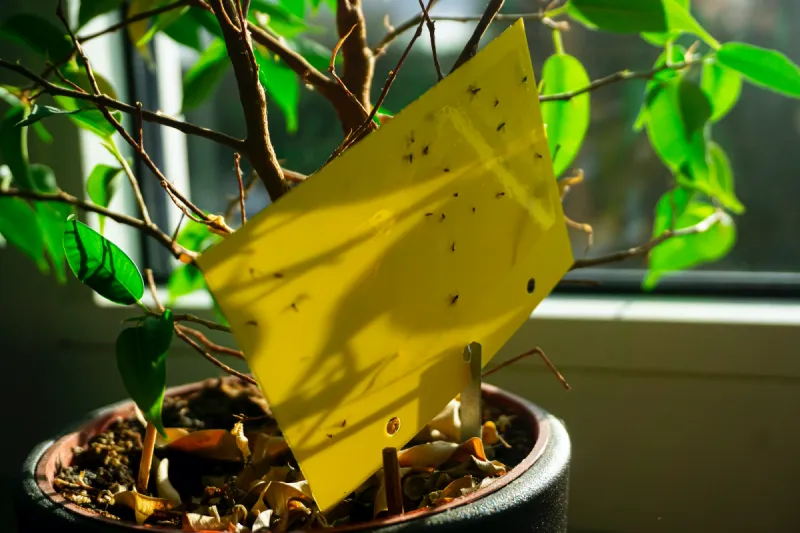
Watering habits are only one piece. Gnats can also breed in other damp, organic spots, so a quick cleanup round can help.
Think of it as a separate job from the dry-down.
Start with the saucers. Lift each pot and look for water that has been sitting underneath, then pour it out.
Make sure every pot has drainage holes that are not blocked by compacted roots or mix, since water that cannot drain keeps the lower layers wet.
Next, look for decaying material. Fallen leaves, spent flowers, and bits of rotting plant matter on the surface can feed larvae.
UC IPM recommends removing such debris and checking that pots drain.
Look beyond the soil too. A drain with gunk in it, a tray under a planter, or a forgotten pot of old mix can all hold moisture.
Oregon State University Extension offers practical advice for tracking down gnats that seem to be everywhere.
A damp spot is not automatic proof of fungus gnats, since other flies like wet places as well. Treat these steps as housekeeping that removes possible breeding sites while you keep watching to see where the flies actually gather.
Sticky cards catch adults; soil treatments target larvae
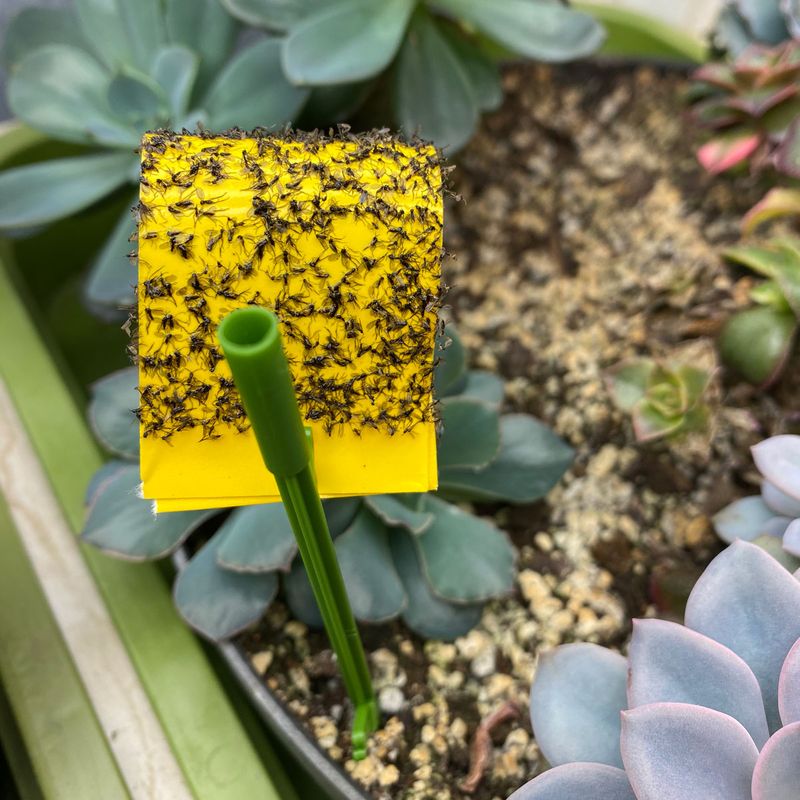
Yellow sticky cards are a handy, low-effort tool. Tuck one into the pot or lay it flat on the soil, and the flying adults will stick to it.
University of Wisconsin-Madison Extension describes them as a way to catch and monitor adults.
The catch is that cards do not reach the larvae in the mix. Think of them as a gauge.
If the number of flies on a card shrinks week to week, your changes are probably helping, and if it climbs, something is still feeding the population.
If gnats keep coming back and you want to treat the mix, products containing Bti can target larvae. Choose one labeled for indoor houseplant use, and follow the label closely, since University of Maryland Extension notes that some approaches need repeat applications.
Routine spraying or fogging is not the place to start. UC IPM says insecticides are rarely warranted around homes and cautions against indoor aerial fogging.
Any pesticide you do use should be labeled for the intended indoor houseplant use.
Why gnats may persist for several weeks
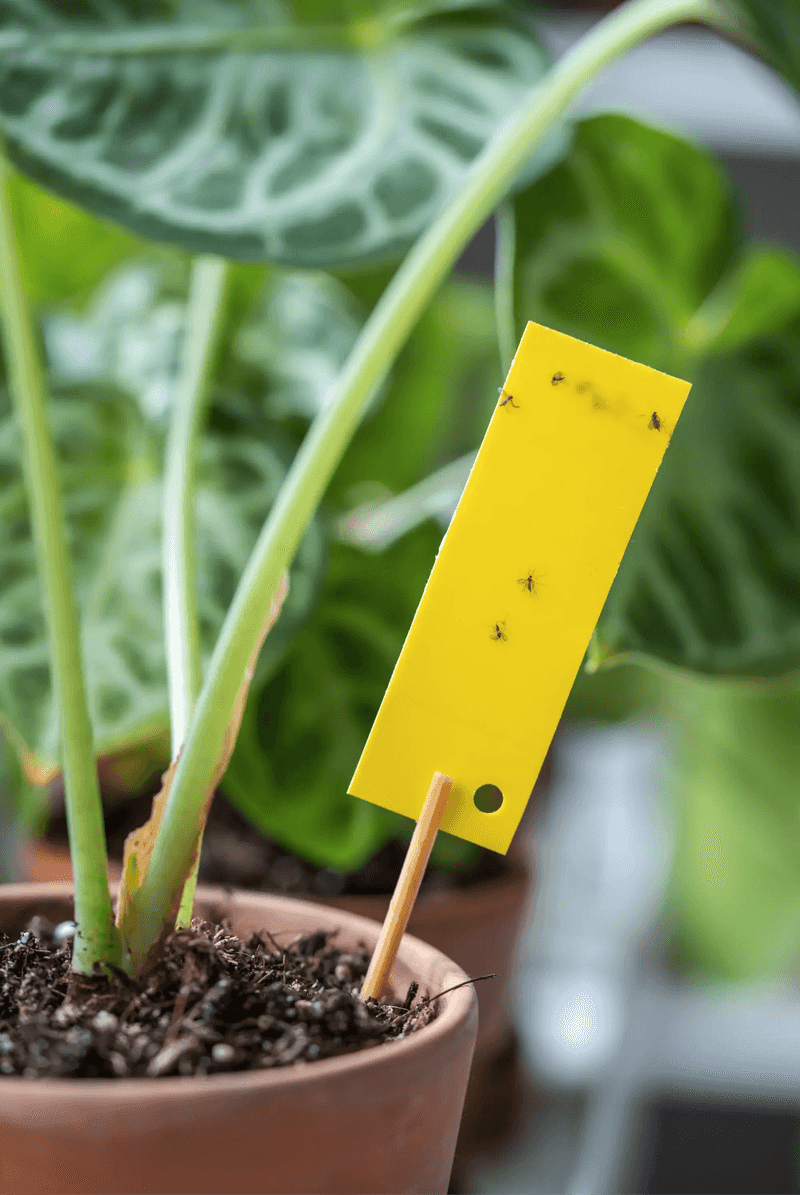
Don’t be discouraged if flies are still around a week after you change your routine. Eggs, larvae, pupae, and adults overlap, so new adults can keep emerging even after conditions improve.
University of Wisconsin-Madison Extension and Colorado State University Extension note that a full generation can take several weeks indoors.
That timeline is not a promise, though. If the mix stays wet or another breeding site is feeding the flies, the numbers may not drop.
Keep meeting each plant’s water needs while avoiding a constantly soggy surface, and check other pots and damp spots, as University of Maryland Extension advises when gnats persist.
Patience plus a few small habits usually beats a dramatic fix.