
Topping Indeterminate Tomato Plants Before Frost: A Possible Late-Season Aid for Your Last Green Fruits
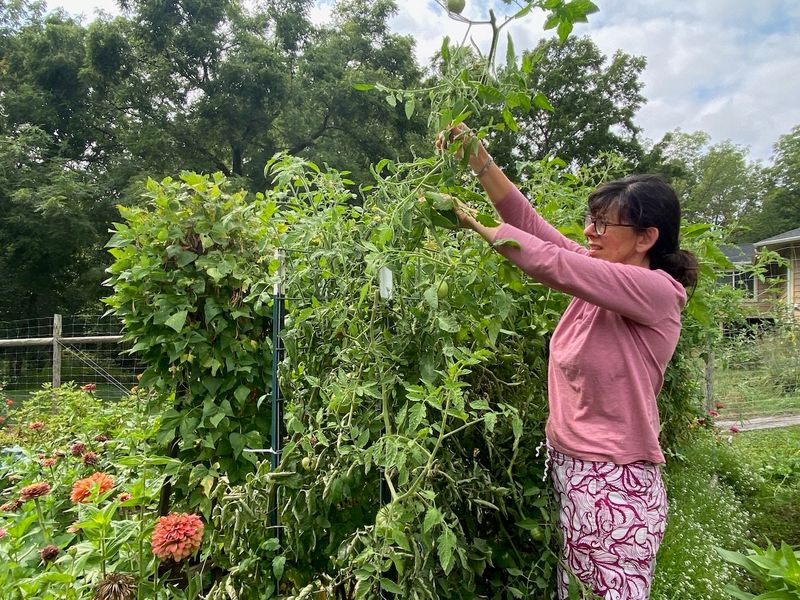
Frost is coming, and your tomato vine is still loaded with green fruit. You may have heard that snipping the tips off the plant can help those tomatoes finish.
It might, but it is not a sure thing, and timing and technique matter a lot. Here is how to decide if topping fits your vines and what to do if it does.
Topping is a possible late-season aid, not a ripening guarantee
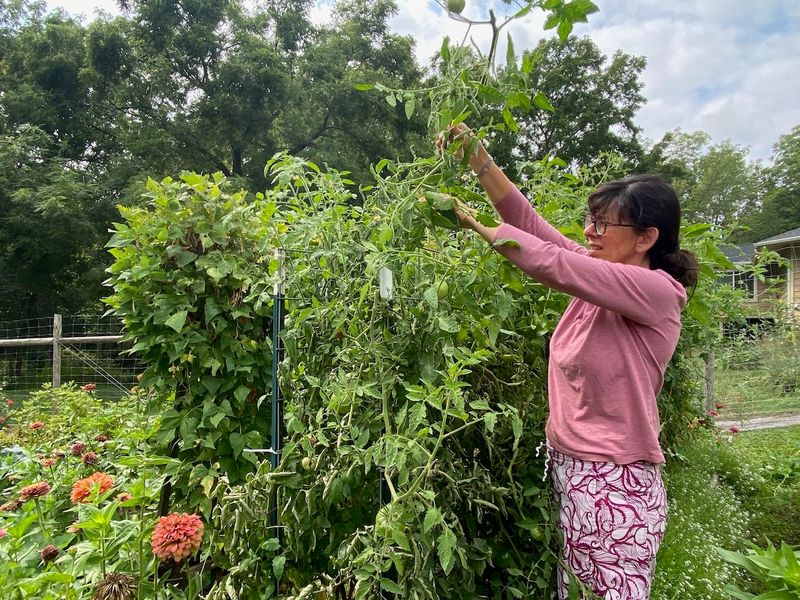
Topping means snipping off the growing tip of each main stem on a vining tomato. Once the tip is gone, the plant stops stretching upward and stops making new flowers.
That matters late in the season, because a flower opened now will not become a ripe tomato before cold weather arrives.
The hope is that the plant stops investing in fruit that has no chance and puts its resources into the tomatoes already hanging there. Washington State University Extension recommends this kind of late-season tip removal on indeterminate plants.
It is a reasonable move, and it costs you very little.
Here is the candid part. Nobody has shown that topping reliably makes existing green tomatoes ripen faster, and nobody has measured how much it might help.
Illinois Extension talks about the idea as something its educators had not tried themselves, and suggests testing it side by side on your own plants.
So think of topping as a low-risk tactic that may help your existing fruit finish. It will not rescue tomatoes from frost, and it will not turn a tiny green fruit into a ripe one.
If you have two vines, try topping one and leaving the other, then compare what you pick.
Use local frost timing to choose when to act
Your calendar matters more than any national date. A gardener in Georgia and one in Minnesota will see frost weeks apart, so start with your own expected first frost and count backward.
Your local extension office or a weather service forecast can give you that date.
The advice you will find does not agree on exactly how far back to count. WSU Extension suggests topping about four weeks before first frost.
An Illinois Extension podcast discusses a wider window of six to eight weeks, noting that tomatoes can take roughly that long to go from flower to harvest.
Neither number is a settled rule for everyone. Treat them as two reasonable markers and pick a date that suits your garden and your weather.
Why does timing matter? Topping too late leaves little time for existing fruit to mature, and the plant has already stopped most of its useful work.
If you are only a week or two from frost, skip the pruning debate and plan to harvest instead. Write your target date on the calendar so it does not sneak up on you.
Focus on indeterminate vines
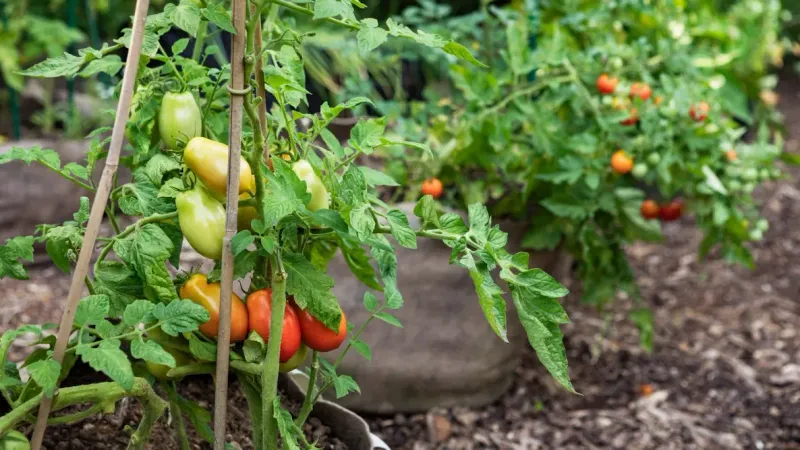
Before you pick up clippers, figure out which kind of tomato you have. Indeterminate tomatoes are the vining types that keep growing taller and keep making flowers and fruit until frost stops them.
Many large heirlooms and cherry tomatoes grow this way, and the plant tag usually says so.
Determinate tomatoes are the bush types. According to University of Minnesota Extension, they naturally stop growing at a flower or fruit cluster at the end of the stem, and they generally need less pruning.
That difference is why this advice is meant for vines. A bush tomato already stops itself, so topping it is not the same useful step and could just remove fruit-bearing growth.
Not sure what you planted? Look at the plant.
If the stems keep reaching and new flower clusters keep appearing along the vine, you likely have an indeterminate type. If the plant is compact and the stems end in fruit clusters, leave it alone and move on to harvest planning.
Remove growing tips without cutting fruiting branches
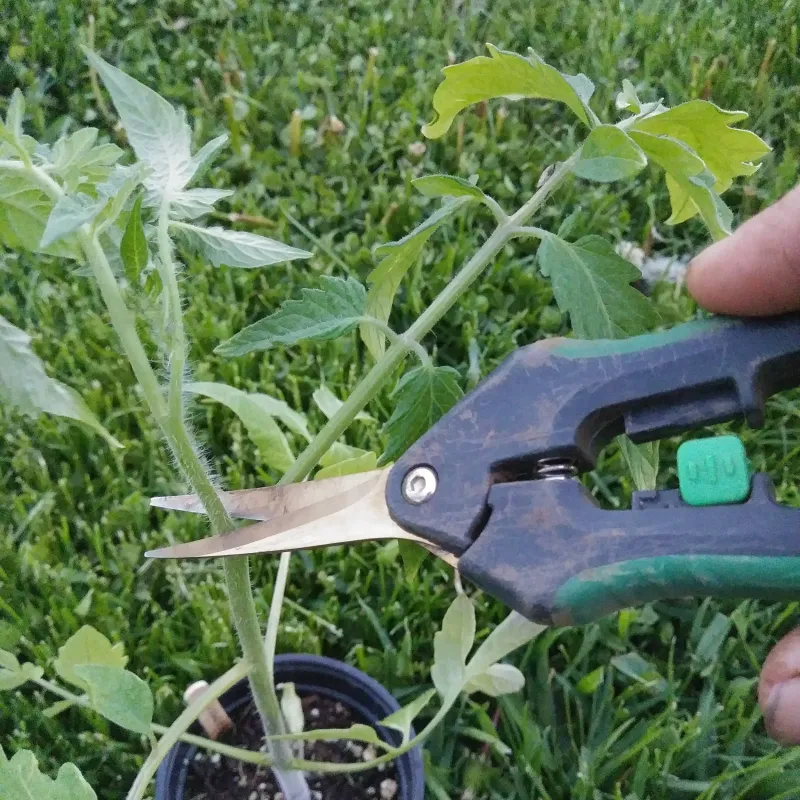
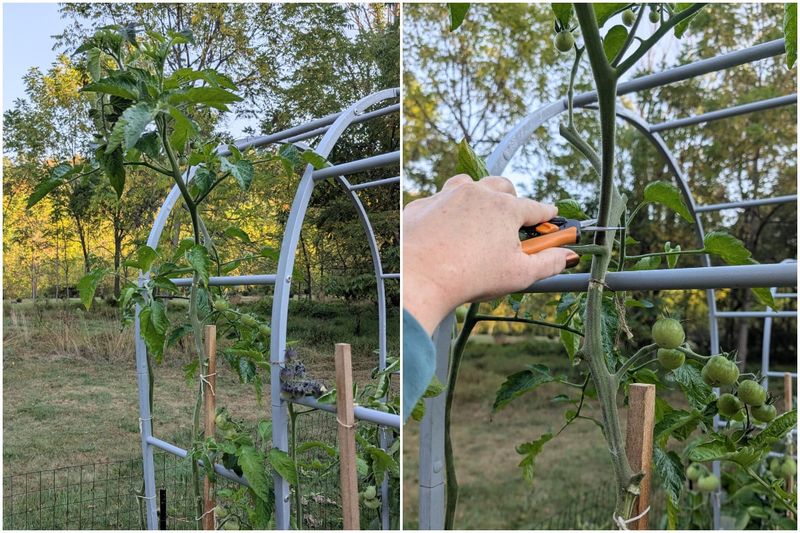
Start by finding the main stems. On a staked or caged vine, each one ends in a growing tip, usually a small cluster of fresh leaves reaching upward.
That tip is the only part you are after.
Cut just above a set of leaves, taking off the tip and little else. Do not cut down through fruit clusters or fruiting branches.
Those branches hold the tomatoes you are trying to save, and removing them defeats the purpose.
Use sharp hand clippers so the cut is clean. A clean cut heals faster than a torn stem, and it stops growth without stressing the plant more than needed.
Guidance from WSU Extension and University of Georgia Extension points to the same careful, tip-level approach.
Pick up the cuttings and take them away from the base of the plant. Left on the soil, they can hold moisture and disease.
Wipe or disinfect your clippers between plants so a problem on one vine does not travel to the next.
Keep enough foliage to shade the fruit
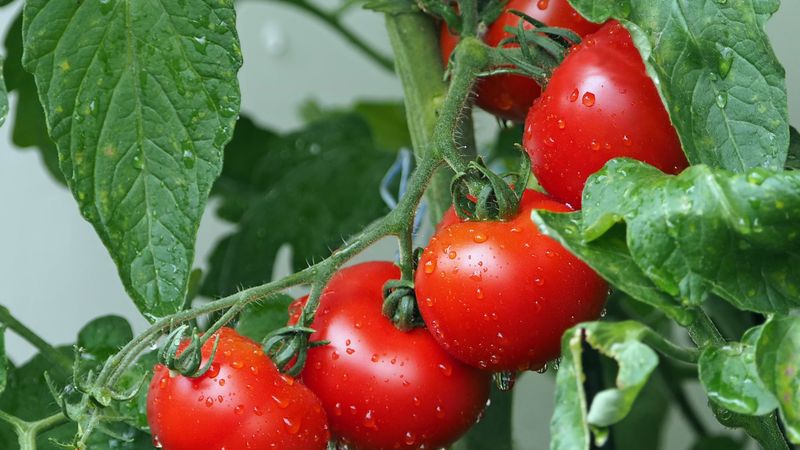
Topping is a small snip, not a haircut. Tomatoes lean on their leaves for shade, and fruit suddenly exposed to hot sun can get sunscald, which shows up as pale, papery patches on the skin.
If you see it on one fruit, that is a clue you have taken off too much cover.
Heavy pruning has other costs. UC IPM warns that severe pruning can greatly reduce your total crop and may increase some diseases or disorders.
The leaves also feed the fruit that is still developing, so stripping them can work against you.
University of Georgia Extension also stresses leaving enough leaf cover to protect fruit, especially in hot, sunny weather.
A simple check: after you finish, step back and look at the clusters. If your fruit is still tucked under leaves and you only removed the tips, you are on track.
If you can see lots of bare green tomatoes, stop cutting.
Harvest mature-green tomatoes if frost is near
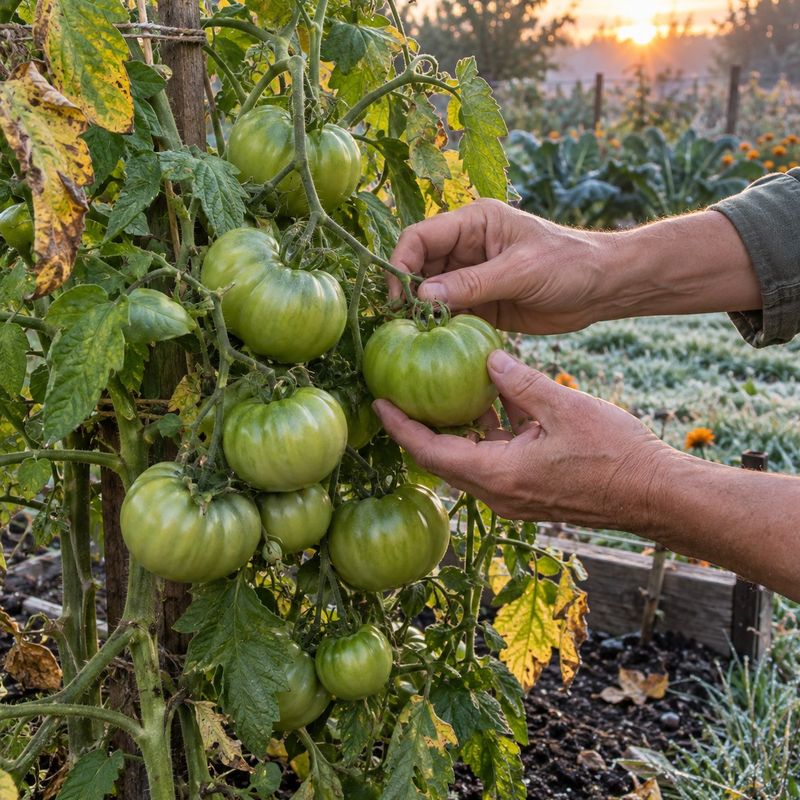
Tomatoes are frost-sensitive, and topping cannot protect them from a freeze. When a frost warning shows up, picking beats pruning every time.
Bring in what you can before the cold hits.
Not every green tomato is equal. University of Minnesota Extension explains that full-size, mature-green fruit has a better chance of ripening indoors, while very immature fruit may not ripen to good quality.
Pick the big, firm, evenly green ones first. Tiny hard fruit may simply never turn.
Temperature affects how well the ripening goes. Colorado State University Extension reports that mature-green tomatoes ripen best at about 68 to 77 degrees F.
Colorado State educators also note through their tomato ripening answer that prolonged temperatures above 85 degrees F can halt production of the red pigments.
So a warm windowsill in a hot attic is not the answer. Pick a spot indoors that stays comfortably warm, not hot, and check the fruit every few days.
Set aside any that soften or spot so one bad tomato does not spoil the batch.
Make a frost-aware end-of-season decision
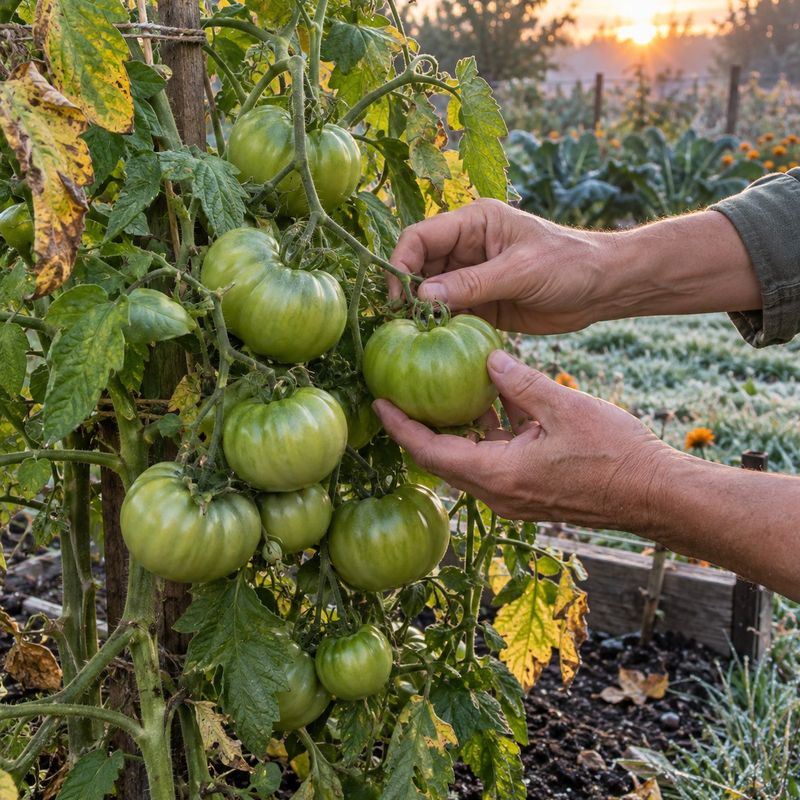
Check your local frost date first. If you have an indeterminate vine and enough time left, as WSU Extension suggests, snip only the growing tips and keep the leaves.
When frost is close, pick the full-size, mature-green fruit, as Minnesota Extension advises.
Topping may help existing fruit finish, but it does not promise faster ripening. Sometimes the best tomato is simply the one you picked in time.